



Cheek Augmentation Market Size, Companies, Share, Patient Volume, Treatment Adoption Rates, Pricing Analysis, Regulatory Landscape, Competitive Positioning, and Demand Forecast
Cheek Augmentation Market (By Procedure Type: Dermal Filler-based Cheek Augmentation, Fat Grafting (Autologous Fat Transfer), Cheek Implants (Surgical); By Product Type: Hyaluronic Acid (HA) Fillers, Calcium Hydroxylapatite (CaHA) Fillers, Poly-L-lactic Acid (PLLA) Fillers, Other Fillers (PMMA, collagen); By End-User: Specialty Aesthetic & Cosmetic Clinics, Hospitals & Multispecialty Clinics, Medical Spas & Dermatology Centers) - Global Industry Analysis, Size, Trends, Leading Companies, Regional Outlook, and Forecast 2026 to 2035
Source: https://www.precedenceresearch.com/cheek-augmentation-market
 Get a Sample
 Table Of Content


What is the Cheek Augmentation Market Size in 2026?
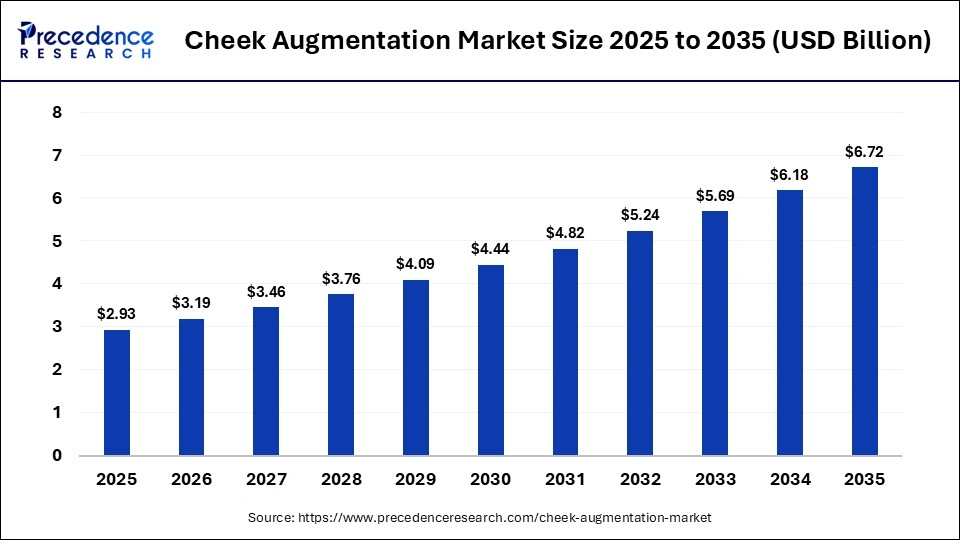
The global cheek augmentation market size was calculated at USD 2.93 billion in 2025 and is predicted to increase from USD 3.19 billion in 2026 to approximately USD 6.72 billion by 2035, expanding at a CAGR of 8.64% from 2026 to 2035.The cheek augmentation market is driven by rising aesthetic awareness, minimally invasive procedures, advanced fillers, and increasing demand for facial contouring across diverse age groups globally.
Market Highlights
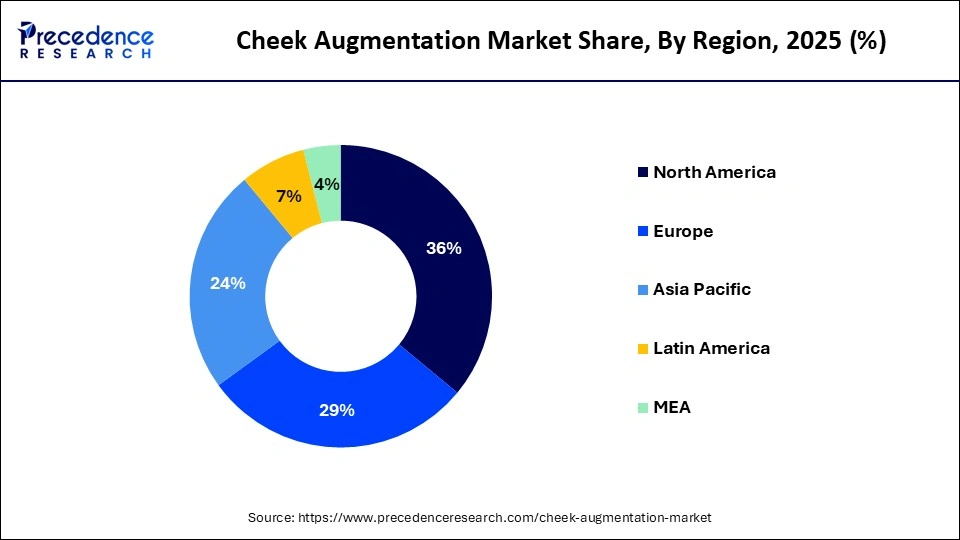
- North America led the cheek augmentation market with a 36% share in 2025.
- Asia Pacific is estimated to expand at the fastest CAGR between 2026 and 2035.
- By procedure type, the dermal filler-based cheek augmentation segment captured 62% market share in 2025 and is also expected to be growing at a strong CAGR between 2026 and 2035.
- By product type, the hyaluronic acid (HA) fillers segment held 48% market share in 2025.
- By product type, the Poly-L-lactic Acid (PLLA) fillers segment is projected to grow at the strongest CAGR between 2026 and 2035.
- By end-user, the specialty aesthetic & cosmetic clinics segment led the market and held 49% market share in 2025.
- By end-user, the medical spas & dermatology centers segment is expected to expand at the fastest CAGR from 2026 to 2035.
What Is Driving Cheek Augmentation Market Demand?
The cheek augmentation market includes aesthetic enhancement procedures for increasing the volume, contouring, and symmetry of the cheeks. The market includes procedures that are performed for cosmetic reasons and procedures aimed at restoring volume lost with age.
The cheek augmentation market continues to show growth due to the growing number of patients interested in minimally invasive aesthetic procedures on their face, driven by the increasing social media influence on beauty standards, and because a growing number of patient populations of all ages have accepted using cosmetic procedures. The continuing development of newer hyaluronic acid based fillers, improved safety profiles of these products, and the availability of customized results have all contributed to building patient confidence in these procedures.
The expansion of medical aesthetics facilities in emerging countries and the availability of more disposable income are widening the consumer base for these types of products. Continuous product innovation, the availability of skilled practitioners who perform these procedures, and increased awareness among consumers about the benefits of non-surgical methods to contour the face are all factors that are positively affecting the demand for cheek augmentation.
AI Precision and Customization of Cheek Augmentation
Artificial intelligence technology is greatly changing the way cheek augmentations are performed today by providing greater accuracy and personalization for diagnosis, workflow, and treatment planning. AI is able to provide a personalized augmentation plan for each patient based on a 3D facial scan analysis using state-of-the-art technology that provides the patient with maximum symmetry and a natural-looking outcome. A growing number of clinics use AI-assisted imaging to give the patients a preview of what they will look like before they have the procedure performed, allowing the patient to make an informed decision on whether to undergo the procedure.
Additionally, AI utilizes smart algorithms to streamline consultation and follow-up appointments. Surgeons are using these new technologies to complement their clinical skills as well as reduce the incidence of complications while increasing patient satisfaction. As AI technologies continue to become more embedded into aesthetic practices, they will continue to be the key differentiator for providing patients with safer and more accurate cheek enhancement experiences.
What are The Current Trends in Cheek Augmentation Landscape?
- Growing Preference For Non-Surgical Treatments: Injectable fillers have become increasingly popular as more people seek quick recovery, minimal risk, and temporary outcomes compared to the surgical option of cheek implants, and as such, they are becoming the preferred method of enhancement for everyone.
- Continued Consumer Demand: As consumers look to enhance their volume while maintaining balance on their face, practitioners are providing customized treatments that emphasize natural-looking soft contours.
- Longer Lasting Fillers: Recent advances in the manufacture of both hyaluronic acid and biostimulatory fillers are allowing for safer, longer-lasting, and more consistently applied procedures, which means patients don't have to come back in regularly for their touch-up appointments.
- Social Media's Impact: With the growing number of visual platforms such as Instagram and Snapchat, influencer culture has created a new generation of consumers who understand what facial aesthetics should be, leading to increased awareness and interest in cheek augmentation.
Market Scope
| Report Coverage | Details |
| Market Size in 2025 | USD 2.93 Billion |
| Market Size in 2026 | USD 3.19 Billion |
| Market Size by 2035 | USD 6.72 Billion |
| Market Growth Rate from 2026 to 2035 | CAGR of 8.64% |
| Dominating Region | North America |
| Fastest Growing Region | Asia Pacific |
| Base Year | 2025 |
| Forecast Period | 2026 to 2035 |
| Segments Covered | Procedure Type, Product Type, End-User and Region |
| Regions Covered | North America, Europe, Asia-Pacific, Latin America, and Middle East & Africa |
Segment Insights
Procedure Type Insights
Why Are Dermal Fillers the Most Popular for Cheek Augmentation?
The dermal filler-based cheek augmentation segment held the highest share of 62% in 2025, as it produces instant results and requires little to no recovery time. This is what contributes to dermal fillers dominating the cheek augmentation market. The potential for patients to have their outcome reversed or customized increases its acceptance in the marketplace. In addition, the increasing acceptance of injectable aesthetics from younger and middle-aged individuals, coupled with improvements in filler formulation techniques and injectors' skills, enhances the dominance of this procedure in urban aesthetic clinics.
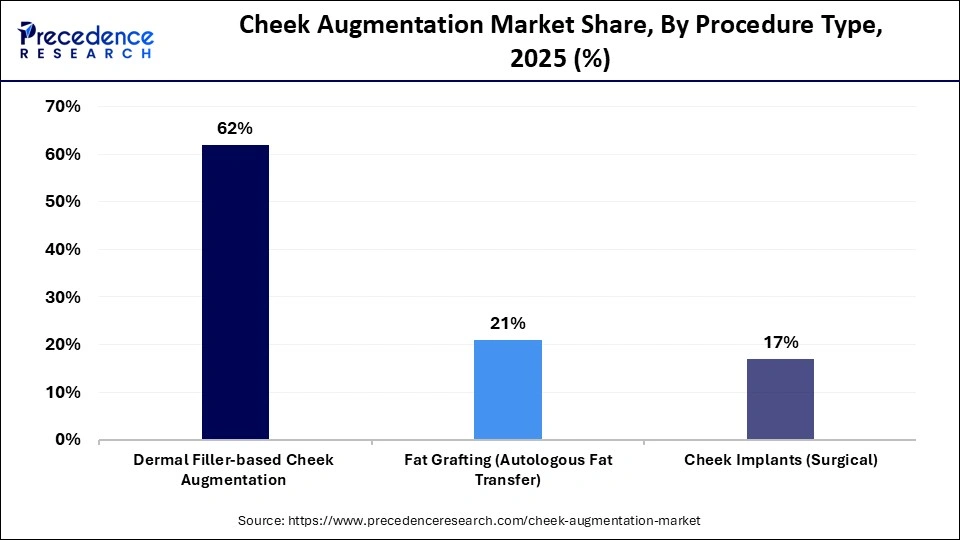
The fat grafting segment is set to be the fastest-growing in the cheek augmentation market, with the highest expected CAGR, as the most recently developed technique stems from the increasing number of patients interested in an organic way to create and maintain volume. Furthermore, continued advancements in techniques used in fat harvesting and purification have improved survival rates of harvested fat cells, and growing interest in biocompatible solutions from patients willing to explore regenerative aesthetic options has led to an increased demand for fat grafting procedures.
Product Type Insights
Why are Hyaluronic Acid Fillers the Most Popular Option among All Fillers?
Hyaluronic acid fillers are the dominant product type in 2025 with a 48% share, due to the combination of excellent safety, reversibility, and the ability of these fillers to produce a very natural-appearing enhancement of volume. Since hyaluronic acid has a strong ability to bind to water, it provides precise, predictable results when used to contour the face. This characteristic, along with continued product development, widespread product availability, and a high level of trust from patients, makes it the first treatment preference among both novice and advanced practitioners for cheek augmentation.
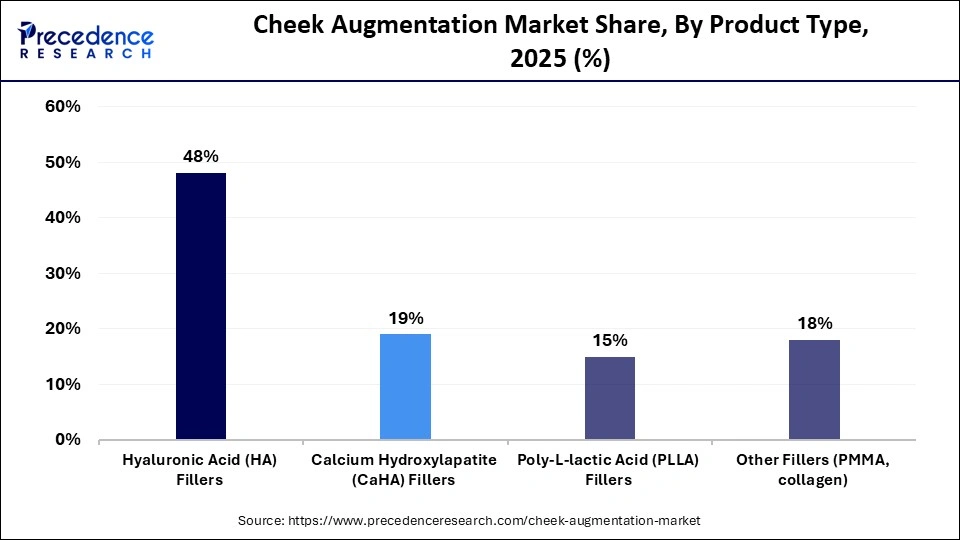
Poly-L-lactic acid fillers have become one of the fastest-growing product segments with the highest CAGR due to increased demand for longer-lasting and collagen-stimulating products. Awareness of progressive aesthetic improvement among older patients is increasing, as is the clinician's knowledge of these fillers; as a result, more patients are utilizing them to maximize the effectiveness of their premium and maintenance-oriented treatment plans.
End-User Insights
Why Do Specialty Aesthetic Clinics dominate the Market for Cheek Augmentation?
The specialty aesthetic & cosmetic clinics segment dominates the cheek augmentation market with a 49% share during 2025, due to having specific expertise in this area, as well as large volumes of procedures performed and access to the latest injectable technologies. Patients choose these types of clinics, as they receive personal consultations from well-trained Injectors and have a greater choice of Facial Aesthetic services. Continued presence through strong Brand Visibility, Repeat Clientele, and Increased Investment in minimally invasive procedures will solidify their ability to lead in this area.
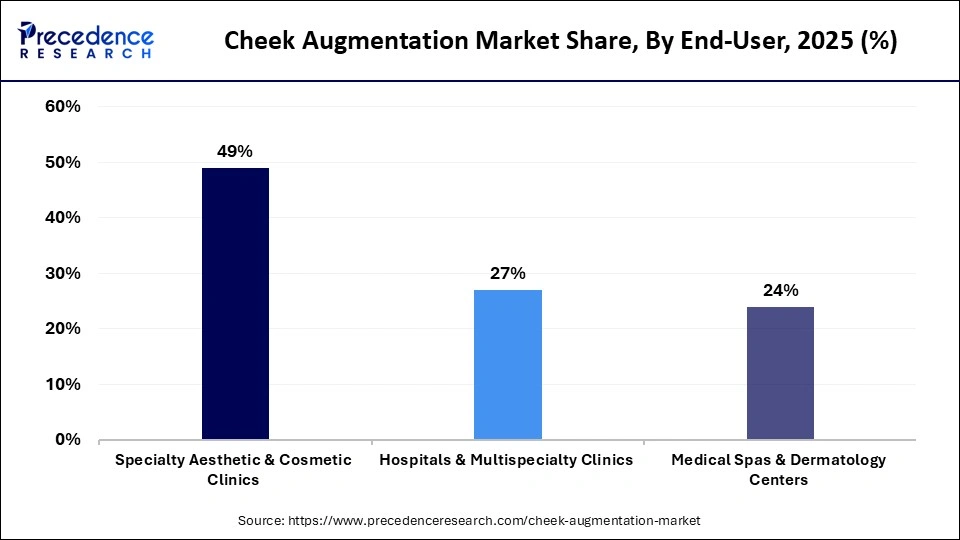
The medical spas & dermatology centers segment is set to be the fastest-growing in the market, due to the increased demand for affordable, convenient, and lifestyle-oriented aesthetic treatment options. These venues provide younger consumers and first-time patients with Flexible Pricing Structures and Combination Therapy options. The growth of chain medical spas and the increasing number of dermatologists participating in the aesthetic injections market are contributing significantly to the growth of this area throughout upper and semi-urban markets.
Regional Insights
How Big is the North America Cheek Augmentation Market Size?
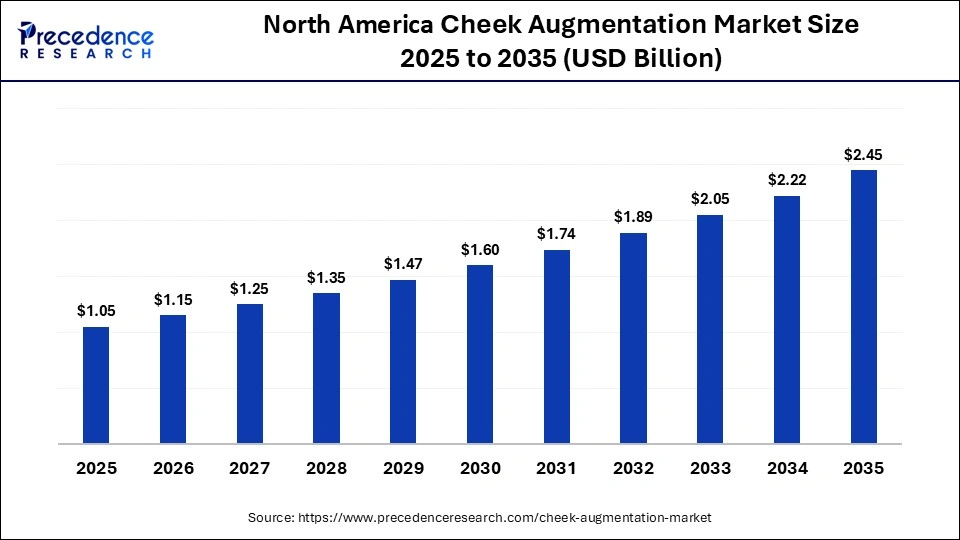
The North America cheek augmentation market size is estimated at USD 1.05 billion in 2025 and is projected to reach approximately USD 2.45 billion by 2035, with a 8.84% CAGR from 2026 to 2035.
Why is North America the top region for Ultrafast Rectifiers Market?
North America is the leading region for cheek augmentation with a 36% share during 2025, due to its advanced healthcare system, established culture of importance placed on appearance, and the prevalence of minimally invasive procedures, in addition to patient awareness and importance placed on facial appearance, combined with the availability of qualified practitioners, drives a consistent demand for cheek augmentation. Consequently, many urban areas in North America are proactive in adopting technological advancements related to implant materials and injections, such as the use of new surgical techniques and devices.
What is the Size of the U.S. Cheek Augmentation Market?
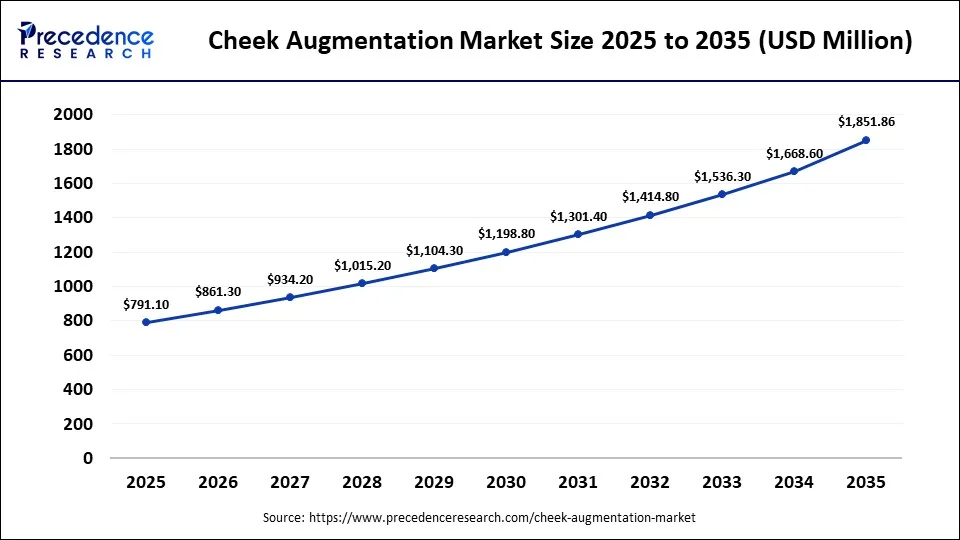
The U.S. cheek augmentation market size is calculated at USD 791.10 million in 2025 and is expected to reach nearly USD 1,851.86 million in 2035, accelerating at a strong CAGR of 8.88% between 2026 and 2035.
U.S. Cheek Augmentation Market Trends
The United States is known for having a high level of clinical training available, along with many cosmetic procedure clinics, creating a general awareness among the public that cheek augmentation exists. The popularity of facelifts and the social/fashion trends associated with the shape of one's face, along with the broad diversity of the population in the United States, have generated a high level of demand for surgical and non-surgical enhancement options.
What is the Asia Pacific Cheek Augmentation Market Size?
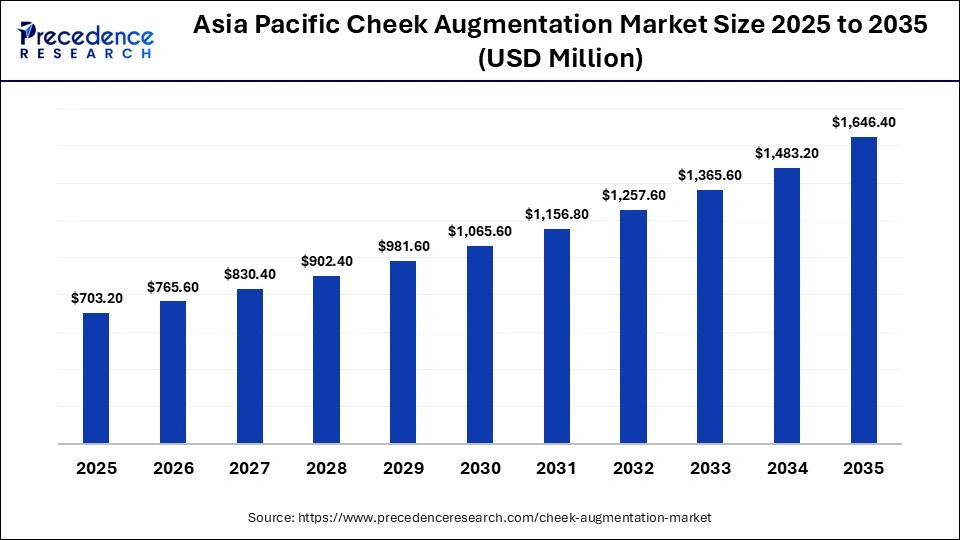
The Asia Pacific cheek augmentation market size is expected to be worth USD 1646.40 million by 2035, increasing from USD 703.20 million by 2025, growing at a CAGR of 8.88% from 2026 to 2035.
Why Is Asia Pacific Experiencing the Fastest Growth of the Cheek Augmentation Market?
The cheek augmentation market is experiencing rapid growth in Asia Pacific due to increasing disposable income, increasing medical tourism, and a younger population becoming more aware of aesthetics . The cultural focus on achieving harmony in facial structure and changing standards of beauty will continue to drive demand for contouring procedures. Rapid developments of the healthcare system and a growing number of specialists will continue to support the increasing usage of cheek augmentation procedures in urban areas.
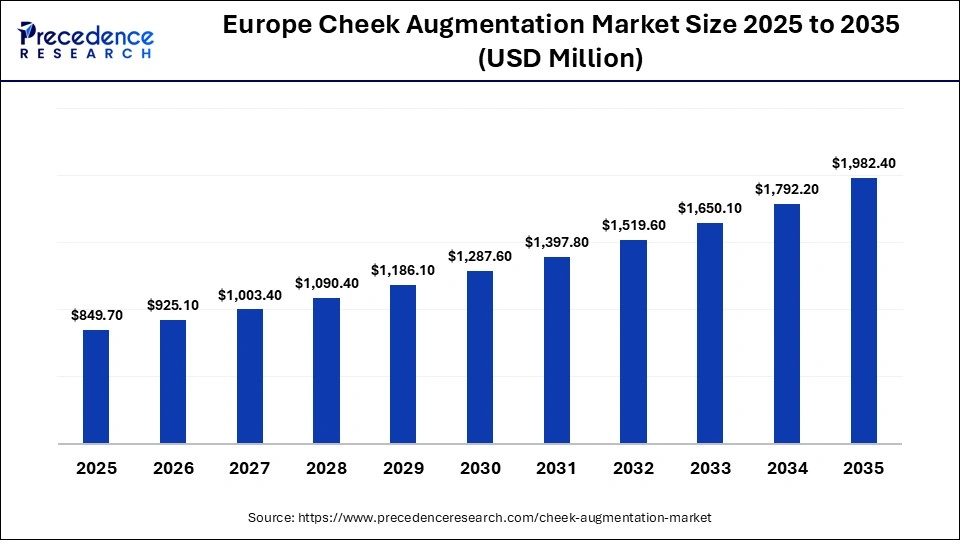
What is the Europe Cheek Augmentation Market Size and Growth Rate?
The Europe cheek augmentation market size has grown strongly in recent years. It will grow from USD 849.70 million in 2025 to USD 1,982.40 million in 2035, expanding at a compound annual growth rate (CAGR) of 8.84% between 2026 and 2035.
Why is Europe Considered a Notably Growing Region in the Cheek Augmentation Market Market?
Europe is expected to grow at a notable rate in the market throughout the forecast period, driven by stricter clinical guidelines and a high prevalence of diabetes, mobility issues, and neurodegenerative disorders. Rising healthcare initiatives also contribute to regional market growth. The EU4 Health provided funding to healthcare organizations, national authorities, and other entities through grants and public procurement to make a healthier Europe. The region's emphasis on advanced healthcare technologies, regulatory compliance, and adoption of innovative pressure-relief mattress solutions further drives market growth.
South Korea Cheek Augmentation Market Trends
South Korea offers a very innovative cosmetic surgery culture due to the high expectations placed on aesthetics and facial features within this region. South Korean clinics offer highly specialized pre-procedure consultation and follow-up care with surgeons who utilize very sophisticated techniques. The combination of social acceptance of the use of aesthetic enhancements and the growing global impact of Korean wave (K-culture) trends will aid in increasing the demand for and usage of cheek augmentation in South Korea.
Cheek Augmentation Market Value Chain Analysis
- R&D and Raw Material Supply
A strong emphasis is placed on the development of advanced biocompatible materials that include silicone-based fillers, hyaluronic acid, and PEEK, which are used for safe and durable products that are also compatible with cheek augmentation.
Key Players: Evonik Industries, DSM Biomedical, BASF, Corbion, and Wacker Chemie.
- Manufacturing and Innovative Product Development
This approach to manufacturing includes the high-volume production of dermal fillers and solid cheek implants. Many companies in this space have ongoing internal or external development efforts to improve aesthetics, longevity, and procedure ease.
Key Players: Allergan (AbbVie), Galderma, Merz Pharma, Stryker, and Zimmer Biomet.
- Distribution
All products are distributed through a specialized distribution channel to hospitals, clinics, and aesthetic centers, ensuring that the product is stored properly and that there is efficiency in the distribution process while maintaining regulatory compliance.
Key Players: McKesson, Cardinal Health, Medline Industries, and Henry Schein.
- Service Delivery (End Use)
Cheek augmentation procedures using either filler or implant are performed by dermatologists and plastic surgeons. Their techniques yield tailored, predictable aesthetic results according to patient facial anatomy.
- Post-Market Surveillance and Regulation
Ongoing safety evaluation of products through post-market surveillance and reporting of adverse events impacting long-term is accomplished, while also ensuring compliance with the regulations of the regulatory authorities (e.g., FDA).
Organizations: FDA, EMA, Regulatory Consulting Firms, Clinical Research Organizations.
Who are the Major Players in the Global Cheek Augmentation Market?
The major players in the cheek augmentation market include AbbVie Inc., Merz Pharma GmbH & Co. KGaA, Galderma SA, Sientra, Inc., Stryker Corporation, Sinclair, Johnson & Johnson Services, Inc., Anika Therapeutics, Inc., Hanson Medical Inc., Zimmer Biomet
Recent Developments
- In March 2025, Korawin Clinic and Master Style (MASTER) invested THB 250 million to launch KRM Plastic Surgery Hospital in Khon Kaen, the first comprehensive aesthetic surgery facility in Central Isaan, aiming to serve local and international patients with advanced cosmetic procedures.(Source: https://www.nationthailand.com)
- In April 2025, A study reported a novel BoNT-A injection technique for masseter hypertrophy that safely prevents worsening of sunken cheeks, showing high patient satisfaction and potential cosmetic improvement four weeks after treatment.(Source: https://www.dermatologytimes.com)
Segments Covered in the Report
By Procedure Type
- Dermal Filler-based Cheek Augmentation
- Fat Grafting (Autologous Fat Transfer)
- Cheek Implants (Surgical)
By Product Type
- Hyaluronic Acid (HA) Fillers
- Calcium Hydroxylapatite (CaHA) Fillers
- Poly-L-lactic Acid (PLLA) Fillers
- Other Fillers (PMMA, collagen)
By End-User
- Specialty Aesthetic & Cosmetic Clinics
- Hospitals & Multispecialty Clinics
- Medical Spas & Dermatology Centers
By Region
- North America
- Europe
- Asia-Pacific
- Latin America
- Middle East & Africa
For inquiries regarding discounts, bulk purchases, or customization requests, please contact us at sales@precedenceresearch.com
Frequently Asked Questions





Ask For Sample
No cookie-cutter, only authentic analysis – take the 1st step to become a Precedence Research client
 Get a Sample
.webp)



 sales@precedenceresearch.com
 Schedule a Meeting
