



Chemical Indicators Market Size, Share and Trends 2026 to 2035
Chemical Indicators Market (By Indicator Type: pH & Acid-Base Indicators, Oxidation/Redox Indicators, Chromatographic Chemical Indicators, Temperature/Thermochromic Indicators, Sterilization Chemical Indicators, Other Chemical Indicators; By Form: Liquid Chemical Indicators, Strip/Paper Chemical Indicators, Tablet/Pellet Indicators, Other Physical Forms; By Detection Method: Visual/Colorimetric Indicators, Instrumental Chemical Indicator; By Application: Sterilization & Healthcare Monitoring, Environmental & Water Quality Testing, Food & Beverage Quality Control, Industrial & Manufacturing Process Monitoring, Pharmaceutical & Analytical Testing, Other Applications) - Global Industry Analysis, Size, Trends, Leading Companies, Regional Outlook, and Forecast 2026 to 2035
Source: https://www.precedenceresearch.com/chemical-indicators-market
 Get a Sample
 Table Of Content


What is the Chemical Indicators Market Size?
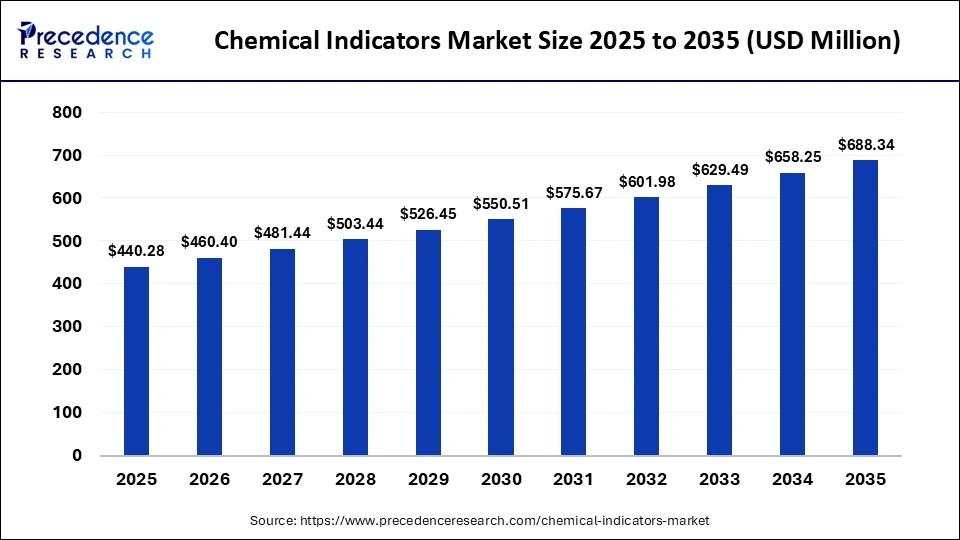
The global chemical indicators market size was calculated at USD 440.28 million in 2025 and is predicted to increase from USD 460.40 million in 2026 to approximately USD 688.34 million by 2035, expanding at a CAGR of 4.57% from 2026 to 2035. This market is growing due to rising demand for reliable sterilization and infection control solutions across healthcare, pharmaceutical, and laboratory settings.
Market Highlights
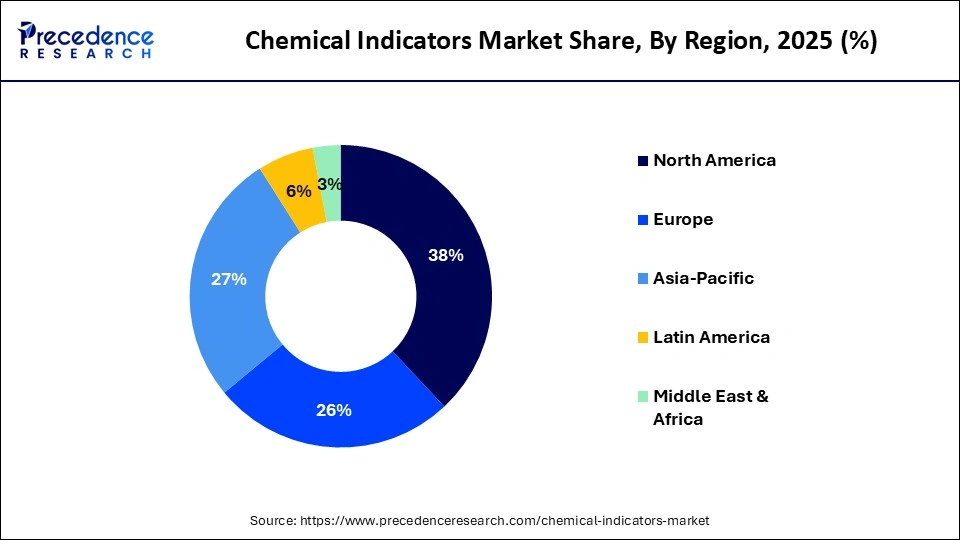
- North America dominated the market with approximately 38% share in 2025.
- Asia Pacific is expected to grow at the fastest CAGR between 2026 and 2035.
- By indicator type, the pH & acid-base indicators segment held the biggest market share of approximately 31% in 2025.
- By indicator type, the chromatographic chemical indicators segment is expected to expand at the fastest CAGR between 2026 and 2035.
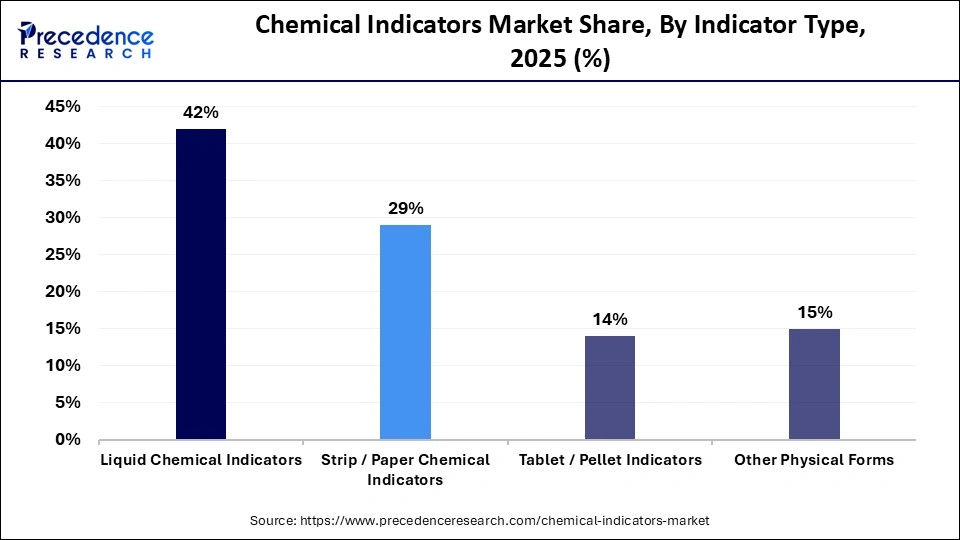
- By form, the liquid chemical indicators segment contributed the highest market share of approximately 42% in 2025.
- By form, the strip/paper chemical indicators segment is expected to grow at a strong CAGR between 2026 and 2035.
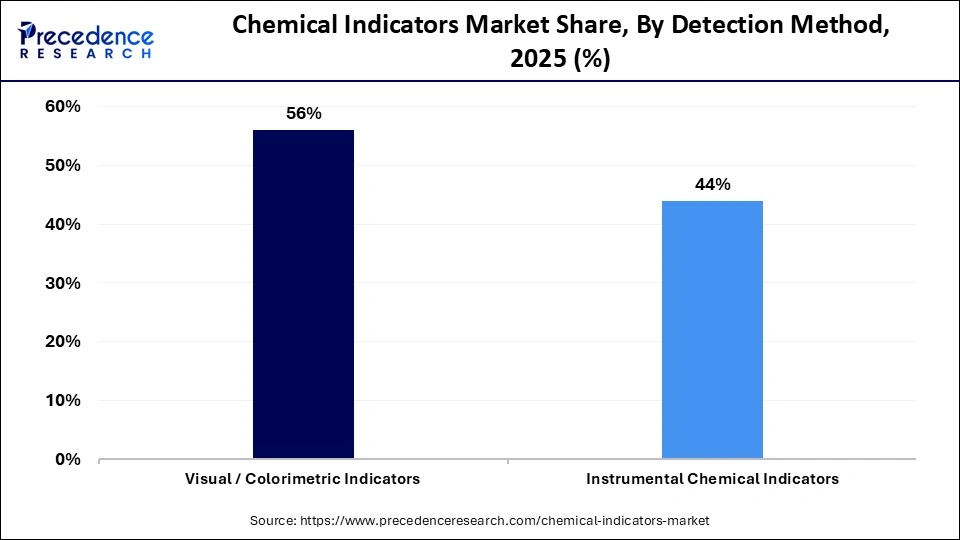
- By detection method, the visual/colorimetric indicators segment held a major market share of approximately 56% in 2025.
- By detection method, the instrumental chemical indicators segment is expected to expand at the fastest CAGR from 2026 to 2035.
- By application, the sterilization & healthcare monitoring segment generated the biggest market share of approximately 28% in 2025.
- By application, the environmental & water quality testing segment is expected to expand at the fastest CAGR between 2026 and 2035.
What are Chemical Indicators?
Chemical indicators includes reagents, dyes, indicator strips, chromatographic indicators, and chemical sensor indicators used to visually or instrumentally detect the presence, concentration, or change of specific chemical species, pH levels, temperature thresholds, oxidizers/reducers, and reaction endpoints across industries such as healthcare, pharmaceuticals, food & beverages, environmental monitoring, water treatment, and industrial processing. Chemical indicators are used in sterilization verification, analytical testing, quality control, process monitoring, and safety compliance.
The chemical indicators market is experiencing steady growth, driven by the increasing focus of laboratories, healthcare facilities, and pharmaceutical companies on infection control and effective sterilization. Chemical indicators provide rapid visual confirmation of critical parameters such as time, temperature, and exposure to sterilizing agents, making them essential for monitoring and verifying sterilization processes. The global demand for reliable chemical indicators is rising due to heightened awareness of hospital-acquired infections, stricter regulatory requirements, and the expanding pharmaceutical and medical device manufacturing sectors.
Market Trends
- Growing focus on infection control and prevention is increasing the routine use of chemical indicators in healthcare facilities.
- Rising adoption of advanced multi-parameter and integrator indicators for more precise sterilization validation.
- Increased demand from pharmaceutical and biotechnology manufacturing due to stringent regulatory compliance.
- Preference for single-use, disposable indicators to minimize contamination risks and human error.
- Technological improvements lead to faster, clearer, and more user-friendly indicator designs.
- Expansion of hospitals, clinics, and diagnostic laboratories in developing regions is driving volume demand.
- Greater emphasis on quality assurance and audit readiness across healthcare and life sciences industries.
Future Growth Outlook
- Expanding healthcare infrastructure and rising surgical procedures in emerging economies are expected to boost the need for chemical indicators.
- Growing pharmaceutical and medical device manufacturing increases the need for validated sterilization monitoring solutions.
- Development of advanced, multi-parameter, and high-accuracy chemical indicators offers scope for product differentiation.
- Increasing adoption of automated and smart sterilization systems opens opportunities for compatible indicator solutions.
- Stricter global regulations on infection control and sterilization compliance support long-term market growth.
How is AI Influencing the Chemical Indicators Market?
Artificial intelligence is gradually reshaping the chemical indicators market by enhancing sterilization monitoring precision, reliability, and effectiveness. By analyzing sterilization data, identifying trends, and flagging deviations in real time, AI-powered systems can lower the possibility of human error and incomplete sterilization cycles. AI assists medical facilities and pharmaceutical companies in streamlining sterilization procedures, guaranteeing regulatory compliance, and keeping records through audit trails when combined with chemical indicators and digital tracking technology. The adoption of AI-enabled sterilization monitoring solutions is anticipated to open new growth opportunities for the chemical indicators market as smart hospitals and automated labs continue to grow.
What Government Initiatives are Supporting the Growth of the Chemical Indicators Market?
Governments across key regions are implementing strict sterilization and infection control regulations, which directly boost the adoption of chemical indicators. The U.S. organizations like the FDA and CDC encourage hospitals and pharmaceutical companies to use chemical indicators to ensure compliance with their guidelines for sterilization monitoring in healthcare facilities. Reliable chemical indicators are in greater demand in India due to programs like the National Health Mission and hospital accreditation initiatives that prioritize safe sterilization practices. Furthermore, by making these goods widely available and reasonably priced, regulatory support for regional production and quality standards reinforces market expansion.
How does investing in chemical indicators deliver a strong ROI?
Investing in chemical indicators delivers a strong return on investment (ROI) by helping organizations prevent costly sterilization failures and infection-related risks. These indicators provide quick, reliable verification of sterilization conditions, reducing the likelihood of hospital-acquired infections, product recalls, regulatory penalties, and reprocessing costs. Their low upfront cost, ease of use, and minimal training requirements make them highly cost-effective compared to the potential financial and reputational losses from non-compliance. In addition, chemical indicators improve operational efficiency and workflow consistency, enabling healthcare facilities and manufacturers to maintain compliance while optimizing time, resources, and overall quality outcomes.
Market Scope
| Report Coverage | Details |
| Market Size in 2025 | USD 440.28 Million |
| Market Size in 2026 | USD 460.40 Million |
| Market Size by 2035 | USD 688.34 Million |
| Market Growth Rate from 2026 to 2035 | CAGR of 4.57% |
| Dominating Region | North America |
| Fastest Growing Region | Asia Pacific |
| Base Year | 2025 |
| Forecast Period | 2026 to 2035 |
| Segments Covered | Indicator Type, Form, Detection Method, Application, and Region |
| Regions Covered | North America, Europe, Asia-Pacific, Latin America, and Middle East & Africa |
Segment Insights
Indicator Type Insights
What made pH & acid-base indicators the dominant segment in the market?
The pH & acid-base indicators segment dominated the chemical indicators market with a major share of 31% in 2025. This is because of their widespread use in pharmaceuticals, healthcare labs, and educational settings. These indicators are easy to use, reasonably priced, and incredibly dependable for tracking acidity and alkalinity in chemical reactions, sterilization procedures, and quality control applications. They are even more dominant because they are simple to understand and work well with standard testing methods.
The chromatographic chemical indicators segment is expected to grow at the fastest CAGR in the coming years, driven by the growing need for multi-parameter analysis and increased precision. These indicators are appropriate for sophisticated laboratory and pharmaceutical applications because they provide improved accuracy and detailed separation capabilities. Chromatographic indicators are becoming more widely used as a result of increased focus on regulatory compliance and quality assurance.
Form Insights
Why did the liquid chemical indicators segment dominate the chemical indicators market?
The liquid chemical indicators segment dominated the market with 42% market share in 2025, thanks to their uniform reaction properties and highly sensitive nature. In labs and medical environments where accurate measurement and prompt action are essential, liquid indicators are frequently utilized. Their strong market position is further reinforced by their compatibility with automated and high-throughput testing systems.
The strip/paper chemical indicators segment is expected to grow at the fastest CAGR in the coming years due to their affordability, portability, and ease of use. These indicators are becoming increasingly popular for quick on-site testing on water quality assessment, environmental monitoring, and healthcare. Strong growth is being driven by the growing demand for field-based and point-of-care testing solutions.
Detection Method Insights
Why did the visual/colorimetric indicators segment dominate the chemical indicators market?
The visual/colorimetric indicators segment dominated the market with the largest share of 56% in 2025. This is because they don't require specialized equipment and offer quick, readable results. They are perfect for routine laboratory testing, healthcare applications, and sterilization monitoring because of their dependability and simplicity to reduce operating expenses, and little training is another factor that supports broad adoption. Additionally, these indicators comply with regulatory standards from organizations like ISO, FDA, and CDC, ensuring quality and safety assurance. Their proven reliability and long-standing performance further reinforce their dominance in the market.
The instrumental chemical indicators segment is expected to grow at the fastest CAGR during the projection period, driven by growing automation and digitalization in medical facilities and labs. Higher accuracy of data logging and traceability is provided by these indicators, which support strict audit and regulatory requirements. Rapid growth is being driven by an increasing number of smart labs and AI-integrated monitoring systems.
Application Insights
What made sterilization & healthcare monitoring the leading segment in the chemical indicators market?
The sterilization & healthcare monitoring segment led the market with a 28% share in 2025 due to the critical need for infection control in hospitals, clinics, and laboratories. In hospitals, clinics, and surgical centers, chemical indicators are crucial for verifying sterilization procedures. The rising incidence of hospital-acquired infections and the growing adoption of advanced sterilization technologies have further fueled demand in this segment. Additionally, healthcare facilities prioritize reliable and rapid monitoring solutions, making sterilization & healthcare monitoring the largest and most dominant application area for chemical indicators.
The environmental & water quality testing segment is expected to grow at the fastest CAGR in the coming years due to increasing concerns over water contamination and environmental pollution. Chemical indicators are frequently used to keep an eye on pollution levels, chemical contamination, and water safety. Chemical indicators provide rapid, reliable, and cost-effective detection of sterilants, chemicals, and pollutants, which is crucial for maintaining safe water supplies and minimizing environmental hazards. Additionally, rising awareness about public health and environmental sustainability is driving the adoption of these indicators in water treatment plants, laboratories, and environmental testing facilities.
Regional Insights
How Big is the North America Chemical Indicators Market Size?
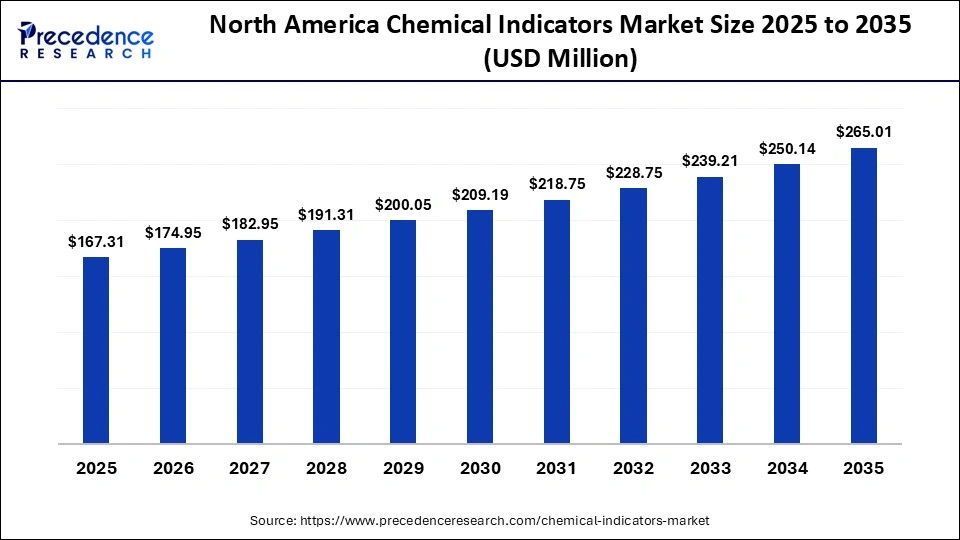
The North America chemical indicators market size is estimated at USD 167.31 million in 2025 and is projected to reach approximately USD 265.01 million by 2035, with a 4.71% CAGR from 2026 to 2035.
What made North America the dominant region in the chemical indicators market?
North America dominated the chemical indicators market with a major revenue share of 38% in 2025 because of its sophisticated healthcare system and robust biotechnology and pharmaceutical industries. Significant R&D investments, strict regulatory frameworks, and widespread adoption of sterilization standards all contribute to regional dominance. The region's leadership in the market is also strengthened by the extensive use of chemical indicators in laboratories and healthcare settings.
What is the Size of the U.S. Chemical Indicators Market?
The U.S. chemical indicators market size is calculated at USD 125.48 million in 2025 and is expected to reach nearly USD 200.08 million in 2035, accelerating at a strong CAGR of 4.78% between 2026 and 2035.
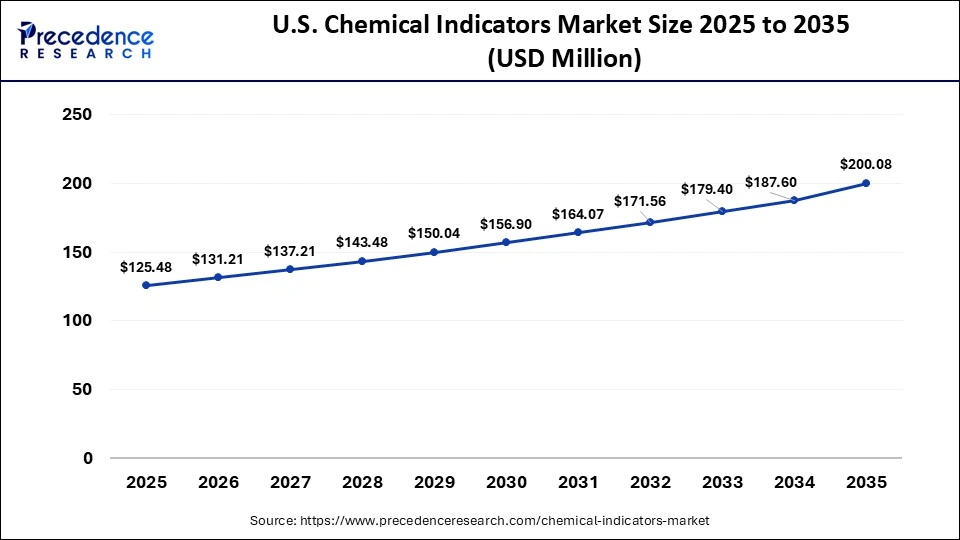
U.S. Chemical Indicators Market Trends
The market in the U.S. is driven by strict safety and sterilization regulations in the pharmaceutical and healthcare sectors. Chemical indicators are becoming increasingly necessary to guarantee process reliability due to the widespread use of advanced sterilization techniques like steam, ethylene oxide, and hydrogen peroxide. To ensure compliance and reduce contamination risks, leading hospitals and pharmaceutical companies favor single-use chemical indicators. The presence of a large number of industry participants and steady R&D investments supports the market expansion in the U.S.
What makes Asia Pacific the fastest-growing region in the chemical indicators market?
Asia Pacific is expected to grow at the fastest CAGR in the coming years, due to rapid industrialization and growing healthcare infrastructure. The demand for chemical indicators is rising due to increased investments in pharmaceuticals, environmental monitoring, and water quality testing. Regional market growth is also accelerated by rising awareness of infection control and regulatory advancements in emerging economies.
India Chemical Indicators Market Trends
India's chemical indicators market is witnessing rapid growth because of the growth of the pharmaceutical and healthcare industries. The growing number of hospitals and diagnostic facilities, along with growing awareness of sterilization safety are driving up demand. Chemical indicators are more widely available in urban and semi-urban areas thanks to affordable solutions and localized manufacturing options. Market adoption in India is being further supported by government initiatives to upgrade healthcare infrastructure as well as partnerships between domestic and foreign businesses.
Why Europe is Growing in the Chemical Indicators Market?
Europe is expected to grow at a notable CAGR in the market. The sterilization standards and the expansion of single-use medical items increase demand for chemical indicators. Advancements in sustainable inks and the focus on avoiding contamination increase the use of chemical indicators. The higher utilization of eco-friendly chemical indicators drives the market growth.
Germany Market Trends
Germany is leading the market in the European region. Stricter guidelines for environmental safety and the interest in green chemistry increase the use of chemical indicators. The need for precision in pharmaceutical bases and the emphasis on quality assurance increase demand for chemical indicators. The burgeoning HAIs concerns and the need for sterilization during drug packaging increase demand for chemical indicators. The expansion of prefillable syringes and the advancements, such as multi-variable indicators, support the overall growth of the market.
How is the Latin America Chemical Indicators Market Evolving?
Latin America is expected to grow at a lucrative rate during the forecast period. It is driven heavily by infection control in healthcare along with sterilization verification, and is evolving via a strong regional push toward digitalization, smart packaging, and also eco-friendly inks. Rising surgical volumes, expanding hospital infrastructure, alongside stringent international patient safety protocols are the main local catalysts driving demand.
Brazil Chemical Indicators Market Analysis
Brazil's robust pharmaceutical and cosmetic manufacturing sectors require strict quality assurance and even rigorous environmental monitoring, necessitating highly reliable chemical indicator systems. Meanwhile, specialized filters are now, incorporated to prevent bacterial toxins from passing into the individual's bloodstream during fluid exchange.
What Drives the Chemical Indicators Market in the Middle East and Africa?
The Middle East and Africa are expected to grow at a notable CAGR during the forecast period. The need for sterilization monitoring in hospitals and the awareness of infection control increase the demand for chemical indicators. The growing chemical manufacturing and the industrialization in the MEA countries increase the use of chemical indicators. The growing surgical volume and the need for strong sterilization verification increase the use of chemical indicators, boosting the overall market growth.
Saudi Arabia Market Trends
Saudi Arabia's growth in the market is driven by the expansion of clinic infrastructure. The emphasis on patient safety and the expansion of the petrochemical industry increase the adoption of chemical indicators. The use of specialty chemicals in projects like Jeddah and the explosion of surgical centers increases the adoption of chemical indicators. The burgeoning medical tourism increases the use of chemical indicators. The innovations in the indicator formula support the overall market growth.
Chemical Indicators Market Value Chain Analysis
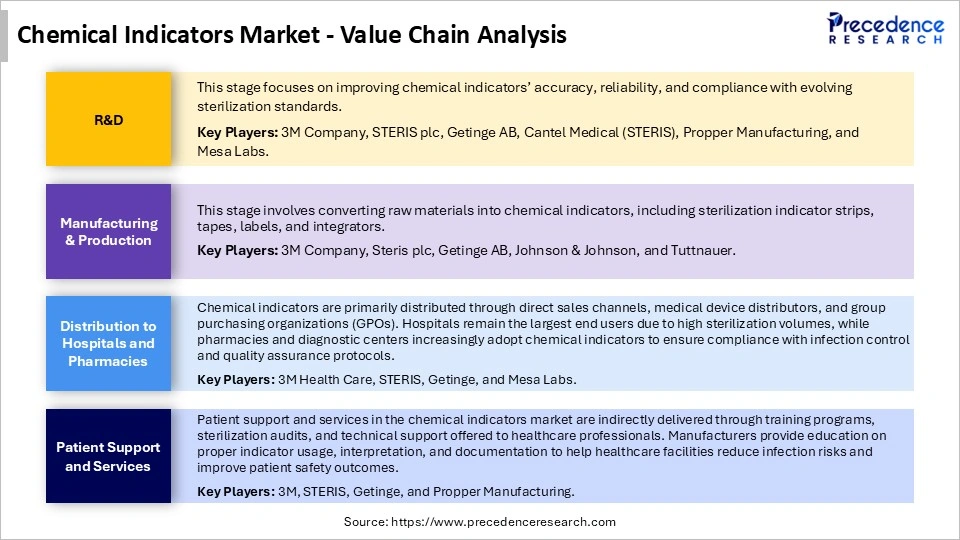
Who are the Major Players in the Global Chemical Indicators Market?
The major players in the chemical indicators market include 3M Company, STERIS Plc, Getinge, Mesa Laboratories, Inc, Solventum, ASP, Terragene S.A., Thermo Fisher Scientific, Inc, Crosstex International, Inc., Propper Manufacturing Co., Inc., gke GmbH, Tempil (LA-CO Industries, Inc.), NiGK Corporation, Riken Chemical Co., Ltd, ETIGAM B.V., and Tuttnauer.
Top Companies and Their Offerings
- 3M Company: 3M provides a comprehensive portfolio of sterilization monitoring and even chemical indicators designed to verify that the vital parameters of sterilization, such as time, temperature, and even sterilant presence, have been met.
- STERIS Plc: STERIS Plc provides a comprehensive portfolio of chemical indicators programmed to monitor and verify the effectiveness of sterilization and even biodecontamination processes. Their single-use consumables utilize physical or chemical changes to offer visual confirmation that critical sterilization parameters such as time, temperature, and sterilants have been met.
- Mesa Laboratories, Inc: Mesa Laboratories, Inc. solutions thus, cater to healthcare facilities, medical device producrers, and the biopharmaceutical industry, monitoring various parameters such as steam, ethylene oxide, hydrogen peroxide, and dry heat.
- Thermo Fisher Scientific, Inc: Thermo Fisher Scientific provides a comprehensive portfolio for the chemical indicators market, thus, serving analytical chemistry, clinical applications, and industrial processing. Their core providings span laboratory reagents, specialized indicators, and even advanced chemical identification hardware.
- Crosstex International, Inc.: Crosstex International, Inc. provides a comprehensive portfolio of sterilization monitoring products for the market. Their providings cover multiple sterilization processes and thus, include process indicators, indicator tapes, integrating indicators, and emulators.
- Propper Manufacturing Co., Inc.: Propper Manufacturing Co., Inc. provides a comprehensive suite of sterility assurance products for the chemical indicators market, thus, spanning ISO-compliant Type 1 process indicators to Type 5 integrating indicators. Their core solutions are programmed for hospitals, dental clinics, and even biotechnology labs.
Recent Developments
- In August 2025, Advanced Sterilization Products (ASP) announced the launch of its BIOTRACE Instant Read Steam System. This new system is noted for providing the fastest FDA-cleared steam biological indicator readout in the U.S. market, delivering results in seven seconds, a significant reduction from typical industry wait times of 20 minutes or more. (Source: https://finance.yahoo.com)
- In June 2025, Solventum announced the launch of its Attest Super Rapid VH2O2 Clear Challenge Pack. This solution is the first FDA-cleared preassembled test pack for routine monitoring across multiple sterilizer brands and models, integrating both a biological and chemical indicator.(Source: https://www.prnewswire.com)
Segments Covered in the Report
By Indicator Type
- pH & Acid-Base Indicators
- Oxidation/Redox Indicators
- Chromatographic Chemical Indicators
- Temperature/Thermochromic Indicators
- Sterilization Chemical Indicators
- Other Chemical Indicator
By Form
- Liquid Chemical Indicators
- Strip/Paper Chemical Indicators
- Tablet/Pellet Indicators
- Other Physical Forms
By Detection Method
- Visual/Colorimetric Indicators
- Instrumental Chemical Indicators
By Application
- Sterilization & Healthcare Monitoring
- Sterilizer indicator strips
- Hospital process checks
- Environmental & Water Quality Testing
- Food & Beverage Quality Control
- Industrial & Manufacturing Process Monitoring
- Pharmaceutical & Analytical Testing
- Other Applications
By Region
- North America
- Europe
- Asia-Pacific
- Latin America
- Middle East & Africa
For inquiries regarding discounts, bulk purchases, or customization requests, please contact us at sales@precedenceresearch.com
Frequently Asked Questions
Tags





Ask For Sample
No cookie-cutter, only authentic analysis – take the 1st step to become a Precedence Research client
 Get a Sample
.webp)



 sales@precedenceresearch.com
 Schedule a Meeting
