



Citronellol Market Size, Share, Trends, Companies, and Forecast 2026-2035
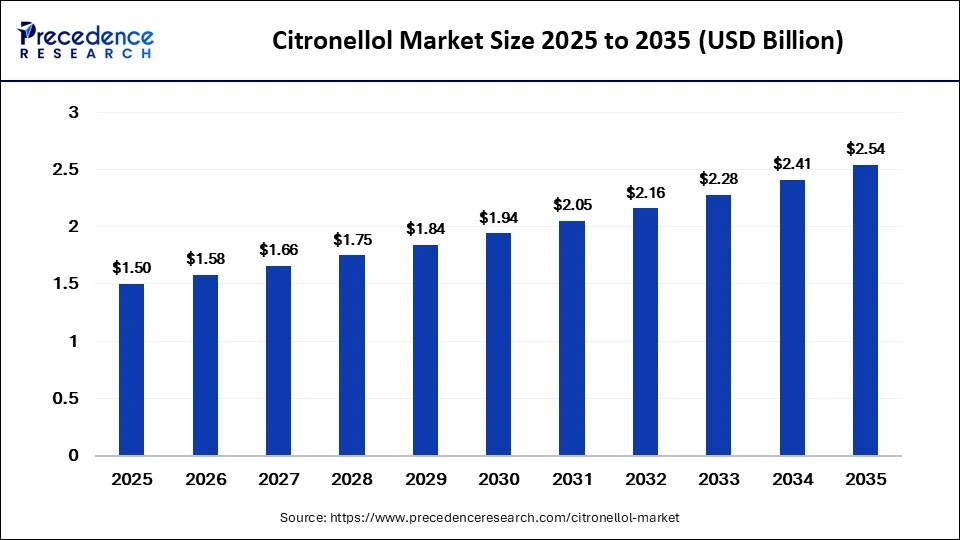
Vidyesh Swar, a Chemical and Materials Industry Expert, estimates the citronellol market at USD 1.58 billion in 2026, with the market projected to reach USD 2.54 billion by 2035 at a CAGR of 5.20%. Major citronellol market companies such as BASF SE, Givaudan SA, International Flavors & Fragrances Inc are competing across key material and application segments, including By Source, By Purity Level, By Form, By End-Use Industry.
Source: https://www.precedenceresearch.com/citronellol-market
 Get a Sample
 Table Of Content


Citronellol Market Size and Forecast 2026 to 2035
The global citronellol market size is predicted to increase from USD 1.58 billion in 2026 to approximately USD 2.54 billion by 2035, expanding at a CAGR of 5.20% from 2026 to 2035. The market is driven by the rapidly increasing consumer preference for natural, plant-driven ingredients in personal care and cosmetics.
Key Takeaways
- North America dominated the global citronellol market with a share of 42% in 2026.
- Asia-Pacific is expected to grow at the fastest CAGR of 7.2% during the forecast period.
- By source, the natural citronellol segment led the global market with a share of 62% in 2026.
- By source, the synthetic citronellol segment held 38% of the market share in 2026 and is expected to grow at a 3.2% CAGR between 2026 and 2035.
- By purity, the ≤95% purity segment accounted for a revenue share of 67% in the market in 2026.
- By purity, the >95% purity segment is expected to grow at the fastest CAGR of 6.9% between 2026 and 2035.
- By form, the liquid segment accounted for a revenue share of 73% in the citronellol market in 2026.
- By form, the solid segment is expected to grow at a CAGR of 4.1% between 2026 and 2035.
- By end-use industry, the fragrances and perfumery segment accounted for a revenue share of 42% in the market in 2026.
- By end-use industry, the personal care and cosmetics segment is expected to grow at the fastest CAGR of 6.4% between 2026 and 2035.
Market Overview
The citronellol industry refers to the global industry centered on the production, distribution, and sale of citronellol, a naturally occurring fragrant compound found in plants such as rose, geranium, and lemongrass. The market is mainly driven by the expanding cosmetics and personal care industries, a surging user shift toward plant-based and even eco-friendly products, and its widespread acceptance as a natural fragrance enhancer and insect repellent.
How is AI Influencing the Citronellol Market?
AI is changing the global market by shifting production from natural extraction to sustainable biomanufacturing and optimizing product applications. Machine learning algorithms and physics-informed neural networks are reshaping how citronellol is produced. By optimizing metabolic pathways in microbes, like engineered yeast, AI maximizes the carbon-to-citronellol yield. Algorithms assist chemical engineers in calculating synergistic blends and delivery formats. This solves historic citronellol volatility issues and creates longer-lasting wearable repellents, cosmetics, and household products.
Citronellol Market Trends
- The push for sustainable and eco-friendly user goods remains the strongest driver of the citronellol industry. As users increasingly seek transparent, clean-label personal care and even cosmetic products, producers are reformulating their offerings to replace synthetic chemicals with botanical extracts.
- Citronellol's sweet, floral aroma makes it a vital ingredient in perfumes, lotions, and soaps. The growth of the global fragrance market, driven by rising disposable incomes, is heavily supporting demand, mainly in the high-end personal care and luxury perfume sectors.
- With the rising popularity of holistic health along with wellness practices, citronellol is seeing increased utilization in aromatherapy and home care applications such as diffusers and scented candles. Younger demographics, such as Millennials, are major contributors to this trend, driving the popularity of natural healing and sensory-enhanced products.
Market Dynamics
Drivers
Booming Demand for Natural and Plant-based Ingredients
The booming demand for natural and plant-based ingredients is the primary driver for the citronellol market because consumers are actively shifting away from synthetic chemicals in favor of safer, eco-friendly, and transparent "clean-label" products. Consumers are increasingly wary of the potential health risks and skin irritations linked with synthetic chemicals and artificial additives. Plant-based citronellol, extracted naturally from essential oils such as citronella, rose, and geranium, provides a safer, non-toxic alternative.
Restraint
Consumer Goods Allergen Concerns
Consumer goods allergen concerns act as a key restraint in the market because the ingredient is a recognized contact allergen. When exposed to air, pure citronellol oxidizes and becomes highly sensitizing, forcing producers to navigate strict labeling regulations, formulation limits, and consumer aversion to potential skin reactions. Pure citronellol is largely non-allergenic; however, when the compound autoxidizes upon exposure to air, it forms hydroperoxides that are known to trigger allergic contact dermatitis in sensitive individuals.
Opportunity
Eco-friendly Home Care Products
Eco-friendly home care products represent a massive opportunity for the global market because of a widespread consumer change toward non-toxic, plant-based cleaning alternatives. Citronellol serves as a versatile, sustainable ingredient that adds value to household formulations. Users are increasingly avoiding synthetic chemicals in household cleaners because of health and environmental concerns. Citronellol, derived naturally from plants such as citronella, rose, and geranium, offers a pleasant, floral, and citrus-like aroma, making it highly attractive for "clean-label" dish soaps, laundry detergents, and even surface sprays.
Market Segmentation Analysis
Source Insights
The Natural Citronellol Segment Held the Largest Market Share of 62% in 2026
The natural citronellol segment dominated the citronellol market with a share of 62% in 2026, owing to its clean-label product demand, natural cosmetics expansion, and sustainability initiatives. Health organizations and governments globally have implemented regulations restricting the usage of synthetic chemicals, thus encouraging the use of safer, green-friendly substitutes such as naturally derived citronellol.
The synthetic citronellol segment held a 38% share of the market in 2026 and is expected to grow at the fastest CAGR of 3.2% during the projection period. This is mainly due to a reliable supply chain, industrial-scale production, and the use in mass-market formulations. Synthetic formulation guarantees a uniform fragrance and chemical profile, which is essential for large-scale production in skincare, home care, and perfume industries. Beyond its sweet, floral scent, synthetic citronellol is highly valued for its antifungal, antimicrobial, and insect-repelling properties.
Purity Insights
The ≤95% Purity Segment Held the Largest Market Share of 67% in 2026
The ≤95% purity segment dominated the citronellol market with a share of 67% in 2026, owing to cost-effective formulations, household products demand, large-volume applications, and industrial fragrance usage. With a strong sweet-citrus scent, citronellol, usually derived from citronella and rose-rich essential oils, serves as a highly effective, natural mosquito and pest repellent. Awareness of the health hazards of conventional chemical repellents has fueled this shift.
The >95% purity segment held a 33% share of the market in 2026 and is expected to grow at the fastest CAGR of 6.9% during the projection period. This is mainly due to premium fragrance applications, fine chemicals demand, and pharmaceutical applications. Growing knowledge of the potential health and environmental risks of synthetic chemicals has spurred the need for safer, green-friendly substitutes. High-purity citronellol provides excellent antimicrobial activity with a strong safety profile.
Form Insights
Why Did the Liquid Segment Lead the Citronellol Market in 2026?
The liquid segment held a dominant position in the market, with a share of 73% in 2026, driven by easy formulation integration, high fragrance industry demand, and better handling characteristics. Users are increasingly avoiding synthetic chemical additives in favor of green, plant-derived alternatives. Citronellol acts as a vital, skin-friendly fragrance enhancer and thus, masking agent in high-end perfumes and skincare lines.
The solid segment held a 27% share of the market in 2026 and is expected to grow at the fastest CAGR of 4.1% during the projection period. This is mainly due to the controlled-release applications, stability requirements, and industrial processing needs. Citronellol is valued for its sweet, floral scent and also excellent skin tolerability. This has led to increased interest in premium perfumes, lotions, and even shampoos.
End-Use Industry Insights
What Made the Fragrances and Perfumery Dominant Segment in the Citronellol Market?
The fragrances and perfumery segment dominated the global market with the largest share of 42% in 2026. This is due to the fine fragrance demand, premium perfume launches, natural aroma ingredient adoption, and luxury brand growth. As a recognized, safe, and botanical insect-repelling agent, citronellol is highly used in eco-friendly bug sprays, candles, and even outdoor-use personal care items.
Citronellol Market Share, By End-Use Industry, 2026-2035 (%)
| End-Use Industry | 2026 | 2035 | CAGR (%) |
| Fragrances & Perfumery | 42.00% | 43.00% | 5.50% |
| Personal Care & Cosmetics | 25.00% | 28.00% | 6.40% |
| Household Products | 16.00% | 14.00% | 4.00% |
| Food & Beverage Flavoring | 8.00% | 8.50% | 5.80% |
| Pharmaceuticals | 4.00% | 3.50% | 4.50% |
| Others | 5.00% | 3.00% | 3.20% |
The personal care and cosmetics segment held a 25% share of the market in 2026 and is expected to grow at the fastest CAGR of 6.4% during the projection period. This is mainly due to the clean beauty trend, skin and hair care growth, and natural ingredient demand. Citronellol is broadly valued for its pleasing, sweet, floral scent. It acts as a core ingredient in high-end perfumes, body mists, and creams. Moreover, its proven skin tolerability and antimicrobial properties make it a safe and functional additive in shampoos, lotions, and soaps.
The household products segment held a 16% share of the market in 2026 and is expected to grow at a CAGR of 4% during the projection period. This is due to the demand for air fresheners, cleaning product formulations, and odor control applications. With a growing push away from synthetic repellents such as DEET, natural compounds derived from citronella, such as citronellol, are increasingly used in household bug sprays and pest management.
Market Regional Analysis: North America, Europe, Asia-Pacific
Which Factors Drive the Citronellol Market in North America?
North America held a major market share of 42% in 2026. This is due to a strong fragrance and perfume manufacturing industry, high consumption of personal care products, and a growing need for natural aroma ingredients. Consumers are increasingly seeking organic, non-toxic, plant-derived products in their daily skincare, perfume, and home care routines, thus avoiding synthetic chemicals and artificial additives.
U.S. Citronellol Market Size and Growth 2026 to 2035
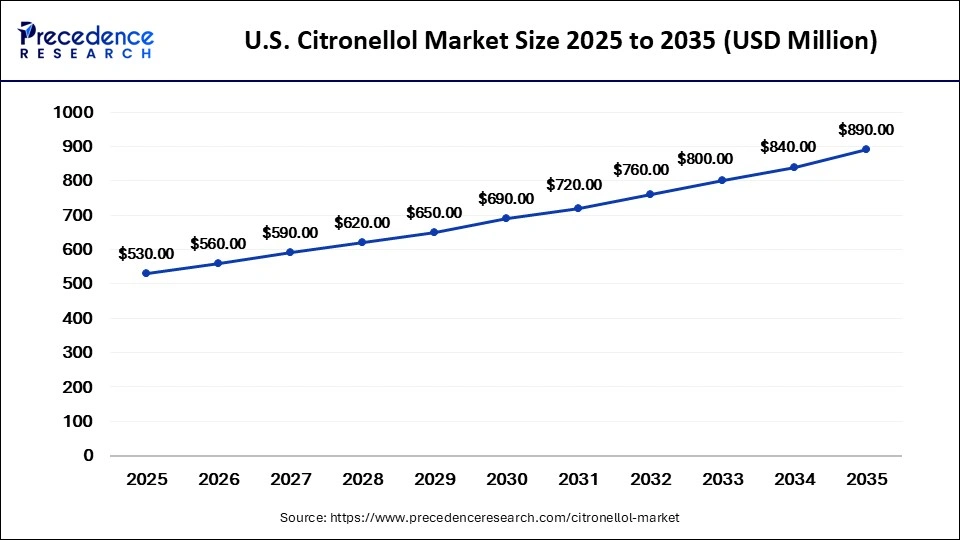
The U.S. citronellol market size was evaluated at USD 560.00 million in 2026 and is projected to reach around USD 890.00 million by 2035, growing at a CAGR of 4.70% from 2026 to 2035.
U.S. Market Analysis
The U.S. market is driven by a major user shift from synthetic chemicals to natural, plant-based products. This growth is heavily supported by rising need across the personal care, cosmetics, and fragrance industries, as well as eco-friendly household and aromatherapy products.
How is Europe Growing in the Citronellol Market?
Europe held the second-largest market share of 25% in 2026 and is expected to grow at a notable CAGR of 4.8% during the projection period, driven mainly by the large perfume and cosmetics industry, a preference for sustainable fragrance ingredients, and stringent regulations favoring natural ingredients. Moreover, increasing stress levels in working populations have led to higher use of essential oils in aromatherapy to relieve anxiety, contributing to market expansion.
UK Market Analysis
The UK market is primarily driven by a massive user shift toward clean beauty, natural wellness, and plant-driven products. Manufacturers are increasingly replacing synthetic chemicals with natural ingredients such as citronellol.
Will Asia-Pacific Grow in the Citronellol Market?
Asia-Pacific held 24% of the market share in 2026 and is expected to grow at the fastest CAGR of 7.2% during the projection period, driven by the rapid growth of the cosmetics industry and expanding essential oil production base. Citronellol and related essential oils are increasingly used in eco-friendly household detergents, cleaning products, and natural insect repellents. Expanding extraction capabilities, favorable climatic conditions for cultivation, and sustainable farming practices in major Asian countries have lowered production expenses while ensuring a steady supply of raw materials.
China Market Analysis
The growth of the Chinese market is mainly fueled by the rising consumer shift toward plant-based, clean-label ingredients, expanding cosmetics and fragrance industries, and a growing need for natural insect repellents.
What Drives the Citronellol Market in Latin America?
Latin America held a 5% share of the market in 2026 and is expected to grow at a significant CAGR of 4.8% during the projection period, driven by abundant natural feedstock availability and the growing beauty and personal care industry. Rising health consciousness and knowledge of essential oil benefits, such as relief from stress and anxiety, have increased the use of citronella derivatives in home care and even household cleaning products.
Brazil Market Analysis
The growth of the market in Brazil is mainly driven by an increasing consumer shift toward natural, plant-based products in cosmetics and household care. In addition, the high prevalence of mosquito-borne illnesses in the region has significantly boosted the need for natural, eco-friendly insect repellents.
How is the Opportunistic Rise of the Middle East and Africa in the Citronellol Market?
The Middle East and Africa held a 4% share of the market in 2026 and are expected to grow at a notable CAGR of 4.1% during the projection period, driven by the growing personal care sector, rising need for luxury fragrances, and growth in regional cosmetics manufacturing. Consumers are changing from synthetic products to plant-based, natural, and organic substitutes. Citronellol is broadly used as a natural fragrance enhancer and a botanical base in soaps, skin care, and home care items.
UAE Market Analysis
The UAE market is driven by the surging need for natural, plant-based ingredients in the region's booming cosmetics and personal care sector. Consumers are increasingly shifting toward organic alternatives, boosting the demand for botanical fragrances, aromatherapy, and eco-friendly insect repellents.
Market Competitive Landscape: Leading Companies and Strategies
The citronellol market is moderately consolidated, with competition driven by product purity, sourcing capabilities, pricing, and supply-chain reliability. Major participants include BASF, Symrise, Kao Corporation, Givaudan, and Takasago International Corporation. Regional producers in the Asia-Pacific also contribute significantly via cost-effective production. Market players focus on expanding natural and sustainably sourced citronellol portfolios to meet growing demand from fragrances, cosmetics, personal care, and household products. Strategic partnerships, capacity expansions, and innovation in bio-driven ingredients remain important competitive strategies.
Citronellol Market Companies
- BASF SE
- Givaudan SA
- International Flavors & Fragrances Inc.
- Symrise AG
- Takasago International Corporation
- Robertet SA
- Treatt plc
- Kao Corporation
- Privi Speciality Chemicals Limited
- Bo International
- Jiangxi Global Natural Spice Co., Ltd.
- Lubon Industry Co., Ltd.
- Crescent Fragrances Pvt. Ltd.
- Jayshree Aromatics Pvt. Ltd.
- Luyuan Natural Perfume Oil Refinery
Recent Development Citronellol Market (2025-2026)
- In September 2025, researchers from Jouf University and the University of Lahore evaluated the effect of citronellol and its synthesized silver nanoconjugates on glioblastoma cell proliferation. They found that the cytotoxicity and inhibition index of glioblastoma cells were increased by the phytocompounds coupled with silver nanoparticles. (Source: https://www.nature.com)
Segments Covered in the Report
By Source
- Natural Citronellol
- Synthetic Citronellol
By Purity Level
- ≤95% Purity
- >95% Purity
By Form
- Liquid
- Solid
By End-Use Industry
- Fragrances and Perfumery
- Personal Care and Cosmetics
- Household Products
- Food and Beverage Flavoring
- Pharmaceuticals
- Others
By Region
- North America
- Latin America
- Europe
- Asia-Pacific
- Middle East and Africa
For inquiries regarding discounts, bulk purchases, or customization requests, please contact us at sales@precedenceresearch.com
Frequently Asked Questions
Tags





Ask For Sample
No cookie-cutter, only authentic analysis – take the 1st step to become a Precedence Research client
 Get a Sample




 sales@precedenceresearch.com
 Schedule a Meeting
