



Middle East Prebiotics Market Size is USD 215.91 Million in 2026
Middle East Prebiotics Market (By Ingredients: Inulin, Fructo-oligosaccharides, Mannan-oligosaccharides, Galacto-oligosaccharides, Xylo-oligosaccharides, Isomalto-oligosaccharides, Resistant Starch, Resistant Maltodextrin, Beta-glucan, Others; By Source: Roots, Fruits & Vegetables, Grains, Others; By Form: Powder/Crystal, Liquid; By Functionality: Gut Health, Cardiovascular Health, Bone Health, Immunity, Weight Management, Others; By Application: Food & Beverages, Dietary Supplements, Animal Feed) Industry Size, Share, Growth, Trends 2026 to 2035.


The Middle East prebiotics market size was estimated at USD 190.73 million in 2025 and is expanding at a CAGR of 13.2% from 2026 to 2035. Due to increasing consumer focus on digestive health, rising demand for functional and fortified foods, and improving awareness about immunity, advancements in nutritional and expanding retail availability are supporting market growth.
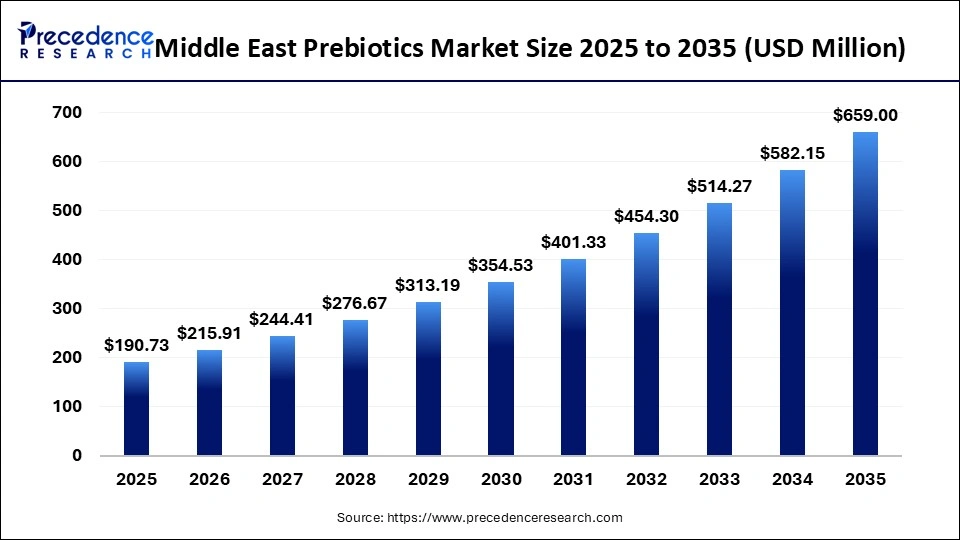
Middle East Prebiotics Market Statical Scope
| Reports Attributes | Statistics |
| Market Size in 2025 | USD 190.73 Million |
| Market Size in 2026 | USD 215.91 Million |
| Market Size by 2035 | USD 659 Million |
| CAGR 2026 to 2035 | 13.2% |
| Base Year | 2025 |
| Forecast Period | 2026 to 2035 |
Technological advancements in the Middle East probiotics markets are driven by innovations in ingredient development, such as advanced fibers like inulin, FOS, and GOS that enhance gut health benefits. Improved processing and techniques ensure better stability in hot climates and maintain product quality. Additionally, manufacturers are focusing on formulation technologies that improve taste, texture, and solubility, enabling easy incorporation into functional food , beverages, and dietary supplements while meeting clean label requirements.
Middle East Prebiotics Market Share, By Country, 2025 (%)
- UAE- Due to rising awareness of gut health, an increasing demand for functional beverages. A health-conscious population and a government focused on preventive health care are further encouraging product innovation and adoption.
- Saudi Arabia- Due to increasing health awareness and a growing fortune towards functional foods and supplements, and rising lifestyle-related conditions, government initiatives promoting preventive health care are encouraging consumers to adopt gut-health-focused nutritional products.
Middle East Prebiotics Market Share, By Ingredients, 2025 (%)
| Segments | Shares (%) |
| Inulin | 34% |
| Fructo-oligosaccharides | 17% |
| Mannan-oligosaccharides | 8% |
| Galacto-oligosaccharides | 4% |
| Xylo-oligosaccharides | 6% |
| Isomalto-oligosaccharides | 7% |
| Resistant Starch | 9% |
| Resistant Maltodextrin | 5% |
| Beta-glucan | 10% |
- Inulin- The segment dominated the market with a 34% share, supported by its well-known benefits for digestive health and gut microbiota balance. Its wide use in functional foods, dairy product , and dietary supplements continues to drive steady consumer demand.
- Fructo-oligosaccharides- The segment accounted for 17% of the total market share. Driven by its role in supporting gut health and digestion, it's growing for use in functional food, beverages, and supplements, and is contributing to steady demand across the region.
- Mannan-oligosaccharides- The segment accounted for 8% of the total market share, supported by its role in gut health and immune function. Its application in animal feed and functional nutrition products continues to support steady growth in demand.
- Galacto-oligosaccharides- The segment accounted for 4% of the total market share. Driven by its effectiveness in supporting digestive health and beneficial gut bacteria, its growing use of infant nutrition, dairy products, and functional foods is boosting demand.
- Xylo-oligosaccharides- The segment accounted for 6% of the total market share, supported by its strong prebiotic efficiency at low doses, and its increasing use in functional foods and dietary supplements is gradually driving consumer interest and market growth.
- Isomalto-oligosaccharides- The segment accounted for 7% of the total market share, due to its mild, sweet, and digestive health benefits. Its expanding use in low-calorie beverages and nutritional supplements is supporting steady market demand.
- Resistant Starch- The segment accounted for 9% of the total market share, supported by its role in gut health and aiding digestion, its use in functional foods and fiber interest products is gradually increasing consumer adoption.
- Resistant Maltodextrin- The segment accounted for 5% of the total market share, due to its benefits in supporting digestive health and blood sugar management. Its growing use of functional foods and beverages and private enriched formulations is supporting steady demand.
- Beta-glucan- The segment accounted for 10% of the total market share, supported by its benefits in improving gut health and supporting immunity. Its increasing inclusion in functional food cereals and dietary supplements is helping drive steady consumer demand.
Middle East Prebiotics Market Share, By Source, 2025 (%)
| Segments | Shares (%) |
| Roots | 50% |
| Fruits & Vegetables | 20% |
| Grains | 30% |
- Roots- The segment dominated the market with a 50% share, due to the high natural content of prebiotic fibers in root-based sources and their widespread use in functional food and nutritional applications.
- Fruits & Vegetables- The segment accounted for 20% of the total market share, supported by its natural fiber content and health benefits. They are growing use of functional foods and clean label products is contributing to steady consumer demand.
- Grains- The segment accounted for 30% of the total market share. Due to its rich fiber content and digestive health benefits, its widespread use in cereals, bakery items, and functional foods continues to support consistent consumer demand.
Middle East Prebiotics Market Share, By Form, 2025 (%)
| Segments | Shares (%) |
| Powder/Crystal | 57% |
| Liquid | 43% |
- Powder/Crystal- The segment dominated the market with a 57% share, due to ease of formulation, longer shelf life, and convenient use in functional foods, beverages, and dietary supplements.
- Liquid- The segment accounted for 43% of the total market share, due to its easy incorporation into beverages and liquid supply, its convenience, and proven absorption and growing demand for ready-to-consume health products, which are driving steady market growth.
Middle East Prebiotics Market Share, By Functionality, 2025 (%)
| Segments | Shares (%) |
| Gut Health | 37% |
| Cardiovascular Health | 12% |
| Bone Health | 20% |
| Immunity | 14% |
| Weight Management | 17% |
- Gut Health- The segment accounted for 37% of the total market share, due to rising awareness of digestive wellness and microbial balance, increasing demand for functional foods and supplements targeting gut health continues to support strong market growth.
- Cardiovascular Health- The segment accounted for 12% of the total market share. Due to growing awareness of heart health and preventive care, the increasing use of prebiotic ingredients in functions aimed at cholesterol management is helping drive the demand.
- Bone Health- The segment accounted for 20% of the total market share, due to rising awareness of calcium absorption and skeletal health. The inclusion of probiotics in functional foods and supplements aimed at improving bone strength supports the growth.
- Immunity- The segment accounted for 14% of the total market share. Due to a growing consumer focus on strengthening immune function, increased demand for functional foods, and supplementing their support overall, Wellness is contributing to consistent market growth.
- Weight Management- The segment dominated the market with a 17% share, due to growing awareness of healthy lifestyles and obesity prevention, increasing demand for functional foods and supplements that aid digestion and support weight control, which is driving steady growth.
Middle East Prebiotics Market Share, By Application, 2025 (%)
| Segments | Shares (%) |
| Food & Beverages | 55% |
| Dietary Supplements | 30% |
| Animal Feed | 15% |
- Food & Beverages- The segment dominated the market with a 55% share, due to the growing incorporation of prebiotic ingredients into functional foods, dairy products, and health-focused beverages.
- Dietary Supplements- The segment accounted for 35% of the total market share, due to increasing consumer interest in preventive healthcare, growing demand for convenient health-focused products, and rising awareness of nutritional supplementation, which are supporting the market growth.
- Animal Feed- The segment accounted for 15% of the total market share, due to increasing use of probiotics to improve livestock health and digestion. A growing focus on animal nutrition and productivity is contributing to the growth.
Top Companies in Middle East Prebiotics Market
- Abbott Laboratories
- Cargill Inc.
- The Kraft Heinz Company
- Friesland Campina
- Archer Daniels Midland Company
- DSM‑Firmenich
- Kerry Group plc
- Yakult Honsha Co., Ltd.
- DuPont de Nemours, Inc.
- Ingredion
Segments Covered in the Report
By Ingredients
- Inulin
- Fructo-oligosaccharides
- Mannan-oligosaccharides
- Galacto-oligosaccharides
- Xylo-oligosaccharides
- Isomalto-oligosaccharides
- Resistant Starch
- Resistant Maltodextrin
- Beta-glucan
- Others
By Source
- Roots
- Fruits & Vegetables
- Grains
- Others
By Form
- Powder/Crystal
- Liquid
By Functionality
- Gut Health
- Cardiovascular Health
- Bone Health
- Immunity
- Weight Management
- Others
By Application
- Food & Beverages
- Dairy Products
- Infant Foods
- Cereals
- Beverage
- Meat Products
- Others
- Dietary Supplements
- Food Supplements
- Nutritional Supplements
- Specialty Supplements
- Animal Feed
- Poultry
- Swine
- Cattle
- Aquaculture
- Pet Food
| Source | 2025 | 2026 | 2027 | 2028 | 2029 | 2030 | 2031 | 2032 | 2033 | 2034 | 2035 |
|---|---|---|---|---|---|---|---|---|---|---|---|
| Roots | 80.11 | 90.03 | 101.19 | 113.71 | 127.78 | 143.58 | 161.33 | 181.27 | 203.65 | 228.78 | 257.01 |
| Fruits & Vegetables | 45.78 | 52.25 | 59.64 | 68.06 | 77.67 | 88.63 | 101.14 | 115.39 | 131.65 | 150.19 | 171.34 |
| Grains | 41.96 | 47.72 | 54.26 | 61.70 | 70.15 | 79.77 | 90.70 | 103.13 | 117.25 | 133.31 | 151.57 |
| Others | 22.89 | 25.91 | 29.33 | 33.20 | 37.58 | 42.54 | 48.16 | 54.52 | 61.71 | 69.86 | 79.08 |
| Form | 2025 | 2026 | 2027 | 2028 | 2029 | 2030 | 2031 | 2032 | 2033 | 2034 | 2035 |
|---|---|---|---|---|---|---|---|---|---|---|---|
| Powder/Crystal | 129.70 | 145.96 | 164.24 | 184.82 | 207.96 | 233.99 | 263.27 | 296.20 | 333.25 | 374.90 | 421.76 |
| Liquid | 61.03 | 69.95 | 80.17 | 91.85 | 105.23 | 120.54 | 138.06 | 158.10 | 181.02 | 207.25 | 237.24 |
Research Methodology
Related Databooks
March 2026
March 2026
March 2026
March 2026


 sales@precedenceresearch.com
 +1 804-441-9344
 Download Databook
 Schedule a Meeting