



Dental Soft Tissue Regeneration Market Size, Companies, Share, Patient Volume, Treatment Adoption Rates, Pricing Analysis, Regulatory Landscape, Competitive Positioning, and Demand Forecast
Dental Soft Tissue Regeneration Market (By Type of Procedure: Gingival Grafting, Guided Tissue Regeneration, Connective Tissue Grafting, Coronally Advanced Flap; By Material Used: Allografts, Xenografts, Alloplastsm Bioactive Materials; By Application: Periodontal Treatment, Implantology, Reconstructive Surgery) - Global Industry Analysis, Size, Trends, Leading Companies, Regional Outlook, and Forecast 2026 to 2035
Source: https://www.precedenceresearch.com/dental-soft-tissue-regeneration-market
 Get a Sample
 Table Of Content


What is Dental Soft Tissue Regeneration Market Size in 2026?
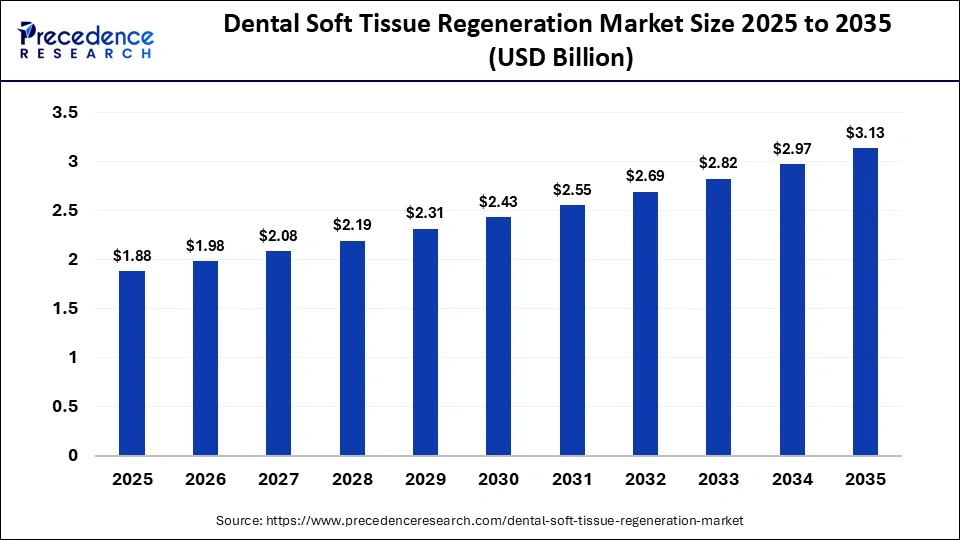
The global dental soft tissue regeneration market size was calculated at USD 1.88 billion in 2025 and is predicted to increase from USD 1.98 billion in 2026 to approximately USD 3.13 billion by 2035, expanding at a CAGR of 5.20% from 2026 to 2035. The global dental soft tissue regeneration market comprises collagen membranes, tissue matrices, and biological agents used in periodontal and implant surgeries. The market is driven by increasing periodontal disease rates, growing demand for aesthetic and implant dentistry, an aging population, and the widespread adoption of minimally invasive techniques.
Key Takeaways
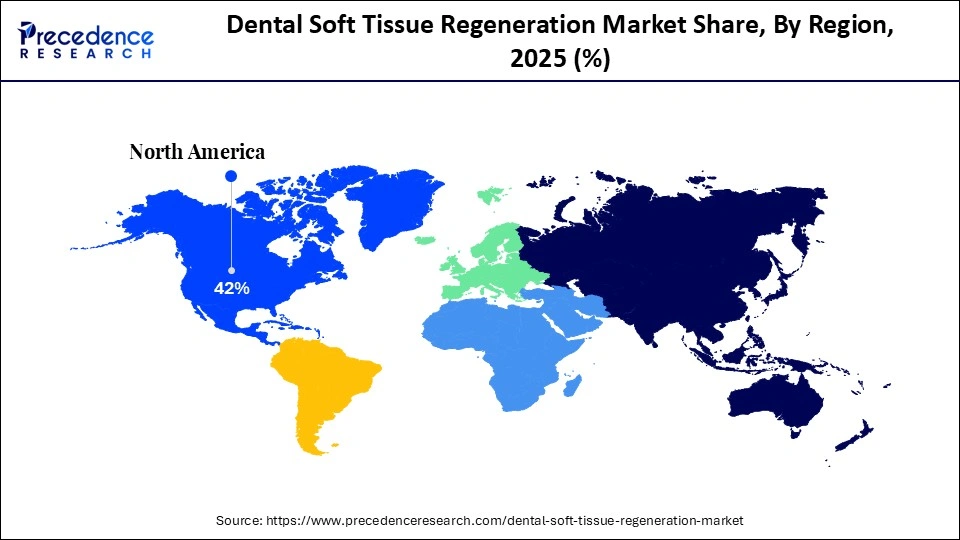
- North America dominated the global market in 2025.
- Asia-Pacific is expected to grow at the fastest CAGR in the market during the forecast period.
- By type of procedure, the gingival grafting segment contributed the biggest revenue share in the market in 2025.
- By type of procedure, the guided tissue regeneration segment is expected to witness the fastest growth in the market over the forecast period.
- By material used, the allografts segment contributed the biggest revenue share in the market in 2025.
- By material used, the bioactive materials segment is expected to witness the fastest growth in the market over the forecast period.
- By application, the periodontal treatment segment registered its dominance over the global market in 2025.
- By application, the implantology segment is expected to gain the highest share of the market between 2026 and 2035.
- By end user, the dental clinics segment contributed the biggest revenue share in the market in 2025.
- By end user, the hospitals segment is expected to show the fastest growth over the forecast period.
What is the Dental Soft Tissue Regeneration Market?
Dental soft tissue regeneration is used to repair or regrow damaged gum and connective tissue around teeth or implants. The technique plays an important role in restoring oral health while maintaining the shape of the gums. It also makes sure implants stay stable over time and prevents issues like gum disease and recession. Implants offer a reliable and long-lasting option for replacing missing teeth. The success of these implants relies on the bond with the bone and also on the health of the surrounding tissues.
Securing soft tissues with bone regeneration is important for achieving the best health around implants for their long-term success. Focusing on the volume, thickness, and quality of soft tissues improves the appearance, stability, and function around dental implants. Soft tissue augmentation plays a crucial role in maintaining the health of the tissues around implants and their stability. Ongoing studies and improvements in soft tissue management further strengthen the outcomes of these augmentation procedures in implant dentistry, which benefits both patients and dental professionals.
What is the Role of AI in the Dental Soft Tissue Regeneration Market?
Artificial Intelligence (AI) is revolutionizing tissue regeneration by shifting from traditional methods to a personalized, data-driven approach. AI is vital for designing biomaterial scaffolds, analyzing cellular behavior, and customizing treatments for periodontal issues. Analyzing large datasets helps identify optimal material properties for specific tissue growth and tailored biomaterials for dentin, enamel, or periodontal ligaments. Additionally, AI helps in determining the parameters and accelerates the development of advanced biomaterials for dental tissue engineering (DTE). It utilizes patient data, such as genetics and medical history, to create personalized DTE treatment plans by selecting effective biomaterials and cell sources.
AI algorithms also predict the response of stem cells to various stimuli, which helps in the selection of appropriate cells for regeneration. Furthermore, AI integrates patient-specific data to help in customized regenerative strategies and employs models like decision trees to estimate the success rates of periodontal treatments. AI also analyzes patient histories and identifies gum areas that are prone to inflammation, facilitating proactive soft tissue health management, and automates tasks like image recognition and data analysis, significantly expediting the process.
Dental Soft Tissue Regeneration Market Trends
- Shift Towards Minimally Invasive Procedures
The shift towards less invasive procedures is observed as it helps in patient comfort, shortens recovery times, and improves aesthetics. As patients prefer quick and gentle treatments, the market is shifting from traditional surgeries to periodontal microsurgery and tunnel methods. This reduces pain, swelling, and bleeding, which leads to higher patient acceptance.
Minimally invasive techniques, such as micro-surgical access flaps, allow for better tissue handling and wound closure, which is necessary in successful periodontal regeneration and contamination prevention. Additionally, these are cost-effective as they reduce chair time, minimize post-surgical complications, and decrease the need for follow-up treatments. - Advanced Biomaterials Products
Advanced biomaterials are crucial because of their excellent biocompatibility, controlled degradation, and better cellular integration compared to traditional grafting methods. Materials such as bioresorbable collagen matrices, hydrogels, and growth factor-enriched scaffolds are highly used. New materials, such as injectable scaffolds and membranes, are adaptable to irregularly shaped, small, or hard-to-reach oral defects. - Stem Cell Research and Regenerative Biologics
Stem cell research innovations use autologous cells and bioactive molecules to regenerate gums, periodontal ligaments, and alveolar bone. Regenerative biologics like Platelet-Rich Fibrin (PRF) and Periodontal Ligament Stem Cells (PDLSCs) help restore tissue structure and function, providing lasting support for teeth. It helps in soft tissue attachment, improves periodontal disease treatment, reduces post-operative complications, and speeds up recovery.
Market Scope
| Report Coverage | Details |
| Market Size in 2025 | USD 1.88 Billion |
| Market Size in 2026 | USD 1.98 Billion |
| Market Size by 2035 | USD 3.13 Billion |
| Market Growth Rate from 2026 to 2035 | CAGR of 5.20% |
| Dominating Region | North America |
| Fastest Growing Region | Asia Pacific |
| Base Year | 2025 |
| Forecast Period | 2026 to 2035 |
| Segments Covered | Type of Procedure, Material Used,Application, End User, and region |
| Regions Covered | North America, Europe, Asia-Pacific, Latin America, and Middle East & Africa |
Segmental Insights
Type of Procedure Insights
Which Procedure Type Segment Dominated the Dental Soft Tissue Regeneration Market?
The gingival grafting segment dominated the market in 2025, due to the high occurrence of periodontal disease, increasing interest in cosmetic dentistry, and its major contribution to the success of dental implants. Soft tissue grafts are frequently used to address gingival recession, which leads to tooth sensitivity and exposure of the roots. With a growing elderly population, more susceptible to gum diseases and recession, resulting in a constant need for treatments to restore the gingival tissue.
Also, with a significant increase in patient interest in cosmetic dental procedures that target "gummy smiles" or uneven gum lines, gingival procedures are an essential part of smile improvement. Additionally, increasing awareness of the connection between oral health and systemic diseases is expanding the market steadily.
The guided tissue regeneration segment is expected to show the fastest growth over the forecast period, due to its high success in treating periodontal disease and restoring supporting tissues. Its popularity is fueled by increasing gum disease rates in an aging population and the need to maintain their teeth.
It also uses biocompatible membranes to slow gingival tissue growth, for gradual regeneration of bone and periodontal ligament cells, which improve implant stability. The market is further driven by combining GTR with guided bone regeneration (GBR) to establish the essential foundation of bone and gum tissue for effective dental implant placement.
Material Used Insights
Why Did the Allografts Segment Dominate the Dental Soft Tissue Regeneration Market?
The allografts segment contributed the biggest market share in 2025, due to its excellent biocompatibility, structural strength, and ability to minimize donor site complications associated with autografts. They also improve periodontal tissues and serve as a reliable alternative to clinically successful synthetic materials. Recent advancements in processes have made allografts safe, sterile, and widely available, boosting their acceptance among dental professionals. The market is further fueled by an aging population, increased sports injuries, and a growing emphasis on periodontal health.
The bioactive materials segment is expected to gain the highest market share between 2026 and 2035, as it ranges from simple fillers to active healing agents. The shift is driven by the need for materials to improve tissue regeneration, reduce infection rates, and increase restoration longevity. These materials release therapeutic ions like calcium, phosphate, and fluoride, found in cements and composites, strengthening enamel and dentin, and reversing early decay. Additionally, mineral trioxide aggregate provides superior sealing for root canals, minimizing the need for repetitive procedures.
Application Insights
How the Periodontal Treatment Segment Dominated the Market?
The periodontal treatment segment registered its dominance in the dental soft tissue regeneration market in 2025, due to the prevalence of diseases like gingivitis and periodontitis. Growth is further driven by an aging population prone to gum recession, rising interest in aesthetic procedures such as gum grafting, and advancements in minimally invasive regenerative technologies. Innovations in biomaterials and GTR have improved tissue repair outcomes. The focus on aesthetic treatments, especially gum contouring, and the restoration of supporting structures such as bone and ligaments, further boost market expansion.
The implantology segment is expected to witness the fastest growth in the market over the forecast period, as healthy, thick peri-implant mucosa is essential for the long-term success of implants. It also prevents infections and enhances aesthetics. The increasing number of implant procedures is largely due to an aging population, raising the need for advanced regenerative materials such as collagen membranes and soft-tissue grafts. Furthermore, the growing incidence of tooth loss in older adults strengthens the demand for implants and regenerative products. The need for gum recession repair in periodontal treatments also contributes to the demand within the implant workflow.
End User Insights
Which End User Segment Led the Dental Soft Tissue Regeneration Market?
The dental clinics segment led the market in 2025, with specialized and accessible care for periodontal treatments, implant site development, and cosmetic grafting. With a rise in outpatient care demand, advanced minimally invasive techniques, and the adoption of digital 3D printing, clinics are preferred. As the initial point of contact for patients, clinics serve as the main place for soft tissue procedures, employing techniques such as laser therapy and biocompatible materials to achieve improved aesthetic results. The increasing trend towards outpatient care further enhances the dependence on private clinics.
The hospitals is expected to expand rapidly in the market in the coming years, due to advanced facilities, the ability to handle complex procedures, and access to specialized biomaterials. They also provide multidisciplinary environments for costly surgeries like bone grafting while maintaining the sterile conditions for intricate oral and maxillofacial surgeries. With improved insurance reimbursement in hospitals, the adoption of advanced regenerative technologies is increasing. The rising need for complex soft tissue grafts, especially for periodontal diseases, shows the importance of the availability of resources in hospitals.
Regional Insights
North America Dental Soft Tissue Regeneration Market Size and Growth 2026 to 2035
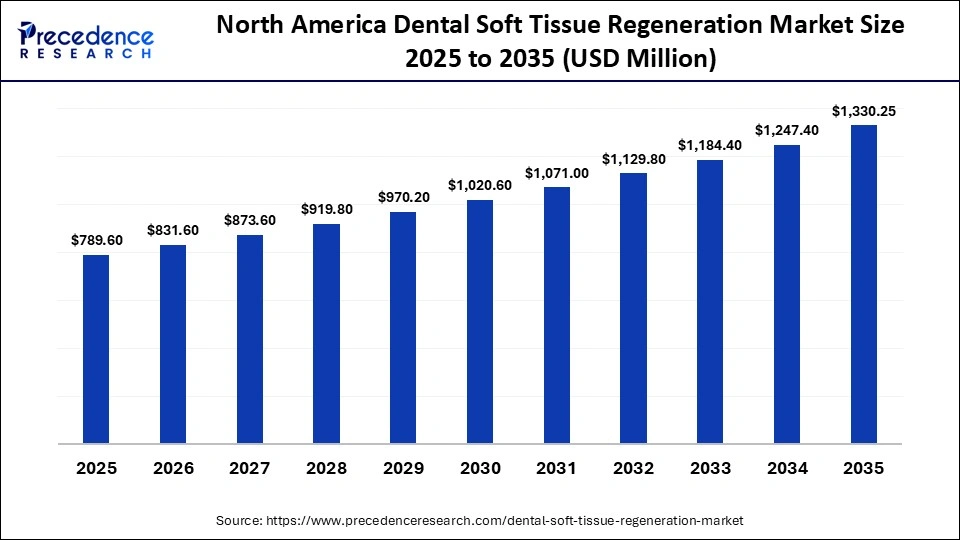
The North America dental soft tissue regeneration market size is estimated at USD 789.60 million in 2025 and is projected to reach approximately USD 1,330.25 million by 2035, with a 5.35% CAGR from 2026 to 2035.
Which Factors Drive the Dental Soft Tissue Regeneration Market in North America?
North America held a major market share in 2025, due to high periodontal diseases, an older population, and a robust healthcare system. Significant healthcare investments, cutting-edge regenerative technologies such as collagen-based materials, and supportive reimbursement policies boost the market further. Also, with ongoing research and development, acceptance of new techniques, and well-established insurance frameworks, increase the access to costly treatments.
U.S. Dental Soft Tissue Regeneration Market Size and Growth 2026 to 2035
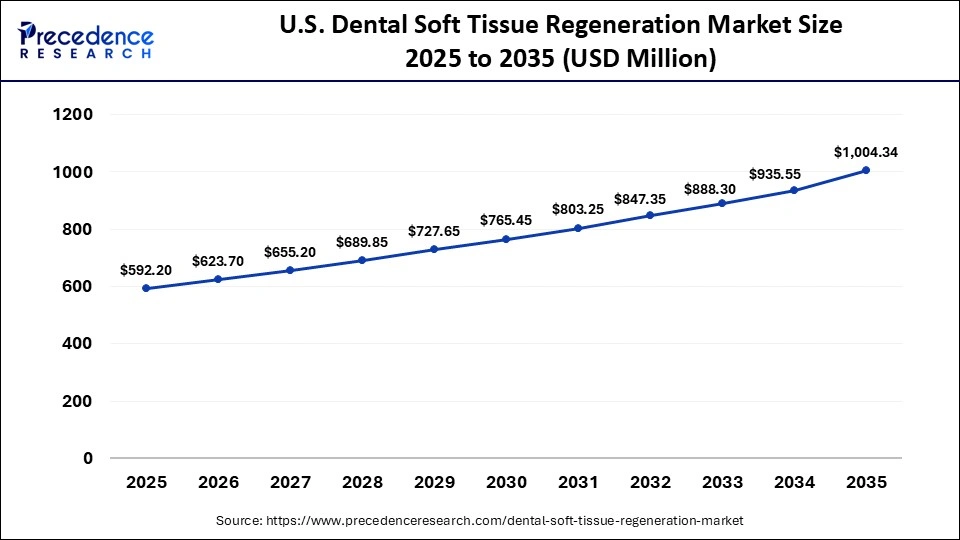
The U.S. dental soft tissue regeneration market size is calculated at USD 592.20 million in 2025 and is expected to reach nearly USD 1,004.34 million in 2035, accelerating at a strong CAGR of 5.42% between 2026 to 2035.
U.S. Market Trends
The U.S. dominated the market, driven by an older population suffering from periodontal disease, robust healthcare, and insurance support. Significant research and development, such as 3D printing and biomaterials, fuel this growth further. The U.S. is leading in regenerative dentistry methods like stem cell therapy and tissue engineering. Organizations like the NIH and ADA promote continuous innovation, while providing supportive reimbursement policies, and FDA regulations guarantee safe and effective treatments.
How is Asia-Pacific Growing in the Dental Soft Tissue Regeneration Market?
Asia-Pacific is expected to host the fastest-growing market in the coming years. The growing awareness of oral care, the rising adoption of advanced technologies, and the increasing number of dental surgeries boost the market. Government organizations launch initiatives and conduct campaigns to raise awareness about dental hygiene. The increasing demand for personalized treatment and growing research activities also contribute to market growth.
China Market Trends
China leads the market in Asia-Pacific, driven by the increasing investments in dental research activities and evolving regulatory landscapes. The Chinese government is making constant efforts to become a global clinical trial hub, serving the local population. The growing demand for cosmetic and implant dentistry, as well as bioactive materials, fosters market growth.
How Will Europe Grow in the Dental Soft Tissue Regeneration Market?
Europe is expected to grow at a considerable CAGR in the upcoming period, fueled by increasing demand for cosmetic treatments, an older population, and robust manufacturing and research capabilities. The rising popularity of minimally invasive methods, such as soft tissue grafts for gum problems, also boosts the market. The growing elderly population prone to gum diseases highlights the need for soft tissue regeneration. Also, it results in growth in this area as the focus on gum health and aesthetic expectations for dental implants increases.
Germany Market Trends
Germany leads the dental soft tissue generation industry due to its high manufacturing standards, strong R&D focus, and advanced healthcare system. Germany remains a key hub for innovation, production, and distribution in Europe. The sector is known for its high-quality, reliable products that build trust in the medical community. Ongoing collaboration among manufacturers, academic institutions, and research organizations drives advancements in biomaterials and soft tissue engineering. It is one of the major producers and exporters in both European and global markets, particularly in the fields of periodontics and implantology.
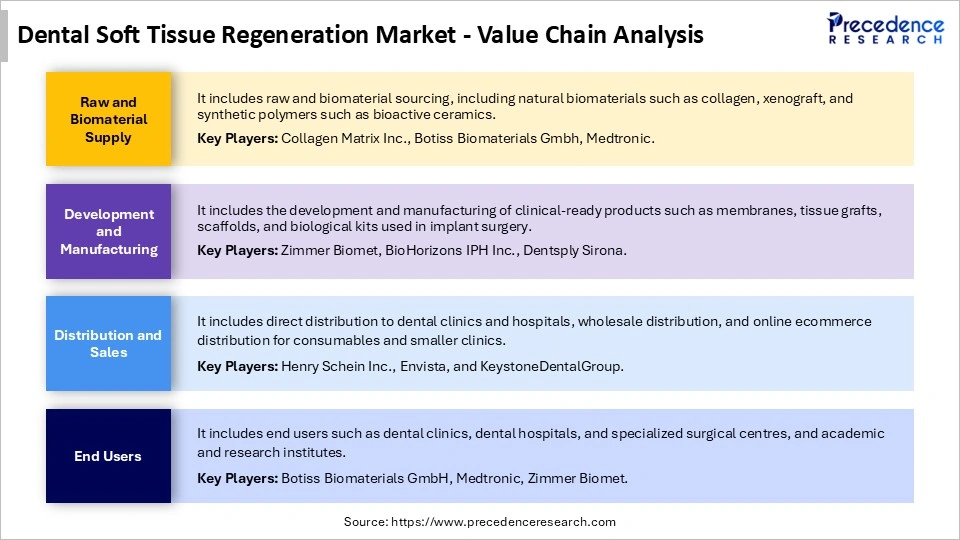
Dental Soft Tissue Regeneration Market Value Chain Analysis
Dental Soft Tissue Regeneration Market Comapnies
- Geistlich Pharma AG
- Institut Straumann AG
- Dentsply Sirona
- ZimVie Inc.
- Henry Schein, Inc.
- Regenity
- BioHorizons Implant Systems, Inc.
- Regedent AG
- Tissue Regenix
- Advanced Medical Solutions Group plc
- Osteogenics Biomedical
- TBR Dental
- DentiumUSA
- Tecnoss Dental Srl (Tecnoss s.r.l.)
- Unicare Biomedical, Inc.
- Neoss
- Advanced Medical Solutions Group plc
- B&B Dental Implant Company
- Botiss
- Septodont Holding
- Implant Direct Corporation (Envista)
- META BIOMED Co., Ltd.
- SigmaGraft Biomaterials
Recent Developments
- In February 2026, 3D Systems introduced three new shades of NextDent Jet Base to its Jetted Denture Solution, bringing the total to four shades, which correspond to different natural gum colors. This range enables dental labs to serve a wider range of patients, providing tailored restorations that enhance fit, comfort, and acceptance rates. (Source - https://www.3dsystems.com)
- In February 2025, Geistlich made a strategic investment in ReOss Ltd, which specialized in integrating digital patient data with 3D-printing technology. This investment shows Geistlich's dedication to increasing its portfolio with innovative regenerative solutions. (Source - https://www.geistlich.com)
Segments Covered in the Report
By Type of Procedure
- Gingival Grafting
- Guided Tissue Regeneration
- Connective Tissue Grafting
- Coronally Advanced Flap
By Material Used
- Allografts
- Xenografts
- Alloplasts
- Bioactive Materials
By Application
- Periodontal Treatment
- Implantology
- Reconstructive Surgery
By End User
- Hospitals
- Dental Clinics
- Research Institutes
For inquiries regarding discounts, bulk purchases, or customization requests, please contact us at sales@precedenceresearch.com
Frequently Asked Questions





Ask For Sample
No cookie-cutter, only authentic analysis – take the 1st step to become a Precedence Research client
 Get a Sample
.webp)



 sales@precedenceresearch.com
 Schedule a Meeting
