



Deodorization System Market Revenue, Leading Companies, Company Technology / Innovation, Product Consumption, Production Efficiency, Pricing Trends, Retail Performance, Product Innovation, and Growth Opportunities
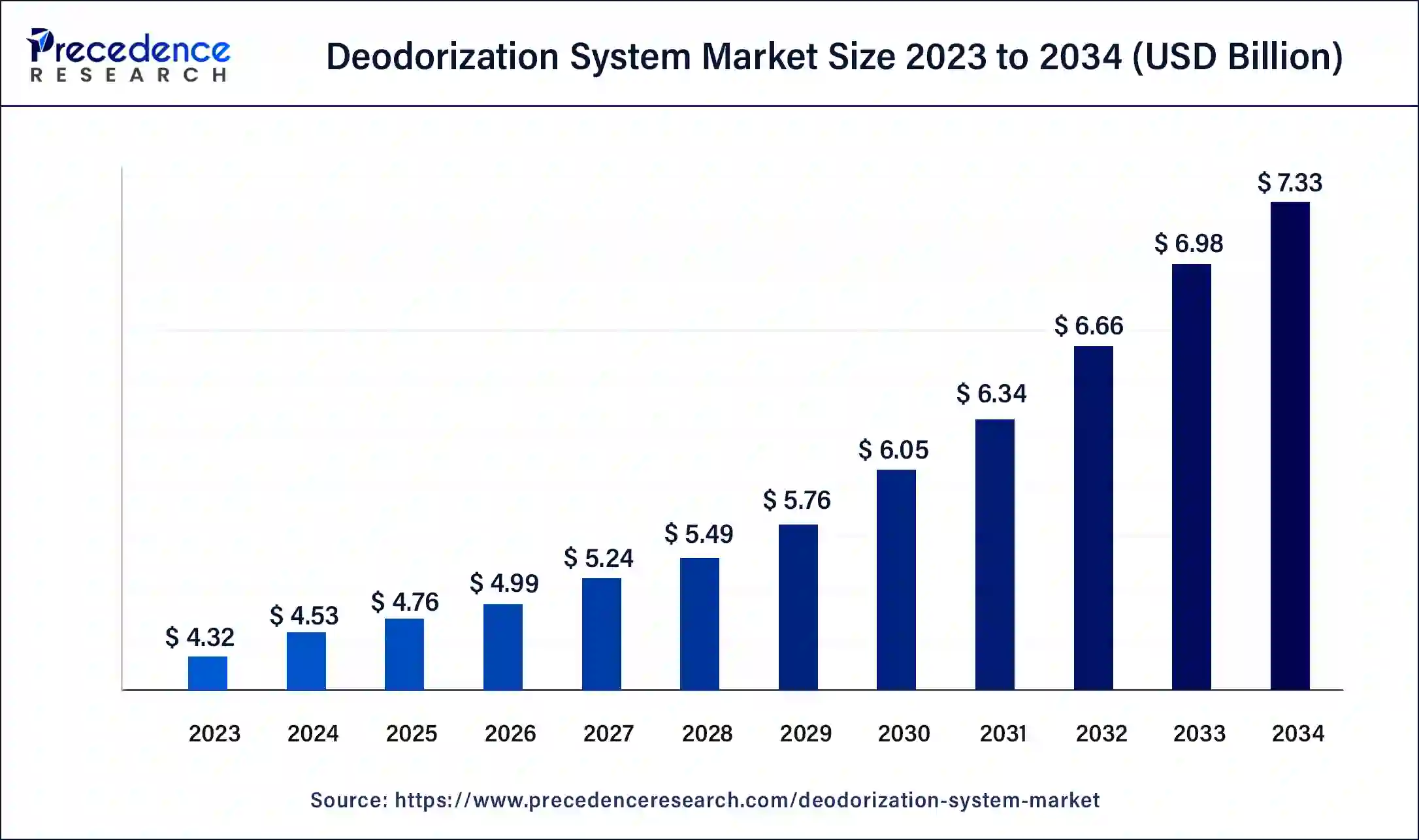
The deodorization system market is expanding steadily, supported by rising urbanization, industrialization, and demand for high-quality edible oils. Valued at USD 4.76 billion in 2025, the market is projected to reach approximately USD 7.33 billion by 2034, growing at a CAGR of 4.93% as innovations in AI, automation, and eco-friendly technologies reshape odor control and refining processes.
Source: https://www.precedenceresearch.com/deodorization-system-market
 Get a Sample
 Table Of Content


Deodorization System Market Size and Forecast 2026 to 2034
The global deodorization system market size was valued at USD 4.99 billion in 2026 and is anticipated to reach around USD 7.33 billion by 2034, growing at a CAGR of 4.93% over the forecast period 2025 to 2034. The market is growing as a result of fast-growing urbanization, and the demand for better odor control and air quality.
Deodorization System Market Key Takeaways
- The global deodorization system market was valued at USD 4.76 billion in 2025.
- It is projected to reach USD 7.33 billion by 2034.
- The deodorization system market is expected to grow at a CAGR of 4.93% from 2025 to 2034.
- Asia Pacific dominated the deodorization system market in 2024.
- North America is anticipated to grow at the fastest rate in the market during the forecast period.
- By technology, the packed column segment generated the biggest share of the market in 2024.
- By technology, the thin film segment is anticipated to grow at a solid CAGR in the market during the forecast period.
- By refining method, the chemical refining segment dominated the global market in 2024.
- By edible oil, the palm oil segment contributed towards the largest share of the market in 2024.
- By operation, the automatic segment is expected to grow significantly in the market during the forecast period.
How AI Impacts the Deodorization System Market
Artificial intelligence (AI) is playing a key role in the transformation of the deodorization system market in aspects such as efficiency and effectiveness. Environmental conditions can also be monitored, and areas radiating odors can immediately be detected by an AI system, and the deodorization process can be constantly adapted to produce the best quality air. Intelligent features such as automatic controls and real-time monitoring are starting to become popular. It is anticipated that the advancement of AI technology will influence deodorization systems, such as predictive maintenance and automatic adjustments.
Market Overview
The deodorization system aims to eliminate free fatty acids as well as volatile compounds present in crude edible oil. The steam acts as a carrier to remove odor-causing compounds. The process is referred to as stripping, desorption, or steam distillation. Deodorization systems enhance the quality, safety, and quantity of edible oils. The deodorization system market can also help ensure that food products meet the acceptable quality of taste and texture, hygiene, and low operation costs.
Deodorization System Market Growth Factors
- Increasing consumer awareness: An increasing consumer awareness of environmental issues and hygiene demands for proper deodorizing services.
- Technological advancements: Technological advancements in deodorization systems are promoting deodorization system market growth.
- Urbanization and Industrialization: Urbanization and industrialization generate demand and a higher rate of deodorization to remove odor and enhance the air quality in industrialized areas.
Market Scope
| Report Coverage | Details |
| Market Size by 2034 | USD 7.33 Billion |
| Market Size in 2026 | USD 4.99 Billion |
| Market Size in 2025 | USD 4.76 Billion |
| Market Growth Rate from 2026 to 2034 | CAGR of 4.93% |
| Largest Market | Asia Pacific |
| Base Year | 2025 |
| Forecast Period | 2026 to 2034 |
| Segments Covered | Technology, Refining Method, Edible Oil, Operation, and Regions |
| Regions Covered | North America, Europe, Asia-Pacific, Latin America and Middle East & Africa |
Market Dynamics
Driver
Rising demand for deodorizers from oil industries
Deodorization is the most important step in the oil refining process due to the quality parameters required for packing and human consumption. Deodorization assists in removing odorous compounds together with free fatty acid through the process of steam distillation. Deodorization is perhaps the most important operation for affecting the quality of refined oil and edible oil refining. Deodorization systems involve lower temperatures with lesser use of steam in the deodorization or deacidification process for the edible oil to remove the undesired odor, flavors, color, and other volatile components with efficiency and accuracy. Regardless of the type of palm, soybean, rapeseed, or any other edible oil being processed, deodorization is an essential step that reduces unwanted volatiles to a large extent and minimizes the formation of glycidyl esters (GEs) and trans-fatty acids (TFA) isomers. Obtain higher quality services, safety, and yield, as well as receive better treatment.
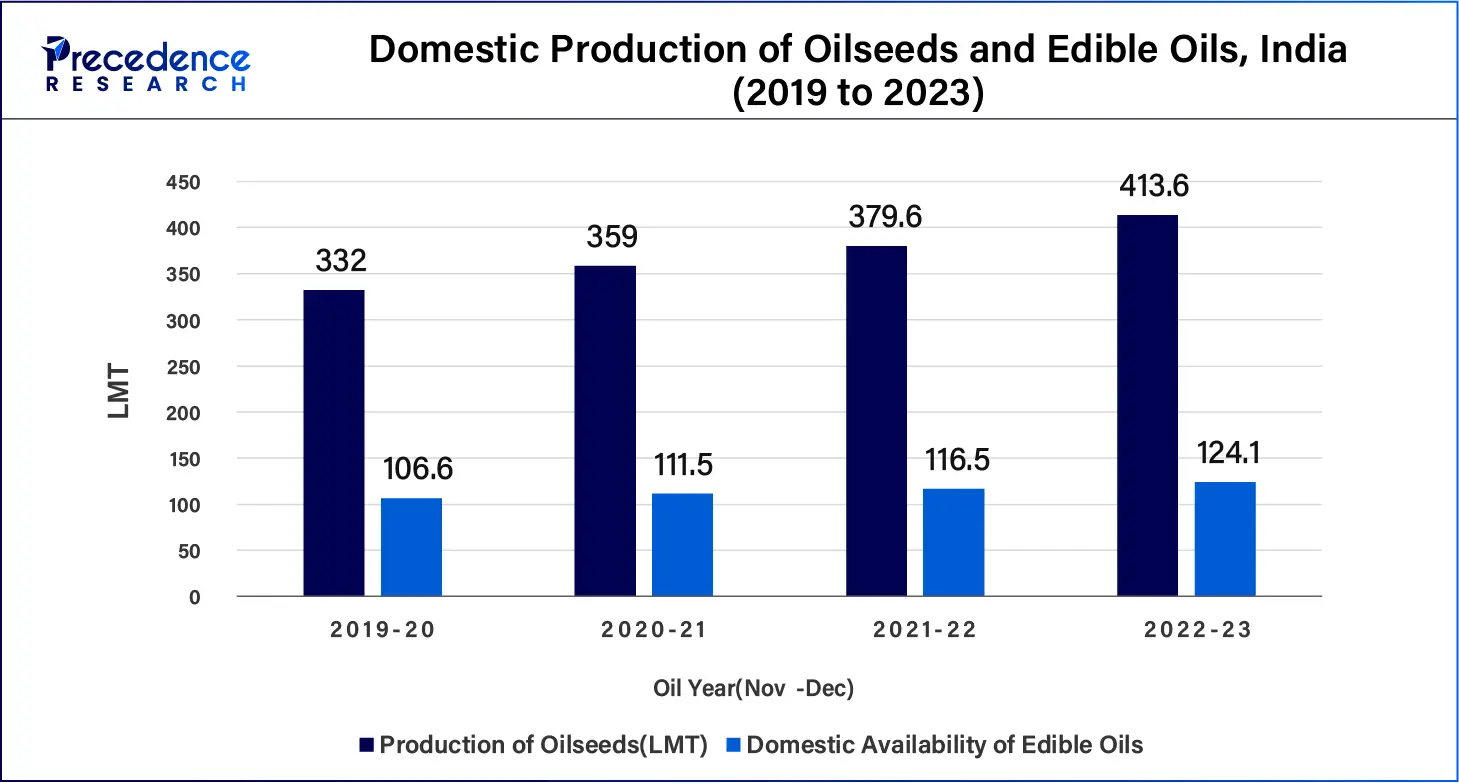
- According to the data released by the Department for Promotion of Industry and Internal Trade (DPIIT), as of June 2024, India had 10,941 km of crude pipeline network, with a capacity of 153.1 MMTPA.
- India's crude oil production increased to 4.89 MMT during April-May 2024. Indian refining capacity has increased from 215.1 MMTPA to 256.8 MMTPA in the last ten years.
Increasing urbanization and industrialization
The deodorization systems market is expanding because of urbanization, and industrialization. The deodorization system is used for the elimination of the undesirable flavor, odor, and volatile matter present in edible oil and fats during the industrialization process. In various industrial activities, there are unpleasant smells from the various processes. This leads to the need for sophisticated deodorization systems. In urbanization, there is a need for deodorization, and technologies can be used to monitor or minimize odors.
Restraint
Environmental concern
The oil is treated at extremely high temperatures for a considerable period and in consequence, generates polymers, decomposition products, and trans-isomers. The drawback is that the operating cost associated with that system consumes large amounts of energy. Increasing environmental guidelines to reduce carbon footprint can push industries towards more energy-efficient solutions that limit the use of high-energy consumption systems.
Opportunity
Environmentally friendly technologies
Increasing concern towards the use of natural and pollution-free deodorizing agents, as well as non-toxic and biodegradable material developments, is harmonizing. Plasma deodorization is an eco-friendly technology that utilizes plasma in the process of removing odor and gas constituents in the air. Plasma deodorization uses include smoking places, health facilities, several industries, and other public places, as well as air treatment. The offensive odor air is treated with the generated low-temperature plasma to oxidize and decompose the air by the action of radicals produced in the plasma to stabilize the air.
Technology Insights
The packed column segment generated the biggest share of the deodorization system market in 2024. The packed column systems are capable of running at two different temperatures so that balance in deodorization residence time can be easily achieved. This allows the equipment to process edible oils at different temperatures as well as pressures. It helps eliminate odorous material and other unwanted components to obtain a bland and stable oil.
he thin film segment is anticipated to grow at a solid CAGR in the deodorization system market during the forecast period. The thin-film deodorizers make it possible to have a short deodorization period at high temperatures in the structured packing section and a longer period at relatively low temperatures in the retention section.
Refining Insights
The chemical refining segment dominated the global deodorization system market in 2024. The term deodorization refers to the method of eliminating odors in the atmosphere, which is both chemical and physical deodorization. The chemical refining process is realized by a specific and rigorous procedure that uses base chemical reagents with low-pollution impact. Using chemical deodorization, the offensive odor is neutralized or stopped by chemical reactions and transformed into material with a low odor level. The chemical refining process is used to remove impurities of oil effectively and cost-effectively, improving the self-life of the oil.
Edible Oil Insights
The palm oil segment contributed towards the largest share of the deodorization system market in 2024. Palm oil deodorization is the process of an edible palm oil refinery plant. Fatty impurities such as odiferous material and other small undesired particulate matter present in crude palm oil or palm kernel oil are eliminated through the deodorization process of palm oil. The shelf life of refined palm oil increased after going through the palm oil deodorizer equipment.
- In April 2023, Crown established a liquids pilot plant, offering customers access to a state-of-the-art continuous-process environment for testing, validating, scaling, and commercializing renewable diesel/hydrotreated vegetable oil (HVO), sustainable aviation fuel (SAF), and biodiesel, edible oils, oleochemicals, and specialty liquid-extraction products.
Operation Insights
The automatic segment is expected to grow significantly in the deodorization system market during the forecast period. The air deodorization system is a fully automatic industrial deodorizer that can remove odors from large areas. The use of blue creates a modern and fresh look, blending with the industrial lighting that is used on the wall. This means that the system is protected by a warranty to ensure maximum protection for users. For any industrial setting, be it a warehouse, manufacturing plant, or any building, this deodorization system is ideal for keeping the environment fresh.
Regional Insights
Asia Pacific dominated the deodorization system market in 2024. Investment in research and development in developing economies will increase the uptake of the deodorization system in the region, such as China, Japan, India, and South Korea. Witnessing rapid industrialization, urbanization, population increase, increasing key players establishing of new refinery units and expansion of industries in the region.
North America is anticipated to grow at the fastest rate in the deodorization system market during the forecast period. Increasing consumer awareness of environmental issues and hygiene demands in North America is expected to raise the demand for deodorization systems. The rising usage of edible oil is a major factor generating the market's growth, as are technological advancements, increases in disposable income, and increases in investment in technology.
- In August 2022, Rentokil North America launched the GENIE Max odor management system. Designed for large back-of-house indoor and outdoor spaces, the patented scent technology eliminates and neutralizes foul smells, delivering an improved air care experience for customers and employees while helping to reduce unwanted pests.
Deodorization System Market Companies
- Desmet Ballestra (Belgium)
- Gianazza International S.p.A. (Italy)
- Crown Iron Works (U.S.)
- DVC Process Technologists Pvt. Ltd. (India)
- Alfa Laval AB (Sweden)
- Zhengzhou Sunshine Machinery Co. Inc. (China)
- Gianazza International S.p.A. (Italy)
Recent Development
- In September 2024, Aquacycl announced the launch of SulfideFix, which utilizes natural sulfate-reducing bacteria to eliminate up to 99 percent of hydrogen sulfide gas from wastewater tanks. That removes odors from wastewater tanks and provides a sustainable biological approach that prevents sulfide emissions in holding tanks.
Segments Covered in this Report
By Technology
- Thin film
- Packed column
By Refining Method
- Physical refining
- Chemical refining
By Edible Oil
- Soybean Oil
- Olive Oil
- Peanut Oil
- Canola Oil
- Sunflower Oil
- Palm kernel Oil
- Cottonseed Oil
- Coconut Oil
- Palm Oil
By Operation
- Batch deodorization systems
- Semi-continuous system
- Continuous deodorization systems
By Geography
- North America
- Asia Pacific
- Europe
- Latin America
- Middle East & Africa
For inquiries regarding discounts, bulk purchases, or customization requests, please contact us at sales@precedenceresearch.com
Frequently Asked Questions





Ask For Sample
No cookie-cutter, only authentic analysis – take the 1st step to become a Precedence Research client
 Get a Sample




 sales@precedenceresearch.com
 Schedule a Meeting
