



Extracellular Matrix Patches Market Size, Companies, Share, Patient Volume, Treatment Adoption Rates, Pricing Analysis, Regulatory Landscape, Competitive Positioning, and Demand Forecast
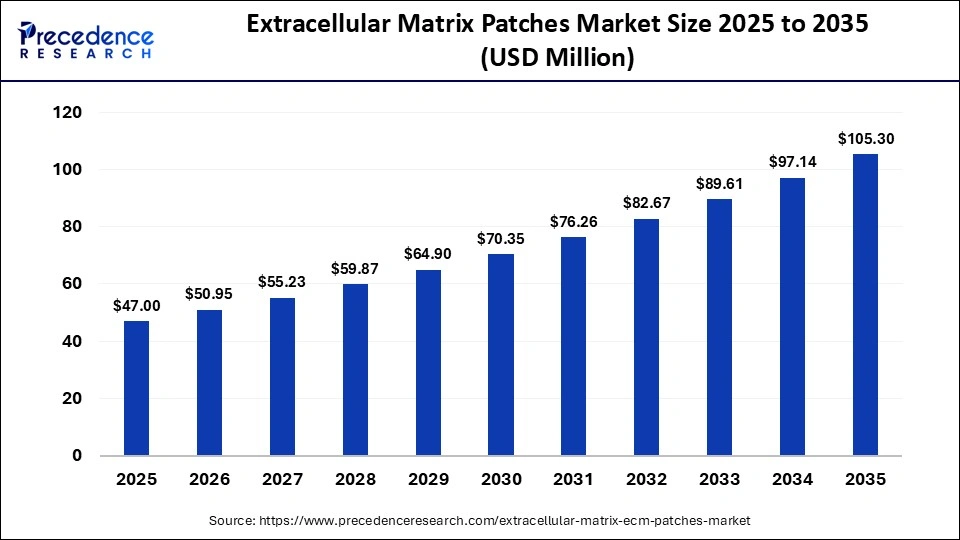
Rohan Patil, a Healthcare Industry Expert, highlights that the extracellular matrix patches market has reached USD 50.95 million in 2026 and is on track to reach USD 105.30 million by 2035, advancing at a CAGR of 8.40%. Key extracellular matrix patches market companies shaping the market include Admedus Ltd., Aziyo Biologics, Baxter, Boston Scientific Corporation, Coloplast Group, Cook Group, while major growth segments span By Application, By Raw Material
Source: https://www.precedenceresearch.com/extracellular-matrix-patches-market
 Get a Sample
 Table Of Content


What is the Extracellular Matrix Patches Market Size in 2026?
The global extracellular matrix patches market size was calculated at USD 47.00 million in 2025 and is predicted to increase from USD 50.95 million in 2026 to approximately USD 105.30 million by 2035, expanding at a CAGR of 8.40% from 2026 to 2035. The market growth is attributed to rising surgical volumes, increasing chronic wound prevalence, and growing adoption of regenerative biomaterials for advanced tissue repair.
Key Takeaways
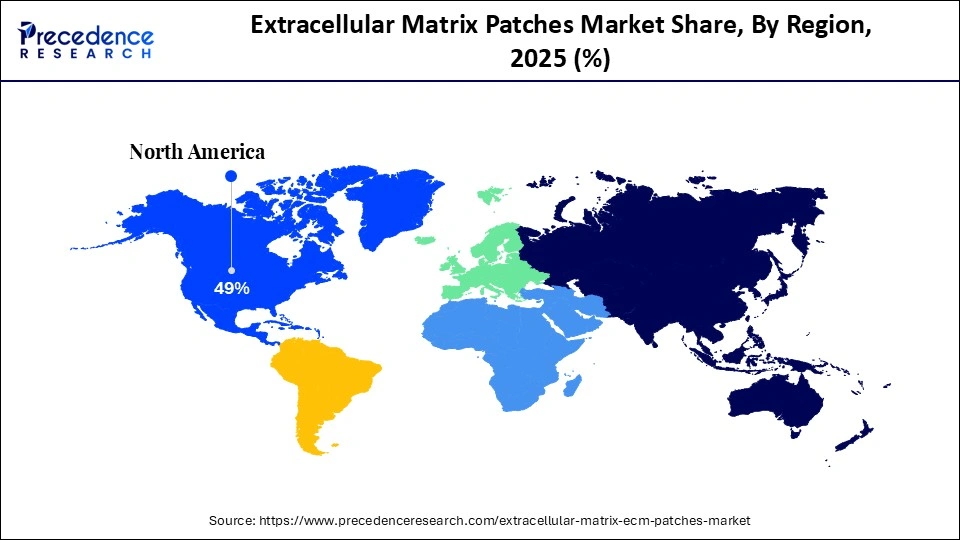
- North America dominated the extracellular matrix patches market with the largest market share of 49% by 2025.
- Asia Pacific is expected to grow at the fastest CAGR between 2026 and 2035.
- By application, the soft tissue repair segment contributed the highest market share in 2025.
- By application, the vascular repair and reconstruction segment is expected to grow at a strong CAGR between 2026 and 2035.
- By raw material, the porcine segment held a major market share of 47% in 2025.
- By raw material, the bovine segment is expected to expand at the highest CAGR from 2026 to 2035.
Which Factors Drive the Extracellular Matrix Patches Market?
The rising global burden of chronic wounds and surgical injuries is significantly driving the growth of the extracellular matrix (ECM) patches industry. Healthcare systems are increasingly moving towards regenerative and biologic treatment options. Extracellular matrix patches are recent biomaterials derived from the decellularization of animal or human tissues, modeled on natural body structural scaffolds.
They support cell migration, tissue regeneration, and angiogenesis, making them very effective for repairing soft tissues and wound healing. According to the NIH 2024 report, up to 20% of diabetic foot ulcer cases progress to limb amputation, highlighting the urgent need for advanced regenerative solutions such as ECM-based patches. Furthermore, the rising disease burden, expanding surgical interventions, and rapid technological innovation continue to accelerate the demand for ECM patches.
Extracellular Matrix Patches Market Growth Factors
- Growing Adoption in Veterinary Regenerative Medicine: Increasing use of ECM biomaterials in animal surgeries is boosting demand across emerging veterinary healthcare applications.
- Expansion of Ambulatory Surgical Centers: Rising outpatient surgical volumes are driving demand for efficient and easy-to-use ECM-based implants across minimally invasive procedures.
- Rising Preference for Infection-Resistant Biomaterials: Growing concerns over post-surgical infections are fuelling the shift toward biologic ECM patches with superior biocompatibility.
- Advancements in Decellularization Technologies: Continuous innovation in tissue processing methods is enhancing ECM quality and performance, propelling wider clinical adoption.
Global Surgical Trends Shaping the Future of Regenerative Biomaterials
- According to the International Society of Aesthetic Plastic Surgery, more than 15.8 million surgical procedures were performed globally in 2024, directly strengthening demand for ECM-based patches in tissue regeneration and wound closure applications.
- American College of Surgeons indicates that synthetic meshes account for over 70–80% of hernia repair procedures in the U.S. as of 2024–2025, driven by lower recurrence rates and cost efficiency compared to biologic alternatives.
- Clinical research indexed on PubMed indicates that over 20 million hernia repair surgeries are performed each year globally as of 2024–2026, positioning hernia repair among the most frequent surgical procedures and a primary driver for ECM patch adoption in soft tissue reinforcement.
- According to the United Nations Department of Economic and Social Affairs, the global population aged 65 years and above is projected to exceed 2.2 million by 2070, significantly increasing the volume of age related degenerative conditions that require soft tissue reconstruction procedures.
Impact of Artificial Intelligence on Extracellular Matrix Patches
AI is transforming the extracellular matrix patches industry by accelerating biomaterial design, optimizing manufacturing precision, and improving clinical decision-making. Modeling tools based on AI are allowing researchers to predict tissue behavior and fabricate ECM scaffolds that have very specific mechanical and biological characteristics.
Developing new machine learning algorithms involves examining big clinical data to determine optimal material combinations and forecast individual patient outcomes. Firms like 3M and Thermo Fisher Scientific are already actively incorporating AI in biomaterials research to make the process more efficient in product development.
Extracellular Matrix Patches Market Trends
- Rise of Stimuli-Responsive Smart ECM Biomaterials: Engineering advanced ECM-based biomaterials that are responsive to stimuli, including pH and temperature, and biological signals, is currently being developed. This innovation is transforming ECM patches from passive supports into active therapeutic systems, boosting their clinical adoption.
- Integration of Stem Cell-Derived ECM Platforms: Extracellular matrix derived from stem cell sources is becoming popular as a result of their increased regenerative and immunomodulative effects. Recent investigations show that they recreate native tissue conditions and increase cell survival. This is driving the development of more advanced and biologically active ECM patches across multiple surgical applications.
Market Scope
| Report Coverage | Details |
| Market Size in 2025 | USD 47.00 Million |
| Market Size in 2026 | USD 50.95 Million |
| Market Size by 2035 | USD 105.30 Million |
| Market Growth Rate from 2026 to 2035 | CAGR of 8.40% |
| Dominating Region | North America |
| Fastest Growing Region | Asia-Pacific |
| Base Year | 2025 |
| Forecast Period | 2026 to 2035 |
| Segments Covered | Application, Raw Material , and Region |
| Regions Covered | North America, Europe, Asia-Pacific, Latin America, and Middle East & Africa |
Extracellular Matrix Patches Market Dynamics
Drivers
Increasing Prevalence of Cardiovascular and Vascular Diseases
The increasing prevalence of cardiovascular and vascular diseases is expected to drive ECM patch demand significantly across surgical applications. The evidence is based on the surgical research data, which states that the number of cases of trauma is one of the leading causes of soft tissue reconstruction in the world.
ECM patches are structural support and allow natural healing and are therefore applicable in complex trauma repair. Moreover, the growing number of trauma and injury-related surgical procedures is anticipated to accelerate the adoption of ECM-based implants globally.
Restraint
High Cost of Biologic ECM Patches
The high cost of biologic ECM patches is expected to limit widespread adoption in cost-sensitive healthcare systems, thereby hindering market growth. Advanced ECM patches entail advanced sourcing, decellularization, and sterilization procedures that raise the total cost of production. In emerging economies, hospitals are usually choosing synthetic solutions to the routine procedures with lower costs. Moreover, limited long-term clinical outcome data are anticipated to slow adoption in certain surgical segments.
Opportunity
Surging Advancements in Regenerative Medicine and Tissue Engineering
Surging advancements in regenerative medicine and tissue engineering are expected to create immense opportunities for extracellular matrix patches in modern surgical practices. Studies presented in PubMed indicate that ECM scaffolds facilitate cell migration, angiogenesis, and tissue regeneration at the molecular scale.
ECM patches have biological attributes that make them significant elements in the next-generation regenerative strategies. Moreover, the growing focus on improving post-surgical outcomes and reducing complications is likely to propel ECM patch adoption across healthcare systems.
Segmental Insights
Application Insights
The Soft Tissue Repair Segment Dominated the Market in 2025
The soft tissue repair segment dominated the extracellular matrix patches market in 2025, driven by increasing surgical interventions involving tendons, ligaments, and abdominal wall reconstruction. Surgeons use ECM-based patches in complicated reconstructions for better tissue integration and less inflammatory reaction. There is an increasing number of cases of obesity and sports injuries that are adding to the list of patients who have to be surgically repaired.
According to findings released by Elsevier in 2025, the number of hernia-related procedures is more than 20 million cases annually. This supports the necessity of the development of durable soft tissue repair solutions. Additionally, the Journal of Biomedical Materials Research presents clinical observations that highlight that the occurrence of post-operative complications is low when soft tissue reconstructions are done using ECM materials.
The vascular repair and reconstruction segment is expected to show the fastest growth over the forecast period, owing to the increasing prevalence of cardiovascular diseases and the growing number of surgical operations. ECM patches are being used in vascular surgery for their capability to induce endothelialization and ameliorate the threats of thrombosis.
The use of biologic materials by surgeons is gaining popularity in surgeries, such as carotid artery repair and peripheral bypass surgeries. The current trend of the preference for regenerative solutions in complex vascular repair is driving adoption trends. This market segment is likely to grow continuously with the progress of cardiovascular surgery.
Raw Material Insights
The Porcine Segment Contributed the Highest Market Share in 2025
The porcine segment held the largest revenue share in the extracellular matrix patches market in 2025, due to their high similarity to human tissue in terms of structure and uniformity of collagen architecture. Such materials are used in the surgical industry extensively because of their better elasticity and mechanical strength. Surgeons use porcine ECM patches in abdominal wall and soft tissue repairs, as they provide better integration and ease of rejection. Technologies of decellularization have been enhanced to guarantee better levels of safety and performance. The availability of scalable sourcing and well-established clinical validation across multiple procedures further facilitates the segment growth in the coming years.
The bovine segment is expected to gain the highest market share between 2026 and 2035, as they contain high amounts of collagen and can be applied at a high rate in medical practice. These materials have strong structural properties, hence they are suitable for vascular and cardiovascular repair operations. The increased interest in other biomaterial sources is pushing manufacturers towards diversification of raw material sources. The growth of this segment is anticipated to rise because of the development of purification and sterilization.
Regional Insights
North America Extracellular Matrix Patches Market Size and Growth 2026 to 2035
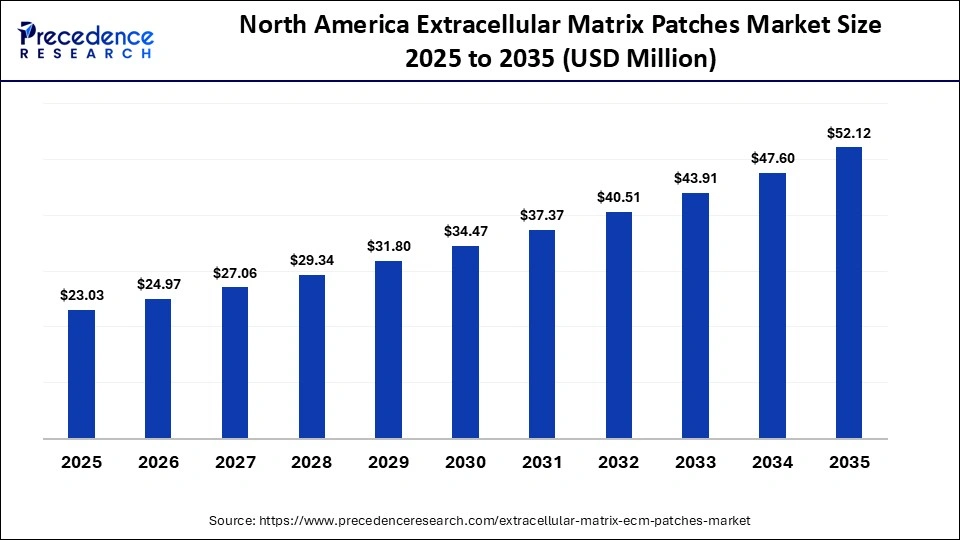
The North America extracellular matrix patches market size is estimated at USD 23.03 million in 2025 and is projected to reach approximately USD 52.12 million by 2035, with a 8.51% CAGR from 2026 to 2035.
How Did North America Emerge as the Dominant Region in the Extracellular Matrix Patches Market?
North America led the market in 2025, driven by advanced healthcare infrastructure and strong adoption of regenerative surgical technologies. There is an increasing use of ECM-based patches in complicated soft tissue and cardiovascular operations in the hospitals around the area. Clinical integration is being reinforced by high surgical volumes and access to newer biomaterials.
The Lancet in 2025 highlights that North America performs over 40-50 million surgical procedures annually, boosting demand for advanced biomaterials. Positive reimbursement models are aiding in the use of high-quality surgical implants in most healthcare systems. This dominance continues due to the strong presence of leading biomaterial manufacturers and continuous clinical innovation.
U.S. Extracellular Matrix Patches Market Size and Growth 2026 to 2035
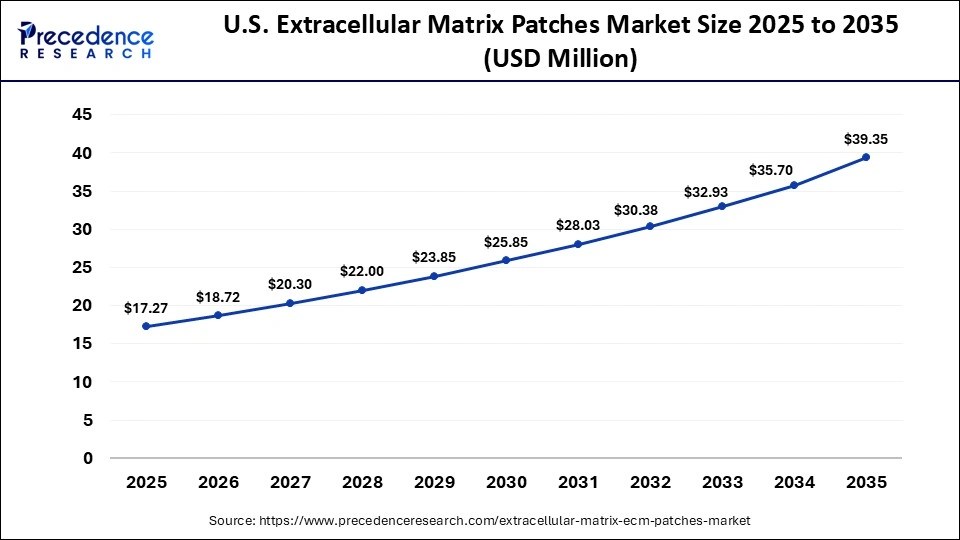
The U.S. extracellular matrix patches market size is calculated at USD 17.27 million in 2025 and is expected to reach nearly USD 39.35 million in 2035, accelerating at a strong CAGR of 8.58% between 2026 and 2035.
U.S. Leading ECM Patch Adoption in North America
U.S. leads the market in North America, supported by high surgical volumes and advanced healthcare infrastructure. The use of ECM-based patches is becoming more popular in hernia repair, cardiovascular, and wound care operations in hospitals around the country. Statistics reveal that the U.S. has more than 23 million procedures in its ambulatory surgical centers each year, with a significant number using biologic scaffolds to restore tissues. The market leadership of this country is a result of its early adherence to regenerative technologies and robust clinical validation frameworks.
How is AsiaPacific Growing in the Extracellular Matrix Patches Market?
Asia Pacific is expected to experience the fastest growth during the predicted timeframe, owing to the increasing number of healthcare and increased surgical volumes in emerging economies. Increasing access to advanced medical treatments is accelerating the adoption of regenerative biomaterials in the region.
Governments are spending a lot of money on the modernization of health care systems and increasing the capacity of surgery. The increasing rate of chronic disease and trauma cases is putting pressure on the necessity to find appropriate surgical repair solutions. The region continues to grow with increased access to healthcare services and the growing awareness about the existence of advanced treatment methods.
China Emerging as a High Growth Hub for ECM Patch Adoption in Asia Pacific
China is leading the charge in the Asia-Pacific market with the increasing healthcare amenities and the increasing number of surgeries. The availability of treatment is being enhanced by the rapid increase in the capacity of hospitals and access to medical technology. Such a growth trend is supported by high levels of government backing and the increase in clinical use of the latest regenerative therapies.
Extracellular Matrix Patches Market Value Chain Analysis
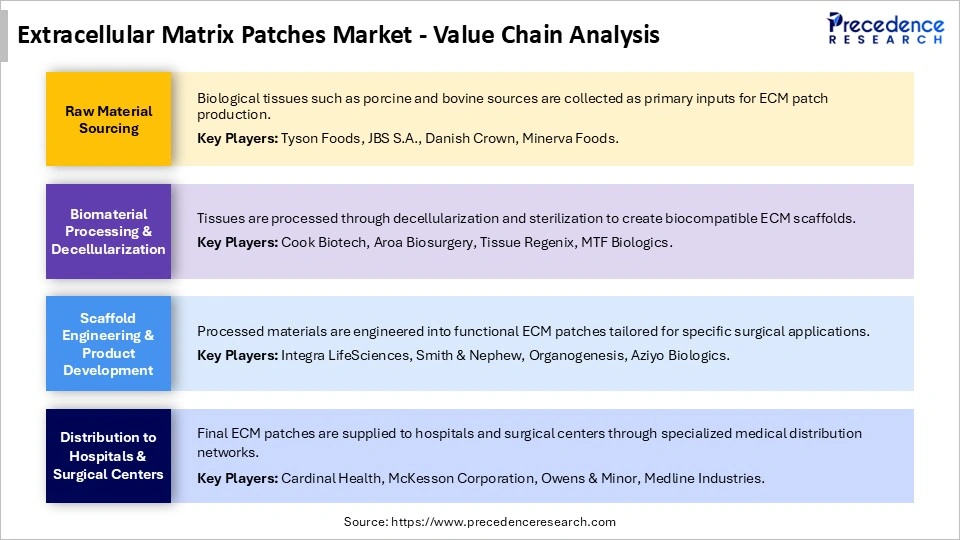
Extracellular Matrix Patches Market Companies
- Admedus Ltd.
- Aziyo Biologics
- Baxter
- Boston Scientific Corporation
- Coloplast Group
- Cook Group
- Koninklijke DSM N.V.
- Medtronic
- MTF Biologics
- Smith & Nephew
Recent Developments
- In January 2026, Tiger BioSciences acquired Platelet-Rich Fibrin Matrix (PRFM) technology from Bahia Medical to expand its regenerative wound care portfolio. The platform enables rapid preparation of autologous platelet concentrates at the point of care for chronic wound treatment. Its wearable dressing system adapts to various wound sizes and activates PRFM in situ, enhancing healing efficiency. (Source: https://www.prnewswire.com)
- In January 2026, Alicorn Medical launched CholeDerm, India's first indigenously developed ECM-based Class D wound healing device. The product was introduced at Sree Chitra Tirunal Institute, marking a successful collaboration between research and government bodies. This innovation enhances domestic access to advanced wound care and strengthens India's biomaterials ecosystem. (Source: https://www.biospectrumindia.com)
- In November 2025, Solventum announced the acquisition of Acera Surgical for $725 million with additional milestone-based payments to strengthen its regenerative medicine capabilities. Acera specializes in synthetic biomaterials for soft tissue repair using proprietary electrospinning technology. Its Restrata products are widely used in the U.S. for treating complex and non-healing wounds in clinical settings.(Source: https://www.prnewswire.com)
Segments Covered in the Report
By Application
- Cardiac Repair
- Dural Repair
- Pericardial Repair
- Soft Tissue Repair
- Vascular Repair & Reconstruction
- Wound Healing
By Raw Material
- Porcine
- Bovine
- Others
By Region
- North America
- Latin America
- Europe
- Asia-pacific
- Middle and East Africa
For inquiries regarding discounts, bulk purchases, or customization requests, please contact us at sales@precedenceresearch.com
Frequently Asked Questions





Ask For Sample
No cookie-cutter, only authentic analysis – take the 1st step to become a Precedence Research client
 Get a Sample




 sales@precedenceresearch.com
 Schedule a Meeting
