



Eyewear Market Size, Companies, Share, Sales Volume, Consumer Demand, Pricing Trends, Distribution Performance, Competitive Positioning, and Growth Forecast
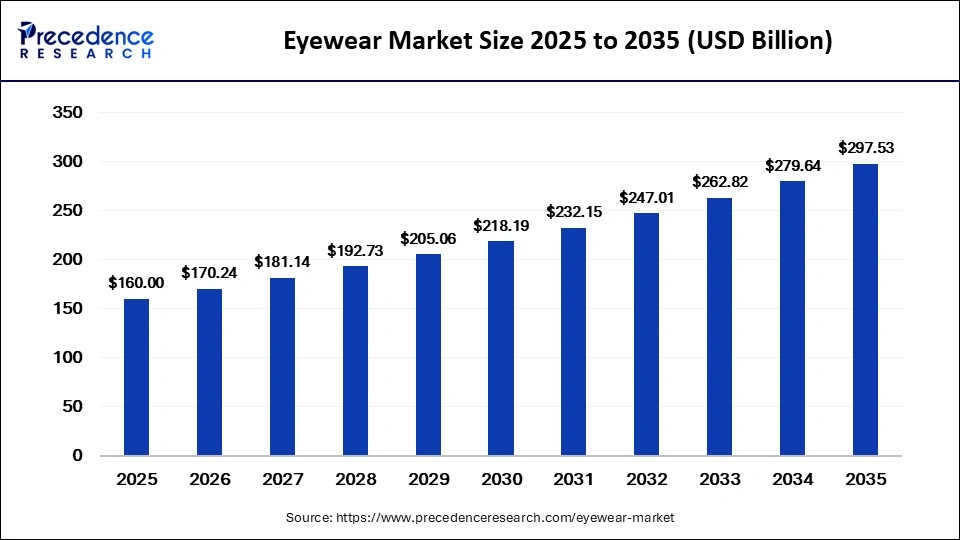
Vidyesh Swar, a Consumer Goods Industry Expert, finds that the eyewear market has reached USD 170.24 billion in 2026 and is projected to reach USD 297.53 billion by 2035, growing at a CAGR of 6.40%. Leading eyewear market brands and companies such as EssilorLuxottica, Johnson & Johnson Vision Care, Ray-Ban, Fossil Group are competing across high-demand segments including By Product Type, By Distribution Channel, By Lens Type, By End-Use.
Source: https://www.precedenceresearch.com/eyewear-market
 Get a Sample
 Table Of Content


What is the Eyewear Market Size in 2026?
The global eyewear market size was estimated at USD 160.00 billion in 2025 and is predicted to increase from USD 170.24 billion in 2026 to approximately USD 297.53 billion by 2035, expanding at a CAGR of 6.40% from 2026 to 2035. The market is driven by the increasing prevalence of age-related eye disorders, rising purchasing power, and rapid technological innovations.
Eyewear Market Key Takeaways
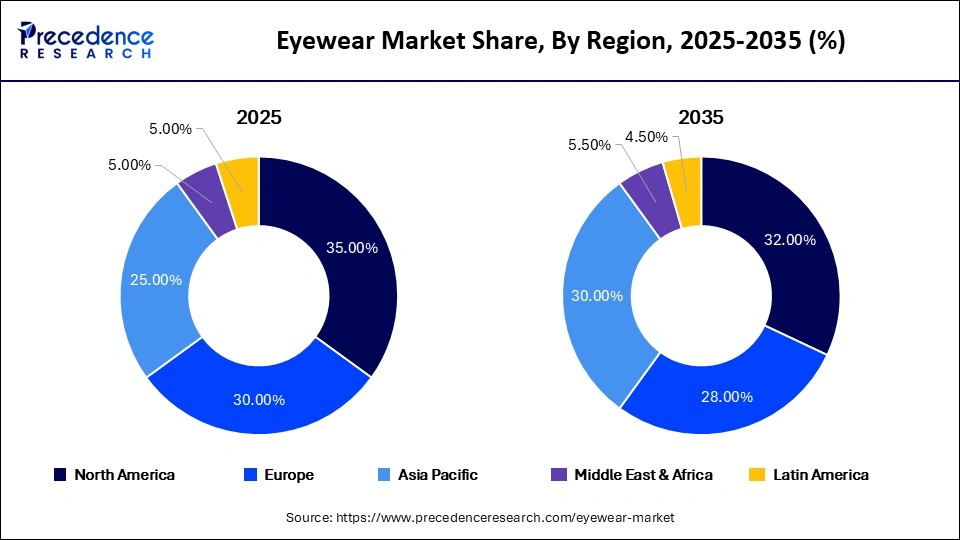
- North America dominated the global eyewear market with a share of around 35% in 2025.
- Asia-Pacific held 25% of the market share in 2025 and is expected to grow at the fastest CAGR of 8% during the forecast period.
- By product type, the prescription eyewear segment held a dominant position in the market with a share of 50% in 2025.
- By product type, the sunglasses segment held 25% of the market share in 2025 and is expected to grow at the highest CAGR of 7.5% between 2026 and 2035.
- By distribution channel, the offline (optical stores, retailers) segment accounted for 65% of market revenue in 2025.
- By distribution channel, the online (e-commerce) segment held 35% of the market share in 2025 and is expected to grow at the fastest CAGR of 10% between 2026 and 2035.
- By lens type, the single vision lenses segment led the global eyewear market with a share of 30% in 2025.
- By lens type, the photochromic lenses segment held 18% of the market share in 2025 and is expected to grow at the fastest CAGR of 7.2% between 2026 and 2035.
- By end-use, the adults segment dominated the global market with a share of 80% in 2025.
- By end-use, the children segment held 20% of the market share in 2025 and is expected to grow at the fastest CAGR of 7.2%
- between 2026 and 2035.
Market Overview
The market encompasses any items or devices worn on or over the eyes for protection, vision correction, and fashion. Eyewear has become one of the most powerful tools in a modern wardrobe, acting as both a necessary health tool and a fashion accessory. Today's eyewear embraces individuality and fashion at any age. The most common examples of eyewear include sunglasses, eyeglasses, goggles, and contact lenses. Eyewear is also now treated as a key lifestyle accessory, which creates demand for premium, designer frames and sunglasses. Older adults now have stylish options beyond plain and utilitarian glasses.
Eyewear Market Trends
- With the aging global population, the cases of myopia and hyperopia are increasing. This, in turn, boosts the demand for prescription eyewear, particularly among children and young adults.
- The market is witnessing increasing eyewear demand as a fashion accessory. Consumers are increasingly viewing glasses as lifestyle products, which spurs the demand for branded, stylish, and premium sunglasses.
- The rapid technological innovation in lens technology is expected to contribute to the overall growth of the market. The rapid technological innovation in lens technology, including superior anti-reflective coatings and lightweight materials, is significantly improving visual clarity.
- The rise of e-commerce and direct-to-consumer growth is anticipated to accelerate the growth of the market during the forecast period. The surge of online retail and virtual try-on technology allows consumers to try on, compare, and purchase glasses easily.
How are AI-Driven Innovations Reshaping the Growth of the Eyewear Market?
In the era of a rapidly evolving technological landscape, the integration of artificial intelligence (AI) is significantly transforming and accelerating market growth. AI is rapidly transforming eye care from reactive to proactive, improving the speed and accuracy of eye exams. Modern AI glasses use cameras and sensors for real-time object recognition, navigation, language translation, and to accurately answer questions about the user's environment. Augmented reality (AR) software, enhanced by AI, efficiently analyzes a user's facial geometry to create a realistic image of how the frames will appear. AI-powered tools analyze facial features to recommend the best frame styles from thousands of options, which reduces consumer indecision and enhances satisfaction.
Market Scope
| Report Coverage | Details |
| Market Size in 2025 | USD 160.00 Billion |
| Market Size in 2026 | USD 170.24 Billion |
| Market Size by 2035 | USD 297.53 Billion |
| Market Growth Rate from 2026 to 2035 | CAGR of 6.40% |
| Dominating Region | North America |
| Fastest Growing Region | Asia Pacific |
| Base Year | 2025 |
| Forecast Period | 2026 to 2035 |
| Segments Covered | Product Type, Distribution Channel, Lens Type, End-Use, and Region |
| Regions Covered | North America, Europe, Asia-Pacific, Latin America, and Middle East & Africa |
Market Dynamics
Driver
Rising digital screen time
The increase in screen time is anticipated to boost the demand for light-filtering glasses, boosting the eyewear market's growth during the forecast period. The prolonged focus on digital screens causes various symptoms such as headaches, dry eyes, and blurry vision. The increasing digital screen time is significantly increasing the prevalence of digital eye strain (DES) and myopia (nearsightedness). To combat these effects, specialized eyewear is generally recommended to reduce exposure to high-energy visible light (blue light) and alleviate strain.
Restraint
Widespread Availability of Counterfeit Products
The widespread availability of low-cost, counterfeit, and unbranded eyewear frames is anticipated to hamper the market growth. These products reduce the demand for authentic items, while also undermining consumer trust and damaging brand reputation. Additionally, the lack of proper lens-frame compatibility in cheaper alternatives poses potential risks to consumer eye health. Such factors may hinder the growth of the global eyewear market.
Opportunity
Rising popularity of Smart Eyewear Technology
The increasing adoption of smart eyewear is anticipated to offer lucrative growth opportunities for the market. The smart glasses now automatically adjust for reading or distance vision, eliminating the need for multiple pairs of glasses for those with specific vision needs. As technology is becoming more user-friendly, adults are increasingly embracing these innovations. Smart glasses equipped with advanced features such as voice control, fitness tracking, and health monitoring are becoming increasingly accessible, providing significant benefits for older adults. These glasses can track physical activity and provide crucial health benefits, including monitoring heart rate and blood sugar levels and reminding the wearer to take their medication.
Segmental Analysis
Product Type Insights
The Prescription Eyewear Segment Held 50% of Market Share in 2025
The prescription eyewear segment dominated the eyewear market with a share of 50% in 2025, owing to the increasing prevalence of vision impairment globally, increasing awareness regarding the importance of eye health, rising screen time causing digital eye strain, increasing aging population, and the rising consumer preference for personalized eyewear.
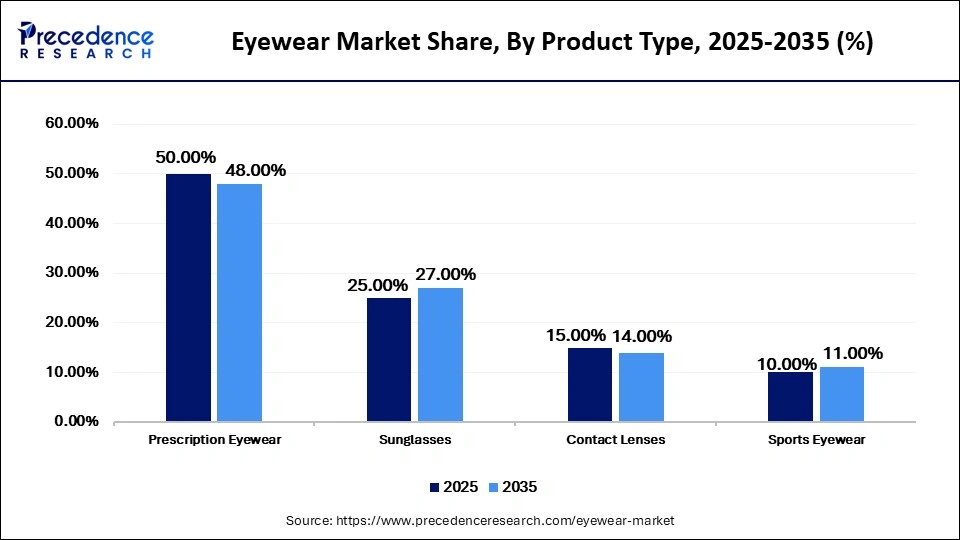
The sunglasses segment held 25% of the market share in 2025 and is expected to grow at the fastest CAGR of 7.5% during the forecast period. Sunglasses are widely perceived as a "fashion accessory" rather than just a health product. The rise of social media influencers, celebrity culture, and lifestyle marketing has positioned designer sunglasses as must-have accessories. Sunglasses offer high-functionality UV protection with fashion-driven and premium branding. Moreover, the growing awareness of eye damage caused by UV rays has increased the demand for superior quality sunglasses.
The contact lenses segment held 15% of the market share in 2025 and is expected to grow at a CAGR of 5% in the upcoming period. The rising screen time, digital device usage, and lifestyle changes have significantly increased the prevalence of myopia and other refractive errors, creating a strong demand for contact lenses. Moreover, the rising development of specialized contact lenses is specifically designed to slow the progression of myopia.
Eyewear Market Share, By Product Type, 2025-2035 (%)
| Product Type | 2025 | 2035 | CAGR (%) |
| Prescription Eyewear | 50.00% | 48.00% | 6.00% |
| Sunglasses | 25.00% | 27.00% | 7.50% |
| Contact Lenses | 15.00% | 14.00% | 5.00% |
| Sports Eyewear | 10.00% | 11.00% | 6.50% |
Lens Type Insights
Why Did the Single Vision Lenses Segment Led the Eyewear Market in 2025?
The single vision lenses segment held a dominant position in the market with a share of 30% in 2025. The rising screen time, extended work hours, and increasing prevalence of digital eye strain among younger populations are anticipated to bolster the demand for anti-fatigue and anti-glare single-vision lenses. Single vision lenses are cheaper to produce than multifocal lenses, making them the preferred economical choice for first-time users and individuals requiring everyday correction.
The bifocal lenses segment held 12% of the market share in 2025 and is expected to grow at a CAGR of 4.8% during the projection period, driven by the increasing prevalence of presbyopia, the rise in the aging population, rapid technological advancements in lens materials, and growing demand for cost-effective & versatile vision correction. Moreover, the growth of e-commerce and virtual try-ons has made it easier for consumers to access a wide range of bifocal glasses.
Eyewear Market Share, By Lens Type, 2025-2035 (%)
| Lens Type | 2025 | 2035 | CAGR (%) |
| Single Vision Lenses | 30.00% | 28.00% | 5.50% |
| Bifocal Lenses | 12.00% | 11.00% | 4.80% |
| Progressive Lenses | 25.00% | 26.00% | 6.00% |
| Photochromic Lenses | 18.00% | 20.00% | 7.20% |
| Anti-reflective Lenses | 15.00% | 15.00% | 5.00% |
The progressive lenses segment held 25% of the market share in 2025 and is expected to grow at a CAGR of 6% during the forecast period, due to increasing global prevalence of presbyopia in an aging population, and growing demand for seamless transition between near and far vision. Progressive lenses are multifocal lenses that correct vision across several distances. They have no visible lines, offering a smooth and natural transition between vision zones. These lenses eliminate the need for multiple pairs of glasses and provide clear vision for all daily activities.
The photochromic lenses segment held 18% of the market share in 2025 and is expected to grow at the fastest CAGR of 7.2% during the projection period. This growth is driven by a combination of factors, such as the increasing popularity of lightweight materials such as plastic and polycarbonate materials, rising eye health awareness, and rapid technological innovation. The photochromic lenses automatically darken in sunlight and turn clear indoors, which eliminates the need to switch between prescription eyeglasses and sunglasses.
End-use Insights
The Adults Segment Held 80% of Market Share of the Eyewear Market in 2025
The adults segment registered its dominance in the global market with a share of 80% in 2025, driven by the rising prevalence of age-related vision issues, the surge of digital eye strain, and increasing disposable income for premium purchases. The rising adult population has significantly increased demand for specialty lenses, mainly progressive and reading glasses, to correct presbyopia.
The children segment held 20% of the market share in 2025 and is expected to grow at the fastest CAGR of 7.2% during the projection period. The rising screen time of digital devices and decreased outdoor activities has increased the prevalence of myopia and other vision issues in school-age children. Parents are increasingly becoming more proactive about conducting early, regular eye screenings, which accelerates the adoption of corrective lenses. Parents are also increasingly prioritizing durable, stylish, and functional eyewear, like character branding and enhanced UV protection.
Eyewear Market Share, By End-use, 2025-2035 (%)
| End-use | 2025 | 2035 | CAGR (%) |
| Adults | 80.00% | 78.00% | 5.00% |
| Children | 20.00% | 22.00% | 7.20% |
Distribution Channel Insights
What Made Offline the Dominant Segment in the Eyewear market in 2025?
The offline (optical stores, retailers) segment dominated the global market with the largest share of 65% in 2025. Consumers mostly prefer to try on frames to ensure proper fit, style, and comfort. Physical stores offer instant possession of products and on-the-spot adjustments, which offer high-touch service that fosters consumer trust and brand loyalty. Consumers with progressive, complex, and high-prescription lenses feel more secure when they receive face-to-face expert guidance from opticians to ensure accuracy.
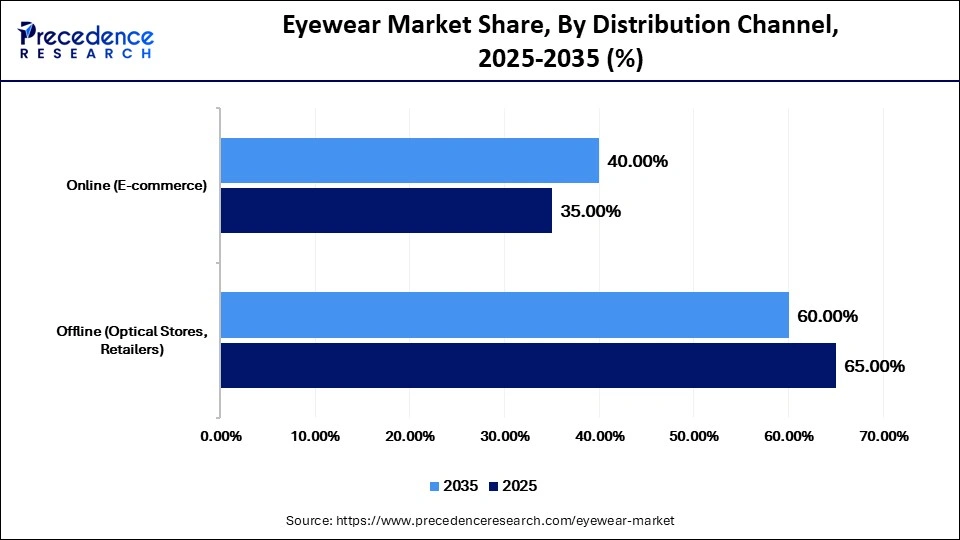
The online (e-commerce) segment held 35% of the market share in 2025 and is expected to grow at the fastest CAGR of 10% during the projection period, owing to the lower pricing, wide availability, rising consumer convenience, and sophisticated technology that simulates the in-store experience. The market is witnessing a massive shift towards the adoption of AI-powered virtual try-ons, making online purchasing more accessible.
Eyewear Market Share, By Distribution Channel, 2025-2025(%)
| Distribution Channel | 2025 | 2025 | CAGR (%) |
| Offline (Optical Stores, Retailers) | 65.00% | 60.00% | 4.50% |
| Online (E-commerce) | 35.00% | 40.00% | 10.00% |
Regional Analysis
North America Eyewear Market Size and Growth 2026 to 2035
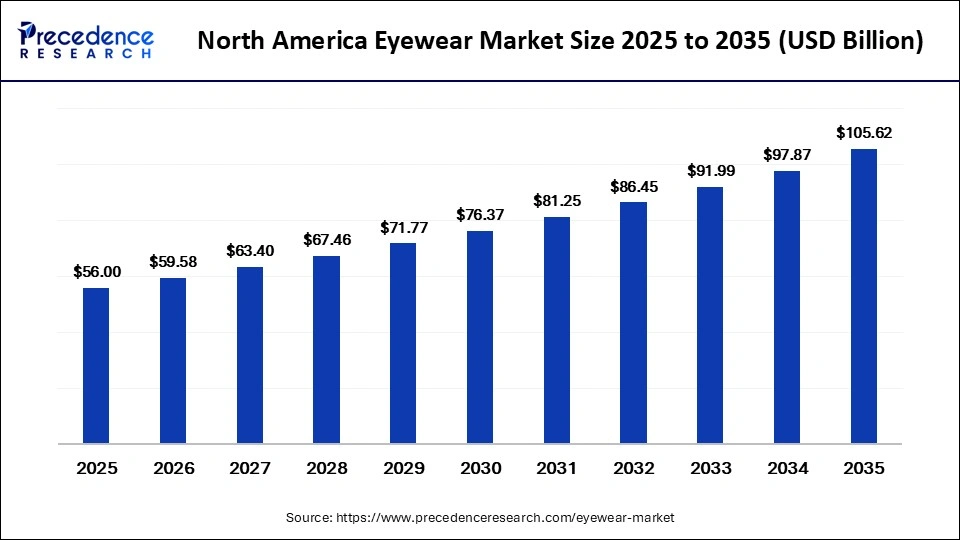
The U.S. Eyewear market size was exhibited at USD 56.00 billion in 2025 and is projected to be worth around USD 105.62 billion by 2035, growing at a CAGR of 6.55% from 2026 to 2035.
Which Factors Drive the Eyewear Market in North America?
North America led the market by holding a major share of 35% in 2025. The region has a strong network of optical retail chains coupled with the rapid expansion of online retail, making it easy to purchase non-prescription and prescription eyewear. The increasing number of people suffering from myopia, presbyopia, and other eye impairments, which is increasing the consistent demand for corrective lenses in the region. Additionally, the growing demand for premium/fashion eyewear continues to drive market growth.
U.S. Eyewear Market Size and Growth 2026 to 2035
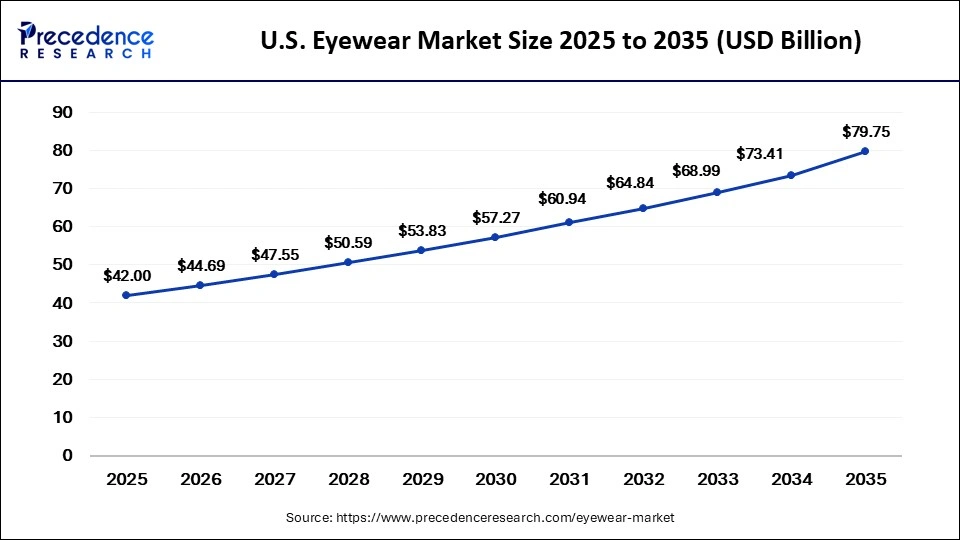
The U.S. Eyewear market size was evaluated at USD 42.00 billion in 2025 and is projected to be worth around USD 79.75 billion by 2035, growing at a CAGR of 6.62% from 2026 to 2035.
U.S. Market Analysis
The U.S. is a major contributor to the North American market. The growth of the country is majorly attributed to the advanced healthcare infrastructure, increasing prevalence of vision impairment, high disposable income, high awareness of eye health, significant digital device usage among adults & children, and strong retail and e-commerce infrastructure. Consumers in the U.S. treat eyewear as a fashion statement rather than just a medical necessity, which is boosting sales of luxury and branded frames. These collective factors are anticipated to bolster the market's growth during the forecast period.
How is Asia-Pacific Growing in the Eyewear Market?
Asia-Pacific held 25% of the market share in 2025 and is expected to grow at the fastest CAGR of 8% during the projection period, driven by the developing healthcare infrastructure, a high prevalence of vision defects such as myopia, rising disposable incomes, growing awareness of eye health, rising digital screen time, and increasing shift towards premium, fashionable, and branded eyewear. The region has a growing geriatric population requiring vision correction, which creates a high demand for reading glasses and bifocals. In addition, the rapid adoption of modern healthcare infrastructure in countries like China, Japan, and India is further accelerating market growth.
China Market Analysis
The Chinese market is driven by the strong presence of prominent players, the increasing prevalence of myopia and other vision disorders, particularly among children and young adults, a surge in the ageing population, high disposable income, and rising expansion of the e-commerce sector. Eyewear is widely seen in the country as a key fashion accessory rather than just a medical necessity. The strong R&D in the country is significantly fostering innovation in smart glasses and lightweight lens materials. Additionally, the rising usage of smartphones and remote work has led to the increasing rates of digital eye strain, significantly increasing demand for blue light-blocking lenses and protective eyewear. Such factors are supporting the expansion of the market in the country.
Supply Chain Analysis of the Eyewear Market
Research, Design & Development (R&D): This initial stage strongly focuses on market trends, ergonomic design, fashion forecasting, and material science, including the development of specialized lenses and smart glasses.
- Key Players: EssilorLuxottica, Carl Zeiss AG, Hoya Corporation, Safilo Group, Kering Eyewear, and others.
Manufacturing (Frames & Lenses): This stage involves the physical production of frames and lenses, assembly, coating, and quality control (QC). It also includes the manufacturing of prescription lenses and sunglass lenses.
- Key Players: Safilo Group, EssilorLuxottica, Marcolin SpA, De Rigo Vision S.p.A., Alcon Inc., Hoya Corporation, and Charmant Group.
Retail & Final Consumption: This stage involves the delivery to the final consumer, divided into traditional offline optical shops, high-fashion retail outlets, and online platforms.
- Key Players: EssilorLuxottica, Fielmann Group, GrandVision, Lenskart, Warby Parker, and Titan Company Limited.
Top Companies in the Eyewear Market
- EssilorLuxottica
- Johnson & Johnson Vision Care
- Ray-Ban
- Fossil Group
- Marchon Eyewear
- Maui Jim
- Safilo Group
- Kering Eyewear
- Luxottica Group
- Warby Parker
- Oakley
- CooperVision
- Bausch & Lomb
- Prada Eyewear
- Tom Ford Eyewear
Recent Developments
- In December 2025, Innovative Eyewear, Inc., the developer & manufacturer of smart eyewear under the Lucyd, Lucyd Armor, Reebok, Eddie Bauer, and Nautica brands, announced that it had partnered with SmartBuyGlasses, a global online eyewear provider, to provide its Reebok smart eyewear to its customers. Through the partnership, SmartBuyGlasses is offering Innovative Eyewear's smart eyewear with prescription options and global shipping, providing fast delivery of frames with custom lenses across its markets. (Source: https://www.prnewswire.com)
- In November 2025, Authentic Brands Group, a global brand development, marketing, and entertainment platform, announced a licensing agreement with RobSol Indústria Óptica (RobSol) for Reebok eyewear in Brazil. Under the agreement, RobSol will design, manufacture, and distribute Reebok sunglasses, optical frames, eyewear accessories, and swim goggles throughout the region. (Source: https://corporate.authentic.com)
Segments Covered in the Report
By Product Type
- Prescription Eyewear
- Sunglasses
- Contact Lenses
- Sports Eyewear
By Distribution Channel
- Offline (Optical Stores, Retailers)
- Online (E-commerce)
By Lens Type
- Single Vision Lenses
- Bifocal Lenses
- Progressive Lenses
- Photochromic Lenses
- Anti-reflective Lenses
By End-Use
- Adults
- Children
By Region
- North America
- Latin America
- Europe
- Asia-pacific
- Middle and East Africa
For inquiries regarding discounts, bulk purchases, or customization requests, please contact us at sales@precedenceresearch.com
Frequently Asked Questions
Tags





Ask For Sample
No cookie-cutter, only authentic analysis – take the 1st step to become a Precedence Research client
 Get a Sample




 sales@precedenceresearch.com
 Schedule a Meeting
