



GLP-1 Market Size, Share and Trends 2026 to 2035
GLP-1 Market (By Product Type: GLP-1 Receptor Agonists, Oral GLP-1 Therapies, Injectable GLP-1 Therapies; By Route of Administration: Injectable, Once Daily, Once Weekly, Oral; By Indication: Type 2 Diabetes Mellitus, Obesity & Weight Management, Cardiovascular Risk Reduction, Non-Alcoholic Steatohepatitis (NASH)/MASH, Chronic Kidney Disease (CKD), Other Metabolic Disorders; By Drug Class: Short-acting GLP-1 Agonists, Long-acting GLP-1 Agonists, Dual Incretin Agonists, Triple Agonists (Pipeline); By Distribution Channel: Hospital Pharmacies, Retail Pharmacies, Online Pharmacies; By End User: Hospitals, Specialty Clinics, Homecare Settings, Ambulatory Care Centers; By Age Group: Adults, Geriatric, Pediatric; By Payer Type: Public Insurance, Private Insurance, Out-of-Pocket) - Global Industry Analysis, Size, Trends, Leading Companies, Regional Outlook, and Forecast 2026 to 2035
Source: https://www.precedenceresearch.com/glp-1-market
 Get a Sample
 Table Of Content


GLP-1 Market Size and Forecast 2026 to 2035
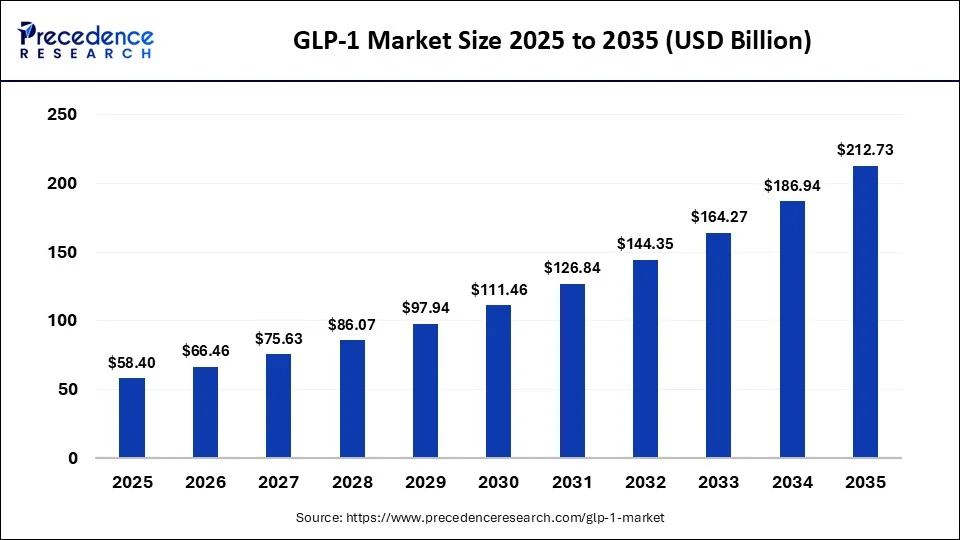
The global GLP-1 market size accounted for USD 58.40 billion in 2025 and is predicted to increase from USD 66.46 billion in 2026 to approximately USD 212.73 billion by 2035, expanding at a CAGR of 13.80% from 2026 to 2035. The market is driven by the expanding clinical indication of these therapies, which are now evolving from handling Type 2 diabetes to long-term chronic weight management and even cardiovascular risk reduction.
Key Takeaways
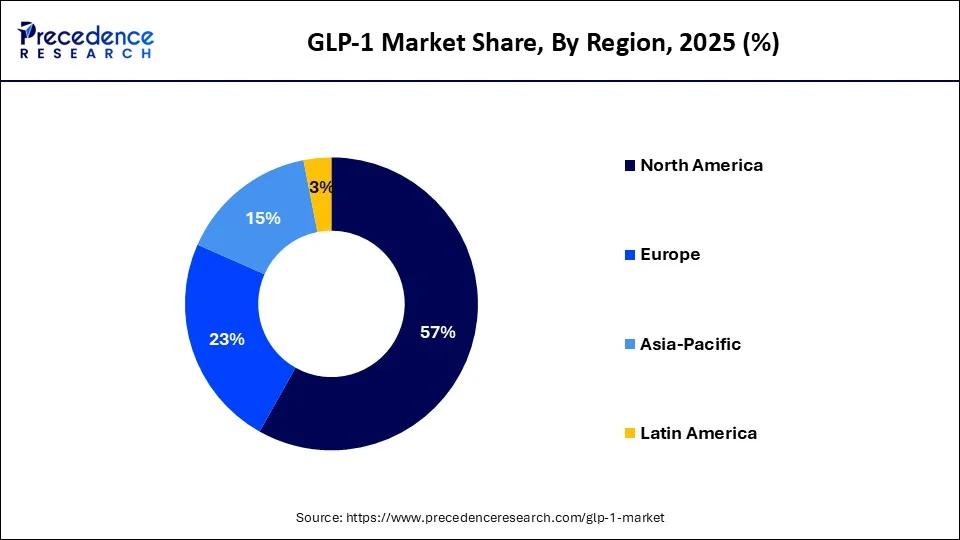
- North America led the GLP-1 market by holding a major share of 57% in 2025.
- Asia-Pacific held a 15% share of the market in 2025 and is expected to grow at the fastest CAGR of 18.2% during the projection period.
- By product type, the GLP-1 receptor agonists segment held the largest market share in 2025 and is expected to grow at the fastest CAGR during the projection period.
- By product type, the oral GLP-1 therapies segment is expected to grow at a notable CAGR during the projection period.
- By indication, the type 2 diabetes mellitus segment held a dominant position in the market with a 58% share in 2025.
- By indication, the obesity and weight management segment held a 28% share of the market in 2025 and is expected to grow at the fastest CAGR of 18.6% during the projection period.
- By drug class, the long-acting GLP-1 agonists segment held a dominant position in the market with a 63% share in 2025.
- By drug class, the triple agonists (Pipeline) segment held a 3% share of the market in 2025 and is expected to grow at the fastest CAGR of 29.4% during the projection period.
- By distribution channel, the retail pharmacies segment held a dominant position in the GLP-1 market, with a 54% share in 2025.
- By distribution channel, the online pharmacies segment held a 18% share of the market in 2025 and is expected to grow at the fastest CAGR of 20.8% during the projection period.
- By end user, the homecare settings segment dominated the market with a share of 64% in 2025 and is expected to grow at the fastest CAGR of 15.1% in the coming years.
- By end user, the hospitals segment held a 19% share of the market in 2025 and is expected to grow at a CAGR of 8.4% during the projection period.
Market Overview
The GLP-1 industry refers to the worldwide pharmaceutical sector centered around glucagon-like peptide-1 (GLP-1) receptor agonists. It developed to maintain type 2 diabetes; thus, these lab-engineered hormones work by stimulating insulin production and delaying gastric emptying, alongside signaling fullness to the brain. The market is mainly driven by the massive growth in therapeutic applications, shifting from just diabetes management to widespread obesity treatment and cardiovascular care.
GLP-1 Market Trends
- The shift from injectables to oral GLP-1 formulations, like recent FDA approvals and even expansions, is lowering barriers to entry.
- GLP-1s are no longer just for type-2 diabetes along with weight management; clinical data is demonstrating their efficacy in treating fatty liver disease, cardiovascular conditions, and neurological disorders.
- High GLP-1 acceptance is altering consumer behavior. Analysts note the decreased spending in fast-food discretionary categories and even a complementary spike in fitness engagement and experiential dining.
Market Report Coverage and Key Metrics
| Report Coverage | Details |
| Market Size in 2025 | USD 58.40 Billion |
| Market Size in 2026 | USD 66.46 Billion |
| Market Size by 2035 | USD 212.73 Billion |
| Market Growth Rate from 2026 to 2035 | CAGR of 13.80% |
| Dominating Region | North America |
| Fastest Growing Region | Asia Paicfic |
| Base Year | 2025 |
| Forecast Period | 2026 to 2035 |
| Segments Covered | Product Type, Route of Administration, Indication, Drug Class, Distribution Channel, End User, Age Group, Payer Type, and Region |
| Regions Covered | North America, Europe, Asia-Pacific, Latin America, and Middle East & Africa |
Market Dynamics
Drivers
Shift to Oral Formulations
The shift to oral formulations is a main driver of the GLP-1 market because it directly removes patient barriers, simplifies daily routines, needle anxiety, and eliminates complex cold chain logistics. This huge leap in convenience is accelerating adoption. Clinical trials show oral GLP-1s offer robust, clinically meaningful weight reduction along with notable cardiometabolic benefits, mirroring the efficacy of injectables.
Restraint
Regulatory & Promotional Restrictions
Regulatory and promotional restrictions act as a significant restraint for the GLP-1 market because they prohibit surrogate marketing, such as disease awareness campaigns, ban direct-to-consumer advertising, and mandate strict prescriptions. These guardrails prevent pharmaceutical firms from creating mass consumer need, ultimately capping overall market volume and adoption rates. Authorities strictly prevent the direct advertising of prescription medications. This prevents pharmaceutical firms from using high-impact marketing to reach millions of potential obese or overweight users.
Opportunity
Supply Chain & Manufacturing
Supply chain and manufacturing represent the opportunity in the market as the demand has drastically outpaced existing capacity. Transitioning from solvent-intensive peptide production to modern techniques such as enzyme-based peptide synthesis and scalable oral small molecules, such as orforglipron, presents a vast opportunity to lower costs and boost profit margins.
Market Segmentation Analysis
Product Type Insights
Which Product Type Segment Dominated the GLP-1 Market?
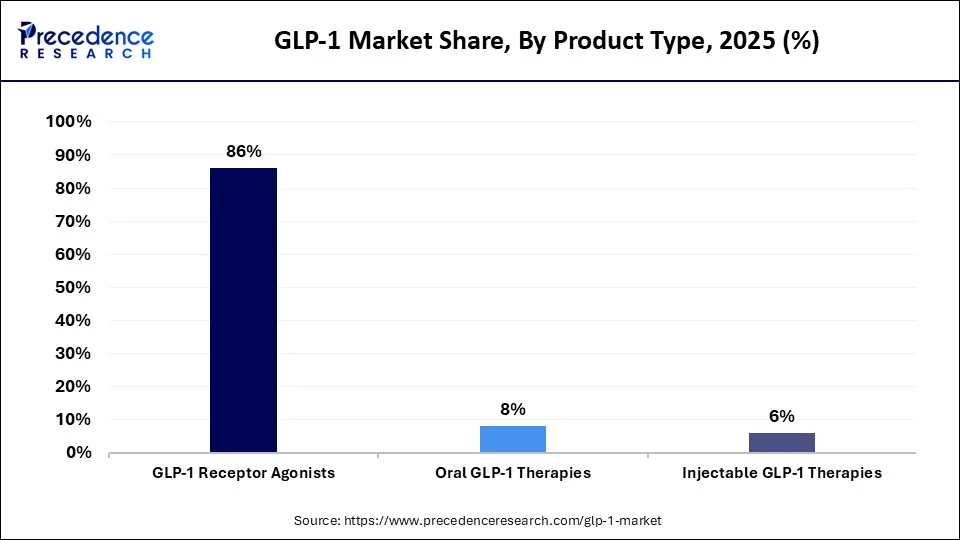
The GLP-1 receptor agonists segment dominated the market with a share of 86% in 2025, as GLP-1 receptor agonists are driving historic market expansion by transforming obesity and diabetes management into a billion-dollar global industry. Moreover, GLP-1s are no longer just for diabetes; they are thus established as first-line therapies for obesity and are being validated for wider indications. Further, clinical evidence demonstrating their effectiveness in decreasing cardiovascular events and kidney disease has remarkably broadened the addressable patient population.
The semaglutide subsegment dominated the market in 2025. This is mainly due to the strong acceptance of diabetes and obesity management. Moreover, semaglutide is evolving past just diabetes and weight loss, thus expanding into treatments for heart failure, chronic kidney disease, and metabolic dysfunction. These expanded clinical uses drastically widen the addressable patient population.
The oral GLP-1 therapies segment held 8% of the market share in 2025 and is expected to grow at the fastest CAGR of 21.8% during the forecast period. This is due to easy convenience, high affordability, and improved patient compliance. Oral therapies can be administered to patients of all age groups, enhancing their widespread availability. They eliminate the need for skilled professionals to deliver medications.
Indication Insights
Why Did the Type 2 Diabetes Mellitus Segment Lead the GLP-1 Market in 2025?
The type 2 diabetes mellitus segment led the market with a 58% share in 2025, driven by the large existing diabetic patient population. The proven ability of GLP-1s to lower HbA1c with a low risk of hypoglycemia has now skyrocketed their adoption. Doctors are prescribing them much earlier in the individual journey, displacing older medications. Type 2 diabetes is usually accompanied by obesity and cardiovascular issues. GLP-1s treat the root cause by rising insulin secretion, suppressing glucagon, and decreasing appetite. This makes them ideal multi-condition solutions.
GLP-1 Market Share, By Indication, 2025 (%)
| Indication | 2025 | 2035 | CAGR (%) |
| Type 2 Diabetes Mellitus | 58 | 42 | 9.40% |
| Obesity & Weight Management | 28 | 42 | 18.60% |
| Cardiovascular Risk Reduction | 6 | 7 | 15.20% |
| NASH/MASH | 3 | 4 | 17.10% |
| Chronic Kidney Disease (CKD) | 2 | 3 | 16.40% |
| Other Metabolic Disorders | 3 | 2 |
10.50% |
The obesity and weight management segment held a 28% share of the market in 2025 and is expected to grow at the fastest CAGR of 18.6% during the projection period. This is mainly due to the rapid growth in anti-obesity treatment adoption. GLP-1s are proven to decrease cardiovascular events, sleep apnea, and even kidney disease. This proof of medical efficacy solidifies their position as standard, thus, foundational treatments rather than just cosmetic lifestyle drugs.
The cardiovascular risk reduction segment held a 6% share of the market in 2025 and is expected to grow at a CAGR of 15.2% during the projection period. This is due to expanding cardiovascular outcome data. Because cardiovascular disease remains the major cause of death worldwide, proving that GLP-1s prevent cardiac events and hospitalizations makes the drugs highly valuable to healthcare systems. Moreover, demonstrating clear cardiovascular risk reduction is assisting manufacturers in securing better insurance reimbursements and payer coverage, making these historically expensive treatments more accessible to the public.
Drug Class Insights
How the Long-acting GLP-1 Agonists Segment Led the GLP-1 Market?
The long-acting GLP-1 agonists segment held the largest market share of 63% in 2025, driven by the offering of once-weekly dosing, which drastically enhances patient adherence over daily therapies. This dosing convenience, combined with robust weight loss and cardiovascular benefits, expands the addressable patient pool beyond diabetes to include obesity, heart disease, and metabolic disorders.
GLP-1 Market Share, By Drug Class, 2025 (%)
| Drug Class | 2025 | 2035 | CAGR (%) |
| Long-acting GLP-1 Agonists | 63 | 49 | 10.20% |
| Dual Incretin Agonists | 23 | 38 | 18.50% |
| Short-acting GLP-1 Agonists | 11 | 5 | 3.40% |
| Triple Agonists (Pipeline) | 3 | 8 | 29.40% |
The triple agonists (Pipeline) segment held a 3% share of the market in 2025 and is expected to grow at the fastest CAGR of 29.4% during the projection period. This is mainly by pushing the boundaries of weight loss and glycemic control. By simultaneously aiming at GLP-1, GIP, and glucagon receptors, these drugs, such as retatrutide, deliver significantly greater efficacy than current therapies, expanding the addressable patient base.
The dual incretin agonists segment held a 23% share of the market in 2025 and is expected to grow at a CAGR of 18.5% during the projection period. This is due to superior glycemic control and weight reduction. Because dual incretin agonists improve metabolic dysfunction so effectively, pharmaceutical firms are heavily investing in label expansions and pipeline drugs, like emerging triple-incretin agonists. These treatments are currently undergoing clinical trials for expanded usage in pediatric populations and to target broader cardiometabolic and liver conditions, thus rapidly expanding the treatable patient pool.
Distribution Channel Insights
Why Did the Retail Pharmacies Segment Dominate the GLP-1 Market?
The retail pharmacies segment contributed the biggest market share of 54% in 2025, driven by the primary dispensing channel for chronic therapy. Retail pharmacies are ubiquitous. Their broad geographic reach enables pharmaceutical companies to seamlessly deploy blockbuster medications to local neighborhoods, driving record-breaking sales volumes for drugs such as Mounjaro and Wegovy.
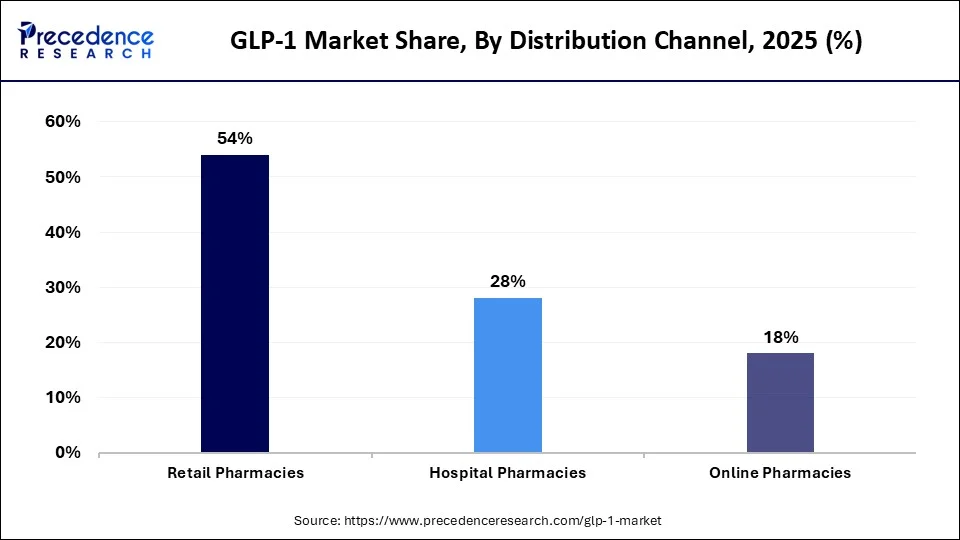
The online pharmacies segment held an 18% share of the market in 2025 and is expected to grow at the fastest CAGR of 20.8% during the projection period. This is mainly because of expanding digital healthcare and home delivery services. Platforms such as LifeMD and Ro offer subscription-based online programs where consumers complete questionnaires, get e-prescriptions, and order medications. This seamless pipeline enables almost anyone to secure GLP-1s without an in-person appointment.
The hospital pharmacies segment held a 28% share of the market in 2025 and is expected to grow at a CAGR of 8.5% during the projection period. This is due to prescription initiation and specialist treatment. By centralizing supply via hospital systems, these pharmacies aid in navigating global supply-demand imbalances, ensuring patients with high-risk conditions maintain continuous access to vital medications.
End User Insights
Which End User Segment Led the GLP-1 Market?
The homecare settings segment led the market with a share of 64% in 2025 and is expected to grow at the fastest CAGR of 15.1% in the coming years. This is due to self-administration of injectable and oral therapies. As GLP-1s change from short-term interventions to lifelong cardiometabolic therapies, the home becomes the main environment for ongoing weight management and even preventive health maintenance.
GLP-1 Market Share, By End User, 2025 (%)
| End User | 2025 | 2035 | CAGR (%) |
| Homecare Settings | 64 | 71 | 15.10% |
| Hospitals | 19 | 14 | 8.40% |
| Specialty Clinics | 13 | 12 | 11.70% |
| Ambulatory Care Centers | 4 | 3 | 8.20% |
The hospitals segment held a 19% share of the market in 2025 and is expected to grow at a CAGR of 8.4% during the projection period. This is due to the diagnosis and treatment initiation. Hospital-backed health systems are expanding GLP-1 use to treat chronic kidney disease, cardiovascular complications, and non-alcoholic steatohepatitis (NASH), as per Morgan Stanley. Also, by screening for and treating these comorbid conditions, hospitals widen the eligible patient pool for GLP-1s beyond conventional obesity and diabetes management.
The specialty clinics segment held a 13% share of the market in 2025 and is expected to grow at a CAGR of 11.7% during the projection period. This is due to the obesity and diabetes management centers. Medical spas and dermatology clinics use GLP-1 prescriptions alongside complementary treatments such as body contouring, radio-frequency (RF) microneedling, and even injectable biostimulators to aim for aesthetic changes, for example, facial volume loss, linked with rapid weight loss.
Market Regional Analysis: North America, Europe, Asia-Pacific
Which Factors Drive the GLP-1 Market in North America?
North America held a major market share of 57% in 2025. This is due to the strong uptake of obesity and diabetes therapeutics. By addressing obesity, GLP-1s lower the societal and economic burdens of severe comorbidities such as cardiovascular and kidney diseases. Healthier populations lead to fewer sick days, higher workforce participation, and reduced long-term healthcare costs.
U.S. GLP-1 Market Size and Growth 2026 to 2035
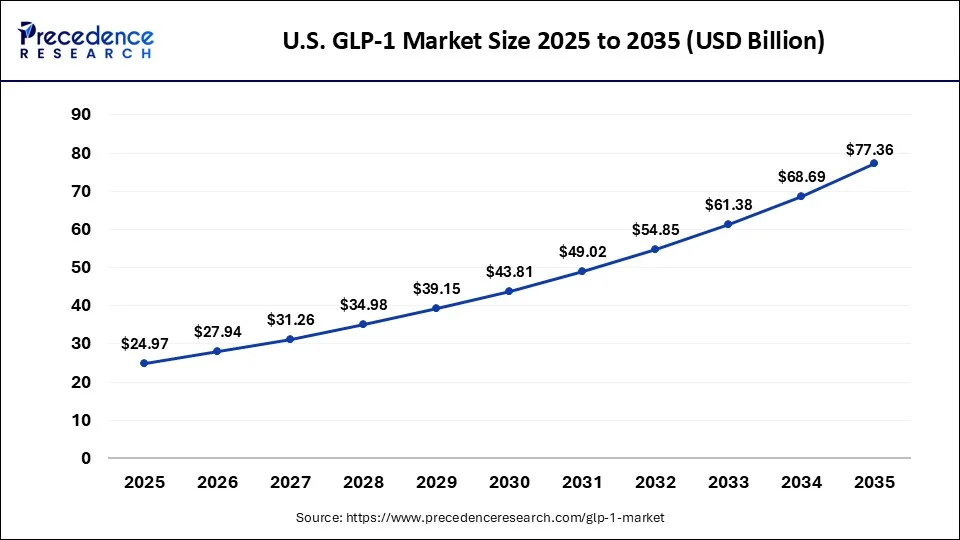
The U.S. GLP-1 market size was evaluated at USD 24.97 billion in 2025 and is projected to reach around USD 77.36 billion by 2035, growing at a CAGR of 11.97% from 2026 to 2035.
U.S. Market Analysis
GLP-1 receptor agonists, like Ozempic and Wegovy, are driving U.S. economic expansion by boosting labor productivity, decreasing obesity-related healthcare costs, and driving a massive multi-billion-dollar biopharmaceutical and consumer market.
Europe: The Second-Largest Market
Europe held the second-largest share of 23% in 2025 and is expected to grow at a notable CAGR of 13.1% during the projection period, driven mainly by expanding reimbursement and treatment access. The soaring demand for treatments such as Ozempic and Wegovy has catalyzed billions of euros in domestic manufacturing, along with research investments. Pharmaceutical giants are thus scaling up local peptide production, which stimulates regional job growth and cements Europe as a worldwide leader in biopharma innovation.
UK Market Analysis
GLP-1 medications are driving expansion in the UK by addressing two major economic and public health challenges: soaring National Health Service (NHS) expenses and workforce inactivity due to obesity. These drugs are changing the UK by boosting workplace productivity, reducing national healthcare burdens, and also catalyzing new investments in the pharmaceutical and food sectors.
Asia-Pacific: The Fastest-Growing Region
Asia-Pacific held a 15% share of the GLP-1 market in 2025 and is expected to grow at the fastest CAGR of 18.2% during the projection period, driven by a growing diabetic population and rising obesity prevalence. Users are buying specialized products to combat reduced calorie intake, which include protein shakes, hydration solutions, and even micronutrient supplements to avoid lean muscle loss.
China Market Analysis
GLP-1 drugs are helping China expand its domestic pharmaceutical industry and global biotech influence via rapid market growth, massive manufacturing investments, and lucrative cross-border licensing deals. Homegrown firms are quickly moving via Phase 3 trials to challenge early market leaders, ensuring that Chinese companies will secure a major foothold in one of the world's fastest-growing drug classes.
What Drives the GLP-1 Market in Latin America?
Latin America held a 3% share of the market in 2025 and is expected to grow at a significant CAGR of 14% during the projection period, driven by GLP-1 medications that are driving structural health and economic shifts across Latin America by curbing surging obesity and type-2 diabetes rates, spurring vast biopharma investments, and fundamentally changing consumer habits in the fast-moving consumer goods sector.
Brazil Market Analysis
With up to half of Brazilians reportedly aware of or utilizing GLP-1 medications, the drugs are fundamentally reshaping the wider retail economy. Consumers are heavily focusing on protein-rich diets, buying less alcohol, and dining out less frequently, which is now causing traditional food and beverage categories to decline while boosting wellness and fitness sectors.
How is the Opportunistic Rise of the Middle East and Africa in the GLP-1 Market?
The Middle East and Africa held a 2% share of the market in 2025 and are expected to grow at a notable CAGR of 14.8% during the projection period, driven by expanding healthcare investments and obesity management programs. Ajanta Pharma has now brokered similar regional in-licensing deals for semaglutide, accelerating distribution across over 20 countries in the Middle East and Africa.
Saudi Arabia Market Analysis
In Saudi Arabia, GLP-1 medications are driving a transformative growth of the country's biotechnology and pharmaceutical manufacturing sectors. Facing high rates of type 2 diabetes and obesity, the Kingdom is leveraging a strong need to localize drug production, build life sciences infrastructure, and establish itself as a regional biotech hub.
Market Competitive Landscape: Leading Companies and Strategies
The global GLP-1 market is highly competitive, dominated by Novo Nordisk and Eli Lilly, whose therapies now dominate diabetes and obesity treatment. Other major players, which include AstraZeneca, Pfizer, Sanofi, Roche, Amgen, and Boehringer Ingelheim, are expanding pipelines via innovation, acquisitions, and partnerships. Competition centers on enhancing efficacy, weight-loss outcomes, dosing convenience, oral formulations, and cardiovascular benefits. Growing need, patent strategies, manufacturing capacity, and even regulatory approvals continue to shape market dynamics, while emerging biotech firms intensify competition by developing next-generation GLP-1 along with combination therapies.
GLP-1 Market Companies
- Novo Nordisk
- Eli Lilly and Company
- Zealand Pharma
- Structure Therapeutics
- Amgen
- Viking Therapeutics
- Sanofi
- AstraZeneca
- Hansoh Pharmaceutical Group Co. Ltd.
Recent Developments GLP-1 Market (2025-2026)
In June 2026, Novo Nordisk and Eli Lilly introduced GLP-1 pills for obesity, and their competition at the American Diabetes Association (ADA) Scientific Sessions. Both companies make constant efforts to increase insurance coverage of GLP-1 drugs for obesity.(Source: https://www.cnbc.com)
In April 2026, Zealand Pharma A/S declared that Boehringer Ingelheim reported positive topline results from the Phase III SYNCHRONIZE-1 trial, in which survodutide met the co-primary endpoints utilizing both the efficacy and treatment-regimen estimands.(Source: https://www.biospace.com)
Segments Covered in the Report
By Product Type
- GLP-1 Receptor Agonists
- Semaglutide
- Liraglutide
- Dulaglutide
- Exenatide
- Lixisenatide
- Tirzepatide (Dual GIP/GLP-1 Agonist)
- Other GLP-1-based Therapies
- Oral GLP-1 Therapies
- Injectable GLP-1 Therapies
By Route of Administration
- Injectable
- Once Daily
- Once Weekly
- Oral
By Indication
- Type 2 Diabetes Mellitus
- Obesity & Weight Management
- Cardiovascular Risk Reduction
- Non-Alcoholic Steatohepatitis (NASH)/MASH
- Chronic Kidney Disease (CKD)
- Other Metabolic Disorders
By Drug Class
- Short-acting GLP-1 Agonists
- Long-acting GLP-1 Agonists
- Dual Incretin Agonists
- Triple Agonists (Pipeline)
By Distribution Channel
- Hospital Pharmacies
- Retail Pharmacies
- Online Pharmacies
By End User
- Hospitals
- Specialty Clinics
- Homecare Settings
- Ambulatory Care Centers
By Age Group
- Adults
- Geriatric
- Pediatric
By Payer Type
- Public Insurance
- Private Insurance
- Out-of-Pocket
By Region
- North America
- Latin America
- Europe
- Asia-pacific
- Middle and East Africa
For inquiries regarding discounts, bulk purchases, or customization requests, please contact us at sales@precedenceresearch.com
Frequently Asked Questions
Tags





Ask For Sample
No cookie-cutter, only authentic analysis – take the 1st step to become a Precedence Research client
 Get a Sample




 sales@precedenceresearch.com
 Schedule a Meeting
