



GnRH Receptor Antagonists Market Size, Companies, Share, Patient Volume, Treatment Adoption Rates, Pricing Analysis, Regulatory Landscape, Competitive Positioning, and Demand Forecast
GnRH Receptor Antagonists Market (By Drug Type: Peptides, Small Molecules; By Application: Prostate Cancer, Endometriosis, Uterine Fibroids, Assisted Reproductive Technology (ART), Female Infertility; By Route of Administration: Injectable, Oral; By Distribution Channel: Hospital Pharmacies, Retail Pharmacies, Online Pharmacies) - Global Industry Analysis, Size, Trends, Leading Companies, Regional Outlook, and Forecast 2026 to 2035
Source: https://www.precedenceresearch.com/gnrh-receptor-antagonists-market
 Get a Sample
 Table Of Content


What is the GnRH Receptor Antagonists Market Size in 2026?
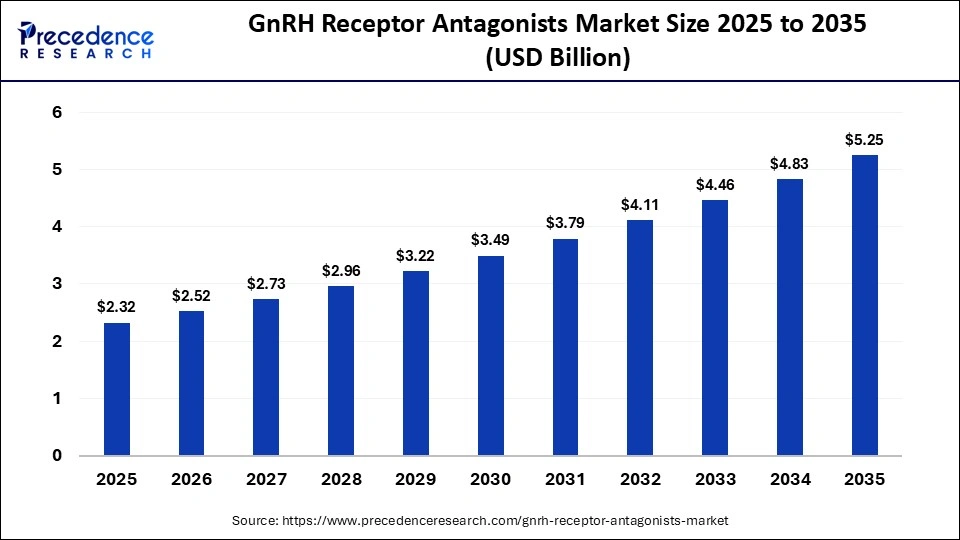
The global GnRH receptor antagonists market size was calculated at USD 2.32 billion in 2025 and is predicted to increase from USD 2.52 billion in 2026 to approximately USD 5.25 billion by 2035, expanding at a CAGR of 8.50% from 2026 to 2035.The market is witnessing substantial growth due to a rapid shift toward oral, non-invasive therapies for hormone-dependent disorders and increased research and development in oncology and gynecology.
Key Takeaways
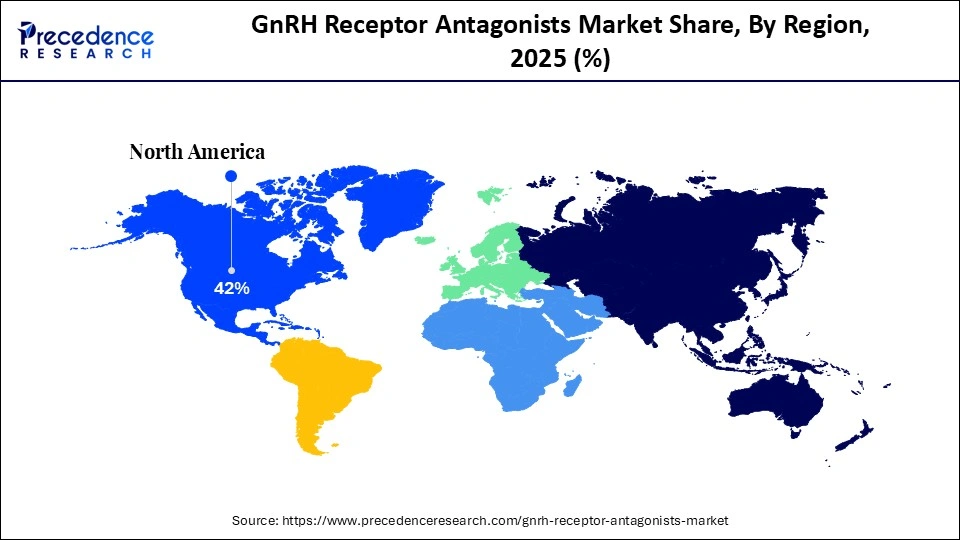
- North America dominated the market with a major market share of around 42% in 2025.
- Asia Pacific is expected to grow at the fastest CAGR of 9.0% between 2026 and 2035.
- By drug type, the peptides segment held the biggest market share of around 60% in 2025.
- By drug type, the small molecules segment is expanding at the fastest CAGR of 7.3% between 2026 and 2035.
- By application, the prostate cancer segment accounted for the largest market share of about 48% in 2025.
- By application, the female infertility segment is projected to grow at a solid CAGR of 7.6% between 2026 and 2035.
- By route of administration, the injectable segment contributed the highest market share of around 70% in 2025.
- By route of administration, the oral segment is expected to grow at a strong CAGR of 7.5% between 2026 and 2035.
- By distribution channel, the hospital pharmacies segment held a major market share of around 50% in 2025.
- By distribution channel, the online pharmacies segment is expected to expand at a CAGR of 7.8% from 2026 to 2035.
What are GnRH Receptor Antagonists?
GnRH (gonadotropin-releasing hormone) receptor antagonists are targeted therapeutic agents that block pituitary GnRH receptors, rapidly suppressing luteinizing hormone (LH) and follicle-stimulating hormone (FSH) and lowering sex hormone levels that drive hormone-dependent conditions. These antagonists are used in oncology (e.g., prostate cancer), women's health (e.g., endometriosis, uterine fibroids), and fertility protocols. Market growth is driven by rising disease prevalence, preference for oral formulations, and expanded applications in reproductive and endocrine disorders.
How is AI Transforming the GnRH Receptor Antagonists Market?
Artificial intelligence (AI) is transforming the GnRH receptor antagonists market by optimizing drug discovery, enabling personalized treatment through predictive modeling for hormone-related diseases, and reducing R&D costs. AI-driven platforms are used to monitor patient responses, predict disease resistance, and tailor treatment protocols, enhancing outcomes in prostate cancer and endometriosis care. Advanced algorithms on MRI and PET scans assist in better staging and tracking disease progression. AI facilitates the creation of second-generation antagonists and optimizes combination therapies.
Major Trends in the GnRH Receptor Antagonists Market
- Shift to Oral Medication: A major shift toward oral, non-peptide GnRH antagonists is underway, offering daily dosing options that avoid injection-site pain associated with earlier agents.
- Rapid Expansion into Benign Gynecological Disorders: There is a strong focus on treatments for endometriosis and uterine fibroids, with agents like Linzagolix and Relugolix combinations providing alternatives to surgery.
- Rise in Prostate Cancer Prevalence: The growing number of prostate cancer cases globally, particularly in the aging population, is driving demand for rapid-acting hormone therapy.
- Advancements in Long-Acting Peptide Formulations: New research is focused on developing long-acting, injectable antagonists that offer improved compliance over older daily or monthly injectable treatments.
Market Scope
| Report Coverage | Details |
| Market Size in 2025 | USD 2.32 Billion |
| Market Size in 2026 | USD 2.52 Billion |
| Market Size by 2035 | USD 5.25 Billion |
| Market Growth Rate from 2026 to 2035 | CAGR of 8.50% |
| Dominating Region | North America |
| Fastest Growing Region | Asia Pacific |
| Base Year | 2025 |
| Forecast Period | 2026 to 2035 |
| Segments Covered | Drug Type, Application, Route of Administration, Distribution Channel, and region |
| Regions Covered | North America, Europe, Asia-Pacific, Latin America, and Middle East & Africa |
Segment Insights
Drug Type Insights
What Made Peptides the Dominant Segment in the GnRH Receptor Antagonists Market?
The peptides segment dominated the market, holding approximately 60% market share in 2025. This dominance is primarily attributed to their widespread use in treating prostate cancer and in assisted reproductive technologies due to their high receptor-binding affinity and immediate therapeutic action without the initial testosterone flare. These peptides bind directly to pituitary GnRH receptors, leading to rapid, reversible, and dose-dependent suppression of gonadotropins and sexual steroids. The development of depot formulations allows for monthly or sustained release, enhancing patient compliance in cancer treatment while maintaining high efficacy.
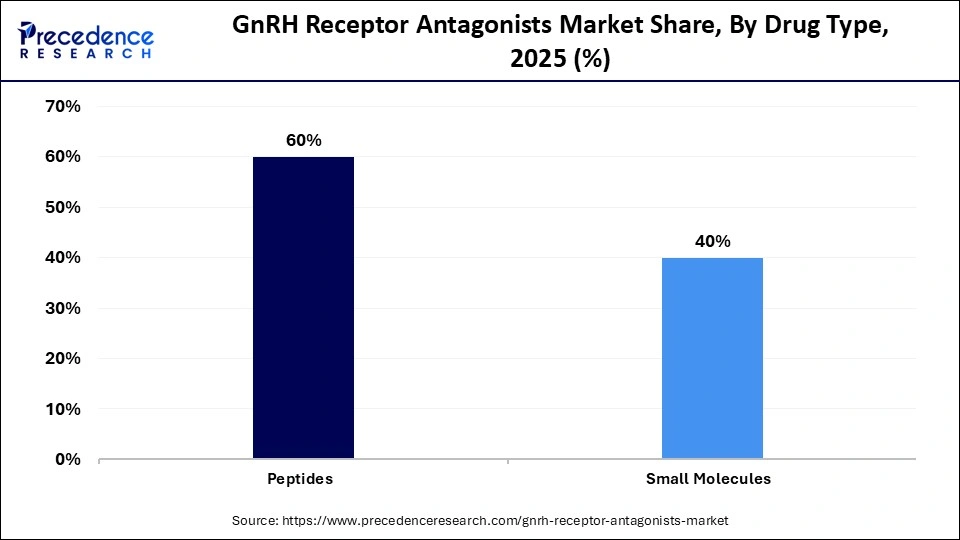
The small molecules segment is projected to expand at a robust CAGR of 7.3%. This growth is largely attributed to the increasing demand for orally administered drugs, which offer greater convenience. Developers are creating small molecules that provide more specific and targeted treatment for hormone-dependent conditions, successfully minimizing side effects compared to traditional therapies. Moreover, the rising number of regulatory approvals for small molecules aimed at treating conditions like uterine fibroids and endometriosis is fueling market expansion for these novel antagonists.
Application Insights
How Did the Prostate Cancer Segment Lead the GnRH Receptor Antagonists Market?
The prostate cancer segment led the market with about 48% share in 2025. This is because prostate cancer is one of the most common hormone sensitive cancers in men, driving substantial demand for effective androgen deprivation therapies that these drugs provide. GnRH receptor antagonists rapidly suppress testosterone without causing the initial hormone surge seen with agonists, making them particularly suitable for managing advanced prostate cancer and improving clinical outcomes.
Additionally, the aging global male population and increasing incidence of prostate cancer have further expanded the use of these antagonists in clinical practice, contributing to the segment's largest market share by application. Consequently, widespread clinical adoption and ongoing approval of both injectable and oral formulations for prostate cancer have reinforced its dominance in the market.
The female infertility segment is anticipated to grow at the fastest CAGR of 7.6% in the coming years because these drugs are increasingly used in assisted reproductive technologies like IVF to prevent premature LH surges and improve fertility treatment outcomes, making them valuable in controlled ovarian stimulation protocols. GnRH antagonists offer advantages over older therapies by rapidly suppressing gonadotropins without an initial hormone flare, which simplifies protocols and can reduce complications such as ovarian hyperstimulation.Additionally, rising awareness of infertility issues, delayed childbearing trends, and greater healthcare access are driving demand for effective fertility treatments that include GnRH antagonist protocols.
Route of Administration Insights
Why Did the Injectable Segment Dominate the GnRH Receptor Antagonists Market?
The injectable segment dominated the market with a share of around 70% in 2025. This dominance is attributed to the proven rapid efficacy of sustained-release, long-acting depot injections in treating prostate cancer and endometriosis. These provide immediate, robust hormone suppression without the initial flare effect associated with older therapies. Injectable GnRH antagonists are standard in controlled ovarian stimulation (COS) protocols, offering a lower risk of OHSS compared to other methods. These treatments are preferred for providing consistent, sustained, and reliable hormonal control in chronic, serious conditions.
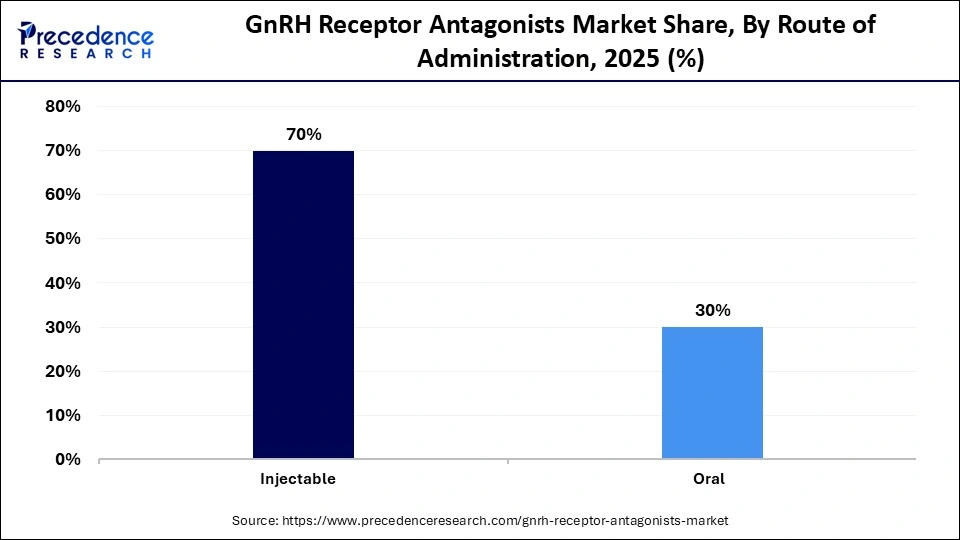
The oral segment is expected to grow at a CAGR of 7.5% over the forecast period. This growth is driven by enhanced patient convenience, improved compliance, and the removal of painful daily injections. Oral options often utilize add-back therapy to mitigate side effects, such as bone density loss, making them safer for long-term use. Oral GnRH antagonists directly inhibit pituitary GnRH receptors, resulting in rapid, dose-dependent, and reversible suppression of sex hormones without the initial hormone flare. This ensures quicker symptom control, broadens patient accessibility, and increases market uptake.
Distribution Channel Insights
What Made Hospital Pharmacies the Leading Segment in the GnRH Receptor Antagonists Market?
The hospital pharmacies segment led the market with approximately 50% market share in 2025. This is mainly because these pharmacies serve as primary dispensing hubs for high-cost, specialized treatments for cancer and reproductive health, facilitated by advanced healthcare infrastructure. The availability of sophisticated healthcare facilities enables better management of complex medications, while increased inclusion in reimbursement policies boosts hospital-based dispensing. The rising prevalence of hormone-sensitive diseases, like prostate cancer, uterine fibroids, and endometriosis, drives a high volume of patients into hospital settings, reinforcing the segment's leadership.
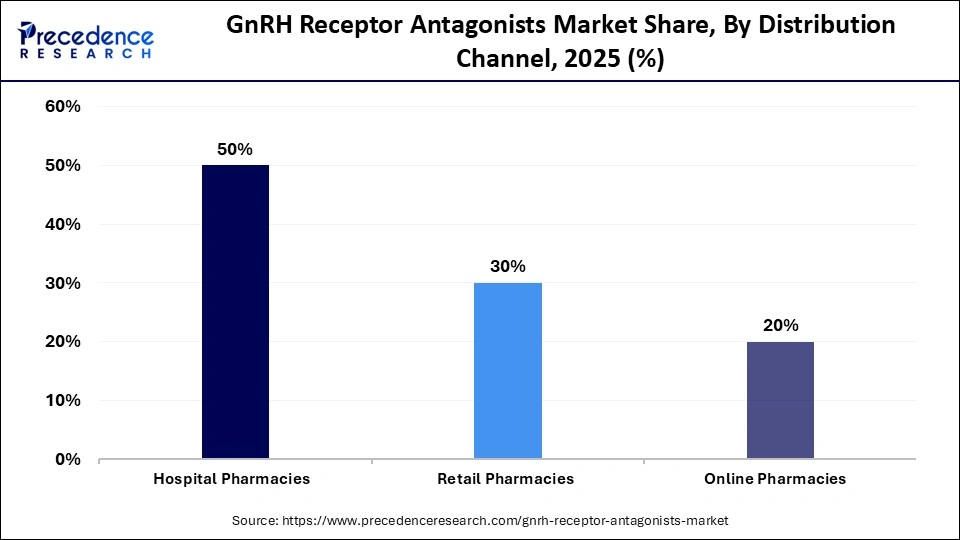
The online pharmacies segment is expected to grow at the fastest CAGR of 7.8% in the coming years. The growth of this segment is primarily attributed to the convenience of home delivery, the growing internet penetration, and the rise in telemedicine usage for chronic disease management. Online pharmacies provide discreet delivery, which particularly appeals to patients dealing with chronic conditions such as endometriosis, uterine fibroids, and prostate cancer. The shift from injectables to oral GnRH antagonists makes it easier for patients to manage their treatments at home through digital platforms for easier access to prescriptions without visiting physical stores.
Regional Insights
North America GnRH Receptor Antagonists Market Size and Growth 2026 to 2035
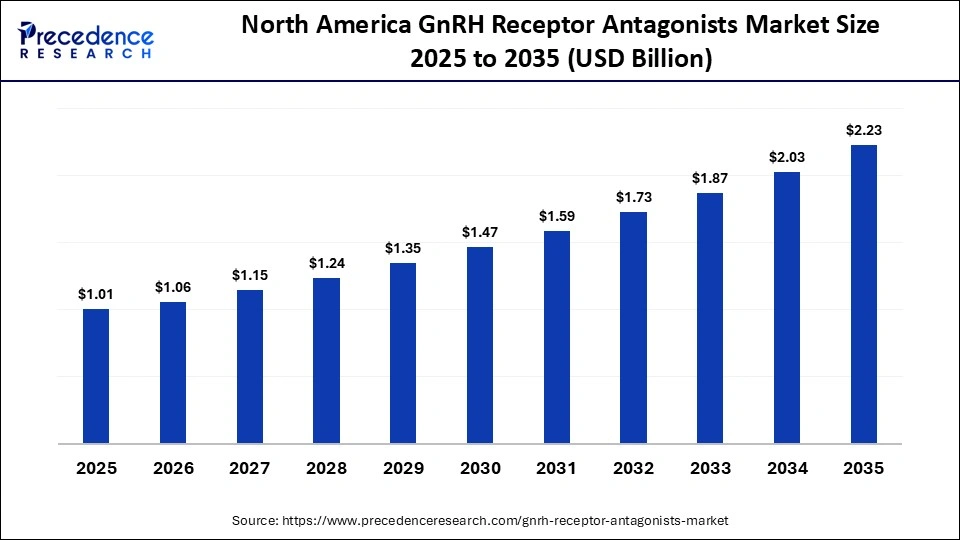
The North America GnRH receptor antagonists market size is estimated at USD 1.01 billion in 2025 and is projected to reach approximately USD 2.23 billion by 2035, with a 8.68% CAGR from 2026 to 2035.
How Did North America Dominate the GnRH Receptor Antagonists Market?
North America dominated the market while holding about 42% market share in 2025. This dominance stems mainly from the high prevalence of hormone-dependent cancers and reproductive disorders, superior healthcare infrastructure, and rapid adoption of novel oral, non-injectable treatments. The shift from traditional injections to convenient oral formulations accelerated market growth in the U.S. and Canada. Strong, well-established healthcare systems and high research and development investments by major pharmaceutical companies foster new product launches and clinical trials. Comprehensive insurance coverage for oncology and fertility treatments facilitates access to expensive, advanced therapies.
U.S. GnRH Receptor Antagonists Market Size and Growth 2026 to 2035
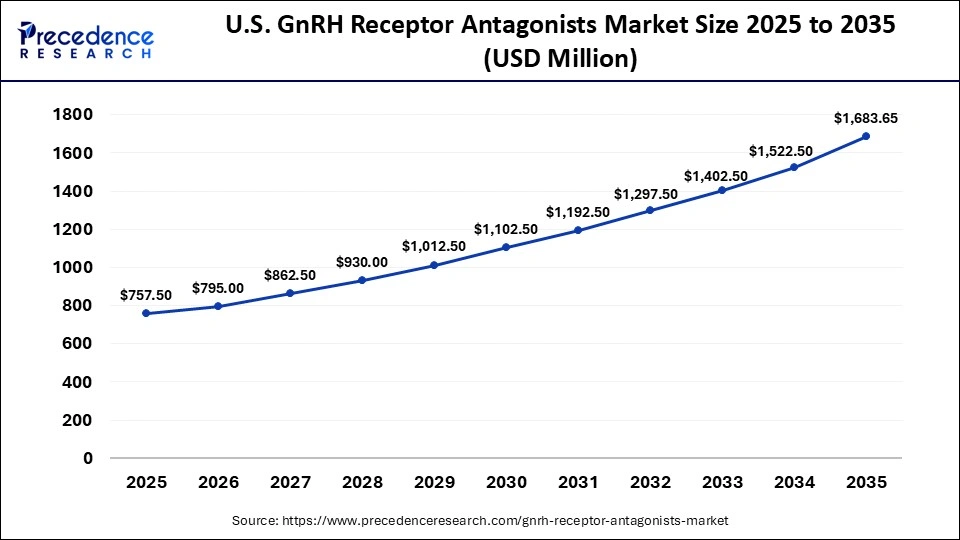
The U.S. GnRH receptor antagonists market size is calculated at USD 757.50 million in 2025 and is expected to reach nearly USD 1,683.65 million in 2035, accelerating at a strong CAGR of 8.72% between 2026 and 2035.
U.S. GnRH Receptor Antagonists Market Trends
The U.S. holds a dominant position within the North American market, mainly due to high demand for advanced hormonal therapies for prostate cancer and endometriosis. Key companies like Pfizer, AbbVie, and Myovant Sciences drive development, particularly in oral GnRH antagonists, improving patient convenience by avoiding the testosterone surge associated with agonists. The U.S. FDA sets standards for approvals, with a high concentration of clinical trials and rapid adoption of novel, non-surgical treatment options.
Why is Asia Pacific Considered the Fastest-Growing Region in the GnRH Receptor Antagonists Market?
Asia Pacific is expected to grow at the fastest CAGR of 9.0% in the market during the forecast period. This growth is driven by the high prevalence of prostate cancer and endometriosis, a growing aging population, increasing adoption of oral, non-injectable treatments, and improving healthcare infrastructure. The adoption of user-friendly oral GnRH antagonists is accelerating as patients prefer non-invasive treatments over injections. Significant investment in hospitals, screening programs, and healthcare accessibility in China and India is fostering early detection and treatment, raising demand for advanced, targeted medications.
India GnRH Receptor Antagonists Market Trends
India plays an emerging role within the region, mainly due to increasing awareness of hormone-related disorders and expanding healthcare infrastructure. Manufacturing and Generics: Indian pharmaceutical companies, including Lupin and Zydus Lifesciences, are pivotal in manufacturing and launching more affordable alternatives. India emphasizes cost-effective healthcare solutions, offering a strong market for generic and localized, lower-cost variants of approved antagonists.
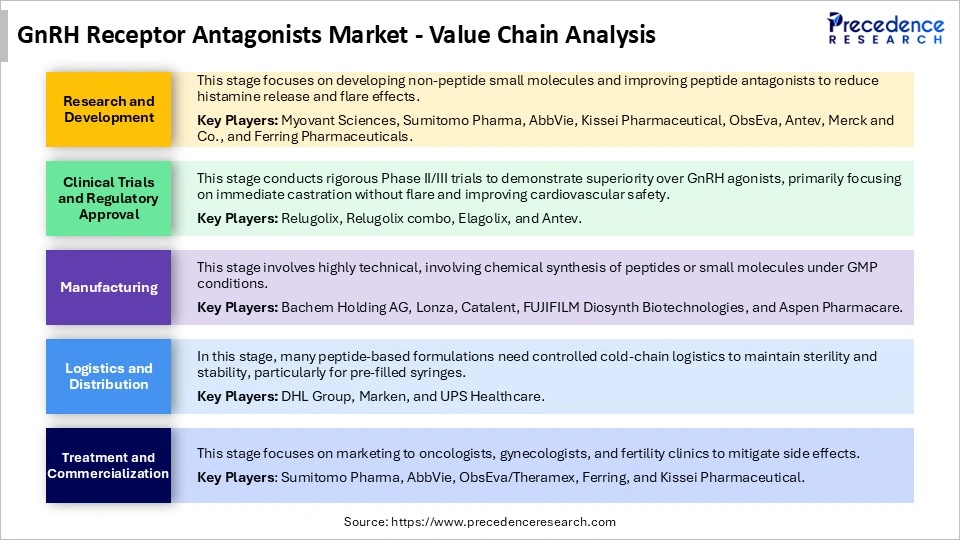
GnRH Receptor Antagonists Market Value Chain Analysis
GnRH Receptor Antagonists Market Companies
- Pfizer Inc.
- AbbVie Inc.
- Ferring Pharmaceuticals
- Myovant Sciences
- Takeda Pharmaceutical Company Limited
- Astellas Pharma Inc.
- Bayer AG
- Ipsen S.A.
- Merck and Co., Inc.
- Sanofi S.A.
- Teva Pharmaceutical Industries Ltd.
- Sun Pharmaceutical Industries Ltd.
- Dr. Reddy's Laboratories Ltd.
- Novartis AG
- Johnson and Johnson
Recent Developments
- In October 2025, Knight Therapeutics Inc. relaunched ORGOVYX (relugolix) in Canada. This followed exclusive agreements with Sumitomo Pharma America Inc. to commercialize MYFEMBREE (relugolix/estradiol/norethindrone acetate), ORGOVYX, and vibegron. ORGOVYX, the first oral GnRH receptor antagonist approved in Canada for advanced prostate cancer. Samira Sakhia, President and CEO of Knight, noted that ORGOVYX offers a convenient treatment option for patients.(Source: https://investors.knighttx.com)
- In October 2025, Kissei Pharmaceutical Co., Ltd. announced that Synmosa Biopharma Corporation received approval from Taiwan's FDA to market Linzagolix under the name "Yselty" for uterine fibroids. Linzagolix is an orally administered GnRH antagonist that helps reduce estrogen production, thereby alleviating symptoms of uterine fibroids and endometriosis. Kissei is conducting a Phase III trial for endometriosis and has submitted a new drug application for uterine fibroids in Japan.
Segments Covered in the Report
By Drug Type
- Peptides
- Small Molecules
By Application
- Prostate Cancer
- Endometriosis
- Uterine Fibroids
- Assisted Reproductive Technology (ART)
- Female Infertility
By Route of Administration
- Injectable
- Oral
By Distribution Channel
- Hospital Pharmacies
- Retail Pharmacies
- Online Pharmacies
By Region
- North America
- Europe
- Asia-Pacific
- Latin America
- Middle East & Africa
For inquiries regarding discounts, bulk purchases, or customization requests, please contact us at sales@precedenceresearch.com
Frequently Asked Questions





Ask For Sample
No cookie-cutter, only authentic analysis – take the 1st step to become a Precedence Research client
 Get a Sample
.webp)



 sales@precedenceresearch.com
 Schedule a Meeting
