



Graves Disease (Overactive Thyroid) Market Size, Companies, Share, Patient Volume, Treatment Adoption Rates, Pricing Analysis, Regulatory Landscape, Competitive Positioning, and Demand Forecast
Graves Disease (Overactive Thyroid) Market (By End User: Hospitals, Clinics, Homecare Settings; By Treatment Type: Antithyroid Medications, Radioactive Iodine Therapy, Surgery; By Diagnosis Method: Blood Test, Imaging Techniques, Physical Examination; By Phase of Treatment: Initial Diagnosis, Maintenance Therapy, Post-Treatment Monitoring) - Global Industry Analysis, Size, Trends, Leading Companies, Regional Outlook, and Forecast 2026 to 2035
Source: https://www.precedenceresearch.com/graves-disease-market
 Get a Sample
 Table Of Content


What is the Graves Disease (Overactive Thyroid) Market Size?
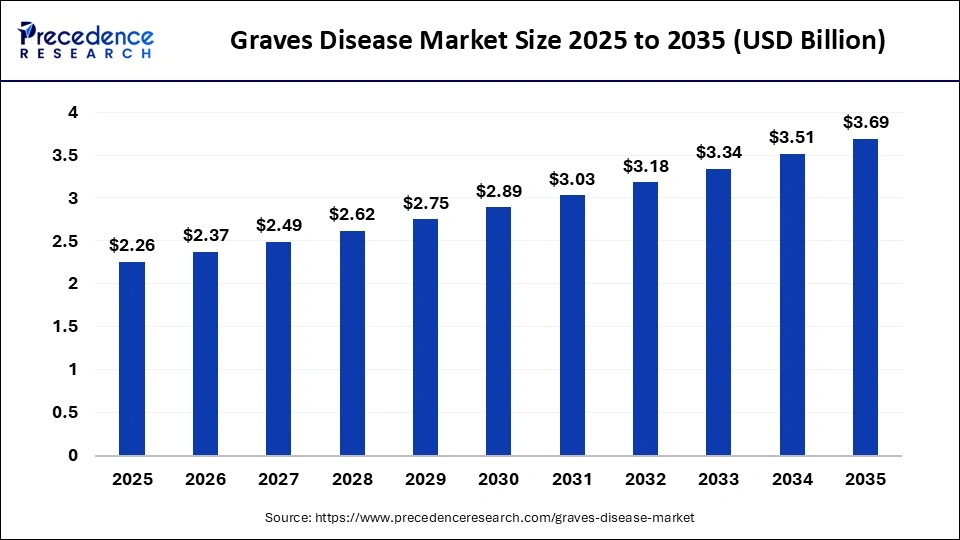
The global graves' disease (overactive thyroid) market size was calculated at USD 2.26 billion in 2025 and is predicted to increase from USD 2.37 billion in 2026 to approximately USD 3.69 billion by 2035, expanding at a CAGR of 5.02% from 2026 to 2035. The market is growing because of rising cases of Graves' disease, improving healthcare infrastructure, growing awareness of thyroid-related diseases, and ongoing research for safer and targeted therapies.
Key Takeaways
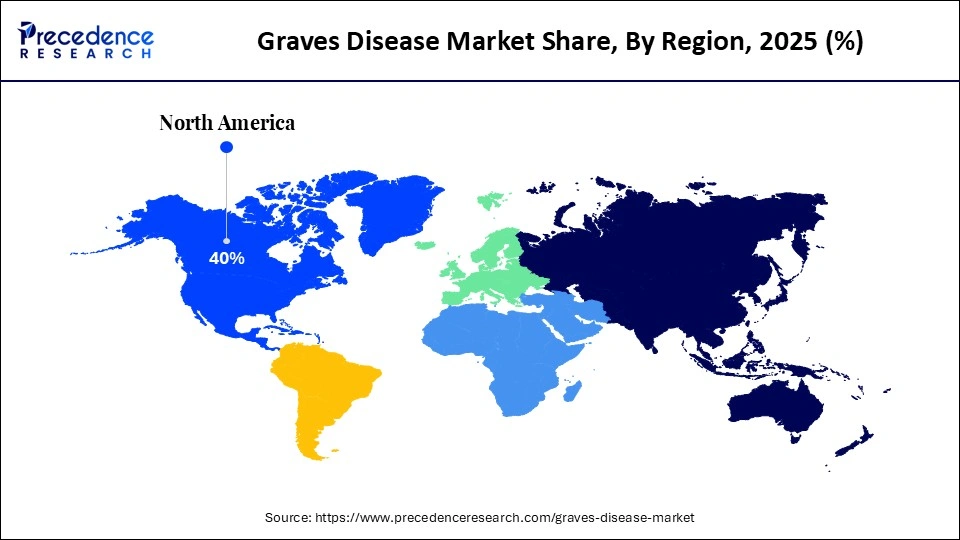
- North America dominated the Graves' disease (overactive thyroid) market with the largest market share of 40% in 2025.
- Asia Pacific is expected to be the fastest-growing region between 2026 and 2035.
- By phase of treatment, the initial diagnosis segment held a dominant position in the market in 2025.
- By phase of treatment, the maintenance therapy segment is expected to grow at the fastest CAGR during the forecast period.
- By diagnosis method, the blood test segment dominated the market in 2025.
- By diagnosis method, the imaging techniques segment is expected to show the fastest growth over the forecast period.
- By treatment type, the Anti-thyroid medications segment led the global market in 2025.
- By treatment type, the radioactive iodine therapy segment is expected to witness the fastest growth in the market over the forecast period.
- By end user, the hospitals segment registered its dominance over the global market in 2025.
- By end user, the clinics segment is expected to expand rapidly in the market in the coming years.
Market Overview
The Graves' disease (overactive thyroid) market includes medicines, diagnostic tests, and clinical services used to treat overactive thyroid caused by autoimmune dysfunction. Treatment includes anti-thyroid drugs, radioactive iodine therapy, beta blockers for symptom control, and in some cases, surgery. Increasing awareness, improved diagnosis rates, routine thyroid testing, and easy access to treatment are supporting steady demand. The presence of affordable generic drugs keeps treatment widely accessible, while ongoing research on targeted therapies and novel treatment expand overall growth of the market.
Graves' Disease (overactive thyroid) Market Trends
- The number of cases of Graves' disease (overactive thyroid) is increasing worldwide. It is the leading cause of hyperthyroidism, and the growing patient base is increasing demand for thyroid function tests, long-term medications, and specialist care services.
- Research is shifting towards novel therapies that could reduce relapse rates, offering more specific mechanisms and better patient outcomes.
- Diagnostic innovation for Graves' disease has significantly increased in recent years. Improved thyroid function tests and reliable antibody screening helps physician to detect the condition early. This allows timely treatment initiation, reduces complications, and supports steady demand for laboratory services.
- Pharmaceutical companies are heavily investing in autoimmune thyroid disorders research. This funding is accelerating the development of novel drugs and therapies.
- Growing awareness of thyroid-related symptoms and Graves' disease among both healthcare providers and patients. Early consultation with healthcare professionals leads to high diagnosis rates and long-term treatment adoption.
How AI Is Transforming the Graves' Disease (overactive thyroid) Market?
Artificial intelligence is transforming the market by improving diagnosis, monitoring, and management approaches to the disease. AI-powered tools are used to analyze thyroid function tests and detect abnormal hormone patterns for early diagnosis of autoimmune activity. Imaging tools supported by machine learning can assist radiologists in reading thyroid scans for more precise and accurate outcomes. AI is also being used in research to study large datasets of patients and identify abnormal patterns linked to relapse and treatment response. In drug development, AI tools are supporting researchers to identify new immune targets. Overall, these technologies are improving efficiency and supporting more personalized thyroid care.
Market Scope
| Report Coverage | Details |
| Market Size in 2025 | USD 2.26 Billion |
| Market Size in 2026 | USD 2.37 Billion |
| Market Size by 2035 | USD 3.69 Billion |
| Market Growth Rate from 2026 to 2035 | CAGR of 5.02% |
| Dominating Region | North America |
| Fastest Growing Region | Asia Pacific |
| Base Year | 2025 |
| Forecast Period | 2026 to 2035 |
| Segments Covered | Phase of Treatment, Treatment Type,End-user, and region |
| Regions Covered | North America, Europe, Asia-Pacific, Latin America, and Middle East & Africa |
Segmental Insights
Phase of Treatment Insights
Why the Initial Diagnosis Segment Dominated the Graves' Disease (overactive thyroid) Market?
The initial diagnosis segment held a dominant position in the market in 2025. Most patients visit a doctor after experiencing symptoms such as weight loss, rapid heartbeat, fatigue, and anxiety. During this stage, doctors advise thyroid function tests and antibody screening to confirm autoimmune hyperthyroidism. Early diagnosis is important because an untreated condition can lead to serious complications. The initial stage creates steady demand for laboratory testing, hospital visits, and consultations.
The maintenance therapy segment is expected to expand rapidly in the market in the coming years. It is a long-term treatment; even after symptoms improve, patients need regular follow-up visits and laboratory tests to check that hormone levels are balanced. After initial treatment, patients continue anti-thyroid medication, but in some cases, patients may require radioactive iodine therapy or surgery. The ongoing need for prescription and lab testing keeps the maintenance segment steady.
Diagnosis Method Insights
How the Blood Test Segment Dominated the Graves' Disease (overactive thyroid) Market?
The blood test segment led the global market in 2025 because it is a widely used diagnosis method. Physicians measure thyroid-stimulating hormone (TSH), T3, and T4 levels to identify hormone imbalance. These tests are affordable and widely available in hospitals and diagnostic centres. Since patients need repeated testing to adjust dose and monitor progress, blood testing remains an essential part of disease management and increases demand in the market.
The imaging techniques segment is expected to witness the fastest growth in the market over the forecast period. A radioactive iodine uptake scan helps to measure how much iodine is absorbed by the gland, showing its activity. This test is used to confirm Graves' disease. Ultrasound of the thyroid gland is performed to examine the size of the gland and check for structural changes. These procedures are performed in hospitals or specialized centres.
Treatment Type Insights
Why the Anti-thyroid Medications Segment Dominated the Graves' Disease (overactive thyroid) Market?
The Anti-thyroid medications segment accounted for a considerable revenue share in the market in 2025 because it is the most commonly used treatment for Graves' disease. Drugs such as methimazole and propylthiouracil work by reducing the excess production of the hormone. Anti-thyroid medication is preferred at the early stage as it is non-invasive and easy to administer. These medications are affordable and widely available, which makes them dominant in the market.
The radioactive iodine therapy segment is expected to grow at the fastest CAGR in the market over the forecast period. It is preferred when medication does not provide long-term control. The therapy works by gradually destroying overactive thyroid cells, which reduces hormone production. It is given as a single oral dose and does not require surgery. This treatment is commonly available in hospital settings and is considered reliable, and gives long-term effective outcomes. It is not the first choice of treatment in younger patients, but it is a widely accepted approach.
End-user Insights
What Made the Hospitals Segment Lead the Graves' Disease (overactive thyroid) Market?
The hospitals segment registered its dominance over the global market in 2025. The hospital handles complex and newly diagnosed cases. Hospitals are equipped with advanced laboratory facilities, imaging services, and machines required for radioactive iodine therapy. In cases of surgery, it has specialised surgical care and post-operative monitoring units. Emergencies that require immediate medical attention are effectively managed by hospitals. Patients rely on hospitals for both diagnosis and treatment.
The clinics segment is expected to gain the highest share of the market in the coming years. Most patients prefer clinics for routine consultations and regular hormone monitoring. Clinics are more accessible and convenient for follow-up care compared to large hospitals. Clinics are the first point of contact when patients experience symptoms of thyroid imbalance. They manage stable cases, adjust medication doses, and monitor long-term progress.
Key Government Initiatives for the Graves Disease (Overactive Thyroid) Market
|
Initiative Area |
Key Government Action and Program |
Focus |
|
Drug Regulation |
FDA Breakthrough Designation and Accelerated Approval Pathways (e.g., Veligrotug for TED) |
Accelerates approval of novel biologics (FcRn/IGF-1R blockers) to replace older antithyroid drugs. |
|
Research and Funding |
Anusandhan National Research Foundation (ANRF) (India) and NIH/ATA Research Grants (U.S) |
Promotes public-private partnerships for developing new thyroid-specific immunotherapies and diagnostics. |
|
Public Health |
National Non-Communicable Disease Screening and World Thyroid Day Initiatives |
Focuses on population-wide screening for early detection of thyroid dysfunction to prevent long-term complications. |
Regional Insights
What is the North America Graves' Disease (Overactive Thyroid) Market Size?
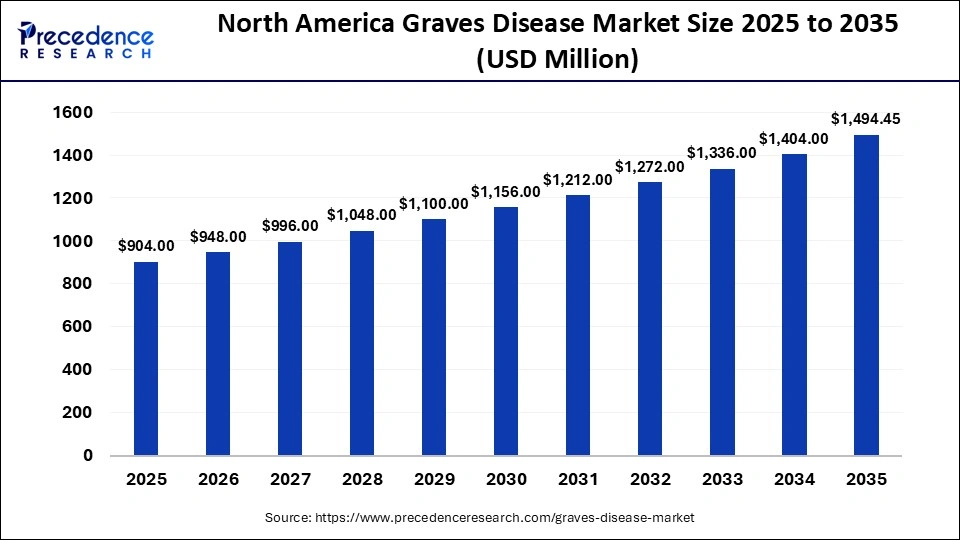
The North America graves' disease (overactive thyroid) market size is estimated at USD 904.00 million in 2025 and is projected to reach approximately USD 1,449.45 million by 2035, with a 5.16% CAGR from 2026 to 2035.
Which Region Dominated the Market in 2025?
North America dominated the global Graves' disease (overactive thyroid) market in 2025 due to well-established healthcare infrastructure and high diagnosis rates. The increasing prevalence of thyroid disorders and the growing ageing population drive demand in the market. Patients have access to anti-thyroid medicines, radioactive therapy, and surgical care if needed. The region supports research in the autoimmune disease area by raising significant investment from the government and private firms.
U.S. Graves' Disease (Overactive Thyroid) Market Size and Growth 2026 to 2035
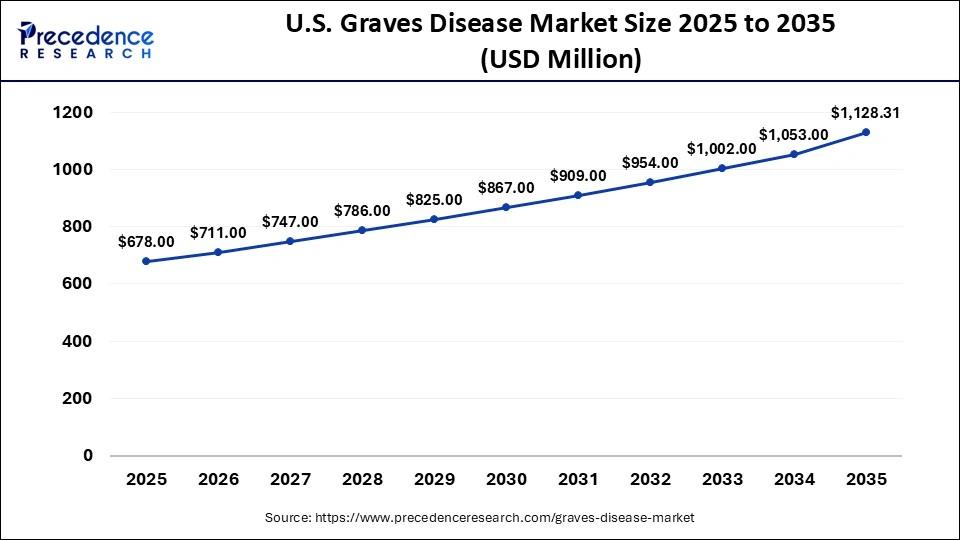
The U.S. graves' disease (overactive thyroid) market size is calculated at USD 678.00 million in 2025 and is expected to reach nearly USD 1,228.31 million in 2035, accelerating at a strong CAGR of 5.23% between 2026 to 2035.
U.S. Market Trends
The United States represents the largest market in North America. Thyroid testing is widely available, and many cases are identified during routine health check-ups. Insurance policies generally cover diagnostic testing and treatment costs, which encourages patients to seek early and routine consultation. Regulatory agencies such as the FDA support research for novel therapies, which maintain steady dominance in the market.
Why Is the Asia Pacific Region Growing with the Highest CAGR in the Market?
Asia Pacific is expected to grow at the fastest CAGR in the Graves' disease (overactive thyroid) market during the forecast period because healthcare access is improving. Awareness of thyroid-related conditions has increased, leading patients to seek medical advice. Urban hospitals are well-equipped for the diagnosis and treatment of diseases. Insurance coverage is expanding, which supports long-term treatment adherence. Regulatory agencies are encouraging and supporting new therapies, which are further driving the growth of the region in the market.
China Market Trends
China plays an important role in the Graves' disease (overactive thyroid) market because of its large population, and improving healthcare access leads to increasing diagnosis rates. Standard treatments like anti-thyroid drugs, radioactive therapy, and generic, affordable medicines are widely available for treatment. The government is expanding healthcare coverage has supported adherence to long-term therapy. Regular monitoring and follow-up care are becoming more structured due to rising awareness in the population.
Will Europe Notably Grow in the Graves Disease (Overactive Thyroid) Market?
Europe is a notably growing region in the global market, driven by an increasing patient population, high adoption of advanced diagnostics, and a strategic shift toward precision immunotherapies. Europe has a high incidence of Graves' disease, exacerbated by an aging population and high smoking rates, increasing both the prevalence of the disease and its related complications. Favorable reimbursement policies in key European nations, such as Germany, the UK, France, and Italy, support greater adoption of expensive, novel targeted therapies, facilitating better patient access.
Germany Market Trends
Germany is positioning itself as Europe's premier hub for thyroid disease management. The country combines robust clinical infrastructure with the launch of Egetis Therapeutics' pioneering Emcitate for MCT8 deficiency. By leveraging top-tier research, Germany is accelerating breakthroughs in autoimmune thyroid disease through advanced clinical trials and optimizing long-term patient outcomes by transitioning from antithyroid drugs.
How will Latin America Emerge in the Graves Disease (Overactive Thyroid) Market?
Latin America is emerging as a significant player in the global market, primarily driven by an increasing incidence of autoimmune disorders, improved diagnostic capabilities, and rising healthcare expenditures. The incidence of diseases such as Graves' disease is on the rise, particularly in aging populations in Brazil and Argentina, leading to a larger pool of patients seeking treatment for thyroid disorders. Both governments and private sector entities are increasing investments to enhance healthcare infrastructure, ensuring better access to specialists and advanced treatment centers.
Brazil Market Trends
Brazil is emerging as a pivotal player within the region. This growth is driven by the high prevalence of Graves' disease and upcoming regulatory reforms designed to accelerate access to advanced treatments like teprotumumab for Thyroid Eye Disease. The presence of companies like Argenx is strengthening locally, while the Brazilian health regulatory agency, ANVISA, is facilitating faster, data-driven approvals.
How will the Middle East and Africa grow in the Graves Disease (Overactive Thyroid) Market?
The Middle East and Africa are significant growth regions in the global market, primarily due to an increasing prevalence of diseases, rapid improvements in healthcare infrastructure, and heightened awareness of autoimmune disorders. Substantial government investment in healthcare, especially in GCC countries, is enhancing diagnostic capabilities and access to specialized care. Moreover, growing public awareness and increased medical screenings for thyroid-related disorders are leading to higher diagnostic rates of previously undetected or subclinical Graves' disease.
UAE Market Trends
The UAE is revolutionizing patient care through massive investments in AI-driven diagnostics, molecular therapies, and the nation's first gene therapy trials initiated by Cleveland Clinic Abu Dhabi, positioning itself as a premier global hub for cutting-edge healthcare. Spearheaded by the Department of Health, Abu Dhabi's Future Health initiative, this strategic push is to tailor data-driven interventions.
Graves Disease (overactive thyroid) Market Value Chain Analysis
- R&D
Research and development focus on studying the autoimmune causes of Graves' disease and developing treatment options. This stage includes drug discovery, laboratory testing, and research to design and develop safe and effective therapies.
Key Players: Immunovant, Inc., Argenx SE, Amgen (Horizon Therapeutics), Viridian Therapeutics. - Clinical Trials and Regulatory Approvals
Clinical trials check the safety, dosage, and effectiveness of new treatments and therapies in patients. After successful trials, companies seek regulatory approvals for launching a product in the market.
Key Players: Biohaven Therapeutics Ltd, Sling Therapeutics, Inc., Amgen (Horizon Therapeutics), Viridian Therapeutics. - Formulation and Final Dosage Preparation
Formulation and final dosage preparation involve developing a safe, effective, and patient-friendly dosage form, such as tablets and injectables. Companies ensure proper dosage strength, stability, and quality control before large-scale production.
Key Players: Viridian Therapeutics, Immunovant, Inc., Sling Therapeutics, Inc., Tourmaline Bio, Teva Pharmaceutical Industries Ltd. & Merck KGaA. - Packaging and Sterilization
Medicines are packed in safe and protective materials to maintain quality and shelf life. For injectables, sterilization is a crucial step to prevent contamination and ensure safety.
Key Players: HanAll Biopharma Co., Ltd., Sun Pharmaceutical Industries Ltd., Pfizer Inc., F. Hoffmann-La Roche Ltd., Novartis AG. - Distribution to Hospitals, Pharmacies
Finished products are supplied to hospitals, clinics, retail pharmacies, and online platforms. Strong distribution networks ensure the consistent availability of medicines for patient use.
Key Players: Amgen (Horizon Therapeutics), Pfizer Inc., Novartis AG, Viridian Therapeutics, F. Hoffmann-La Roche Ltd. - Patient Support and Services
Patient support and services include follow-up consultations, dosage adjustments, monitoring thyroid levels, and guidance for long-term disease management.
Graves Disease (overactive thyroid) Market Companies
- Abbott Laboratories
- Apitope International NV
- bioMérieux SA
- Crinetics Pharmaceuticals
- F. Hoffmann-La Roche Ltd
- HanAll Biopharma
- Horizon Therapeutics (Amgen Inc.)
- Immunovant, Inc.
- Institute of Isotopes Co., Ltd.
- Jubilant Pharma Holdings Inc.
- Merck KGaA
- Novartis AG
- Pfizer Inc.
- Sanofi
- Sling Therapeutics
- Sun Pharmaceutical Industries Ltd.
- Teva Pharmaceutical Industries Ltd.
- Thermo Fisher Scientific Inc.
- Tourmaline Bio
- Viridian Therapeutics
Recent Developments
- In December 2025, U.S. based Yarrow Bioscience takes ex-China rights to an antibody targeting thyroid-stimulating hormone receptor (TSHR) for the treatment of Graves' disease. The deal is between Yarrow Bioscience and China-based GeneScience (GenSci) pharmaceutical, secured at $1.37 billion. This partnership shows huge opportunities for advanced therapies in Graves' disease management. (Source: https://www.fiercebiotech.com)
- In April 2025, a U.S.-based biotechnology company called Merida Biosciences raised $121 million to develop treatments targeting autoimmune antibodies that cause Graves' disease. The company claims its approach could offer more convenient dosing and an easier route of administration. This funding shows a growing focus on precise therapies. (Source: https://www.pharmaceutical-technology.com)
Segments Covered in the Report
By End User
- Hospitals
- Clinics
- Homecare Settings
By Treatment Type
- Antithyroid Medications
- Radioactive Iodine Therapy
- Surgery
By Diagnosis Method
- Blood Test
- Imaging Techniques
- Physical Examination
By Phase of Treatment
- Initial Diagnosis
- Maintenance Therapy
- Post-Treatment Monitoring
By Region
- North America
- Europe
- Asia-Pacific
- Latin America
- Middle East & Africa
For inquiries regarding discounts, bulk purchases, or customization requests, please contact us at sales@precedenceresearch.com
Frequently Asked Questions
Tags





Ask For Sample
No cookie-cutter, only authentic analysis – take the 1st step to become a Precedence Research client
 Get a Sample
.webp)



 sales@precedenceresearch.com
 Schedule a Meeting
