



Healthcare Cybersecurity Market Trends, Procedure Volume, Healthcare Spending, Technology Adoption, Reimbursement Analysis, Cost Structure, Market Penetration, and Growth Outlook
Healthcare Cybersecurity Market (By Offering: Solutions, Services; By End User: Healthcare Payers, Healthcare Providers; By Security: Cloud security, Network security, Application security, Endpoint security; By Threat Type: Ransomware, Malware & Spyware, Distributed Denial of Service (DDoS), Phishing & spear phishing, Others; By Deployment: On-premises, Cloud-based; By Application: Hospitals, Pharmaceutical and biotechnology industries, Healthcare payers, Others; By Solution: Identity and Access Management, Risk and Compliance Management, Antivirus and Antimalware, DDoS Mitigation, Security Information and Event Management, Intrusion Detection System/ Intrusion Prevention System, Others) - Global Industry Analysis, Size, Trends, Leading Companies, Regional Outlook, and Forecast 2026 to 2035
Source: https://www.precedenceresearch.com/healthcare-cybersecurity-market
 Get a Sample
 Table Of Content


What is the Healthcare Cybersecurity Market Size?
The global healthcare cybersecurity market size is valued at USD 31.90 billion in 2025 and is predicted to increase from USD 37.32 billion in 2026 to approximately USD 142.45 billion by 2035, expanding at a CAGR of 16.12% from 2026 to 2035. The healthcare cybersecurity market is experiencing rapid growth due to strict regulatory compliance mandates and the rapid expansion of the Internet of Medical Things (IoMT) and cloud. The healthcare cybersecurity market is driven by rising cyber threats, healthcare digitalization, and increasing regulatory compliance requirements.
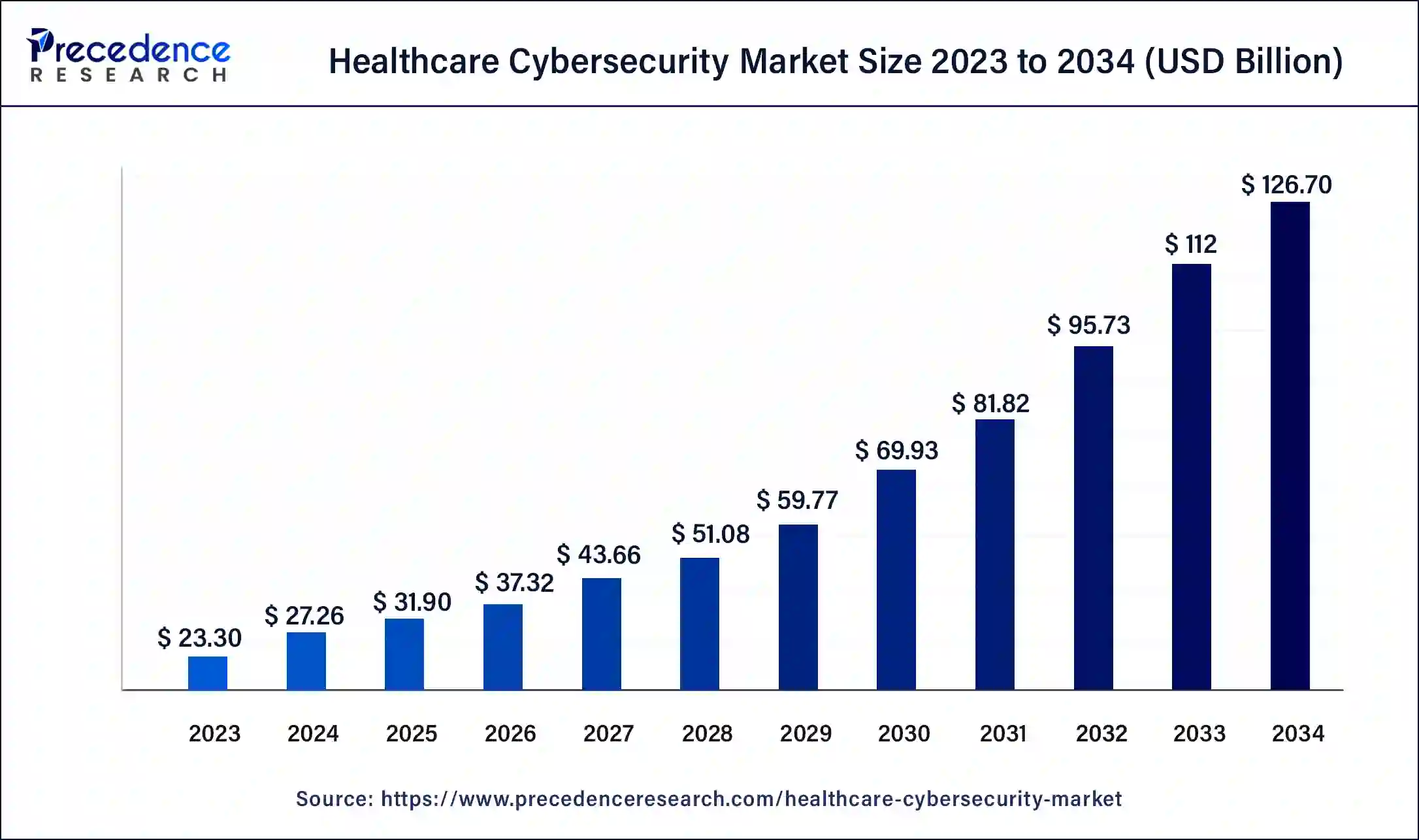
Healthcare Cybersecurity Market Key Takeaways
- By Region, North America held a majority revenue share of the healthcare cybersecurity market in 2025.
- By Region, Asia Pacific is expected to grow at the fastest CAGR in the market during the forecast period.
- By offering, the solutions segment held a dominant position in the market with a share in 2025.
- By offering, the services segment is expected to grow at the fastest CAGR in the market between 2026 and 2035.
- By end user, the healthcare payers segment accounted for a considerable revenue share in the market in 2025.
- By end user, the healthcare providers segment is expected to grow with the highest CAGR in the market during the studied years.
- By security, the cloud security segment led the global market with a share in 2025.
- By security, the application security segment is expected to expand rapidly in the market with a CAGR in the coming years.
- By threat type, the malware & spyware segment registered its dominance over the global market with a share in 2025.
- By threat type, the ransomware segment is expected to witness the fastest growth in the market with a CAGR over the forecast period.
- By deployment, the on-premises segment dominated the global market with a share in 2025.
- By deployment, the cloud-based segment is expected to gain the highest market share with a CAGR between 2026 and 2035.
- By application, the hospitals segment held the largest revenue share in the market in 2025.
- By application, the healthcare payers segment is expected to show the fastest growth with a CAGR over the forecast period.
- By solution, the identity and access management segment held the largest revenue share in the market in 2025.
- By solution, the security information and event management segment is expected to show the fastest growth with a CAGR over the forecast period.
Market Overview
The healthcare industry's cybersecurity space is witnessing rapid growth owing to rising threats from hackers towards hospitals, healthcare professionals, insurance providers, and connected medical devices. Increased use of electronic health records (EHRs), cloud computing, telehealth systems, IoT-based medical devices, and digital healthcare systems has created a strong demand for comprehensive cybersecurity measures. Government initiatives are focused on ensuring data privacy laws, whereas healthcare facilities are making investments in security technologies to protect patient information, comply with the rules, reduce business disruptions, and maintain trust within the digital healthcare environment.
Why is Cybersecurity Important in the Healthcare Sector?
Cybersecurity is essential in the healthcare sector because healthcare organizations manage vast amounts of sensitive patient information, including medical records, financial data, and personal identifiers, making them prime targets for cyberattacks. Effective cybersecurity measures help protect patient privacy, prevent data breaches, and ensure compliance with healthcare regulations such as the Health Insurance Portability and Accountability Act.
In addition to protecting data, cybersecurity is critical for maintaining the availability and reliability of healthcare services. Cyberattacks such as ransomware can disrupt hospital operations, delay treatments, compromise connected medical devices, and potentially impact patient safety. As healthcare providers increasingly rely on electronic health records (EHRs), telehealth platforms, cloud computing, and Internet of Medical Things (IoMT) devices, robust cybersecurity has become indispensable for safeguarding healthcare infrastructure, ensuring operational continuity, and maintaining trust among patients and healthcare stakeholders.
How is AI Influencing the Healthcare Cybersecurity Market?
The use of artificial intelligence (AI) has been revolutionizing cybersecurity in healthcare through real-time threat detection, predictive risk assessment, automated response, and continuous monitoring of healthcare networks. Artificial intelligence tools can monitor huge volumes of clinical and network data and determine anomalies, ransomware attacks, phishing, and insider threats with greater precision than traditional cybersecurity tools. With the help of AI, it is possible to automate vulnerability assessment, reduce response times, enhance endpoint security, and ensure compliance with regulations in the healthcare sector.
Healthcare Cybersecurity Market Outlook
- Industry Growth Overview: The market is poised for significant expansion from 2025 to 2034, driven by rising volumes of sensitive healthcare data and the adoption of digital health technologies such as telehealth and IoMT devices. The growing number of sophisticated cyberattacks targeting patient information, along with the need for strong security solutions driven by regulations such as HIPAA and GDPR, are further influencing the market.
- Shift Toward AI and ML-Powered Security Solutions: There is a rapid shift toward AI and machine learning-powered security solutions for proactive threat detection and response. The increasing focus on zero-trust security architecture is crucial for protecting network access. An expanding focus is also on securing connected medical devices (IoMT) and cloud-based systems.
- Global Expansion: The market is expanding worldwide due to increasing digitalization and infrastructure modernization efforts. Emerging regions offer significant opportunities due to rising investments in healthcare IT, growing awareness of data breaches, and new data protection laws.
- Major Investors: Large technology and cybersecurity companies such as Palo Alto Networks, Fortinet, IBM, Cisco, and Microsoft are major investors, developing specialized solutions for the healthcare sector. Investment is also significantly driven by venture capital firms and government initiatives.
- Startup Ecosystem: A vibrant startup ecosystem focuses on innovations in niche areas like securing IoMT devices and protecting telehealth platforms. Startups attract funding for unique platforms, including real-time threat detection for medical devices and cloud-based security analytics.
Healthcare Cybersecurity Market Growth Factors
The phishing incidences in the healthcare industry were increasing during the pandemic and the market had grown. The use of Internet and various digital platforms for healthcare industry is increasing the need for cybersecurity. The availability of advanced cyber security solutions are also expected to help in the growth of the market. Many health organisations and governments are investing and taking initiatives in the health care cybersecurity systems. The market for healthcare cybersecurity has increased due to the increasing data breach.
- With the rise in cyberattacks, ransomware being the most common, health systems are strengthening their defenses against cybersecurity threats.
- Using electronic records, telehealth, and medical devices is establishing more demand for higher cybersecurity frameworks.
- In view of strict data protection laws and patient privacy-related regulations, healthcare providers are more concerned about investing in secure digital infrastructure.
- Governments and healthcare providers are increasingly investing, thus facilitating the construction of higher cybersecurity capabilities.
- Transition from the traditional systems to cloud-based systems in healthcare, with the integration of artificial intelligence technologies, demands stronger cybersecurity measures to protect data sharing and to ensure system integrity.
Market Trends
- Increasing cyber threats and increasing demand for cybersecurity, as well as highlighting security concerns, which is a growing trend in the market.
- Increasing adoption of digital technologies and increasing use of digital health and cloud-based solutions in healthcare drive the need for robust cybersecurity measures.
- Increasing adoption of 5G technology in healthcare helps secure and protect the connected devices and identify solutions that fuel the growth.
- Identify and access management is extensively playing a crucial role in maintaining and securing patient records and data, which boosts the growth of the market.
- With rising patient privacy concerns and compliance with regulations, there is a driving investment in cybersecurity solutions.
Market Report Coverage and Key Metrics
| Report Coverage | Details |
| Market Size by 2035 | USD 142.45 Billion |
| Market Size in 2025 | USD 31.90 Billion |
| Market Size in 2026 | USD 37.32 Billion |
| Market Growth Rate from 2026 to 2035 | CAGR of 16.12% |
| Largest Market | North America |
| Base Year | 2025 |
| Forecast Period | 2026 to 2035 |
| Segments Covered | Offering, End User, Security, Threat Type, Deployment, End Use, and Solution, and Regions |
| Regions Covered | North America, Europe, Asia-Pacific, Latin America, and Middle East & Africa |
Market Dynamics
Driver
Regulatory pressure for patient data protection
Regulators and regulatory authorities working in healthcare are stepping up the fight for stronger compliance requirements for patient privacy, breach notification, and cybersecurity adaptation. To counter it, hospitals, insurance companies, and drug companies are gradually implementing advanced security to protect themselves, and not just against cyber-attacks, but also to ensure compliance so it's not a headache for the legal trouble they can avoid, damage their reputation, and avoid the possibility of their failure to operate for the wrong reasons.
Restraints
Budget limitations
Many private hospitals and other regional health centers still operate on a shoestring IT budget without the budget needed to make cybersecurity updates. This financial pressure means these institutions are choosing over cybersecurity improvements and spending more on human resources and medical equipment. As a result, many organizations are still relying on old technology and disjointed security solutions that keep them vulnerable in a time of rising awareness of cyber threats.
Opportunities
Expansion of AI-driven threat detection and predictive security tools
Artificial intelligence is paving the way for the advent of new opportunities for cybersecurity vendors in the way of swift detection of anomalies and ready-made responses tailored according to the organization's mission in the healthcare segment. AI-based platforms can spot anomalies in network behavior, point out compromised devices promptly, and predict potential threats in such a way that they are detected before they can result in potentially debilitating disruptions that affect the care of patients and/or hospital processes.
Major Hacking and Unauthorized Access Incidents
| Year | Name of HIPAA-Regulated Entity | State | Entity Type | Individuals Affected | Type of Breach |
| 2024 | Acadian Ambulance Service, Inc. | LA | Healthcare Provider | 2,896,985 | Hacking/IT Incident |
| 2024 | Concentra Health Services, Inc. | TX | Healthcare Provider | 3,998,163 | Hacking/IT Incident |
| 2024 | Ascension Health | MO | Healthcare Provider | 5,466,931 | Hacking/IT Incident |
| 2024 | Kaiser Foundation Health Plan, Inc. | CA | Health Plan | 13,400,000 | Unauthorized Access/Disclosure |
| 2025 | DaVita Inc. | CO | Healthcare Provider | 2,689,826 | Hacking/IT Incident |
| 2025 | Yale New Haven Health System | CT | Healthcare Provider | 5,556,702 | Hacking/IT Incident |
| 2025 | Anne Arundel Dermatology | MD | Healthcare Provider | 1,905,000 | Hacking/IT Incident |
Restraint:
High Implementation and Maintenance Costs
The high cost of deploying and maintaining comprehensive cybersecurity infrastructure remains a key restraint for the healthcare cybersecurity market. Advanced security technologies, including AI-powered threat detection, endpoint protection, identity management, and security monitoring systems, require significant upfront investment and ongoing maintenance expenses. Smaller healthcare providers and rural healthcare facilities often face budget constraints, limiting their ability to implement enterprise-grade cybersecurity solutions.
Opportunity:
Growing Adoption of AI-Powered Cybersecurity Solutions
The integration of artificial intelligence and machine learning into healthcare cybersecurity presents a significant market opportunity. AI-powered platforms can detect anomalies, identify threats in real time, automate incident response, and predict potential vulnerabilities before they are exploited. As healthcare organizations increasingly adopt cloud computing, Internet of Medical Things (IoMT) devices, and digital health technologies, demand for intelligent cybersecurity solutions is expected to rise, creating substantial growth opportunities for cybersecurity vendors.
Market Segmentation Analysis
Offering Insights
How Does the Solutions Segment Dominate the Healthcare Cybersecurity Market in 2025?
The solutions segment dominated the market with the largest share in 2025, owing to surging cyber incidents and the urgent need for preventative software tools. The surging growth of connected medical devices and the greater intensity of ransomware attacks further drive the need for potential solutions. It is expected that smart hospitals can deploy millions of connected Internet of Medical Things (IoMT) devices in the coming years, ensuring the long-term growth of the segment.
The services segment is expected to grow at the fastest CAGR in the market during the forecast period due to a surge in complex regulatory compliance demands, healthcare cyberattack incidents, and a severe shortage of internal security talent across medical institutions. Hospitals heavily rely on external teams for automated cloud protection, 24/7 continuous threat monitoring, and incident response. Moreover, healthcare organizations rely on professional auditors and professional services for advisory metrics, consulting, and global training.
End-User Insights
What Made Healthcare Providers the Dominant Segment in the Healthcare Cybersecurity Market?
The healthcare providers segment dominated the market while capturing the largest share in 2025. This is mainly due to the huge adoption of cybersecurity solutions by clinics, hospitals, and health systems. The majority of healthcare providers are making direct investments to strengthen enterprise security. They also provide funding to preventative platforms to stop data leakage.
The healthcare payers segment is expected to grow at the fastest rate in the market during the projection period due to a surge in cybersecurity investments by health insurance companies. Payers are moving toward AI-first business models, including real-time biometric tracking, automated claims processing, and autonomous customer agents. There is an increased focus of payers on securing these continuous data streams and AI pipelines, contributing to segmental growth.
Security Insights
How Does the Cloud Security Segment Lead the Market in 2025?
The cloud security segment led the healthcare cybersecurity market with the largest share in 2025, owing to the rapid adoption of digital operations and the transition of the healthcare sector from traditional on-premises infrastructure to cloud infrastructure. The surging cloud migration and cloud deployment enabled providers to move telehealth platforms, electronic health records, and remote patient operations to multi-cloud environments. This surge is also driven by strict compliance mandates regarding patient data privacy, such as emerging frameworks, GDPR, and HIPAA, that allow huge adoption of continuous, automated cloud auditing.
The application security segment is projected to grow at a notable rate in the market during the upcoming period due to a strong focus by healthcare providers on securing electronic health records, cloud-native workloads, and patient-facing applications. The segment is also driven by the expansion of the Internet of Medical Things (IoMT) and adoption of cloud application security. Stringent data privacy regulations and a shift toward zero trust and DevSecOps also drive segmental growth.
The network security segment is projected to grow at a notable pace as hospitals' IT infrastructure targets increasingly focus on reducing the impact of threats. Whether it's patient records on which to rely or cloud applications that keep going, secure networks are critical in healthcare environments, hospitals, clinics, and diagnostic centers. Ransomware attacks remain a big, regular threat to healthcare networks, and organizations are spending more on network security.
The endpoint security segment is expected to witness steady growth during the forecast period because of its powerful capabilities to protect laptops, desktops, mobile devices, and medical devices that are connected, from cyber attacks. As remote healthcare and hybrid workplaces emerge, so too does the number of endpoints grow, and these endpoints need to be protected around-the-clock. To minimise security risks, healthcare organizations are turning towards endpoint detection and response, antivirus, and device management.
Threat Type Insights
The Malware & Spyware Segment Dominated the Healthcare Cybersecurity Market in 2025?
The malware & spyware segment dominated the market in 2025, owing to the increasing frequency of malware and spyware threats. As a result, medical institutions have advanced defense infrastructures against automated, highly standardized digital threats. Generative AI is heavily used by criminals to quickly write code for malware variants.
The ransomware segment is predicted to grow at a rapid rate in the market during the studied period due to the expanding digital attack surface created by the increasing adoption of connected healthcare technologies, including Internet of Medical Things (IoMT) devices, cloud platforms, and digital health systems. Cybercriminals are increasingly targeting hospitals, pharmaceutical manufacturers, medical billing providers, health-tech companies, and third-party vendors because of the critical nature of healthcare operations and the high value of patient data.
The distributed denial of service (DDoS) segment is projected to grow at a notable pace, due to the sheer number of cybercriminals leveraging the segment to run attacks on digital platforms and healthcare services. Patient portals, telemedicine technologies, and hospital information systems are essential for health organizations, making them a target for DDoS attacks. As attacks increase in frequency and sophistication, organisations want to invest in enhanced traffic filtering and mitigation that could make their job easier.
The phishing & spear phishing segment is expected to witness steady growth during the forecast period as this is considered one of the most popular phishing techniques for healthcare companies. In the healthcare industry, it's common for employees to fall prey to phishing emails that lure them into giving out patient information and financial information to malicious parties. With the growing awareness that social engineering is a threat to healthcare organizations, regulations require that they implement email security solutions.
Application Insights
Why Did the Hospitals Segment Dominate the Healthcare Cybersecurity Market in 2025?
The hospitals segment dominated the market in 2025 by holding a major share. This is mainly due to the rapid digitization of healthcare operations, increasing ransomware threats, and stringent regulatory requirements for patient data protection. Hospitals manage vast volumes of sensitive health information through electronic health records (EHRs), connected medical devices, and digital care platforms, making cybersecurity a critical priority.
To strengthen cyber resilience, hospitals are implementing advanced security measures such as multi-factor authentication, strict access controls, continuous threat monitoring, and ransomware prevention strategies, while government initiatives, including cybersecurity support programs and early-warning systems, are further accelerating cybersecurity investments across healthcare facilities.
The healthcare payers segment is projected to grow at the fastest CAGR in the upcoming period due to rising cybersecurity investments driven by increasing threats targeting insurance databases, claims systems, and member data platforms. Payers are especially vulnerable to large-scale data breaches, prompting stronger adoption of advanced security frameworks to protect sensitive financial and patient information.
Healthcare payers are rapidly transitioning toward cloud-native and AI-first architectures to improve scalability, fraud detection, and real-time claims processing. This shift from legacy infrastructure to cloud-based environments is accelerating demand for advanced cybersecurity solutions that can secure distributed systems, manage identity access, and protect biometric and member data across digital ecosystems.
The pharmaceutical and biotechnology industries segment is projected to witness stable growth during the forecast period, due to the increased concerns about protection of intellectual property rights and security of research data. The entities have valuable clinical trial data, drug development information, and proprietary research that criminals would find valuable assets. With increasing partnerships between the research institutions and international organizations, adoption of common data security solutions is anticipated.
Solution Insights
Why Does the Identity and Access Management Segment Dominate the Healthcare Cybersecurity Market?
The identity and access management segment dominated the market in 2025, owing to escalating credential theft, ransomware threats, and strict regulatory pressures. A shift to zero trust frameworks is driven by the rise of decentralized hospital staff and telehealth. Identity and access management solutions are forcing healthcare providers to invest in specialized IoT IAM and machine platforms.
The security information and event management segment is predicted to grow at a rapid rate in the market during the studied period due to significant efforts by organizations to assess or deploy AI security tools. A shift toward cloud and compliance enforcement allows healthcare facilities to easily advance log storage and comply with stringent data security mandates under regulations. AI is used within healthcare systems to automate labor-intensive tasks like log analysis, triaging, and compliance reporting.
The risk and compliance management segment is expected to grow steadily. Applications for the assessment and management of risks and compliance are integral parts of healthcare systems. Risk assessment and compliance management applications are connected with maintaining compliance with systems, regulations, and legislation such as HIPAA and GDPR, and can help with certain regional compliance requirements. These solutions can lead to identifying security vulnerabilities, tracking compliance with those vulnerabilities, and reducing risk to operations.
The antivirus and antimalware segment is projected to witness stable growth during the forecast period as healthcare organizations remain vulnerable to malware, ransomware, and other malicious software. A hospital or healthcare facility, patient information, medical devices, and critical IT systems must be well protected with constant endpoint protection. The evolution of antivirus software into cutting-edge platforms is enhancing its ability to proactively identify new threats through AI and behavioral analytics.
Market Regional Analysis: North America, Europe, Asia-Pacific
How Does North America Dominate the Healthcare Cybersecurity Market?
North America dominated the healthcare cybersecurity market in 2025 due to rapid adoption of advanced security frameworks such as AI-based threat detection systems and Zero Trust architecture across hospitals, insurers, and healthcare networks. The region has seen significant investments in machine learning–driven cybersecurity tools that help detect, prevent, and respond to increasingly sophisticated cyberattacks targeting healthcare data and infrastructure.
Strong government support has further strengthened regional dominance through national cybersecurity strategies that fund workforce upskilling, coordinated incident response programs, and cross-sector threat intelligence sharing. Additionally, targeted initiatives such as rural hospital cybersecurity grants are helping smaller healthcare facilities implement ransomware protection systems, advanced threat detection infrastructure, and employee cybersecurity training, thereby improving overall resilience across the healthcare ecosystem.
Canada Market Trends
Canada market is anticipated to grow significantly, driven by rising investments in digital healthcare infrastructure and a rising rate of adoption of electronic medical records. The number of cyberattacks on hospitals, healthcare networks, and government health agencies is increasing. The increasing use of cloud-based technologies in healthcare, telemedicine, and wearable medical devices is driving new demands for cybersecurity. These efforts by the government to build digital health systems and safeguard patient data are driving healthcare providers to beef up their cybersecurity.
What is the U.S. Healthcare Cybersecurity Market Size?
The U.S. healthcare cybersecurity market size reached USD 9.17 billion in 2025 and is predicted to be worth around USD 41.24 billion by 2035, at a CAGR of 16.22% from 2026 to 2035.
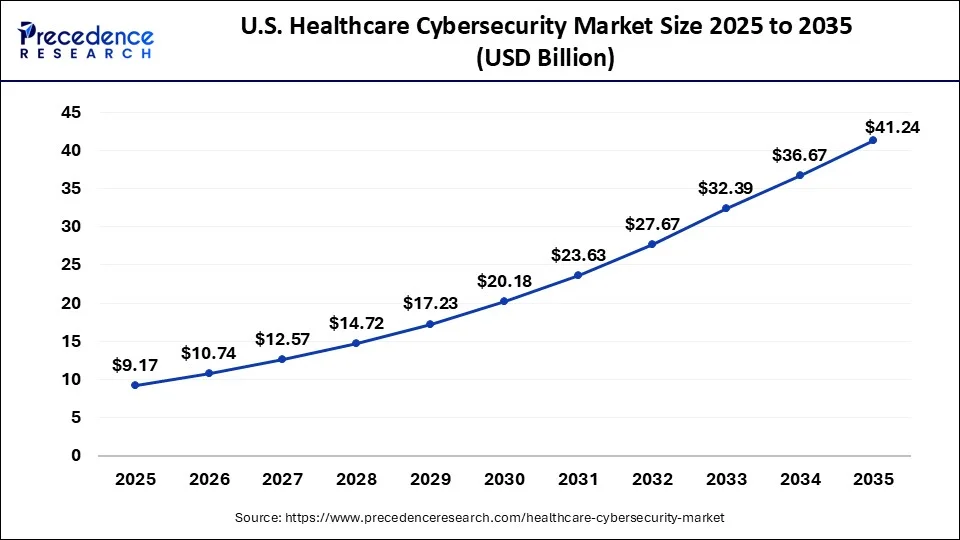
U.S. Healthcare Cybersecurity Market Trends
The U.S. dominates the healthcare cybersecurity market in North America due to stringent regulatory compliance (HIPAA), high rates of digital health adoption, and significant investment in advanced security solutions. There is a strong focus on robust, comprehensive security frameworks to protect a highly digitized healthcare ecosystem from frequent cyber threats like ransomware and data breaches, which contributed to market growth.
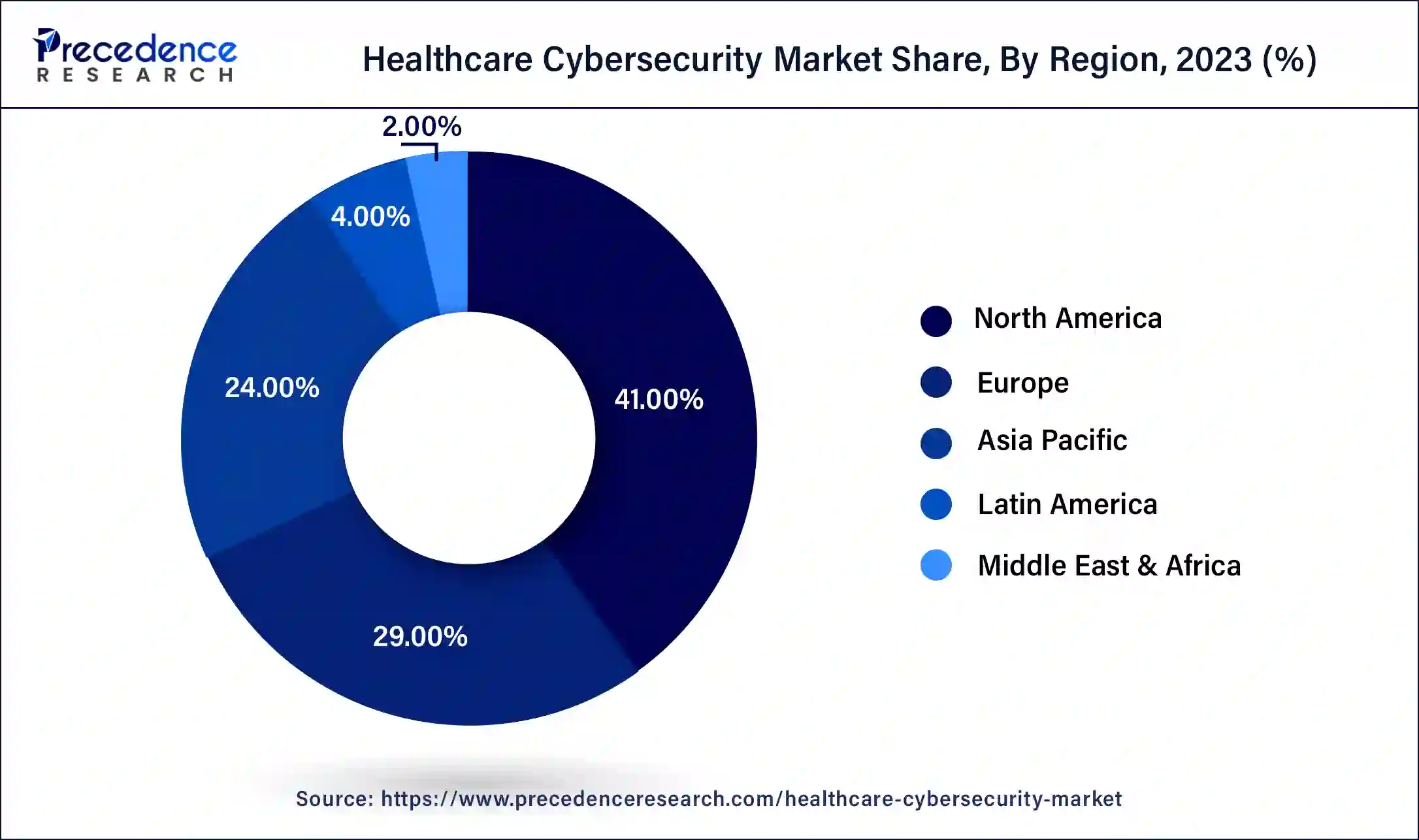
What Potentiates the Growth of the Market in Asia Pacific?
Asia Pacific is expected to grow at the fastest CAGR in the healthcare cybersecurity market during the forecast period due to the rapid expansion of digital healthcare infrastructure across public hospitals, data centers, and telemedicine platforms. The increasing use of AI-driven medical devices and connected healthcare systems is significantly expanding the cyberattack surface, making organizations more vulnerable to advanced threats such as phishing, ransomware, and data breaches.
Countries such as China are strengthening regulatory frameworks to secure large-scale healthcare and biometric data, particularly in systems handling sensitive patient information. In addition, rising investments in digital health transformation, cloud adoption, and AI-based healthcare solutions are driving demand for advanced cybersecurity measures in the region.
Japan Market Trends
Japan healthcare cybersecurity market is anticipated to grow significantly. The nation is quickly transitioning from paper to electronic health records, AI-driven health tools, cloud services, and connected medical devices, thus driving up the need for cybersecurity. The Japanese government's initiatives for increased cybersecurity standards and digital healthcare continue to drive up the national healthcare's cybersecurity resilience. Healthcare providers are looking to purchase cutting-edge technologies like zero-trust architecture, endpoint detection and response, and cloud security solutions.
India Healthcare Cybersecurity Market Trends
India is a rapidly emerging market, primarily driven by the need to secure a rapidly digitizing healthcare system and comply with new data protection laws, such as the Digital Personal Data Protection Act, 2023. Growth is driven by rapid adoption of telemedicine and EHRs and by increasing internet penetration, leading to greater focus on building a robust, indigenous cybersecurity posture.
How is Europe Contributing to the Healthcare Cybersecurity Market?
Europe has a mature healthcare cybersecurity market, driven by strict regulatory frameworks such as the General Data Protection Regulation (GDPR) and the NIS2 Directive, which mandate rigorous data protection and incident reporting. The market is marked by a shift towards sustainable and ethical practices and an increased use of advanced technologies, such as AI for threat detection, with a focus on protecting sensitive patient data and maintaining critical healthcare operations.
UK Market Trends
UK market is anticipated to grow significantly, as a result of the growing digital transformation of the National Health Service and private healthcare providers. The increased number of threats in the cyber world, like ransomware attacks and phishing incidents, has propelled investments into healthcare cybersecurity technologies. The market will expand with supporting government initiatives for boosting national cyber resilience and securing the critical healthcare infrastructure.
Germany Healthcare Cybersecurity Market Trends
Germany is a leading player in the European market, known for quality, precision engineering, and the presence of leading global cybersecurity and tech companies. The market is influenced by the German government's focus on data privacy and security, with research and development concentrated on specialized, ethically sound unmanned systems for reconnaissance, demining, and logistical support to safeguard its sophisticated healthcare infrastructure from advanced cyber threats.
What Opportunities Exist in Latin America for the Market?
Latin America presents significant opportunities in the healthcare cybersecurity market as digital transformation advances, along with the rising adoption of electronic health records (EHRs) and telemedicine, which raise vulnerabilities to cyber threats. The market is fueled by the urgent need to protect sensitive patient information from increasing ransomware attacks and data breaches. Regulatory requirements, such as Brazil's General Data Protection Law (LGPD), demand stricter data protection measures, prompting organizations to invest in robust security solutions and services.
Brazil Healthcare Cybersecurity Market Trends
Brazil is a prominent market in the region, with significant growth in healthcare cybersecurity driven by frequent cyber threats and strict regulations such as the LGPD. The rapid adoption of cloud-based solutions and IoMT devices has widened the attack surface, boosting demand for advanced security measures such as network and endpoint protection, data encryption, and identity and access management.
Why is the Middle East and Africa Healthcare Cybersecurity Market Growing?
The market in the Middle East and Africa is mainly driven by a growing focus on digital health initiatives, increasing cyber threats, and rising awareness of the importance of data security. Countries are investing more in protective measures, motivated by national digital transformation efforts and high-profile breaches. The healthcare and life sciences sectors are expected to experience high growth rates during the forecast period.
Saudi Arabia Healthcare Cybersecurity Market Trends
Saudi Arabia is a key player in the market within the Middle East and Africa, driven by digital transformation initiatives and a rise in cyberattacks targeting healthcare. Compliance with regulations from the National Cybersecurity Authority (NCA) and the new Personal Data Protection Law (PDPL) requires healthcare providers to implement robust security frameworks, emphasizing advanced technologies such as AI and machine learning to counter sophisticated threats.
United Arab Emirates Market Trends
United Arab Emirates market is anticipated to grow significantly, owing to the quick pace of healthcare digitalisation and government instigation for smart healthcare initiatives. The rising concern about healthcare and hospital cybersecurity attacks is a driving force for demand for comprehensive healthcare cybersecurity solutions. The government's cybersecurity plans, along with data protection laws, are encouraging healthcare organizations to invest more in their security walls and to enhance compliance.
Government Initiatives
United States
The U.S. Department of Health and Human Services has recently proposed revisions to the HIPAA Security Rule that dictate the level of security for implementing the rule, including enhanced risk management, encryption and multi-factor authentication.
United Kingdom
The UK government has passed the Cyber Security and Resilience Bill, which aims to upregulate the security expectations in key sectors, such as healthcare. It also has a continued roll-out of cyber resilience and incident reporting across the National Health Service.
Germany
Germany backs the EU Action Plan on Cybersecurity of Hospitals and Healthcare Providers to boost security within health-care systems. The country is building its hospital incident response capabilities and cyber preparedness by rolling out the country initiative.
India
The Government of India expanded the Ayushman Bharat Digital Mission, paving the way for a faster acceleration of digitising secure Ayushman Bharat Health Account health records. It also aims to further build durable, secure health data sharing and cybersecurity in the national digital health calendar.
Market Data & Statistics
- According to the Department of Health and Human Services Office for Civil Rights (OCR) breach portal, approximately 772 healthcare data breaches were recorded, affecting 500 or more individuals.
- Globally, data breach costs resulted in $4.44 million in 2025. However, the cost of U.S. data breaches set a record of $10.22 million, increasing by 9.2% from 2024.
Value Chain Analysis
- R&D: This is involved in the cybersecurity research side of things, with emphasis on developing advanced security solutions for healthcare systems and safeguarding sensitive and private patient data and operational data.
Key Players: GE HealthCare, IBM Security - Solution development and integration: Creating, testing, and integrating security software and hardware for healthcare networks and connected devices.
Key Players: Cisco Systems, CrowdStrike - Implementation and Deployment: Assures smooth installation of cybersecurity frameworks into healthcare infrastructure toward data protection and system stability.
Key Players: CloudWave, HCLTech - Monitoring and Threat Detection: Enabling real-time analysis aided by AI tools to detect, analyze, and respond to any potential threats.
Key Players: Armis, Cynerio - Regulatory Compliance and Risk Management: Ensures compliance with any data protection law and carries out risk management through audits and security policy enforcement.
Key Players: Clearwater Compliance, VeraSafe - Training and Support Services: Delivers continuous training as well as system maintenance and responses for incident types to improve user awareness and cybersecurity strength.
Key Players: CertCube Labs, Hoxhunt
Market Competitive Landscape: Leading Companies and Strategies
The healthcare cybersecurity market is highly competitive and dominated by specialized healthcare security vendors, IoMT-focused platforms, and large enterprise cybersecurity providers. Healthcare-specific companies such as Claroty, Asimily, Armis, and Cylera focus on securing connected medical devices, hospital operational technology (OT), and biomedical networks. Their solutions are designed to reduce vulnerabilities in IoMT ecosystems and protect critical clinical infrastructure from evolving cyber threats.
At the enterprise level, major cybersecurity and technology providers such as Palo Alto Networks, Cisco Systems, IBM, and Zscaler are strengthening their healthcare-focused offerings through dedicated security divisions. These companies deploy advanced zero-trust architectures, cloud-native security platforms, and real-time threat detection systems to protect large-scale hospital networks, distributed clinics, and health data ecosystems. Their core strengths include high-speed threat mitigation, scalable zero-trust frameworks, and robust protection for complex healthcare IT and IoMT environments.
Competitive Landscape
The healthcare cybersecurity market remains semi-consolidated, with major technology companies operating alongside specialized vendors focused on healthcare security. These players compete in areas such as threat intelligence, compliance knowledge, and cloud safeguarding capabilities. Prominent firms like Palo Alto Networks, Inc., Cisco Systems, Inc., and Fortinet, Inc. have secured strong market positions through their comprehensive enterprise offerings and global presence. In contrast, smaller niche companies set themselves apart by providing tailored security frameworks for the healthcare industry as well as managed detection services.
Mergers and acquisitions, Artificial Intelligence-powered threat monitoring, zero-trust architectures, partnerships with hospital networks, and cloud service providers have a bigger part to play in the competitive landscape. Similarly, the continued evolution of predictive analytics and real-time incident response plays a part in determining which vendors get selected for a new network. However, substantial regulatory oversight and high research and development costs, intricate healthcare IT systems, plus the necessity to build trustworthy relationships over time will create an infrastructure barrier for newer players to enter this area, as long as maintaining the dominance of established cybersecurity firms.
- In May 2026, the U.S. Department of Health and Human Services continued to work with hospitals and private cybersecurity companies through its Risk Analysis Initiative. The effort is aimed at building better HIPAA compliance and cybersecurity risk management among healthcare organizations. (Source: https://www.reuters.com)
- In January 2025, the Commission, ENISA and Member States of the European Union published the European Action Plan on the Cybersecurity of Hospitals and Healthcare Providers to further foster collaboration on cybersecurity in the healthcare sector. The project builds cross-border cooperation, threat intelligence sharing and cyber-resilience for hospitals. (Source: https://health.ec.europa.eu)
Top Companies in the Healthcare Cybersecurity Market and Their Offerings
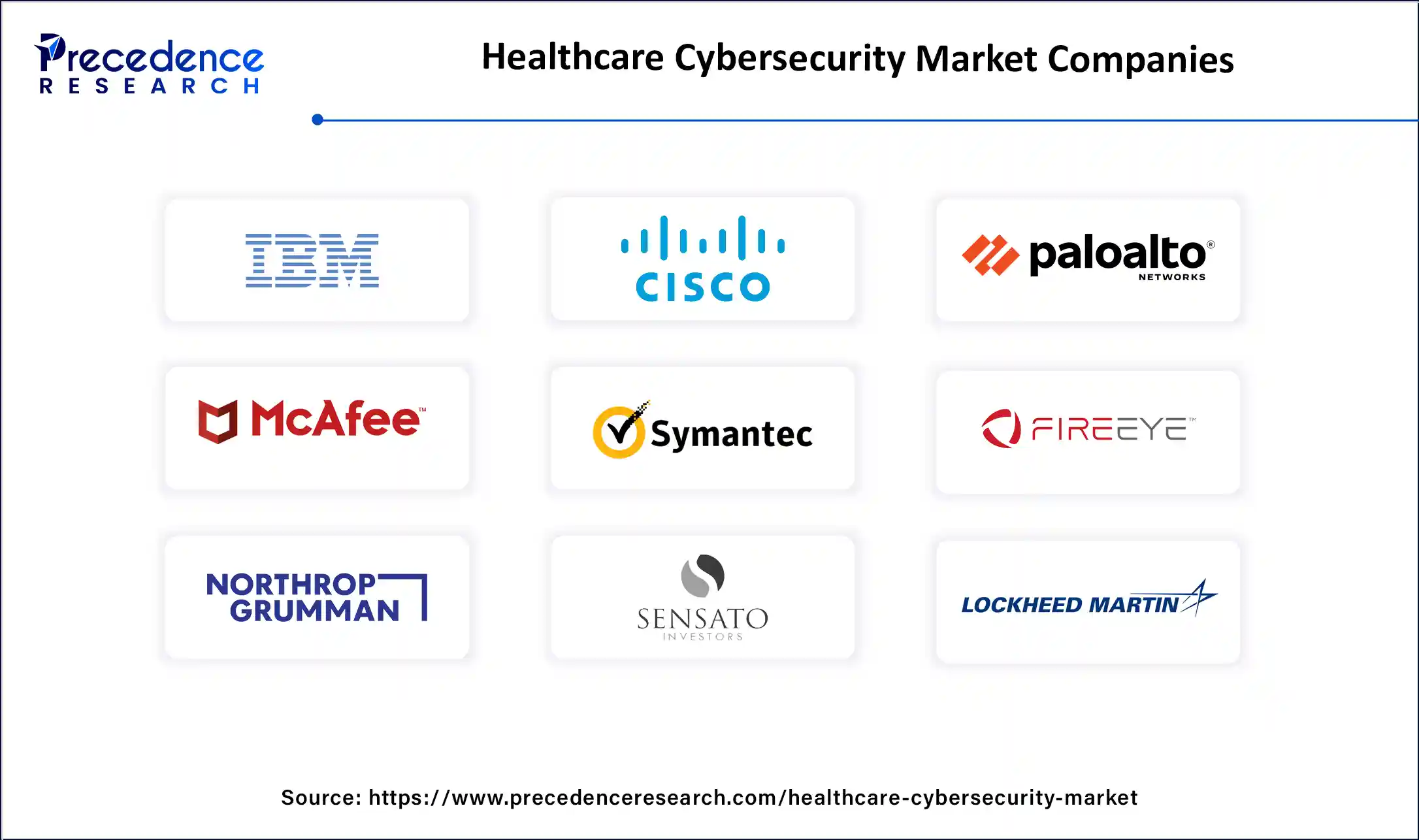
- IBM Corporation: Integrated solutions for security intelligence (QRadar), data security (Guardium), and AI-driven proactive threat management.
- Cisco Systems, Inc.: Comprehensive network security including firewalls, intrusion prevention systems, and secure connectivity for IoT/IoMT devices.
- Palo Alto Networks, Inc.: Next-generation cybersecurity with advanced threat detection, secure cloud integration, endpoint protection, and a zero-trust framework.
- McAfee, Inc.: Advanced threat detection, endpoint protection, data protection, and cloud security solutions to counter threats like ransomware.
- Symantec Corporation: Comprehensive endpoint security, data loss prevention (DLP), email security, and threat intelligence for critical infrastructure protection.
Other Major Key Players
- FireEye, Inc.
- NORTHROP GRUMMA CORPORATION
- sensato investors
- Lockheed Martin Corporation
- Kaspersky Lab
Recent Developments
- In June 2026, Black Hat announced a collaboration with HIMSS to establish the first-ever Healthcare Cybersecurity Summit through Black Hat USA 2026. The summit aimed to focus on cybersecurity challenges and to foster collaboration among industry experts. (Source: https://www.businesswire.com)
- In March 2026, the Connect Safe Cyber Facility was developed by Deloitte India for healthcare and medtech enterprises to assess various cyber threat scenarios, improve the state of their cybersecurity readiness and build resilience of their systems, including healthcare infrastructure. (Source: https://www.digitalhealthnews.com)
- In February 2025, Availity, the country's largest real-time health information network, rolled out its cutting-edge Rapid Recovery model. This pioneering framework is meant to quickly bring back crucial healthcare operations after a major disaster, setting a new standard for resilience and security in healthcare.
- As of November 2024, the Indian healthcare industry is in the midst of a significant digital transformation, with hospitals shifting towards tech-driven centers that incorporate telemedicine, AI-powered diagnostics, and robotic surgeries. However, this shift has also made them more vulnerable to cyberattacks. To address this issue, Deloitte Touche Tohmatsu India and the Data Security Council of India (DSCI) have jointly released a report called “Cyber Resilience in Hospitals.” The report highlights notable progress in the healthcare sector's approach to cybersecurity, with 89% of hospitals now using Third-Party Risk Management (TPRM) systems. These systems play a key role in identifying and mitigating cybersecurity threats within vendor networks, safeguarding sensitive patient data, and fortifying vendor relationships.
- In January 2025, the European Commission launched a plan for cybersecurity to protect the healthcare sector. The aim is to provide the hospitals with a Cybersecurity Support Center within ENISA. This will provide health organizations with tailored essential cybersecurity support.
Segments Covered in the Report
By Offering
- Solutions
- Services
By End User
- Healthcare Payers
- Healthcare Providers
By Security
- Cloud security
- Network security
- Application security
- Endpoint security
By Threat Type
- Ransomware
- Malware & Spyware
- Distributed Denial of Service (DDoS)
- Phishing & spear phishing
- Others
By Deployment
- On-premises
- Cloud-based
By Application
- Hospitals
- Pharmaceutical and biotechnology industries
- Healthcare payers
- Others
By Solution
- Identity and Access Management
- Risk and Compliance Management
- Antivirus and Antimalware
- DDoS Mitigation
- Security Information and Event Management
- Intrusion Detection System/ Intrusion Prevention System
- Others
By Region
- North America
- Latin America
- Europe
- Asia-pacific
- Middle and East Africa
For inquiries regarding discounts, bulk purchases, or customization requests, please contact us at sales@precedenceresearch.com
Frequently Asked Questions





Ask For Sample
No cookie-cutter, only authentic analysis – take the 1st step to become a Precedence Research client
 Get a Sample
.webp)



 sales@precedenceresearch.com
 Schedule a Meeting
