



Hematology Analyzers and Reagents Market Size, Companies, Share, Patient Volume, Treatment Adoption Rates, Pricing Analysis, Regulatory Landscape, Competitive Positioning, and Demand Forecast
Rohan Patil, a Healthcare Industry Expert, highlights that the hematology analyzers and reagents market has reached USD 7.90 billion in 2026 and is on track to reach USD 13.97 billion by 2035, advancing at a CAGR of 6.53%. Key hematology analyzers and reagents market companies shaping the market include Mindray Medical International Limited, Roche Diagnostics, Nihon Kohden Corporation, while major growth segments span By Product Type, By Analyzer Type, By Consumables Type, By End-User, By Application, By Mode of Operation.
Source: https://www.precedenceresearch.com/hematology-analyzers-and-reagents-market
 Get a Sample
 Table Of Content


What is the Hematology Analyzers and Reagents Market Size in 2026?
The global hematology analyzers and reagents market size accounted for USD 7.42 billion in 2025 and is predicted to increase from USD 7.90 billion in 2026 to approximately USD 13.97 billion by 2035, expanding at a CAGR of 6.53% from 2026 to 2035. The increased number of preventive and diagnostic health screenings is the key driver of the global hematology analyzers and reagents market.

Key Takeaways
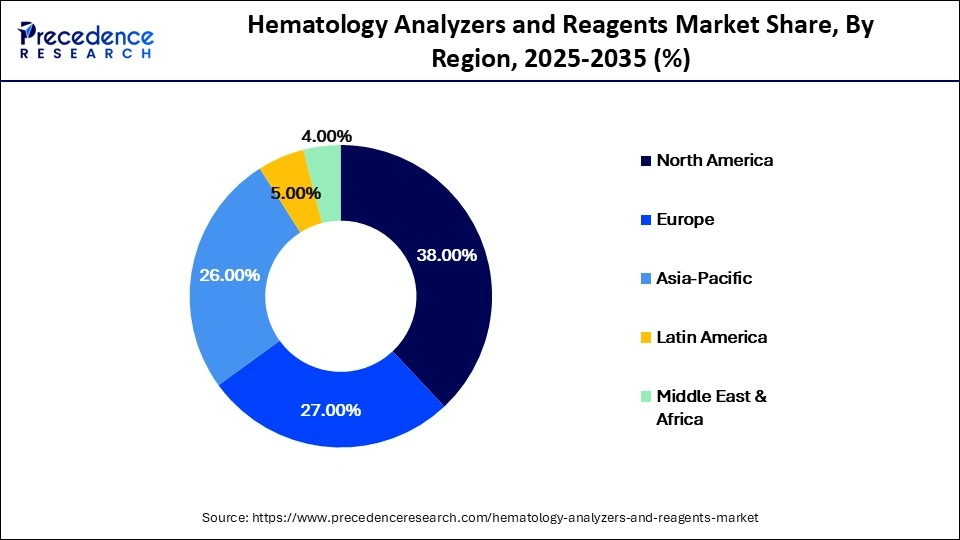
- North America held a dominant position in the hematology analyzers and reagents market in 2025, accounting for 38.0% of the total market share.
- Asia-Pacific is expected to show the fastest growth with the highest CAGR over the forecast period.
- By product type, the hematology reagents & consumables segment dominated the market in 2025 with 57.0% of market share.
- By product type, the hematology analyzers (instruments) segment is expected to witness steady growth over the forecast period.
- By analyzer type, 3-part differential analyzers accounted for the dominant share of 48.0% in 2025.
- By analyzer type, the 5-part differential analyzers segment is expected to grow considerably over the forecast period.
- By consumables type, the reagents segment held the largest share of 40.0% in 2025.
- By consumables type, the stains segment is expected to grow significantly during the forecast period.
- By end user, clinical diagnostic laboratories accounted for the highest revenue share of 36.0% in 2025.
- By end user, hospitals & hospital laboratories segment is expected to grow notably over the forecast period.
- By application, anemia diagnostics accounted for the dominant share of 29.0% in 2025.
- By application, blood cancer (leukemia, lymphoma) segment is expected to experience considerable growth over the forecast period.
- By mode of operation, fully automated systems held the largest share of 66.0% in 2025.
- By mode of operation, semi-automated systems segment is expected to grow significantly during the forecast period.
What are Hematology Analyzers and Reagents?
Hematology analyzers and reagents are healthcare products and consumables that are designed to spot and count individual blood cells in a high-speed manner. These instruments have replaced the standard strategies of enumerating blood cells on an individual basis beneath a magnifier that was previously dispensed by the research laboratory technicians.
The growing need for precision and sensitivity, along with the demand for accurate outcomes, is predicted to boost the global hematology analyzers and reagents market growth in the upcoming years. Surging cases of blood disorders and a global increase in the geriatric population have given rise to various kinds of chronic ailments. An increase in the allocation of funds in the healthcare sector, along with favorable government initiatives, to prompt the growth of the market across the globe.
What is the Impact of AI on the Hematology Analyzers and Reagents Industry?
Artificial intelligence is reshaping and revolutionizing the hematology analyzers and reagents industry, reshaping how diagnostics are performed, how reagents are developed, managed, and how healthcare systems are delivered for optimum patient care. AI-integrated software helps to enhance the speed, accuracy, and reliability of blood tests by using advanced algorithms and machine learning models. This leads to a more precise interpretation of blood cells, earlier detection of anomalies, and reduced manual intervention.
In the reagents segment, AI supports optimized formulation and quality control by analyzing large amounts of data from manufacturing processes and performance testing. Machine learning models can predict reagent stability, shelf life, and performance consistency. This helps manufacturers reduce their batch variability and minimize waste.
What are the Key Trends in the Hematology Analyzers Reagents Market?
- Rising Incidence of Blood-Related Diseases and Chronic Illnesses: The rising number of individuals diagnosed with blood disorders and chronic illnesses is driving the market. Blood disorders such as lymphoma, leukemia, and hemophilia are highly prevalent, boosting market adoption.
- Increasing Geriatric Population: The rising geriatric population globally is further leading to a positive market outlook. Elderly individuals are more prone to a wide range of health conditions, such as chronic diseases and blood disorders, which leads to the rising demand for regular blood testing for diagnosis and monitoring.
- Rising Demand for Point-of-Care (POC) Diagnostics: The increasing demand for point-of-care (POC) diagnostics is a major factor leading to a rise in the demand for hematology analyzers and reagents. In hematology, POC analyzers allow quick blood counts and basic diagnostics, supporting timely treatment and efficient workflow, which drives their adoption.
- Adoption of Fully Automated Analyzers: Fully automated hematology analyzers improve accuracy and throughput, reducing manual errors in routine blood testing. They enhance workflow efficiency, allowing laboratories to handle larger sample volumes with faster turnaround times.
- Rising Demand for Reagents and Consumables: Continuous need for reagents for complete blood counts (CBCs) and multi-parameter tests ensures recurring revenue for laboratories. Innovations in high-quality, stable reagents improve test reliability and reduce wastage.
Market Scope
| Report Coverage | Details |
| Market Size in 2025 | USD 7.42 Billion |
| Market Size in 2026 | USD 7.90 Billion |
| Market Size by 2035 | USD 13.97 Billion |
| Market Growth Rate from 2026 to 2035 | CAGR of 6.53% |
| Dominating Region | North America |
| Fastest Growing Region | Asia Pacific |
| Base Year | 2025 |
| Forecast Period | 2026 to 2035 |
| Segments Covered | Product Type, Analyzer Type, Consumables Type, End-User, Application, Mode of Operation, and Region |
| Regions Covered | North America, Europe, Asia-Pacific, Latin America, and Middle East & Africa |
Market Dynamics
Drivers
Rising Diagnostics Demand
The increasing prevalence of blood-related disorders and chronic diseases is driving demand for hematology analyzers and reagents. Hospitals and diagnostic labs require fast, accurate blood testing for conditions like anemia, infections, and cancers. Growing awareness of preventive healthcare and routine screening programs further boosts adoption, especially in emerging markets where healthcare infrastructure is rapidly expanding.
Restraint
High Equipment Costs
One major restraint is the high cost of advanced hematology analyzers and their maintenance. Smaller laboratories and clinics often struggle to afford these systems, along with recurring expenses for reagents and calibration. This limits market penetration in low-resource settings and developing regions, where budget constraints and lack of skilled technicians further hinder widespread adoption.
Opportunity
Automation Advancements
Technological advancements present strong opportunities in this market. Automation, AI integration, and improved data management systems are making hematology analyzers faster, more accurate, and user-friendly. These innovations reduce manual errors and increase throughput, making them attractive for high-volume laboratories. Additionally, the shift toward point-of-care testing opens new growth avenues in decentralized healthcare settings.
Segmental Insights
Product Type Insights
Hematology Analyzers and Reagents Market Share, By Product Type, 2025-2035 (%)
| Product Type | 2025 |
| Hematology Reagents & Consumables | 57.00% |
| Hematology Analyzers (Instruments) | 43.00% |
Why Do Reagents Dominate Market?
As the predominant segment in terms of market share, hematology reagents and consumables make up approximately 57.0% of the hematology market share by product type. This percentage demonstrates a considerable amount of repeat usage from previous years when performing routine blood tests. The need for hematology reagents and consumables continues to grow as diagnostic laboratories and hospitals continue to demand a large volume of tests for both chronic and infectious diseases, leading to ongoing consumption and revenue generation from hematology reagents and consumables.
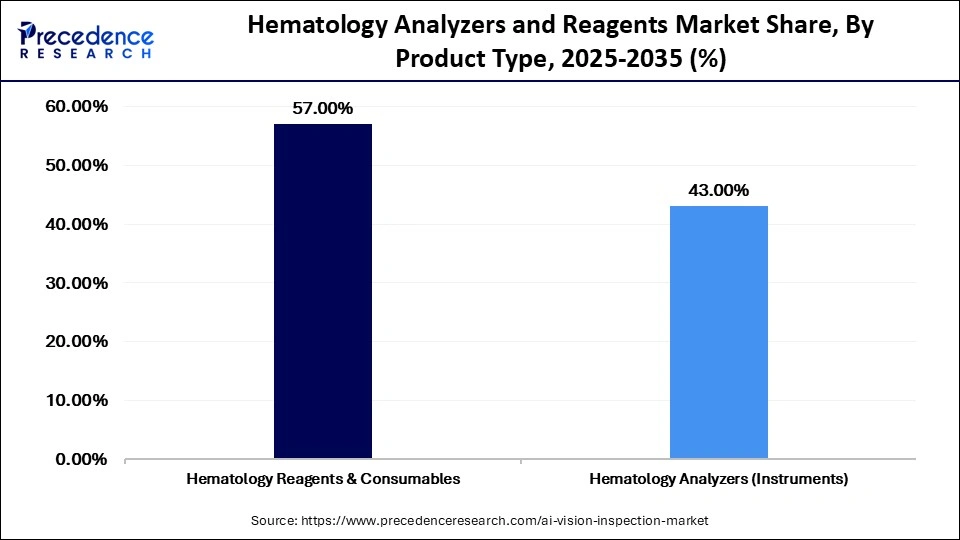
Analyzers are the second-largest segment account for a total of 43.00% of the hematology market share by product type. The increasing acceptance of automated laboratory diagnostic systems has contributed to the growing demand for hematology analyzers. In addition, when new technological advancements are introduced, such as high-throughput analyzers, the demand for hematology analyzers continues to rise. Many healthcare providers are purchasing new hematology analyzers to maximize throughput, eliminate manual errors in performing blood tests, and facilitate earlier disease detection opportunities, particularly given the growing healthcare infrastructure in many regions of the world.
Analyzer Type Insights
Why 3-Part Analyzers Lead Market?
3-Part Differential Analyzers leading the market with a 48.0 percent share, three-part differential analyzers are very cost-effective and suitable for small-medium laboratories. The basic white blood cell count will provide differentiation among the cells, allowing them to be used as a general tool for diagnosing patients. Because of their low cost and simple operation, these analyzers are widely used in developing countries due to limited funding for healthcare.
5-part differential analyzers represent 34.0 percent of the analyzer market, with these analyzers containing additional capabilities that provide in-depth analysis of white blood cell types. This type of analyzer has a greater number of supporters in large hospitals and specialized laboratories, due to its greater accuracy and ability to detect more complicated diseases caused by a hematologic disorder (such as infections and blood cancers) and will provide better clinical information.
Consumables Type Insights
Why Reagents Hold Highest Share?
Reagents will dominate the hematology analyzers and reagents market with 40% of the total due to their pivotal role in the processing and testing of blood samples. Reagents are consistently required for nearly every type of hematological test, providing a steady level of demand. As the volume of diagnostics performed continues to rise and the requirement for accurate diagnoses becomes more pronounced, this also stimulates the growth of reagents. Most of this demand is being generated out of high-throughput laboratories or hospitals.
Stains have the next largest consumable category with a 32% market share. They are the most commonly utilized consumables when performing microscopy on blood smears. Their primary purpose is to help with cell morphology evaluation and to identify abnormal cells. As more manual verification of sample results occur as a result of automation, along with the increasing prevalence of hematology-related diseases necessitating in-depth cellular evaluation, this further boosts the demand for stains.
End-User Insights
Hematology Analyzers and Reagents Market Share, By End-User, 2025-2035 (%)
| End-User | 2025 |
| Clinical Diagnostic Laboratories | 36.00% |
| Hospitals & Hospital Laboratories | 34.00% |
| Research & Academic Institutes | 18.00% |
| Commercial Diagnostic Centers | 12.00% |
Which End Users Lead the Hematology Analyzers and Reagents Market?
Clinical diagnostic laboratories dominated the market and have the greatest market share of 36.0% ,because of their high volume of testing and specialized diagnostic testing capabilities,. Clinical diagnostic laboratories perform blood analysis for large numbers of patients, resulting in demand for analyzer devices as well as consumable supplies. Growing outsourcing of diagnostic services and increased utilization of preventive health care services are helping to increase clinical diagnostic laboratories market share.
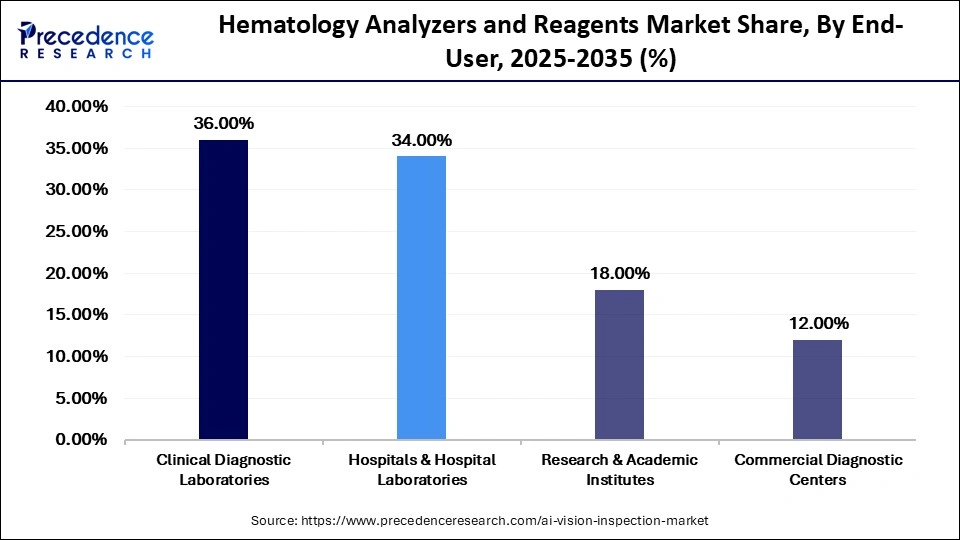
Hospitals & Hospital Laboratories is the second largest segment. There is a growing number of inpatient and outpatient procedures at hospitals and their associated hospital laboratories. As hospitals perform numerous diagnostic tests, including hematology testing to diagnose disease, monitor health, and provide emergency care, there is a steady demand for integrated automated diagnostic systems.
Application Insights
Anemia is the dominant application segment with highest share of market 29.0% due to the high global incidence of iron deficiency anemia and many related conditions. The demand for hematology analyzers is largely driven by routine blood tests for hemoglobin levels and thus routine blood testing for hematology analyzers. Increased public awareness and government screening programs both support the growth of this segment.
Blood cancer (leukemia and lymphoma) has the second largest share of total market (24.0%). Accurate and early detection is needed to effectively treat these conditions. Although hematology analyzers do not have direct direct involvement in diagnosing blood cancer, they do provide important information about abnormal cell counts and morphology. The growing number of people diagnosed with blood cancer, as well as improvements in the diagnostic technologies available for blood cancer diagnosis, are driving growth in this segment.
Mode of Operation Insights
Why Fully Automated Systems Dominate the Hematology Analyzers and Reagents Market?
The fully automated systems are the largest segment with a 66.0 % market share based on their efficiency, speed and accuracy when conducting high volume tests as well as their decreasing need for manual intervention which thereby reduces errors and improves workflow efficiency. The increase in usage of these systems by large laboratories and hospitals reinforces their strong market share.
The semi-automated systems (34.0% of the market share) are primarily used in smaller laboratories and are generally less expensive than the other two types of laboratory automation systems; as such, they continue to provide an affordable option for users in areas where full laboratory automation is not economically viable.
Regional Insights
North America Hematology Analyzers and Reagents Market Size and Growth 2026 to 2035
The North America hematology analyzers and reagents market size is estimated at USD 2.82 billion in 2025 and is projected to reach approximately USD 5.38 billion by 2035, with a 6.67% CAGR from 2026 to 2035.
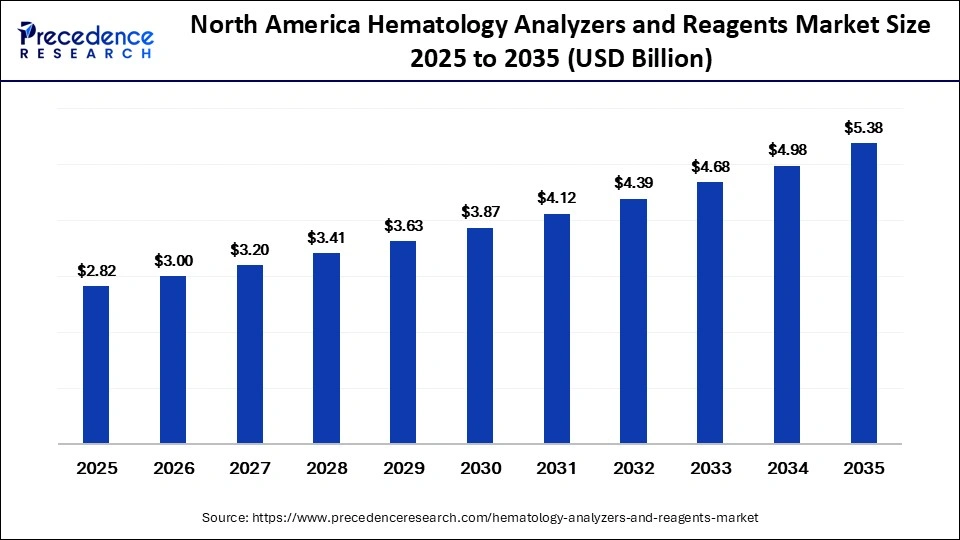
How Does North America Dominate the Hematology Analyzers and Reagents Market?
North America leads the hematology analyzers and reagents market in 2025 with 38% of total market share, driven by its robust healthcare infrastructure and high investment in healthcare technologies. The region has a strong presence of key market players and a strong emphasis on research and development, further bolstering the region's market position. The United States and Canada are leading players due to their advanced healthcare facilities and proactive adoption of cutting-edge diagnostic tools.
Additionally, recurring demand for reagents and consumables continues to drive market revenue because they are essential for routine complete blood count (CBC) tests and multi-parameter analyses.
U.S. Hematology Analyzers and Reagents Market Size and Growth 2026 to 2035
The U.S. hematology analyzers and reagents market size is calculated at USD 2.11 billion in 2025 and is expected to reach nearly USD 4.06 billion in 2035, accelerating at a strong CAGR of 6.76% between 2026 and 2035.
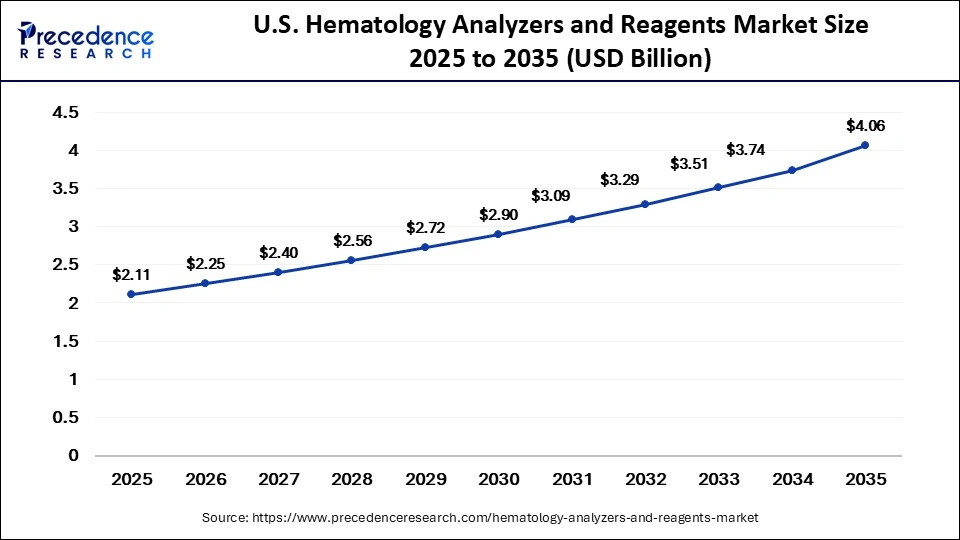
U.S. Hematology Analyzers and Reagents Market Trends
The country has a high focus on preventive healthcare, and the increasing prevalence of blood disorders is an additional factor propelling market growth in this region. The region is expected to maintain its dominance throughout the forecast period. Overall, technological innovation, expansion of diagnostic capabilities, and growing demand for precise, data-driven hematology testing are shaping market growth in the United States.
Asia Pacific's Growing Hematology Analyzers and Reagents Industry
Asia Pacific is expected to witness the fastest growth rate, fueled by rapid economic development and increasing healthcare investments. Countries such as China, India, and Japan are leading players as they are witnessing significant improvements in healthcare infrastructure, creating lucrative opportunities for market expansion. The growing population, rising awareness of health and wellness, and the increasing prevalence of blood disorders are key drivers of market growth in this region.
Expansion of healthcare infrastructure, laboratories, and point-of-care facilities in countries such as China, India, and Japan is encouraging the rapid adoption of automated hematology analyzers. Additionally, technological advancements, local manufacturing of reagents, and government initiatives for early disease detection are driving market growth across the region.
China Hematology Analyzers and Reagents Market Trends
China's market is rapidly growing due to its shift towards digital healthcare solutions, and the adoption of AI-driven diagnostics is expected to accelerate market growth. The country is also witnessing improvements in healthcare access and infrastructure, offering potential growth opportunities.
Laboratories in China are upgrading to fully automated platforms with advanced digital integration and AI-enabled features to improve accuracy, efficiency, and workflow optimization. There is also a strong expansion of point of care and decentralized testing, allowing rapid complete blood count (CBC) testing in outpatient clinics and remote locations.
Hematology Analyzers and Reagents Market-Supply Chain Analysis
- Raw Material Sourcing
The initial stage deals with sourcing high-purity chemicals, enzymes, stains, buffers, preservatives, and other calibrators.
Key Players: Merck, Thermo Fisher, and Lonza.
- Manufacturing Process
At this stage, the raw materials are formulated into finished reagents specifically designed for compatibility with automated hematology analyzers.
Key Players: Sysmex, Beckman Coulter, and Abbott.
- Distribution Process
The finished reagents are distributed through direct sales teams, authorized diagnostic distributors, and long-term service contracts.
Key Players: Quest, LabCorp, and Sonic Healthcare.
Hematology Analyzers and Reagents Market & Their Offerings
Tier 1
- Sysmex Corporation: Provides a wide range of hematology analyzers and reagents for complete blood counts, differential analysis, and clinical diagnostics used in hospitals and labs.
- Beckman Coulter, Inc: Offers automated hematology systems and reagent kits that deliver accurate blood cell analysis and streamline laboratory workflows.
- Abbott Laboratories: Manufactures hematology analyzers and corresponding reagents for routine blood testing and disease monitoring in clinical laboratories.
- Siemens Healthineers: Supplies advanced hematology analyzers and reagent solutions that support complete blood counts and disease diagnostics with integrated lab automation.
- HORIBA, Ltd: Develops hematology analyzers and reagent panels designed for efficient blood testing and reliable clinical results in lab settings.
- Bio Rad Laboratories, Inc: Provides hematology reagents and quality control materials that ensure accuracy and reliability in blood analyzer performance.
- Boule Diagnostics AB: Offers compact hematology analyzers and reagent cartridges tailored for small laboratories and point-of-care testing environments.
Tier 2:
- Mindray Medical International Limited
- Roche Diagnostics
- Nihon Kohden Corporation
- Diatron Group
- Drew Scientific Group
- Heska Corporation
Recent Developments
- In July 2025, developer of Full-Field Cell Morphology imaging and analysis platform, Scopio Labs, launched its Complete Blood Morphology (CBM) analyzer. This analyzer is expected to bring more scale. Standardization and efficiency in hematology from autonomous morphology analysis and reporting. (Source: https://scopiolabs.com)
- In March 2025, a clinical diagnostics leader, Beckman Coulter Diagnostics, announced 510(K) clearance from the U.S. Food and Drug Administration for its newly launched DxC 500i Clinical Analyzer. DxC 500i Clinical Analyzer is an integrated clinical chemistry and immunoassay analyzer, which combines technology with an intuitive user interface to make laboratory sizes to meet the increased modern healthcare demands. (Source: https://www.beckmancoulter.com)
Segments Covered in the Report
By Product Type
- Hematology Reagents & Consumables
- Hematology Analyzers (Instruments)
By Analyzer Type
- 3-Part Differential Analyzers
- 5-Part Differential Analyzers
- Point-of-Care Hematology Analyzers
By Consumables Type
- Stains
- Controls & Calibrators
- Reagents
By End-User
- Clinical Diagnostic Laboratories
- Hospitals & Hospital Laboratories
- Research & Academic Institutes
- Commercial Diagnostic Centers
By Application
- Anemia Diagnostics
- Blood Cancer (Leukemia, Lymphoma)
- Infection-Related Conditions
- Immune System Disorders
- Other Hematological Conditions
By Mode of Operation
- Fully Automated Systems
- Semi-Automated Systems
By Region
- North America
- Latin America
- Europe
- Asia-pacific
- Middle and East Africa
For inquiries regarding discounts, bulk purchases, or customization requests, please contact us at sales@precedenceresearch.com
Frequently Asked Questions





Ask For Sample
No cookie-cutter, only authentic analysis – take the 1st step to become a Precedence Research client
 Get a Sample




 sales@precedenceresearch.com
 Schedule a Meeting
