



Household Induction Cooktops Market Size, Companies, Share, Sales Volume, Consumer Demand, Pricing Trends, Distribution Performance, Competitive Positioning, and Growth Forecast
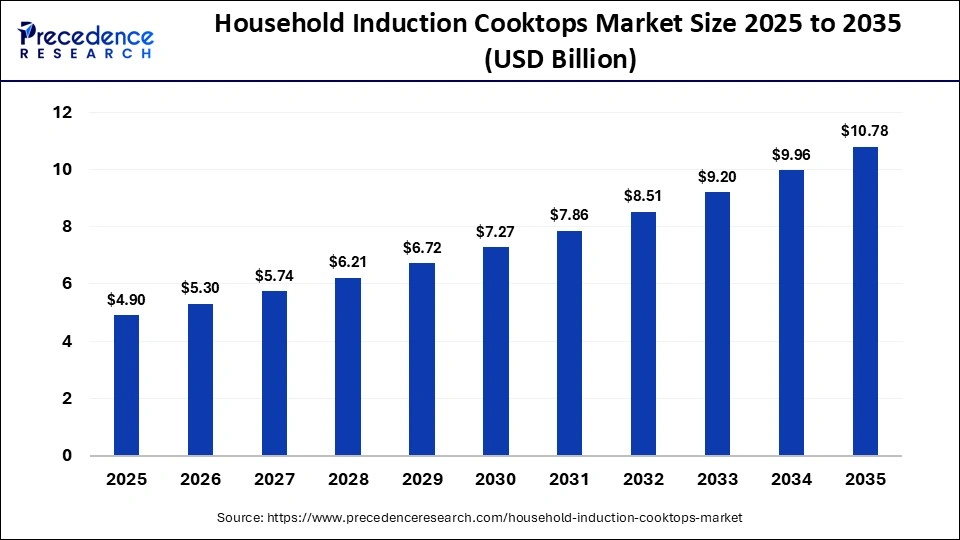
Vidyesh Swar, a Consumer Goods Industry Expert, finds that the household induction cooktops market has reached USD 5.30 billion in 2026 and is projected to reach USD 10.78 billion by 2035, growing at a CAGR of 8.20%. Leading household induction cooktops market brands and companies such as Philips Electronics, Whirlpool Corporation, Panasonic Corporation, GE Appliances (Haier Group), Bosch Home Appliances are competing across high-demand segments including By Product Type, By Power Capacity, By Application, By Distribution Channel.
Source: https://www.precedenceresearch.com/household-induction-cooktops-market
 Get a Sample
 Table Of Content


What is the Household Induction Cooktops Market Size in 2026?
The global household induction cooktops market size accounted for USD 4.90 billion in 2025 and is predicted to increase from USD 5.30 billion in 2026 to approximately USD 10.78 billion by 2035, expanding at a CAGR of 8.20% from 2026 to 2035. The market growth is attributed to rising consumer demand for energy-efficient, smart, and safe cooking solutions.
Key Takeaways
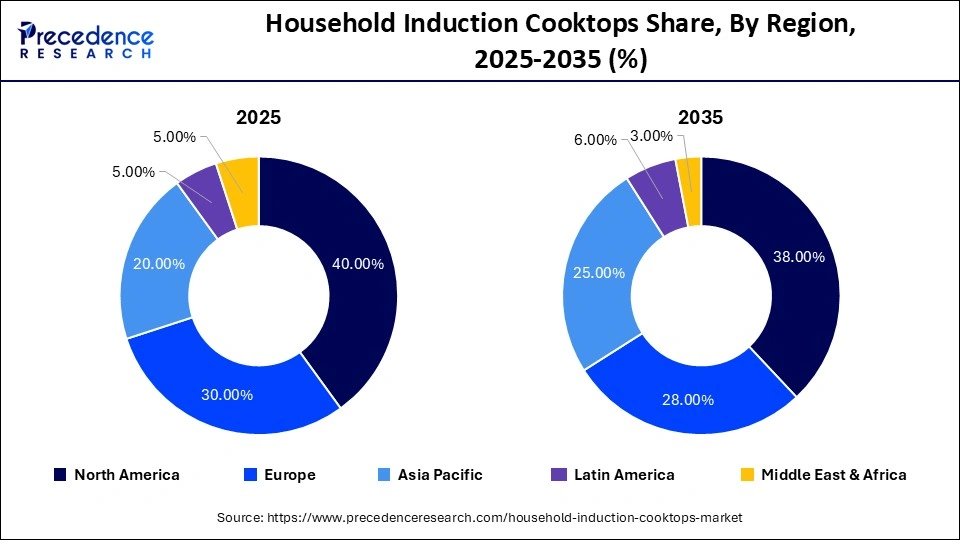
- North America dominated the market with a 40% share in 2025.
- Europe was the second-largest shareholder of the market in 2025 and is expected to grow at a significant rate between 2026 and 2035.
- By product type, the built-in induction cooktops segment contributed the largest market share of 45% in 2025.
- By product type, the portable induction cooktops segment held a 38% share of the market in 2025 and is expected to grow at a significant rate in the coming years.
- By power capacity, the 1500-3000 watts segment held a major market share of 50% in 2025.
- By power capacity, the above 3000 watts segment held a 30% share of the market in 2025 and is expected to register significant growth during the forecast period.
- By application, the residential use segment accounted for 60% share of the market in 2025.
- By application, the commercial use segment captured a 30% share of the market in 2025 and is likely to experience robust growth in the forthcoming years.
- By distribution channel, the supermarkets & hypermarkets segment contributed the highest market share of 45% in 2025.
- By distribution channel, the online retailers segment contributed a 35% market share in 2025 and is expected to grow at a strong rate over the projection period.
Market Overview
Rising global emphasis on energy efficiency and clean cooking is strongly driving growth in the household induction cooktops market worldwide. Induction cooking technology works with the help of electromagnetic fields that directly warm the compatible cookware. It cooks in a shorter time, resulting in much less heat loss. This high-end technology allows for the control of the temperature accurately, to increase the safety level and efficiency compared to traditional gas or resistance-based electric stoves. Furthermore, the growing consumer consciousness about safety, efficiency, and convenience is still a factor contributing to the adoption of induction cooktops.
Impact of Artificial Intelligence on the Household Induction Cooktops Market
The household induction cooktops market is being transformed greatly through artificial intelligence, which allows intelligent and efficient cooking experiences in a modern household. Manufacturers are integrating AI-driven sensors and control systems that continuously monitor temperature and cooking progress to provide precise heat adjustments. These smart systems optimize power usage in real time, enhancing energy efficiency while delivering consistent cooking results.
Major Market Trends
- Rise of Multi-Functional and Space-Integrated Cooking Designs: Manufacturers are launching cooktops with ventilation solutions and multi-use features so that there is no need to have separate kitchen appliances. This is a trend that can encourage space optimization and contemporary kitchen design, and has been adopted in urban and modular housing settings.
- Emergence of Energy-Optimized Cooking Linked with Smart Grids: Induction cooktops of the new generation are being developed to match smart grids and time-of-use electricity pricing to optimize energy use. The trend is enhancing the capabilities of induction cooktops in sustainable and energy-efficient household ecosystems across the world.
- Rising Disposable Income: Growing middle-class spending power is propelling demand for advanced and premium kitchen appliances, including induction cooktops.
- Increasing Preference for Compact and Portable Appliances: Changing lifestyle trends and smaller living spaces are fueling demand for portable induction cooktops in urban households.
Market Scope
| Report Coverage | Details |
| Market Size in 2025 | USD 4.90 Billion |
| Market Size in 2026 | USD 8.20 Billion |
| Market Size by 2035 | USD 10.78 Billion |
| Market Growth Rate from 2026 to 2035 | CAGR of 8.20% |
| Dominating Region | North America |
| Fastest Growing Region | Asia-Pacific |
| Base Year | 2025 |
| Forecast Period | 2026 to 2035 |
| Segments Covered | Product Type, Power Capacity, Application, Distribution Channel, and Region |
| Regions Covered | North America, Europe, Asia-Pacific, Latin America, and Middle East & Africa |
Market Dynamics
Drivers
Adoption of Smart Appliances
Surging adoption of smart appliances is projected to accelerate the demand for connected induction cooktops worldwide. Kitchen appliances are also becoming smart home platforms in which centralized control is achieved via mobile application and voice assistants. The young population is highly inclined toward connected gadgets, which are more consistent with digital lifestyles and convenience-driven consumption habits.
Restraint
Limited Cookware Compatibility and High Costs
Limited cookware compatibility and high replacement costs are likely to reduce the adoption rates among price-sensitive households, thus hindering the household induction cooktops market. This extra spending is considered an impediment by many households, particularly in new markets with price-sensitive consumers. Furthermore, limited awareness and technical understanding are expected to affect adoption in non-metro and rural regions.
Opportunity
Improvements in Heating Efficiency
Increasing technological innovations and improvements in heating efficiency are projected to create immense opportunities for players competing in the household induction cooktops market. Performance optimization and innovative cooking features are becoming important in product differentiation. Furthermore, the rising disposable income in emerging markets is anticipated to boost spending on advanced kitchen appliances, including induction cooktops.
Segment Insights
Product Type Insights
Household Induction Cooktops Share, By Product Type, 2025-2035 (%)
| Product Type | 2025 | 2035 |
| Portable Induction Cooktops | 38.00% | 35.00% |
| Built-in Induction Cooktops | 45.00% | 47.00% |
| Modular Induction Cooktops | 10.00% | 12.00% |
| Commercial Induction Cooktops | 7.00% | 6.00% |
The Portable Induction Cooktops Segment Held a 38% Market Share in 2025
The built-in induction cooktops segment dominated the household induction cooktops market with a major share of 45% in 2025. This is mainly due to a surge in modular housing projects and integrated kitchen layouts across urban areas globally. The adoption of these cooktops has increased with an increasing number of modular housing constructions and built-in kitchen designs in urban areas worldwide. Customers want flush-mount designs that are able to beautify and provide excellent performance in cooking. The demand for premium housing and renovation is still maintaining high rates of installation of built-in induction cooktops in developed economies.
The portable induction cooktops segment was the second-largest shareholder in 2025, holding a 38% share. This is mainly due to their affordability and widespread adoption in Tier-2 and Tier-3 cities worldwide. Moreover, the number of consumers residing in small apartments is moving toward lightweight appliances, including portable induction cooktops, which provide ease in moving around and storage facilities.
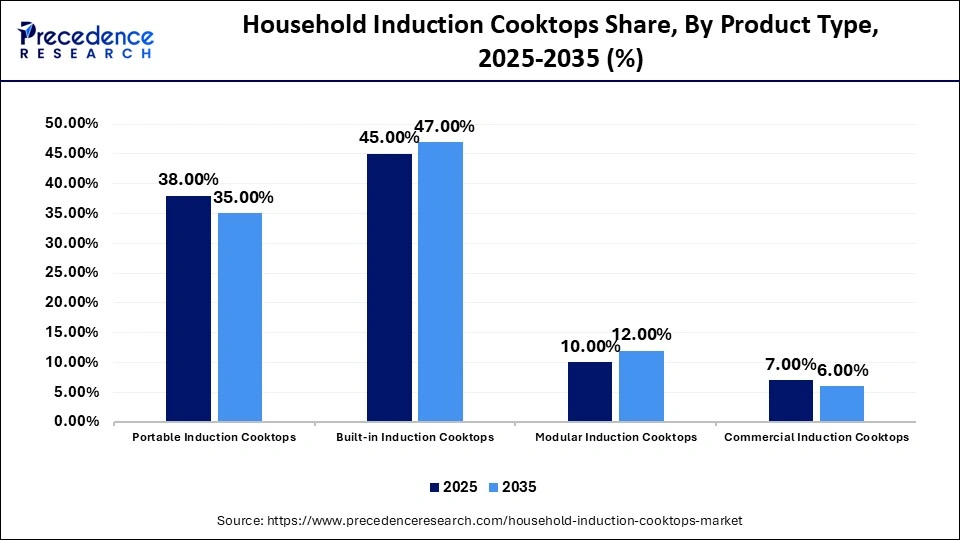
The modular induction cooktops segment held a 10% share of the market in 2025 due to the increased demand for customized and premium kitchen appliances. These modular cooktops are popular in high-end residential projects and luxury apartments, with urban households increasingly adopting them for convenience, fueling the segmental growth.
The commercial induction cooktops segment held a 7% share of the market in 2025, driven by rising interest in energy-efficient and safe cooking in commercial kitchens. Hospitality and restaurant operators prefer induction systems for faster cooking, reduced heat emissions, and precise temperature control, enabling consistent results favored by professional chefs.
Power Capacity Insights
Household Induction Cooktops Share, By Power Capacity, 2025-2035 (%)
| Power Capacity | 2025 | 2035 |
| Up to 1500 Watts | 20.00% | 18.00% |
| 1500-3000 Watts | 50.00% | 52.00% |
| Above 3000 Watts | 30.00% | 30.00% |
The 1500-3000 Watts Segment Dominated the Market in 2025
The 1500-3000 watts segment dominated the household induction cooktops market with a share of 50% in 2025. This is mainly due to its optimal balance between power efficiency and cooking performance. This power range provides sufficient heat for quick and efficient cooking, catering to the needs of most households while maintaining energy efficiency. It is also ideal for versatile cooking tasks, making it a preferred choice for a wide range of consumers seeking both convenience and performance in their kitchen appliances.
The above 3000 watts segment held the second-largest market share of 30% in 2025 and is expected to grow at a steady rate during the projection period, owing to increasing consumer demand for high-performance cooking appliances that offer faster heating and more powerful cooking capabilities. This higher power capacity is particularly appealing to larger households or those who frequently cook large meals, as it allows for quicker cooking times and greater flexibility in cooking a variety of dishes. Additionally, advancements in induction technology are making high-powered cooktops more energy-efficient, which further boosts their appeal in premium kitchens.
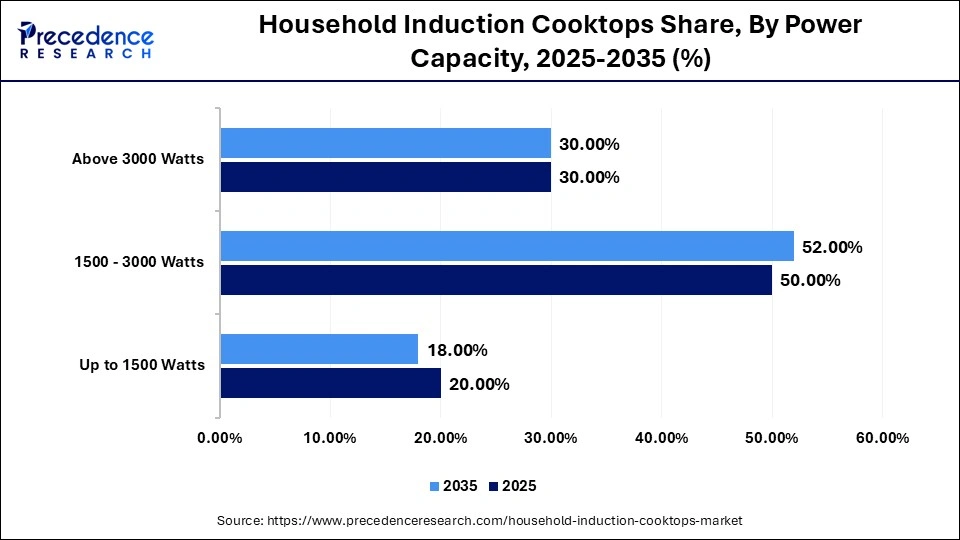
The up to 1500 watts segment held a 20% share of the market in 2025 due to its affordability, energy efficiency, and suitability for smaller households or users with basic cooking needs. These cooktops provide sufficient power for everyday cooking tasks while consuming less energy, making them an attractive option for budget-conscious consumers or those with limited kitchen space. The compact size and cost-effectiveness of up to 1500 Watts models also align well with the growing trend of smaller, urban living spaces and the increasing demand for simple, easy-to-use appliances.
Application Insights
The Residential Use Segment Dominated the Market With a 60% Share in 2025
The residential use segment held a 60% share of the household induction cooktops market in 2025. This is mainly due to lifestyle changes that focus on convenience, hygiene, and food preparation in busy urban settings. Furthermore, the increased accessibility of electricity in the developing regions further increased the adoption of electric cooking appliances, including induction cooktops, in residential settings.
Household Induction Cooktops Share, By Application, 2025-2035 (%)
| Application | 2025 | 2035 |
| Residential Use | 60.00% | 55.00% |
| Commercial Use | 30.00% | 35.00% |
| Others | 10.00% | 10.00% |
The commercial use segment was the second-largest shareholder in 2025, holding a 30% share, and is expected to grow at a significant rate in the coming years. This is due to the increasing demand for energy-efficient cooking technologies that help reduce operational costs in high-volume food preparation environments. Induction cooktops provide faster cooking times, precise temperature control, and minimize ambient heat, making them ideal for commercial kitchens where efficiency and safety are critical. Additionally, the rise of delivery-oriented kitchens and technology-driven food service models in urban areas further accelerates the adoption of induction cooking systems in the commercial sector.
Distribution Channel Insights
The Supermarkets & Hypermarkets Segment Held a 45% Market Share in 2025
The supermarkets & hypermarkets segment dominated the household induction cooktops market with a major share of 45% in 2025 due to their wide product selection, competitive pricing, and convenience for consumers. These retail channels provide a hands-on shopping experience, allowing customers to physically assess and compare various models before making a purchase. Additionally, the widespread availability of household induction cooktops in these stores attracts a broad consumer base, including those seeking immediate purchase options and the ability to take advantage of promotional offers and discounts.
Household Induction Cooktops Share, By Distribution Channel, 2025-2035 (%)
| Distribution Channel | 2025 | 2035 |
| Online Retailers | 35.00% | 40.00% |
| Supermarkets & Hypermarkets | 45.00% | 42.00% |
| Specialty Stores | 15.00% | 14.00% |
| Others | 5.00% | 4.00% |
The online retailers segment held the second-largest market share of 35% in 2025 due to the increasing shift toward e-commerce, offering consumers the convenience of shopping from home and accessing a broader range of products. Online platforms often provide competitive prices, detailed product information, customer reviews, and home delivery, making it easier for consumers to make informed decisions.
The specialty stores segment held a 15% share of the market in 2025 due to their focus on providing a curated selection of high-quality, premium kitchen appliances with expert guidance. These stores offer a more personalized shopping experience, allowing consumers to receive tailored recommendations based on their cooking needs and preferences. Additionally, specialty stores often carry exclusive or advanced models that may not be available through larger retail channels, attracting customers looking for specialized features and high-performance cooktops.
Regional Insights
North America Household Induction Cooktops Market Size and Growth 2026 to 2035
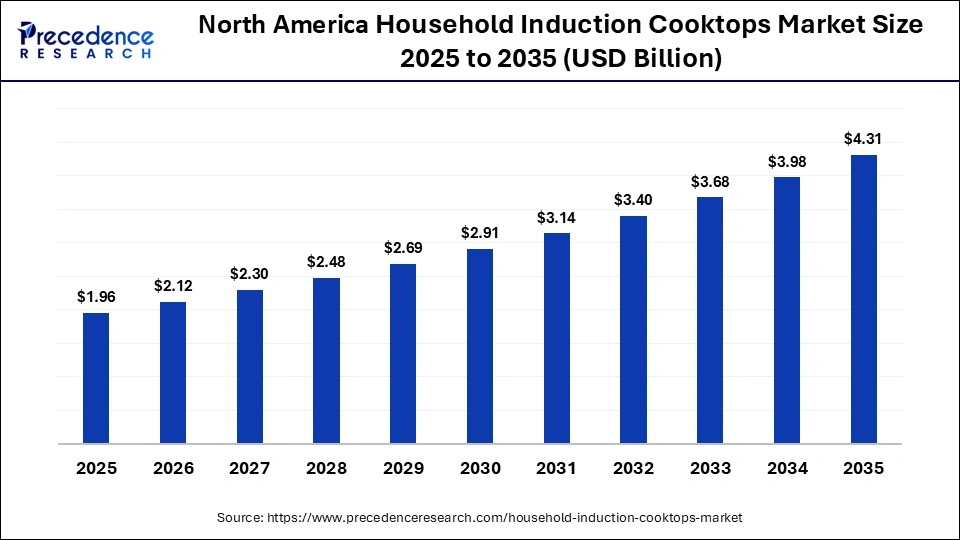
The North America household induction cooktops market size is estimated at USD 1.96 billion in 2025 and is projected to reach approximately USD 4.31 billion by 2035, with a 8.20% CAGR from 2026 to 2035.
North America Dominated the Market With a 45% Share in 2025
North America dominated the household induction cooktops market, capturing the largest share of 40% in 2025. This is due to the increasing adoption of energy-efficient cooking technologies that significantly reduce household electricity waste. State and utility rebate programs encourage adoption by promoting these clean appliances effectively. The region's mature retail infrastructure, along with the growing adoption of smart home technologies, further contributed to the market's growth.
U.S. Household Induction Cooktops Market Size and Growth 2026 to 2035
The U.S. household induction cooktops market size is calculated at USD 1.47 billion in 2025 and is expected to reach nearly USD 3.23 billion in 2035, accelerating at a strong CAGR of 8.19% between 2026 and 2035.
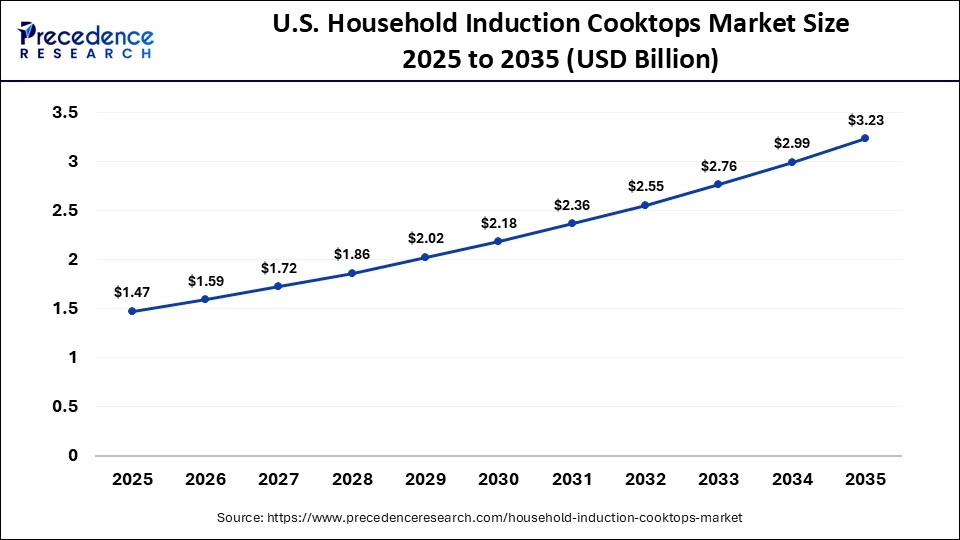
U.S. Household Induction Cooktops Market Analysis
The U.S. leads the market within North America due to the energy efficiency policies and federal appliance standards that affect household buying behavior. City-level electrification initiatives in states such as California and Washington include rebates for induction adoption, aligning urban decarbonization strategies with household choices. This regulatory and incentive synergy supports consistent growth in the market in the U.S.
Europe: The Second-Largest Market
Europe was the second-largest shareholder of the market in 2025, holding a 30% share, and is anticipated to grow at a significant rate during the forecast period. This growth is driven by strict regional standards and labeling programs that promote energy-efficient appliances. According to the IEA's 2025 appliance efficiency analysis, Minimum Energy Performance Standards (MEPS) eliminate low-performance products and encourage innovation, aligning with the EU's goal to reduce energy consumption by 11.7% by 2030. Additionally, manufacturers in the region produce units that meet European performance requirements, ensuring safety and efficiency, further boosting market growth.
Germany Household Induction Cooktops Market Analysis
Germany is a major contributor to the European market, driven by the demand for energy-efficient solutions that appeal to eco-conscious consumers. The growing urban renovation trends in cities like Berlin and Munich reflect a broader shift toward modern kitchen designs, further accelerating the adoption of induction cooktops. Manufacturers are innovating to meet this demand, offering eco-friendly and high-performance appliances that align with sustainability trends in the region.
Asia Pacific: The Fastest-Growing Market
Asia Pacific is expected to grow at the fastest rate throughout the forecast period due to the rising demand for energy-efficient cooking appliances. According to the IRENA 2023 report, nearly 2.3 billion 2.3 billion people lacked access to clean cooking, highlighting huge potential for electric induction adoption. Additionally, improved electricity infrastructure is enabling households to transition from traditional fuels, further boosting the growth of the market for household induction cooktops in the region.
China Household Induction Cooktops Market Analysis
In China, the market is driven by rapid urbanization and electrification policies integrated into national clean energy programs. Urban consumers are increasingly adopting induction solutions due to heightened awareness of indoor air quality and the lower emissions they offer compared to gas stoves. Retailers are capitalizing on in-store demos and urban display kitchens to highlight the precision, speed, and efficiency of induction cooking, further strengthening its adoption in densely populated Chinese markets.
Household Induction Cooktops Market Value Chain Analysis
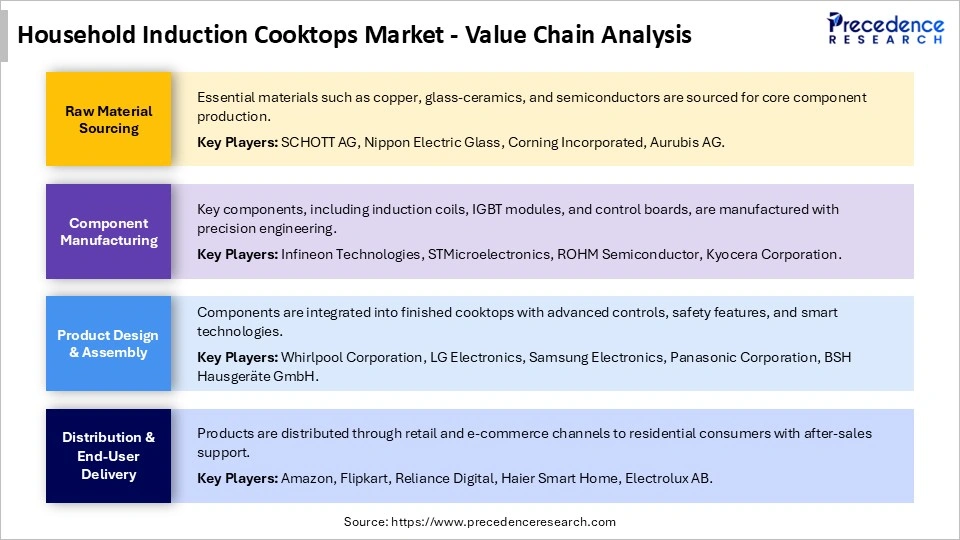
Household Induction Cooktops Market Companies
- Philips Electronics
- Whirlpool Corporation
- Panasonic Corporation
- GE Appliances (Haier Group)
- Bosch Home Appliances
- Electrolux AB
- Samsung Electronics Co., Ltd.
- LG Electronics
- Sharp Corporation
- Midea Group
- Siemens AG
- Kenmore (Sears)
- Tata Group (Tefal)
- Breville Group
- Miele & Cie. KG
Recent Developments
- In June 2025, GE Profile launched its ENERGY STAR 30” Smart Slide-In Induction Range. The range delivers fast heating, precise control, and easy-to-clean surfaces for modern kitchens. Affordable and energy-efficient, it helps families reduce electricity use and cooking time significantly.(Source: https://pressroom.geappliances.com)
- In February 2026, Zephyr unveiled the HyperCore Cooktop, offering four times the power of gas and three times standard induction. Its built-in battery supports peak performance while using standard 120V or 240V outlets. This innovation emphasizes efficiency, precision, and professional-grade cooking at home.(Source: https://www.prnewswire.com)
- In March 2026, Frigidaire introduced MatteGuard induction cooktops, addressing consumer concerns about scratches and wear. The surface keeps a sleek, durable appearance while maintaining precise heat control. Everyday cooking becomes easier and more reliable across diverse kitchen setups.(Source: https://www.prnewswire.com)
Segments Covered in the Report
By Product Type
- Portable Induction Cooktops
- Built-in Induction Cooktops
- Modular Induction Cooktops
- Commercial Induction Cooktops
By Power Capacity
- Up to 1500 Watts
- 1500-3000 Watts
- Above 3000 Watts
By Application
- Residential Use
- Commercial Use
- Hotels
- Restaurants
- Catering Services
- Others
- Industrial Applications
By Distribution Channel
- Online Retailers
- Supermarkets & Hypermarkets
- Specialty Stores
- Others
- Direct Sales
- Electronics Retail Stores
By Region
- North America
- Latin America
- Europe
- Asia-pacific
- Middle and East Africa
For inquiries regarding discounts, bulk purchases, or customization requests, please contact us at sales@precedenceresearch.com
Frequently Asked Questions





Ask For Sample
No cookie-cutter, only authentic analysis – take the 1st step to become a Precedence Research client
 Get a Sample




 sales@precedenceresearch.com
 Schedule a Meeting
