



Hydrogen Fuel Cells Market Trends, Leading Companies, Company Revenue / Sales Performance, Manufacturing Capacity, Production Cost, Supply Chain Performance, Pricing Analysis, Competitive Landscape, and Industry Outlook
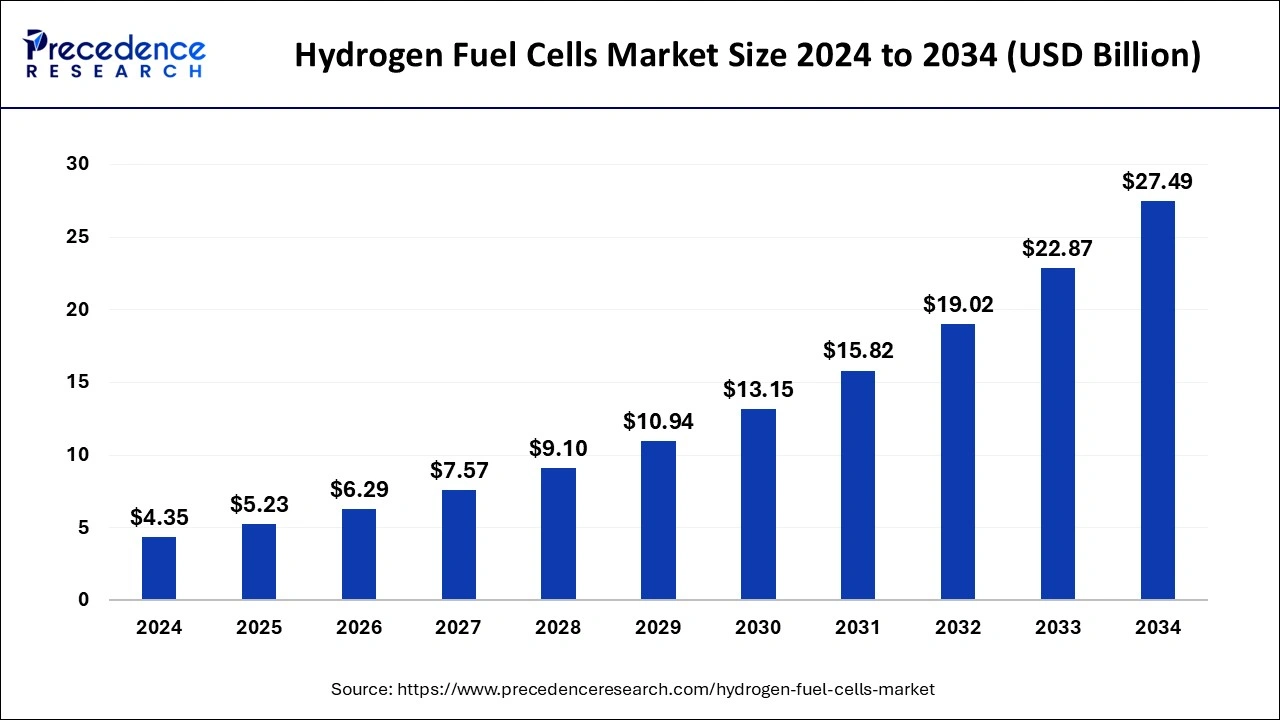
The global Hydrogen Fuel Cells Market was valued at USD 6.29 billion in 2026 and is projected to reach approximately USD 31.60 billion by 2035, growing at a CAGR of 19.71% from 2026 to 2035. Market growth is driven by rising demand for clean energy, advancements in fuel cell technology, expanding transportation applications, and government initiatives promoting hydrogen energy. North America dominated the market with a 47% share in 2025, while Asia Pacific is expected to grow at the fastest rate. Proton exchange membrane fuel cells led by technology, stationary applications dominated by application, and fuel cell vehicles led by end user.
Source: https://www.precedenceresearch.com/hydrogen-fuel-cells-market
 Get a Sample
 Table Of Content


Hydrogen Fuel Cells Market Size and Forecast 2026 to 2035
The global hydrogen fuel cells market size was estimated at USD 6.29 billion in 2026 and is anticipated to reach around USD 31.60 billion by 2035, expanding at a CAGR of 19.71% from 2026 to 2035. The rapidly expanding transportation sector, advancements in materials and design, and increasing investments in the automotive sector drive the market.
Hydrogen Fuel Cells Market Key Takeaways
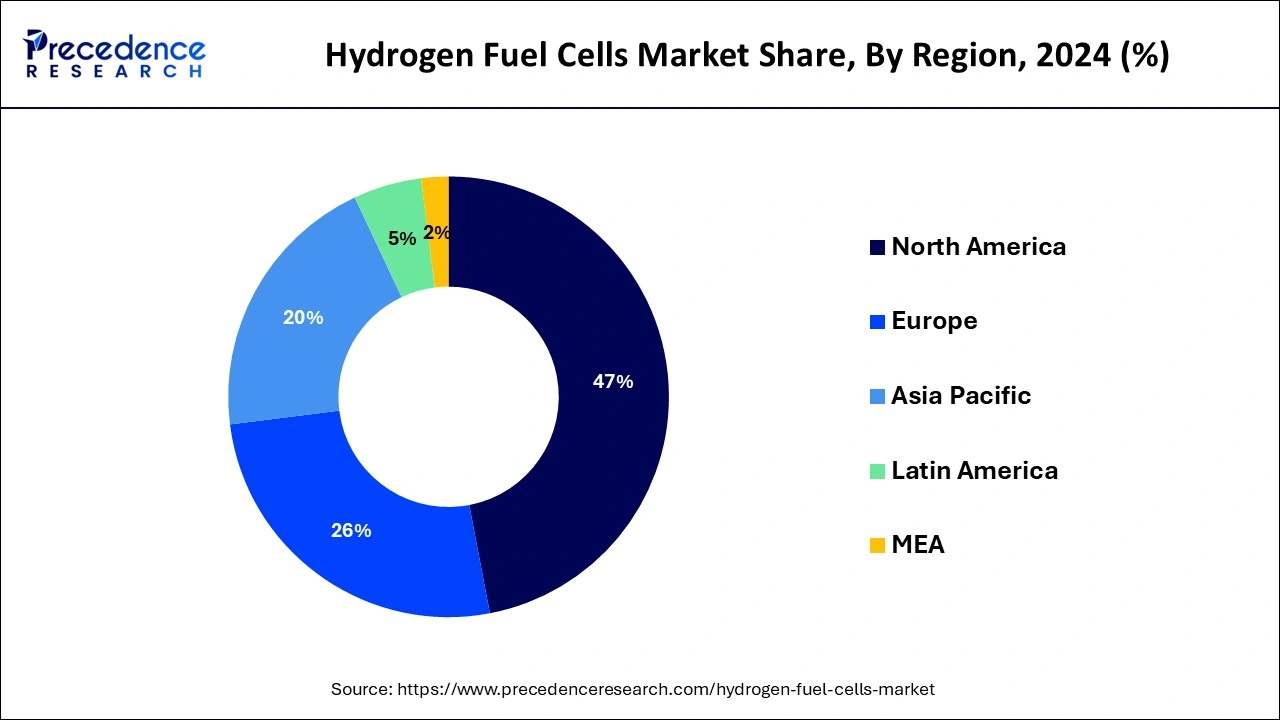
- North America dominated the global hydrogen fuel cells market with the largest market share of 47% in 2025.
- Asia Pacific is projected to expand at the notable CAGR during the forecast period.
- By technology , the exchange membrane fuel cells segment has held the largest market share in 2025.
- By technology, the solid oxide fuel cell segments is estimated to be the fastest-growing segment during the forecast period.
- By application , the stationary segment captured the biggest market share in 2025.
- By application, the transportation segments is predicted to be the fastest-growing segment during the forecast period.
Market Overview
The hydrogen fuel cells market refers to the development and distribution of hydrogen fuel cells that convert chemical energy into electricity. Hydrogen fuel cells are widely used across multiple industries, including transportation, stationary power generation, and portable power. Hydrogen fuel cells contribute to the hydrogen economy through decarbonizing transportation, integrating renewable energy, and enhancing energy security. The growing demand for cleaner transport and the increasing sales of battery-powered electric vehicles boost the market.
Impact of AI on the Hydrogen Fuel Cells Market
The emergence of AI is transforming the market. AI helps in optimizing the design and performance of hydrogen fuel cells. Predictive maintenance capabilities of AI identify potential failures in cells, reducing downtime and maintenance costs. Moreover, AI improves the production and distribution of hydrogen fuel cells by automating manufacturing processes and reducing errors.
Hydrogen Fuel Cells Market Growth Factors
- With the growing environmental concerns and climate change issues, there is a high demand for clean energy sources, which boosts the hydrogen fuel cells market. Hydrogen fuel cells are an excellent solution for heavy-duty and long-haul trucks.
- The rising development of hybrid vehicles contributes to market expansion. Hybrid vehicles run on combustion engines. However, the combination of battery and hydrogen fuel cells boosts the performance of these engines as they run on both battery and hydrogen, minimizing environmental impact.
- Rising advancements in hydrogen fuel cell technology drive innovations, enhancing efficiency and performance. Moreover, technological advancements lead to reduced costs of hydrogen fuel cells, contributing to market growth.
- Rising government initiatives in promoting hydrogen energy fuel the market growth.
Market Scope
| Report Coverage | Details |
| Market Size in 2025 | USD 5.23 Billion |
| Market Size in 2026 | USD 6.29 Billion |
| Market Size by 2035 | USD 31.60 Billion |
| Growth Rate from 2026 to 2035 | CAGR of 19.71% |
| Largest Market | North America |
| Base Year | 2025 |
| Forecast Period | 2026 to 2035 |
| Segments Covered | Technology, Application, End User, Region |
| Regions Covered | North America, Europe, Asia-Pacific, Latin America, and Middle East & Africa |
Segment Insights
Technology Insights
In 2025, the proton exchange membrane fuel cells segment dominated the market for hydrogen fuel cells. The widespread use of proton exchange membrane fuel cells in fixed, transit, and portable applications has resulted in a sizable market share.
In 2024, the solid oxide fuel cell segment will be the fastest growing segment of the hydrogen fuel cell market. Because solid oxide fuel cells can operate at high temperatures, expensive catalysts such as ruthenium are no longer required. The most common application for solid oxide fuel cells is in stationary applications.
Application Insights
In 2024, the stationary segment dominated the hydrogen fuel cells market. The stationary segment is expected to become the most popular application during the forecast period. Because of factors such as high efficiency and the ability to use a variety of fuels, the stationary application segment is expected to grow.
The transportation sector, on the other hand, is expected to grow at the fastest rate in the coming years. The transportation application segment is expected to grow at arapid pace during the forecast period due to rising demand for hydrogen fuel cell automobiles and hydrogen fuel cell powered forklifts. Furthermore, the industry is expected to expand as a result of increased research and development activities in developed and developing countries to produce hydrogen-powered hybrid vehicles.
The global market for hydrogen fuel cells is highly fragmented, with only a few firms competing with each other. However, due to the market's competitiveness, the number of new companies is likely to enter the hydrogen fuel cells market in the near future is expected to increase. The leading organizations engage in research and development in order to stay competitive and produce new products.
End User Insights
Which End User Segment Led the Hydrogen Fuel Cells Market?
The fuel cell vehicles segment led the market in 2025 due to the increasing sales of fuel cell vehicles and growing demand for environmental sustainability. Modern fuel cell electric vehicles (FCEVs) use the battery for recapturing braking energy, providing extra power during short acceleration events, and to smooth out the power delivered from the fuel cell. This helps generate less pollution than gas-powered cars and trucks.
The utilities segment is expected to grow with the highest CAGR in the market during the studied years, as hydrogen fuel cells help utilities provide clean power, grid support, and long-term energy storage through electrochemical reactions. Green hydrogen energy is required to reach deep decarbonization sustainability goals to produce clean energy. Hydrogen fuel cells for utilities provide consistent performance and productivity gains, infrastructure optimization, and cost savings.
Regional Insights
Why Is North America Leading the Hydrogen Fuel Cells Market?
North America dominated the global hydrogen fuel cells market with the largest market share of 47% in 2025. The fuel cell deployments in North American countries have been aided by research and development programs, as well as incentives and subsidies provided by government for fuel cell-based vehicles, as well as funding and expenditure by governments, which have pushed the use of fuel cell and hydrogen technologies in the North America region.
U.S. Hydrogen Fuel Cells Market Size and Growth 2026 to 2035
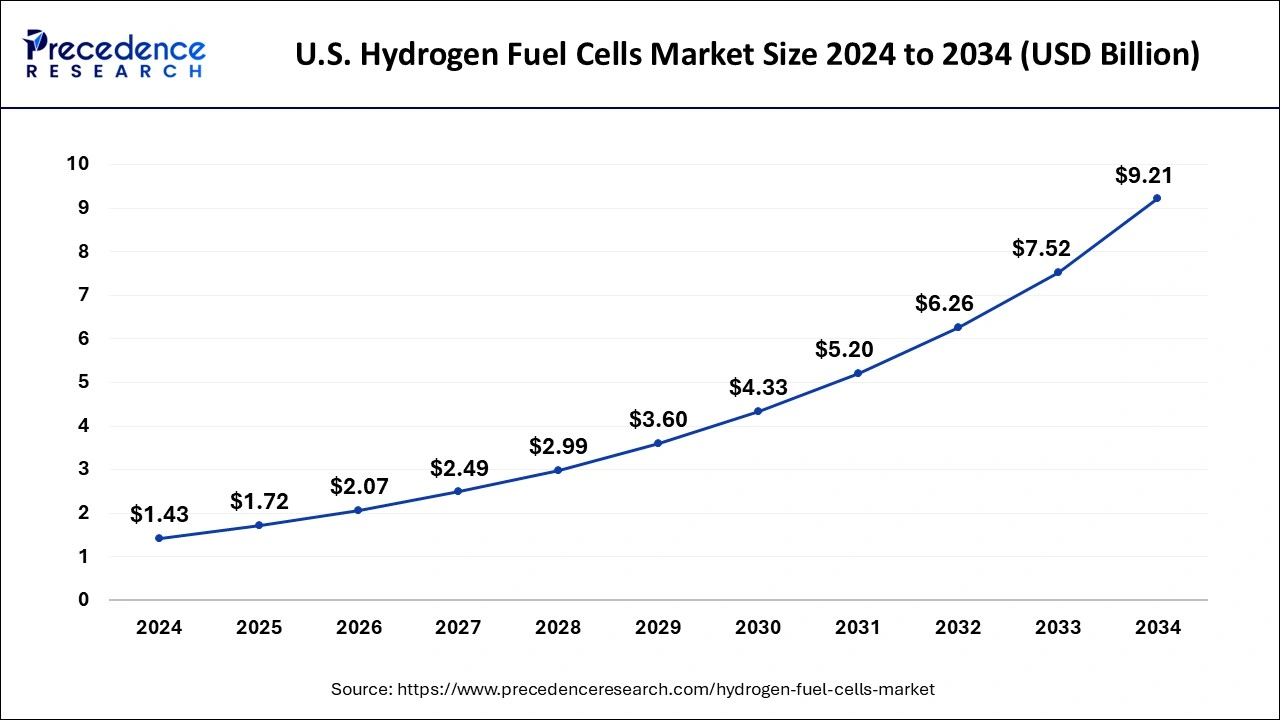
The U.S. hydrogen fuel cells market size was evaluated at USD 1.72 billion in 2025 and is predicted to be worth around USD 10.61 billion by 2035, rising at a CAGR of 19.96 % from 2026 to 2035.
U.S. Market Trends
The U.S. leads the market in North America due to the growing manufacturing of electric vehicles and technological advancements. Government bodies launch stringent policies to curb carbon emissions generated from automobiles. The Fuel Cell Technologies Office (FCTO) by the U.S. Department of Energy (DOE) focuses on applied research, development, and innovation to advance hydrogen and fuel cells for transportation and other applications.
Why Is Asia Pacific the Fastest-Growing Hydrogen Fuel Cells Market?
Asia-Pacific, on the other hand, is expected to develop at the fastest rate during the forecast period. The region's expanding population and rising disposable income are lifting up the demand for energy. Furthermore, the region's rapidly growing economies are also the world's leading polluters. The hydrogen fuel cells have been found as the best alternative to other conventional fossil fuel energy sources for reducing carbon emissions and efficiently providing energy needs.
India Market Trends
The Indian market is growing due to the increasing preference for electric vehicles and expanding infrastructure. The nation targets 5 MMT of Green Hydrogen production annually by 2030. To support this mission, the Indian government allocated over INR 8 lakh crores. Hydrogen mobility ports are launched in the country across 10 routes, involving 37 fuel cell and hydrogen internal combustion engine vehicles.
How is Europe Growing in the Hydrogen Fuel Cells Market?
Europe is expected to grow at a considerable CAGR in the upcoming period due to favorable government policies and increasing investments in automotive and transportation sectors. The presence of key players and several funding initiatives by government bodies contribute to market growth. Major companies in the region are involved in public-private collaboration and partnerships, underscoring governmental commitment. The participation of private companies in these initiatives is viewed as a strong indicator of scalability and long-term business potential within the hydrogen ecosystem.
UK Market Trends
The UK government has stringent regulations related to net-zero emissions by 2050. With the UK government's commitment to promoting the use of electric and hybrid vehicles, hydrogen fuel cells are increasingly becoming popular as an alternative to traditional petrol or diesel engines.
Hydrogen Fuel Cells Market Companies
- Audi AG
- BMW Group
- Daimler AG
- General Motors Company
- Honda Motor Co. Ltd
- MAN SE
- Hyundai Motor Group
- Ballard Power Systems Inc.
- Volvo Group
- Toyota Motor Corporation
Recent Development
- In August 2026, Bosch launched an Irizar test for its hydrogen fuel cell bus in Madrid to examine the potential for hydrogen-powered buses to support zero-emission public transport, including on longer-distance routes. Operations will focus on routes where the fuel cell's longer range can demonstrate its capabilities, with the trial expected to to continue for several weeks. (Source: https://www.emeoutlookmag.com)
- In July 2026, the Indian Railways' prototype hydrogen fuel cell-powered multiple-unit was launched. The unit was formed of two power cars equipped with a 1,200 kW hydrogen fuel cell propulsion system and eight passenger cars. The launch was made to test the use of hydrogen traction on non-electrified lines or routes that would be difficult to electrify. (Source: https://www.railwaygazette.com)
Segments Covered in the Report
By Technology
- Proton Exchange Membrane Fuel cells
- Phosphoric Acid Fuel Cells
- Solid Oxide Fuel Cells
- Polymer Exchange Membrane Fuel Cells (PEMFC)
- Direct Methanol Fuel Cells (DMFC)
- Molten Carbonate Fuel Cells
- Others
By Application
- Stationary
- Transportation
- Portable
By End User
- Fuel Cell Vehicles
- Utilities
- Defense
By Geography
- North America
- U.S.
- Canada
- Europe
- U.K.
- Germany
- France
- Asia-Pacific
- China
- India
- Japan
- South Korea
- Malaysia
- Philippines
- Latin America
- Brazil
- Rest of Latin America
- Middle East & Africa (MEA)
- GCC
- North Africa
- South Africa
- Rest of the Middle East & Africa
For inquiries regarding discounts, bulk purchases, or customization requests, please contact us at sales@precedenceresearch.com
Frequently Asked Questions
Tags





Ask For Sample
No cookie-cutter, only authentic analysis – take the 1st step to become a Precedence Research client
 Get a Sample




 sales@precedenceresearch.com
 Schedule a Meeting
