



Insect Pest Control Market Size, Companies, Trends, Competitive Landscape, and Demand Forecast
Insect Pest Control Market (By Control Method: Chemical Control, Biological Control; By Insect Type/Pest Type: Insect, Termite; By Application: Residential, Commercial; By Form/Product Format: Spray, Traps) - Global Industry Analysis, Size, Trends, Leading Companies, Regional Outlook, and Forecast 2026 to 2035
Source: https://www.precedenceresearch.com/insect-pest-control-market
 Get a Sample
 Table Of Content


What is the Insect Pest Control Market Size?
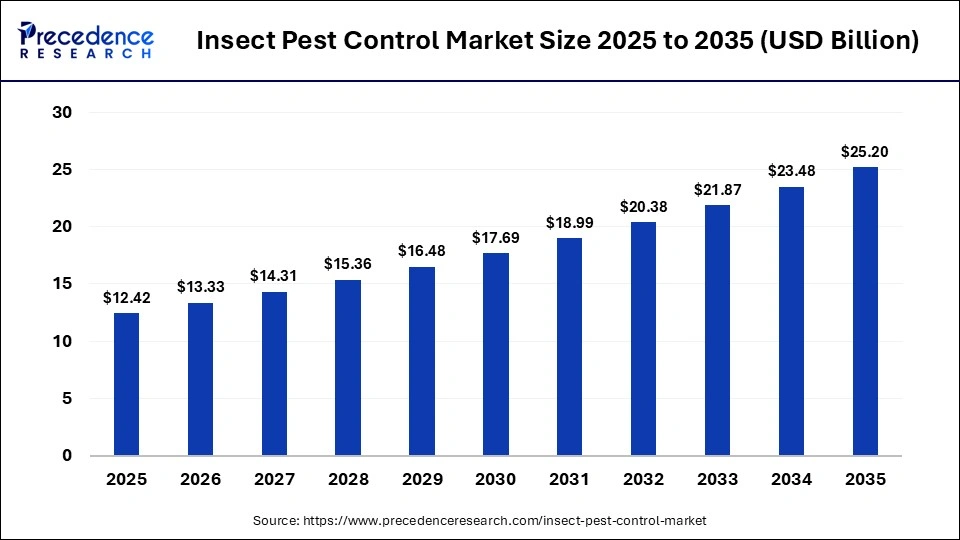
The global insect pest control market size is predicted to increase from USD 13.33 billion in 2026 to approximately USD 25.20 billion by 2035, expanding at a CAGR of 7.33% from 2026 to 2035.
Market Highlights
- North America held a dominant position in the market with a share of approximately 41% in 2026.
- Asia-Pacific is expected to grow at the fastest CAGR of 8.0% in the market between 2026 and 2035.
- By control method, the chemical control segment held a dominant position in the insect pest control market with a share of approximately 64% in 2026.
- By control method, the biological control segment is expected to grow at the fastest CAGR of 7.0% in the market between 2026 and 2035.
- By insect type/pest type, the insects segment led the global market with a share of approximately 46% in 2026.
- By insect type/pest type, the termites segment is expected to grow at the fastest CAGR of 6.9% in the market between 2026 and 2035.
- By application, the residential segment held a dominant position in the market with a share of approximately 52% in 2026.
- By application, the industrial segment is expected to grow at the fastest CAGR of 6.6% in the insect pest control market between 2026 and 2035.
- By form/product format, the sprays segment held a dominant position in the market with a share of approximately 36% in 2026.
- By form/product format, the traps segment is expected to grow at the fastest CAGR of 6.8% in the market between 2026 and 2035.
What is Insect Pest Control?
The insect pest control market comprises products and services designed to manage, prevent, and eliminate insect pests affecting residential, commercial, agricultural, and industrial environments. It includes chemical, biological, physical, and integrated control methods deployed through sprays, traps, baits, and services to mitigate health risks, property damage, and crop loss.
In residential and commercial environments, pest control plays an important part in maintaining a healthy and clean-living environment. It prevents the spread of diseases and reduces the health risk while saving money in the long run. Pest control is fundamental in managing sanitary household conditions, protecting property, and stopping the infection before it spreads. Pests such as mosquitoes, ticks, and rodents can carry and transmit diseases to humans, which can cause serious illness.
Proper pest control helps prevent the risk of pest-borne diseases, and it also protects against damage to property, ensuring a safe and healthy living environment. Growing public awareness of pest-related health and property risks can support demand for insect pest control products and services. The demand is also fueled by rising urbanization, vector-borne diseases, regulatory focus on sustainability, and the adoption of eco-friendly and smart pest management solutions.
What is the Role of AI in the Insect Pest Control Market?
Artificial intelligence (AI) plays a significant role in detecting, monitoring, planning and treating different types of pests. It introduces automation in scheduling, communication, and routing. It helps develop creative solutions by combining different pest control methods, such as pheromone traps. AI-based sensors can detect the presence of insects that are difficult to detect by humans. Apart from automated pest detection, AI and machine learning algorithms can analyze vast amounts of activity data and predict pest outbreaks.
Insect Pest Control Market Trends
- Eco-Friendly and Sustainable Solutions: To minimize the harm to the environment and human health, eco-friendly pest control is a sustainable solution in pest management. Environmental issues continue to arise, potentiating the demand for eco-friendly pest control solutions. Chemical and toxic pesticides risk both human health and the environment, while eco-friendly pest control offers a different and more sustainable alternative to the pest problem.
- Rise Of Integrated Pest Management (IPM): Integrated pest management integrates holistic approaches to minimize the impact of pests on crops. It emphasizes the use of biological controls, crop rotation, resistant varieties, habitat manipulation, and limited pesticide use. IPM provides a sustainable and ecological approach to the entire agricultural ecosystem.
- Technology and Digital Integration in Pest Control: Technology and digital integration into IPM enable real-time monitoring and data collection. Equipped with sensors and imaging technology, digital platforms help monitor the field continuously. It also helps to detect subtle changes in pest population, helping farmers to take timely, targeted actions.
- Growing Demand Across Diverse Sectors: To meet customers' needs in competitive markets, pest control businesses are offering multiple services along with new technologies, stricter regulations, and growing demand for environmental solutions. The industry offers various pest control services, such as residential or commercial pest control, wildlife management, termite control, and mosquito treatment. Additionally, to maintain hygiene and to prevent diseases, various commercial places, such as hotels, hospitals, airports, schools, and offices, play an important part in market growth.
- Professional And Service-Oriented Growth: A professional and service-oriented business helps in early problem detection while ensuring precise and cost-effective solutions to pest control. Professional services also offer numerous benefits, including expertise and knowledge, safe and effective treatments, cost effectiveness, customized pest control plans, and long-term prevention. It also offers flexible and adaptable plans, providing personalized approaches with effective strategies to address the unique challenges of each situation.
Segmental Insights
Control Method Insights
Which Control Method Segment Dominated the Insect Pest Control Market?
The chemical control segment dominated the market with a share of approximately 64% in 2026, because chemical control is a pest control method that uses chemical pesticides. These controls are used to control ticks and mites. Chemical control methods are highly preferred due to their cost-effectiveness and widespread availability. Some common examples of chemical-based materials are maneb, aramite, carbofuran, and carboxin.
The biological control segment is expected to grow with the highest CAGR of the market during the studied years, due to non-toxicity and the growing preference for pest control products derived from natural sources. The biological control method is used to control pests using other biological organisms. It relies on natural mechanisms such as predation, parasitism, herbivory, and other natural mechanisms. It also plays an important part in IPM programs. Some common examples of biological control products are Bacillus thuringiensis, Encarsia Formosa, and Trichogramma wasps.
Insect Type/Pest Type Insights
Which Insect Type/Pest Type Segment Dominated The Insect Pest Control Market?
The insects segment held the largest revenue share of approximately 46% in the market in 2026, due to an increase in vector-borne diseases, such as dengue and malaria. Also, in residential and commercial areas, cockroaches, ants, and flies are major concerns; pest control for insects is essential for food safety and sanitation in these sectors.
The termites segment is expected to expand rapidly in the market with a CAGR of 6.9% in the coming years, as termites cause severe damage to residential and commercial buildings, weakening their foundations. They also damage wooden structures or furniture by promoting the growth of molds; pest control for termites is essential. Government bodies release guidelines to prevent, manage, and control termites in different locations.
Application Insights
Which Application Type Segment Dominated the Insect Pest Control Market?
The residential segment dominated the market with a share of approximately 52% in 2026, due to rapid urbanization and growing awareness in health and food safety, creating an opportunity increase the demand for pest control in residential buildings. In residential settings, pest control involves a combination of sanitation, habitat modification, and targeted treatments to manage cockroaches, ants, mosquitoes, and termites.
The industrial segment is expected to witness the fastest growth in the market with a CAGR of 6.6% over the forecast period, due to the need for strict sanitation standards for safety and compliance with public health. Industrial pest control refers to controlling pests in industrial areas, such as factories, warehouses, and manufacturing plants. This ensures high product quality and reduced downtime in industries.
Form/Product Format Insights
Why Did the Sprays Segment Dominate the Insect Pest Control Market?
The sprays segment accounted for the highest revenue share of approximately 36% in the market in 2026, due to the ability of sprays to provide rapid action and wide coverage against broad areas. Chemical sprays are liquid reagents that help kill insects by coming in contact with the surface. For infestations, cockroach and mosquito sprays are very effective solutions. They are user-friendly solutions, potentiating their widespread use by professionals and homeowners.
The traps segment is expected to grow with the highest CAGR of 6.8% in the market during the studied years, as traps are relatively non-toxic. The growing adoption of smart traps by consumers allows them to monitor pest control and pest count in real time. Traps are comparatively cost-effective in the long term, maintaining hygiene without the need for constant chemical applications.
Regional Insights
How Big is the North America Insect Pest Control Market Size?
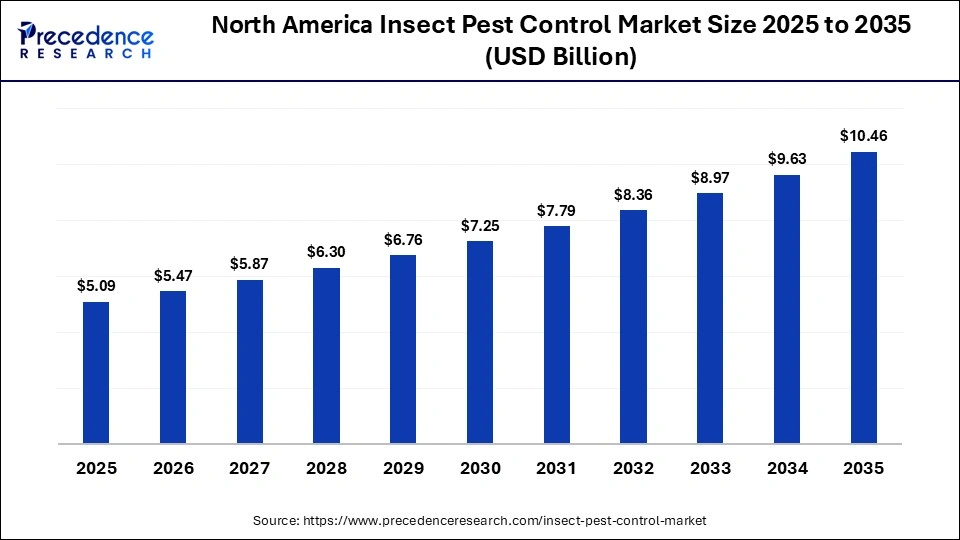
The North America insect pest control market size is estimated at USD 5.47 billion in 2026 and is projected to reach approximately USD 10.46 billion by 2035, with a 7.47% CAGR from 2026 to 2035.
How North America Dominated the Insect Pest Control Market?
North America dominated the market with a share of approximately 41% in 2026. The driving factors for market growth include the presence of a robust infrastructure, food safety and hygiene standards across various sectors, and established manufacturing units. The market in North America is experiencing significant growth due to technological advancements and growing research activities. A growing emphasis on climate change potentiates the demand for eco-friendly pest control solutions. Major players are heavily investing in research and development to produce eco-friendly and sustainable formulations.
What is the Size of the U.S. Insect Pest Control Market?
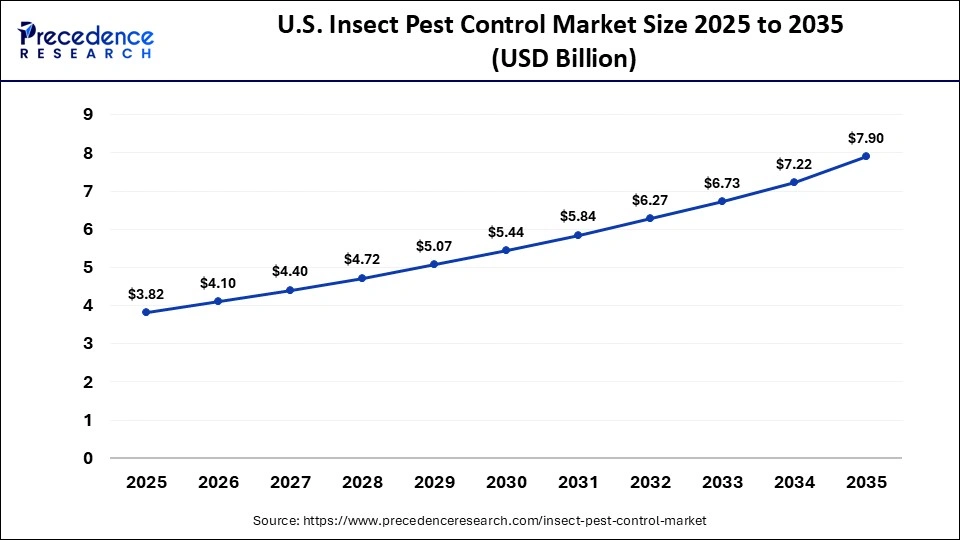
The U.S. insect pest control market size is calculated at USD 4.10 billion in 2026 and is expected to reach nearly USD 7.90 billion in 2035, accelerating at a strong CAGR of 7.54% between 2026 and 2035.
U.S. Insect Pest Control Market Trends
The urban population in the U.S. accounts for a major residential pest control demand in the region. With the risk of high pest infestations, demand for pest control services and professional-oriented services play a significant role in the market. More than 17,000 pest control firms are operating in the country, providing services with a revenue of $13 billion. According to the National Pest Management Association (NPMA), over 13.25 million customers received professional pest control services in 2025, accounting for 85.2% of residential service revenue.
What is the Growth Potential of the Insect Pest Control Market in Asia-Pacific?
Asia-Pacific is expected to witness the fastest growth during the predicted timeframe, due to rapid urbanization, climate-induced infestations, and technological innovations. As the Asia-Pacific region is the world's largest agricultural producer, accounting for 52% of its working population, IPM is driving the market in the agriculture sector. Additionally, vector-borne illnesses are further leading the market in the region. The region is also home to numerous key players that provide raw materials and finished products for insect pest control.
China Insect Pest Control Market Trends
China holds a majority share in the region due to rapid urbanization and a large population. Also, after COVID-19, the demand for sanitation and safety is becoming a priority. Government-initiated policies for crop protection and eco-friendly, sustainable solutions to insecticides in agriculture also propel the market. The Chinese Ministry of Finance allocated around 1.42 billion yuan (USD 199.8 million) from the central budget to support pest prevention and control efforts to boost agricultural production.
Insect Pest Control Market Value Chain Analysis
Who are the Major Players in the Global Insect Pest Control Market?
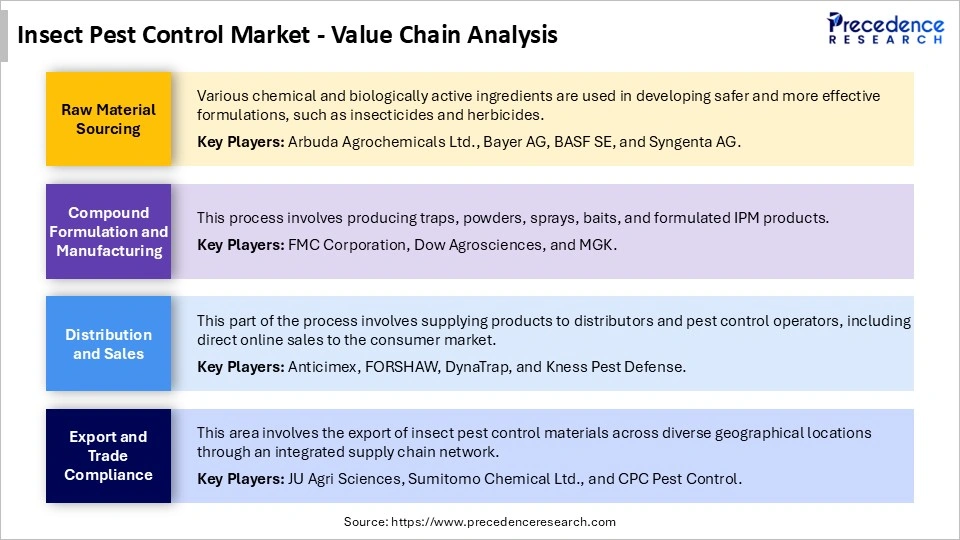
The major players in the insect pest control market include Rentokil Initial plc, BASF SE, Bayer AG, FMC Corporation, Syngenta AG, Sumitomo Chemical Co., Ltd., Adama Agricultural Solutions Ltd., Ecolab Inc., Rollins, Inc., Terminix Global Holdings, Inc., Anticimex Group, Bell Laboratories, Inc., PelGar International, Ensystex Inc., and Control Solutions Inc.
Recent Developments
- In December 2025, Zero Bugs Marketing announced the launch of its upgraded DIY non-toxic pest management system for residential and commercial flooring. The system can detoxify disinfectant to break down biofilm and deactivate accumulated residues. The detoxification and dehydration nature promotes its use in households and commercial spaces.(Source: https://www.womansworld.com)
- In March 2025, Thanos launched the Thanos MK47 rodent trap, which uses an infrared sensor to detect rodents and trigger a spring-powered strike that resets automatically. The trap is weather-resistant and intended for use in homes, on farms, and in commercial facilities. (Source: https://www.pctonline.com)
- In March 2025, Pangaea Biosciences announced the registration of Booster in Indonesia for resistant pest control in rice, shallots, and other vegetable crops. The company also launched Tardis to complement Booster in optimizing the control of resistant organisms, dealing with insect resistance. (Source: https://www.agribusinessglobal.com)
Insect Pest Control Market Segments
By Control Method
- Chemical Control
- Biological Control
By Insect Type/Pest Type
- Insect
- Termite
By Application
- Residential
- Commercial
By Form/Product Format
- Spray
- Traps
By Region
- North America
- Europe
- Asia-Pacific
- Latin America
- Middle East & Africa
For inquiries regarding discounts, bulk purchases, or customization requests, please contact us at sales@precedenceresearch.com
Frequently Asked Questions





Ask For Sample
No cookie-cutter, only authentic analysis – take the 1st step to become a Precedence Research client
 Get a Sample




 sales@precedenceresearch.com
 Schedule a Meeting
