






 Request Consultation
Clean fuels such as biofuels and green hydrogen are gaining momentum as countries seek cleaner, more secure energy systems. With rising investment and policy support, they are becoming essential for cutting emissions and powering hard-to-decarbonize industries.
Global energy demand is accelerating at a pace few predicted a decade ago. At the same time, climate goals and industrial decarbonization mandates are forcing nations and corporations to rethink how energy is produced, distributed, and consumed. One of the most important shifts in this evolving landscape is the rise of clean fuels, including liquid biofuels, hydrogen and hydrogen-derived fuels, synthetic fuels, and other low-carbon molecules. These fuels are emerging as essential building blocks of a sustainable, secure, and economically resilient energy system.
Clean fuels are transitioning from niche innovations to strategic industrial assets. Their ability to integrate with existing infrastructure and support decarbonization across aviation, shipping, heavy industry, refining, and chemicals has captured the attention of policymakers, investors, and global energy companies. However, scaling this sector requires coordinated investment, policy clarity, and long-term industrial commitment.
The Industrial Significance of Clean Fuels
Clean fuels are defined as fuels produced with significantly lower lifecycle carbon emissions compared to conventional fossil fuels. They include:
- Biofuels derived from biomass
- E-fuels produced using renewable electricity and captured carbon
- Green hydrogen and hydrogen derivatives such as ammonia and methanol
- Synthetic fuels produced through advanced chemical processes
Unlike fully electrified systems, clean fuels can often be used within existing engines, turbines, pipelines, storage facilities, and distribution networks. This compatibility allows hard-to-abate sectors to reduce emissions without completely replacing legacy infrastructure.
From an industrial standpoint, this adaptability lowers capital intensity and accelerates deployment. For example:
- Clean fuel facilities often integrate into existing refinery complexes
- Hydrogen hubs can utilize existing pipeline corridors
- Sustainable aviation fuels can be blended into current jet fuel systems
This reduces transition friction and improves economic feasibility.
Industry analysts emphasize that clean fuels are not only climate tools but also industrial growth catalysts. Clean fuel investments are estimated to generate two to three times more employment per dollar invested compared to traditional fossil fuel sectors. This includes jobs in feedstock cultivation, electrolyzer manufacturing, plant construction, engineering services, logistics, and maintenance.
The Investment Imperative
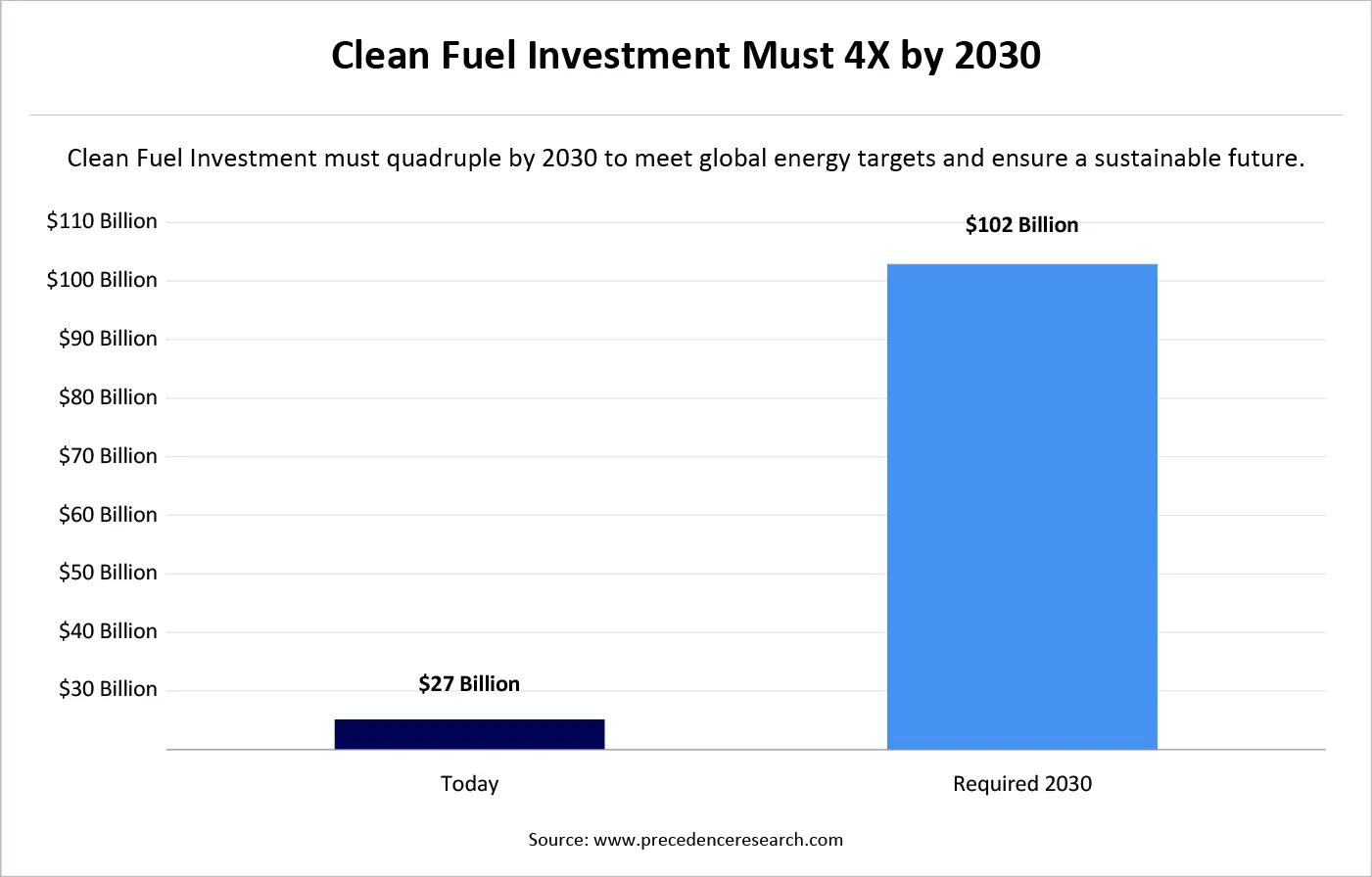
Current annual global investment in clean fuels is estimated at approximately $25 billion. However, to align with long-term decarbonization and energy security goals, annual investment needs to exceed $100 billion by 2030. This represents more than a fourfold increase in capital deployment within less than a decade.
The financing gap highlights a structural issue. While political commitments are rising, capital mobilization has not yet reached industrial scale. Investors remain cautious due to uncertainties in demand visibility, cost competitiveness, and regulatory frameworks.
Clean Fuel Investment Landscape
| Metric | Current Estimate | Required by 2030 |
| Annual Investment | ~$25 billion | > $100 billion |
| Investment Growth Needed | 4x increase | Structural scaling |
| Primary Funding Sources | Corporate, Government, Institutional | Expanded blended finance |
Industry leaders consistently stress that scaling clean fuels requires predictable long-term revenue models. Long-term offtake agreements between producers and industrial consumers such as airlines, shipping operators, and steelmakers are critical to de-risk projects.
What is the Industrial Energy-Efficiency Services Market Size?
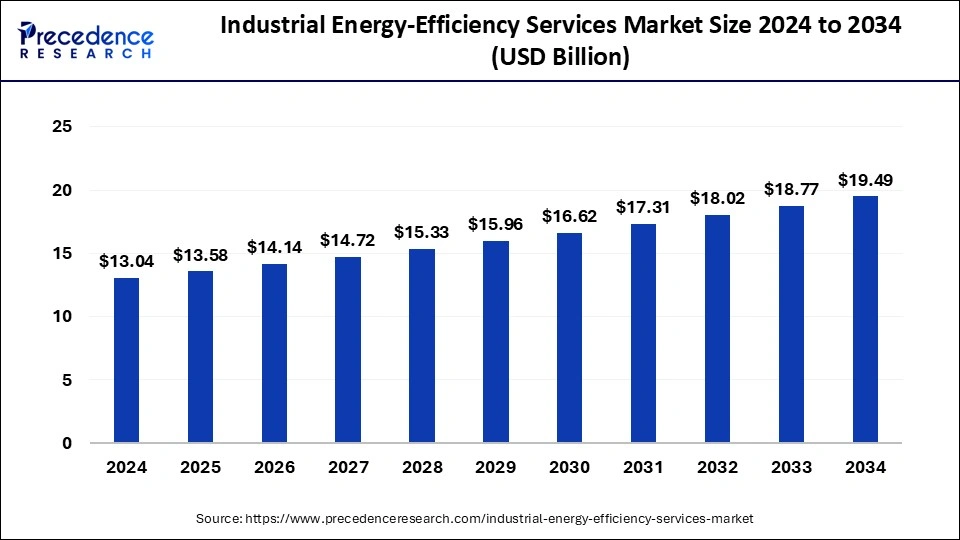
The global industrial energy-efficiency services market size is accounted at USD 13.58 billion in 2025 and is predicted to increase from USD 14.14 billion in 2026 to approximately USD 20.23 billion by 2035, expanding at a CAGR of 4.07% from 2026 to 2035. Reduced energy use results in lower energy costs, which helps businesses' bottom lines.
Industrial Energy-Efficiency Services Market Key Takeaways
- North America held the largest share of the industrial energy-efficiency services market in 2025.
- Europe is expected to host the fastest-growing market during the forecast period.
- By type, the energy auditing or consulting segment led the market in 2025.
United States: Scaling Clean Fuels to Power the Energy Transition
In the United States, clean fuels are becoming a central pillar of the broader energy transition strategy. Federal initiatives such as the Inflation Reduction Act and the Bipartisan Infrastructure Law have significantly expanded incentives for clean hydrogen, sustainable aviation fuel (SAF), renewable natural gas (RNG), and advanced biofuels. The U.S. is positioning itself as a global leader in clean hydrogen production through regional hydrogen hubs, while tax credits are accelerating private investment in low-carbon fuels for heavy industry, aviation, and long-haul transport.
At the same time, state-level policies particularly in California, are driving demand through low-carbon fuel standards. Despite strong policy momentum and growing private capital participation, scaling infrastructure, securing supply chains, and ensuring long-term policy certainty remain critical challenges for achieving 2030 and 2050 decarbonization targets.
India: Clean Fuels as a Growth and Energy Security Strategy
India’s clean fuel transition is closely tied to its goals of energy independence, industrial growth, and emissions reduction. With rapidly rising energy demand, the government has launched the National Green Hydrogen Mission to position India as a major producer and exporter of green hydrogen and ammonia. Biofuels are also a priority, with ethanol blending targets progressing steadily to reduce oil imports and support rural incomes.
Compressed biogas and sustainable mobility fuels are expanding under national programs aimed at waste-to-energy development. While cost competitiveness and infrastructure readiness remain barriers, India’s transition strategy uniquely integrates climate objectives with economic development and energy security, making clean fuels a strategic lever for long-term resilience.
Germany: Industrial Decarbonization Through Clean Fuels
Germany is advancing clean fuels as a core component of its industrial decarbonization and energy security strategy, particularly after reducing reliance on imported fossil fuels. Green hydrogen plays a central role in decarbonizing heavy industries such as steel, chemicals, and manufacturing. Germany is investing heavily in hydrogen import partnerships, domestic electrolyzer capacity, and hydrogen-ready infrastructure to support its climate neutrality target by 2045. Sustainable aviation fuel and renewable electricity-based fuels are also gaining policy support under European Union climate frameworks.
Technology Pathways and Industrial Deployment
Clean fuels span multiple technological pathways, each at different maturity levels.
Biofuels
Biofuels remain one of the most commercially deployed clean fuel categories. Global ethanol production exceeds 100 billion liters annually, with biodiesel production surpassing 45 billion liters. Second-generation biofuels derived from waste feedstocks are gaining traction due to improved sustainability metrics.
Major companies such as Neste, Repsol, and TotalEnergies are expanding renewable diesel and sustainable aviation fuel facilities. For example, renewable fuel plants today can produce more than 1 million tons annually at single-site scale.
Green Hydrogen
Green hydrogen is produced using electrolysis powered by renewable electricity. Electrolyzer manufacturing capacity has expanded rapidly, with annual global manufacturing capacity now exceeding 20 gigawatts. Large-scale hydrogen projects increasingly exceed 200 megawatts per facility.
Companies such as Siemens Energy, ITM Power, Nel Hydrogen, Air Liquide, and Linde are scaling electrolyzer production and hydrogen infrastructure. Industrial gas giants are integrating hydrogen into refining, ammonia production, and steel decarbonization initiatives.
Hydrogen-based direct reduced iron facilities are being piloted in Europe and Asia, demonstrating the potential to reduce carbon emissions from steel production by up to 90 percent compared to traditional blast furnace routes.
Synthetic Fuels and E-Fuels
E-fuels combine captured carbon dioxide with renewable hydrogen to produce synthetic hydrocarbons. Pilot facilities have demonstrated production capacities in the tens of thousands of tons annually, with scaling plans targeting hundreds of thousands of tons in the coming years.
These fuels are particularly attractive for aviation and maritime sectors where electrification remains technically challenging.
Structural Barriers to Scale
Despite technological advancements, the clean fuels industry faces several challenges:
High Production Costs
Green hydrogen production costs currently range between $3 and $6 per kilogram depending on electricity prices. Sustainable aviation fuels can cost two to four times more than conventional jet fuel. Cost reductions depend heavily on renewable energy pricing, electrolyzer efficiency improvements, and economies of scale.
Infrastructure Gaps
Hydrogen requires dedicated storage and transportation solutions. While ammonia and methanol benefit from established global trade networks, hydrogen transport remains limited to select regions.
Policy Fragmentation
Different certification standards, carbon accounting frameworks, and subsidy models create market fragmentation. A harmonized international certification system would significantly improve cross-border trade in clean fuels.
Industrial Applications of Clean Fuels
Clean fuels serve multiple sectors:
Aviation
Sustainable aviation fuel blending mandates are expanding. Airlines have conducted thousands of commercial flights using blended sustainable fuels.
Shipping
Ammonia and methanol are being evaluated as marine fuels. Major shipping companies have ordered vessels capable of operating on alternative fuels.
Heavy Industry
Hydrogen-based direct reduction processes are being piloted for low-carbon steel production. Cement and chemical industries are exploring carbon capture combined with synthetic fuel production.
Agriculture and Chemicals
Green ammonia production integrates hydrogen electrolysis with nitrogen fixation, enabling low-carbon fertilizer manufacturing.
Clean Fuels Industry Snapshot
| Sector | Application Example | Industrial Impact |
| Aviation | Sustainable Aviation Fuel | Lower lifecycle emissions |
| Shipping | Green Methanol | Reduced bunker fuel emissions |
| Steel | Hydrogen-based DRI | Up to 90% emission reduction |
| Chemicals | Renewable Ammonia | Decarbonized fertilizer production |
The Road Ahead
The clean fuels industry stands at a pivotal stage. The technology foundation exists. Industrial demand is emerging. Corporate participation is accelerating. However, scaling requires coordinated investment, stable policy frameworks, and global trade alignment.
The future energy system will likely be hybrid in nature, combining electrification, energy efficiency, and low-carbon fuels. Clean fuels are particularly essential for sectors where electrification alone is insufficient. Industry experts widely agree that the next five years will determine whether clean fuels transition from demonstration projects to mainstream industrial pillars. With the right combination of capital, technology, and policy, clean fuels can become a central component of the global energy architecture.
The transition to clean fuels is no longer a distant ambition it is a defining economic and industrial shift of this decade. The United States is leveraging innovation and policy incentives to build scale, India is aligning clean fuels with growth and energy security, and Germany is transforming its industrial backbone to lead in deep decarbonization. While their pathways differ, the direction is clear: clean fuels are becoming foundational to resilient, low-carbon energy systems.
The coming years will determine whether momentum turns into measurable transformation. Investment must accelerate, infrastructure must modernize, and public–private collaboration must deepen. If governments, industries, and investors move decisively, clean fuels will not only reduce emissions but also redefine competitiveness, create new markets, and strengthen energy independence. This is more than an energy transition it is the blueprint for the next era of global economic leadership.
About the Authors

Aditi Shivarkar
Aditi, Vice President at Precedence Research, brings over 15 years of expertise at the intersection of technology, innovation, and strategic market intelligence. A visionary leader, she excels in transforming complex data into actionable insights that empower businesses to thrive in dynamic markets. Her leadership combines analytical precision with forward-thinking strategy, driving measurable growth, competitive advantage, and lasting impact across industries.



Aman Singh
Aman Singh with over 13 years of progressive expertise at the intersection of technology, innovation, and strategic market intelligence, Aman Singh stands as a leading authority in global research and consulting. Renowned for his ability to decode complex technological transformations, he provides forward-looking insights that drive strategic decision-making. At Precedence Research, Aman leads a global team of analysts, fostering a culture of research excellence, analytical precision, and visionary thinking.

Piyush Pawar
Piyush Pawar brings over a decade of experience as Senior Manager, Sales & Business Growth, acting as the essential liaison between clients and our research authors. He translates sophisticated insights into practical strategies, ensuring client objectives are met with precision. Piyush’s expertise in market dynamics, relationship management, and strategic execution enables organizations to leverage intelligence effectively, achieving operational excellence, innovation, and sustained growth.