






 Request Consultation
Discover the leading biotechnology acquirers across major global regions and explore how funding, mergers and acquisitions (M&A), and strategic investments are transforming the biotech landscape. This analysis highlights regional deal activity, key growth strategies, and emerging trends driving innovation and market expansion.
Introduction to Regional Biotechnology Mergers and Acquisitions Landscape
Biotechnology mergers and acquisitions thus represent the consolidation of smaller, innovative biotech startups with large pharmaceutical firms. And even the consolidation of smaller, innovative biotech startups with large pharmaceutical firms. Acquisitions are a primary growth strategy in biotechnology because they enable companies to bypass the lengthy, high-risk R&D process along with instantly secure proven, de-risked assets. By absorbing specialized startups, established companies quickly expand their product portfolios and even access breakthrough scientific platforms.
Biotechnology mergers and acquisitions are strategic consolidations boosted by major pharmaceutical firms seeking to replenish pipelines, access next-generation technologies such as AI-driven drug discovery, and secure high-value clinical assets. These deals assist firms in overcoming patent expirations, accelerating research, along with enter lucrative new therapeutic markets. Companies use cross-border acquisitions and licensing partnerships, mainly tapping into the rapidly growing biotech and pharmaceutical hubs in China and India, to expand their geographic footprint and even diversify their global reach.
The biopharma and healthcare industry is currently undergoing a historic M&A surge. This regional acquisition boom is boosted by a massive patent cliff, a flood of capital from cash-rich pharma giants, rising patient need for chronic care, and the integration of breakthrough technologies such as AI and gene editing. Leading North American biotechnology acquirers, like Eli Lilly, Johnson & Johnson (J&J), Merck & Co., and Vertex Pharmaceuticals, thus aggressively acquire late-stage and revenue-generating platforms to counter upcoming patent cliffs.
Europe’s biotech M&A landscape is now dominated by Big Pharma giants employing targeted "string-of-pearls" strategies. To combat patent cliffs alongside filling pipeline gaps, companies such as Novartis, Roche, Sanofi, and Novo Nordisk obtain early-to-mid-stage innovators aimed onderisked, high-reward mechanisms.
Roche prefers "derisked" mechanisms which treat diseases with high unmet medical needs. They use targeted buyouts rather than wider, expensive purchasing sprees, aiming instead to expand aggressively into neuroscience and metabolic diseases. Recent years have seen Roche prioritize mid-phase clinical assets in obesity alongside the immunology space to replace revenues lost to the patent cliff of legacy drugs such as Avastin and Herceptin.
Asia-Pacific’s biopharma M&A is highly competitive, and it is driven by Japanese pharmaceutical giants, Chinese licensing, and also South Korean manufacturing. Biocon & Samsung Bioepis are the powerhouses, which are leading by capturing volume in the worldwide biosimilar market, leveraging scalable manufacturing.
Latin American powerhouses like Brazil’s Aché Laboratorios, aiming at regenerative medicine, Blau Farmaceutica oncology and critical care, and Switzerland-headquartered Acino are snapping up regional competitors along with commercializing new biosimilars.
The Middle East and Africa biotechnology landscape is transitioning into a phase of localized biomanufacturing, biologics, along with bio-agriculture, with investments and growth driven by personalized medicine, national sovereignty strategies, and AI-driven drug discovery.
Biotechnology Market Size and Forecast in 2026 to 2035
The global biotechnology market is projected to reach USD 1.77 trillion in 2025 and is expected to grow from USD 2.02 trillion in 2026 to approximately USD 6.34 trillion by 2035, expanding at a CAGR of 13.61% during the forecast period from 2026 to 2035. The market's growth is driven by the increasing demand for personalized medicine and bio-agriculture, rising investments from pharmaceutical and biotechnology companies, and the integration of advanced technologies into drug discovery.
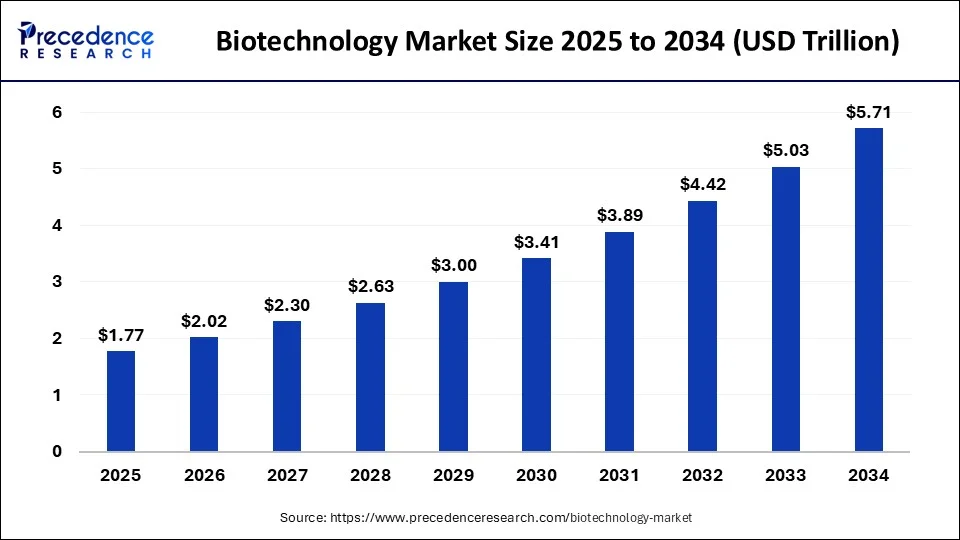
Get a Free Sample Report with Key Market Trends: https://www.precedenceresearch.com/sample/1450
Why Mergers and Acquisitions Have Become Critical Growth Strategies in the Biotechnology Industry
Mergers and acquisitions in biotechnology are crucial for industry renewal, primarily driven by the demand to replace revenue from blockbuster drugs facing patent cliffs. Large pharmaceutical firms use targeted acquisitions to bypass lengthy internal R&D, secure de-risked clinical candidates, along with access the latest therapeutic platforms. As major patents on blockbuster drugs expire, pharmaceutical firms face severe revenue cliffs. Biotechnology startups and specialized firms are fundamentally engineered to be agile, often possessing highly specialized talent and disruptive research models. Moreover, larger companies use M&A to absorb these entrepreneurial ecosystems, incorporating novel approaches, like artificial intelligence in drug discovery or targeted protein degradation, thus into their own legacy research models.
Small biotechs excel at scientific discovery but usually lack the global infrastructure, manufacturing capacity, and even established sales networks required for a worldwide drug launch. A merger or acquisition thus combines the biotech’s breakthrough asset with the pharmaceutical giant’s vast regulatory and commercial footprint, thus ensuring the therapy reaches the broadest possible patient population.
Rising Research Costs Are Encouraging Strategic Acquisitions
Developing a single drug costs upwards and usually takes over a decade. With risk, inflation, and even clinical complexity multiplying, established firms find it faster and more capital-efficient to obtain de-risked assets from startups rather than relying solely on prolonged, unpredictable internal R&D. Moreover, pre-clinical and early-stage trials carry massive attrition rates. By enabling venture capitalists and startups to absorb the initial R&D risk, established players only buy programs which show provable efficacy. Firms are increasingly mitigating risks via joint co-development and licensing agreements before a full acquisition takes place.
Patent Expirations and Pipeline Expansion Are Driving Acquisition Activity
Leading biotechnology and pharmaceutical firms acquire smaller biotech firms to secure immediate replacement revenues and even replenish fading pipelines. Because internal R&D is time-consuming, buying de-risked Phase II/III assets or approved therapies enables them to offset losses from patent expirations and thus maintain their market dominance. With the implementation of the Inflation Reduction Act (IRA), which introduces price negotiations after fixed timeframes, firms look to "bio-betters" and even novel assets with longer potential market life before government pricing controls kick in.
Regional Innovation Hubs Are Creating New Acquisition Opportunities
U.S. biotechnology clusters, such as Boston-Cambridge and the San Francisco Bay Area, are massive centres of specialized talent, venture capital, and even academic research. This concentrated ecosystem dramatically de-risks early-stage R&D, thus making these startups prime acquisition targets for global firms seeking to replenish pipelines, adapt to new modalities, and then survive looming patent expirations.
European biotechnology clusters, like the UK's Golden Triangle, Switzerland's BioValley, and Germany's biotech hubs, thus, function as highly concentrated incubators for the latest science. These ecosystems attract global biopharma acquirers by generating validated, early-stage assets in high-growth modalities, usually at more attractive valuations than comparable US-based startups.
China’s biotech clusters are highly localized, designed ecosystems that remove traditional development bottlenecks. Major specialized centres drive distinct phases of the biopharma lifecycle. Moreover, domestic volume-based procurement (VBP) policies and tighter capital markets have squeezed high-margin returns for local Chinese biotechs. To sustain cash flow and worldwide reach, many homegrown companies usually license promising molecules to larger MNCs early in the pipeline.
Japanese biotech startups excel at creating unique and highly differentiated drug discovery engines. Companies such as PeptiDream, which specializes in macrocyclic peptides, and PRISM BioLab possess highly modular technological platforms which have become prime targets for worldwide partners seeking to bypass internal discovery bottlenecks.
Biotech innovation clusters in South Korea, like the Songdo Bio Cluster in Incheon and the Seoul BioHub, have evolved into premier sources of advanced therapeutics. Backed by significant government investments, these centres offer global pharma attractive acquisition targets by pairing niche and clinical-stage pipelines with streamlined R&D infrastructures.
Singapore’s biomedical ecosystem has now built deep research capabilities tailored to Asian biology. Startups specializing in genetic cardiomyopathies, oncology, and even chronic infectious diseases create highly coveted pipelines which fill therapeutic gaps for global players. As geopolitical tensions complicate cross-border investments in a few regions, Singapore’s stable regulatory frameworks, strong IP protection, along with neutral diplomatic standing, make it a safe harbor for global capital.
Key Factors Influencing Biotechnology Acquisition Strategies Across Different Regions
Regional biotechnology acquisition decisions are boosted by a complex interplay of innovation ecosystems and market incentives. These factors thus shape Big Pharma’s "bolt-on" and strategic investment strategies, guiding them to obtain assets that address patent cliffs, navigate regional cost pressures, and even leverage established scientific talent pools. Harmonized and predictable pathways, like the FDA's priority review in the US or streamlined clinical frameworks in Singapore and Europe, thus dictate how quickly an asset can be commercialized. Advanced clinical trial networks, established reimbursement policies, and even digitized health systems accelerate clinical validation and subsequent market adoption.
Government Policies and Innovation Incentives
Tax incentives, research grants, innovation funding, along with biotechnology-friendly regulations, drive acquisition activities by systematically de-risking early-stage R&D, bolstering the valuation of target pipelines, and then creating concentrated biotech clusters which attract deep-pocketed pharmaceutical conglomerates seeking external innovation.
Non-dilutive grants, such as the US NIH or India's BIRAC schemes, validate a firm's underlying science. This "seal of approval" signals to the market which the asset has technical merit, which inflates the startup’s acquisition premium.
Regions with streamlined clinical trial pathways along with expedited regulatory approvals, like Switzerland’s Swissmedic or Singapore’s HSA, drastically decrease the time to market. Faster commercialization prospects thus make regional startups highly appealing acquisition targets.
Programs such as the US R&D tax credits or Australia's generous R&D Tax Incentive significantly lower a startup's operational costs. This prolonged runway enables smaller firms to achieve critical clinical milestones, such as Phase II trials, making them highly attractive, high-value acquisition targets for larger companies.
Venture Capital and Private Equity Support
Strong venture capital and private equity ecosystems accelerate biotechnology innovation by supplying the massive, multi-stage capital demanded for complex drug development, clinical trials, and regulatory approvals. This specialized funding model de-risks assets, professionalizes management teams, along with ultimately creates highly attractive, acquisition-ready startups which drive aggressive industry-wide deal activity. As startups mature past the high-risk discovery phase, PE companies, such as OrbiMed or KKR, step in to offer growth equity or buyout structures. These institutional investors aim to operational streamlining, manufacturing scale-up, and even commercial preparation, effectively polishing the asset into a turnkey entity that a larger pharmaceutical firm can seamlessly integrate.
Regulatory Environment and Market Accessibility
Regulatory frameworks, approval timelines, market access policies, along with reimbursement systems, dictate the speed, profitability, and then geographic sequencing of life sciences and MedTech product launches. Rather than distinct hurdles, these elements form an interdependent pathway that determines whether a regional asset acquisition or launch is commercially viable. Even after regulatory clearance, thus, a product cannot achieve commercial scale without designated reimbursement codes, for example, HCPCS, DRGs.
Understanding the Funding Landscape Supporting Biotechnology Acquisitions
Biotechnology acquisitions and corporate growth are driven by a mix of retained earnings, specialized venture capital, strategic partnerships, along with debt structures. These funding sources are highly interdependent and subject to different geographic regulatory environments and firm scales.
- Specialized life-sciences VCs offer early-to-late-stage equity. They finance research and clinical trials, increasing pipelines to acquisition-ready phases such as Phase II/III.
- State-backed investment funds, for instance, from Singapore or the Middle East, offer massive, patient, long-term capital directly into life sciences VC funds or strategic state acquisitions.
- Collaborations such as joint ventures or licensing agreements enable smaller biotechs to secure upfront, milestone-driven cash from Big Pharma in exchange for development or commercialization rights.
Corporate Investments and Internal Capital Allocation
Large biotechnology firms utilize robust cash reserves and then steady operating profits to fund strategic acquisitions as a main mechanism to replenish drug pipelines, combat patent cliffs, and secure next-generation technologies. This capital is deployed utilizing specific financial strategies and target criteria. Companies use accumulated cash reserves on their balance sheets to make immediate, large-scale upfront payments to obtain clinical-stage or commercial-stage biotech startups.
Companies generate substantial operating profits from legacy blockbuster drugs. Because patents eventually expire, these profits are utilized to obtain smaller biotechs with recently approved or late-stage drugs to guarantee revenue continuity.
Venture Capital and Growth Equity Funding
Venture capital and growth investors de-risk along with scale biotechnology startups, so they become attractive acquisition targets for large pharmaceutical firms. They offer essential funding for costly, lengthy clinical trials, build out operational and production capabilities, and leverage their industry networks to facilitate early M&A dialogues. Moreover, investors shape the startup’s IP portfolio and therapeutic aim to align with the strategic pipelines of potential acquirers; for example, big pharma firms looking to fill specific therapeutic gaps such as oncology or rare diseases.
Biotech R&D needs hundreds of millions of dollars to progress via Phase I, II, and III clinical trials. VCs stage their funding to hit critical clinical along with regulatory milestones, which progressively de-risk the drug or therapy.
Public Market Financing and Debt Instruments
Biotechnology firms frequently leverage hybrid and debt financing, like convertible notes, syndicated loans, and bond issuances, alongside equity offerings to sponsor major acquisitions. These tools enable acquiring firms to balance the high expenses of pipeline expansion against the risks of shareholder dilution and even immediate cash drain.
Syndicated loans offer immediate, large-scale liquidity demanded to close M&A transactions swiftly. Commercial-stage or well-established pharmaceutical firms use these to bridge the time gap before executing permanent bond issuances or stock offerings. Moreover, they carry floating interest rates and require firms to maintain specific financial covenants regarding cash flow.
Bond issuances are mainly utilized by mature, heavily capitalized pharmaceutical and mega-biotech firms. By issuing bonds, acquirers can now raise multi-billion-dollar sums for transformative acquisitions without diluting equity. Because these are uncollateralized "straight debt," they demand strong, reliable revenue streams to service the regular interest payments.
Leading Biotechnology Acquirers by Region
Biotechnology acquisition activity varies remarkably across regions due to differences in innovation ecosystems, regulatory frameworks, healthcare priorities, and investment availability. As the global leader in life sciences, the U.S. draws a vast share of venture capital. Major hubs in Boston and San Francisco are powered by strong university-industry ties along with deep capital markets, enabling startups to rapidly mature their pipelines.
Europe boasts robust scientific innovation, mainly in targeted therapeutics and biosolutions. The industry places a strong impact on public health needs and sustainability initiatives.
Asia-Pacific is increasingly recognized as a global centre for manufacturing. Strategic acquisitions and partnerships are forming as firms look to diversify their supply chains and tap into digitally connected research networks.
North America: Global Leader in Biotechnology Acquisitions and Innovation Funding
North America remains the undisputed leader in biotechnology acquisitions and is driven by a mature venture capital ecosystem, the existence of top-tier pharmaceutical companies, world-class research institutions, and thus, favorable regulatory frameworks programmed to accelerate innovative therapies.
Major industry giants, including Johnson & Johnson, Merck, Pfizer, AbbVie, and Eli Lilly, are headquartered or heavily established in North America. Thus, facing looming patent expirations, the firms deploy massive amounts of capital to obtain de-risked, clinical-stage pipelines.
The US Food and Drug Administration offers expedited pathways, such as Fast Track, Breakthrough Therapy, and Orphan Drug designations, which significantly decrease the time and cost demanded to bring highly complex, innovative treatments to market.
Leading Biotechnology Acquirers in North America
Eli Lilly is executing a historic acquisition spree, thus, deploying over a billion across roughly 10 deals. Moreover, capitalizing on its windfall from blockbuster weight-loss and even diabetes franchises, like Mounjaro and Zepbound, the company is using its trillion-dollar market valuation to aggressively fund platform technologies and thus diversify far beyond metabolic medicine.
Vertex Pharmaceuticals is a worldwide biotechnology powerhouse transitioning from a single-franchise model into a multi-specialty rare disease leader. Vertex uses massive cash flows from its core franchise to fund a broad, curative-intent pipeline across multiple specialty pillars.
Funding Trends Supporting North American Biotechnology Acquisitions
Venture capital investment in Pune’s biotechnology sector aims heavily on de-risking clinical pipelines, translating deep science, and then leveraging local biomanufacturing capabilities. This localized funding flywheel is thus sustaining early-stage discovery and setting up regional startups for strategic acquisitions and commercial partnerships. Investors are backing clinical-stage therapeutics aimed on autoimmune and skin diseases. For instance, Pune-based Ahammune Biosciences secured a Series A round led by pi Ventures to advance Phase II clinical trials for vitiligo and a few immune-mediated dermatological conditions.
Strategic partnerships across the Pune and broader Maharashtra biotechnology hubs are increasingly driven by large pharmaceutical companies seeking to refill pipelines and navigate looming patent cliffs. Firms are using joint ventures and licensing models to share R&D costs and accelerate time-to-market for complex biologics. For instance, Emcure Pharmaceuticals consolidated its ownership of Gennova Biopharmaceuticals to secure its proprietary mammalian along with microbial biomanufacturing platforms, sharpening its aim on novel biosimilars and adjacent therapeutic platforms.
Key Growth Strategies Adopted by North American Acquirers
Life sciences firms use strategic acquisitions to overcome the high expenses and lengthy timelines of internal R&D. By purchasing specialized tech and biotech companies, pharmaceutical giants instantly integrate validated, and external innovation into their commercial and research operations. Moreover, acquisitions of multi-omics firms and large-scale diagnostic or real-world databases allow companies to integrate genomic and clinical patient data. This fuels targeted therapies, thus, tailored to specific patient subgroups rather than broad populations.
Europe: Strategic Biotechnology Acquisitions Driven by Scientific Excellence and Cross-Border Expansion
Europe’s biotech ecosystem is driven by deep academic-industry partnerships, strong government funding, along with established multinational companies. However, the region faces difficulties in commercial scaling and capital availability. Cross-border acquisitions act as a crucial bridge, bringing European science to global markets while importing vital funding and commercial scale back to the region.
State and EU-level funding are central to keeping the biotech pipeline viable. Frameworks such as the multi-billion-euro Horizon Europe program offer foundational R&D grants. Furthermore, the EU has launched the European Biotech Act, a legislative push programmed to streamline cross-border regulatory approvals, speed up clinical trials, along with mobilize billions in scale-up investment to rival the US and China.
Leading Biotechnology Acquirers in Europe
Novartis operates as a "pure-play" innovative medicines firm. Facing a major patent cliff on blockbuster drugs, the firm has aggressively deployed its robust cash flow toward targeted "bolt-on" acquisitions and then heavy investments in advanced technology platforms to build its next-generation pipeline.
AstraZeneca is a global, science-led biopharmaceutical giant pursuing an ambitious goal. It aims to launch 20 new medicines along with achieve a billion in revenue by 2030. The company primarily aims on pioneering complex therapies, aggressively integrating artificial intelligence, and then expanding its deep-rooted commercial footprint across emerging and core markets.
European Funding Ecosystem Supporting Biotechnology M&A
Each funding source plays a distinct, sequential role in acquisition activity, thus, driving corporate growth, de-risking new technologies, and offering the liquidity required for market consolidation and eventual exit events. Grants validate a firm’s technology and R&D. This de-risks the asset for future investors, assisting the startup in securing subsequent funding and making it a more attractive acquisition aim for larger firms seeking to integrate breakthrough innovations.
By bridging the structural scale-up funding gap in Europe, EIB (European Investment Bank) financing enables promising mid-caps and scale-ups to avoid premature buyouts. It empowers these firms to make their own strategic acquisitions to expand internationally and then build dominant market positions before an eventual exit.
Public markets offer listed corporations with highly valued stock and then deep capital reserves. Firms use their stock as currency to obtain competitors or smaller innovators, while well-funded public buyers deploy cash generated from secondary offerings to buy disruptive startups, enabling VCs and PE (Private Equity) firms to officially exit their investments.
Growth Strategies Shaping European Biotechnology Acquisitions
Oncology remains the most heavily funded therapeutic area, thus capturing roughly venture capital. Strategic investments have moved beyond traditional checkpoint inhibitors toward next-generation modalities, like antibody-drug conjugates, radiopharmaceuticals, and even bispecific antibodies designed to decrease toxicity.
The complexity of cell, gene, and mRNA therapies has now created major supply chain bottlenecks. Consequently, venture and corporate funding thus, heavily target automated production and closed-system manufacturing platforms to reduce expenses and shrink cleanroom footprints.
Rare disease programs attract steady investment, mainly as regulatory pathways fast-track highly personalized gene therapies. Key players rely on strategic acquisitions to buy these platform pipelines, targeting to replicate the historical success of targeted genetic medicines.
Asia-Pacific: Fastest Growing Biotechnology Acquisition Market
The Asia-Pacific region has evolved from a low-cost production base into an epicenter for biopharmaceutical innovation. By combining advanced capabilities with a large patient base, the region has become a prime aim for global biotech acquisitions. Increasing middle-class populations and aging demographics across Asia-Pacific, mainly in Japan and South Korea, have drastically increased regional need for advanced, localized healthcare, prompting global firms to secure regional assets.
Leading Biotechnology Acquirers in Asia-Pacific
Takeda is a global, R&D-based biopharmaceutical leader headquartered in Japan. The firm targets life-transforming medicines in neuroscience, oncology, gastroenterology, rare diseases, plasma-derived therapies, and vaccines. Takeda now partners with early-stage biotech innovators to incubate drugs, thus holding an exclusive right to purchase the firm at a pre-negotiated price if clinical milestones are met.
Astellas Pharma is a global pharmaceutical firm headquartered in Tokyo, Japan, operating in over 70 countries. Astellas drives growth via targeted acquisitions, specialized regional investments, robust internal and external capital generation, along with focus-area-specific medical innovation.
Samsung Biologics is a premier pure-play Contract Development and Manufacturing Organization headquartered in Incheon, South Korea. The company focuses on scaling production, accelerating drug discovery, and then expanding advanced biopharmaceutical capabilities worldwide. The firm has opened regional sales and liaison offices in major biotech hubs, which include Tokyo, New Jersey, Boston, and San Francisco, to improve client proximity and communication.
Investment and Funding Trends Across Asia-Pacific
The biotechnology sector is currently defined by an escalating influx of long-horizon capital and then structured financing. From government grants along with regional equity programs to sovereign wealth funds and then pre-IPO positioning, biotech firms can tap into a highly diversified, global capital ecosystem to fund R&D and even strategic acquisitions.
Sovereign wealth funds (SWFs) possess a vast advantage in biotech: patient capital. SWFs have long investment horizons and then can withstand the 10-to-15-year timelines demanded for biologics and drug discovery. Entities such as the Public Investment Fund (PIF) and sovereign funds in the UAE and Singapore thus, actively invest in life sciences, offering the deep pockets necessary to establish local biomanufacturing infrastructure along with scaled market access.
Regional Growth Strategies Focused on Innovation and Global Expansion
Biotechnology firms are scaling operations and meeting industry demands via targeted mergers and acquisitions, cross-border out-licensing deals, flexible contract manufacturing partnerships, and decentralized clinical trial methodologies. Companies are buying specialized platform developers, like those focusing on antibody-drug conjugates, cloud-based bioinformatics, and cell engineering.
Latin America: Emerging Biotechnology Acquisition Opportunities
Latin America is driven by the demand to increase healthcare access and reduce reliance on imported therapeutics. This transformation is thus marked by major investments, local manufacturing expansion, a booming biosimilar market, along with strategic international partnerships that are driving M&A activity. To bypass global supply chain bottlenecks and enhance medical sovereignty, countries are aggressively expanding biomanufacturing. Brazil and Argentina are leading this charge, leveraging existing solid pharmaceutical infrastructures and then government incentives to scale up vaccine and biologic production.
Major Biotechnology Acquirers in Latin America
Regional biotechnology and pharmaceutical firms are rapidly expanding beyond traditional generics into biologics and specialty therapies via strategic acquisitions and joint ventures. Simultaneously, multinational companies are aggressively increasing their local footprint through Global Capability Centers and infrastructure investments to capture market share. In an effort to expand its India business and even therapeutic footprint, the company acquired legacy brands such as Progynova and Cyclo-Progynova, and entered a joint venture with Nestlé India.
Funding Environment Supporting Regional Biotechnology Growth
Biotechnology acquisitions are the culmination of a high-risk, as well as capital-intensive pipeline. The ecosystem demands a multi-stage funding continuum, from non-dilutive government capital to venture capital and even strategic investments, to successfully de-risk scientific breakthroughs into profitable, market-ready assets for large pharmaceutical firms.
Corporate venture capital arms of major pharmaceutical firms, for instance, Novo Holdings, Eli Lilly Ventures, and Sanofi Ventures, thus actively invest in smaller startups to gain early visibility into breakthrough drugs. These strategic investments enable startups to align their R&D objectives directly with the market demands of potential future acquirers.
Middle East & Africa: Building Biotechnology Capabilities Through Strategic Acquisitions
Governments and healthcare organizations across the Middle East and Africa are revolutionizing their healthcare sectors into diversified, high-tech economic engines. By changing from heavy import reliance to localized biomanufacturing and research, these regions target to secure health sovereignty, create high-value jobs, and even capture a lucrative share of the global biotech market. Tax-free economic zones such as the Dubai Science Park provide specialized infrastructure for early-stage life science firms. In Saudi Arabia, the Biotech Accelerator, run alongside BioLabs, integrates local startups with global research networks.
Leading Biotechnology Investors and Acquirers
Multinational pharmaceutical and regional biotechnology firms are aggressively expanding their capabilities via acquisitions and partnerships, driven by strategic demands to address patent cliffs and localize supply chains. Sovereign wealth funds, along with healthcare groups, are acting as major enablers, injecting essential capital and infrastructure into the sector. AbbVie obtained Apogee Therapeutics for $10.9 billion to secure a portfolio of advanced monoclonal antibodies for atopic dermatitis and asthma. Biogen also agreed to obtain RayThera for up to billion to bolster its immunology pipeline.
Singapore remains a mature centre for global clinical projects. Meanwhile, companies such as BeiGene are leading Asia Pacific's charge in developing next-generation modalities, thus capturing a significant share of regional biotech venture funding.
Emerging Funding Sources Driving Biotechnology Expansion
Biotechnology growth depends on a complex, multi-tiered funding ecosystem where state-backed funds, international nonprofits, government policy, and private financiers distribute the massive capital and long timelines demanded to bring life-saving therapies to market.
State-owned investment funds are deploying unprecedented capital into biotechnology to diversify their economies and secure strategic healthcare capabilities. Gulf SWFs, such as Saudi Arabia's Public Investment Fund, are thus aggressively funding contract development and manufacturing organizations and investing directly in global life sciences. Similarly, in Asia, funds such as South Korea's Korea Investment Corporation commit hundreds of millions explicitly to domestic as well as international biotech research and development.
Comparative Analysis of Leading Biotechnology Acquirers Across Regions
- US acquirers are prioritizing RNA therapeutics, AI-native biotech platforms, and fully autonomous, closed-loop manufacturing systems. =
- Europe leans thus heavily into precision oncology and radioligand therapies. Acquirers aim for platform control rather than single-asset buys to make long-term pipeline sustainability. =
- Rapid integration of AI into structural biology along with target discovery, combined with robust internal chemistry, manufacturing, and even controls capabilities.
Comparison Based on Funding Strength and Capital Availability
North America leads global markets with unmatched private venture capital along with deep public exits. Asia-Pacific leans heavily on state-backed funds and even massive corporate cash piles. Europe trails in private VC, depending heavily on government grants along with institutional research funding.
Comparison Based on Acquisition Activity and Deal Volume
The global mergers and acquisitions landscape is featured by a "multi-speed" market, with regional divergence boosted by capital availability, geopolitical shifts, and regulatory environments. Deal activity is defined by selectivity and even strategic alignment rather than sheer exuberance. Across all regions, targets offering AI-driven solutions, digital infrastructure, and energy transition or cleantech capabilities are thus commanding premium valuations. Sovereign wealth funds along with strategic buyers from the Middle East remain the main drivers of outbound cross-border investments, usually targeting food security, natural resources, and advanced tech in Asia and the West.
Comparison Based on Growth Strategies and Innovation Focus
Biotechnology firms prioritize pipeline and manufacturing investments based on regulatory environments, regional healthcare infrastructure, and capital availability. Major investments aim to secure domestic supply chains for biologics and thus bring decentralized, point-of-care CAR-T cell manufacturing online. Europe has a mature biologics sector with key manufacturing bases in Germany and Switzerland, contributed by players such as Novartis.
China and Japan prioritize oncology. Firms utilize next-generation sequencing and liquid biopsies to handle high cancer rates, while China thus heavily leads in early-phase AI drug design for oncology.
Recent Biotechnology Acquisitions, Funding Rounds, and Strategic Partnerships Transforming the Global Market
- AI in clinical development has thus evolved from an experimental concept to an execution engine. It is rapidly expediting Investigational New Drug submissions and enabling precise tracking of clinical targets.
- Initiatives such as the U.S. National Science Foundation’s Regional Innovation Engines and India's Bio E3 policy are actively thus funding geographic regions outside traditional epicenters.
- Emerging Technologies Influencing Biotechnology Acquisition Decisions
- Platforms aiming at next-generation editing are greatly valued for their ability to chemically rewrite single DNA letters with high precision and even fewer off-target effects.
- The sector is changing from complex, ex vivo therapies toward in vivo cell engineering and even synthetic genetic circuits. This enables the body's cells to be reprogrammed via single injections, removing difficult supply chains and long patient wait times.
- RNA modalities, like mRNA and siRNA are expanding from infectious diseases into oncology and genetic disorders. Advancements in antibody engineering, combined with AI screening, have contributed to multi-billion-dollar partnerships for targeted therapies.
Artificial Intelligence Is Reshaping Biotechnology Investment Priorities
AI technologies have revolutionized biotech mergers and acquisitions by drastically reducing R&D expenses and clinical failure rates. Major pharmaceutical firms acquire AI-native platforms to de-risk pipelines, expedite drug discovery, along with secure proprietary computational biology tools. Algorithms thus generate entirely novel molecular structures and test their binding affinity in silico, rapidly optimizing compounds. Further, this shifts the process from slow trial-and-error to rapid computational screening. AI models determine Electronic Health Records (EHRs) and genomic data to analyze specific patient subgroups most likely to benefit from a therapy.
Cell and Gene Therapy Platforms Continue to Attract Premium Valuations
Advanced therapies, such as CAR-T and CRISPR-based gene therapies, are highly sought-after acquisition targets. They provide definitive, potentially curative outcomes which command high premiums and long-term patent protections. Crucially, they insulate acquiring companies from traditional patent cliffs and even generic competition. Major pharmaceutical firms face massive revenue losses from expiring patents. Acquiring advanced therapy platforms thus secures long-term market exclusivity and sustainable expansion. The industry is prioritizing in vivo therapies. By removing the demand for labor-intensive, ex vivo cell processing, in vivo technologies provide unprecedented operational efficiency and global scalability.
Challenges Affecting Biotechnology Acquisitions Across Different Regions
Biotechnology mergers and acquisitions are heavily driven by the demand to replenish pipelines before looming patent expirations and to secure next-generation platforms such as RNA, antibody-drug conjugates, and AI-driven therapeutics. Antitrust regulators, the U.S. Federal Trade Commission (FTC), along with the European Commission, apply aggressive scrutiny to biotech transactions. Further, regulators assess not just current market share, but also have the potential for future monopolies of early-stage pipelines, mainly in highly consolidated therapeutic markets.
Biotech valuations hinge entirely on patent defensibility. Thus, acquirers face significant risks from difficulties with core drug mechanisms, ongoing patent infringement lawsuits, or thus, evolving international regulatory standards for data exclusivity.
Regulatory Approval and Antitrust Considerations
Regulatory approvals, foreign investment reviews, along with antitrust laws act as critical conditions precedent in mergers and acquisitions. These processes function as parallel strategic work streams which can extend pre-close waiting periods from a baseline of a few months to more than a year.
Regulatory bodies now have the authority to block foreign transactions entirely or impose mitigation agreements, like requiring data to be stored domestically or restricting foreign board members' thus access to certain intellectual property.
During due diligence, IP protections remarkably lengthen the timeline. Legal teams must verify chain-of-title, audit the validity and even scope of patents, and assess any ongoing patent infringement litigation. Furthermore, IP licensing agreements are now frequently subject to antitrust review to prevent "pay-for-delay" settlements or patent holdups.
Integration of Scientific Talent and Innovation Pipelines
Acquiring a firm involves much more than combining financial assets; it demands blending human capital, operational processes, and even intellectual property. Failing to effectively manage these four elements usually leads to talent drain, stalled development, and lost deal value. Specialized scientists and researchers thus, hold the tacit knowledge, proprietary methodologies, and even institutional history necessary for long-term product development. Research shows that average employee turnover in major roles can spike within three years of an acquisition.
Cultural clashes, like conflicting leadership styles, opposing values, and different workplace norms, are usually a hidden force that undermines M&A success. Thus, neglecting this alignment creates confusion, reduces morale, and even causes operational friction.
Future Outlook for Regional Biotechnology Acquisitions and Funding Trends
Over the next decade, biotechnology mergers and acquisitions will change from broad portfolio expansions to highly targeted, and technology-first integrations. Large-cap pharmaceutical firms will aggressively buy "bolt-on" assets and AI platforms to bridge patents, secure resilient supply chains, along with master complex, patient-specific drug manufacturing. Dealmaking will thus center heavily on genomics and multi-omics data integration. As the FDA increasingly ties new drug approvals to companion diagnostics, large-pharma will obtain bioinformatics and biomarker-screening firms to ensure higher efficacy and reduce late-stage trial failure rates.
The biotechnology industry's next phase of growth is driven by a critical need to de-risk pipelines, circumvent regional regulatory bottlenecks, along with secure stable capital. Cross-border acquisitions, strategic alliances, as well as diversified funding are bridging the gap between innovative start-ups and multinational commercialization. Governments globally are injecting billions to secure domestic biopharma sovereignty. Initiatives such as India's Biopharma SHAKTI outline massive outlays to drive biologic and biosimilar manufacturing.
Cross-Border Acquisitions Will Continue Accelerating Global Biotechnology Innovation
Cross-border deals enable firms to acquire foundational, proprietary technologies in fast-growing fields such as gene editing, RNA therapeutics, along with cell therapies without building the intellectual property from scratch. Moreover, the industry faces fierce competition for personnel skilled in bioinformatics along with complex biomanufacturing. Buying foreign firms allows firms to acquire clinical trial experts, onboard specialized R&D teams, and localize regulatory affairs specialists in one sweep.
Strategic Funding Will Support the Next Wave of Biotechnology Consolidation
SWFs increasingly operate such as direct venture capitalists and co-investors. By deploying patient, state-backed capital into strategic sectors such as digital infrastructure and artificial intelligence, SWFs not only sponsor the scale-up of target companies, but also collaborate with corporations to facilitate cross-border technology transfers which bolster long-term competitive positioning.
Corporations will utilize robust balance sheets and debt markets to execute strategic M&A, bypassing long and then costly internal R&D cycles. By obtaining venture-backed startups and using SWF-backed joint ventures, thus, corporations directly integrate external intellectual property into their existing operations to solidify market dominance.
Regional Biotechnology Acquirers Are Driving the Next Era of Global Healthcare Innovation
Biotechnology acquisitions serve as a crucial engine for industry growth, enabling established companies to quickly integrate next-generation scientific platforms, offset impending patent cliffs, and de-risk their product pipelines. By purchasing agile, innovation-aimed biotech firms, large corporations bypass lengthy internal R&D cycles and then instantly secure proprietary assets, specialized production capabilities, and advanced modalities such as AI-driven drug discovery, gene therapies, and antibody-drug conjugates.
Regional disparities in biotech funding ecosystems, regulatory frameworks, innovation capacity, and strategic priorities shape distinct acquisition landscapes. Yet, these structural differences act as complementary components, thus collectively driving a globally connected, highly competitive, and even continually innovating biotechnology industry.
Agencies like the US FDA provide accelerated pathways for breakthrough therapies, while a few regions balance localized price negotiation with clinical incentives, for instance, China's National Reimbursement Drug List. Further, these variations dictate distinct go-to-market strategies and development timelines.
About the Authors

Aditi Shivarkar
Aditi, Vice President at Precedence Research, brings over 15 years of expertise at the intersection of technology, innovation, and strategic market intelligence. A visionary leader, she excels in transforming complex data into actionable insights that empower businesses to thrive in dynamic markets. Her leadership combines analytical precision with forward-thinking strategy, driving measurable growth, competitive advantage, and lasting impact across industries.



Aman Singh
Aman Singh with over 13 years of progressive expertise at the intersection of technology, innovation, and strategic market intelligence, Aman Singh stands as a leading authority in global research and consulting. Renowned for his ability to decode complex technological transformations, he provides forward-looking insights that drive strategic decision-making. At Precedence Research, Aman leads a global team of analysts, fostering a culture of research excellence, analytical precision, and visionary thinking.

Piyush Pawar
Piyush Pawar brings over a decade of experience as Senior Manager, Sales & Business Growth, acting as the essential liaison between clients and our research authors. He translates sophisticated insights into practical strategies, ensuring client objectives are met with precision. Piyush’s expertise in market dynamics, relationship management, and strategic execution enables organizations to leverage intelligence effectively, achieving operational excellence, innovation, and sustained growth.