






 Request Consultation
Introduction
Biologics are generally medicines derived from living organisms rather than synthesized from chemicals, and they have quietly become the most commercially valuable and even most concentrated segment of the global pharmaceutical industry. A single biologic, Merck's Keytruda, generated $29.5 billion in 2024 sales and now accounts for 46% of Merck's entire firm revenue. Moreover, AbbVie's Humira, once the best-selling drug in pharmaceutical history, collapsed from $21.24 billion to $8.99 billion in just two years after US biosimilar competition arrived in January 2023, and yet AbbVie's successor drugs, Skyrizi and Rinvoq, already generate more combined revenue than Humira ever did. This report draws entirely on FDA regulatory guidance and each firm's own FY2024 earnings disclosures to map exactly which firms dominate the biologics market, how concentrated that dominance really is at the individual-product level, and also what the industry's next wave of patent expirations, an estimated $400 billion in contestable annual revenue via 2030, means for the companies profiled here.
Key Takeaways
- Merck's Keytruda was considered the world's best-selling biologic in 2024 at $29.5 billion in global sales, more than double the next closest biologic and even equivalent to 46% of Merck's entire company revenue.
- The eight top-selling biologics of 2024, such as Keytruda, Dupixent, Skyrizi, Stelara, Humira, Darzalex, Opdivo, and Eylea, together generated nearly $103 billion in global sales.
- AbbVie's Humira, once the best-selling drug in pharmaceutical history, collapsed from $21.24 billion in 2022 to just $8.99 billion in 2024 following the January 2023 US launch of many biosimilar competitors, a decline of approximately 58% in two years.
- AbbVie's replacement strategy worked, with combined Skyrizi and Rinvoq revenue reaching $17.69 billion in 2024, already exceeding Humira's collapsed sales, with AbbVie aiming for more than $31 billion combined by 2027.
- AbbVie retained nearly 77% of Humira's U.S. market share as of mid-2024 despite ten biosimilar competitors, largely because of pharmacy benefit manager rebate contracts, a stark contrast to Europe, where biosimilar adalimumab has now captured a far greater share since 2018.
- The FDA approved a record number of biosimilars in 2024, thus bringing the cumulative total of FDA-approved biosimilars to nearly 75 as of late 2025, up from around 45 by 2023.
- Johnson & Johnson functions as a three-biologic engine, Darzalex ($11.6B), Stelara ($10.3B), along with Tremfya, spanning oncology and immunology, thus together anchoring its Innovative Medicine segment.
- Dupixent, the world's second-best-selling biologic at $14.15 billion in 2024, is not owned by a single firm; it is co-developed and even co-commercialized by Regeneron and Sanofi under a profit-sharing partnership.
- Bristol Myers Squibb's Opdivo generated $9.3 billion in 2024, thus representing 19.3% of the firm's total $48.3 billion revenue, a concentration risk comparable to Merck's Keytruda dependency.
- Biologics manufacturing demands custom cell-line development and bioreactor fermentation for each product, even a structurally higher barrier to entry than small-molecule generic manufacturing, assisting explain why biosimilar competition, even when legally approved, has been slower and also more contested than generic drug competition historically has been.
Visual Intelligence: 15 Data Stories on Global Biologics Market Dominance
Top-Selling Biologics of 2024: A $103 Billion Club
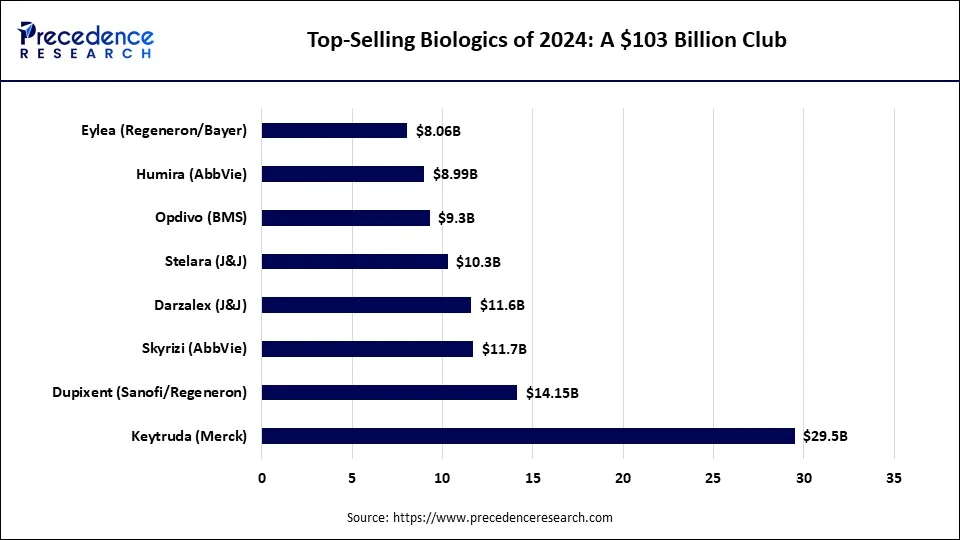
Based on FY2024 earnings disclosures, the top eight best-selling biologic and protein driven blockbusters worldwide for 2024 were led by Merck & Co.'s Keytruda at nearly $29.5 billion, followed by Sanofi or Regeneron's Dupixent with $14.15B, AbbVie's Skyrizi with $11.7B, Johnson & Johnson's Darzalex with $11.6B, J&J's Stelara with $10.3B, and AbbVie's legacy Humira with $8.99B.
Key Insight: Keytruda's $29.5 billion in sales is more than double the second-place Dupixent. No other therapeutic category in pharmaceuticals has a single product that can command this degree of lead over its nearest competitor, thus reflecting Keytruda's now 45+ approved indications across 18 tumor types.
Source: Multiple (see below) - "Company FY2024 earnings releases (Merck, Sanofi, Regeneron, AbbVie, Johnson & Johnson, Bristol Myers Squibb)," 2024–2025.
What Actually Counts as a "Biologic"? FDA's Regulatory Framework
| Biologic Category | Examples | FDA Regulatory Center |
| Monoclonal Antibodies | Keytruda, Humira, Opdivo, Darzalex | CDER |
| Therapeutic Proteins | Insulins, growth factors, enzymes, cytokines | CDER |
| Vaccines & Blood Products | Influenza, tetanus, COVID-19 vaccines, plasma derivatives | CBER |
| Cell & Gene Therapies | CAR-T cell therapies, gene-modifying treatments | CBER |
FDA regulates different biological products via two main centers: the Center for Drug Evaluation and Research (CDER) manages monoclonal antibodies and therapeutic proteins, while the Center for Biologics Evaluation and Research (CBER) oversees vaccines, blood products, and even cell and gene therapies.
CDER Regulated Products
- Monoclonal Antibodies: Laboratory-made proteins that act as antibodies in the body; examples like Keytruda and Humira.
- Therapeutic Proteins: Proteins used to treat various medical conditions; examples like insulin, growth factors, enzymes, and cytokines.
CBER Regulated Products
- Vaccines and Blood Products: Products utilized to prevent diseases or supply blood components; examples such as influenza and COVID-19 vaccines.
- Cell and Gene Therapies: Advanced treatments which modify cells or genes to treat diseases; examples such as CAR-T therapies and gene-modifying treatments.
Key Insight: The split between CDER, which regulates monoclonal antibodies and therapeutic proteins, and CBER, which regulates vaccines, blood products, and cell or gene therapies, means that a company's "biologics dominance" claim can rest on very different regulatory foundations; an oncology antibody portfolio and a vaccine portfolio face entirely different review pathways despite both being biologics.
Source: US Food and Drug Administration (FDA) - "Biological Product Definitions" and "Frequently Asked Questions About Therapeutic Biological Products," Accessed 2026.
Which Companies Dominate by Flagship Biologics Revenue?
| Company | Products Included |
| Merck | $29.5B Keytruda alone |
| J&J | ~$25.4B+ Darzalex + Stelara + Tremfya |
| Regeneron / Sanofi | ~$22.2B Dupixent + Eylea (combined) |
| AbbVie | ~$20.7B Humira + Skyrizi (biologics only) |
| BMS | ~$9.3B+ Opdivo (+ Orencia, not shown) |
Based on FY2024 earnings releases, top biologic blockbusters such as Merck & Co.'s Keytruda reached over $25 billion, while legacy and growing biologics from companies like AbbVie showed mixed trajectories due to biosimilar competition and then surging immunology growth.
Major Flagship Biologics:
- Merck & Co.: Keytruda alone led global biologic sales, crossing the $29.5 billion threshold.
- AbbVie: Humira faced steep biosimilar erosion down to nearly $20.7 billion, cushioned by fast-growing Skyrizi.
Key Insight: No firm discloses a single consolidated "total biologics revenue" line item; supremacy has to be pieced together product by product, which itself reveals something important: the industry's biggest players think about competitive position drug-by-drug along with indication-by-indication, not portfolio-wide by molecule type.
Source: Multiple (see below) - "Merck, Johnson & Johnson, Regeneron, Sanofi, AbbVie, and Bristol Myers Squibb FY2024 earnings releases," 2024–2025.
Humira's Historic Collapse: From $21.2B to $8.99B in Two Years
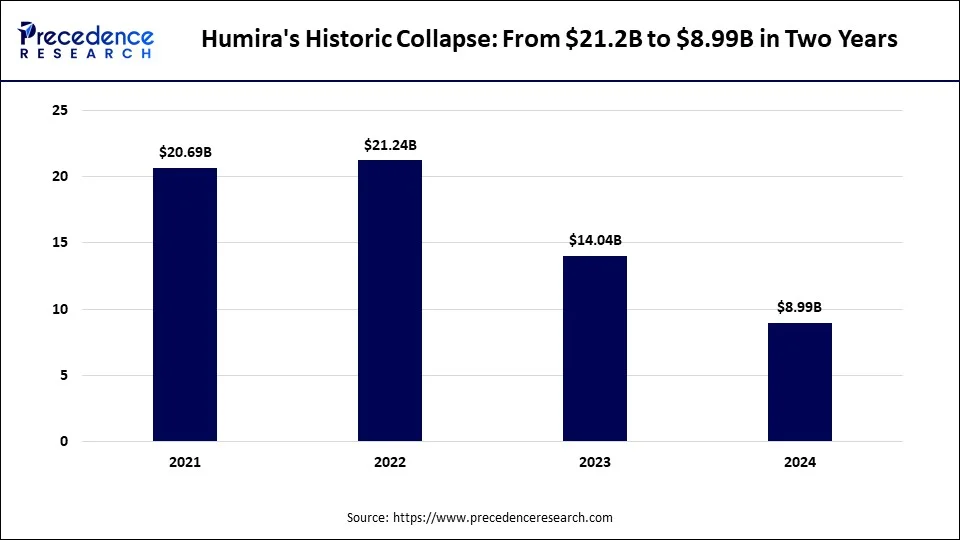
The Humira biosimilars have arrived in the U.S. market. These highly anticipated biosimilars started against the world’s top-selling drug of all time. Humira, AbbVie’s blockbuster monoclonal antibody product indicated for several inflammatory disease states, reached its pinnacle in 2018 with approximately $20 billion in worldwide sales. U.S. biosimilars in the following years: in 2021, $20.69B; in 2022, $22.24B; in 2023, $14.04B; in 2024, $8.99B.
Key Insight: The speed of this decline, approximately 58% in two years, is unusual even by patent-cliff standards. The most recent blockbuster small-molecule drugs eroded more gradually, as biosimilar manufacturing and regulatory approval take years longer to scale than small-molecule generic production; thus, Humira's fall was actually delayed relative to the underlying patent expiry before hitting all at once.
Source: AbbVie Inc. - "Form ARS (Annual Report) FY2023; Q4/full-year 2024 earnings release," 2023-2025.
AbbVie's Comeback: Skyrizi + Rinvoq Already Exceed Humira's Peak
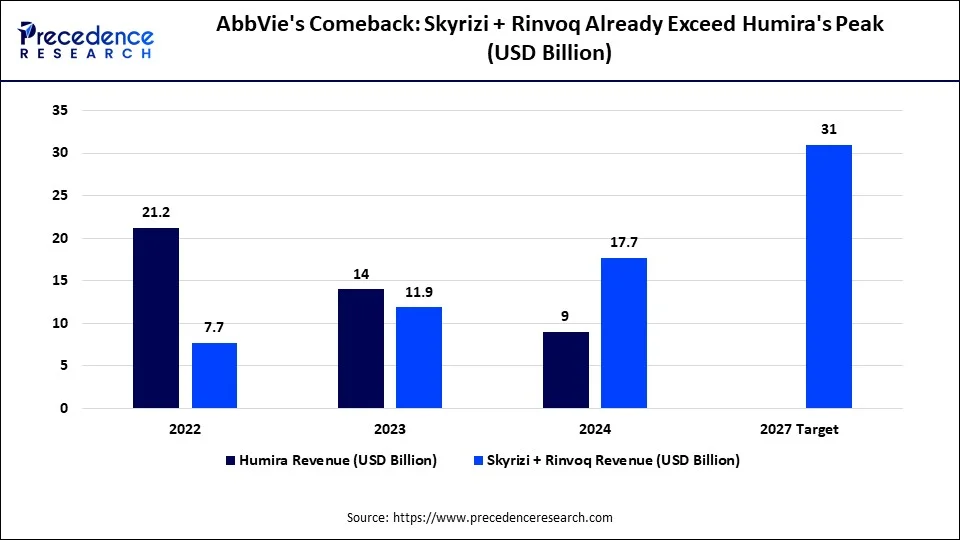
Humira's declining revenue versus the combined growth of AbbVie's Skyrizi and Rinvoq from 2022 through AbbVie's stated 2027 target. Skyrizi and Rinvoq are advanced prescription medications made by AbbVie to treat immune-mediated inflammatory diseases like Crohn's disease, ulcerative colitis, and psoriatic arthritis.
- In 2022, $21.2B in revenue was generated by Humira, and $7.7B in revenue was generated by Skyrizi and Rinvoq.
- In 2023: $14B in revenue was generated by Humira, and $11.9B in revenue was generated by Skyrizi and Rinvoq.
- In 2024: $9Brevenue generated by Humira and $17.7B in revenue was generated by Skyrizi and Rinvoq.
Key Insight: AbbVie achieved something few pharmaceutical companies have: fully replacing a $21 billion drug's peak revenue with successor products within roughly three years of the original patent cliff - though it's worth noting Rinvoq (upadacitinib) is actually a small-molecule JAK inhibitor, not a biologic, meaning AbbVie's "immunology" recovery blends biologic and non-biologic revenue streams.
Source: AbbVie Inc. - "FY2022-FY2024 earnings releases; January 2025 long-term outlook," 2022-2025.
The U.S. vs. Europe Biosimilar Gap: Two Very Different Stories for the Same Drug
| Region | Biosimilar Market Dynamics |
| United States | Biosimilars launched: January 2023. AbbVie retained ~77% market share as of mid-2024. Slower uptake driven by PBM rebate contracts and formulary placement. |
| Europe | Biosimilars launched: October 2018. Substantially higher and faster uptake than the US. National tender systems and mandatory switching policies in many countries. |
Humira biosimilar adoption has starkly contrasted between the US and Europe. Europe achieved rapid, widespread uptake after 2018 patent expirations through national tenders and organized hospital switching. Meanwhile, US adoption lagged after 2023 launches due to complex pharmacy benefit manager (PBM) rebate walls and entrenched list-price strategies.
Europe in 2018: Multiple Humira biosimilars launched immediately upon patent expiration, overseen by the European Medicines Agency framework.
United States in 2023: It was launched following extensive patent-thicket settlements with originator producer AbbVie, introducing ten distinct alternatives regulated by the U.S. Food and Drug Administration.
Key Insight: The seven-year head start Europe had on biosimilar launches (2018 vs. 2023) only explains part of the gap; the bigger structural difference is that European national tender systems can now mandate switching to lower-cost biosimilars, while the U.S. depends on a rebate-based formulary system, which gave AbbVie years of leverage to negotiate directly with pharmacy benefit managers rather than losing share to price competition alone.
Source: Multiple (see below) - "Life Science Daily News and DrugPatentWatch industry analysis," 2025-2026.
FDA Biosimilar Approvals Hit a Record High in 2024
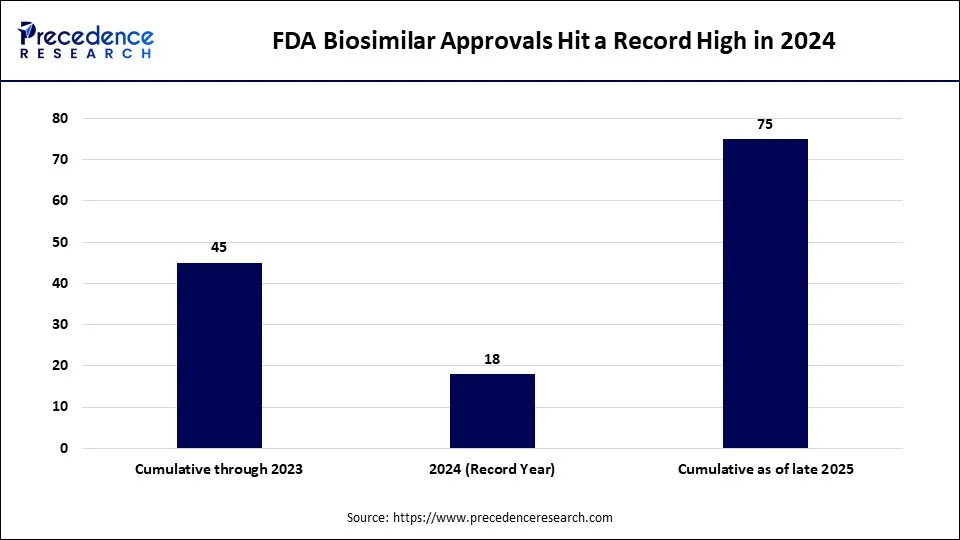
This chart tracks the cumulative number of FDA-approved biosimilars by 2023, the record number accepted in 2024 alone, and the cumulative total as of late 2025.
- Cumulative through 2023: 45 FDA-approved biosimilars.
- 2024: 18 FDA-approved biosimilars.
- Cumulative as of late 2025: 75 FDA-approved biosimilars.
Key Insight: The fact that approvals are growing at a higher rate while actual U.S. market uptake for many biosimilars, including Humira's, remains slow reveals a widening gap between regulatory supply and commercial adoption; more biosimilars are being accepted than the current rebate-driven U.S. market structure appears able to fully absorb.
Source: US FDA, Center for Drug Evaluation and Research (CDER) - "2024 approval report; Biosimilars Forum "Approved Biosimilars" tracker," 2024–2025.
J&J's Triple Biologics Engine: Darzalex, Stelara, Tremfya
| Biologic | Revenue / Growth | Therapeutic Area & Details |
| Darzalex | $11.6B | Multiple myeloma; anti-CD38 mAb; +20% YoY |
| Stelara | $10.3B | Psoriasis, Crohn's; anti-IL-12/23 mAb; −4.6% YoY (biosimilars) |
| Tremfya | Growing | Psoriasis, psoriatic arthritis; anti-IL-23 mAb |
Johnson & Johnson's three leading biologic blockbusters for 2024 were Darzalex, an oncology top-seller at $11.67 billion, up $11.6B; Stelara, an immunology leader at roughly $10.3 billion facing patent cliffs; and Tremfya, a rapidly expanding immunology asset, thus driving the firm's innovative medicine segment growth.
Leading Biologic Indication Areas:
- Darzalex: It is indicated for multiple myeloma, such as blood and bone marrow cancer, as a targeted CD38 monoclonal antibody.
- Stelara: It is indicated for immune-mediated inflammatory conditions including ulcerative colitis, Crohn’s disease, plaque psoriasis, and psoriatic arthritis.
- Tremfya: It is indicated for plaque psoriasis, psoriatic arthritis, and has recently expanded approvals in ulcerative colitis and Crohn's disease.
Key Insight: J&J's portfolio illustrated a diversification strategy distinct from Merck's Keytruda-dependent model or AbbVie's two-drug replacement strategy, thus spreading biologics revenue across three separate molecules with three different mechanisms, such as anti-CD38, anti-IL-12/23, and anti-IL-23, decreasing single-product concentration risk.
Source: Johnson & Johnson - "FY2024 earnings release and Innovative Medicine segment disclosures," 2024-2025.
Merck's Keytruda Concentration Risk: Nearly Half of Total Company Revenue
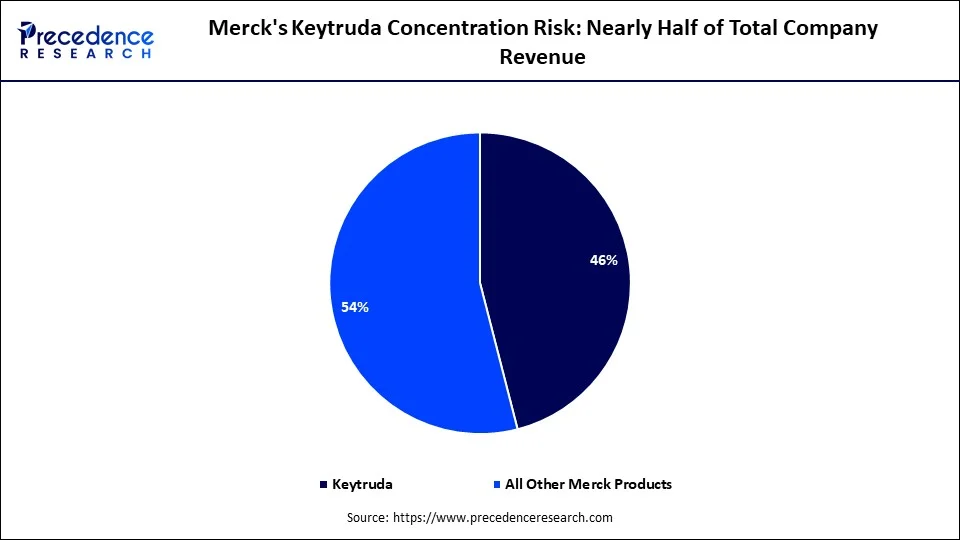
Keytruda is an immunotherapy medicine utilized to treat many kinds of cancer, including non-small cell lung cancer, melanoma, triple-negative breast cancer, renal cell carcinoma, urothelial cancer, head and neck squamous cell carcinoma, cervical cancer, and others. It belongs to a class of drugs called PD-1 inhibitors, thus known as immune checkpoint inhibitors. In full-year 2024, Keytruda sales accounted for approximately 46% of Merck's total worldwide sales.
Key Insight: A 46% revenue concentration in a single product is considered an extraordinary risk profile for a firm of Merck's scale; it means Keytruda's 2028 patent expiry thus represents one of the largest patent-cliff exposures in pharmaceutical industry history, and larger in absolute dollar terms than Humira's cliff was for AbbVie.
Source: Merck & Co., Inc. - "FY2024 earnings release," 2024-2025.
BMS's Opdivo Dependency: Nearly One-Fifth of Total Revenue From a Single Biologic
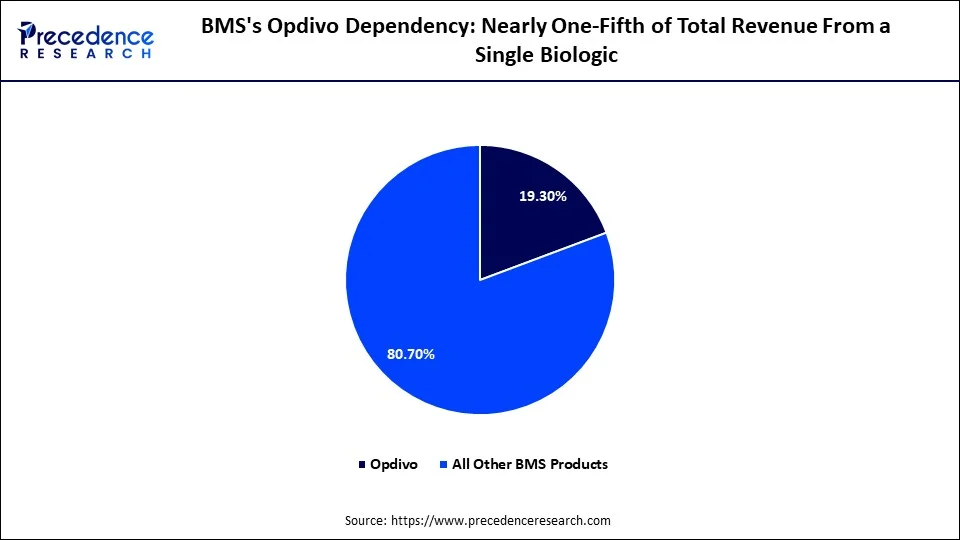
Opdivo is used in adults for melanoma as well as advanced classical melanoma. This chart shows Opdivo's 2024 sales as 19.3% of Bristol Myers Squibb's total company revenue. The European Medicines Agency (EMA) declared that it has validated the application of Bristol Myers Squibb’s Opdivo for the front-line treatment of metastatic urothelial carcinoma in combination with standard-of-care (SOC) cisplatin-based chemotherapy.
Key Insight: BMS's 19.3% concentration is lower than Merck's 46%. Opdivo thus faces the same 2028 patent expiry timeline as Keytruda, which suggests two of oncology's dominant immunotherapies could lose exclusivity in the same window, a scenario that reshapes the entire checkpoint-inhibitor competitive landscape simultaneously rather than sequentially.
Source: Bristol Myers Squibb Company - "FY2024 earnings release," 2024-2025.
The Regeneron-Sanofi Model: Co-Developing a $14 Billion Biologic Together
The global net sales for Dupixent reached $14.15 billion in full-year 2024, representing a 22% increase over 2023. The product is jointly developed and commercialized via a global collaboration agreement between Regeneron Pharmaceuticals and Sanofi. Meanwhile, Sanofi records global net sales while both firms share profits and expenses under specific terms.
Key Insight: Dupixent's collaboration structure means that ranking firms by "biologics dominance" using total revenue can double-count or under-count shared products depending on methodology. Both Regeneron and Sanofi have reported their own half-share of Dupixent profits separately, so neither firm's individual biologics revenue figure fully captures the drug's total market impact on its own.
Source: Sanofi; Regeneron Pharmaceuticals, Inc. - "FY2024 earnings releases," 2024–2025.
Mapping the Biologics Manufacturing Value Chain
| Stage | Description |
| Cell Line Development | Engineering cells (CHO, bacterial) to produce the protein |
| Bioreactor Fermentation | Large-scale cell culture growth in sterile bioreactors |
| Purification | Chromatography and filtration to isolate the protein |
| Fill-Finish & Cold Chain | Sterile vial/syringe filling, temperature-controlled shipping |
| Patient | Injection or infusion administration |
Why This Matters for Market Dominance
Unlike small-molecule generics, biosimilars cannot be made from a simple chemical formula-each requires its own multi-year cell-line and manufacturing development, raising the barrier to entry.
The five-stage biologics manufacturing chain spans from initial cell-line creation to final patient care, moving through cell-line development, upstream processing, downstream processing, fill and finish, along with clinical or commercial patient administration. As biologic medicines continue to expand across therapeutic areas, manufacturing excellence has become increasingly important. Through robust cell line development, optimized manufacturing processes, and strong GMP systems, alongside integrated development expertise, pharmaceutical firms can efficiently bring innovative biologics to individuals while maintaining the highest quality standards.
Key Insight: Every stage in this chain demands product-specific development. Unlike small-molecule generics, which can usually be synthesized from a published chemical formula, a biosimilar producer must independently develop its own cell line along with a purification process for each molecule, which is the underlying technical reason biosimilar competition has historically arrived years later and captured share more slowly than small-molecule generic competition.
Source: Synthesized from official sources - "FDA Biological Product Definitions"; NIH "Regulatory Knowledge Guide for Biological Products," 2024–2025.
The Looming Biologics Patent Cliff: What's Next After Humira
| Year / Period | Development |
| 2023 | Humira loses U.S. exclusivity; 10 biosimilars enter by early 2024 |
| 2023 | Stelara loses U.S. exclusivity; biosimilars begin eroding sales |
| 2024-2025 | Eylea faces first U.S. biosimilar competition |
| 2028 | Keytruda and Opdivo both face U.S. patent expiry |
| 2025-2030 | ~$400B in annual pharma revenue becomes contestable industry-wide |
The 2023 U.S. launch of Humira biosimilars set a monumental blueprint for biologic patent cliffs. It showed how originators use dense patent thickets to delay generic entry, establishing a strategic playbook that mega-blockbusters such as Merck’s Keytruda and Bristol Myers Squibb’s Opdivo are tracking toward their anticipated 2028 U.S. expirations.
Key Insight: The industry-wide scale of the coming cliff analysts estimate nearly $400 billion in annual pharmaceutical revenue becomes legally contestable between 2025 and 2030- means the Humira story is not a one-off event but a preview of a wave that will hit multiple firms' largest biologics in overlapping windows via the rest of the decade.
Source: Multiple (see below) - "DrugPatentWatch patent-cliff analysis; BioPharma Dive reporting," 2025-2026.
Who Owns the World's Top Biologics? Company Comparison
| Company | Flagship Biologic(s) | 2024 Sales | Indication Area | % of Company Revenue |
| Merck & Co. | Keytruda | $29.5B | Oncology (immunotherapy) | 46% |
| Sanofi / Regeneron | Dupixent | $14.15B | Eczema, asthma, immunology | Co-owned (50/50 profit) |
| AbbVie | Skyrizi + Humira | $20.7B combined | Immunology (psoriasis, Crohn's, RA) | ~37% combined |
| Johnson & Johnson | Darzalex + Stelara | $21.9B combined | Oncology, immunology | ~38% of Innovative Medicine |
| Bristol Myers Squibb | Opdivo | $9.3B | Oncology (immunotherapy) | 19.30% |
| Regeneron / Bayer | Eylea | $8.06B | Ophthalmology (wet AMD) | Major Regeneron product |
The top six pharmaceutical firms and partnerships ranked by their flagship blockbuster biologics, 2024 global sales, primary indication areas, along with approximate enterprise revenue concentrations, include massive leaders in immunology, oncology, and metabolic care.
Key Insight: Every firm in this comparison shows some form of concentration risk, whether a single-product dependency such as Merck, BMS, a two-product replacement strategy such as AbbVie, a diversified three-product engine (J&J), or a shared-ownership partnership such as Regeneron or Sanofi, there is no example among the industry's biologics leaders of a firm that has achieved dominance via a genuinely broad, evenly distributed biologics portfolio.
Source: Multiple (see below) - "Merck, Sanofi, Regeneron, AbbVie, Johnson & Johnson, and Bristol Myers Squibb FY2024 earnings releases," 2024–2025.
Global Biologics Regulatory Landscape: FDA, EMA, and WHO
| Regulatory Organization | Key Regulatory Framework |
| US FDA | Biologics License Application (BLA) pathway under the PHS Act; CDER regulates mAbs and proteins, while CBER regulates vaccines, cell & gene therapies; 351(k) abbreviated pathway for biosimilars |
| European Medicines Agency (EMA) | Centralized authorization procedure for biologics across the EU; biosimilar pathway active since 2005 - earlier than the US (2015); faster biosimilar uptake via national tender systems |
| World Health Organization (WHO) | Sets international guidelines for “similar biotherapeutic products”; maintains the Essential Medicines List, including several biologics; coordinates regulatory convergence across member states |
This comparison summarizes the biologics regulatory approach of the three major global authorities. The US Food and Drug Administration, the European Medicines Agency, and the World Health Organization are major global health authorities. They set safety rules, evaluate medicines, and even protect public health across different regions and globally.
Key Insight: The EMA's decade-long head start on biosimilar pathways is the single clearest structural explanation for why European biosimilar markets are more mature than the US market today, as regulatory framework age, not just economic incentive, has directly shaped how much biosimilar competition each region's biologics leaders actually face.
Source: US FDA; European Medicines Agency; World Health Organization- "Official regulatory guidance and biologics/biosimilars frameworks," Accessed 2026.
Quick-Reference Data Tables
The tables below present the same core figures from the Visual Intelligence section in plain, sortable Word-table format for quick reference and reuse.
Top-Selling Biologics of 2024 at a Glance
| Biologic | Company | 2024 Sales | Indication Area | YoY Change |
| Keytruda | Merck & Co. | $29.50B | Oncology (multiple cancers) | +18% |
| Dupixent | Sanofi or Regeneron | $14.15B | Eczema, asthma, immunology | +22.1% |
| Skyrizi | AbbVie | $11.70B | Psoriasis, Crohn's, psoriatic arthritis | +50.9% |
| Darzalex | Johnson & Johnson | $11.60B | Multiple myeloma | +20% |
| Stelara | Johnson & Johnson | $10.30B | Psoriasis, Crohn's, ulcerative colitis | -4.6% |
| Opdivo | Bristol Myers Squibb | $9.30B | Melanoma and other cancers | Flat |
| Humira | AbbVie | $8.99B | Rheumatoid arthritis, Crohn's | -37.6% |
| Eylea / Eylea HD | Regeneron / Bayer | $8.06B | Wet age-related macular degeneration | Growth (region-varied) |
Source: Company FY2024 earnings releases (Merck, Sanofi, Regeneron, AbbVie, Johnson & Johnson, Bristol Myers Squibb, Bayer); cross-referenced via BioSpace, Qz.com, and Drug Discovery Trends industry reporting, 2024-2025.
Humira's Biosimilar Erosion Timeline, 2021-2025
| Date | Event | Impact |
| 2021 | Humira global revenue peaks pre-biosimilar era | $20.69 billion in global net revenues |
| 2022 | Final full year before US biosimilar entry | $21.24 billion (all-time peak) |
| January 2023 | Amgen launches Amjevita, first US Humira biosimilar | 9 biosimilars enter the market within the year |
| 2023 (full year) | First year of US biosimilar competition | Global sales fall to $14.04 billion (-32%) |
| April 2024 | CVS Caremark removes Humira from major formularies | Hyrimoz prescriptions jump from 640 to 8,300/week |
| 2024 (full year) | Second full year of biosimilar competition | Global sales fall to $8.99 billion (US sales -54.5% YoY) |
| Mid-2025 | Nine biosimilar products actively compete | Some net prices run ~90% below original Humira list price |
Source: AbbVie Inc. Form ARS FY2023 and FY2024 earnings releases; BioSpace and DrugPatentWatch reporting on biosimilar market dynamics, 2023–2025.
Recent Developments
Seven of the most consequential developments shaping global biologics market dominance over the past 18 months, prioritized by recency and business impact:
AbbVie Inc. - January 2025
| Date | January 2025 |
| Organization | AbbVie Inc. |
| Development | AbbVie has raised its long-term outlook for combined Skyrizi and Rinvoq revenue to more than $31 billion by 2027, up from a prior $27 billion projection. |
| What Changed | Skyrizi alone is now expected to exceed $20 billion, and Rinvoq more than $11 billion, by 2027. |
| Why It Matters | It confirms AbbVie's immunology replacement strategy for Humira is outperforming even the firm's own earlier internal projections. |
| Business Significance | It comes as AbbVie's founding-era CEO Richard Gonzalez, who orchestrated the Humira defense along with the Allergan acquisition, stepped down in 2024 after delivering nearly 700% shareholder return during his tenure. |
Source: SyneticX competitive intelligence report; AbbVie investor communications, January 2025
CVS Health or Cordis - August 2024
| Date | August 2024 |
| Organization | CVS Health or Cordis |
| Development | CVS Caremark has removed AbbVie's Humira from its major national commercial drug formularies, thus converting nearly 97% of commercial Humira use to biosimilars by that month. |
| What Changed | The new prescriptions for Sandoz's Hyrimoz, which is marketed via CVS subsidiary Cordavis, jumped from 640 in the week ending March 29, 2024 to 8,300 in the week ending April 5, 2024. |
| Why It Matters | It represents the single clearest example of a pharmacy benefit manager formulary decision, not patent expiry or biosimilar pricing alone, driving a rapid change in US biosimilar market share. |
| Business Significance | It illustrates that PBM formulary strategy, not producer competition alone, is usually the decisive variable in US biosimilar adoption speed. |
Source: BioSpace, "AbbVie's Humira Continues to Lose Market Share as Biosimilars Gain Ground," July 2024
AbbVie Inc. - December 2023
| Date | December 2023 |
| Organization | AbbVie Inc. |
| Development | AbbVie sued Samsung Bioepis over patent issues associated with biosimilar competition, as part of a broader pattern of biosimilar-related patent litigation across the industry. |
| What Changed | It reflects continued legal contestation over biosimilar market entry even after initial FDA approvals have been granted. |
| Why It Matters | It shows that FDA approval of a biosimilar does not guarantee an uncontested path to market; patent litigation thus remains a significant variable in the timing and even scale of biosimilar competition. |
| Business Significance | It is a part of a broader wave of Biologics Price Competition and Innovation Act (BPCIA) litigation shaping how quickly biosimilars can actually reach patients after approval. |
Source: BioSpace, "5 Pharma Powerhouses Facing Massive Patent Cliffs," February 2025
US FDA, Center for Drug Evaluation and Research (CDER)- 2024 (full year)
| Date | 2024 (full year) |
| Organization | US FDA, Center for Drug Evaluation and Research (CDER) |
| Development | CDER accepted a record number of biosimilars in 2024, along with 50 novel drug approvals overall. |
| What Changed | It continued a multi-year acceleration in biosimilar approval volume, thus building toward a cumulative total of nearly 75 FDA-approved biosimilars by late 2025. |
| Why It Matters | It signals sustained regulatory capacity and even industry investment in biosimilar development, yet continued commercial adoption challenges in the US market. |
| Business Significance | As of 2025, 18 additional biosimilar approvals had been recorded that year, which is ahead of the pace set in 2024. |
Source: Regulatory Affairs Professionals Society (RAPS), "CDER Approved 50 Novel Drugs in 2024, Record Number of Biosimilars," January 2025
Bristol Myers Squibb Company- 2025
| Date | 2025 |
| Organization | Bristol Myers Squibb Company |
| Development | BMS continued thus, developing a subcutaneous (under-the-skin) formulation of Opdivo, targeting to convert 30–40% of the overall US Opdivo market to the new formulation. |
| What Changed | It represents a lifecycle-management strategy to extend Opdivo's commercial differentiation, which is ahead of its 2028 patent expiry. |
| Why It Matters | It illustrates a common industry pattern: launching enhanced formulations of a biologic near the end of its exclusivity period to maintain physician and even patient preference even after biosimilars become available. |
| Business Significance | Merck is thus pursuing a similar subcutaneous formulation strategy for Keytruda, and setting up a formulation race between the industry's two largest oncology biologics. |
Source: Xtalks, "Top 30 Drugs to Watch in 2024," citing BMS pipeline disclosures
Regeneron Pharmaceuticals; Bayer- 2024 (full year)
| Date | 2024 (full year) |
| Organization | Regeneron Pharmaceuticals; Bayer |
| Development | Eylea has maintained market leadership in ophthalmology despite emerging biosimilar competition approved in 2024, which is aided by the newer Eylea HD formulation. |
| What Changed | Eylea HD's flexible dosing schedule advantage fueled continued growth in Europe, Canada, and Japan even as US biosimilars entered the market. |
| Why It Matters | It demonstrates a successful "bio-better" strategy, launching a clinically enhanced next-generation version of a biologic that is ahead of biosimilar competition to the original formulation. |
| Business Significance | It reflects a broader industry trend of utilizing formulation and delivery innovation, not just legal patent protection, to defend biologics market share. |
Source: Bayer AG annual report 2024, cited in Xtalks "Top 50 Best-Selling Drugs to Watch in 2025"
Industry-wide- 2025 (ongoing)
| Date | 2025 (ongoing) |
| Organization | Industry-wide |
| Development | It analysts estimate nearly $400 billion in annual pharmaceutical revenue, heavily concentrated in biologics, which becomes legally contestable to patent challenges and biosimilar or generic competition between 2025 and 2030. |
| What Changed | William Blair analysts project aggregate sales of affected products to fall from $162.8 billion in 2025 to just $67 billion by 2029 across nearly 50 products losing patent protection. |
| Why It Matters | It represents the largest concentrated patent-cliff wave in pharmaceutical industry history, with five therapeutic franchises including Keytruda, accounting for the majority of projected exposure. |
| Business Significance | It sets up a multi-year industry-wide test of whether the AbbVie Skyrizi or Rinvoq replacement playbook can be repeated across dozens of firms simultaneously. |
Source: BioSpace, "5 Pharma Powerhouses Facing Massive Patent Cliffs," citing William Blair analysis, February 2025
Key Companies & Organizations
Companies with Leading Individual Biologics (2024 Sales)
- Merck's Keytruda is a dominant immunotherapy biologic that reached over $31.7 billion in global sales, making it one of the top-selling pharmaceutical products globally while driving nearly half of Merck's total corporate revenue.
- Co-developed and co-owned by Sanofi and Regeneron Pharmaceuticals, Inc., Dupixent has reached $14.15 billion in global net sales for the full year 2024. The global sales for the franchise have continued to scale higher past that milestone.
Major Biosimilar Manufacturers
- Amgen Inc. launched Amjevita, the first US Humira biosimilar, in January 2023.
- Samsung Bioepis is the major biosimilar developer, the subject of AbbVie patent litigation.
- Cordavis, a CVS Health subsidiary, is collaborating with Sandoz on Hyrimoz distribution.
- Celltrion, Teva Pharmaceutical Industries Ltd., and Viatris Inc. are additional major biosimilar manufacturers.
Government & Regulatory Organizations
- US Food and Drug Administration (FDA), Center for Drug Evaluation and Research (CDER) and Center for Biologics Evaluation and Research (CBER)
- European Medicines Agency (EMA)
- World Health Organization (WHO)
Trade Associations & Research Bodies
- Biosimilars Forum is a U.S. biosimilar industry association that maintains the approved biosimilars tracker.
- National Institutes of Health (NIH), Regulatory Knowledge Guide for Biological Products.
Questions Answered in This Blog
- Which pharmaceutical firm dominates the global biologics market by revenue?
- Which biologics were the best-selling drugs in the world in 2024?
- How did AbbVie's Humira lose so much revenue so quickly after biosimilars launched?
- What legally differentiates a "biologic" from a traditional small-molecule drug?
- Has AbbVie successfully replaced Humira's lost revenue, and then with what products?
- How many biosimilars has the FDA accepted, and how has that number grown recently?
- What biologics does Johnson & Johnson depend on most for its Innovative Medicine segment?
- Why did Humira retain more US market share than anticipated despite ten biosimilar competitors?
- How dependent is Merck on Keytruda for its total company revenue?
- Why is Dupixent co-owned by two different firms instead of one?
- What are the manufacturing steps are generally involved in producing a biologic drug?
- Which major biologics are approaching patent expiration, and when?
- How dependent is Bristol Myers Squibb on Opdivo for its total company revenue?
- What role does the World Health Organization play in global biologics regulation?
- How do the US and European Union differ in their approach to regulating biosimilars?
What Additional Questions Can Our Full Research Report Answer?
- This blog draws on public and government data, along with institutional data. A commissioned research report can go further, combining proprietary market modeling, primary interviews, and even competitive benchmarking to answer questions such as:
- What is the realistic timeline as well as magnitude of biosimilar erosion for Stelara compared to the Humira precedent, given J&J's different formulary and even rebate strategy?
- How might U.S. pharmacy benefit manager (PBM) reform proposals have affected the pace of future biosimilar adoption relative to the slow Humira experience?
- Which firms are best positioned to capture share as Keytruda and Opdivo approach their 2028 patent expirations?
- Which biosimilar manufacturers such as Sandoz, Celltrion, Samsung Bioepis, and Amgen are best positioned by manufacturing capacity and even pipeline breadth to capture share across multiple biologics simultaneously?
- What is the total addressable market for biosimilars of the next wave of major biologics losing exclusivity, such as Eylea, Opdivo, Stelara, and Keytruda, through 2030?
- How has the WHO's global biosimilar guidance framework affected biologics market access and pricing in low- and middle-income countries?
- How do biosimilar adoption rates and pricing dynamics compare across therapeutic categories such as oncology mAbs vs. immunology mAbs vs. ophthalmology biologics?
- How might AbbVie's Skyrizi or Rinvoq replacement playbook be adapted by other firms facing their own patent cliffs, and then where does that playbook fail to translate?
- What is the realistic cost alongside timeline for a biosimilar manufacturer to bring a new molecule to market, from cell-line development through commercial launch?
- How do formulation-innovation strategies, like Eylea HD or subcutaneous Opdivo or Keytruda, affect the realistic revenue-defense timeline for a biologic facing biosimilar entry?
- What antitrust and patent-litigation risk do major biologics producers face from ongoing BPCIA litigation, and then how might that shape future biosimilar launch timing?
- What is the competitive threat profile facing Regeneron and Sanofi as Dupixent approaches its own eventual patent cliff, given its shared-ownership structure?
- Which emerging biotech firms hold the most commercially significant next-generation biologics pipelines which could challenge current market leaders by 2030?
- How does biologics manufacturing capacity, such as bioreactor availability and CDMO relationships, constrain which firms can realistically scale a biosimilar launch quickly?
- How do biosimilar adoption rates in China, India, and a few major emerging pharmaceutical markets compare to the US and EU experience?
- What is the realistic scenario range for how much of the estimated $400 billion patent-cliff exposure through 2030 is actually captured by biosimilar or generic competitors versus successor branded products?
- Which firms' biologics revenue concentration, such as Merck's Keytruda and BMS's Opdivo, represents the greatest single-product risk to their overall equity valuation?
- How might interchangeability designations, thus enabling automatic pharmacy-level biosimilar substitution, change US biosimilar adoption dynamics compared to the current substitution-restricted environment?
- What role will cell and gene therapies play in the next 10 years of biologics market competition, given their distinct manufacturing and even regulatory pathway under CBER?
- What collaboration or co-development structures similar to the Regeneron-Sanofi Dupixent model exist elsewhere in the industry, and how do they affect competitive analysis?
References
All sources cited throughout this report, in order of first appearance:
| Source / Organization | Title | Date | URL | Supports |
| US Food and Drug Administration (FDA) | Biological Product Definitions | Accessed 2026 | https://www.fda.gov/files/drugs/published/Biological-Product-Definitions.pdf | Definition of biologics vs. small-molecule drugs |
| US Food and Drug Administration (FDA) | Frequently Asked Questions About Therapeutic Biological Products | Accessed 2026 | https://www.fda.gov/drugs/therapeutic-biologics-applications-bla/frequently-asked-questions-about-therapeutic-biological-products | CDER/CBER regulatory division for biologics categories |
| US Food and Drug Administration (FDA) | Purple Book: Lists of Licensed Biological Products | Accessed 2026 | https://www.fda.gov/drugs/therapeutic-biologics-applications-bla/purple-book-lists-licensed-biological-products-reference-product-exclusivity-and-biosimilarity-or | Biosimilar and reference product licensing database structure |
| National Institutes of Health (NIH) | Regulatory Knowledge Guide for Biological Products | 2024 | https://seed.nih.gov/sites/default/files/2024-03/Regulatory-Knowledge-Guide-Biological-Products.pdf | Biologics manufacturing process and regulatory pathway details |
| Regulatory Affairs Professionals Society (RAPS) | CDER Approved 50 Novel Drugs in 2024, Record Number of Biosimilars | January 2025 | https://www.raps.org/news-and-articles/news-articles/2025/1/cder-approved-50-novel-drugs-in-2024,-record-numbe | 2024 FDA novel drug and biosimilar approval statistics |
| Biosimilars Forum | Approved Biosimilars | Accessed 2025–2026 | https://biosimilarsforum.org/approved-biosimilars/ | Cumulative count of FDA-approved biosimilars (75) |
| Merck & Co., Inc. | FY2024 earnings release | 2025 | https://www.drugdiscoverytrends.com/pharma-50-the-50-largest-pharmaceutical-companies-in-the-world-for-2025/ | Keytruda 2024 sales and share of Merck's total revenue |
| Johnson & Johnson | FY2024 earnings release and Innovative Medicine segment disclosures | 2025 | https://druganddeviceworld.com/2025/03/04/top-10-highest-grossing-drugs-in-2024-by-sales/ | Darzalex and Stelara 2024 sales figures |
| Bristol Myers Squibb Company | Reports Fourth Quarter and Full-Year Financial Results for 2024 | February 2025 | https://news.bms.com/news/details/2025/Bristol-Myers-Squibb-Reports-Fourth-Quarter-and-Full-Year-Financial-Results-for-2024/default.aspx | Opdivo 2024 sales and BMS total revenue |
| Sanofi; Regeneron Pharmaceuticals, Inc. | FY2024 earnings releases | 2025 | https://www.geneonline.com/blockbusters-breakthroughs-who-ruled-the-pharma-market-in-2024-and-whos-next/ | Dupixent 2024 global sales and co-ownership structure |
| AbbVie Inc. | Form ARS (Annual Report), FY2023 | 2024 | https://www.sec.gov/Archives/edgar/data/1551152/000110465924035573/tm244274d2_ars.pdf | Humira 2023 revenue and biosimilar competition risk disclosure |
| BioSpace | AbbVie's Humira Continues to Lose Market Share as Biosimilars Gain Ground: Report | July 2024 | https://www.biospace.com/business/abbvies-humira-continues-to-lose-market-share-as-biosimilars-gain-ground-report | Humira historical revenue (2021–2023), CVS Caremark formulary decision |
| Labiotech.eu | The AbbVie Pipeline Strategy, a Company at an Inflection Point | April 2026 | https://www.labiotech.eu/in-depth/abbvie-pipeline-strategy/ | AbbVie 2024 US Humira revenue decline; Skyrizi/Rinvoq 2027 outlook |
| BioSpace | 5 Pharma Powerhouses Facing Massive Patent Cliffs-And What They're Doing About It | February 2025 | https://www.biospace.com/business/5-pharma-powerhouses-facing-massive-patent-cliffs-and-what-theyre-doing-about-it | Humira 2022–2024 revenue figures; industry-wide patent cliff analysis |
| DrugPatentWatch | The $400 Billion Patent Cliff: How Strategic Partnerships Determine Which Pharma Giants Survive | May 2026 | https://www.drugpatentwatch.com/blog/forging-strategic-partnerships-to-conquer-the-400-billion-patent-cliff/ | Industry-wide 2025–2030 patent cliff revenue exposure estimate |
| DrugPatentWatch | Bio-Betters Are Eating Biosimilars: The Strategic Shift Reshaping Biologic Drug Patents | 2026 | https://www.drugpatentwatch.com/blog/bio-betters-are-eating-biosimilars-the-strategic-shift-reshaping-biologic-drug-patents/ | Humira biosimilar pricing dynamics and PBM formulary behavior |
| Life Science Daily News | Biologics on the Brink: The Patent Cliff Facing Big Pharma | 2026 | https://lifesciencedaily.news/biologics-on-the-brink-the-patent-cliff-facing-big-pharma/ | US vs. Europe biosimilar adoption comparison; Humira US market share retention |
| Xtalks | Top 50 Best-Selling Drugs to Watch in 2025: Insights from 2024 Sales Data | January 2026 | https://xtalks.com/top-50-best-selling-drugs-to-watch-in-2025-insights-from-2024-sales-data-4343/ | Eylea 2024 sales and Eylea HD formulation strategy |
| Qz.com | Ozempic, Eliquis, Keytruda: The 9 Top-Selling Drugs of 2024 | February 2025 | https://qz.com/ozempic-keytruda-best-selling-drugs-1851758657 | Opdivo, Stelara, Darzalex, Skyrizi, and Dupixent 2024 sales figures |
| GeneOnline News | Blockbusters & Breakthroughs: Who Ruled the Pharma Market in 2024-and Who's Next? | June 2025 | https://www.geneonline.com/blockbusters-breakthroughs-who-ruled-the-pharma-market-in-2024-and-whos-next/ | 2024 top-seller biologics list and mechanism-of-action details |
About the Authors

Aditi Shivarkar
Aditi, Vice President at Precedence Research, brings over 15 years of expertise at the intersection of technology, innovation, and strategic market intelligence. A visionary leader, she excels in transforming complex data into actionable insights that empower businesses to thrive in dynamic markets. Her leadership combines analytical precision with forward-thinking strategy, driving measurable growth, competitive advantage, and lasting impact across industries.



Aman Singh
Aman Singh with over 13 years of progressive expertise at the intersection of technology, innovation, and strategic market intelligence, Aman Singh stands as a leading authority in global research and consulting. Renowned for his ability to decode complex technological transformations, he provides forward-looking insights that drive strategic decision-making. At Precedence Research, Aman leads a global team of analysts, fostering a culture of research excellence, analytical precision, and visionary thinking.

Piyush Pawar
Piyush Pawar brings over a decade of experience as Senior Manager, Sales & Business Growth, acting as the essential liaison between clients and our research authors. He translates sophisticated insights into practical strategies, ensuring client objectives are met with precision. Piyush’s expertise in market dynamics, relationship management, and strategic execution enables organizations to leverage intelligence effectively, achieving operational excellence, innovation, and sustained growth.