



Intra-Articular Injections Market Size, Companies, Share, Patient Volume, Treatment Adoption Rates, Pricing Analysis, Regulatory Landscape, Competitive Positioning, and Demand Forecast
Intra-Articular Injections Market (By Product Type: Hyaluronic Acid, Corticosteroids, Platelet-Rich Plasma, Others; By Application: Osteoarthritis, Rheumatoid Arthritis, Otherr; By End-User: Hospitals, Ambulatory Surgical Centers, Specialty Clinics, Others) - Global Industry Analysis, Size, Trends, Leading Companies, Regional Outlook, and Forecast 2026 to 2035
Source: https://www.precedenceresearch.com/intra-articular-injections-market
 Get a Sample
 Table Of Content


What is Intra-Articular Injections Market Size in 2026?
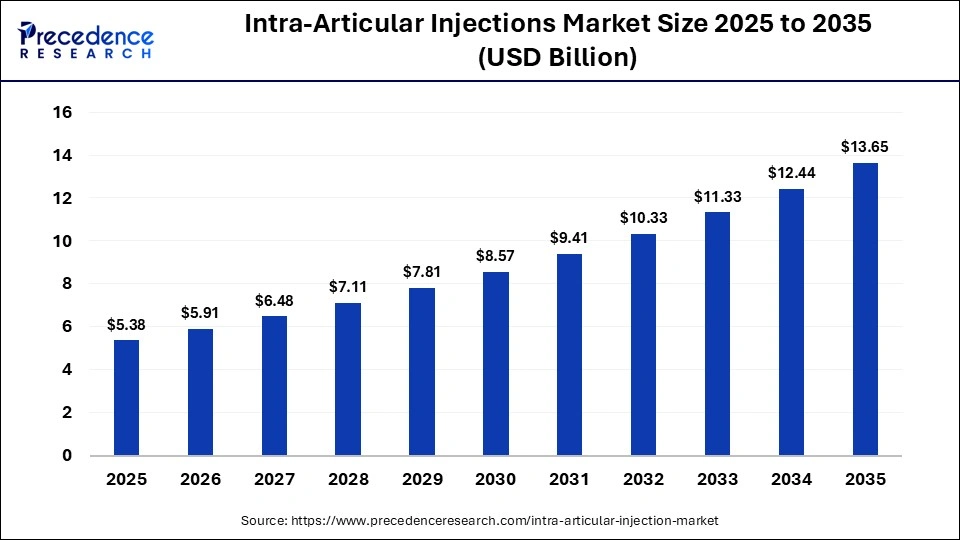
The global intra-articular injections market size was calculated at USD 5.38 billion in 2025 and is predicted to increase from USD 5.91 billion in 2026 to approximately USD 13.65 billion by 2035, expanding at a CAGR of 9.76% from 2026 to 2035. Rising demand for non-surgical treatments for several disorders creates potential for the market to grow.
Key Takeaways
- North America dominated the global market share in 2025.
- Asia-Pacific is anticipated to witness the fastest growth rate throughout the forecast period.
- By product type, hyaluronic acid injections segment dominated the market in 2025.
- By product type, the corticosteroids is the fastest growing segment within the market during the forecast period.
- By application, the osteoarthritis led the market this year in 2025.
- By application, the rheumatoid arthritis is expected to witness rapid growth throughout the forecast period.
- By end user, the hospitals held the largest market share as of this year in 2025.
- By end user, the ambulatory surgical centers (ASCs) is the fastest growing segment as of this year.
Market Overview
The intra-articular drug injections market is witnessing steady growth, and this growth is fueled by the rising prevalence of osteoarthritis and other joint-related disorders globally. As aging populations expand globally and sedentary lifestyles lead to joint degradation, demand for targeted, minimally invasive treatment options continues to surge. Strategic collaborations between pharma companies and biotech innovators are also gaining traction, boosting pipeline development, especially around long-acting injectables and combination therapies.
Furthermore, favorable reimbursement frameworks in developed regions, expanding healthcare infrastructure in emerging markets, and rising patient awareness regarding non-surgical pain management options are supporting consistent adoption. The shift toward outpatient care and ambulatory surgical centers also contributes to procedural volume growth due to cost efficiency and convenience.
Overall, the intra-articular drug injections market is evolving beyond conventional pain relief solutions toward advanced biologics and regenerative therapies, positioning it for sustained long-term growth driven by demographic trends, innovation, and expanding clinical acceptance.
What are Intra-Articular Injections?
Intra-articular injections are used to deliver therapeutic agents such as corticosteroids, hyaluronic acid, or emerging biologics directly into the joint space, helping in providing localized relief with fewer systemic side effects compared to oral medications. The primary substances used in these types of injections include corticosteroids, hyaluronic acid, and platelet-rich plasma (PRP). These injections are commonly used for conditions like osteoarthritis, rheumatoid arthritis and gout.
Key Market Trends in the Intra-Articular Injections Market
- Rising Demand for Non-Surgical Treatments: There is a growing demand for non-invasive therapies among patients seeking relief from joint pain. This trend is likely influenced by the desire to avoid the risks associated with surgical procedures, leading to increased interest in these injections.
- Advancements in Injection Techniques: Innovations in injection methodologies are helping in enhancing the effectiveness and safety of various treatments. Improved techniques may result in better patient outcomes, thus encouraging more healthcare providers to adopt these therapies in their practice.
- Focus on Personalized Medicine: The shift towards personalized treatment approaches is becoming more pronounced in the market. Tailoring therapies to individual patient needs help to enhance efficacy and satisfaction, driving further market growth
What is the Impact of AI in the Intra-Articular Injections Market?
The impact of Artificial Intelligence in the intra-articular injections market is quite significant, and it is transforming the market landscape by helping in streamlining diagnostic accuracy and enabling more personalized treatment protocols. AI algorithms can now be seamlessly integrated into imaging technologies, which helps in allowing physicians to identify the severity and location of joint deterioration with precision. Automated robotic systems are also assisting clinicians in performing guided injections with much better consistency, minimizing procedural errors and patient discomfort. These technologies collectively improve patient outcomes, reduce human error, and support evidence-based practices.
As AI becomes more connected with healthcare infrastructure, the intra-articular injections market is expected to benefit from increased efficiency, predictive analytics and enhanced decision-making tools for healthcare professionals.
Market Scope
| Report Coverage | Details |
| Market Size in 2025 | USD 5.38 Billion |
| Market Size in 2026 | USD 5.91 Billion |
| Market Size by 2035 | USD 13.65 Billion |
| Market Growth Rate from 2026 to 2035 | CAGR of 9.76% |
| Dominating Region | North America |
| Fastest Growing Region | Asia-Pacific |
| Base Year | 2025 |
| Forecast Period | 2026 to 2035 |
| Segments Covered | Product Type, Application, End-User, and region |
| Regions Covered | North America, Europe, Asia-Pacific, Latin America, and Middle East & Africa |
Segmental Insights
Product Type Insights
Hyaluronic acid injections segment dominated the market in 2025. This is because are widely used for their ability to lubricate joints and provide relief from osteoarthritis symptoms. The growing aging population and the rising prevalence of osteoarthritis are key factors for the growth of the hyaluronic acid segment. These injections offer significant relief for patients suffering from mild to moderate osteoarthritis and have become vital in non-surgical joint pain management.
Technological advancements have also strengthened this segment's dominance. The development of cross-linked and high-molecular-weight formulations has improved durability and extended therapeutic benefits, reducing the frequency of repeat injections. Furthermore, improved clinical protocols and image-guided injection techniques have enhanced procedural accuracy and patient outcomes.
Corticosteroids segment is observed to grow at the fastest rate within the market. These types of injections are renowned for their potent anti-inflammatory properties, thus making them a preferred choice for treating inflammatory joint diseases such as rheumatoid arthritis. The quick course of action and effectiveness in reducing inflammation and pain leads to the widespread use of corticosteroids in intra-articular injections.
Another key factor driving segment growth is their cost-effectiveness compared to certain biologic or regenerative injectable therapies. Corticosteroids are widely accessible and commonly covered under reimbursement frameworks in many healthcare systems, further supporting high utilization rates. Physicians frequently recommend them as first-line intra-articular therapy for short-term symptom control before considering more advanced or long-acting options.
Application Insights
Osteoarthritis led the market in 2025, driven by the rising aging population and the increasing prevalence of this degenerative joint disease. Intra-articular injections offer a non-surgical solution for easily managing osteoarthritis symptoms, thus providing significant relief from pain and improving joint function. The effectiveness and safety of these injections make them a popular choice among patients and healthcare providers alike.
The growing burden of obesity and sedentary lifestyles further contributes to the rising incidence of osteoarthritis, even among middle-aged populations. Sports injuries and repetitive joint stress also accelerate cartilage degeneration, expanding the eligible patient base for injectable therapies. In response, healthcare providers increasingly recommend intra-articular corticosteroids, hyaluronic acid injections, platelet-rich plasma (PRP), and other biologic treatments as part of comprehensive disease management strategies.
Rheumatoid arthritis segment is expected to witness rapid growth throughout the forecast period. This autoimmune disorder causes chronic inflammation and pain in the joints, necessitating effective management strategies. These injections play a crucial role in controlling inflammation and providing relief for rheumatoid arthritis patients.
End-User Insights
Which end user held the largest market share this year in 2026?
The hospitals segment held the largest market share as of this year in 2025. This dominance is due to the comprehensive range of services they offer and their easy access to advanced medical technologies. The availability of specialized healthcare professionals and facilities for administering intra-articular injections makes hospitals an ideal choice for patients who are seeking these treatments.
In addition, hospitals often manage patients with severe or advanced joint disorders who may require multidisciplinary care, including diagnostic evaluation, injection therapy, rehabilitation, and potential surgical intervention. Their strong reimbursement frameworks and established patient trust also contribute to higher procedural volumes. Furthermore, hospitals are more likely to participate in clinical trials and early adoption of innovative biologic or regenerative injectables, reinforcing their market dominance.
The ambulatory surgical centers (ASCs) is the fastest growing segment for the forecast period. ASCs offer a cost-effective and convenient alternative than compared to traditional hospital settings for patients who require minimally invasive procedures. Factors such as shorter wait times, lower costs, and quicker recovery periods associated with ASCs make them a popular option for patients seeking intra-articular injections.
Regional Insights
Why is North America Dominating the Market in 2026?
North America continues to dominate the intra-articular injections market in 2026, building upon its leadership position established in 2025. This dominance is primarily driven by the region's advanced healthcare infrastructure, high prevalence of joint disorders, strong reimbursement frameworks, and sustained investments in research and development.
The region benefits from a well-established orthopedic care ecosystem, including specialized clinics, ambulatory surgical centers, and hospital networks equipped with advanced diagnostic imaging and minimally invasive treatment capabilities. Furthermore, early diagnosis rates and proactive treatment adoption significantly contribute to higher procedural volumes.
The United States remains the key contributor to regional dominance due to substantial funding from both public and private sectors. Government-backed healthcare programs, private insurance coverage, and favorable reimbursement policies improve patient accessibility to intra-articular therapies. In addition, strong collaboration between pharmaceutical companies, biotech firms, and academic research institutions accelerates product innovation and commercialization.
U.S. Market Trends in 2026
The United States continues to drive regional market growth through:
- Rising Osteoarthritis Burden
An increasing aging population and growing obesity rates contribute to a higher incidence of osteoarthritis and other degenerative joint conditions. - Shift Toward Non-Surgical Therapies
Patients and healthcare providers increasingly prefer intra-articular injections as alternatives to joint replacement surgery, especially for early-to-mid-stage disease management. - Strong Reimbursement Policies
Favorable Medicare and private insurance coverage support widespread procedural adoption. - Innovation in Injectable Therapies
Ongoing development of extended-release formulations, biologic injectables, and regenerative-based intra-articular therapies is enhancing treatment efficacy and duration. - Expansion of Ambulatory Surgical Centers (ASCs)
The rise of ASCs reduces procedural costs and increases patient convenience, further boosting treatment uptake.
What are the Advancements in Asia-Pacific in 2026?
Asia-Pacific is witnessing rapid growth in the intra-articular injections market. This rapid growth is due to the increasing prevalence of osteoarthritis, coupled with a growing aging population, drives demand for these treatments. Additionally, rising disposable incomes and improved healthcare access contribute to market expansion, especially in countries like China and Japan.
China is seen making significant investments in healthcare infrastructure and a rising number of orthopedic procedures. It also has a strong focus on research and development. Further, the surging medical tourism in the region that drives the demand for technologically advanced medical offerings.
Japan also represents a mature and technologically advanced market within Asia-Pacific. The country's rapidly aging population significantly increases demand for joint pain management therapies. Advanced clinical research, strong regulatory frameworks, and early adoption of innovative injectable formulations position Japan as a key contributor to regional growth.
Intra-Articular Injections Market Value Chain Analysis
- Raw Material Sourcing: This stage deals with sourcing raw materials that are needed to produce these injections such as hyaluronic acid, corticosteroids and platelet rich plasma components.
Key Players: Anika, Zimmer Biomet, Sanofi - Manufacturing Process: At this stage, APIs are formulated into sterile injectable solutions or prefilled syringes under strict controlled conditions.
Key Players: LG Chem, Anika, Johnson and Johnson - Distribution Process: The finished products are distributed through pharmaceutical distributors, specialty orthopedic clinics, direct sales networks to hospitals and other rheumatology practices.
Key Players: Cardinal Health, McKesson, Zimmer Biomet
Intra-Articular Injections Market Companies
- Sanofi
- Pfizer Inc.
- Anika Therapeutics, Inc.
- Seikagaku Corporation
- Ferring Pharmaceuticals
- Bioventus LLC
- Zimmer Biomet Holdings, Inc.
- Chugai Pharmaceutical Co., Ltd.
- Flexion Therapeutics, Inc.
- Smith & Nephew plc
- Horizon Therapeutics plc
- Teva Pharmaceutical Industries Ltd.
- Johnson & Johnson
- Merck & Co., Inc.
- AbbVie Inc.
Recent Developments
Zimmer Biomet launched a next-gen hyaluronic acid injection for knee osteoarthritis, featuring a single-dose formulation to improve patient compliance. This innovation aims to reduce joint pain while simplifying administration protocols in clinical settings. It is a 100% cross-linked gel, allowing for better cushioning and greater product durability1 in a single 3mL injection, giving healthcare providers confidence in addressing mild to moderate OA of the knee with a safe, effective and complete treatment. (Source: https://www.zimmerbiomet.com)
Segments Covered in the Report
By Product Type
- Hyaluronic Acid
- Corticosteroids
- Platelet-Rich Plasma
- Others
By Application
- Osteoarthritis
- Rheumatoid Arthritis
- Otherr
By End-User
- Hospitals
- Ambulatory Surgical Centers
- Specialty Clinics
- Others
By Region
- North America
- Europe
- Asia-Pacific
- Latin America
- Middle East & Africa
For inquiries regarding discounts, bulk purchases, or customization requests, please contact us at sales@precedenceresearch.com
Frequently Asked Questions





Ask For Sample
No cookie-cutter, only authentic analysis – take the 1st step to become a Precedence Research client
 Get a Sample
.webp)



 sales@precedenceresearch.com
 Schedule a Meeting
