



Luxury Van Market Trends, Leading Companies, Company Revenue / Sales Performance, Manufacturing Capacity, Production Cost, Supply Chain Performance, Pricing Analysis, Competitive Landscape, and Industry Outlook
Luxury Van Market (By Seating Capacity: 7 To 8, 10 To 12, 14 To 15; By End-use: Private, Commercial; By Propulsion Type: ICE, Electric) - Global Industry Analysis, Size, Trends, Leading Companies, Regional Outlook, and Forecast 2026 to 2035
Source: https://www.precedenceresearch.com/luxury-van-market
 Get a Sample
 Table Of Content


What is the Luxury Van Market Size?
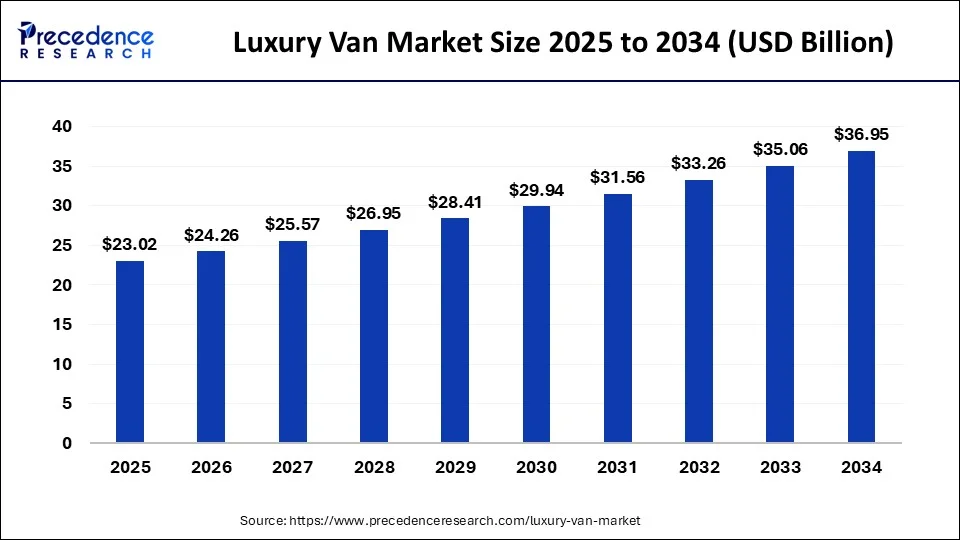
The global luxury van market size is calculated at USD 23.02 billion in 2025 and is predicted to increase from USD 24.26 billion in 2026 to approximately USD 38.78 billion by 2035, expanding at a CAGR of 5.35% from 2026 to 2035. The market for luxury vans has experienced growth due to increasing disposable income, technological innovations, easy rental, and subscription models.
Luxury Van Market Key Takeaways
- The global luxury van market was valued at USD 23.02 billion in 2025.
- It is projected to reach USD 38.78 billion by 2035.
- The luxury van market is expected to grow at a CAGR of 5.35% from 2026 to 2035.
- Asia Pacific held the largest share of the luxury van market in 2025.
- North America is expected to showcase notable growth in the market in the upcoming period.
- By seating capacity, the 7 to 8 segment accounted for the largest share of the market in 2025.
- By seating capacity, the 14 to 15 segment will register the fastest growth in the market during the forecast period.
- By end-use, the private segment dominated the global market in 2025.
- By end-use, the commercial segment is expected to grow significantly during the forecast period.
- By propulsion type, the ICE segment held the largest share of the market in 2025.
- By propulsion type, the electric segment is expected to grow significantly during the forecast period.
AI Impact on the Luxury Van Market
It can improve vehicle safety through intelligent driving assistance systems, improve the safety of the driver, improve the engine, and improve the fuel consumption rate. Smart vehicle Infotainment systems are sophisticated systems that guarantee and coordinate specially tailored entertainment and information for the driver and travelers. Regional languages are understood by car voice assistants, and they are used for playing music, directing directions, or changing temperatures.
Driver and passenger facets of automobiles controlled by voice assistant personal technologies are revolutionizing the connection people have with their cars. The introduction of advanced infotainment models, such as voice recognition, navigation systems, and integration with smartphones, will enhance the driving experience significantly.
Market Overview
A luxury van is a vehicle that has the characteristics of a business-use vehicle, as well as the style and features of a high-end car. For passengers, business, or recreational uses, luxury vans are a type of vehicle designed and built for transporting people. A luxury car is a car that offers above-average to high-end levels of comfort, features, and equipment. These luxury vehicles are traditionally linked with better-performing engines, innovation, and superior standard equipment. These vans' purposes include recreational use, travel, and touring, as well as commercial vehicles.
Luxury Van Market Growth Factors
- Rising disposable income: Increasing income leads to consumers spending more on luxury products.
- Innovations in technology: Improved safety and connectivity solutions give buyers new features in a car.
- Increasing rental and subscription options: Leasing and renting options are permitting people access to luxury vans without buying.
Market Scope
| Report Coverage | Details |
| Market Size by 2035 | USD 38.78 Billion |
| Market Size in 2025 | USD 23.02 Billion |
| Market Size in 2026 | USD 24.26 Billion |
| Market Growth Rate from 2026 to 2035 | CAGR of 5.35% |
| Largest Market | Asia Pacific |
| Base Year | 2025 |
| Forecast Period | 2026 to 2035 |
| Segments Covered | Seating Capacity, End-use, Propulsion Type, and Regions |
| Regions Covered | North America, Europe, Asia-Pacific, Latin America and Middle East & Africa |
Market Dynamics
Drivers
Increase in disposable income and development
Improving global economic situations and increasing per capita income, more consumers have the purchasing power to buy premium cars. This economic uplift is helping to drive the luxury van market as more individuals seek to invest in premium automotive options. The demands for luxury cars are dependent on consumers and are moved by consumers changing preferences by having higher disposable income. In the matured market of automobiles, the increase in the global income level and enhanced quality of life have resulted in the need for luxury vans.
Increasing demand for premium transportation
Luxury vans are characterized by high-end features such as high-quality interior parts, high technology, enhanced comfort, and elegant design. These vehicles provide an improved mode of transport and cater to affluent consumers. Increase in demand driven by rising disposable incomes, urbanization, and a desire for premium driving experiences. People in the higher classes of society are looking for elegance, comfort systems, and performance targets for their cars. These vans are fitted with elegant materials and the newest features that can be found on motor vehicles, providing large space as well as comfort.
Depending on the owner's specifications, luxury vans come with qualities like leather reclining seats, high-tech audio-video systems, Internet and cellular phone connections, and assorted mini-bars and can be converted to mobile living rooms or business places.
Restraint
High initial and maintenance cost
High initial and operating costs are major barriers for most people to purchase luxury vans. A drawback of these cars is that their purchase price tends to be considerably high, which limits their ability to afford them. Also included in the cost are insurance, repair, and maintenance, as well as any other additional services required periodically, which are extensive and hamper the growth of the luxury van market. Therefore, consumers may probably prefer the rental or subscription options so they can get the experience of the luxury property without buying.
Opportunity
Development of Luxury Van Rental and Subscription Model
Luxury van rental, leasing, and subscription services that let people rent cars and vans. As recreational activities, such as road trips, have been adopted, more consumers are increasing to the market in search of larger, comfortable automobiles. Luxury vans come with a solution that aims to satisfy the needs of families and groups of individuals in terms of transportation. However, services offered by these rental companies, such as one-touch pickup & drop and trained drivers, are making these services even more beneficial, which are provided by the rental owners and are also driving the luxury van market, as more consumers prefer to obtain convenient and high-quality services.
Segment Insights
Seating Capacity Insights
The 7 to 8 segment accounted for the largest share of the luxury van market in 2025. Lightweight and compact luxury vans are in high demand in the market. Due to their small size, they are very comfortable to navigate through traffic and require less space for parking. The 7-seater van is predominantly used by the tourism and hotel industries.
- In May 2024, Nissan introduced the Townstar Evalia EV to be a seven-seater car. The new model is the passenger car version of the Townstar EV electric panel van, which has been prepared for private use gaining high demand in the market.
The 14 to 15 segment will register the fastest growth in the luxury van market during the foreseeable period. These vans afford a seating complement of 14-15 persons, including the driver. Luxury vans are mainly used as passenger vehicles or business vehicles. On the global level, increasing income per capita, as well as elevation in living standards, is pressurizing the demand for luxury vans in the market.
- In August 2023, Stellantis introduced the Pro One commercial vehicle. The lineup of Pro One commercial vehicles will include vans, pickup trucks, and a micro-mobility option. The vehicles will be fully connected with software to maximize efficiency, reduce operating costs, and grow profitability for commercial customers.
Propulsion Type Insights
The ICE segment held the largest share of the luxury van market in 2025. Internal combustion engine (ICE) vehicles are frequently adopted by luxury vehicles and have been the standard engine technology for over a century. Conventional internal combustion engines provide very powerful and responsive performance and are thus appropriate for aggressive drivers. These include a high power-to-weight ratio, readily available fuel, and relatively cheap and easy to use. IC engines include combustion engines, which are applicable in all sectors, including mobility, energy, and manufacturing industries. These include vehicles such as cars, trucks, boats, motorcycles, and airplanes, besides generators, pumps, and compressors.
The electric segment is expected to grow significantly in the luxury van market during the forecast period. A shift towards sustainability, luxurious electric vans have recently emerged on the market. Some powerful electric models manufactured by automobile manufacturers resemble regular combustion engines in luxury and performance. The consumer's inclination towards sustainability, the innovation of improved battery technology and charging, and the growing demand for electric luxury cars are causing a growing demand for electric luxury cars. This inclination is driven by factors such as concerns about climate change, regulatory pressures for cleaner transportation, and the need for innovation. Introducing modern, sophisticated technology, superior style and design, and eco-friendly benefits.
- In March 2024, Mercedes Benz declared the introduction of its V-Class luxury vans into the U.S. by 2026. The new V-Class vans will feature all-electric drive propulsion blended with luxury.
- In April 2024, Mercedes-Benz is planning to launch a luxury electric van for the Chinese market based on its VAN.EA platform, the head of the carmaker's vans division told German magazine WirtschaftsWoche.
End-use Insights
The private segment dominated the global luxury van market in 2025. The enhancements in global wealth and the inclinations for individualized transportation solutions have significantly contributed to market expansion. A private vehicle is a personally owned vehicle used for individual transportation and has the benefits of flexibility, privacy, and convenience of the owner. The main customers are individual buyers or fleet operators who employ these vans primarily for leisure purposes, including recreational use, travel, and touring, or even as commercial supplies and distribution vehicles.
The commercial segment is expected to grow significantly in the luxury van market during the forecast period. A commercial luxury van is a vehicle that combines the capabilities of a commercial vehicle with the style and features of a car. They are usually applied for business or passenger-carrying purposes. Various industries such as tourism, transportation, entertainment, movies, and hotels are the major clients of luxury vans. The growth and development of the industrial sector can enhance the luxury van market all across the world.
Regional Insights
North America is expected to showcase notable growth in the luxury van market in the upcoming period due to enhanced consumer preference for high-end automobiles, rising disposable income, and leisure travel. The new technologies and the increasing number of market players drive the market. The transition to more premium, the demand for modern multipurpose vehicles, and improved standards of living. The established market players such as Mercedes-Benz, Ford, and Ram ramped up competition through the presentation of new models.
Asia Pacific held the largest share of the luxury van market in 2023. The continuous development in the technology field, growing popularity of recreational activities, increasing use of leisure activities, and increased disposable income in this region are creating demand for luxury vans. The rapid development in the electronics and IT industry, adoption of advanced technology, increasing manufacturing activities, and also the growing travel and tourism industry are backing the growth of the market. The surging urban population, growth in the industrial segment, emerging infrastructures, rise in the standard of living, and the escalated disposable income of people.
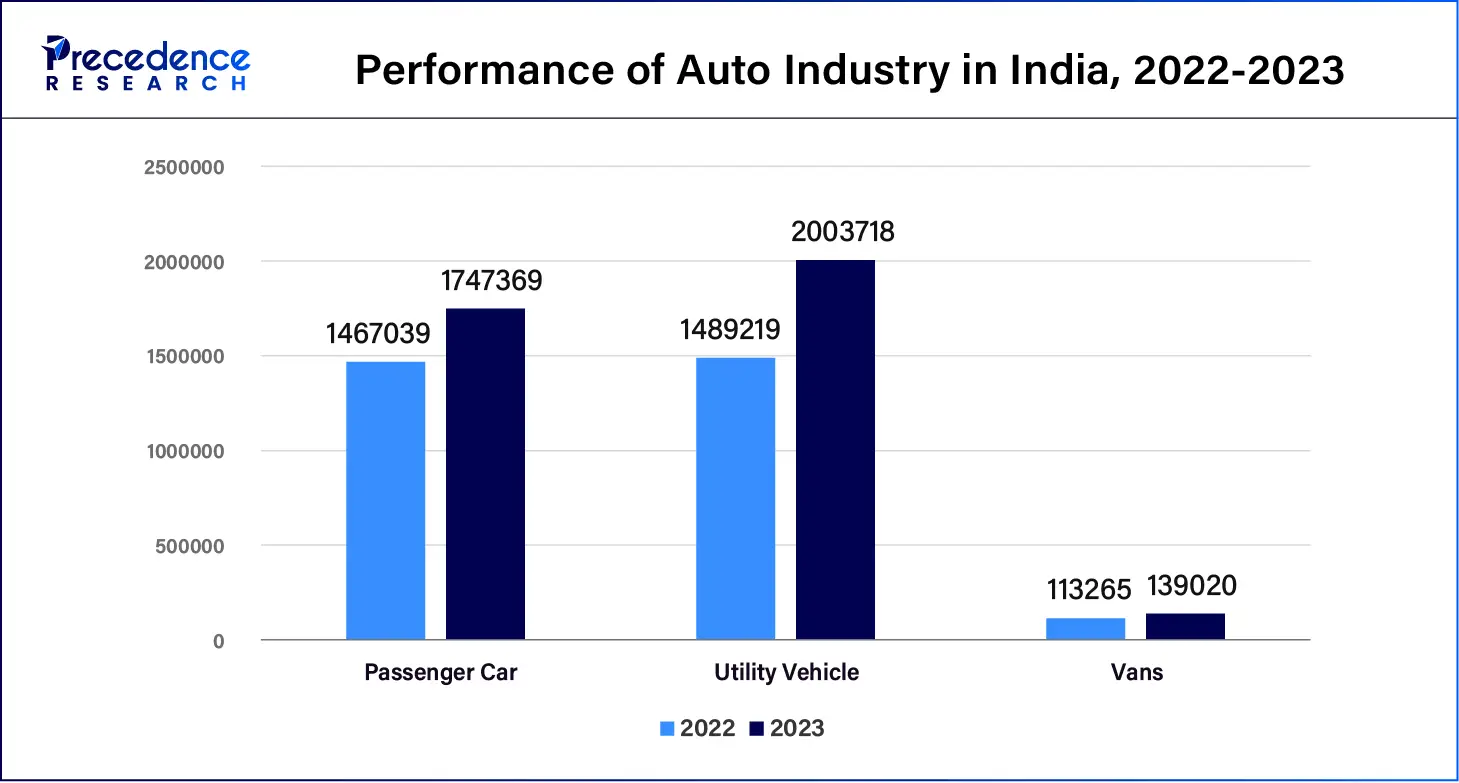
- According to the Society of Indian Automobile Manufacturers, total Passenger Vehicle Sales increased from 30,69,523 to 38,90,114 units. Sales of passenger cars also increased from 14,67,039 to 17,47,376, utility vehicles from 14,89,219 to 20,03,718, and vans from 1,13,265 to 1,39,020 units in FY-2022-23, compared to the previous year.
China Luxury Van Market Trends
China's market is also benefiting from the broader premium vehicle trend as rising disposable incomes and increased interest in upscale mobility solutions spur demand for high end vans and MPVs tailored to comfort and technology. Domestic tourism growth and supportive policies promoting recreational vehicle development are expanding opportunities for luxury vans used in travel and leisure applications.
U.S. Luxury Van Market Trends
The U.S. market is growing as demand rises for premium, comfortable, and spacious transport options. High-end features, advanced technology, and customization, along with electric powertrains, are driving adoption. Increasing disposable income and use in luxury travel and executive transport further support market growth.
Middle East & African Growing Luxury Van Industry
The Middle Eastern markets like the UAE and Saudi Arabia have high demand for highly customised luxury vans for VIP transport and private ownership, while Africa has a niche market for tourism and government fleets with gradual growth potential. Electric and customized luxury van options are also emerging due to sustainability goals and lifestyle preferences, even as Africa's adoption remains more limited and niche. However, regional economic and geopolitical uncertainties can influence demand and logistics for high end vehicles in the MEA automotive landscape.
Latin America: Increasing Luxury with Practicality
Latin America is experiencing slow growth in the luxury van sector owing to tourism, business travel, and the provision of transportation services for hotels. Some countries in this region, such as Brazil and Mexico, use luxury vans in airport transportation services and in arranging other events. Practicality and safety are essential factors that influence growth.
Middle East & Africa: Luxury Influenced by Affluence and Prestige
This region is experiencing rapid growth, and its rapid growth is mainly influenced by affluence in the area and the desire for luxurious travel. Luxury vans in this region are utilised in VIP transportation, tourism, and family vacations. Comfort is a vital factor influencing the growth of this market segment.
Supply Chain Analysis of the Luxury Van Market
- Raw Material Procurement (Steel, Plastic, Electronics): Raw materials such as steel, plastics, and electronics are procured on an international scale from raw material providers.
Major suppliers: ArcelorMittal, BASF, Intel - Manufacturing of Components (Engines, Transmissions, Etc.): Various components like engines, brakes, and transmissions are manufactured in different firms.
Major manufacturers: Bosch, ZF Friedrichshafen, Cummins - Assembling of Vehicles: The entire car is assembled after manufacturing all parts and adding the interior and electronics to it.
Major vehicle assembling firms: Mercedes-Benz, Toyota, Ford - Testing and Quality Assurance:Before delivering vehicles to clients, they are tested thoroughly for performance and safety.
Major testing agencies: TUV Rheinland, SGS - Vehicle Distribution to Dealers and OEMs: Completed cars are delivered to dealers and OEMs around the world.
Key players: DHL, Maersk - Wholesale Marketing and Financial Services: Vans are sold to consumers via dealers offering financial services such as financing and leasing.
Key players: BMW Financial Services, Ally Financial - Services After Sales: Maintenance and servicing services are provided post-sales.
Key players: Bosch Service, Michelin
Luxury Van Market Companies
- General Motors Company (GM): Products from GM include luxury vans that are mostly available through conversion and brand names such as Chevrolet. The vans have comfortable interiors and advanced safety systems, which make them perform excellently.
- Daimler: The Daimler company produces luxury vans through the brand name Mercedes-Benz. Examples include the Sprinter, which has an interior and advanced technologies that make it preferred by VIPs and hotels.
- Volkswagen Group: The company produces luxury vans under brand names such as the Multivan and Transporter. They are famous because of their luxurious interiors, modern design, and advanced infotainment system.
- Nissan Motor Company — Offers upscale MPVs such as the Nissan Elgrand with premium seating, infotainment, and comfort features aimed at the luxury people-mover segments in select global markets.
- Ford Motor — Produces the Ford Transit van lineup that serves as a base for luxury customizations with available high-end interiors, tech, and comfort options for executive and leisure travel.
- Becker Automotive Design — Specializes in bespoke luxury conversions of vans like the Mercedes-Benz Sprinter and other platforms, creating high-end VIP transports with custom interiors and premium amenities.
Other Major Key Players
- Hyundai Motor
- Honda Motor
- Thor Industries
- Renault
- Toyota Motor
Recent Developments
- In January 2026, Avis India launched a luxury van rental service for group travel, accommodating up to 25 passengers. The fleet included Mercedes-Benz V-Class, Toyota Vellfire, Kia Carnival, Toyota Coaster, and Toyota Commuter. It offered intracity and intercity travel with chauffeurs, booking support, and 24/7 customer service. (Source: https://www.autocarpro.in)
- In February 2024, the Kia auto company reported enhancements to its multi-utility car, the Kia Carnival. A new car model will be launched in the market by 2025 with all new powerful hybrid, enhanced designs, and new generation technologies. The company will also be offering an optional turbo-hybrid delivering 242 horsepower.
- In August 2023, the Lexus LM ultra-luxury van will debut in India for INR 1.2 crore. The Lexus LM, also known as the Luxury Mover, is designed like an aircraft, with 23 speakers for sound and a 48-inch television.
- In May 2022, Ram launched the Promaster Crew 2023 version of its model. The safety features of the 2023 version are parallel/perpendicular park assistance.
Segments Covered in the Report
By Seating Capacity
- 7 To 8
- 10 To 12
- 14 To 15
By End-use
- Private
- Commercial
By Propulsion Type
- ICE
- Electric
By Geography
- North America
- Asia Pacific
- Europe
- Latin America
- Middle East & Africa
For inquiries regarding discounts, bulk purchases, or customization requests, please contact us at sales@precedenceresearch.com
Frequently Asked Questions
Tags





Ask For Sample
No cookie-cutter, only authentic analysis – take the 1st step to become a Precedence Research client
 Get a Sample




 sales@precedenceresearch.com
 Schedule a Meeting
