



Medical Collagen Market Trends, Cost per Unit, Sales Volume, Recycling Rate, Export & Import Metrics, Adoption Rates, Pricing Strategies, Production Volume, and Logistics Efficiency
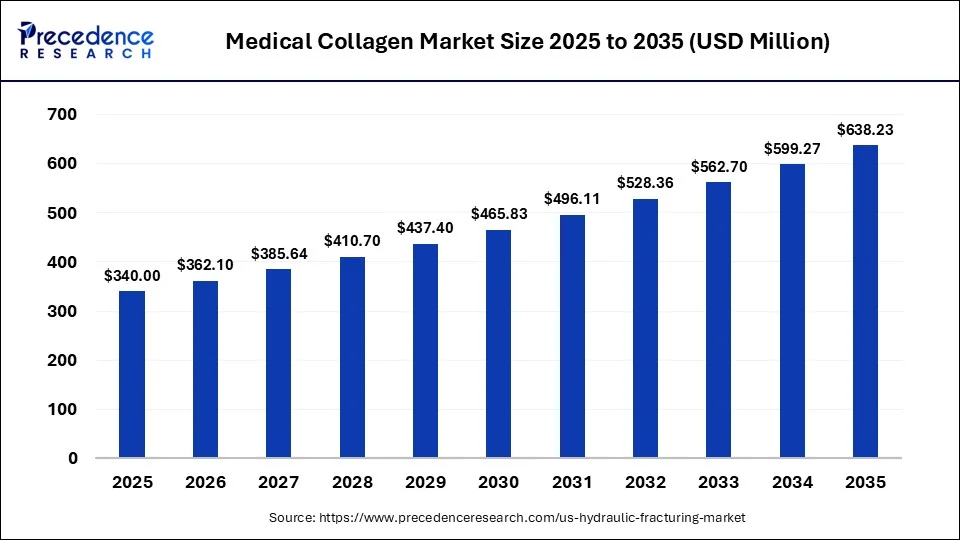
The medical collagen market reached USD 340 million in 2025. This value was calculated by our healthcare research analyst, Deepa Pandey. She researched biomaterials based on collagen and their applications in wound healing, tissue regeneration, surgical applications, and product innovation in healthcare. Her research is useful for medical product manufacturers, healthcare providers, biotechnology companies, and investors for competitive benchmarking and strategic decision-making.Â
Source: https://www.precedenceresearch.com/medical-collagen-market
 Get a Sample
 Table Of Content


Medical Collagen Market Growth, Demand, and Production Forecast
The medical collagen market is forecasted to expand from USD 362.10 million in 2026 to USD 638.23 million by 2035, growing at a CAGR of 6.5% from 2026 to 2035. Medical collagen is becoming increasingly significant for regenerative medicine and advanced healthcare applications. According to our primary researcher, Deepa Pandey, the rising demand for wound healing products, tissue engineering solutions, bone graft substitutes, and collagen-based surgical materials is bolstering growth in the industry.
Key Takeaways
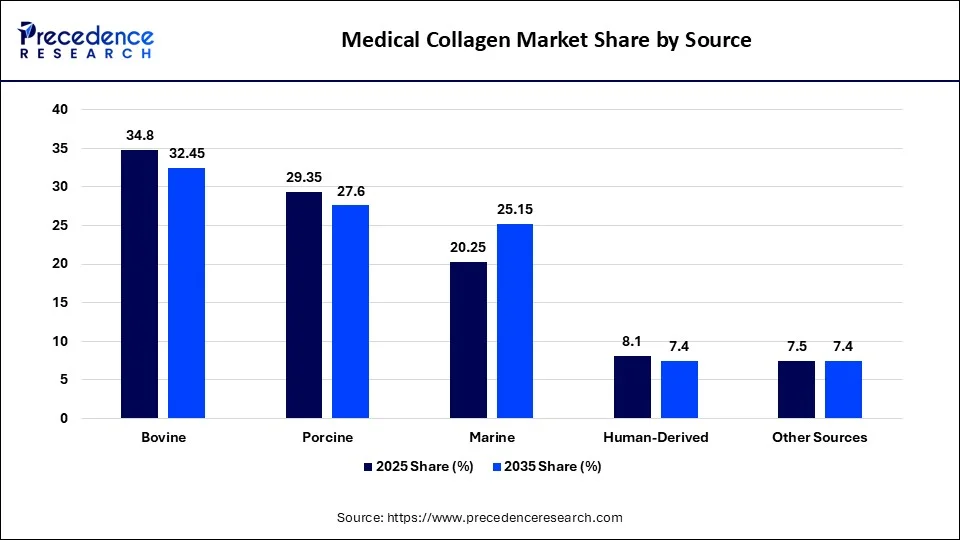
- By source, the acetaminophen-only products segment led the market with a share of 34.8% in 2025.
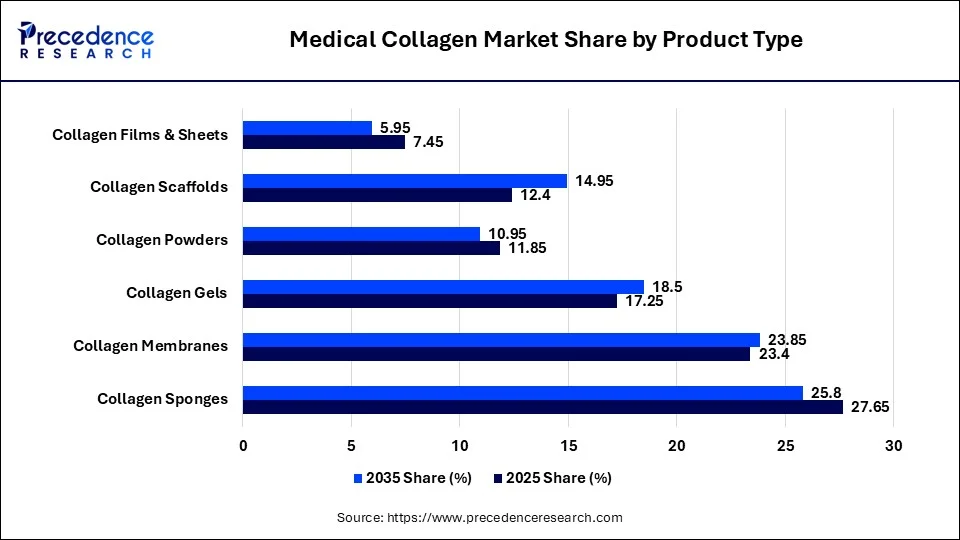
- By product type, the collagen sponges segment led the market with a 27.65% share in 2025.
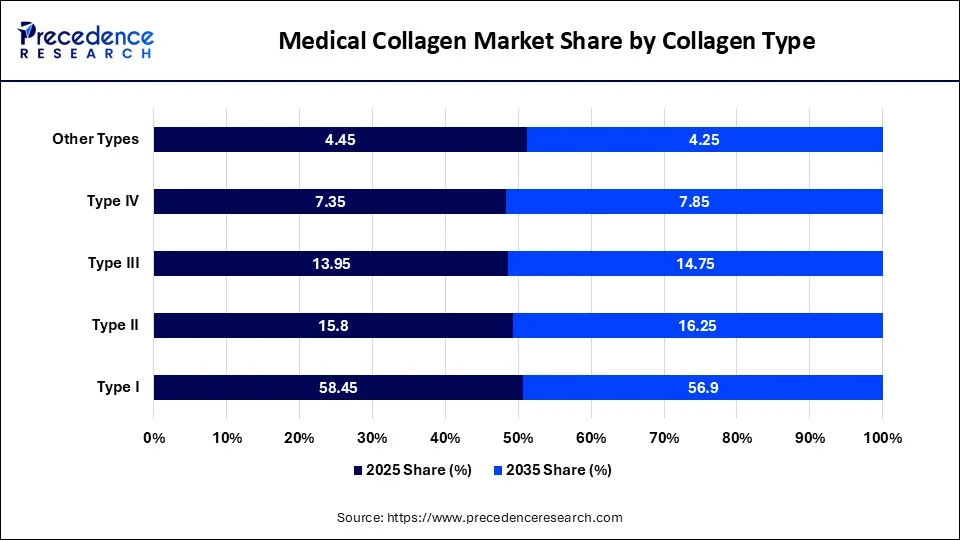
- By collagen type, the type I segment captured a major revenue share of 58.45% in 2025.
- By application, the wound care segment captured the largest market share of 32.85% in 2025.
- By end user, the hospitals segment led the market with a share of 44.25% in 2025.
- Collagen-based products contribute nearly 50% of Integra's business, with approximately 30% of total revenue generated by its Tissue Technologies segment.
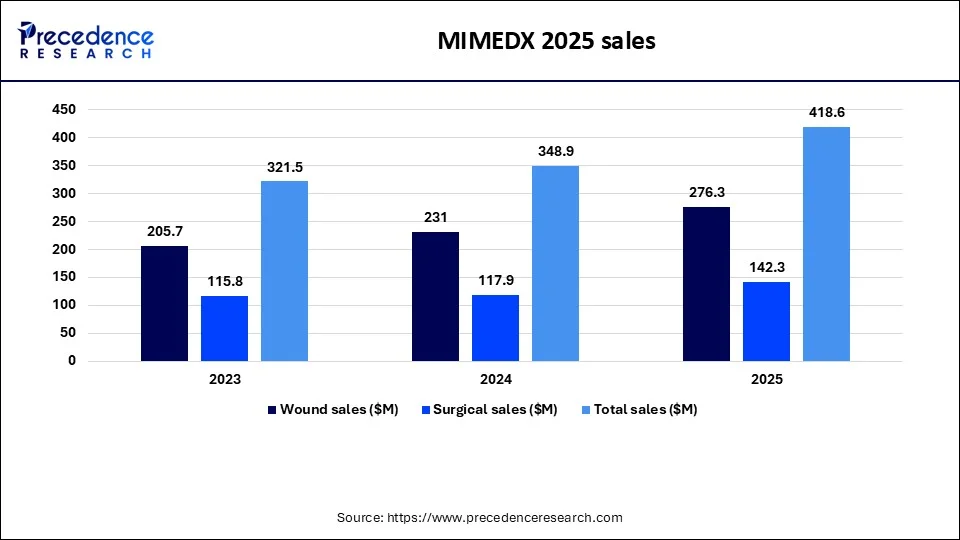
- MIMEDX achieved around 20% sales growth from 2024 to 2025, signaling accelerating demand across its wound care and surgical portfolios.
- Organogenesis has delivered consistent momentum, with advanced wound care revenue growing 17% in consecutive years.
- The launches of Winner Medical's collagen dressing and Maxigen Biotech's SurgiAid in October 2025 suggest strong market confidence in collagen-based wound care products.
- Chronic wound management and surgical hemostasis remain the primary growth drivers due to their essential, recurring clinical demand.
Market Overview
Medical collagen is used in advanced wound care, hemostasis, tissue engineering, bone regeneration, surgical repair, dental treatment, and drug delivery collagen-based biomaterials. Collagen is very valuable in applications designed to repair, regenerate, or support damaged tissue, as it is well-suited to the extracellular matrix, supports cell attachment, and is naturally biodegradable.
Additionally, regulatory developments in the last few years suggest that product activity will persist throughout the sector. With continuing innovations and commercialization in medical applications, the FDA classification of collagen-based absorbable hemostatic agents is Class III. Also, recent 510(k) clearance of collagen wound dressing products and collagen powder products in 2025 and 2026 demonstrates this.
Key Insight: With ongoing regulatory approvals and a growing number of clinical applications, the biomaterial is further solidified as a key component in advanced tissue repair and regenerative healthcare products.
1. Medical Collagen Market Growth Outlook
How Large Could the Medical Collagen Market Become By 2035?
Demand across products is not a driver of growth to be expected until 2035. It mirrors increased collagen applications in wound-management dressings, hemostats for surgical wound closure, regenerative scaffolds and bone and dental membranes. One of our senior researchers, Aman Singh, further interpreted that the spread across use cases is what ensures this sustained growth instead of rolling fluctuations. One clinical use case doesn't have to consistently grow to reach the 2035 figure.
Key Insight: Spreading demand across five or six clinical categories is the main reason this market's growth curve looks smooth rather than lumpy.
2. Why Is Medical Collagen Demand Increasing?
What are the main demand drivers for medical collagen?
| Demand Driver | Impact | Main Application | |
| Advanced wound care | Very High | Collagen dressings, matrices | |
| Chronic wound burden | Very High | Diabetic and vascular wounds | |
| Surgical hemostasis | Very High | Collagen sponges, powders | |
| Tissue engineering | Very High | Scaffolds, hydrogels | |
| Bone regeneration | High | Membranes, mineralized scaffolds | |
| Dental regeneration | High | Barrier membranes | |
| Regenerative medicine | Very High | Cell-support matrices | |
| Drug delivery | High | Hydrogels, microspheres | |
| Reconstructive surgery | High | Collagen matrices | |
| Sports medicine | High | Tendon, cartilage and tissue repair | |
| Recombinant collagen | High | Animal-free biomaterials | |
| 3D bioprinting | Emerging | Tissue-engineering scaffolds | |
Source: Precedence Research Database
Advanced wound care and the burden of chronic wounds have a very high-impact combination. Diabetic and vascular wound recurrence necessitates repeated dressing changes as opposed to a single treatment. Surgical hemostasis is also ranked very high. Collagen sponges/powders provide surgeons with a rapid and biologically absorbable solution to halt bleeding in areas where it is too difficult to use sutures or cauterization.
This trend is supported by reviews in NIH and PubMed, which describe the structure of collagen as porous and biodegradable in such a way that it allows cells to adhere, migrate, and differentiate. This makes collagen a key material for tissue engineering, and a topic that continually rises to the forefront of research.
Key Insight: Chronic wound burden and surgical hemostasis remain the two highest-impact drivers because both represent recurring, unavoidable clinical need rather than elective demand.
3. Market Share by Source
Source: Precedence Research Database
This category is dominated by bovine collagen, and although the share of bovine collagen is experiencing a slight drop of 5.80% CAGR, it increases to 34.80% in 2025. Marine collagen is moving into the lead, rising from 20.25% market share in 2025 to 25.15% in 2035 with an 8.85% CAGR, as it avoids the worrying mammalian disease transmission risks and is able to leverage a steady stream of fish-processing by-products that would otherwise be disposable.
We believe that aside from being a non-mammalian source, marine collagen offers better acceptance in markets where livestock-derived collagen is proscribed for religious and/or cultural reasons. On the other hand, marine collagen has significant challenges, especially in terms of mechanical strength and consistency of purification and passage to clinical translation.
Key Insight: The most notable appeal of marine collagen is its 8.85% growth anticipation, approximately three points higher than bovine and porcine collagen growth, owing to the variations in its source, not cost.
4. Medical Collagen Source Intelligence
What differentiates the major collagen sources?
| Source | Major Advantages | Major Challenges | Typical Medical Opportunity |
| Bovine | Established supply, strong clinical history | Animal-origin concerns | Wound care, hemostasis |
| Porcine | Established biomaterial platform | Religious/cultural restrictions | Wound care, membranes |
| Marine | Alternative source, high growth potential | Processing and mechanical properties | Regenerative biomaterials |
| Human-derived | High biological compatibility | Supply, processing, regulation | Tissue replacement |
| Recombinant | Potentially consistent and animal-free | Cost and manufacturing complexity | Advanced scaffolds |
| Advanced scaffolds | Diversification | Limited clinical history | R&D and niche applications |
Source: Precedence Research Database
Bovine collagen has a proven clinical track record and a supply chain. That makes it a great choice for wound care and hemostasis. In addition to its superior processing and mechanical property issues that hinder current load-bearing applications. Marine collagen is most important for its small size. It still has tremendous upside potential. Biotech brands are more focused on research and development for recombinant collagen owing to its ability to provide a stable supply of collagen without the use of animals.
Key Insight: Bovine collagen remains the current industry standard due to its proven performance and established supply chain, while recombinant collagen is emerging as a high-growth innovation driven by sustainable, animal-free production and long-term scalability.
5. Market Share by Product Type
Source: Precedence Research Database
Collagen sponges continue to be the largest share of the category, with the lowest rate of 5.75% CAGR, dropping to a still sizeable 25.80% in 2035. The biggest riser in the category, at an 8.55% compound annual growth rate, is collagen scaffolds. They provide a temporary extracellular-matrix-like structure that supports far more advanced tissue-engineering work than a simple dressing can.
Key Insight: The product mix is shifting to engineered tissue support, and collagen scaffolds are expected to grow at 8.55% CAGR versus sponges, which are projected to grow at 5.75%.
6. Market Share by Collagen Type
Source: Precedence Research Database
Type I collagen dominates this segment with 58.45% market share in 2025. It is projected to retain the same dominance with 56.90% by 2035 at a CAGR of 6.2%, maintaining its position. Type I is the structural backbone of the skin, bone, tendon, and connective tissue throughout the body. Type IV, the smallest-defined category, expands by 7.35% to 7.85% at 7.20%, closely related to basement-membrane structures in specialized tissue work.
Key Insight: The near 60% portion of Type 1 is directly related to anatomy because it is the most abundant structural collagen in the tissues this market is designed to impact.
7. Market Share by Application
Source: Precedence Research Database
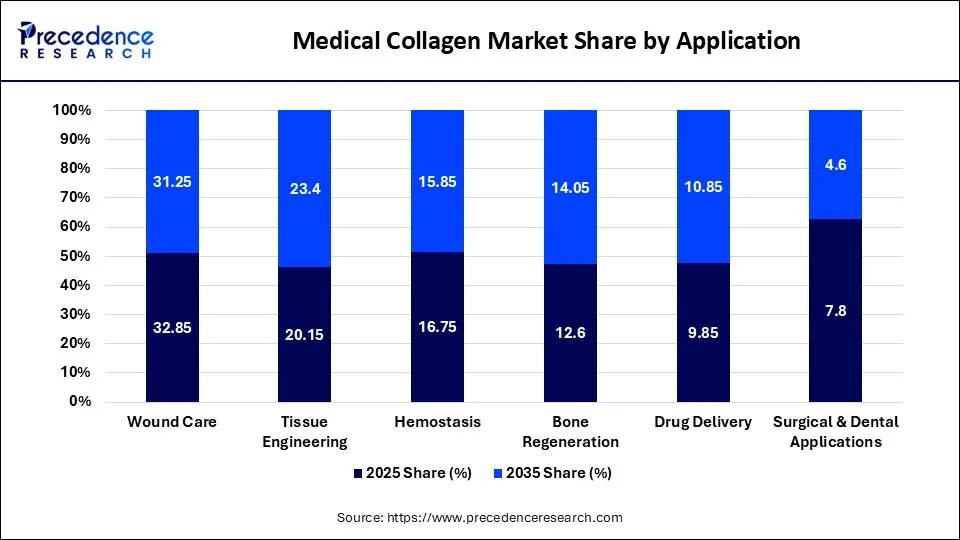
Wound care holds the largest market share of around 32.85% in 2025, although slowing to a 5.95% CAGR, the lowest of the big four applications. This growth will come from increasingly more engineered use of the same biomaterial in wound care (31.25% share in 2035). The trendsetter is tissue engineering, rising by 8.15% CAGR, from 20.15% to 23.40%, as a result of the same push seen in cell-loaded scaffolds and injectable hydrogels research.
Collagen's 8.15% CAGR is a testament to the fundamental change in the way the product is being used. Rather than merely shifting from traditional wound products to engineered biomaterials like cell-loaded scaffolds, injectable gels, mineralized collagen, and growth factor delivery systems. Collagen scaffolds are increasingly being seen as a tool to be used in tissue engineering for a variety of different organs, and not just as a wound product.
Key Insight: Surgical and dental growth was the lowest at 1.90%, indicating that new synthetic materials are creating real competition and being dislodged.
8. Wound Care Creates the Largest Commercial Base
Wound care has already achieved the status of being the largest application in the supplied market model, reflected in physical formats ranging from collagen-containing dressings, powders, sponges, sheets, matrices, and hydrogels that pushed the commercial pipeline back as well. The merit of MIMEDX's new product, Hydrelix Collagen Matrix, may be that it is a Type I collagen-based powder that can be used in multiple applications, such as pressure ulcers, venous stasis ulcers, diabetic ulcers, burns, traumatic wounds, and surgical wounds.
Key Insight: A single approved product covering six distinct wound categories is a strong sign of how commercially entrenched collagen wound care has become.
9. FDA Regulatory Activity Shows Active Product Development
Recent FDA collagen-related device activity
Source: Precedence Research Database
In October 2025, two products in the same wound dressing product class cleared simultaneously. Winner Medical's collagen dressing and Maxigen Biotech's SurgiAid collagen dressing, indicating that two different manufacturers saw the same time as the perfect window for this form of product to launch. It's worth noting that Roosin Medical received two separate clearances in June 2026. This is a collagen dressing and a collagen powder, suggesting a strategy of developing a multiple-format product line rather than relying on just one format.
Key Insight: The four different manufacturers releasing new collagen wound products in a span of just about nine months is clear proof that it's still a very active period for expanding the regulated device pathway.
10. FDA Classification of Collagen Hemostats
Collagen-based absorbable hemostatic agents are under the jurisdiction of FDA regulation 878.449 and fall into the highest category of scrutiny, Class III devices. They are intended to be used in situations where traditional techniques to control bleeding are not feasible or effective. That classification matters commercially because it creates a distinct, higher-barrier regulatory segment that spans general surgery, cardiovascular surgery, neurosurgery, trauma, and oncology surgery all at once. Rather than treating collagen hemostats as a simple accessory product.
Key Insight: The high defensibility of collagen hemostats compared to other wound products with lower classifications is attributable to their status as Class III products.
11. Market Share by End User
Source: Precedence Research Database
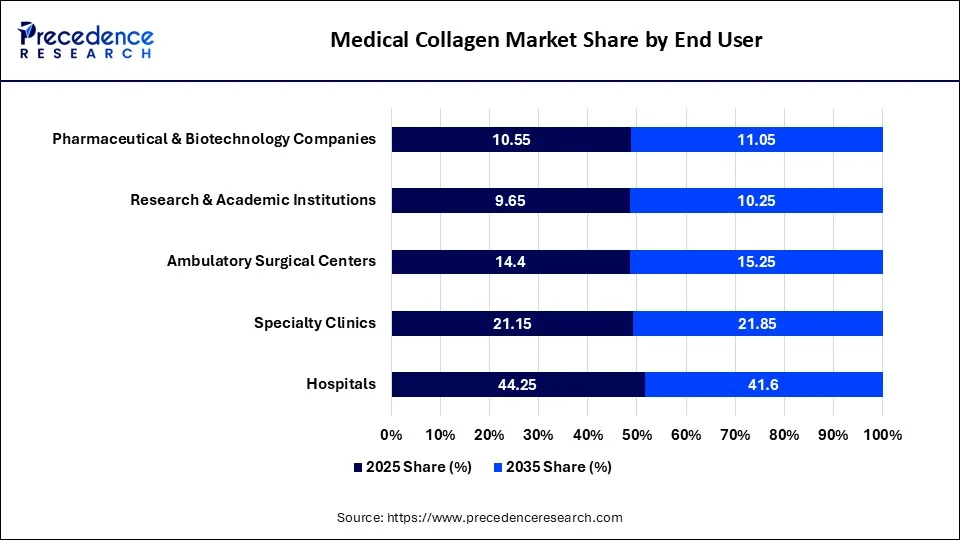
Hospitals dominate this segment with a 44.25% market share in 2025. This will be dominant even in 2035 with a market share of 41.6%, expanding at a CAGR of 5.85%, driven by collagen products used in wound management, surgical hemostasis, and reconstructive procedures that overwhelmingly take place in hospitals. Research and academic institutions grow at their fastest rate, from 9.65% to 10.25%, indicating the amount of activity in collagen research outside of commercial manufacturing.
Key Insight: Collagen is solidly positioned as a research base, not just a finished clinical product, according to research institutions, which posted the highest CAGR (7.15%) among all end users.
12. Company Landscape
Which companies are active in medical collagen and adjacent biomaterials?
| Company | Major Collagen/Biomaterial Focus | Primary Application |
| Integra LifeSciences | Collagen technology, wound reconstruction, hemostats | Wound care, reconstruction, surgery |
| BD | Avitene collagen hemostats | Surgical hemostasis |
| MIMEDX | Hydrelix Type I collagen, HELIOGEN Type I/III collagen | Wound care, surgery |
| Organogenesis | Regenerative medicine and wound-care biomaterials | Advanced wound care |
| Collagen Matrix | Bovine collagen matrices, dressings | Wound care, dental, surgery |
| Aroa Biosurgery | ECM biomaterials | Wound care, reconstruction |
| Smith+Nephew | Advanced wound management | Wound care |
| Stryker | Surgical biomaterials and regenerative technologies | Surgery, orthopedics |
| Winner Medical | Collagen wound dressings | Wound management |
| Maxigen Biotech | Collagen wound dressings | Wound care |
Source: Precedence Research Database
This market is competitive, with four core competitive companies. Integra LifeSciences has the most egregious spread in the collagen area. With Heinrich's wound reconstruction business and the hemostats area being two other areas the company has exposure to, it's not just about one application or field.
Avitene collagen hemostat line is the sole engine of BD's success, and it's a small but strong business within surgical hemostasis overall. MIMEDX expanded its product lines with two distinct products. Including a Type I/III collagen product line (HelioGen) and a Type I collagen product line (Hydrelix) to stand with an even stronger position in both wound care and in surgeries rather than in one niche.
Key insight: Collagen Matrix's fully collagen-dedicated portfolio makes it the cleanest read on pure collagen demand, since most larger peers blend collagen revenue into broader business lines.
13. Integra LifeSciences: Important Collagen Technology Player
Source: Precedence Research Database
Integra's relationship with collagen technology dates back to the company's inception, originating from a technology platform to acquired for engineered collagen technology in tissue repair and wound regeneration. The company has since broadened its scope of product development for burns, deep tissue wounds, dura mater, nerves, tendons, and advanced wound care.
Collagen-adjacent technology was a smaller part of a large surgical business, reaching an estimated USD 1.635 billion, with Codman Specialty Surgical accounting for USD 1.201 billion, by far the biggest single contributor. Furthermore, the U.S. revenue of USD 1.205 billion proved the U.S. market was Integra's main source of revenue, ahead of Europe and Asia Pacific combined.
Key Insight: Collagen-related activity accounts for approximately half of Integra's total business, with the bulk, about 30 % of the company's revenue coming from its Tissue Technologies division.
14. BD: Collagen Hemostasis
BD's Avitene portfolio is a noticeable single-brand case for collagen in hemostasis. The range is from microfibrillar collagen flour, collagen sheets, the UltraFoam collagen sponge, to EndoAvitene and SyringeAvitene, two different physical formats from the same base product. The bovine collagen in Avitene, says BD, is 100% collagen and activates platelets and facilitates the formation of fibrin, not merely serving as a barrier. The company also states the portfolio has been in clinical use for more than 40 years, a track record that matters heavily in hemostasis, where surgeons tend to stick with products that have a long history of predictable performance.
Key Insight: One collagen-based brand that has been clinically used for over 4 decades is a good indicator of the robustness of collagen hemostats' place in routine surgical practice.
15. MIMEDX: Collagen Expansion in Wound and Surgical Products
Source: Precedence Research Database
MIMEDX is relevant here since its business has grown beyond just placental biologics to collagen-based products exclusively. It makes a HELIOGEN product that consists of a mixture of Type I and Type III collagen for wound management. Also sterile Type I Bovine collagen in powder form (Hydrelix) for wound management and minimal bleeding.
Our senior research analyst, Aman Singh, stated that, in financial terms, total sales increased from 348.9 million dollars in 2024 to 418.6 million dollars in 2025. Due to the increase in wound sales, which went up to 276.3 million dollars. In 2025, surgical sales totaled 142.3 million dollars, an increase from the previous year's figure of 117.9 million dollars.
Key Insight: MIMEDX's total sales climbing roughly 20% between 2024 and 2025 shows genuine acceleration, not just steady maintenance growth, in its wound and surgical product lines.
16. Organogenesis: Advanced Wound Care Demand
Organogenesis revenue trend
Source: Precedence Research Database
Organogenesis' net product revenue was $563 million, an increase of 17% year over year, with advanced wound care accounting for $531.2 million, 17% higher, and surgical and sports medicine a small increase of $31.8 million. Over the three years, advanced wound care revenue rose year-on-year in a double-digit fashion from 405.5 million dollars in 2023 to 453.6 million dollars in 2024.
Expected to reach $531.2 million in 2025, with no one year dominating, yet year-on-year growth of 10% or more. The figures are for Organogenesis's overall product lines and do not just mean medical collagen gained from sales. They are a good indicator of the pace of growth of demand in the adjacent customer base of advanced wound-care and regenerative-medicine solutions that collagen products are helping to grow.
Key Insight: The increase has been steady, and advanced wound care revenue has jumped 17 % in back-to-back years, demonstrating organogenesis' sustained growth.
17. Collagen Matrix: Dedicated Collagen Manufacturer
Collagen Matrix stands out because its entire product line is built directly around collagen-based medical products rather than sitting inside a broader portfolio. The two that are currently active entries in FDA's device database are Bovine Dermis Collagen Dermal Matrix and Fibrillar Collagen Wound Dressing, and an oral collagen wound dressing. The Bovine Dermis Collagen Dermal Matrix was filed in December 2024 and was found substantially equivalent, indicating that it's a fairly recent addition to the company's portfolio of cleared products.
Key Insight: A business with a regulatory background history in collagen in particular makes Collagen Matrix the direct Supply Chain likeliest to indicate collagen demand among the companies dealt with in this post.
18. Recent Product Development Indicates Pipeline Expansion
What recent regulatory activity says about the market
Source: Precedence Research Database
The bovine dermis collagen matrix clearance was launched by Collagen Matrix in 2024. The launch of the collagen wound dressing by Winner Medical and SurgiAid by Maxigen Biotech, around the same time in the same year (2025), indicates that products were launched around the same time by similar competitors. In 2026, Roosin Medical submitted two separate clearances, such as a dressing and a powder, and Ventris Medical followed with a collagen wound powder of its own. Furthermore, four different businesses have launched their collagen products in the space of approximately 18 months, not just a single product category.
Key Insight: The 4 new collagen packings that have been filed within 18 months illustrate that powder, dressing, and matrix or membrane collagen are all being pushed in business development.
19. Market Share by Region
Source: Precedence Research Database
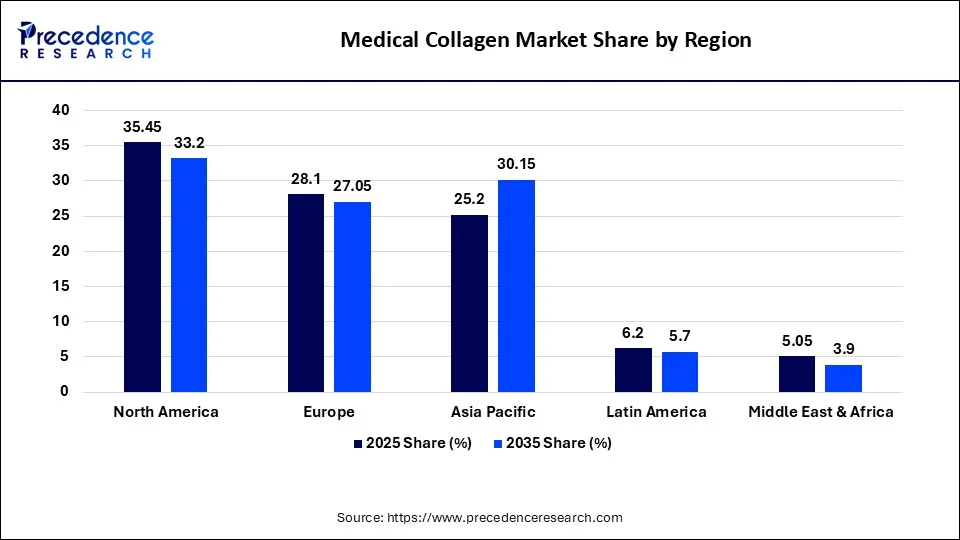
North America will account for 35.45% of the market in 2025 and fall to 33.20%, through a 5.80% CAGR. Regional markets earlier in healthcare-infrastructure build-out will drive growth in this region. Asia Pacific has had a significant influence on the region's outlier growth, from 25.20% in 2025 to 30.15% in 2035 with an 8.25% CAGR, outpaced by all other regions as the number of surgeries and expanding healthcare infrastructure increased.
Besides the clinical demand, Asia Pacific is also turning into a true manufacturing and sourcing epicenter for marine-based and animal-based biomaterials, further reducing the costs of their inputs, which consequently enables the region to be an attractive market for such products to be adopted sooner, says Aman Singh, Senior Research Analyst.
Key Insight: The most obvious regional trend in this entire data set is that in Asia Pacific, sales growth reached 8.25%, compared with 5.80% in North America.
20. Government and Clinical Demand Indicators
What external healthcare data support the market opportunity?
| Indicator | Reported Data/Signal | Market Relevance |
| FDA collagen hemostat classification | Class III | High regulatory barrier |
| FDA collagen wound dressing activity | Multiple recent 510(k) decisions | Active product pipeline |
| FDA collagen powder activity | 2026 510(k) decision | Product-form diversification |
| Surgical hemostasis | Established collagen-device category | Mature application |
| Chronic wound management | Major advanced wound-care use | Large clinical need |
| Diabetes-related wounds | Major wound-care driver | Recurring demand |
| Tissue engineering | Expanding research field | High-growth opportunity |
| Bone regeneration | Active collagen scaffold research | High-growth opportunity |
| Recombinant collagen | Active biomedical research | Emerging technology |
| 3D collagen biomaterials | Increasing research activity | Long-term opportunity |
Source: Precedence Research Database
The FDA's Class III classification for collagen hemostats and various items gaining certification after certification for wound dressings and wound powders in recent years. The introduction of these products into the market is not as difficult as it could be, given the regulatory hurdle that has slowed down new entrants. They have shown the product pipeline to be active.
Chronic wound management, especially for diabetes-related wounds, occurs as a recurring event throughout a patient's life and is a large, constant clinical need, the kind that can sustain a steady long-term revenue stream. The next big articles on commercialization of collagen scaffolds are likely to appear in tissue engineering and bone regeneration, both of which are growing fields, and have numerous products using the collagen scaffold coming to market.
Key Insight: With the combination of a regulatory barrier of Class III and an active 510(k) pipeline, it is an unusual combination of high entry cost and high new-product activity occurring simultaneously.
21. Medical Collagen Technology Stack
Raw Collagen
Medical collagen is usually sourced from animal tissues like bovine (cow) or porcine (pig) tissues, and recombinant sources are emerging for specialized applications. The starting material has collagen structures that should be processed with caution for medical use.
Purification/Extraction
This is because extraction involves separating collagen from the tissue and getting rid of unwanted proteins, fats, and cellular components from the source tissue. Extensive research is conducted on processing parameters to ensure the collagen structure is maintained. This is maintained while ensuring high purity of collagen, which is required for the medical applications in question.
Cross-linking/Modification
The native collagen possesses beneficial biomass characteristics and correspondingly low mechanical robustness and structural stability. Cross-linking, which changes the network of collagen, makes it more resistant to degradation and helps maintain its form while using it.
Material Engineering
Material engineering is the design of purified or modified collagen in a way that is appropriate for the medical needs. Various parameters, including pore size, thickness, density, flexibility, degradation behavior, and surface characteristics. These can be controlled by the manufacturer during this step.
Final Product
The synthesized collagen product is transformed into a final medical product tailored to a specific procedure or medical application. These include flexible wound dressings and hemostatic sponges, membranes, injectable gels, scaffolds, and drug delivery systems. This product-level customization helps collagen technology be used for a wide variety of medical applications, instead of being a standardized product.
22. Key Technical Challenges
What limits wider medical collagen adoption?
| Challenge | Impact | Market Response |
| Low mechanical strength | High | Cross-linking |
| Rapid enzymatic degradation | High | Chemical modification |
| Animal-source concerns | High | Recombinant collagen |
| Immunogenicity | Moderate-High | Purification/processing |
| Batch variability | High | Process standardization |
| Sterilization challenges | High | Improved processing |
| High manufacturing cost | High | Scale-up |
| Regulatory complexity | High | Clinical evidence |
| Source availability | Moderate | Marine/recombinant alternatives |
| Long-term implant stability | High | Composite scaffolds |
Source: Precedence Research Database
Low mechanical strength and rapid enzymatic degradation both rank high. They want both to be slowed and/or to impart some rigidity or stability to collagen, which is the primary reaction of the market. The animal source is also high on the agenda, leading to continued investment in recombinant collagen as an animal-free option. The industry's answer to inconsistencies in manufacturing has been to have tighter process standardization and better processing techniques. Rather than a single solution, for batch variability and sterilisation challenges, as well as for the others rejected, both of which relate to consistency in manufacturing.
Key Insight: Cross-linking and recombinant sourcing keep appearing as the two most common responses across an otherwise long list of technical limitations.
23. Recombinant Human Collagen - Strategic Opportunity
Why are companies and researchers interested?
| Advantage | Commercial Implication |
| Animal-free production | Addresses source concerns |
| Consistent composition | Better batch control |
| Controlled sequence | Product engineering |
| Lower pathogen concerns | Potential safety advantage |
| Customizable properties | Advanced biomaterials |
| Compatible with tissue engineering | Regenerative medicine |
| Potential 3D-printing integration | Future manufacturing |
Source: Precedence Research Database
Animal-free production directly tackles the source concerns in some markets for bovine and porcine collagen. They maintain a constant composition provides much more batch control than naturally sourced collagen. Low pathogen concerns complete the picture and provide a potential safety benefit that is of great importance in regulatory evaluation. Lower pathogen concerns round out the case, offering a potential safety advantage that matters heavily in regulatory review.
Key Insight: Recombinant collagen's appeal rests almost entirely on consistency and safety advantages, while cost and manufacturing scale remain the two unresolved barriers to wider adoption.
24. Buyer Intelligence - Who Buys Medical Collagen Products?
| Buyer | Main Products Purchased | Main Application |
| Hospitals | Sponges, hemostats, matrices | Surgery, wound care |
| Specialty wound centers | Dressings, matrices, powders | Chronic wounds |
| Dental clinics | Membranes, graft materials | Periodontal/bone regeneration |
| Orthopedic centers | Scaffolds, membranes | Bone/cartilage repair |
| ASCs | Hemostats, wound products | Surgery |
| Plastic surgery centers | Matrices, sheets | Reconstruction |
| Research institutions | Collagen powders, gels, scaffolds | R&D |
| Universities | Research-grade collagen | Tissue engineering |
| Biotech companies | Scaffolds, hydrogels | Regenerative medicine |
| Pharmaceutical companies | Delivery matrices | Drug delivery |
Source: Precedence Research Database
The sponges and hemostats/matrices sold in surgical and/or wound care applications are the most diverse product format in the hospital market. They are the highest volume buyers by product type for the majority of other product formats. Specialty wound centers have a very specific focus on wound dressings, matrices, and powders for chronic wound care, showing they focus on products made specifically for managing chronic wounds, not one-time products that are purchased. Collagen powders, gels, scaffolds, and research-grade material contribute to the demand for collagen, which is equally driven by research institutions and universities, further contributing to the tissue-engineering growth that is visible in the application data.
Key Insight: Hospital and specialty wound centers comprise the two largest buyer categories by volume and by repeat purchases for this entire buyer table.
25. Buyer Intelligence - Which Departments Influence Purchasing?
| Buyer Function | Primary Decision |
| Surgeons | Clinical performance |
| Wound-care specialists | Healing performance |
| Hospital procurement | Price and supply |
| Materials management | Inventory |
| Pharmacy / medical supply | Product availability |
| Biomedical engineering | Device compatibility |
| R&D | Biomaterial performance |
| Regulatory affairs | Compliance |
| Quality assurance | Manufacturing consistency |
| Reimbursement teams | Coverage economics |
| Dental specialists | Membrane/scaffold performance |
| Orthopedic specialists | Mechanical and regenerative performance |
Source: Precedence Research Database
Surgeons and wound-care specialists base all purchases on clinical performance and healing properties, with product efficacy data gaining greater importance for these professionals than price, whereas price, reliability of supplies, and materials management are the priorities of hospital procurement and materials management. They are very different sets of priorities in parallel in the same shop. Compliance plus manufacturing consistency is the regulatory affairs and quality assurance function. A product must pass through before the clinical, manufacturing, or procurement team gets involved with the product.
Key Insight: Inside the hospital, clinical performance and the reimbursement economics create virtually separate purchasing filters, and a product must pass both.
26. Buyer Intelligence - What Factors Matter Most?
| Selection Criterion | Importance |
| Clinical evidence | Very High |
| Safety profile | Very High |
| Regulatory clearance | Very High |
| Healing performance | Very High |
| Hemostatic effectiveness | Very High |
| Source traceability | High |
| Sterility assurance | Very High |
| Product consistency | Very High |
| Ease of handling | High |
| Storage requirements | High |
| Shelf life | High |
| Price per procedure | High |
| Reimbursement | Very High |
| Supplier reliability | High |
| Product portfolio breadth | High |
Source: Precedence Research Database
Clinical evidence, safety profile, regulatory clearance, healing performance, and hemostatic effectiveness all carry very high importance.
Coverage/economics is again a strong component, as seen in the department-level buying figures, with reimbursement at very high importance. By contrast, the price per procedure is about average, which indicates that no buyer of pricey-to-expensive products is buying a collagen product that hasn't been clinically proven. They are willing to pay for, and that they are keen to pay for, the only collagen product that has been clinically proven.
Key Insight: Price ranking below clinical evidence and safety in importance is the clearest sign that collagen procurement is driven by outcomes first and cost second.
27. Buyer Intelligence - Emerging Commercial Demand
| Buyer Need | Growth Opportunity |
| Faster wound closure | Collagen matrices |
| Chronic wound management | Collagen powders/dressings |
| Better surgical hemostasis | Collagen sponges |
| Bone regeneration | Mineralized collagen |
| Dental regeneration | Collagen membranes |
| Cell delivery | Collagen scaffolds |
| Growth-factor delivery | Collagen hydrogels |
| Animal-free biomaterials | Recombinant collagen |
| 3D tissue fabrication | Bioinks |
| Personalized regeneration | Engineered scaffolds |
| Reduced operating time | Ready-to-use products |
| Reduced product handling | Preformed matrices |
Source: Precedence Research Database
Accelerated wound closure is expected to maintain collagen matrices as a top-tailored product category. Also, chronic wound management continues to be an ongoing, repeat-purchase category of collagen powders and dressings. Both features would indicate a trend in bone regeneration toward more specialized and application-specific collagen-based products. This is like the trend in dental regeneration toward collagen membranes that have more specific applications. Additionally, there are animal-based biomaterials, with recombinant collagen emerging as the latest response to that purchaser convenience.
Key Insight: Bone and dental regeneration are both seeking very specific collagen formats, as consumers tend to look more at the clinical application than with a focus on just the product type.
28. Competitive Positioning
How major companies are positioned
| Company | Wound Care | Hemostasis | Regenerative Biomaterials | Collagen-Specific Relevance |
| Integra | Very High | High | Very High | Very High |
| BD | Moderate | Very High | Moderate | Very High |
| MIMEDX | Very High | Moderate | High | High |
| Organogenesis | Very High | Low | High | Moderate |
| Collagen Matrix | High | Moderate | High | Very High |
| Aroa Biosurgery | Very High | Moderate | High | Moderate |
| Winner Medical | High | Moderate | Moderate | High |
| Maxigen Biotech | High | Moderate | Moderate | High |
| Roosin Medical | High | Moderate | Moderate | High |
| Ventris Medical | High | Low-Moderate | Emerging | High |
Source: Precedence Research Database
Integra ranks very high across wound care, regenerative biomaterials, and collagen-specific relevance all at once, giving it the broadest genuine strength of any company in the table rather than a narrow specialty. Consistency has been another strength of Collagen Matrix, with high or very high ratings in each and every category, with a completely collagen-based business model. Ventris Medical is one of the newer firms on the table and possesses not so much established strength in the field of regenerative biomaterials, but new strength as well, as such.
Key Insight: Integra's very high rating across all three clinical categories at once makes it the only company in this table without a clear structural weak point.
29. Key Companies to Watch
Integra LifeSciences
Integra LifeSciences remains an important company to watch because of its long-standing engineered-collagen capabilities and sizeable Tissue Technologies business. With 2025 revenue of $434.7 million, the segment underscores the company's proven track record in collagen biomedical technologies and regenerative products.
BD
The Avitene product suite is a key pillar in the surgical hemostasis segment of the collagen market in which BD has a strong presence. The spectrum spans from microfibrillar collagen flour and sheets to some sponges and various delivery systems. This allows the firm to gain exposure in a range of surgical areas where they need speedy bleeding management.
MIMEDX
With its strong product portfolio in the field of wound care and surgery, MIMEDX is becoming increasingly prominent in the collagen market with its HELIOGEN and Hydrelix products. The company's emphasis on biomaterial products places it at the forefront of the growing tissue repair product market.
Organogenesis
Since Organogenesis has a wide portfolio and is one of the major players in the advanced wound care and regenerative medicine market, it is considered to cater to complex tissue-repair requirements. The company's commercial engagement in the field of regenerative healthcare was evident as it reported a net product revenue of $563 million for 2025.
Collagen Matrix
Collagen Matrix has focused its expertise directly on the medical biomaterials field of collagen. FDA records of its products that support tissue repair and regeneration, which are designed as collagen wound-care products and dermal matrix products, show its involvement with tissues.
Aroa Biosurgery
Aroa Biosurgery is another key player among the group of companies involved in extracellular matrix biomaterials. Especially advanced wound management and tissue reconstruction. Its portfolio demonstrates its larger body of work, driving the movement toward the use of biologically derived matrices in more complex clinical contexts for tissue repair.
The biggest opportunities through 2035 are likely to be:
- Marine and alternative-source collagen
- Recombinant human collagen
- Collagen scaffolds
- Injectable collagen hydrogels
- Bone-regeneration matrices
- Advanced wound-care powders
- Collagen-based drug delivery
- Cell-loaded scaffolds
- 3D-bioprinted collagen biomaterials
- Combination collagen-polymer and collagen-mineral biomaterials
Expert Insights
The medical collagen market is shifting from traditional biological collagen to advanced and application-specific biomaterials for wound healing and regenerative medicine. I believe the strongest opportunities lie in high-purity collagen processing and the increasing clinical market for collagen products that are meant to assist in supporting the natural repair of tissues. Regenerative medicine offers the hope of more new products, while the rising popularity of collagen-based scaffolds, membranes, matrices, and implants is also growing. They are impacting product development throughout the healthcare sector. I also expect to see more product innovation as recombinant collagen and formulation-specific products are developed for use in complex medical applications.
Our Experts
The main research was carried out by Deepa Pandey, who also came up with the methodology and analyzed the segmentation, regional markets, competition, and forecasts, which form the basis of the report's analysis.
Aman handled all regulatory filings, company financial information, healthcare data, scientific data, and other independently sourced quantitative data to support the underlying strength of the market estimates.
Aditi has checked the entire research paper, done Quality checks, performed validation on the findings, edited the content, resolved inconsistencies, and finished documentation, ensuring accuracy and lucidity.
Medical Collagen Market Segmentation
By Source
- Bovine
- Porcine
- Marine
- Human-Derived
- Other Sources
By Product Type
- Collagen Sponges
- Collagen Membranes
- Collagen Gels
- Collagen Powders
- Collagen Scaffolds
- Collagen Films & Sheets
By Type
- Type I
- Type II
- Type III
- Type IV
- Other Types
By Application
- Wound Care
- Tissue Engineering
- Hemostasis
- Bone Regeneration
- Drug Delivery
- Surgical & Dental Applications
By End User
- Hospitals
- Specialty Clinics
- Ambulatory Surgical Centers
- Research & Academic Institutions
- Pharmaceutical & Biotechnology Companies
By Region
- North America
- Europe
- Asia Pacific
- Latin America
- Middle East & Africa
For inquiries regarding discounts, bulk purchases, or customization requests, please contact us at sales@precedenceresearch.com
Frequently Asked Questions





Ask For Sample
No cookie-cutter, only authentic analysis – take the 1st step to become a Precedence Research client
 Get a Sample
.webp)



 sales@precedenceresearch.com
 Schedule a Meeting
