



Metabolic Testing Market Size, Key Companies, Company Market Share, Patient Volume, Treatment Adoption Rates, Pricing Analysis, Regulatory Landscape, Competitive Positioning, and Demand Forecast
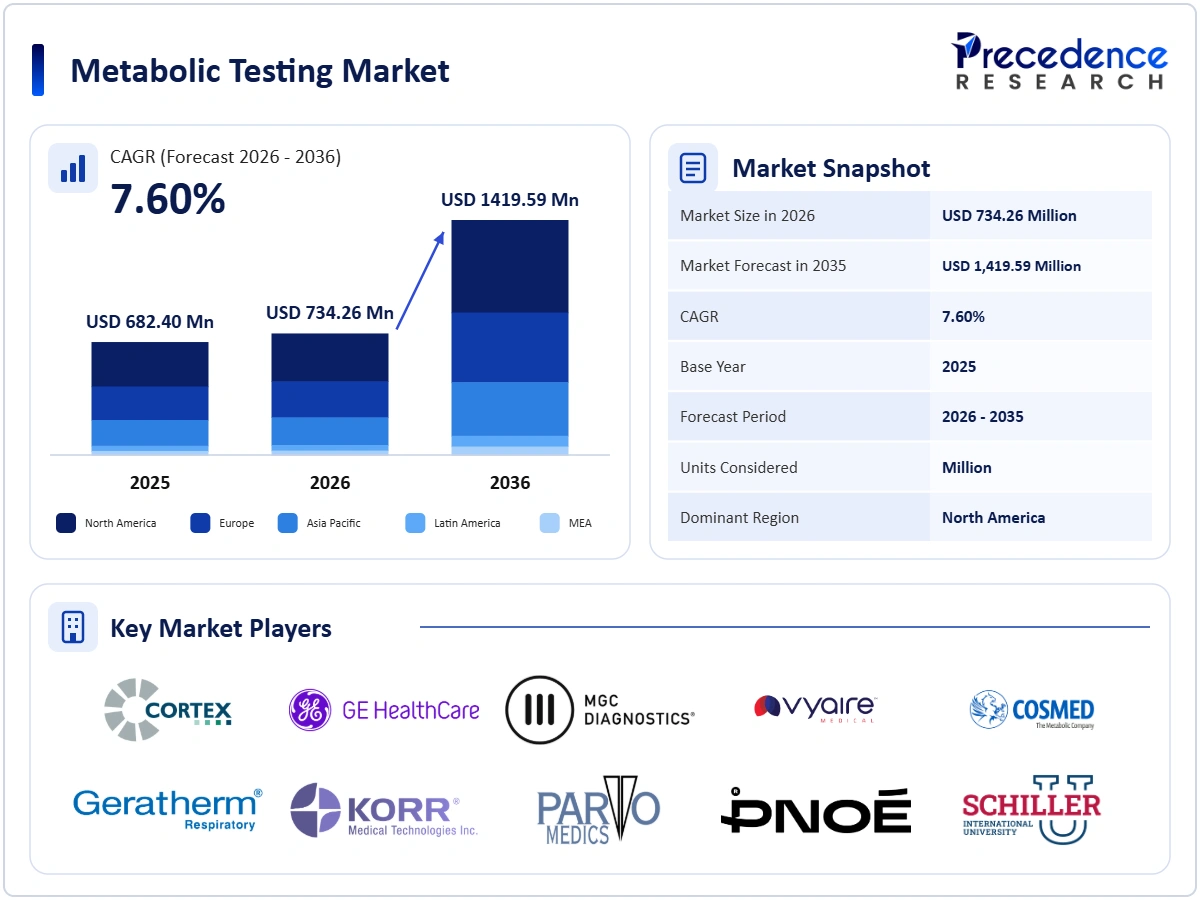
Payal Rabde, a Healthcare Industry Expert, highlights that the metabolic testing market has reached USD 734.26 million in 2026 and is on track to reach USD 1,419.59 million by 2035, advancing at a CAGR of 7.60%. Key metabolic testing market companies shaping the market include COSMED, MGC Diagnostics, while major Vyaire Medical growth segments span product, technology, application, end user, and region.
Source: https://www.precedenceresearch.com/metabolic-testing-market
 Get a Sample
 Report Description


Metabolic Testing Market Size, Demand, and Trends Analysis 2035
The metabolic testing market is forecasted to expand from USD 734.26 million in 2026 to USD 1,419.59 million by 2035, growing at a CAGR of 7.60% from 2026 to 2035.
 Key Takeaways
Market Size & Growth Outlook
- Market size in 2025: USD 682.40 million
- Estimated market size in 2026: USD 734.26 million
- Projected market size by 2035: USD 1,419.59 million
- CAGR (2026-2035): 7.60%
Regional Market Spotlight
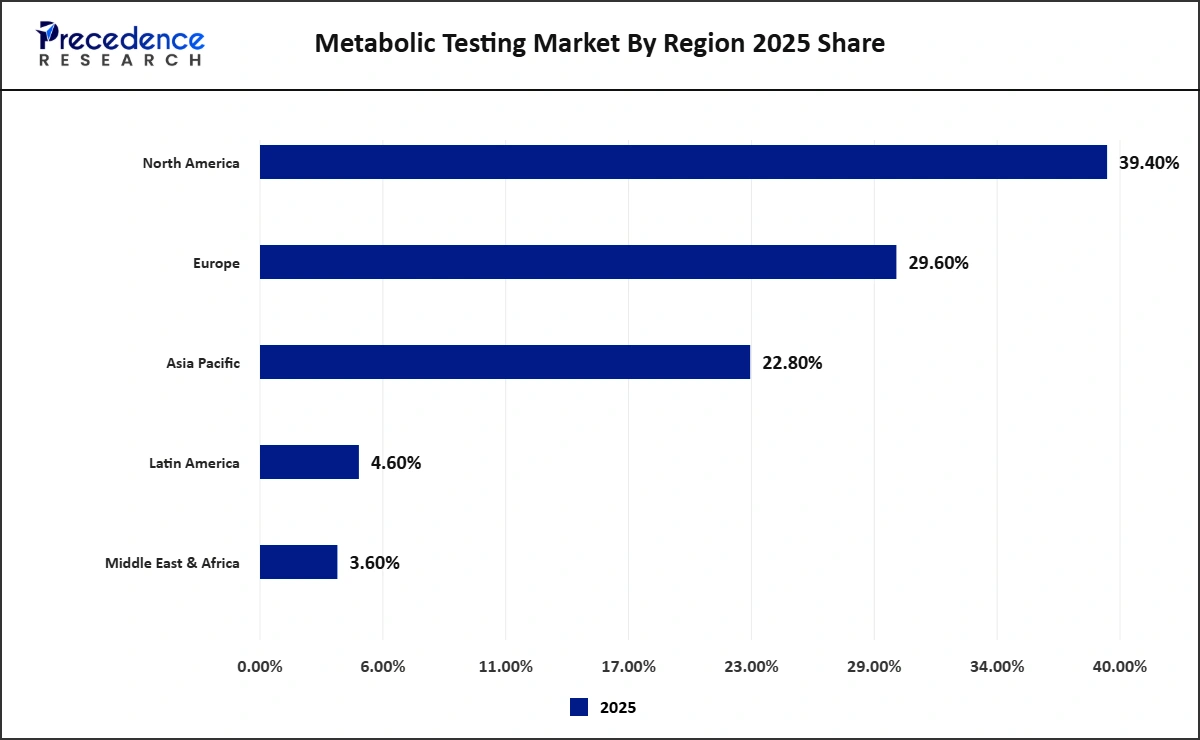
- North America dominated the market with a 39.40% (USD 268.87 million) share in 2025.
- Europe accounted for 29.60% (USD 201.99 million) of the net market revenue in the base year.
- Asia Pacific held 22.80% (USD 155.59 million) of the market in 2025 and is forecasted to grow at the fastest CAGR of 8.89% during the forecast period.
Segmental Spotlight
- By product, the CPET Systems & Metabolic Carts segment accounted for 38.60% share (USD 263.41 million) in 2025.
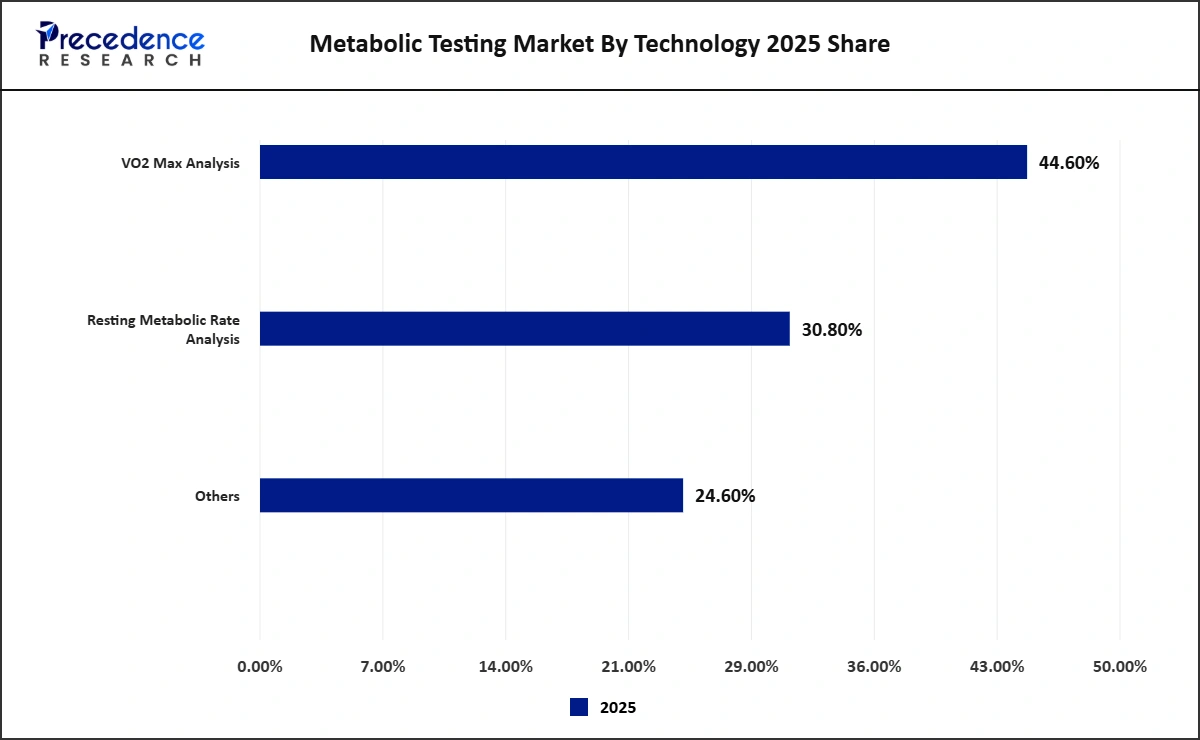
- By technology, VO2 Max Analysis held a market share of 44.60% (USD 304.35 million) in 2025.
- Lifestyle Diseases accounted for 46.20% share in the applications category (USD 315.27 million) in 2025.
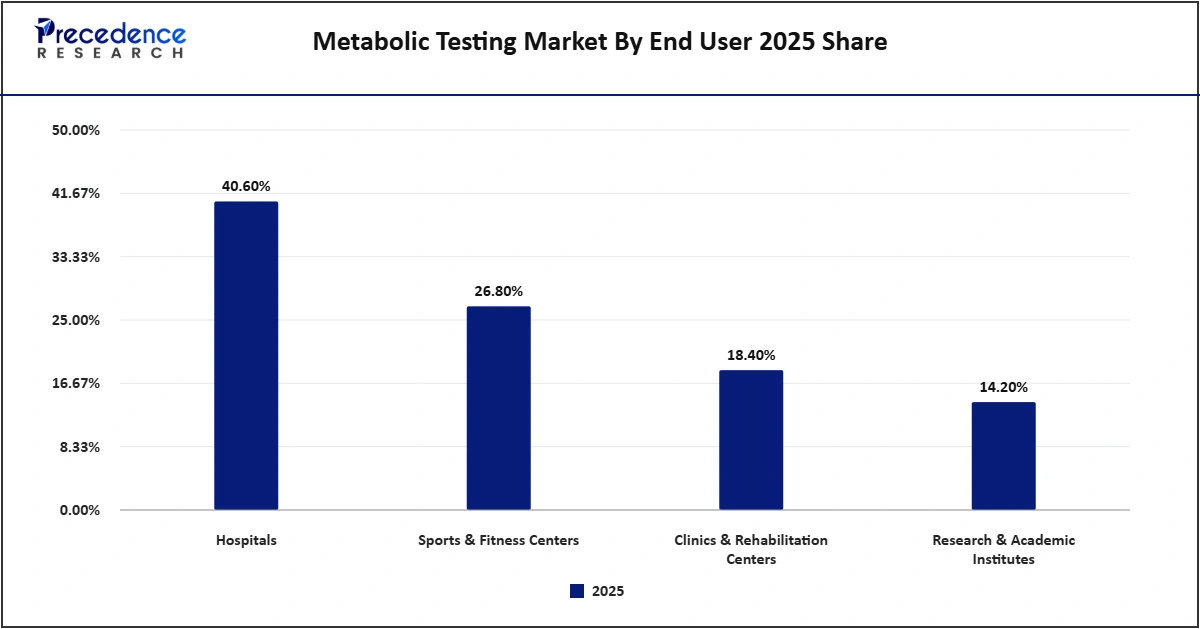
- By end user, Hospitals accounted for 40.60% (USD 277.05 million) of the total revenue in 2025.
Metabolic Testing Market Size and Forecast, 2025-2035 (USD Million)
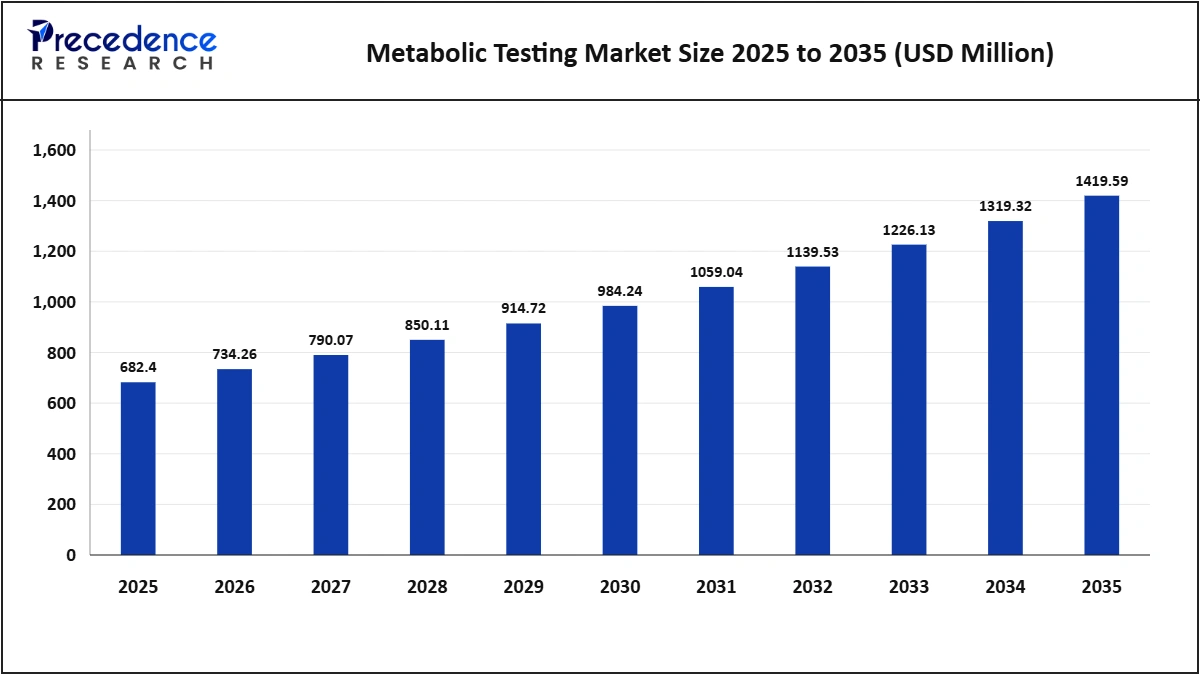
Note: 2025 is the base year; 2026-2035 values are forecasts. Sources: Expert interviews, secondary sources, Precedence Research database and Precedence Research analysts.
The market is expected to expand from USD 682.40 million in 2025 to USD 1,419.59 million by 2035 because clinicians are increasingly using metabolic tests to examine heart and lung function, nutrition requirements and obesity treatment, and gyms and sports teams use VO2 max and metabolic rate tests to personalize training. Portable analyzers and subscription-based services extend the horizons of testing beyond hospital laboratories, lifting the market to USD 984.24 million by 2030 and sustaining a CAGR of 7.60% during the forecast period .
- Analyst View: We built the estimate from the installed base and yearly shipments of CPET systems, metabolic carts, indirect calorimeters, stress testing systems with gas analysis and portable analyzers by end user and region, multiplied by average prices, plus software, consumables and service revenue. Clinical demand is being driven by cardiology, pulmonology, critical care and obesity programs, and fitness demand by sports laboratories, gyms and wellness centers. The total was cross-checked against the cardiopulmonary and metabolic testing revenue of prominent device manufacturers and against published estimates, which places our base year slightly above the comparable figures. The growth rate highlights rising chronic disease and fitness demand. The market growth is negatively affected by the long replacement cycles of clinical systems.
Market Trends
- Metabolic testing in gyms is being facilitated by portable masks.
- CPET software is being integrated with electronic health records.
- Indirect calorimetry guides ICU nutrition.
- VO2 max is promoted as a longevity marker.
- Obesity programs use resting metabolic rate testing.
- Subscription models support the adoption of fitness centers.
Drivers, Restraints and Opportunities
Driver
The prevalence of obesity, diabetes and cardiovascular and lung diseases is rising, and metabolic tests help with diagnosis, stratification and management of these conditions. CPET is recommended for assessing heart failure, breathlessness and surgical risk. Indirect calorimetry assists intensive care teams match nutrition to patients' requirements. Consumers and athletes are increasingly tracking VO2 max and metabolic rate. Portable devices allow for faster and cheaper testing.
Restraint
Clinical CPET systems are expensive and require trained staff and dedicated space. Reimbursement for metabolic testing is limited for fitness and certain clinical applications. Long replacement cycles throttle the pace of new system sales. Consumer wellness devices may lack clinical certification. Competition from wearable estimates of VO2 max may limit demand for formal testing.
Opportunity
Self-serve portable analyzers can be potentially adopted in gyms, wellness clinics and corporate health programs. Integration with obesity and GLP-1 treatment programs can boost clinical demand. Software and AI interpretation have the ability to generate recurring revenue. The growth of healthcare and fitness markets in Asia offer expansion opportunity. Remote and home-based cardiopulmonary assessment could open doors for new applications.
Market Segmentation: 2025 Share and Value
Metabolic Testing Market By Product 2025 Share
| Segments | 2025 Share | 2025 Market Value |
| CPET Systems & Metabolic Carts | 38.60% | USD 263.41 million |
| ECG & Stress Testing Systems | 26.40% | USD 180.15 million |
| Indirect Calorimeters & Body Composition | 18.20% | USD 124.20 million |
| Portable & Wearable Metabolic Analyzers | 16.80% | USD 114.64 million |
Note: 2025 is the base year.
Sources: Expert interviews, secondary sources, Precedence Research database and Precedence Research analysts.
The CPET systems and metabolic carts segment accounted for 38.60% share (USD 263.41 million) in 2025 due to the fact that they combine breath-by-breath gas analysis with ECG and exercise equipment to assess heart failure, lung disease, unexplained breathlessness and surgical risk, and are also used in elite sport. ECG and stress testing systems held a market share of 26.40% (USD 180.15 million), and they support exercise testing in cardiology, often integrated with gas exchange. The indirect calorimeters and body composition tools account for 18.20% of revenue (USD 124.20 million) and measure resting energy expenditure in intensive care, nutrition and obesity clinics, while portable and wearable metabolic analyzers, at 16.80% share (USD 114.64 million), are the fastest-growing product as mask-based devices enable field and self-serve testing.
Metabolic Testing Market By Technology 2025 Share & Size
Note: 2025 is the base year.
Sources: Expert interviews, secondary sources, Precedence Research database and Precedence Research analysts.
VO2 max analysis accounted for a market share of 44.60% (USD 304.35 million) in 2025 because peak oxygen uptake is an important measure of cardiorespiratory fitness and prognosis in heart failure and has been widely adopted in sports. Resting metabolic rate analysis held 30.80% (USD 210.18 million) of revenue, and guides nutrition plans in obesity care, critical care and weight management, and other analyses, including substrate use and ventilatory thresholds, account for 24.60% (USD 167.87 million) share.
Metabolic Testing Market By Application 2025 Share & Size
| Segments | 2025 Share | 2025 Market Value |
| Lifestyle Diseases | 46.20% | USD 315.27 million |
| Sports & Fitness | 31.40% | USD 214.27 million |
| Critical Care Nutrition | 12.60% | USD 85.98 million |
| Research | 9.80% | USD 66.88 million |
Note: 2025 is the base year.
Sources: Expert interviews, secondary sources, Precedence Research database and Precedence Research analysts.
The lifestyle diseases segment accounted for a market share of 46.20% (USD 315.27 million) in 2025 because metabolic testing helps with diagnosis and management of obesity, diabetes, cardiovascular disease, and lung disease. Sports and fitness held 31.40% of revenue (USD 214.27 million), are the fastest-growing application owing to the fact that gyms, sports teams and wellness clinics offer VO2 max and metabolic rate tests, critical care nutrition accounts for 12.60% (USD 85.98 million) and research for 9.80% share (USD 66.88 million).
Metabolic Testing Market By End User 2025 Share & Size
Note: 2025 is the base year.
Sources: Expert interviews, secondary sources, Precedence Research database and Precedence Research analysts.
The hospitals segment accounted for a market share of 40.60% (USD 277.05 million) in 2025, as it covers cardiology, pulmonary and critical care departments. Sports and fitness centers, at 26.80% (USD 182.88 million), are the fastest-growing users; clinics and rehabilitation centers held 18.40% (USD 125.56 million) of revenue and research and academic institutes account for a 14.20% share (USD 96.90 million).
- Analyst View: Segment values were finalized by matching device shipments and the installed base by end user and application to product types and technologies, using average prices. The domination of CPET systems can be attributed to their high value and clinical importance. We expect the shares of portable analyzers, sports and fitness and resting metabolic rate testing to increase.
Regional Analysis
Note: 2025 is the base year.
Sources: Expert interviews, secondary sources, Precedence Research database, and Precedence Research analysts.
North America accounted for 39.40% (USD 268.87 million) of revenue in 2025, with significant growth rate due to wide use of CPET in cardiology and pulmonology, indirect calorimetry in critical care, high obesity rates and a large premium fitness and sports science market. Europe held a market share of 29.60% (USD 201.99 million), with market growth being supported by strong sports medicine, cardiac rehabilitation and respiratory physiology practice and device makers based in Italy and Germany. Asia Pacific accounted for22.80% (USD 155.59 million) of revenue, and is the fastest-growing region, owing to rising prevalence of chronic disease, expanding hospitals ecosystem in China and India and growing fitness and sports science investment in Japan, South Korea and Australia. Latin America, at 4.60% (USD 31.39 million), and the Middle East and Africa, at 3.60% (USD 24.57 million) share, are smaller markets which revolve around private hospitals, sports academies and premium gyms.
North America held 39.40% (USD 268.87 million) of the net market revenue in 2025. CPET and indirect calorimetry are being widely adopted in hospitals. High obesity rates drive demand for metabolic testing and premium gyms increasingly offer VO2 max testing.
Europe accounted for 29.60% (USD 201.99 million) share in 2025. Sports medicine and cardiac rehabilitation drive regional market demand. Leading device manufacturers are based in Italy and Germany and respiratory physiology practice has a strong ecosystem.
Asia Pacific held 22.80% (USD 155.59 million) of revenue in 2025 and is growing at the highest CAGR. Hospital expansion in China and India fuels demand. Japan, South Korea and Australia are increasingly investing in sports science and the prevalence of chronic diseases is rising.
Latin America accounted for a market share of 4.60% (USD 31.39 million) in 2025. Private hospitals and sports academies form the primary demand base. Brazil is the leading regional market.
The Middle East and Africa held 3.60% (USD 24.57 million) share in 2025. Gulf hospitals and sports institutes are increasingly investing in metabolic testing and adoption remains limited elsewhere.
Analyst View: Regional shares were built from device shipments, the installed base and prices in each region. The domination of north America can be attributed to high clinical use and fitness spending. We have assigned Asia Pacific the highest growth CAGR because hospital capacity and sports science investment are expanding at the fastest rate there.
Top 10 Companies in the Metabolic Testing Market
| Rank | Company Name | Market-Specific Revenue (USD Million) | 2025 Share | Key Products / Business | Headquarters |
| 1 | COSMED | 82.00 | 12.02% | Quark CPET, Q-NRG indirect calorimetry and K5 wearable systems | Italy |
| 2 | MGC Diagnostics | 58.00 | 8.50% | Ultima CPET systems and Ascent software | United States |
| 3 | Vyaire Medical | 52.00 | 7.62% | Vyntus CPX metabolic carts | United States |
| 4 | GE HealthCare | 30.00 | 4.40% | Stress testing and ECG systems | United States |
| 5 | Geratherm Respiratory | 28.00 | 4.10% | Ergostik CPET systems | Germany |
| 6 | CORTEX Biophysik | 24.00 | 3.52% | Metalyzer CPET and metabolic systems | Germany |
| 7 | Schiller | 18.00 | 2.64% | Stress testing and spirometry systems | Switzerland |
| 8 | PNOÄ’ | 14.00 | 2.05% | Portable breath-analysis metabolic masks | United States |
| 9 | Parvo Medics | 12.00 | 1.76% | TrueOne metabolic measurement systems | United States |
| 10 | KORR Medical Technologies | 8.00 | 1.17% | Indirect calorimeters for RMR testing | United States |
Note: Company revenues and shares are 2025 estimates.
Sources: Company press releases, expert interviews, secondary sources, Precedence Research database and Precedence Research analysts.
COSMED dominated the market with a 12.02% (USD 82.00 million) market share in 2025, followed by MGC Diagnostics at 8.50% (USD 58.00 million) and Vyaire Medical at 7.62% (USD 52.00 million). The lead of COSMED is because of its broad range of CPET systems, indirect calorimeters for critical care and wearable metabolic analyzers which finds applications in clinical and sports settings. MGC Diagnostics holds a strong position in US hospitals with CPET and pulmonary function systems and its FDA-cleared Ascent software, which covers both pulmonary function testing and CPET. Vyaire Medical, Geratherm and CORTEX are important suppliers of metabolic carts and CPET systems in Europe and North America. GE HealthCare and Schiller offer stress testing and ECG systems, and newer companies such as PNOÄ’ are bringing portable breath analysis to gyms and wellness businesses. The top 10 companies held 47.77% (USD 326.00 million) of market revenue in 2025, while the remaining 52.23% (USD 356.40 million) was shared among regional device makers, indirect calorimeter suppliers and consumer metabolic device companies. The market is moderately fragmented, and competition revolves around gas analysis accuracy, ease of use, software integration with health records, portability and service. Subscription-based portable devices are opening the fitness and wellness segment to new entrants, while clinical buyers give significant importance to FDA clearance and integration with cardiopulmonary workflows.
Recent Developments
- February 2026: MGC Diagnostics marketed its Ascent platform as a single interface combining pulmonary and exercise testing, physician review and health record connectivity.
- September 2026: PNOÄ’ unveiled the PNOÄ’ 2.0 breath-analysis mask, designed for eight-minute self-serve metabolic tests measuring VO2 max, resting metabolic rate and other biomarkers in gyms, with launch planned for October 2026.
Metabolic Testing Market Segments
By Product
- CPET Systems & Metabolic Carts
- ECG & Stress Testing Systems
- Indirect Calorimeters & Body Composition
- Portable & Wearable Metabolic Analyzers
By Technology
- VO2 Max Analysis
- Resting Metabolic Rate Analysis
- Others
By Application
- Lifestyle Diseases
- Sports & Fitness
- Critical Care Nutrition
- Research
By End User
- Hospitals
- Sports & Fitness Centers
- Clinics & Rehabilitation Centers
- Research & Academic Institutes
By Region
- North America (U.S., Canada, Mexico)
- Europe (Germany, U.K., France, Italy, Spain, Rest of Europe)
- Asia Pacific (China, Japan, India, South Korea, Taiwan, Rest of Asia Pacific)
- Latin America (Brazil, Argentina, Rest of Latin America)
- Middle East & Africa (GCC, South Africa, Rest of MEA)
Research Methodology
The market is defined as CPET systems, metabolic carts, stress testing systems used with gas analysis, indirect calorimeters and portable metabolic analyzers, with related software and services, across the world. The 2025 base year was built bottom-up from device shipments and the installed base by end user, average prices and software and service revenue, and checked top-down against the cardiopulmonary and metabolic testing revenue of prominent device producers. Segment, regional and company values were allocated from products, technologies, applications, end users and regional demand. Key estimates were verified by cross-checking company disclosures, regulatory and industry data and published third-party estimates, and inputs that could not be reconciled were excluded. All segment, regional and company figures were reconciled to the same 2025 base year, and the 2026-2035 forecast, which applies a constant CAGR from the 2025 base, was recalculated and validated.
Analyst View Overall Market
The market brings together consistent clinical demand for CPET and indirect calorimetry and fast-growing fitness and wellness applications. Our estimate connects demand to device shipments, the installed base and prices by end user, so the forecast follows chronic disease management, sports science and consumer health trends. The market is benefiting from portable devices and fitness adoption, while the main restraints are equipment costs, limited reimbursement and competition from wearable estimates.
Sources and References
- TechCrunch. "PNOÄ’'s new face mask wants to make lab-grade breath testing a self-serve affair". 2026-09-26. PNOÄ’ 2.0 announcement. https://techcrunch.com/2026/09/26/pnoes-new-face-mask-wants-to-make-lab-grade-breath-testing-a-self-serve-affair/
- Respiratory Therapy. "MGC Diagnostics Ascent software announcements". 2024-10-21. Ascent FDA clearance for PFT and CPET. https://respiratory-therapy.com/tag/cpet-cardiopulmonary-exercise-testing/
- COSMED. "Cardiopulmonary exercise test products". Undated. CPET product range. https://www.cosmed.com/en-us/products/cardiopulmonary-exercise-test
For inquiries regarding discounts, bulk purchases, or customization requests, please contact us at sales@precedenceresearch.com
Frequently Asked Questions
Tags





Ask For Sample
No cookie-cutter, only authentic analysis – take the 1st step to become a Precedence Research client
 Get a Sample




 sales@precedenceresearch.com
 Schedule a Meeting
