



Microalgae Market Size, Key Companies, Company Market Share, Production Volume, Consumption Trends, Pricing Analysis, Export & Import Dynamics, Competitive Positioning, and Demand Forecast
Microalgae Market (By Species: Spirulina, Chlorella, Dunaliella, Haematococcus, Crypthecodinium, Schizochytrium, Euglena, Nannochloropsis, Phaeydactelum, Others; By Source: Marine Water, Fresh Water; By End-use Application: Food and Beverages Sector, Health and Medical Sector, Animal Feed Sector, Pet Food Sector, Cosmetics and Personal Care Sector, Fertilizers Sector) - Global Industry Analysis, Size, Trends, Leading Companies, Regional Outlook, and Forecast 2026 to 2035
Source: https://www.precedenceresearch.com/microalgae-market
 Get a Sample
 Table Of Content


What is the Microalgae Market Size?
The global microalgae market size was calculated at USD 13.85 billion in 2025 and is predicted to increase from USD 14.96 billion in 2026 to approximately USD 29.42 billion by 2035, expanding at a CAGR of 7.82% from 2026 to 2035. Microalgae are beneficial for humans and the ecosystem as they absorb carbon dioxide and release oxygen during photosynthesis.
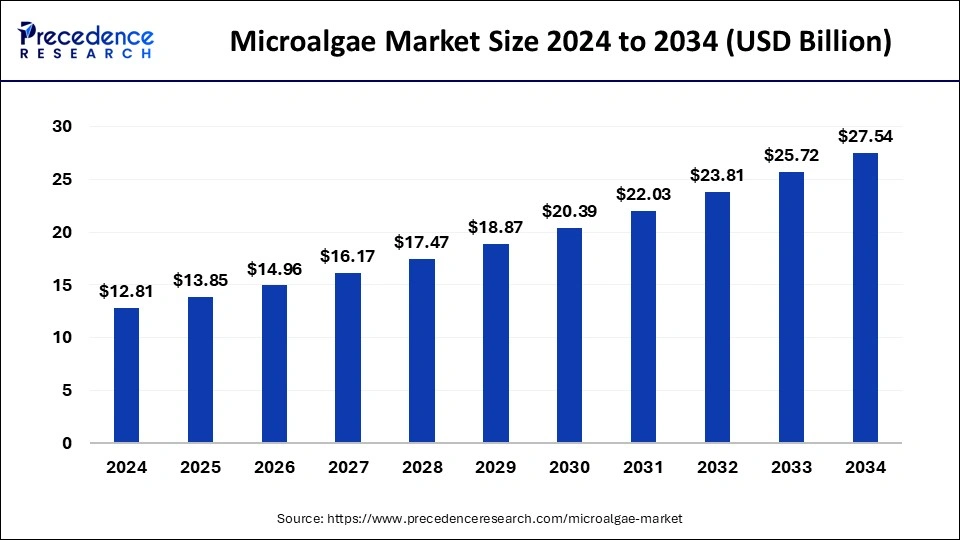
Microalgae Market Key Takeaways
- The global microalgae market was valued at USD 13.85 billion in 2025.
- It is projected to reach USD 29.42 billion by 2035.
- The market is expected to grow at a CAGR of 7.82% from 2026 to 2035.
- North America dominated the microalgae market in 2025.
- By species, the spirulina segment dominated the market in 2025.
- By species, the chlorella segment is expected to be the fastest-growing during the forecast period.
- By source, the marine water segment dominated the market in 2025.
- By source, the freshwater segment is estimated to be the fastest-growing during the forecast period.
- By end-use application, the food & beverages sector segment dominated the microalgae market in 2025.
Market Overview
The microalgae market deals with industries for many applications, including fertilizers, cosmetics & personal care, pet food, animal feed, health & medical, and food & beverages. Microalgae are microscopic algae, also called microphytes, invisible to the naked eye. Microalgae are phytoplankton, normally found in marine and freshwater systems living in the water sediment and column. The benefits of microalgae include potential food and bioenergy sources, efficient growth, and positive health effects. Microalgae contains bioactive compounds that are helpful for positive health effects, which include cardiovascular protection, anticancer, antioxidative, anti-obesity, and antihypertensive. Microalgae may use nutrients and carbon dioxide more effectively than land plants, which allows for rapid growth. Microalgae may be harvested and cultivated for use as bioenergy or food. These factors help to the growth of the market.
Artificial Intelligence: The Next Growth Catalyst in Microalgae
AI is transforming the microalgae industry by shifting production from labor-intensive, empirical methods to high-efficiency, data-driven, and automated systems. Through machine learning and IoT-enabled sensors, AI optimizes critical environmental factors such as light, temperature, pH, and nutrient dosing in real-time, which can increase biomass productivity.
AI algorithms also enhance the yield of high-value compounds like pigments and lipids for the pharmaceutical and nutraceutical sectors by predicting optimal harvest times and stress conditions.
Microalgae Market Growth Factors
- The benefits of microalgae include potential food and bioenergy sources, effective growth, and positive health effects.
- Microalgae contains bioactive compounds that are helpful for positive health effects, which include cardiovascular protection, anticancer, antioxidative, anti-obesity, and antihypertensive.
- Microalgae can use nutrients and carbon dioxide more effectively than land plants, which allows for rapid growth.
- Microalgae can be harvested and cultivated for bioenergy and food use. These factors are helpful for the growth of the microalgae market.
- Microalgae are important because of their potential for environmental sustainability and human health, which helps the growth of the market.
Market Outlook
- Market Growth Overview: The microalgae market is expected to grow significantly between 2025 and 2034, driven by the rising consumer preference for eco-friendly and plant-based products, increasing nutraceuticals and food innovations, and innovation in advanced technologies.
- Sustainability Trends: Sustainability trends involve circular economy and waste valorization, sustainable food and nutrition, and production technology advancements.
- Major Investors: Major investors in the market include Corbion (Algatech), DSM, Cyanotech Corporation, Fuqing King Dnarmsa Spirulina, and AlgaEnergy.
Market Scope
| Report Coverage | Details |
| Market Size by 2035 | USD 29.42 Billion |
| Market Size in 2025 | USD 13.85 Billion |
| Market Size in 2026 | USD 14.96 Billion |
| Market Growth Rate from 2026 to 2035 | CAGR of 7.82% |
| Largest Market | North America |
| Base Year | 2025 |
| Forecast Period | 2026 to 2035 |
| Segments Covered | Species, Source, End-use Application, and Regions |
| Regions Covered | North America, Europe, Asia-Pacific, Latin America, and Middle East & Africa |
Market Dynamics
Driver
Rising vegetarians and preference for microalgae-sourced products
Rising vegetarianism among people leads to a preference for microalga-sourced products. Microalgae-based compounds include pigments, vitamins, enzymes, carbohydrates, lipids, and proteins. These high-value biological compounds are the source of new products that can be used as human nutrition supplements and animal feed. Microalgae are used in vitamins, biopharmaceuticals, nutraceuticals, and many other product applications. Microalgae are economical, renewable, and sustainable sources of food ingredients, biofuels, and bioactive medicinal products. Microalgae bioactive compounds have positive health effects, including cardiovascular protection, anticancer, antioxidative, anti-obesity, and antihypertensive. Consumers' interest in health and wellness trends helps to the growth of the market. These factors help to the growth of the microalgae market.
Restraint
Safety issues and scale-up issues
Commercialization of microalgae-based products in a cost-effective manner may be a challenge for the growth of the market. Some microalgae can be high in nucleic acids, and excessive consumption of these compounds can lead to health problems like kidney stones and gout. Some microalgae bacteria produce toxins, mainly cyanobacteria. These toxins can be harmful to the health and survival of aquatic animals because of toxins accumulation, oxygen depletion, and bacterial growth. Microalgae cultivation involves many variables that make it complex. Lab-scale to commercial-scale production of microalgae is difficult due to large-scale cultivation yield being less than expected in the laboratory. These factors can restrict the growth of the microalgae market.
Opportunity
Future scope of the microalgae
The production of microalgae-based biodiesel encourages potential applications in many industries, including agriculture, transportation, and energy. To overcome the challenges of addressing low sensory scores and disrupting stubborn cell walls and to improve sustainability, researchers focus on new applications, low-cost cultivation strategies, and efficient protein purification. Investment in bioengineering of microalgae has a high potential to enhance economic processes, regulatory issues, risk assessment, and biosafety. To increase the sales volume of microalgae-based products, raising awareness and educating consumers about the benefits of microalgae is essential. Government initiatives and investment in R&D for microalgae-based product development lead to the growth of the market. These factors help to the growth of the microalgae market.
Segment Insights
Species Insights
The spirulina segment dominated the market in 2025. Spirulina products forms include liquid, tablets, capsules, and powders. Spirulina microalgae have many benefits, including helping to control blood sugar levels, it also helps to improve endurance and muscle strength, effective against iron deficiency in children and anemia in pregnant women, improving allergic rhinitis symptoms, reducing blood pressure, anti-cancer properties, protecting LDL cholesterol from oxidative damage, can lower cholesterol or triglyceride levels and blood pressure, have powerful anti-inflammatory and antioxidant properties, helpful in gut health, weight loss, reduce allergies, support mental health, immune system support, help to reduce risk of cardiovascular disease, easily digestible, and rich in many nutrients like iron, copper, niacin, riboflavin, thiamin, etc. These factors helped the growth of the spirulina segment and contributed to the growth of the microalgae market.
The chlorella segment is expected to be the fastest-growing during the forecast period. Chlorella microalgae is available in the form of extract, capsule, or dark green color powder at many health food stores. We can take it as a supplement or add it to juices, smoothies, and many savory and sweet recipes. Chlorella is a nutrient-dense freshwater microalgae. It is a good source of healthy fats like Omega-3 and has a higher level of minerals and vitamins. Chlorella is a good source of magnesium, phosphorous, iron, zinc, and vitamin A. It is also an excellent source of vitamin B, such as folate (B9), riboflavin (B2), and thiamine (B1). It may also help to reduce the risk of some types of cancer. The potential health benefits of chlorella include clearing harmful toxins from our bodies, supporting the heart by controlling cholesterol, triglyceride, and blood pressure, helping to reduce the risk of chronic illness, supporting the immune system, and its anti-inflammatory properties help to manage respiratory health conditions like COPD (chronic obstructive pulmonary arteries disease) or asthma. It also helps to reduce shortness of breath, wheezing, or coughing. Chlorella can help to reduce the symptoms of premenstrual syndrome, improve digestion, support liver health, promote eye health, improve aerobic endurance, act as antioxidants, help to improve the immune system, bind to heavy metals, and help to detox the body, and is very nutritious. These factors help to the growth of the chlorella segment and contribute to the growth of the microalgae market.
Source Insights
The marine water segment dominated the market in 2025. Marine microalgae have many benefits for sustainable development. The benefits of marine microalgae include the absorption of carbon dioxide at the time of photosynthesis, which helps reduce greenhouse gas emissions. Microalgae may be used as a renewable energy source, which has the potential to produce biofuels like biodiesel, which may help to reduce dependence on fossil fuels. Marine microalgae act as a primary source of nutrition to support aquatic food chains and marine creatures. Their cultivation can help to improve food security. Marine microalgae can help treat wastewater by removing pollutants and nutrients and improving water quality. Developing marine microalgae-based industries can stimulate economic growth and create jobs. These factors help to the growth of the marine water segment and contribute to the growth of the microalgae market.
The freshwater segment is estimated to be the fastest-growing during the forecast period. Freshwater microalgae have many benefits for human health and sustainability. The advantages of freshwater microalgae include its ability to help reduce greenhouse gases by absorbing carbon dioxide and releasing oxygen during photosynthesis. These microalgae are rich in omega-3 fatty acids, vitamins, pigments, essential amino acids, carbohydrates, and proteins. They act as an ideal sustainable aquatic feed that supports fish and shellfish growth in the aquaculture systems. Freshwater microalgae, including chlorella, have potential health benefits that help to reduce sugar levels and blood cholesterol and improve the immune system. The properties of microalgae include antioxidant, anticancer, antifungal, antibacterial, and anti-inflammatory. These factors help the growth of the freshwater segment and contribute to the growth of the microalgae market.
End-use Application Insights
The food & beverages sector segment dominated the microalgae market in 2025. Microalgae are rich in protein, bioactives, antioxidants, small molecules, lipids, and prebiotics, which have health benefits. The microalgae may be used for the development of feeds, functional foods, pharmaceuticals, and cosmeceuticals. Several microalgae species are used for health benefits like improving the nutritional constitution of the body and strengthening the immune system. Microalgae are used in food and beverages because they provide health-beneficial properties, including immune-enhancing, anti-oxidants, and anti-inflammatory, and their role against many diseases like hypertension, cardiovascular metabolism, and atherosclerosis. Microalgae offers many benefits, including applications in the food and beverages industry due to nutritional composition, functional food and animal feeds, environmental friendliness, and legislation and regulatory aspects. These factors help to the growth of the food & beverages sector and contribute to the growth of the microalgae market.
Regional Insights
North America dominated the microalgae market in 2025, and it is estimated to be the fastest-growing during the forecast period. Rising awareness of nutritional values of microalgae in the food & beverages industry, dietary supplements, and cosmetic industries driving the growth of the market in the North American region. It is anticipated that the market size in Northern America will rise due to the growing demand for Chlorella sp. applications in personal care and medicine. Furthermore, a number of encouraging businesses have made statements on the manufacture of biodiesel from algae, which highlights candidates for further research and the possible applications of these in the fuel industry. In the United States, ExxonMobil and Solix Biofuels reported generating 1500 gallons and 5000–8000 gallons annually, respectively.
- In April 2024, in the United States market, the first microalgae-based fat or oil was launched. Daniel Humm is thrilled with both the performance and sustainability of the dish. This liquid, with a very high smoke point and a neutral taste, reaching 280°C, is rich in omega-9 and omega-3, eco-friendly, and low in saturated fats.
U.S. Microalgae Market Trends
U.S. is pivoting toward high-margin applications in nutraceuticals and personal care, driven by the commercial viability of natural colorants like phycocyanin. Consequently, ongoing advancements in precision cultivation are mitigating historical cost barriers, accelerating microalgae's integration as an essential, eco-friendly protein alternative to traditional food sources.
How did the Asia Pacific Region Fastest Growing in the Microalgae Market?
Asia Pacific is leveraging its geographic advantages to displace traditional soy and fishmeal in the aquaculture and livestock sectors. This industrial scaling is reinforced by a robust ecosystem of research institutions and government-backed initiatives that prioritize renewable bioresources as a cornerstone of national food security.
China Microalgae Market Trends
China's industry is strategically adopting advanced photobioreactors to ensure high purity and yield, moving beyond traditional production methods to satisfy strict quality standards. Fueled by supportive government policies for biotechnology, key players are forming R&D partnerships to embed microalgae as a primary, plant-based protein source in the nation's functional food supply chain.
Value Chain Analysis of the Microalgae Market
- Upstream: Strain Selection & R&D
This foundational stage involves selecting, optimizing, and cultivating specific microalgae strains (e.g., Spirulina, Chlorella, Haematococcus pluvialis) to maximize desirable outputs like lipids, pigments, or proteins.
Key Players: A4F Algae for Future, Wageningen University & Research (AlgaePARC), Fraunhofer, Cyanotech Corporation, and academic research institutions. - Downstream Processing: Extraction & Processing
The concentrated biomass is processed through dewatering, drying, and cell disruption methods (e.g., spray drying, freeze-drying) to extract high-value bioactive compounds like omega-3 fatty acids, antioxidants, and pigments.
Key Players: Corbion N.V., AlgoSource, Allmicroalgae, Fuji Chemical Industries Co., Ltd., and BDI BioLife Science GmbH. - Distribution & Final Formulation
This stage involves the B2B supply of dried powder, pastes, or purified oils to end-use manufacturers, as well as B2C sales of retail-ready products.
Key Players: DIC Corporation, Sun Chlorella Corporation, Roquette Klötze GmbH & Co. KG, and various specialized ingredient distributors.
Microalgae Market Companies
- Bristol Myers Squibb Company: The company invests in synthetic biology to explore microalgae-derived bioactive compounds for potential applications in oncology and immunology therapeutics. By leveraging microalgae's rapid growth and genetic flexibility, they aim to develop novel, high-purity molecular glues and other complex biologics.
- Amgen Inc.: Amgen focuses on the metabolic engineering of microalgae to create efficient production platforms for recombinant proteins and specialty lipids.
- Regeneron Pharmaceuticals Inc: Regeneron utilizes microalgae systems to research low-abundance targets and rare mutations, particularly in the development of precision genetic medicines.
- Vertex Pharmaceuticals Incorporated: Vertex explores microalgae-based biopolymers and proteins as novel delivery vehicles for their specialized cystic fibrosis and genetic therapies.
- Gilead Sciences Inc.: Gilead researches microalgae as a source for anti-viral and anti-inflammatory compounds to expand its portfolio of innovative therapies.
- Moderna Inc.: Moderna leverages microalgae for their potential to produce highly specific vaccine adjuvants and sustainable lipid nanoparticles for mRNA delivery.
Other Major Key Players
- BioNTech SE
- WuXi STA
- Aragen Bioscience Inc.
- MedChemExpress LLC
- Promega Corporation
- Sai Life Sciences Limited
- BioAscent Discovery Limited
- SRI International
- Peak Protein Ltd.
- Sygnature Discovery Limited
- Aptuit LLC
- ChemPartener Corporation
- BioDuro LLC
- Concept Life Sciences Group Limited
- Selcia Limited
- Pharmaron Beijing Co. Ltd
- Viva Biotech Holdings
- Bayer AG
- Aurigene Discovery Technology Limited
- GVK Biosciences Private Limited
- Eurofins Scientific SE
- Merck KGaA
- Evotec AG
- Jubilant Biosys Ltd
- Advinus Therapeutics Pvt Ltd.
- Pharmaceutical Product Development LLC
- Domainex Ltd.
Recent Developments
- In April 2023, an omega-3 rich microalgae powder, the latest product, NaturAlgae, which may be used as a nutritious feed ingredient, was launched by the Scottish biotech company MiAlgae for use in aquafeed or used as a pet food and fish feed ingredients.
- In September 2023, a new 2-in-1 firming complex that restructures and nourishes the skin from within was launched by a Spanish company specializing in sustainable biotechnology, Algaktiv.
- In November 2023, a new product, crispy seaweed sticks, was launched by a French producer of algae, microalgae, and seaweed-based food innovations, ZALG. ZALG, based in Brittani, used locally grown microalgae and seaweed to develop healthy and sustainable plant-based foods.
- In June 2024, the first commercial plant for microalgae protein supply was launched by Microalgae Protein Company, Brevel Ltd. The new facility covers an impressive 2500 square meters and can produce hundreds of tons of microalgae protein powder to help grow global alternative protein space.
Segments Covered in the Report
By Species
- Spirulina
- Chlorella
- Dunaliella
- Haematococcus
- Crypthecodinium
- Schizochytrium
- Euglena
- Nannochloropsis
- Phaeydactelum
- Others
By Source
- Marine Water
- Fresh Water
By End-use Application
- Food and Beverages Sector
- Health and Medical Sector
- Animal Feed Sector
- Pet Food Sector
- Cosmetics and Personal Care Sector
- Fertilizers Sector
By Geography
- North America
- Asia Pacific
- Europe
- Latin America
- Middle East & Africa
For inquiries regarding discounts, bulk purchases, or customization requests, please contact us at sales@precedenceresearch.com
Frequently Asked Questions
Tags





Ask For Sample
No cookie-cutter, only authentic analysis – take the 1st step to become a Precedence Research client
 Get a Sample




 sales@precedenceresearch.com
 Schedule a Meeting
