



Microcarriers Market Trends, Leading Companies, Company Revenue / Sales Performance, Procedure Volume, Healthcare Spending, Technology Adoption, Reimbursement Analysis, Competitive Landscape, and Growth Outlook
Microcarriers Market (By Consumables: Media & Reagents, Microcarrier Beads; By Application: Biopharmaceutical Production, Regenerative Medicine; By End-user: Pharmaceutical & Biotechnology Companies, Contract Research Organizations & Contract Manufacturing Organizations, Academic & Research Institutes) - Global Industry Analysis, Size, Trends, Leading Companies, Regional Outlook, and Forecast 2026 to 2035
Source: https://www.precedenceresearch.com/microcarriers-market
 Get a Sample
 Table Of Content


What is the Microcarriers Market Size?
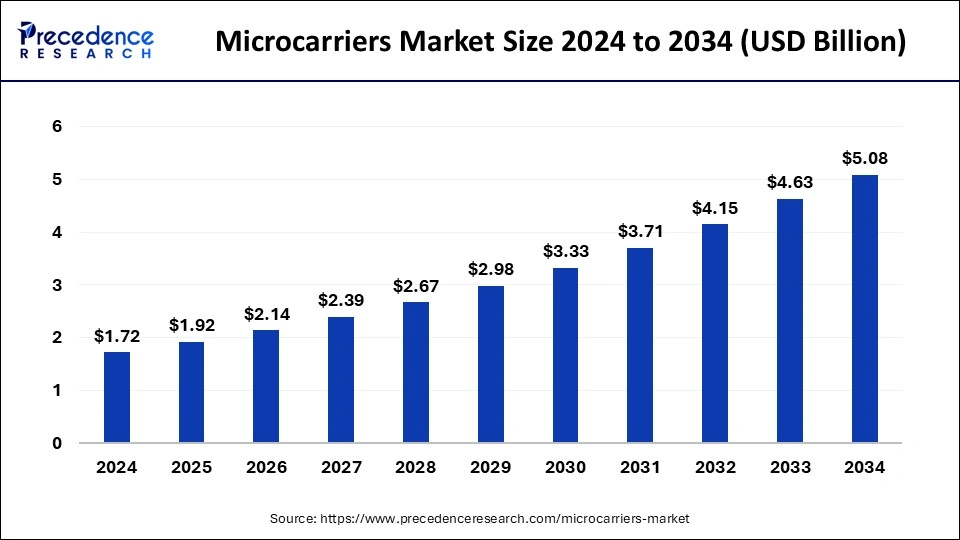
The global microcarriers market size was estimated at USD 1.92 billion in 2025 and is predicted to increase from USD 2.14 billion in 2026 to approximately USD 5.55 billion by 2035, expanding at a CAGR of 11.20% from 2026 to 2035. The microcarriers market is driven by the growing interest in vaccinations based on cells.
Microcarriers Market Key Takeaways
- The global microcarriers market was valued at USD 1.92 billion in 2025.
- It is projected to reach USD 5.55 billion by 2035.
- The microcarriers market is expected to grow at a CAGR of 11.20% from 2026 to 2035.
- North America dominated market with the largest revenue share of 42% in 2025.
- Asia-Pacific is observed to be the fastest growing in the microcarriers market during the forecast period.
- By consumables, the microcarrier beads segment has held a major revenue share of 66% in 2025.
- By application, the biopharmaceutical production segment has contributed more than 45% of revenue share in 2025.
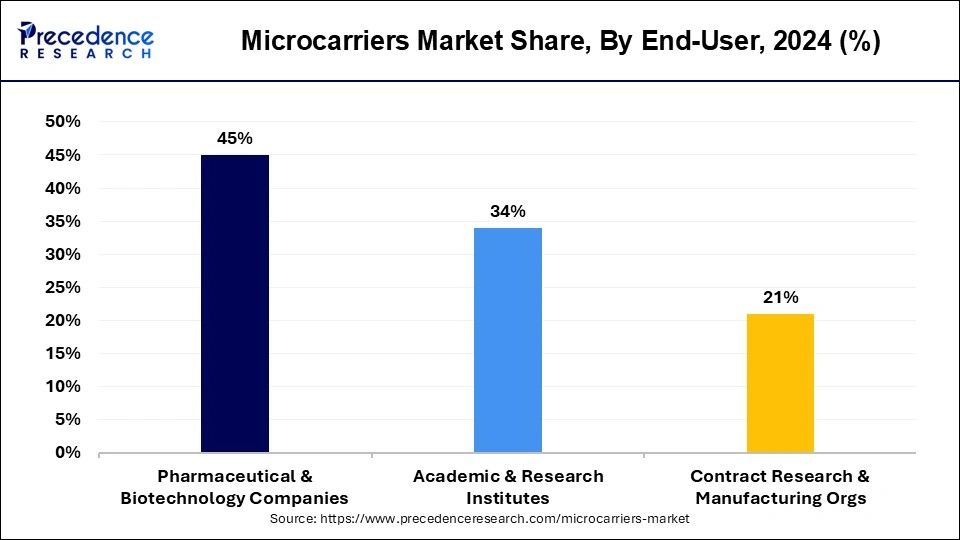
- By end-user, the pharmaceutical & biotechnology companies segment has generated the biggest revenue share of 45% in 2025.
- By end-user, the academic & research institutes segment is the fastest growing in the microcarriers market during the forecast period.
What are the Microcarriers?
Microcarriers are microscopic particles or beads mainly utilized in bioreactors to culture adherent cells. They offer a greater surface area for cell development than conventional two-dimensional techniques. Biological materials can be coated on microcarriers to improve cell adhesion and proliferation. These materials include glass, dextran, and different types of polymers.
Microcarriers are essential to produce vaccinations, monoclonal antibodies, and other therapeutic proteins on a large scale. To address the increasing demand for biopharmaceuticals, they enable the effective growth of cells in bioreactors. Microcarriers can improve the uniformity and quality of cell cultures. Sustaining homogeneity in cell populations is essential for producing dependable biopharmaceutical products and can be achieved by offering a regulated growing environment for cells.
Artificial Intelligence: The Next Growth Catalyst in Microcarriers
AI is transforming the microcarriers industry by optimizing cell culture processes, enabling real-time monitoring, and automating complex bioprocessing workflows, such as in vaccine manufacturing and stem cell expansion. Through machine learning algorithms, researchers can analyze a vast amount of data to predict critical process parameters, such as optimal pH and nutritional flow, which significantly improve cell attachment and growth efficiency.
Microcarriers Market Trends
- In April 2024, Kuraray Co., Ltd. evolved PVA hydrogel microcarriers for cell cultures required in regenerative medicine. The product was initiated in January 2024 in Japan and overseas, beginning in the United States.
Microcarriers Market Growth Factors
- Microcarriers are increasingly used to develop cell therapies, including stem cells and cell-based vaccinations. Chronic illnesses such as cancer are becoming more common, and cell treatments may be able to treat them.
- The creation of novel, better performing microcarriers to promote cell growth and functionality. The increasing use of 3D cell culture methods, which frequently use microcarriers.
- Pharmaceutical and biotechnology businesses invest more in research and development to create new medications and therapies. Government support for using microcarriers in cell and gene therapy research has increased.
- Commercializing cell therapies requires large-scale cell production in bioreactors, which microcarriers make possible. Compared to conventional approaches, they can lower manufacturing costs and provide greater control over cell growth conditions.
Trade Analysis of Microcarriers Market
- Imports of global microcarriers registered 2 shipments, which is a significant decrease of -89% relative to the same time last year.
- There were 2 exporters and 2 validated buyers, meaning that the global microcarriers market is very concentrated and has a limited number of players.
- India, Malaysia, and Colombia came out as the leading importing nations, with the niche demand reflected in the regional markets of select biotechnology products.
- The U.S. had the largest exports having 36 shipments, and France and Germany had a small amount in exports in the global microcarriers trade.
- Exports worldwide were 2 shipments with a negative year-over-year change of -89, indicating a decrease in international trade activity.
- Volza data set covers 203 different countries and more than 3.5+ billion deliveries, which allows for following microcarriers trading dynamics across the world accurately.
(Source: https://www.volza.com )
(Source: https://www.volza.com )
Market Outlook
- Market Growth Overview: The microcarriers market is expected to grow significantly between 2025 and 2034, driven by the rising large-scale production of viral vaccines, increased adoption of material innovation, and a shift towards single-use, closed, and automated bioreactor system improving cell yield.
- Sustainability Trends: Sustainability trends involve enhanced cell harvesting, circular economy integration, and reduced waste/high-efficiency materials.
- Major Investors: Major investors in the market include Thermo Fisher Scientific, Inc., Merck KGaA., Danaher Corporation, Sartorius AG, Corning Incorporated, and Lonza Group Ltd.
Market Scope
| Report Coverage | Details |
| Market Size by 2035 | USD 5.55 Billion |
| Market Size in 2026 | USD 2.14 Billion |
| Growth Rate from 2026 to 2035 | CAGR of 11.20% |
| Largest Market | North America |
| Base Year | 2025 |
| Forecast Period | 2026 to 2035 |
| Segments Covered | Consumables, Application, End-user, and Regions |
| Regions Covered | North America, Europe, Asia-Pacific, Latin America, and Middle East & Africa |
Market Dynamics
Driver
High demand of cell-based vaccines & therapeutics
Cell-based vaccinations frequently have greater efficacy than conventional egg-based vaccinations, mainly when targeting virus strains. Faster production of these vaccinations is significant since pandemics are emergencies when time is of the essence. Microcarriers make manufacturing more scalable and efficient by enabling the large-scale synthesis of cells needed for various treatments and vaccinations.
Production systems based on microcarriers are more cost-effective because of their efficiency and scalability. As a result, cell-based vaccinations and treatments become more affordable, increasing their accessibility. This drives towards the growth of the microcarriers market.
Restraint
High cost associated with serum-free media
Growth factors, specified components, and recombinant proteins are examples of raw ingredients frequently costly when utilized in serum-free media. Sophisticated manufacturing procedures are needed to produce serum-free media while upholding strict purity and quality standards. This often entails strict quality control procedures, aseptic processing, and sophisticated filtering.
The substantial initial cost of serum-free media for microcarrier cultures may deter companies from adopting them. This may reduce the industry's rate of adopting serum-free microcarrier technologies.
Opportunity
Huge investments for the development of innovative therapies
Research and development on cell and gene therapies is receiving significant financing from the governmental and corporate sectors. For instance, the possibility of cell and gene therapy to treat cancer, genetic disorders, and chronic diseases has attracted billions of dollars in investment to the global market. One important consideration is the creation of cells' scalability. The need for mass-producing therapeutic cells is met by microcarriers, which allow for the large-scale generation of cells in bioreactors.
Investments in biopharmaceutical facilities and technology increase the demand for sophisticated microcarrier solutions. Large sums of money are spent on bioprocess optimization, where microcarriers are essential. Improved microcarrier designs can lower expenses, increase yield, and ensure consistent quality in biopharmaceutical production.
Segment Insights
Consumables Insights
The microcarrier beads segment dominated in the microcarriers market in 2025. Microcarrier beads can manufacture vast amounts of cells due to the large surface area they provide, which could be applied to produce, for example, viruses for vaccines. It is a convenient 3D model that is easily set up by simply mixing cells with microcarrier beads. The growing awareness about the applications of cell-based vaccines, growing regulatory approvals for cell-based vaccines, and a focus on commercial expansion of cell-based vaccines are contributing to the growth of the microcarriers market.
Application Insights
The biopharmaceutical production segment dominated in the microcarriers market in 2025. For most pathogens, such as the novel coronavirus, large-scale vaccine production is very important for global disease control and eradication because the high mutation rate of the virus might lead to a decrease in the protection offered by the vaccines. Moreover, research on the production and culture of virus vaccines, especially exploration at the laboratory scale, is urgently needed where the biopharmaceutical industries play a major role.
The versatility and scalability of microcarriers make them a preferred desire for production cell healing procedures, along with stem cell-based cures, immunotherapies, and tissue engineering applications. With increasingly more clinical trials and approvals for cellular therapies, the demand for microcarriers is surging.
The regenerative medicine segment shows a notable growth in the microcarriers market during the forecast period. Regenerative medicine is concentrated on developing and applying new treatments to heal tissues and organs and restore functions lost due to aging, damage, disease, or defects. Regardless of the precise strategy used for reconstruction, restoration, or repair of the tissue/organ of interest, cells, and biomaterials (i.e., scaffolds) provide the basic constituents needed for developing new tissue.
- For instance, if sufficient tissue/organ viability remains in vivo, then either cells alone (i.e., cell therapy) or scaffolds alone (biomaterial therapy) may be sufficient to provide the needed regenerative response. Such an approach is feasible at this point in the disease process, as it may still be possible to leverage existing endogenous mechanisms for relatively complete tissue repair and/or restoration of organ function.
End-user Insights
The pharmaceutical & biotechnology companies segment dominated in the microcarriers market in 2025. To produce protein-based vaccines, the coding gene of the protein can be put into the plasmid and altered into the host cell (e.g., E. coli or mammalian cells), which can then express that gene into protein. The protein manufactured is then harvested, purified, and formulated into a vaccine. The manufacturing of this type of vaccine is corresponding more complex as it requires extra operation, but it can produce a high level of antigen titer. These firms provide the required environment for mass production.
The academic & research institutes segment is observed to be the fastest growing in the microcarriers market during the forecast period.
Employing bioreactors to culture cells to manufacture antigens, antibodies, and other products is the core technology underpinning the large-scale production of biological products. The combination of fine process control in biotechnology and the screening and domestication of high-expression cell lines can enhance production efficiency and product quality. Based on laboratory-scale experiments, we can optimize some conventional physical and chemical parameters and obtain a perfect training program on a larger scale in advance, which saves time during subsequent industrialization. Laboratory-scale experiments can provide pilot-scale conditions for the latest biological products, especially in the research and development of new vaccines, to maximize the yield and quality.
Regional Insights
What is the U.S. Microcarriers Market Size?
The U.S. microcarriers market size was exhibited at USD 560 million in 2025 and is projected to be worth around USD 1,730 million by 2035, poised to grow at a CAGR of 11.20% from 2026 to 2035.
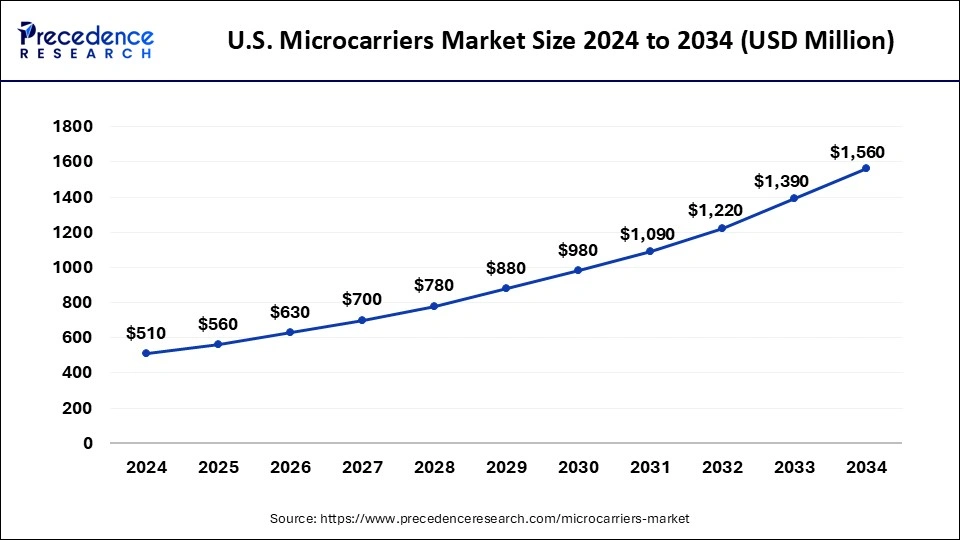
North America dominated in the microcarriers market in 2025. This is due to the increasing cell and gene therapy research in the region and the associations supporting it. Likewise, the American Society of Gene and cell Therapy is accountable for the funding of the research, and this society is forcing the biotechnology and biopharmaceutical companies to enhance their R&D. The United States microcarrier enterprise is dynamic and influential across the broader biotechnology and pharmaceutical landscape. It is well known for its innovation and technological improvements, and this enterprise plays a pivotal role in the cellular way of life, bioprocessing, and regenerative remedy applications.
U.S. Microcarriers Market Trends
The U.S. industry is rapidly shifting toward single-use technologies and SemaCyte's microchip-enabled platforms to minimize contamination risks and enhance cell screening efficiency. Significant advancements in biodegradable carriers are revolutionizing the production of anchorage-dependent cells, enabling cleaner harvesting processes for high-scale vaccine manufacturing.
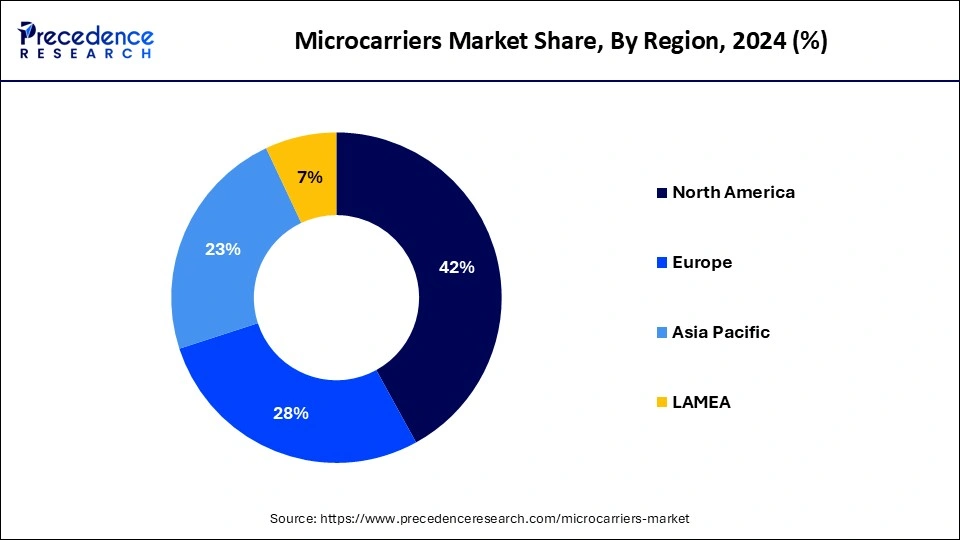
Asia-Pacific is the fastest growing in the microcarriers market during the forecast period. This region is owing to the growing numbers of key players and the rapidly increasing adoption of microcarriers. The technological advancements in the healthcare field and the growing need for cell therapies in the region are significant driving factors for the growth of the microcarriers market.
China Microcarriers Market Trends
China's surge in cell-based therapies and vaccine production necessitates high-density culture solutions that maximize yield. Innovation is currently centered on advanced surface coatings and biocompatible materials like cellulose and collagen to improve cell attachment and harvesting efficiency.
How Did Europe Experience A Notable Growth in the Microcarriers Market?
Europe's advanced pharmaceutical infrastructure in the region, which prioritizes large-scale adherent cell production for regenerative medicine. Innovation is centered at world-class hubs like the Sartorius AG Cell Culture Technology Center, where R&D focuses on developing high-quality, sustainable materials that meet stringent EU regulatory standards.
Germany Microcarriers Market Trends
Germany's heavy investment in cell and gene therapies has led to an accelerated shift toward single-use bioreactor systems in over 60% of new facilities. Innovation is currently concentrated on developing advanced microcarriers featuring specialized, protein-free coatings and magnetic cores that enable rapid, in-line separation and significantly reduce harvesting times.
Value Chain Analysis of the Microcarriers Market
- Raw Material Sourcing & Specialized Chemical Supply
This upstream stage involves the procurement of base materials necessary for creating microcarrier beads, including polymers (polystyrene, dextran), natural materials (collagen, gelatin), cellulose, and coatings that enhance cell adhesion.
Key Players: Merck KGaA, Rousselot (Darling Ingredients), Sigma-Aldrich, various specialty polymer suppliers. - Microcarrier Manufacturing & Product Development
Manufacturers develop and produce a variety of beads, including porous, solid, magnetic, and micro-carriers designed for specific applications in 3D cell culture.
Key Players: Cytiva (formerly GE Healthcare), Thermo Fisher Scientific, Corning Incorporated, Sartorius AG, denovoMATRIX GmbH, Cellevate AB. - Equipment Integration & Bioprocessing Services
This stage bridges the consumables with the actual cell culture process, integrating microcarriers with bioreactors, filtration systems, and automation technology.
Key Players: Sartorius AG, Thermo Fisher Scientific, Cytiva (Danaher), Eppendorf SE, PBS Biotech Inc., and Getinge AB.
Microcarriers Market Companies
- Thermo Fisher Scientific, Inc.: Thermo Fisher is a leading player offering a wide range of microcarriers, including its renowned Gibco and Dynabeads brands, tailored for large-scale adherent cell culture and vaccine production.
- Merck KGaA: Merck contributes to the microcarriers market by providing a comprehensive portfolio of cell culture media, reagents, and specialized microcarriers essential for bioprocessing and vaccine production.
- Danaher Corporation: Through its subsidiaries Cytiva and Pall Corporation, Danaher is a dominant player supplying both microcarrier consumables and advanced single-use/stainless steel bioreactors for large-scale cell cultivation.
- Bio-Rad Laboratories, Inc.: Bio-Rad contributes to the market through its expertise in high-value, specialized laboratory tools, specifically for cell biology, protein purification, and quality control systems that support the development and monitoring of cell-based therapies.
- HiMedia Laboratories Pvt. Ltd.: HiMedia Laboratories contributes to the market by providing a diverse, cost-effective range of microcarriers and cell culture materials, supporting various cell types in research and small-to-mid-scale biopharmaceutical development.
Other Major Key Players
- denovoMATRIX GmbH
- Sartorius AG
- Corning Incorporated
- Eppendorf SE
Recent Developments
- In October 2025, Swedish biotech company Cellevate launched its Cellevat3d VAX nanofiber microcarriers at the World Vaccine Congress Europe in Amsterdam from Oct. 14–16, 2025. This technology aims to enhance the scalability and cost-effectiveness of adherent cell-based viral vaccine production. Data presented shows a 13-fold increase in infectious viral vaccine titers in Vero cells and an 11.4-fold increase in enterovirus vaccine titers in HEK293T cells, verified by an independent study from Intravacc.
(Source: https://www.biopharminternational.com ) - In April 2024, Kuraray Co., Ltd. launched PVA hydrogel microcarriers for cell cultures in January 2024, initially in Japan and the U.S. These microcarriers enhance cell adherence and proliferation in bioreactors, allowing efficient cell recovery. They have been safety-verified, demonstrate higher culture efficiency, and resist damage during stirring in bioreactors. (Source: https://www.selectscience.net )
- In December 2023, CellRev, the bioprocessing firm revolutionizing continuous mammalian cell manufacturing, declared its proprietary media additive AggreGuard to shut out the aggregation of microcarrier-supported cells in adherent cell culture.
- In November 2023, Teijin Frontier declared that it had enlarged new nonwoven microcarriers that enable speedy, high-quality, large-scale cell culture. This scaffolding material for a broad range of cell types facilitates adherence and growth in three dimensions.
Segments covered in the report
By Consumables
- Media & Reagents
- Microcarrier Beads
- Collagen Coated Beads
- Cationic Beads
- Protein Coated Beads
- Untreated Beads
- Others
By Application
- Biopharmaceutical Production
- Vaccine Production
- Therapeutic Production
- Regenerative Medicine
By End-user
- Pharmaceutical & Biotechnology Companies
- Contract Research Organizations & Contract Manufacturing Organizations
- Academic & Research Institutes
By Geography
- North America
- Asia Pacific
- Europe
- Latin America
- Middle East & Africa
For inquiries regarding discounts, bulk purchases, or customization requests, please contact us at sales@precedenceresearch.com
Frequently Asked Questions
Tags





Ask For Sample
No cookie-cutter, only authentic analysis – take the 1st step to become a Precedence Research client
 Get a Sample
.webp)



 sales@precedenceresearch.com
 Schedule a Meeting
