



Middle Ear Infections Treatment Market Size, Companies, Share, Patient Volume, Treatment Adoption Rates, Pricing Analysis, Regulatory Landscape, Competitive Positioning, and Demand Forecast
Middle Ear Infections Treatment Market (By Treatment Type: Antibiotics, Analgesics, Decongestants, Surgery, Others; By Cause/Pathogen: Bacterial, Viral, Others; By Age Group: Pediatric, Adult, Geriatric; By Distribution Channel/End-Users: Hospitals, Clinics, Ambulatory Surgical Centers, Pharmacies/Online) - Global Industry Analysis, Size, Trends, Leading Companies, Regional Outlook, and Forecast 2026 to 2035
Source: https://www.precedenceresearch.com/middle-ear-infections-treatment-market
 Get a Sample
 Table Of Content


What is Middle Ear Infections Treatment Market Size in 2026?
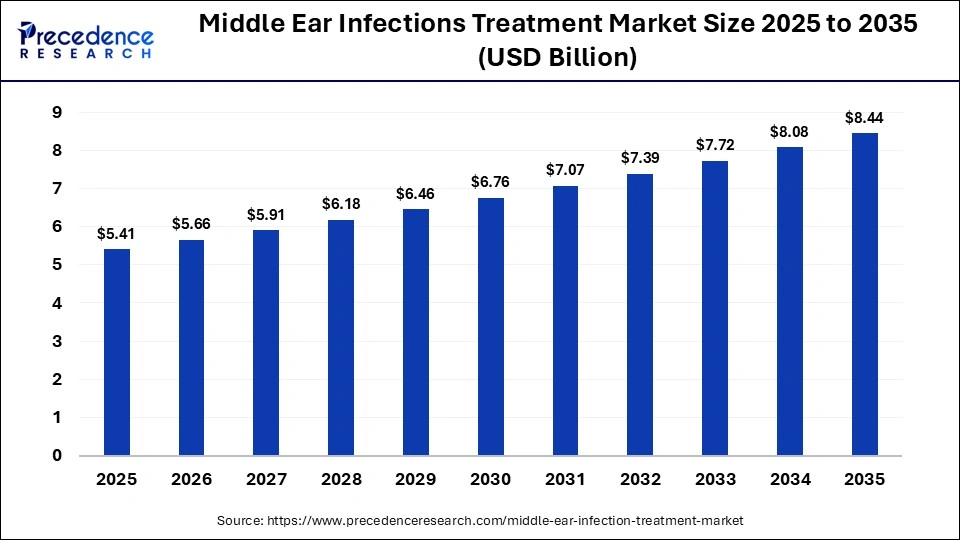
The global middle ear infections treatment market size was calculated at USD 5.41billion in 2025 and is predicted to increase from USD 5.66 billion in 2026 to approximately USD 8.44 billion by 2035, expanding at a CAGR of 4.55% from 2026 to 2035. The middle ear infections treatment market includes pharmaceutical and surgical interventions used to manage otitis media (middle ear infections), a common condition causing pain, inflammation, and hearing issues. The rising incidence in pediatric populations, advancements in minimally invasive surgery, and growing healthcare access drive market growth.
Key Takeaways
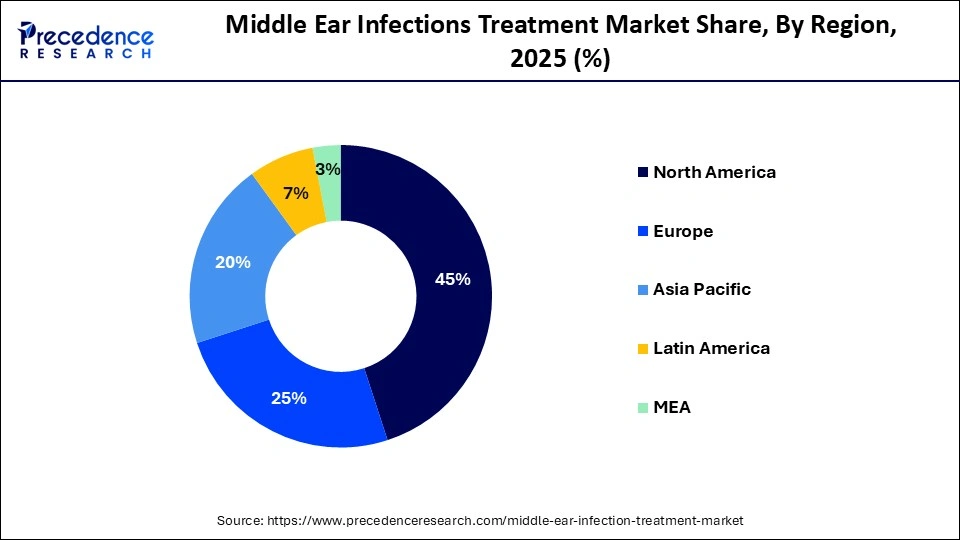
- North America dominated the global market with a share of approximately 45% in 2025.
- Asia-Pacific is expected to grow at the fastest CAGR of approximately 5.2% in the market during the forecast period.
- By treatment type, the antibiotics segment accounted for a considerable revenue share of approximately 68% in the market in 2025.
- By treatment type, the analgesics segment is expected to expand rapidly in the market with a CAGR of 4.0% in the coming years.
- By cause/pathogen, the bacterial segment held a dominant position in the market with a share of approximately 75% in 2025.
- By cause/pathogen, the viral segment is expected to grow with the highest CAGR of approximately 4.1% in the market between 2026 and 2035.
- By age group, the pediatric segment led the global market with a share of approximately 60% in 2025.
- By age group, the geriatric segment is expected to grow with the highest CAGR of approximately 4.3% in the market between 2026 and 2035.
- By distribution channel/end-user, the hospitals segment dominated the market with a share of approximately 50% in 2025.
- By distribution channel/end-user, the ambulatory surgical centers segment is expected to expand rapidly in the market in the coming years.
What is the Middle Ear Infections Treatment market?
Acute otitis media (AOM) is a middle ear infection and the second most common pediatric diagnosis in emergency departments, after upper respiratory infections. It mainly affects children aged 6 to 24 months. AOM causes inflammation and fluid buildup behind the eardrum. While anyone can get a middle ear infection, it is especially frequent in young children, often following an upper respiratory infection that leads to mucus buildup. These infections can be viral, bacterial, or mixed. Treatment varies by infection type and may include antibiotics, analgesics (pain relief), decongestants, surgical procedures, and supportive care.
Antibiotics and over-the-counter pain relievers effectively manage middle ear infections, with amoxicillin being the primary antibiotic for both adults and children, often at higher doses. For recurrent AOM (rAOM) or chronic effusion, myringotomy with ear tubes is the best intervention to reduce recurrence. Research is exploring innovative methods, such as electrospun drug-loaded scaffolds for targeted delivery, which aim to minimize antibiotic side effects.
This minimally invasive technique allows for direct treatment of chronic ear issues through the ear canal, leading to less discomfort and faster recovery than traditional surgery. Additionally, efforts are underway to enhance antibiotic eardrops with agents that disrupt bacterial biofilms, targeting chronic infections resistant to standard treatments. The market serves hospitals, clinics, and ambulatory care settings, with innovation focusing on more effective and targeted treatment options.
What is the Role of AI in the Middle Ear Infections Treatment Market?
Artificial Intelligence (AI) is revolutionizing the treatment of middle ear infections, particularly otitis media (OM), by transitioning from a reactive approach to a proactive, precision-oriented care model. It serves as a sophisticated diagnostic instrument that connects general practitioners with specialists for prompt intervention. Its primary function involves the analysis of tympanic membrane images and videos to differentiate between various types of infections, a challenging task due to obstructions in the ear canal.
By precisely identifying infected fluid located behind the ear, AI helps in assisting clinicians make well-informed decisions regarding antibiotic prescriptions and to minimize unnecessary usage and address resistance issues. Additionally, AI enables remote diagnosis and management of recurrent pediatric ear infections by allowing parents or healthcare providers to transmit high-quality images to specialists. Furthermore, AI-enhanced navigation systems improve the execution of intricate surgical procedures, such as cochlear implants, by offering 3D imaging that helps prevent damage to delicate nerves and blood vessels.
Middle Ear Infections Treatment Market Trends
- Minimally Invasive Treatment
Minimally invasive procedures like endoscopic ear surgery and myringotomy are vital for treating middle ear infections, as they reduce pain, speed up recovery, and offer greater accuracy than traditional surgeries. These techniques avoid large incisions, minimizing tissue damage and scarring while protecting hearing structures. They access the middle ear through the ear canal, causing less disruption. Additionally, endoscopic methods eliminate uncomfortable head bandaging during recovery, enhancing the experience for pediatric patients. - Advanced Therapeutics
Advanced therapeutics are essential in managing infections as they tackle the limitations of conventional treatments to eliminate chronic or biofilm-associated infections. These cutting-edge approaches, which include nanoparticles, hydrogels, and sophisticated drug delivery systems, improve treatment effectiveness by enhancing drug penetration, enabling sustained release, and reducing side effects. Additionally, superparamagnetic iron oxide nanoparticles (SPIONs) ensure precise delivery of medication to the required site, especially in deep or hard-to-reach areas, thus reducing the need for invasive surgical interventions. - Antibiotic Resistance Management
Antibiotic resistance in AOM is rising, particularly against penicillin, reducing antibiotics' effectiveness in clearing bacteria from the middle ear and leading to ongoing symptoms and treatment failures. Excessive antibiotic prescriptions for viral infections promote resistant strains in the nasopharynx, causing further infections and potential transmission.
This growing resistance results in more treatment failures, requiring stronger broad-spectrum antibiotics that worsen resistance. Adopting management strategies like selectively using high-dose amoxicillin can decrease reliance on costly second-line treatments like ceftriaxone and lower the risk of long-term issues such as chronic ear infections and hearing loss.
Market scope
| Report Coverage | Details |
| Market Size in 2025 | USD 5.41 Billion |
| Market Size in 2026 | USD 5.66 Billion |
| Market Size by 2035 | USD 8.44 Billion |
| Market Growth Rate from 2026 to 2035 | CAGR of 4.55% |
| Dominating Region | North America |
| Fastest Growing Region | Asia Pacific |
| Base Year | 2025 |
| Forecast Period | 2026 to 2035 |
| Segments Covered | Treatment Type, Cause/Pathogen, Age Group, Distribution Channel/End-User, and region |
| Regions Covered | North America, Europe, Asia-Pacific, Latin America, and Middle East & Africa |
Segmental Insights
Treatment Type Insights
Which Treatment Type Segment Dominated the Middle Ear Infections Treatment Market?
The antibiotics segment dominated the market in 2025, as they target bacterial pathogens responsible for the infection, reducing pain, speeding up recovery in specific groups, and preventing serious, rare complications. While many ear infections are viral and resolved on their own, antibiotics are necessary for severe, persistent, or recurring bacterial cases to ensure the preservation of hearing and prevent long-term damage. New formulations like extended-release drops and dual-action agents improve patient compliance and clinical outcomes, highlighting the significance of this segment.
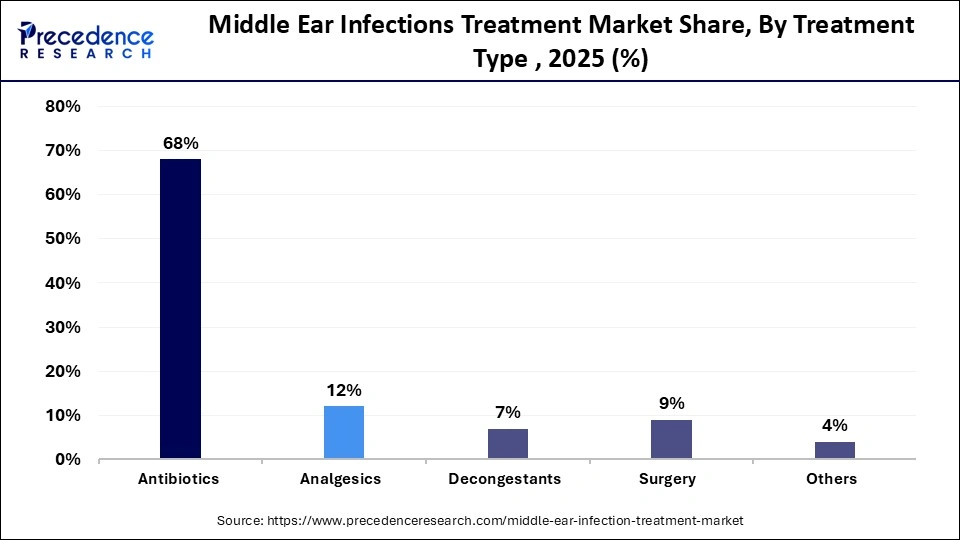
The analgesics segment is expected to be the fastest-growing in the market, as analgesics are crucial in addressing severe pain from acute infections and providing long-term solutions for chronic cases. It helps reduce antibiotic overuse and manages complications like fluid buildup, which may lead to hearing loss in children. Analgesics, including NSAIDs like ibuprofen and anesthetic ear drops, offer quick relief and are vital during 'watchful waiting' periods to avoid unnecessary antibiotic use. These medications are often combined with other treatments to tackle both infection and inflammation
Cause/Pathogen Insights
Why Did the Bacterial Segment Dominate the Middle Ear Infections Treatment Market?
The bacterial segment held the largest revenue share of the market in 2025, as bacterial pathogens are mainly responsible for most acute and chronic cases requiring medical treatment. Due to severe pain, inflammation, and risk of long-term complications like hearing loss, antibiotics are the standard treatment. This creates a high demand for oral and topical antibiotics, driving significant revenue. The increase in antibiotic-resistant bacteria, such as Pseudomonas aeruginosa and Staphylococcus aureus, has led to ongoing research for new drugs and targeted therapies.
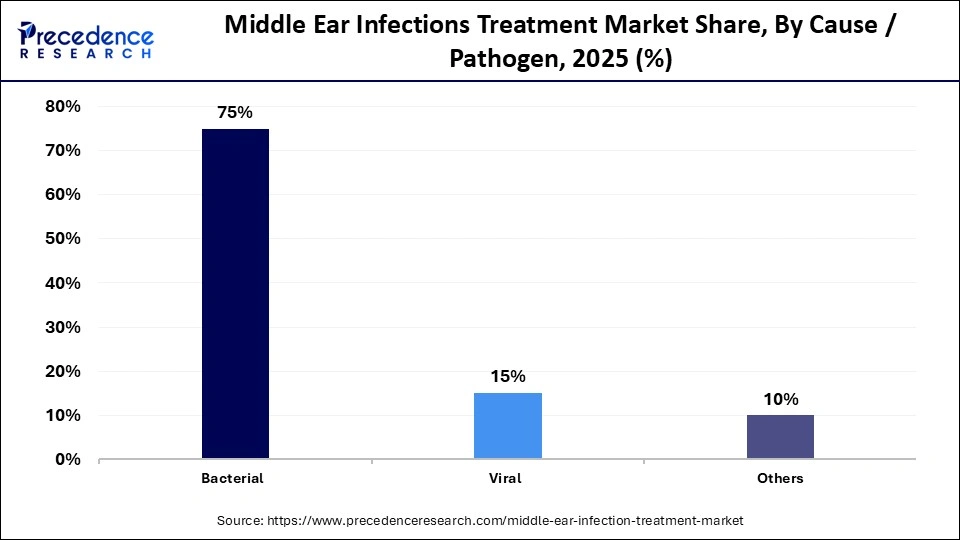
The viral segment is expected to witness the fastest growth in the market over the forecast period, due to the need for improving treatment outcomes, fighting antibiotic resistance, and decreasing recurrent ear infections in children. Viral infections such as the common cold and upper respiratory infections (URIs) cause eustachian tube congestion and inflammation, encouraging bacterial growth. The antiviral medicines offer alternative treatments, including antiviral agents and symptomatic care, to reduce unnecessary antibiotic use, expanding market presence.
Age Group Insights
How the Pediatric Segment Dominated the Middle Ear Infections Treatment Market?
The pediatric segment registered its dominance over the global market in 2025, due to high incidence rates in children, driven by anatomical, immunological, and daycare factors. Children have narrower, more horizontal eustachian tubes than adults, leading to poor drainage and increased bacterial transfer from the throat to the middle ear. OM is the second most common pediatric diagnosis in emergency departments, as children often experience recurrent ear infections that require ongoing treatment, antibiotics, and sometimes surgery.
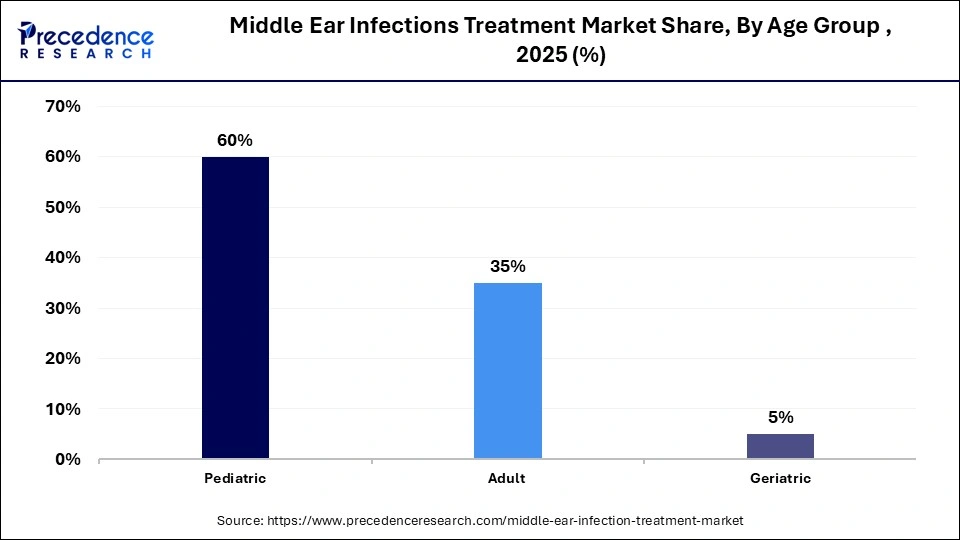
The geriatric segment is expected to witness the fastest growth in the market over the forecast period, due to rising chronic cases among older individuals and a shift towards specialized long-term care. Aging leads to physiological changes, such as a thinner, drier ear canal and reduced eustachian tube function, making the elderly more susceptible to infections. Older adults often suffer from chronic suppurative otitis media (CSOM) and infections linked to existing conditions like diabetes. Additionally, middle ear infections in older adults may not show typical symptoms, leading to delayed diagnoses and a higher risk of severe complications.
Distribution Channel/End-User Insights
Which Distribution Channel/End-User Segment Led the Middle Ear Infections Treatment Market?
The hospitals segment led the market in 2025. They play a crucial role in treating infections because of their large volume of patients, specialized care for serious cases, and advanced diagnostic tools. It is also an important place for surgeries such as tympanostomy tube insertion, commonly performed for children. Furthermore, improved healthcare coverage for hospital services in developed areas has led to a greater demand for hospitals.
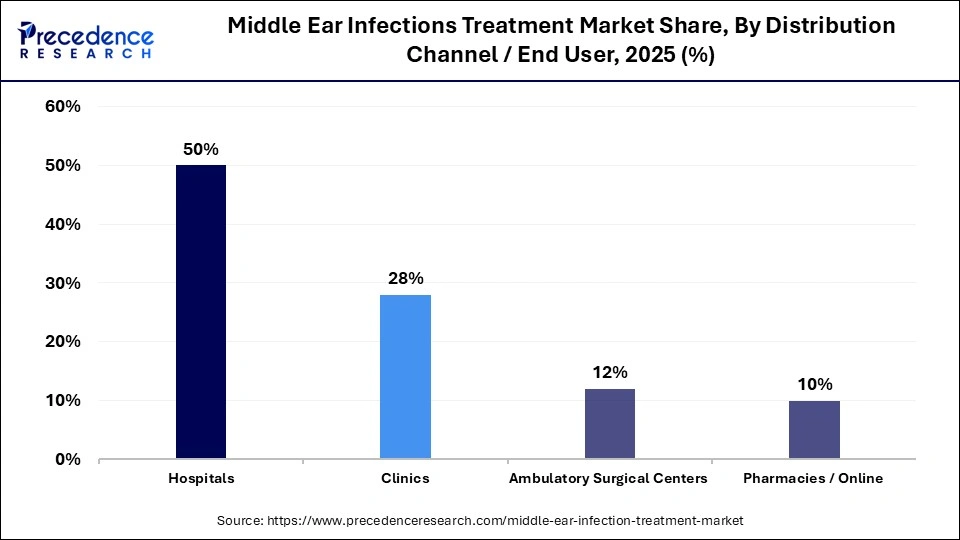
The ambulatory surgical centers segment is expected to be the fastest-growing segment in 2025, driven by the rise in chronic ear infections in children requiring same-day outpatient surgeries. ASCs also offer affordable, convenient, and effective care, with faster procedures boosting productivity and improving patients' quality of life. Additionally, they provide a more personal environment and reduce the risk of hospital-acquired infections due to fewer sick patients, making it a preferred care center for patients.
Regional Insights
North America Middle Ear Infections Treatment Market Size and Growth 2026 to 2035
The North America middle ear infections treatment market size is estimated at USD 2.43 billion in 2025 and is projected to reach approximately USD 3.84 billion by 2035, with a 4.68% CAGR from 2026 to 2035.

Which Factors Drive the Middle Ear Infections Treatment Market in North America?
North America held a major revenue share in 2025, due to the increasing prevalence of middle ear infections, an advanced healthcare system, and the rapid adoption of innovative, minimally invasive treatments. This region leads in research and development of standardized protocols, supported by major pharmaceutical companies, research institutions, and specialized medical facilities that foster new therapies, including advanced antibiotics and surgical tools.
U.S. Middle Ear Infections Treatment Market Size and Growth 2026 to 2035
The U.S. middle ear infections treatment market size is calculated at USD 1.83 billion in 2025 and is expected to reach nearly USD 2.90 billion in 2035, accelerating at a strong CAGR of 4.71% between 2026 to 2035.

U.S. Market Trends
The U.S. dominates the market due to high infection rates in children, a strong healthcare system, and substantial R&D investment. Key factors include advanced diagnostic tools, high healthcare spending, and major pharmaceutical companies. The region has advanced hospitals and favorable reimbursement policies that enhance treatment access. Innovative technologies like smart otoscopes and AI diagnostics are common, with a mix of antibiotic therapies, pain relief medications, and less invasive surgical options like tympanostomy broadening market reach.
How Will the Asia-Pacific Region Grow in the Middle Ear Infections Treatment Market?
Asia-Pacific is expected to witness the fastest growth during the predicted timeframe, driven by a large, young population, better healthcare access, and rising medical needs. With many children susceptible to these infections, factors like pollution, secondary smoking, and overcrowding increase the risk of upper respiratory infections. Rising disposable incomes improve access to pharmaceuticals, including antibiotics and specialized over-the-counter products. Public health efforts for early diagnosis and vaccination, such as pneumococcal conjugate vaccines, are changing the treatment landscape.
India Market Trends
India plays a vital role in the global market for treating middle ear infections as a cost-effective pharmaceutical hub, with a high incidence of infections and a growing ENT industry. As a leading supplier of generic drugs and active pharmaceutical ingredients (APIs) for ear infections, India is significant for affordable treatments and complex surgeries. The demand for the services is rising due to increased awareness and better insurance coverage, positioning India as a key provider of affordable, high-quality ENT medications and a major consumer market for these healthcare solutions.
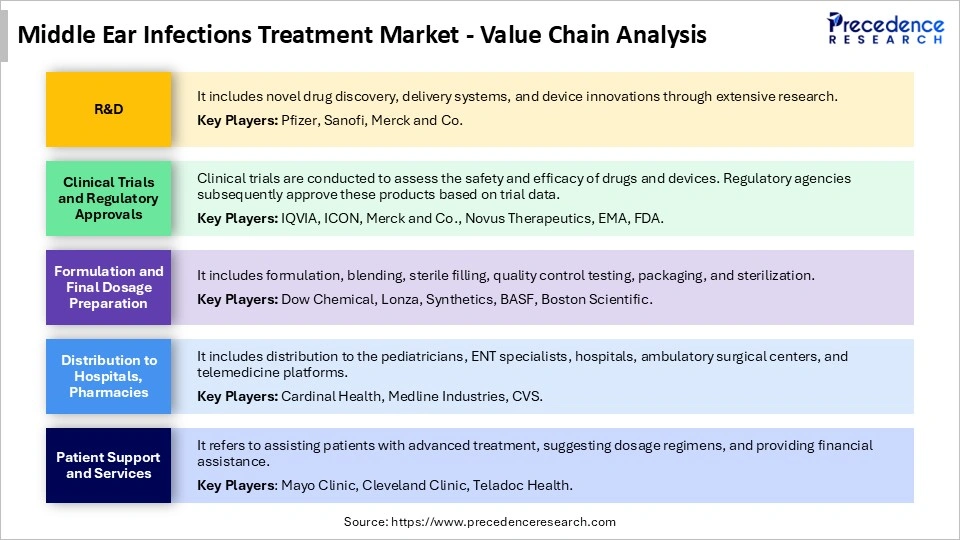
Middle Ear Infections Treatment Market Value Chain Analysis
Top Companies in the Middle Ear Infections Treatment Market
- Pfizer Inc
- Johnson & Johnson
- GlaxoSmithKline plc
- Sanofi S.A.
- Novartis AG
- Bayer AG
- Merck & Co., Inc.
- AstraZeneca plc
- Cipla Limited
- Medtronic plc
- Olympus Corporation
- American Diagnostic Corporation
- Grace Medical
- Intersect ENT
- Torque Pharma
Recent Developments in the Middle Ear Infections Treatment Market
- In November 2025, Earflo announced that it won the CES Innovation Awards Best of Innovation in Digital Health, demonstrating exceptional innovation in design and engineering. The company specializes in developing a non-invasive, at-home treatment for negative middle ear pressure in children as young as two. (Source - https://www.businesswire.com)
- In May 2025, researchers from Cornell University developed a new topical gel that cures ear infections effectively with just a single application, offering relief without the typical drawbacks. They developed tiny particles called liposomes to encapsulate antibiotics. (Source: https://www.thebrighterside.news)
Segments Covered in the Report
By Treatment Type
- Antibiotics
- Analgesics
- Decongestants
- Surgery
- Others
By Cause/Pathogen
- Bacterial
- Viral
- Others
By Age Group
- Pediatric
- Adult
- Geriatric
By Distribution Channel/End-Users
- Hospitals
- Clinics
- Ambulatory Surgical Centers
- Pharmacies/Online
By Region
- North America
- Europe
- Asia-Pacific
- Latin America
- Middle East & Africa
For inquiries regarding discounts, bulk purchases, or customization requests, please contact us at sales@precedenceresearch.com
Frequently Asked Questions





Ask For Sample
No cookie-cutter, only authentic analysis – take the 1st step to become a Precedence Research client
 Get a Sample
.webp)



 sales@precedenceresearch.com
 Schedule a Meeting
