



Middle East Cyclotron-Produced Radioisotopes Market Size, Companies, Share, Patient Volume, Treatment Adoption Rates, Pricing Analysis, Regulatory Landscape, Competitive Positioning, and Demand Forecast
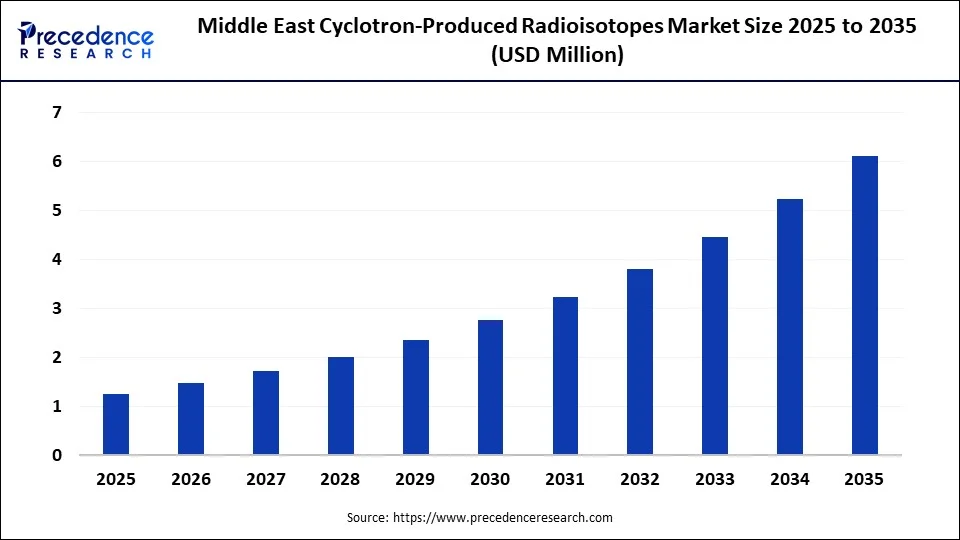
The Middle East cyclotron-produced radioisotopes market established a strong position in 2026 and is projected to expand significantly from 2026 through 2035, driven by increasing demand, evolving market needs, technological advancements, and growing adoption across key industries.
Source: https://www.precedenceresearch.com/middle-east-cyclotron-produced-radioisotopes-market
 Get a Sample
 Table Of Content
What is the Middle East Cyclotron-Produced Radioisotopes Market Size?
The Middle East Cyclotron-Produced Radioisotopes Market demonstrated a strong market presence in 2026 and is projected to maintain steady momentum from 2026 through 2035, supported by rising demand, expanding applications, and continued industry adoption. The market is witnessing steady growth, driven by the increasing adoption of positron emission tomography (PET)-based molecular imaging, expanding cancer incidence across the Middle East, rising investments in nuclear medicine infrastructure, and growing government initiatives to establish domestic radioisotope production capabilities. The expansion of cyclotron installations, increasing demand for precision diagnostics and theranostic radiopharmaceuticals, and efforts to reduce dependence on imported short-lived radioisotopes are further supporting market growth.
Key Takeaways
- The Middle East cyclotron-produced radioisotopes market demonstrated a strong market presence in 2026 and is projected to maintain steady momentum from 2026 through 2035, supported by rising demand, expanding applications, and continued industry adoption.
- Saudi Arabia dominated the Middle East cyclotron-produced radioisotopes market in 2025, while the United Arab Emirates is anticipated to witness the fastest growth through 2035.
- By radioisotope, the Fluorine-18 (F-18) segment accounted for the largest market share in 2025 owing to its widespread use in PET imaging, while the Gallium-68 (Ga-68) segment is expected to register the fastest growth during the forecast period.
- By cyclotron type, Low-Energy Cyclotrons (≤18 MeV) held the largest market share in 2025 due to their extensive deployment for routine PET isotope production, whereas the Medium-Energy Cyclotrons (>18–30 MeV) segment is projected to grow at the fastest rate.
- By application, Diagnostic Imaging dominated the market in 2025, while Therapeutic Interventions are expected to experience the highest growth owing to the increasing adoption of targeted radionuclide therapies and theranostic applications.
- By end user, Hospitals accounted for the largest market share in 2025, whereas Centralized Radiopharmacies are anticipated to expand at the fastest pace during the forecast period.
Market Overview
The Middle East Cyclotron-Produced Radioisotopes Market refers to the industry involved in the production, processing, distribution, and clinical utilization of medical radioisotopes generated using cyclotron technology. These radioisotopes are primarily used in positron emission tomography (PET) imaging, targeted radionuclide therapies, radiopharmaceutical manufacturing, and biomedical research. Unlike reactor-produced isotopes, cyclotron-produced radioisotopes are characterized by their short half-lives, requiring localized production infrastructure, advanced radiochemistry capabilities, and highly efficient time-sensitive distribution networks to ensure timely clinical use.
Cyclotron-produced radioisotopes such as Fluorine-18 (F-18), Gallium-68 (Ga-68), Carbon-11 (C-11), Copper-64 (Cu-64), Zirconium-89 (Zr-89), and Iodine-124 (I-124) have become indispensable for molecular imaging, precision oncology, and theranostic applications. The growing adoption of PET-based diagnostics and personalized medicine has significantly increased demand for these isotopes across hospitals, nuclear medicine centers, and radiopharmacies.
The Middle East market is undergoing significant transformation, supported by increasing investments in nuclear medicine infrastructure, expansion of PET-CT imaging facilities, rising cancer prevalence, and government initiatives to strengthen domestic radioisotope production capabilities. Countries such as Saudi Arabia, the United Arab Emirates, Israel, and Egypt are investing in cyclotron installations, radiopharmacy networks, and research collaborations to reduce dependence on imported isotopes while improving healthcare accessibility. Furthermore, the growing adoption of theranostic radiopharmaceuticals, increasing clinical trials involving novel PET tracers, and advancements in cyclotron technology are expected to accelerate market expansion throughout the forecast period.
Major Market Trends
Expansion of Domestic Cyclotron Infrastructure
Healthcare providers and government agencies across the Middle East are increasing investments in cyclotron installations to improve domestic production of short-lived PET radioisotopes and reduce reliance on imports. The expansion of hospital-based and centralized cyclotron facilities is strengthening regional supply security while improving patient access to advanced molecular imaging.
Growing Adoption of Precision Oncology & Theranostics
The increasing use of molecular imaging for personalized cancer diagnosis and targeted radionuclide therapies is driving demand for cyclotron-produced radioisotopes. Emerging theranostic approaches utilizing isotopes such as Gallium-68 and Copper-64 are expanding the clinical applications of PET imaging beyond conventional oncology diagnostics.
Increasing Government Investment in Nuclear Medicine
National healthcare transformation programs across the Middle East are prioritizing the expansion of nuclear medicine infrastructure, radiopharmacy networks, and advanced diagnostic capabilities. Government investments in healthcare modernization and research institutions are creating favorable conditions for domestic cyclotron-based isotope production.
Advancements in Cyclotron & Radiochemistry Technologies
Technological advancements in compact cyclotron systems, automated target handling, radiochemistry synthesis modules, and quality control systems are improving isotope production efficiency, reducing operational costs, and enabling commercial production of a broader range of PET radioisotopes.
Rising Research Activities for Novel PET Radiotracers
Academic institutions, research organizations, and pharmaceutical companies are increasingly focusing on the development of next-generation PET radiotracers for oncology, cardiology, neurology, and inflammatory diseases. This is expected to expand the commercial potential of emerging cyclotron-produced radioisotopes over the coming decade.
Market Report Coverage and Key Metrics
| Report Coverage | Details |
| Market Size in 2025 | USD XX Million |
| Market Size in 2026 | USD XX Million |
| Market Size by 2035 | USD XX Million |
| Market Growth Rate (2026–2035) | CAGR of XX% |
| Base Year | 2025 |
| Forecast Period | 2026-2035 |
| Market Covered | Middle East Cyclotron-Produced Radioisotopes Market |
| Segments Covered | Radioisotope, Cyclotron Type, Application, End User, and Country |
| Countries Covered | Saudi Arabia, United Arab Emirates, Israel, Egypt, Jordan, Qatar, Kuwait, Oman, Bahrain, and Rest of Middle East |
Ecosystem & Value Chain Analysis
The cyclotron-produced radioisotopes market operates through a highly integrated value chain where production efficiency and supply reliability are determined by coordination between raw material suppliers, cyclotron operators, radiopharmaceutical manufacturers, logistics providers, and healthcare institutions. Since many cyclotron-produced isotopes possess short physical half-lives, the value chain is significantly more time-sensitive than conventional pharmaceutical supply chains, requiring localized production facilities and highly efficient distribution networks.
The study evaluates the complete industry ecosystem by assessing upstream supply of enriched target materials, cyclotron manufacturing capabilities, midstream radioisotope production and radiochemistry processes, and downstream utilization across hospitals, nuclear medicine centers, PET imaging facilities, radiopharmacies, and research institutions. The analysis also identifies critical supply chain bottlenecks, stakeholder roles, and value creation across each stage of the ecosystem.
This section covers
This chapter provides a comprehensive assessment of the complete industry ecosystem by mapping the upstream, midstream, and downstream value chain of cyclotron-produced radioisotopes. It evaluates stakeholder relationships, target material sourcing, cyclotron manufacturing, radiopharmaceutical production, distribution logistics, value creation across the supply chain, and operational bottlenecks influencing regional market efficiency.
What this section provides to clients
This chapter enables stakeholders to understand the complete commercial ecosystem governing cyclotron-produced radioisotopes, identify strategic partners, assess value creation across the supply chain, and evaluate opportunities for vertical integration, localization, and operational optimization.
Technology Landscape
Cyclotron technology forms the backbone of the Middle East cyclotron-produced radioisotopes market, enabling the production of short-lived positron-emitting isotopes required for PET imaging and theranostic applications. Technological advancements in compact cyclotron systems, automated target handling, radiochemistry synthesis modules, and digital quality control platforms have significantly improved production efficiency, isotope purity, and operational reliability. Furthermore, the transition from conventional PET isotope production to multi-isotope production platforms is enabling healthcare facilities to diversify their radiopharmaceutical portfolios while optimizing cyclotron utilization.
The report evaluates the technological evolution of cyclotron systems across the Middle East, assessing the adoption of different energy configurations, target processing technologies, automation capabilities, radiochemistry advancements, and production technologies that support commercial-scale radioisotope manufacturing.
This section covers
This chapter examines the current technology landscape governing cyclotron-based radioisotope production across the Middle East. It evaluates cyclotron configurations, target technologies, radiochemistry processes, purification systems, automation, digitalization, and emerging production technologies while benchmarking the technological capabilities adopted across the regional ecosystem.
What this section provides to clients
This chapter provides a comprehensive understanding of the technological ecosystem governing cyclotron-based isotope production, helping stakeholders evaluate technology maturity, production efficiency, automation capabilities, future technology trends, and investment opportunities across the Middle East.
Regulatory & Licensing Landscape
The production and commercialization of cyclotron-produced radioisotopes are governed by stringent regulatory frameworks covering cyclotron installation, radiation safety, Good Manufacturing Practices (GMP), radiopharmaceutical production, transportation, and radioactive material handling. As countries across the Middle East continue to expand nuclear medicine capabilities, regulatory agencies are strengthening licensing procedures and quality standards to ensure safe production, distribution, and clinical utilization of medical radioisotopes.
The report provides a comprehensive assessment of the regional regulatory environment, highlighting country-specific licensing requirements, radiation protection regulations, import and export policies, transportation guidelines, and evolving regulatory frameworks supporting domestic isotope production and nuclear medicine expansion.
This section covers
This chapter provides a detailed assessment of the regulatory and licensing environment governing cyclotron-produced radioisotopes across the Middle East. It analyzes country-specific licensing frameworks, radiation safety regulations, GMP requirements, transportation standards, and import-export policies while highlighting evolving regulatory developments supporting regional market growth.
What this section provides to clients
This chapter helps manufacturers, healthcare providers, investors, and technology developers understand the regulatory environment across the Middle East, identify licensing requirements, evaluate compliance obligations, and assess future regulatory developments influencing market expansion.
Production Landscape
The Middle East cyclotron-produced radioisotopes market is characterized by localized production owing to the short physical half-lives of PET radioisotopes, which require rapid manufacturing and time-sensitive distribution. Regional production is increasingly supported by investments in hospital-based cyclotrons, centralized radiopharmacies, and commercial production facilities, particularly in countries aiming to reduce dependence on imported radioisotopes. Growing demand for oncology diagnostics, theranostic radiopharmaceuticals, and precision medicine is further driving investments in production capacity and operational efficiency.
The report evaluates the regional production ecosystem by assessing installed production capacity, production volumes, operational utilization, country-wise manufacturing capabilities, supply-demand gaps, production economics, and future capacity expansion projects.
This section covers
This chapter analyzes the production landscape of cyclotron-produced radioisotopes across the Middle East by evaluating installed production capacity, operational utilization, country-wise production volumes, radioisotope-wise manufacturing trends, supply-demand gaps, production economics, pricing trends, and future capacity expansion initiatives shaping the regional market.
What this section provides to clients
This chapter enables clients to assess current production capabilities, identify supply shortages, evaluate production economics, benchmark manufacturing facilities, analyze capacity expansion opportunities, and understand the long-term outlook for domestic cyclotron-produced radioisotope production across the Middle East.
Trade Analysis
The trade of cyclotron-produced radioisotopes within the Middle East differs significantly from conventional pharmaceutical products due to the extremely short half-lives of most PET isotopes. Consequently, regional trade is largely dependent on localized production, efficient cross-border logistics, and rapid transportation networks that enable delivery within clinically acceptable timeframes. Countries without domestic cyclotron infrastructure rely heavily on imports from neighboring production hubs, while nations with established production capabilities increasingly serve as regional supply centers.
The report provides an in-depth assessment of regional trade patterns, import dependency, supplier country analysis, cross-border distribution networks, and supply chain risks affecting the movement of cyclotron-produced radioisotopes across the Middle East.
This section covers
This chapter evaluates the regional trade ecosystem by analyzing import and export patterns, cross-border trade flows, country-level import dependency, major supplier countries, domestic production versus import dynamics, and distribution networks. It also assesses trade-related challenges, supply chain risks, and the evolving regional trade outlook for cyclotron-produced radioisotopes.
What this section provides to clients
This chapter helps clients understand regional trade dynamics, identify import-dependent markets, evaluate domestic production opportunities, assess cross-border supply chain efficiency, analyse procurement risks, and develop strategies to strengthen regional self-sufficiency in cyclotron-produced radioisotopes.
Cancer Epidemiology & Disease Burden Analysis
The growing burden of cancer across the Middle East is one of the primary factors driving demand for cyclotron-produced radioisotopes. Rising incidences of breast, colorectal, lung, prostate, thyroid, liver, and neuroendocrine cancers are accelerating the adoption of PET imaging, molecular diagnostics, and targeted radionuclide therapies. Additionally, increasing healthcare awareness, expanding cancer screening programs, and improved access to advanced oncology services are contributing to greater utilization of nuclear medicine procedures throughout the region.
The report provides a comprehensive assessment of the regional disease burden by evaluating cancer incidence, prevalence, mortality, country-wise disease trends, PET imaging eligible patient populations, and future demand projections for nuclear medicine services.
This section covers
This chapter evaluates the epidemiological landscape of major cancers driving demand for cyclotron-produced radioisotopes across the Middle East. It analyzes country-wise disease burden, incidence and prevalence trends, mortality rates, indication-wise patient populations, and the projected demand for PET imaging and nuclear medicine services over the forecast period.
What this section provides to clients
This chapter enables healthcare providers, investors, and radioisotope manufacturers to identify high-demand therapeutic areas, quantify addressable patient populations, prioritize country-level expansion opportunities, and forecast future demand for cyclotron-produced radioisotopes based on regional disease trends.
Investment & Funding Landscape
Increasing investments in healthcare modernization, nuclear medicine infrastructure, and domestic radioisotope production are transforming the Middle East into an emerging hub for advanced molecular imaging. Governments across the region are allocating significant capital toward cyclotron installations, radio pharmacy expansion, oncology infrastructure, and research institutions, while private healthcare providers and international technology companies continue to establish strategic partnerships to strengthen regional production capabilities.
The report evaluates public and private investment activities, government funding initiatives, foreign direct investments, strategic collaborations, mergers and acquisitions, and country-level investment opportunities that are shaping the future of the Middle East cyclotron-produced radioisotopes market.
This section covers
This chapter provides a detailed assessment of investment activities supporting the cyclotron-produced radioisotopes ecosystem across the Middle East. It analyses government funding programs, private sector investments, foreign direct investments, strategic partnerships, mergers and acquisitions, joint ventures, and emerging investment opportunities across key regional markets.
What this section provides to clients
This chapter helps investors, technology developers, healthcare organizations, and market participants identify high-growth investment opportunities, evaluate funding trends, benchmark country-level investment attractiveness, and develop long-term expansion strategies within the regional nuclear medicine ecosystem
Market Dynamics
Drivers
Rising Adoption of PET Imaging and Precision Oncology
The growing prevalence of cancer and the increasing adoption of precision medicine are significantly driving demand for cyclotron-produced radioisotopes across the Middle East. Healthcare providers are increasingly utilizing PET imaging for early disease detection, treatment planning, and therapy monitoring, leading to higher demand for radioisotopes such as Fluorine-18 and Gallium-68. Simultaneously, expanding nuclear medicine infrastructure and government investments in advanced diagnostic technologies are further supporting market growth.
Restraint
High Capital Investment and Complex Regulatory Requirements
The establishment of cyclotron facilities requires substantial capital investment in cyclotron equipment, radiochemistry laboratories, quality control infrastructure, radiation safety systems, and specialized workforce development. In addition, stringent licensing requirements, regulatory approvals, and compliance with GMP and radiation safety standards increase project timelines and operational complexity, particularly in countries with developing nuclear regulatory frameworks.
Opportunity
Expansion of Domestic Radioisotope Production and Theranostic Applications
Growing efforts to localize radioisotope production and reduce dependence on imported PET isotopes present significant growth opportunities across the Middle East. Increasing investments in hospital-based cyclotrons, centralized radiopharmacies, and theranostic radiopharmaceutical development are expected to strengthen regional production capabilities. Furthermore, the expanding clinical adoption of targeted radionuclide therapies and next-generation PET tracers is creating new commercial opportunities for manufacturers, healthcare providers, and technology developers.
Segment Insights
Radioisotope Insights
The Fluorine-18 (F-18) Segment Dominated the Market in 2025
The Fluorine-18 (F-18) segment dominated the Middle East cyclotron-produced radioisotopes market in 2025 owing to its extensive utilization in PET imaging, particularly in oncology diagnostics using fluorodeoxyglucose (FDG). The increasing prevalence of cancer, expansion of PET-CT infrastructure, and widespread clinical adoption of F-18-based radiopharmaceuticals have established Fluorine-18 as the most commercially produced and consumed cyclotron-generated radioisotope across the region. Additionally, the presence of dedicated cyclotron facilities producing F-18 on a routine basis has further strengthened its market leadership.
Middle East Cyclotron-Produced Radioisotopes Market Share, By Radioisotope, 2025 (%)
| Radioisotope | Market Share (2025) |
| Fluorine-18 (F-18) | 38.40% |
| Carbon-11 (C-11) | 10.20% |
| Nitrogen-13 (N-13) | 4.50% |
| Oxygen-15 (O-15) | 3.80% |
| Gallium-68 (Ga-68) | 13.70% |
| Copper-64 (Cu-64) | 6.40% |
| Zirconium-89 (Zr-89) | 5.10% |
| Iodine-124 (I-124) | 3.20% |
| Scandium-44 (Sc-44) | 2.40% |
| Other Cyclotron-Produced Radioisotopes | 4.60% |
| Rubidium-82 Precursors | 2.90% |
| Bromine-76 | 1.80% |
| Yttrium-86 | 1.30% |
| Other Emerging PET Radioisotopes | 1.70% |
The Gallium-68 (Ga-68) segment is anticipated to witness the fastest growth during the forecast period due to the increasing adoption of theranostic approaches in oncology, particularly for neuroendocrine tumors and prostate cancer. Rising clinical acceptance of Ga-68-labeled radiopharmaceuticals, coupled with growing investments in precision medicine and targeted radionuclide therapies, is expected to drive substantial demand across the Middle East.
Cyclotron Type Insights
The Low-Energy Cyclotrons (≤18 MeV) Segment Held the Largest Market Share in 2025
The Low-Energy Cyclotrons (≤18 MeV) segment accounted for the largest share of the market in 2025 owing to their extensive deployment for routine production of PET radioisotopes such as Fluorine-18, Carbon-11, Nitrogen-13, and Oxygen-15. These systems offer lower installation costs, established operational reliability, and compatibility with hospital-based radiopharmacies, making them the preferred choice for routine clinical isotope production.
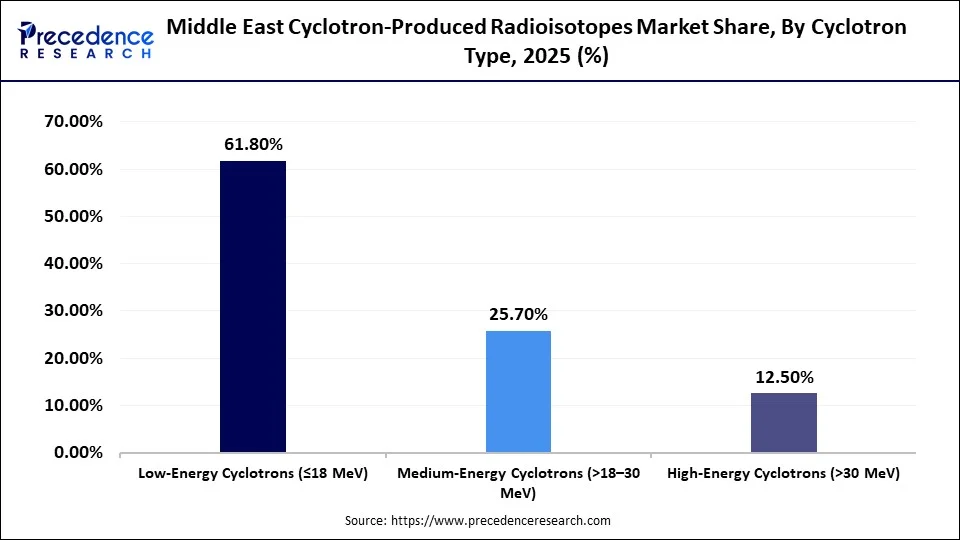
The Medium-Energy Cyclotrons (>18–30 MeV) segment is expected to register the fastest growth during the forecast period due to their capability to produce a broader portfolio of emerging PET and theranostic radioisotopes, including Copper-64, Zirconium-89, and Scandium-44. Growing research activities and expanding commercial isotope production are expected to support adoption.
Application Insights
The Diagnostic Imaging Segment Dominated the Market in 2025
The Diagnostic Imaging segment dominated the market in 2025 owing to the increasing utilization of PET imaging for early diagnosis, disease staging, treatment planning, and therapy response assessment across oncology, cardiology, neurology, and inflammatory diseases. The growing installation of PET-CT systems, increasing cancer screening initiatives, and expanding availability of cyclotron-produced PET tracers continue to strengthen this segment.
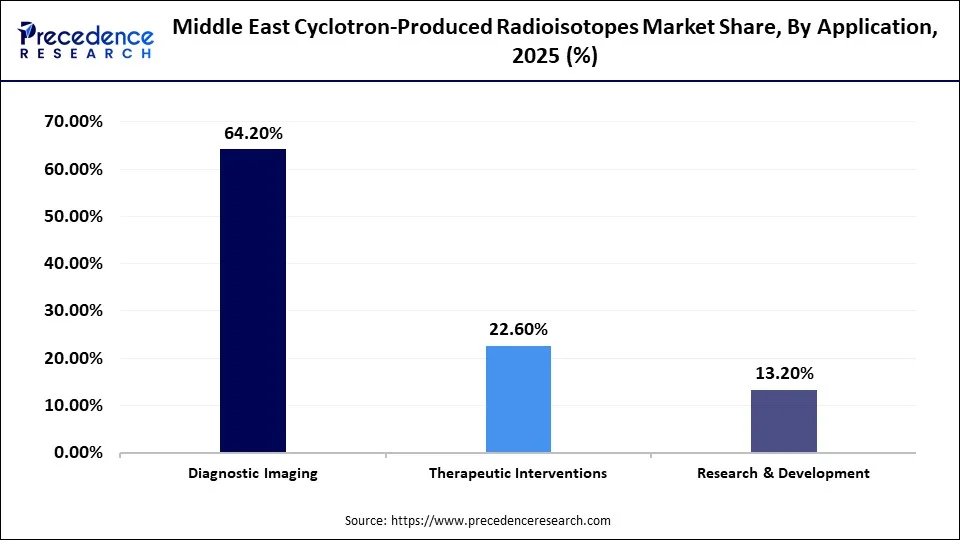
The Therapeutic Interventions segment is projected to witness the fastest growth during the forecast period as the clinical adoption of targeted radionuclide therapies and radiopharmaceutical theranostics continues to expand. Increasing utilization of personalized treatment approaches and growing availability of therapeutic radiopharmaceuticals are expected to accelerate market growth.
End User Insights
The Hospitals Segment Held the Largest Market Share in 2025
The Hospitals segment dominated the market in 2025 owing to the growing integration of PET imaging and nuclear medicine services into tertiary care hospitals and comprehensive cancer centers. Increasing patient volumes, expansion of oncology departments, and rising investments in advanced diagnostic infrastructure have contributed to the dominance of this segment.
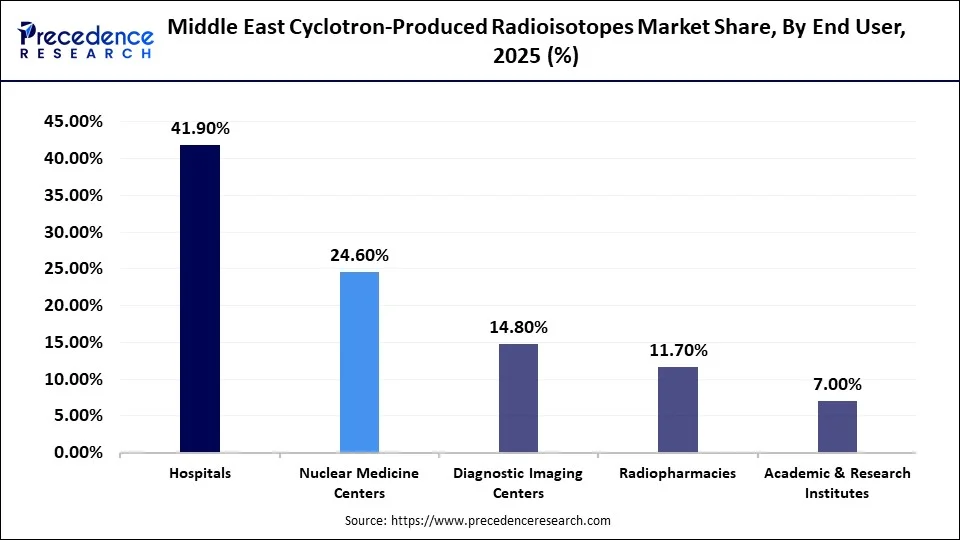
The Radiopharmacies, particularly Centralized Radiopharmacies, are expected to grow at the fastest rate during the forecast period due to the increasing outsourcing of radioisotope production, expansion of regional distribution networks, and rising demand for centralized production facilities capable of supplying multiple healthcare institutions efficiently.
Country Level Insights
Saudi Arabia
Saudi Arabia dominated the Middle East cyclotron-produced radioisotopes market in 2025 owing to substantial government investments in healthcare modernization, expansion of nuclear medicine infrastructure, and the development of advanced oncology centers. The country's Vision 2030 initiatives, increasing installation of cyclotrons, growing number of PET-CT facilities, and rising demand for precision oncology have positioned Saudi Arabia as the regional leader in cyclotron-produced radioisotope production and utilization.
What Makes the United Arab Emirates the Fastest-Growing Market?
The United Arab Emirates is expected to register the fastest growth during the forecast period due to continuous investments in specialized healthcare infrastructure, increasing adoption of molecular imaging technologies, expansion of private healthcare networks, and growing demand for advanced diagnostic imaging. The country's focus on becoming a regional hub for medical innovation and precision medicine is expected to accelerate investments in cyclotron infrastructure and radiopharmaceutical production.
Israel Market Analysis
Israel represents one of the most technologically advanced nuclear medicine markets in the Middle East, supported by a strong research ecosystem, well-established radiopharmaceutical manufacturing capabilities, and extensive collaboration between academic institutions and healthcare providers. Continuous innovation in molecular imaging, radiochemistry, and theranostic research is expected to sustain long-term market growth.
Egypt Market Analysis
Egypt is emerging as a promising market owing to the continuous expansion of healthcare infrastructure, increasing investments in oncology care, and growing adoption of PET imaging services. Government initiatives aimed at strengthening nuclear medicine capabilities and improving access to advanced diagnostic technologies are expected to create significant opportunities for cyclotron-produced radioisotopes during the forecast period.
Rest of Middle East
Countries including Jordan, Qatar, Kuwait, Oman, and Bahrain are gradually strengthening their nuclear medicine capabilities through investments in PET imaging infrastructure, specialized cancer care facilities, and regional collaborations for radioisotope procurement. Although domestic production remains limited in several countries, increasing healthcare expenditure and government support for advanced diagnostic services are expected to contribute to steady market expansion over the coming years.
This structure closely follows the style of a premium syndicated market report while incorporating industry-specific insights, placeholders for graphical representations, and strategic regional analysis tailored to the Middle East cyclotron-produced radioisotopes market.
Competitive Landscape
The competitive landscape of the Middle East cyclotron-produced radioisotopes market is characterized by the presence of global radioisotope producers, regional radiopharmaceutical suppliers, cyclotron operators, and specialized nuclear medicine companies working to strengthen production capabilities and expand regional distribution networks. Market participants are increasingly focusing on production capacity expansion, strategic partnerships, technology upgrades, geographic expansion, and the commercialization of next-generation PET radioisotopes to strengthen their competitive positioning.
The report provides an in-depth competitive assessment by benchmarking leading companies based on their product portfolio, production capabilities, technological expertise, geographic presence, strategic developments, and future growth strategies. It also evaluates competitive intensity and market positioning across the regional ecosystem.
This section covers
This chapter analyzes the competitive structure of the Middle East cyclotron-produced radioisotopes market by evaluating leading companies, market positioning, product portfolio strength, production capabilities, technology adoption, geographic footprint, strategic partnerships, capacity expansion initiatives, mergers and acquisitions, and competitive benchmarking.
What this section provides to clients
This chapter enables stakeholders to benchmark competitors, identify market leaders, evaluate competitive strengths and weaknesses, understand strategic initiatives shaping the industry, and formulate effective market entry, expansion, and partnership strategies.
Company Landscape
The Middle East cyclotron-produced radioisotopes market is moderately consolidated, with competition driven by established global radioisotope producers, specialized radiopharmaceutical manufacturers, and regional cyclotron operators. Market participants are focusing on expanding production capabilities, strengthening radiopharmaceutical portfolios, establishing regional distribution networks, and forming strategic collaborations with healthcare providers and research institutions. The increasing demand for PET imaging and theranostic applications is further encouraging investments in next-generation radioisotopes, localized production facilities, and technology innovation across the region.
The report provides detailed company profiles covering business overview, product portfolio, production capabilities, geographic presence, technology strengths, strategic initiatives, and future business outlook, enabling comprehensive competitive benchmarking across the industry.
Company Profiles Covered
- Curium
- PETNET Solutions
- Jubilant Radiopharma
- SOFIE
- Nihon Medi-Physics Co., Ltd.
- Cyclotron VU B.V.
- China Isotope & Radiation Corporation (CIRC)
- Eckert & Ziegler Radiopharma GmbH
- Lantheus Holdings, Inc.
- PET Pharm Bio Co., Ltd.
- Australian Nuclear Science and Technology Organisation (ANSTO)
- Isotopia Molecular Imaging Ltd.
- Ionetix Corporation
- Huayi Isotope Co., Ltd
- Other Key Market Participants
Recent Developments
- March 2025: Curium completed the acquisition of Eczacıbaşı-Monrol Nuclear Products Co. (Monrol), significantly expanding its Lutetium-177 manufacturing capacity, strengthening its PET footprint, and enhancing its manufacturing and distribution capabilities across Europe and the Middle East.
- April 2025: Curium completed the acquisition of Nucleis, expanding its PET manufacturing capacity, strengthening its radiopharmaceutical distribution network across Western Europe, and enhancing its CDMO capabilities for next-generation PET tracers in oncology, neurology, and cardiology.
- May 2025: Curium extended its long-term collaboration with NRG PALLAS to strengthen the supply of essential medical radioisotopes, supporting a more reliable and sustainable isotope supply chain for hospitals and nuclear medicine providers.
Segments Covered in the Report
By Radioisotope
- Fluorine-18 (F-18)
- Carbon-11 (C-11)
- Nitrogen-13 (N-13)
- Oxygen-15 (O-15)
- Gallium-68 (Ga-68)
- Copper-64 (Cu-64)
- Zirconium-89 (Zr-89)
- Iodine-124 (I-124)
- Scandium-44 (Sc-44)
- Other Cyclotron-Produced Radioisotopes
- Rubidium-82 Precursors
- Bromine-76
- Yttrium-86
- Other Emerging PET Radioisotopes
By Cyclotron Type
- Low-Energy Cyclotrons (≤18 MeV)
- Medium-Energy Cyclotrons (>18–30 MeV)
- High-Energy Cyclotrons (>30 MeV)
By Application
- Diagnostic Imaging
- Oncology Imaging
- Cardiology Imaging
- Neurology Imaging
- Inflammatory & Infectious Disease Imaging
- Therapeutic Interventions
- Targeted Alpha Therapy (TAT)
- Targeted Beta Therapy
- Radiopharmaceutical Theranostics
- Research & Development
- Drug Discovery & Pharmacokinetics
- Preclinical Molecular Research
By End User
- Hospitals
- Nuclear Medicine Centers
- Diagnostic Imaging Centers
- Radiopharmacies
- Centralized Radiopharmacies
- Hospital-Based Radiopharmacies
- Academic & Research Institutes
By Country
- Saudi Arabia
- United Arab Emirates
- Israel
- Egypt
- Jordan
- Qatar
- Kuwait
- Oman
- Bahrain
- Rest of Middle East
For inquiries regarding discounts, bulk purchases, or customization requests, please contact us at sales@precedenceresearch.com
Frequently Asked Questions





Ask For Sample
No cookie-cutter, only authentic analysis – take the 1st step to become a Precedence Research client
 Get a Sample




 sales@precedenceresearch.com
 Schedule a Meeting
