



China Achieves Major Reusable Rocket Milestone with Zhuque-3 Landing
Published: 24 Aug 2026
Author: Laxminarayan



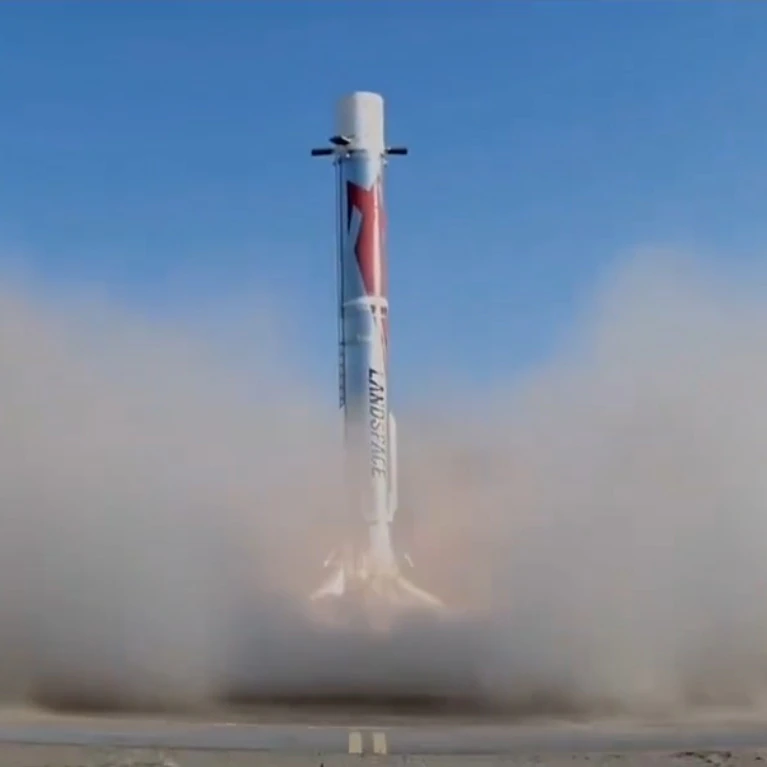
After Land Space successfully retrieved the first stage of its Zhuque-3 rocket after an orbital launch China has taken another step toward reusable space transportation. The accomplishment markets a significant turning point for Chinas commercial aerospace industry as private firms continue to develop technology intended to increase the frequency, flexibility and affordability of space launches.
The Jiuquan Satellite Launch Center in China launched the Zhuque-3 mission which successfully sent its payland into orbit before the first stage headed back towards its intended landing spot. The ability to recover an orbital class rocket stage after launch was demonstrated by the boosters-controlled fall and powered landing.
The development is significant because reusable launch vehicles can potentially reduce the need to manufacture an entirely new rocket for every mission. If recovered stages can be inspected refurbished and flown repeatedly, launch companies could improve vehicle utilization and reduce long-term launch costs.
LandSpace progress also demonstrates the growing capabilities of China private aerospace sector. Commercial companies are becoming increasingly involved in launching vehicles for satellite systems propulsion and other space technologies, creating a more diverse domestic space industry.
Impact on Aerospace and Defence Industry
By providing that privately manufactured reusable launch vehicles can sustain orbital flights and controlled booster recovery the successful recovery could bolster Chinas commercial space industry.
Advanced propulsion guidance navigation flight control software landing systems structural technologies and real time monitoring are all necessary for reusable rockets. If these devices are successfully integrated into a working spacecraft, it can offer useful experience for upcoming commercial missions. The accomplishment might stimulate more funding for China commercial launch industry. Investors for satellite operators' government clients and technology suppliers may be more interested in companies creating reusable rockets.
Additionally, it might make launch providers more competitive. Providers may compete on launching reliability vehicle turnaround mission flexibility and overall cost as more businesses create reusable systems. Increased competition may eventually give satellite companies more launch alternatives. As a need for satellite communication. Earth observation navigation and other space-based services grow this could become especially crucial. As a result the development might aid China larger shift to a space economy that is more driven by commerce.
Impact on Space Launch Services Market
The global space launch services market size is accounted at USD 21.19 billion in 2025 and predicted to increase from USD 24.03 billion in 2026 to approximately USD 70.56 billion by 2035, representing a CAGR of 11.56% from 2026 to 2035.
The Zhuque 3 recovery may have an impact on the market for space launch services by making reusable launch vehicles more crucial. For each mission, critical components for traditional disposable rockets must be made. The purpose of reusable vehicles is to bring major hardware back to Earth for possible future usage.
After successful repeated operations, this strategy may help reduce launch costs and enhance asset usage. The accomplishment of LandSpace offers a crucial technical illustration of this idea. However, whether the recovered booster can be effectively and efficiently reconditioned and flown again will determine its long-term commercial value.
After successful repeated operations, this strategy may help reduce launch costs and enhance asset usage. The accomplishment of LandSpace offers a crucial technical illustration of this idea. However, whether the recovered booster can be effectively and efficiently reconditioned and flown again will determine its long-term commercial value. As satellite operators need more frequent access to space, reusable launch technology may become very important. Regular launch opportunities are necessary for government satellites for scientific missions, communications networks, and Earth observation constellations.
Launch infrastructure propulsion systems avionics guiding technologies, recovery equipment ground support systems and mission management software may all become more in demand because of the advancement.
China progress could also place additional competitive pressure on international launch providers to improve reusability launch frequency reliability and operating economics.
Impact on Space Technology Market
The mission could also accelerate development across the wider space technology market. Several technologies must work together during a very complicated flight to recover from a rocket stage. These include onboard computing sensors communications landing systems aerodynamic control propulsion management autonomous navigation and flight control systems.
When incorporating these technologies into a reusable launch vehicle, the successful landing offers an invaluable operational experience.
Additionally, the advancement may raise demand for sophisticated diagnostic and monitoring systems. After each flight, reusable rockets need to be thoroughly inspected to see if their engines, structures, electronics cooling systems and other parts are still appropriate for another mission.
This creates opportunities for companies developing predictive maintenance sensor systems, digital engineering platforms, simulation technologies, data analytics, and automated inspection systems.
Artificial intelligence and automation could also become increasingly important as launches frequently increase. Automated systems can assist with vehicle health monitoring, trajectory management, mission planning, anomaly detection, and recovery operations. The technologies developed through reusable rocket programs could therefore contribute to a much wider ecosystem of advanced space systems.
About LandSpace
LandSpace is a Chinese commercial aerospace company focused on developing launch vehicles and reusable space transportation technologies. Its Zhuque-3 rocket uses liquid oxygen and methane propulsion and has been designed around a reusable first stage architecture. The vehicle incorporates propulsion guidance navigating flight control and landing technologies intended to support controlled recovery.
The successful recovery of the Zhuque 3 first stage represents a significant milestone for LandSpace and Chinas private aerospace sector. The achievement demonstrates progress toward reusable orbital launch operations and highlights the increasing role of commercial companies in China space industry.
Future successful reuse of the recovered stage will be important in determining the technology's long-term commercial potential. Overall, the Zhuque 3 recovery marks a significant step in China development of reusable space transportation. It could influence the commercial launch services market satellite deployment advanced aerospace manufacturing and defense related space capabilities while adding further competition to the global reusable rocket industry.