



From Pixels to Pavements: NVIDIA’s New Open Architecture to Power the Next Generation of Robots and Avs
Published: 23 Mar 2026
Author: Precedence Research



NVIDIA has launched the NVIDIA Physical AI Data Factory Blueprint, an open reference architecture designed to simplify and automate the creation and evaluation of training data. This initiative aims to lower the costs, time, and complexity of training large-scale physical AI systems.
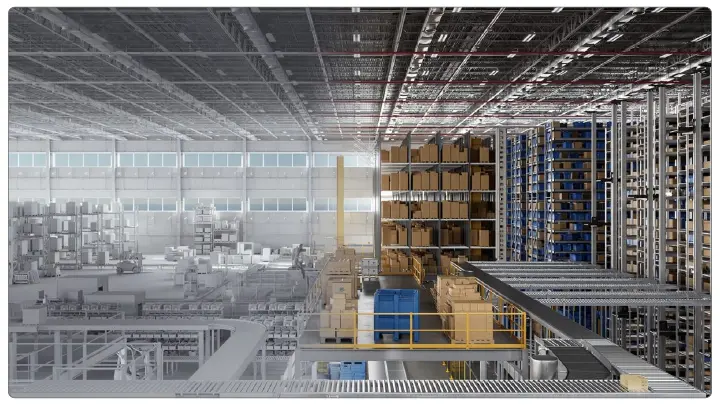
NVIDIA Unifies AI Training for Robotics and Self-Driving Cars
The blueprint allows developers to leverage NVIDIA Cosmos™ foundation models and advanced coding agents to expand limited training data into extensive and varied datasets, capturing rare edge cases that are usually hard to obtain.
According to Precedence Research in-vehicle AI Robot Market size accounted for USD 103.02 million in 2025 and is predicted to increase from USD 130.11 million in 2026 to approximately USD 1,064.03 million by 2035, expanding at a CAGR of 26.30% from 2026 to 2035 as demand grows for personalized in-car experiences, enhanced passenger safety, increased AI integration, and the integration of voice-controlled assistants.
In partnership with Microsoft Azure and Nebius, NVIDIA is integrating this blueprint with cloud services, enabling developers to utilize accelerated computing for high-volume training data generation. Notable users include FieldAI, Hexagon Robotics, and Uber, which are enhancing robotics and autonomous vehicle development.
Many robotics developers lack the resources to build the complex AI infrastructure needed for large-scale data generation. To address this, NVIDIA OSMO, an open-source orchestration framework, simplifies and manages workflows across computing environments, allowing developers to focus on model improvement.
NVIDIA Bridges the Gap Between Digital Intelligence and Physical Action
OSMO has partnered with major coding agents like Claude Code, OpenAI Codex, and Cursor to enable AI-native functions that manage resources, resolve bottlenecks, and accelerate large-scale model delivery. Cloud service providers are essential for offering the rapid AI infrastructure, machine learning operations, and orchestration services necessary for developers to deploy physical AI at scale.
Microsoft Azure is incorporating the Physical AI Data Factory Blueprint into an open toolchain available on GitHub, integrating with Azure services like Azure IoT Operations and Microsoft Fabric to facilitate enterprise-level, agent-driven workflows for training and validating physical AI systems. FieldAI, Hexagon Robotics, Linker Vision, and Teradyne Robotics are early testers of the Azure physical AI toolchain, aimed at enhancing data generation, augmentation, and evaluation in their perception, mobility, and reinforcement learning processes.
Nebius has integrated OSMO into its AI Cloud, allowing developers to utilize the blueprint for tailored production-ready data pipelines. Its infrastructure supports the physical AI stack with NVIDIA RTX PRO™ 6000 GPUs, high-speed storage, and managed inference. Early adopters like Milestone Systems, Voxel51, and RoboForce are leveraging the blueprint on Nebius infrastructure to accelerate model development for video analytics, self-driving vehicles, and industrial humanoid robots. The NVIDIA Physical AI Data Factory Blueprint is set to be released on GitHub in April.
A recent report by Precedence Research highlights that the in-vehicle AI Robot Market is benefiting from the convergence of advanced automotive technologies, increased demand for safety, and enhanced passenger experiences.