



Qualcomm Unveils Snapdragon Wear Elite to Power Next-Generation Wearable AI Devices
Published: 14 Apr 2026
Author: Gautam Mahajan



Qualcomm has presented its new wearable-driven processor that is wearable driven, Snapdragon Wear Elite, at the MWC 2026 in Barcelona. Designing it in such a way and also targeting the new form factors, such as pins, pendants, and displayless smart glasses, the chip is addressed. Considering it is very focused on on-device artificial intelligence and a higher power consumption rate, the introduction is an essential step towards developing more independent and sensitive wearable technology.
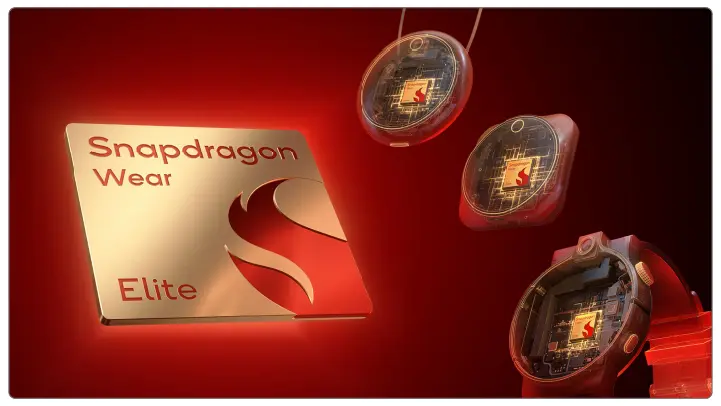
Advancing On-Device AI and Power Efficiency
These emerge from a developed process 3nm to the Snapdragon Wear Elite, which adds not only an enhanced embedded neural processing unit (eNPU) to accomplish low-power AI tasks but also the more power-intensive processing of Hexagon NPU. The platform is capable of running a model up to two billion parameters on-stack directly and supporting applications like natural voice interactions, contextual recommendations, and sensor-driven intelligence without necessarily being connected to a cloud server.
In addition to AI capabilities, Qualcomm has improved energy efficiency, in which GPS tracking is 40 percent less power-hungry than the previous platforms. The chip also has fast charging capability, which can charge the battery up to 50% in 10 minutes. These represent solutions that will be able to fix one of the biggest issues with wearable technology, the battery life, and still be a high-performance device.
According to Precedence Research, the Wearable AI Market size was calculated at USD 32.60 billion in 2025 and is predicted to increase from USD 39.54 billion in 2026 to approximately USD 224.82 billion by 2035, expanding at a CAGR of 21.30% from 2026 to 2035, driven by growing interest in smart, connected, and AI-enabled wearables.
Industry Impact and Future Outlook
The Snapdragon Wear Elite is designed to complement Qualcomm’s existing W5 Plus platform rather than replace it, signaling a diversified strategy to support a broader range of wearable use cases. The platform will provide more ways to connect, via satellite or 5G, ultra-wideband, and Bluetooth 6.0, and become the foundation of very connected, smart wearables.
This publication highlights how Qualcomm is promoting a duration-of-battery life and strong on-chart AI capabilities as one of the aspects that future wearable technologies trends should take. With the market changing, technologies such as the Snapdragon Wear Elite will fulfill the need to move AI-based wearables towards industries, whether health monitoring or personal assistance, to realize a more connected and intelligent user experience.