



STL Unveils India’s First Hollow Core Fibre Cable to Power the Next Era of AI Data Centres
Published: 06 May 2026
Author: Gautam mahajan



STL, one of the connectivity solutions providers in the AI-ready digital infrastructure, has made a significant technological breakthrough with the release of India's first Hollow Core Fibre cable. The innovation fulfills the increasing needs of ultra-low latency expedited transmission of the signals throughout the contemporary digital networks. Digital traffic is gaining pace in the global scene, and next-generation fibre networks are increasingly becoming critical in promoting speed and cost-effectiveness in mission-critical settings.
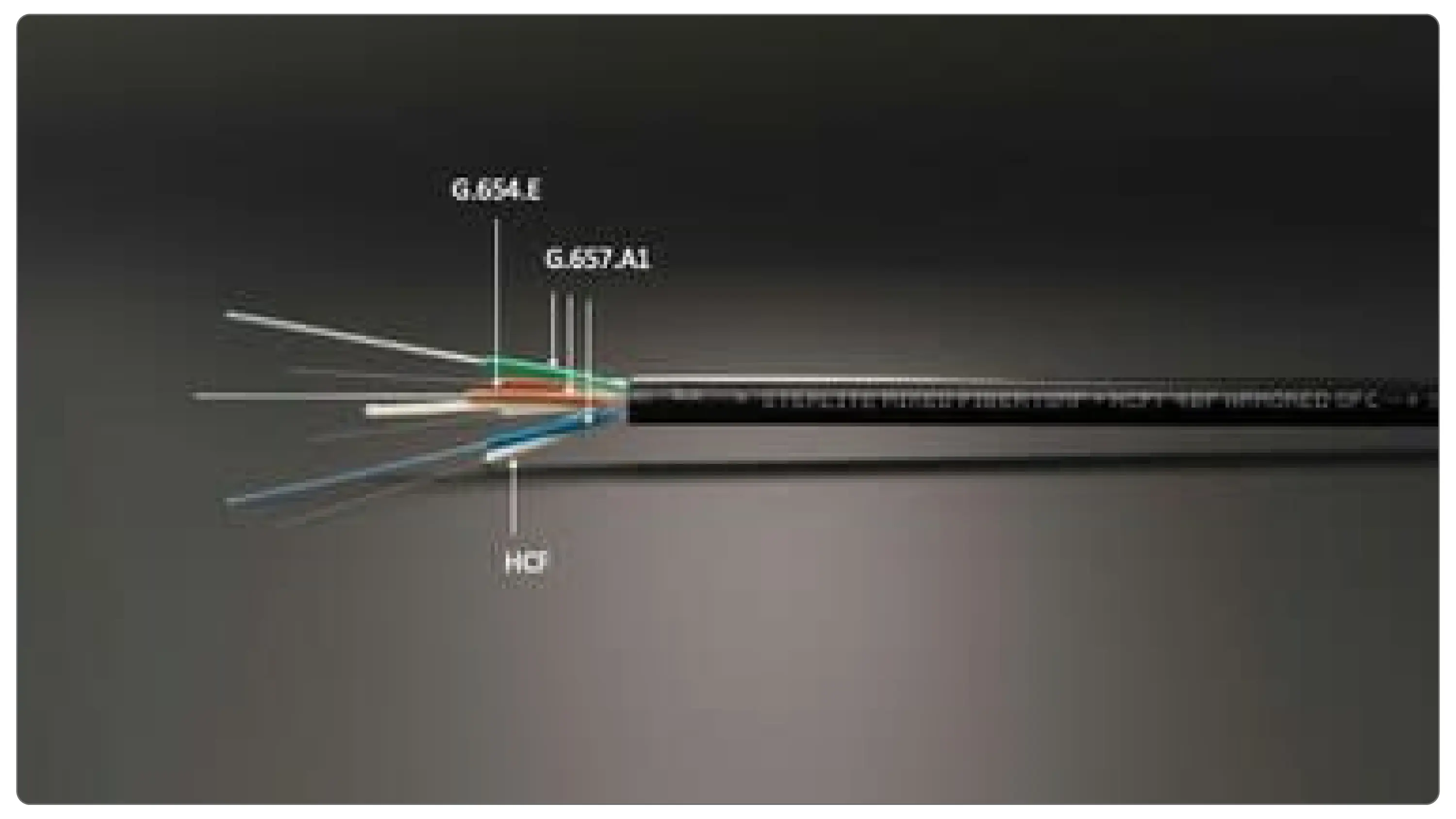
The Hollow Core Fibre is based on an air-filled core in the centre, in contrast to the traditional optical fibre, where the fibre transmits light in solid glass cores. This allows light signals to be transported much faster and decreases latency and transmission losses. The launch is also indicative of the increasing ability of the country India to produce world-class deep-tech products in the global markets.
Engineered for High-Speed Networks and Advanced Computing Demands
Recognising the complex requirements of next-generation communication systems, STL has introduced a hybrid cable architecture that combines multiple fibre technologies within one solution. The design enables an operator to implement a multifunctional platform that can be tailored to suit various performance requirements in long-haul, metro and data center infrastructures. The Hollow Core Fibre is at the centre of the new platform and is aimed at low-latency communications and high-powered delivery.
The Chief Technology Officer of STL, Dr Badri Gomatam, indicated that the company has continued to concentrate on its research to address its challenges of connectivity in the future. He further opined that the new Hollow Core Fibre cable sets the stage for speed-of-light infrastructure needed to drive the AI revolution and is a natural innovation milestone for the company.
According to Precedence Research, the Data Center Cable Market size was calculated at USD 13.70 billion in 2025 and is predicted to increase from USD 15.15 billion in 2026 to approximately USD 37.52 billion by 2035, expanding at a CAGR of 10.60% from 2026 to 2035. The market growth is attributed to the rapid expansion of hyperscale data centers, increasing cloud adoption, and rising demand for high-speed, low-latency connectivity infrastructure.
A Strategic Move for India’s Global Telecom and Data Centre Ambitions
The launch carries strategic importance beyond product innovation. India is fast developing into a digital economy center, being driven by cloud investments, semiconductor projects, enterprise digitisation and AI infrastructure development. The optical networks will be very important in this transformation by being of high performance. Furthermore, the introduction of STL is an indication that the future of connectivity will be faster, smarter, and more geared towards machine-speed communication.