



Nuclear Medicine Equipment Market Size, Companies, Share, Patient Volume, Treatment Adoption Rates, Pricing Analysis, Regulatory Landscape, Competitive Positioning, and Demand Forecast
Nuclear Medicine Equipment Market (By Product/Modality: SPECT Systems, PET Systems, Planar Scintigraphy, Hybrid PET/SPECT/CT; By Application: Oncology, Cardiology, Neurology, Others; By End User: Hospitals, Imaging Centers, Academic & Research Institutes, Others; By Detector Technology: NaI (Sodium Iodide), Solid-State / CZT) - Global Industry Analysis, Size, Trends, Leading Companies, Regional Outlook, and Forecast 2026 to 2035
Source: https://www.precedenceresearch.com/nuclear-medicine-equipment-market
 Get a Sample
 Table Of Content


What is Nuclear Medicine Equipment Market Size in 2026?
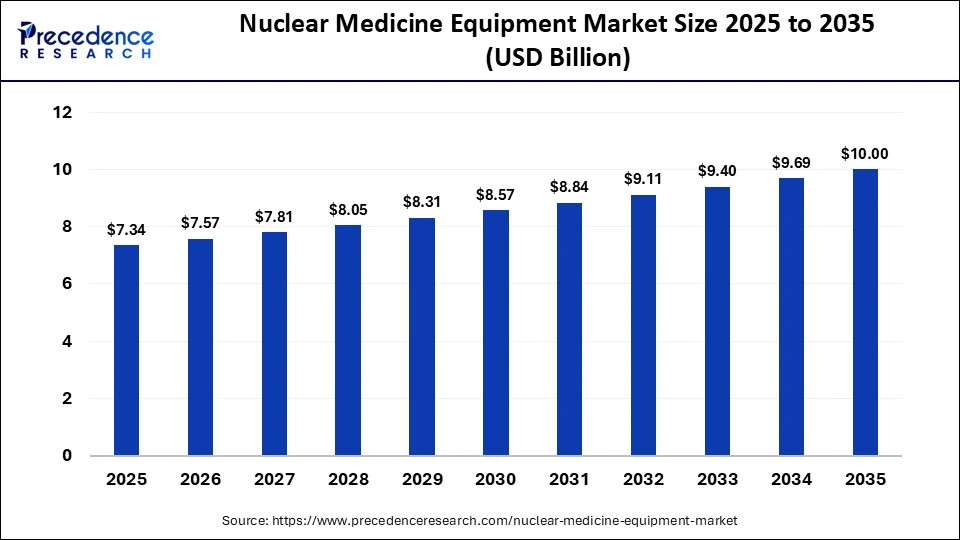
The global nuclear medicine equipment market size was calculated at USD 7.34 billion in 2025 and is predicted to increase from USD 7.57 billion in 2026 to approximately USD 10.00 billion by 2035, expanding at a CAGR of 3.14% from 2026 to 2035. This market is growing due to the rising prevalence of cancer and cardiovascular diseases, along with increasing demand for advanced diagnostic imaging technologies. Expanding healthcare infrastructure in emerging economies and rising demand for minimally invasive diagnostic procedures also drive the market.
Key Takeaways
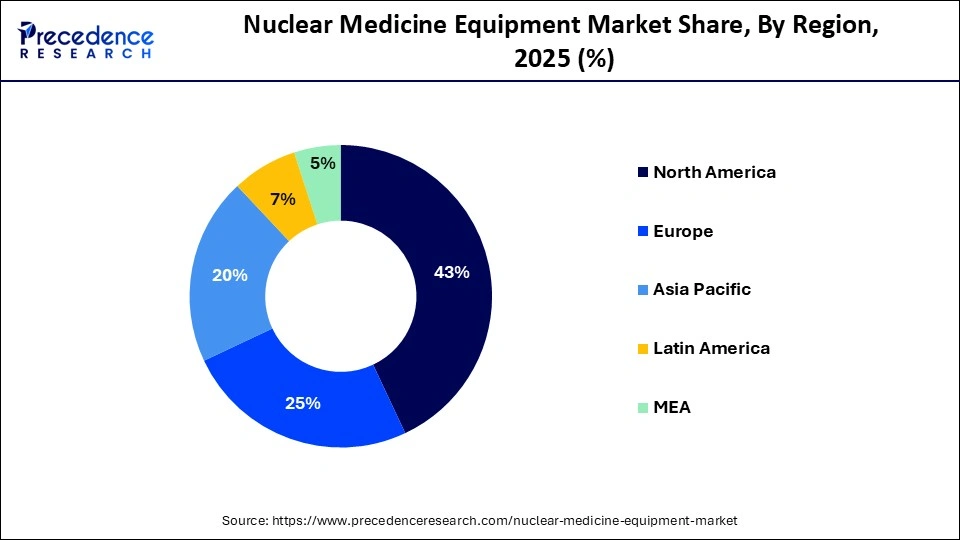
- North America dominated the market with a 43% share in 2025.
- Asia Pacific is expected to grow at a CAGR of 5.0% between 2026 and 2035.
- By product, the SPECT systems segment held the biggest market share of 58% in 2025.
- By product, the hybrid PET/SPECT/CT segment is expected to expand at a solid CAGR of 3.9% between 2026 and 2035.
- By application, the oncology segment contributed to the highest market share of 50% in 2025.
- By application, the neurology segment is expected to grow at a robust CAGR of 4.0% between 2026 and 2035.
- By end user, the hospitals segment held a major market share of 60% in 2025.
- By end user, the imaging centers segment is expected to expand at the fastest CAGR of 4.1% from 2026 to 2035.
- By detector technology, the NaI segment held the biggest market share of 70% in 2025.
- By detector technology, the solid state/CZT segment is expected to expand at the fastest CAGR of 4.3% between 2026 and 2035.
Market Overview
The nuclear medicine equipment market refers to the global industry for diagnostic imaging systems that use radioactive tracers to visualize physiological processes inside the body, enhancing disease detection and treatment monitoring. Key technologies include SPECT, PET, hybrid systems (e.g., PET/CT), and planar scintigraphy. These systems are widely used in oncology, cardiology, neurology, and other clinical applications.
The market is expanding because neurological conditions, cardiovascular diseases, and cancer are becoming more common and call for sophisticated diagnostic imaging. Patient outcomes are enhanced by technologies like PET and SPECT systems, which allow for early disease detection and accurate treatment planning. Continuous improvements in imaging systems, increased healthcare spending, and growing awareness of early diagnosis are all contributing to the global market's growth. Additionally, the increasing use of hybrid imaging systems like PET/CT and SPECT/CT is improving the efficiency and accuracy of diagnostics.
How is AI Impacting the Nuclear Medicine Equipment Market?
Artificial intelligence is transforming the nuclear medicine equipment market by improving image reconstruction, lesion detection, and diagnostic accuracy. Clinicians' interpretation time is shortened by AI-powered algorithms that analyze complex imaging data from PET and SPECT systems more rapidly and accurately. AI also facilitates workflow automation, predictive analytics, and dose optimization, which allows for more individualized treatment planning and boosts overall productivity in nuclear medicine departments.
Key Trends in the Nuclear Medicine Equipment Market
- Adoption of Hybrid Imaging Systems: Hybrid imaging systems such as PET/CT and SPECT/CT are increasingly being used to provide more accurate, detailed, and comprehensive diagnostic results by combining functional and anatomical imaging in a single scan.
- Rising Focus on Early Diagnosis: The growing emphasis on early detection of cancer and cardiovascular diseases is significantly increasing the demand for advanced nuclear medicine equipment in hospitals and diagnostic centers.
- Technological Advancements: Continuous improvements in image resolution, faster scanning technologies, and enhanced software capabilities are improving diagnostic accuracy and patient outcomes.
- AI Integration: Artificial intelligence is being integrated into nuclear imaging systems to enhance image analysis, reduce interpretation time, and improve overall workflow efficiency in clinical settings.
- Growth in Personalized Medicine: Nuclear imaging plays a critical role in personalized medicine by enabling targeted therapies and customized treatment plans based on individual patient conditions.
- Expansion of Radiopharmaceutical Use: The development of new radiotracers and radiopharmaceuticals is expanding the clinical applications of nuclear medicine in oncology, cardiology, and neurology.
- Increasing Healthcare Investments: Rising public and private investments in advanced diagnostic infrastructure are supporting the adoption of modern nuclear medicine equipment across healthcare facilities.
- Growing Demand in Emerging Markets: Expanding healthcare access and improving diagnostic capabilities in developing regions are creating new growth opportunities for nuclear medicine equipment manufacturers.
Future Market Outlook
- Expansion in Oncology Applications: The increasing global prevalence of cancer is generating strong demand for advanced nuclear imaging systems that enable accurate tumor detection, staging, and treatment monitoring.
- Development of Novel Radiotracers: Ongoing innovation in radiopharmaceuticals is opening new diagnostic and therapeutic possibilities, thereby creating significant growth opportunities for equipment providers.
- Emerging Market Penetration: Untapped healthcare markets in developing economies present substantial potential for expansion as healthcare infrastructure continues to improve.
- Hybrid Imaging Upgrades: The replacement of outdated standalone systems with advanced hybrid imaging equipment offers steady revenue opportunities for manufacturers.
How is the Nuclear Medicine Equipment Market Strengthening Its Resilience?
Through ongoing technological innovation, diverse radioisotope supply chains, and the expansion of clinical applications beyond oncology into cardiology and neurology, the nuclear medicine equipment market is strengthening its resilience. Dependency on a small number of international suppliers is being lessened by increased government support for domestic radioisotope production and healthcare infrastructure. The market is also staying stable despite supply chain and regulatory issues, thanks to the growing use of AI-driven diagnostics and hybrid imaging systems, which guarantee consistent long-term demand.
Government Initiatives Supporting the Nuclear Medicine Equipment Market
| Country | Government Initiatives | Impact on Market |
| U.S. | National Cancer Institute funding programs | Supports research in cancer imaging and radiopharmaceutical development, increasing demand for advanced PET and SPECT systems. |
| U.S. | U.S. Food and Drug Administration radiopharmaceutical approvals | Accelerates approval of new imaging agents and hybrid systems, encouraging technology adoption. |
| EU | European Commission Horizon Europe Program | Funds for medical imaging innovation and nuclear medicine research across member states. |
| India | Department of Atomic Energy nuclear medicine initiatives | Promotes domestic production of radioisotopes and expansion of nuclear medicine facilities. |
| China | Healthy China 2030 Plan | Encourages modernization of healthcare infrastructure, including advanced diagnostic imaging technologies |
| Japan | Ministry of Health, Labor and Welfare medical technology support | Supports the adoption of advanced diagnostic equipment and imaging technologies |
Market Scope
| Report Coverage | Details |
| Market Size in 2025 | USD 7.34 Billion |
| Market Size in 2026 | USD 7.57 Billion |
| Market Size by 2035 | USD 10.00 Billion |
| Market Growth Rate from 2026 to 2035 | CAGR of 3.14% |
| Dominating Region | North America |
| Fastest Growing Region | Asia Pacific |
| Base Year | 2025 |
| Forecast Period | 2026 to 2035 |
| Segments Covered | Product Type, End User, Application, Detector Technology, and region |
| Regions Covered | North America, Europe, Asia-Pacific, Latin America, and Middle East & Africa |
Segment Insights
Product Insights
What made SPECT systems the dominant segment in the nuclear medicine equipment market?
The SPECT systems segment dominated the market with the largest share of 58% in 2025. This is mainly due to the SPECT system's cost-effectiveness, proven clinical efficiency, and widespread availability in hospitals and diagnostic facilities. These systems are a common nuclear medicine diagnostic tool, finding widespread use in cardiac oncology and bone imaging procedures. The segment's dominant position is also reinforced by the robust installed base and steady demand for standard imaging procedures.
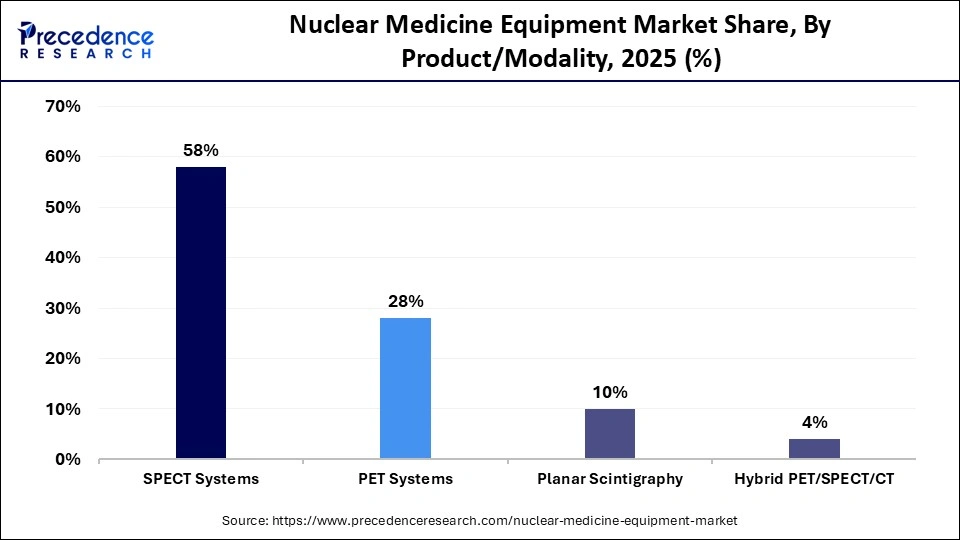
The hybrid PET/SPECT/CT segment is expected to grow at a solid CAGR of 3.9% in the coming years because hybrid systems integrate functional and anatomical imaging in a single scan. There is a growing need for accurate and thorough diagnostic imaging. Adoption is speeding up, especially in advanced healthcare settings, due to technological advancements, increased preference for integrated imaging solutions, and improved diagnostic accuracy.
Application Insights
Why did the oncology segment dominate the nuclear medicine equipment market?
The oncology segment dominated the market with a 50% share in 2025 because early detection, staging, and treatment monitoring are becoming increasingly important due to the growing global cancer burden. PET and SPECT scans provide highly accurate visualization of tumors and metastases, enabling early diagnosis and personalized therapy planning. Additionally, the increasing adoption of targeted radiopharmaceuticals and theranostic approaches has driven sustained demand for nuclear medicine equipment in oncology applications.
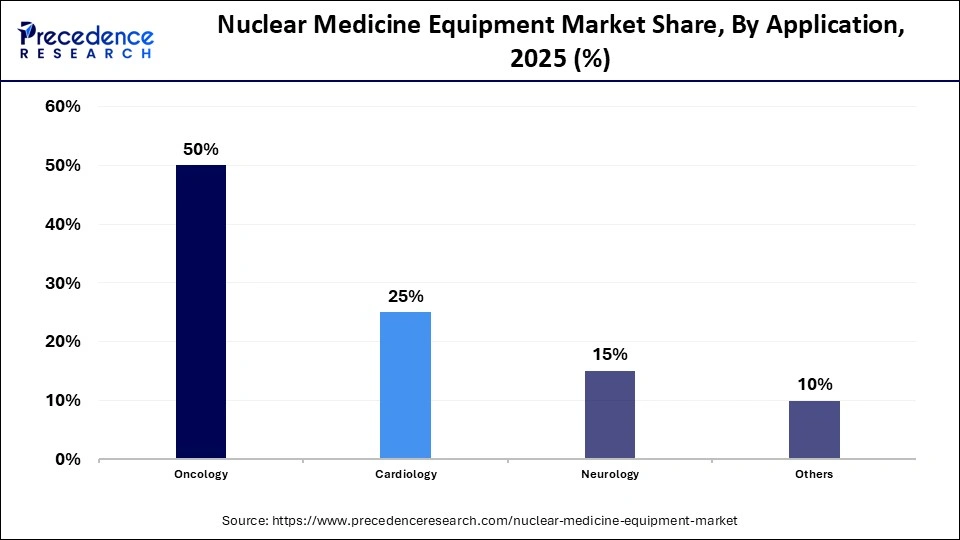
The neurology segment is expected to grow at the fastest CAGR of 4.0% CAGR in the coming years. This is because of the increasing adoption of advanced imaging technologies, driven by the growing prevalence of neurological conditions like epilepsy, Parkinsons disease, and Alzheimer's disease. Nuclear imaging techniques like PET and SPECT provide detailed insights into brain function, metabolism, and receptor activity, enabling early diagnosis and better treatment planning. Improvements in neuroimaging methods and growing awareness of the importance of early brain disorder diagnosis are also fueling this segment's explosive growth.
End User Insights
Why did the hospital segments dominate the nuclear medicine equipment market?
The hospitals segment dominated the market, accounting for nearly 60% share in 2025. The dominance of the segment is attributed to the availability of advanced imaging infrastructure, skilled professionals, and higher patient inflow. Hospitals typically serve as primary centers for complex diagnostic procedures and integrated treatment services, supporting strong demand for nuclear medicine equipment. Hospitals invest in high-end PET, SPECT, and gamma cameras to support oncology, cardiology, and neurology applications, ensuring comprehensive patient care. Their ability to provide integrated diagnostic and therapeutic services, coupled with government and private funding, drives high adoption of nuclear medicine equipment in this segment.
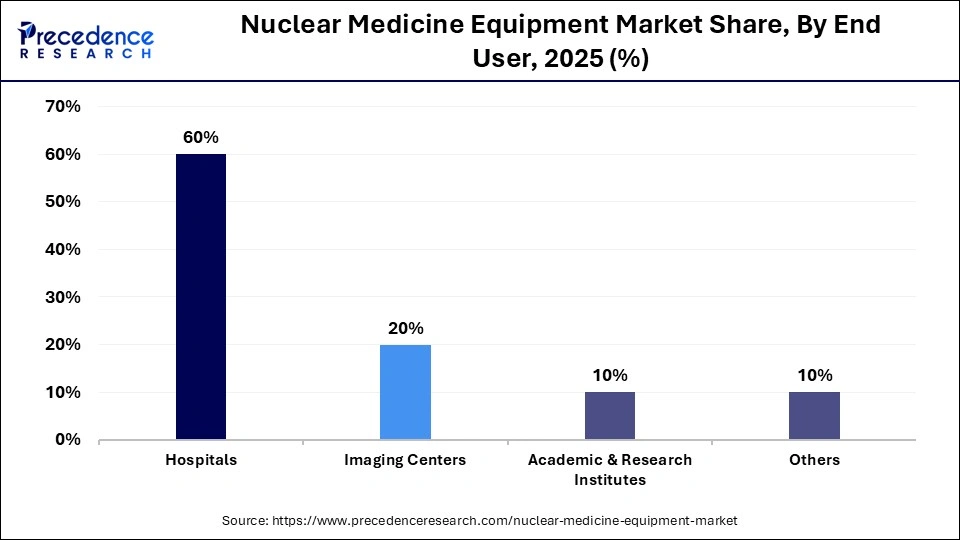
The imaging centers segment is expected to grow at the fastest CAGR of 4.1% in the coming years due to the increasing demand for specialized, outpatient diagnostic services that are faster and more cost-effective than hospital-based imaging. These centers focus on high-throughput imaging for oncology, cardiology, and neurology, often offering advanced PET and SPECT scans. Rising patient preference for convenient, accessible, and dedicated diagnostic facilities, along with collaborations with hospitals and insurance providers, is driving the adoption of nuclear medicine equipment in imaging centers.
Detector Technology Insights
Why did the NaI segment dominate the nuclear medicine equipment market?
The NaI (sodium iodide) segment dominated the market with the highest share of 70% in 2025, driven by its affordability, dependable performance in traditional nuclear imaging systems, and long history of use in gamma cameras. NaI-based systems are widely installed in healthcare facilities, which further solidifies their dominant position. Image efficiency and clarity have increased due to ongoing advancements in signal processing and crystal design. Furthermore, many diagnostic centers choose NaI detectors because of their reduced maintenance and replacement costs.
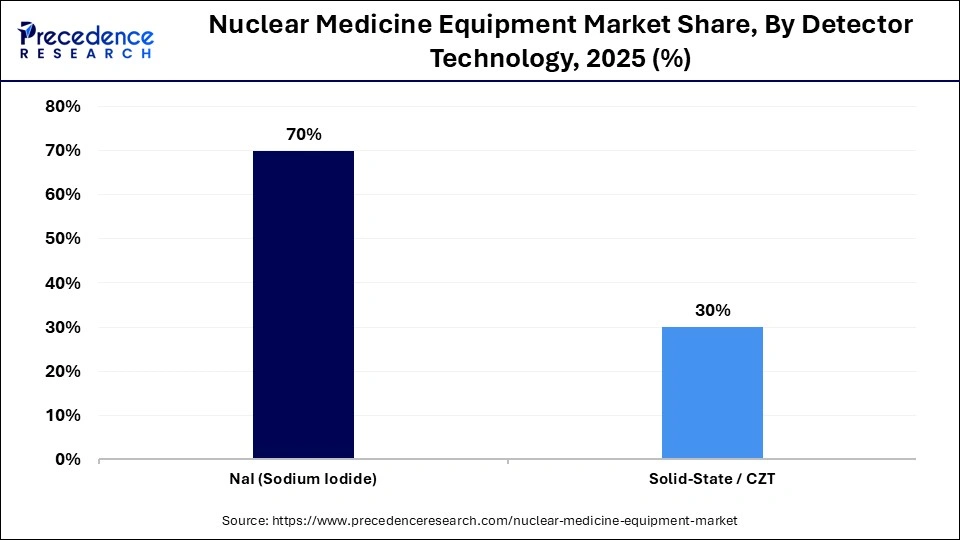
The solid state/CZT segment is expected to grow at the fastest CAGR of 4.3% in the coming years. This is because these detectors offer better image resolution, increased sensitivity, and lower radiation exposure compared to traditional technologies. Solid-state detector systems are being adopted at a faster rate due to ongoing technological advancements and the rising demand for high-precision imaging. They are appropriate for next-generation imaging devices due to their compact design and enhanced energy resolution. Innovation in this market is being further fueled by rising R&D expenditures.
Regional Insights
North America Nuclear Medicine Equipment Market Size and Growth 2026 to 2035
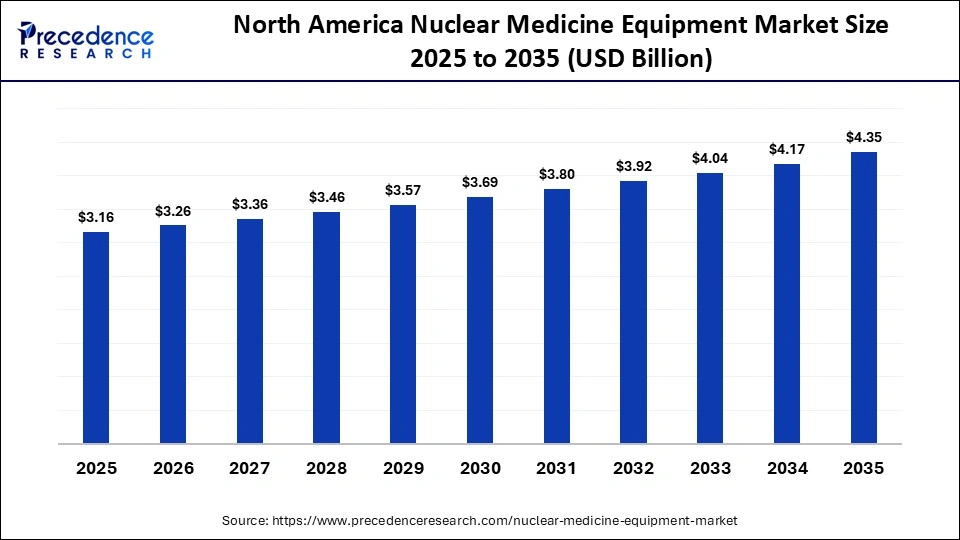
The North America nuclear medicine equipment market size is estimated at USD 3.16 billion in 2025 and is projected to reach approximately USD 4.35 billion by 2035, with a 3.25% CAGR from 2026 to 2035.
Why did North America dominate the nuclear medicine equipment market?
North America dominated the nuclear medicine equipment market by capturing a 43% share in 2025, driven by high adoption of cutting-edge imaging systems, robust reimbursement frameworks, and sophisticated healthcare infrastructure. The existence of leading industry participants, significant investments in R&D activities, and the growing demand for early disease detection all contribute to regional expansion. The region's dominant position in the market is also reinforced by favorable regulatory approvals and an increase in the prevalence of chronic diseases.
U.S. Nuclear Medicine Equipment Market Size and Growth 2026 to 2035
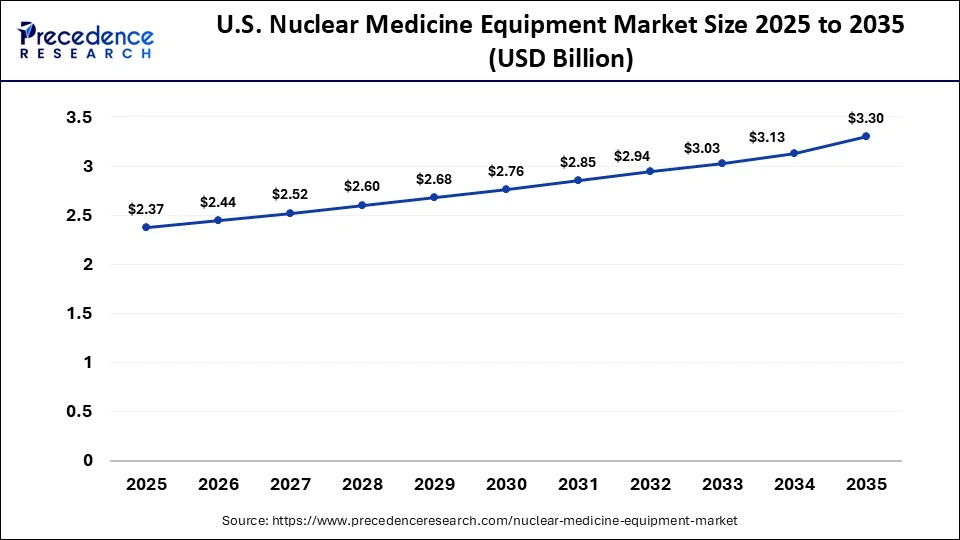
The U.S. nuclear medicine equipment market size is calculated at USD 2.37 billion in 2025 and is expected to reach nearly USD 3.30 billion in 2035, accelerating at a strong CAGR of 3.37% between 2026 to 2035.
U.S. Nuclear Medicine Equipment Market Trends
The U.S. dominates the market within North America, bolstered by the rapid adoption of cutting-edge diagnostic technologies and high healthcare spending. Well-established hospital networks, the availability of qualified personnel, and significant investments in nuclear medicine research all contribute to market penetration. Additionally, the country is at the forefront of innovations in healthcare technology, and there is a growing emphasis on precision medicine and AI-integrated imaging systems, which contribute to market growth.
How is the opportunistic rise of Asia Pacific in the market?
Asia Pacific is expected to grow at the fastest CAGR of 5.0% in the coming years because of the growing patient population, the development of healthcare infrastructure, and the increased awareness of early diagnosis. Market development is being stimulated by a rise in foreign direct investments and government initiatives to modernize healthcare systems. Regional market growth is also fueled by increasing access to cutting-edge medical imaging services and the rapid expansion of the medical device manufacturing industry.
India Nuclear Medicine Equipment Market Trends
The market in India is expanding, driven by improving healthcare infrastructure and increasing demand for advanced diagnostic imaging. Government initiatives to enhance public healthcare and the expansion of private hospital chains are boosting equipment adoption. Additionally, rising medical tourism, a large patient population, and growing awareness of early disease detection are sustaining long-term market growth in the country.
What are the Advancements in the Nuclear Medicine Equipment Market in Europe?
Europe is expected to have significant market growth throughout the forecast years, due to the increase in investments in advanced diagnostic imaging technology, the growing prevalence of cancer in Europe, and the adoption of precision medicine across the continent. Support of early disease detection programs and growing healthcare reimbursement policies are also aiding market growth. Continuous research activities further contribute to innovation in the expanding field of nuclear medicine applications, also in the area of new developments of radiopharmaceuticals and theranostics.
Germany Market Trends
Germany represents one of the leading markets for nuclear medicine equipment in Europe. The increasing demand for PET/CT and SPECT imaging systems in oncology, cardiology, and neurology applications. German healthcare companies have been investing more in technologically advanced imaging solutions that offer better image resolution, a speedier scanning time, and a lower radiation dose, leading to a higher number of investments in such technologies. The sector also benefits from technological developments due to government investment in cancer research and the development of nuclear medicine.
What are the Key Trends in the Nuclear Medicine Equipment Market in Latin America?
Latin America is expected to have significant growth in the market, due to the robust health care infrastructure, rising awareness of indications, and rising incidence of chronic diseases such as cancer and cardiovascular diseases. The region as a whole is investing in cutting-edge imaging technology to enhance health care systems and patient outcomes. Also, an increasing investment of public and private funds is leading to an increase in the nuclear medicine procedures accessible in urban healthcare facilities.
Brazil Market Trends
Brazil is emerging as a major market for nuclear medicine equipment in Latin America due to tremendous growth in the healthcare sector, prevalence of cancer, and the need for more sophisticated diagnostic imaging. As hospitals or diagnostic centres in the country started using PET/CT and SPECT systems to help diagnose or treat disease, these systems are becoming widely spread throughout the country. Moreover, Brazil's modernisation of the public health sector, plus this country's greater development of the private health market, is creating opportunities for the development of advanced imaging equipment producers.
How is the Middle East and Africa Region Growing in the Nuclear Medicine Equipment Market?
The Middle East and Africa are expected to have significant market growth in the upcoming years, driven by rising investments in the healthcare sector, the development of advanced diagnostic imaging facilities, and increased awareness regarding the early detection and diagnosis of diseases. The governments of the region are keen on healthcare modernisation, constructing specialised medical facilities with advanced technology of nuclear medicine. Furthermore, the increasing medical tourism in the Gulf countries is propelling the uptake of high-performance diagnostic imaging equipment.
Saudi Arabia Market Trends
Saudi Arabia is becoming a key market for nuclear medicine equipment. Strong demand for PET/CT imaging systems and SPECT imaging systems for diagnostics in oncology, cardiovascular area, and neurology can be observed in the country. The government's measures towards Vision 2030 are driving a growth in the healthcare infrastructure, digitisation, and creation of advanced diagnostic and research facilities. Growth of the private healthcare facilities, coupled with the increased trend of medical tourism, is also complementing the market growth.
Nuclear Medicine Equipment Market Supply Chain Analysis
- R&D
This stage focuses on driving advancements in hybrid imaging systems, detector technologies, and AI-integrated diagnostic solutions. Companies are focusing on improving image resolution, reducing radiation exposure, and enhancing workflow efficiency to strengthen their competitive position.
Key Players: GE HealthCare, Siemens Healthineers, Philips Healthcare, and Canon Medical Systems.
- Raw Material Sourcing
This stage involves providing essential components such as detectors, collimators, radiopharmaceuticals, and electronics for nuclear medicine equipment.
Key Players: GE Healthcare, Siemens Healthineers, and Canon Medical Systems.
- Manufacturing & Assembly
Manufacturers assemble nuclear medicine devices like PET, SPECT, and gamma cameras, integrating software, hardware, and safety systems.
Key Players: Philips Healthcare, Siemens Healthineers, and GE Healthcare.
- Distribution to Hospitals, Pharmacies
Nuclear medicine equipment is primarily distributed directly to hospitals and specialized diagnostic centers through established sales networks. Partnerships with radiopharmacies and third-party service providers ensure smooth installation, maintenance, and supply chain management.
Key Players: Curium, Bracco Imaging, Cardinal Health, and Lantheus Holdings.
- Patient Support and Services
Market participants are increasingly offering patient-centric services, including training programs for clinicians and workflow optimization tools for hospitals. Extended service contracts, remote monitoring, and technical support solutions improve equipment uptime and overall patient care quality.
Key Players: United Imaging Healthcare, Spectrum Dynamics Medical, Mediso Medical Imaging Systems, and Digirad Corporation.
Nuclear Medicine Equipment Market Companies
- GE HealthCare
- Siemens Healthineers
- Philips Healthcare
- Canon Medical Systems
- Spectrum Dynamics Medical
- Bruker Corporation
- MR Solutions Ltd.
- CUBRESA Inc.
- Digirad Corporation
- DDD-Diagnostics A/S
- Neusoft Medical Systems
- Mediso Ltd.
- Shenzhen Anke High-tech Co., Ltd.
- United Imaging Healthcare
- Positron Corporation
Recent Developments
- In February 2026, Positrigo announced the launch of its BrainPET Accelerator Program, bringing specialized NeuroLF brain imaging technology to U.S. neurology offices. The program enables point-of-care, high-resolution PET imaging to improve the diagnosis of Alzheimer's and dementia. This initiative provides an all-in-one solution for clinics to streamline the integration of molecular imaging into their workflows. (Source: https://www.auntminnie.com)
- In February 2025, Positron Corporation announced a definitive agreement to lease three NeuSight PET-CT scanners. The systems will be deployed to a multi-modality imaging center group through the company's prime rental business model. This deal expands the presence of Positron's molecular imaging technology in clinical settings. (Source: https://www.auntminnie.com)
- In June 2025, GE HealthCare showcased advanced molecular imaging solutions at the SNMMI 2025 Annual Meeting to enhance cardiac diagnostics. The showcase introduced AI-driven PET/CT and SPECT technologies aimed at improving myocardial perfusion imaging and clinical workflows. These innovations are designed to provide cardiologists with clearer insights into better heart disease detection. (Source: https://www.dicardiology.com)
- In September 2025, Philips announced and launched the Rembra RT and Areta RT CT platforms at the ASTRO 2025 annual meeting. These next-generation systems integrate AI-driven reconstruction and advanced spectral imaging to improve the accuracy of radiation therapy planning. The launch aims to streamline oncology workflows by providing high-resolution imaging specifically optimized for precision cancer care. (Source: https://www.philips.com)
Segments Covered in the Report
By Product/Modality
- SPECT Systems
- PET Systems
- Planar Scintigraphy
- Hybrid PET/SPECT/CT
By Application
- Oncology
- Cardiology
- Neurology
- Others
By End User
- Hospitals
- Imaging Centers
- Academic & Research Institutes
- Others
By Detector Technology
- NaI (Sodium Iodide)
- Solid-State / CZT
By Region
- North America
- Europe
- Asia-Pacific
- Latin America
- Middle East & Africa
For inquiries regarding discounts, bulk purchases, or customization requests, please contact us at sales@precedenceresearch.com
Frequently Asked Questions





Ask For Sample
No cookie-cutter, only authentic analysis – take the 1st step to become a Precedence Research client
 Get a Sample
.webp)



 sales@precedenceresearch.com
 Schedule a Meeting
