



Oxygen Therapy Equipment Market Size, Companies, Share, Patient Volume, Treatment Adoption Rates, Pricing Analysis, Regulatory Landscape, Competitive Positioning, and Demand Forecast
Oxygen Therapy Equipment Market (By Product Type: Oxygen concentrators, Liquid oxygen systems, Oxygen cylinders, Oxygen-conserving devices, High-flow nasal cannula systems, Continuous positive airway pressure devices, Bilevel positive airway pressure devices; By Portability: Portable oxygen therapy equipment, Stationary oxygen therapy equipment; By Oxygen Generation and Storage Technology: Pressure swing adsorption systems, Vacuum swing adsorption systems, Membrane separation systems, Liquid oxygen storage systems, Compressed oxygen cylinder systems; By End User: Homecare settings, Hospitals, Ambulatory surgical centers, Long-term care facilities; By Clinical Application: Chronic obstructive pulmonary disease, Asthma, Obstructive sleep apnea, Pneumonia, Respiratory distress syndrome, Cystic fibrosis, Others) - Global Industry Analysis, Size, Trends, Leading Companies, Regional Outlook, and Forecast 2026 to 2035
Source: https://www.precedenceresearch.com/oxygen-therapy-equipment-market
 Get a Sample
 Table Of Content


What is the Oxygen Therapy Equipment Market Size in 2026?
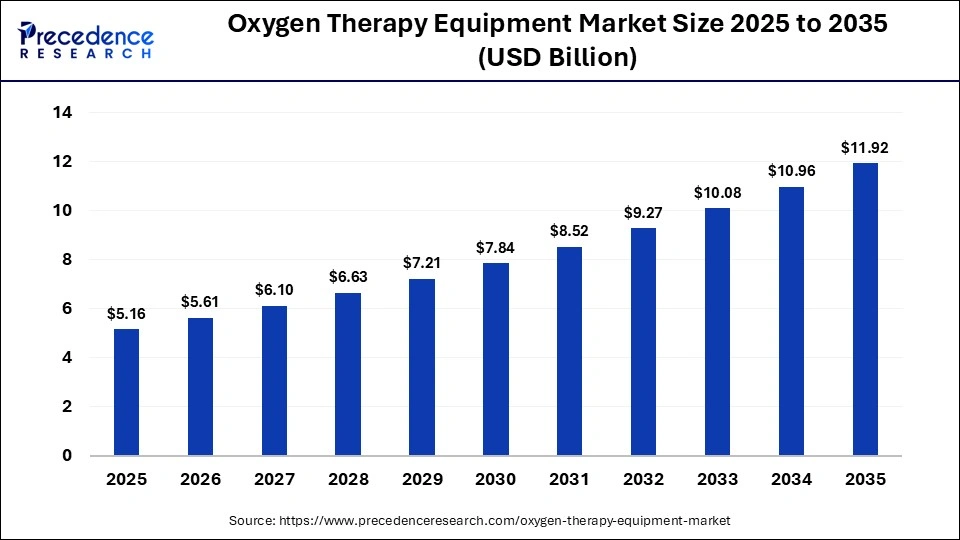
The global oxygen therapy equipment market size accounted for USD 5.16 billion in 2025 and is predicted to increase from USD 5.61 billion in 2026 to approximately USD 11.92 billion by 2035, expanding at a CAGR of 8.74% from 2026 to 2035. The market is driven by the rising prevalence of respiratory diseases and increasing demand for home-based oxygen care.
Key Takeaways
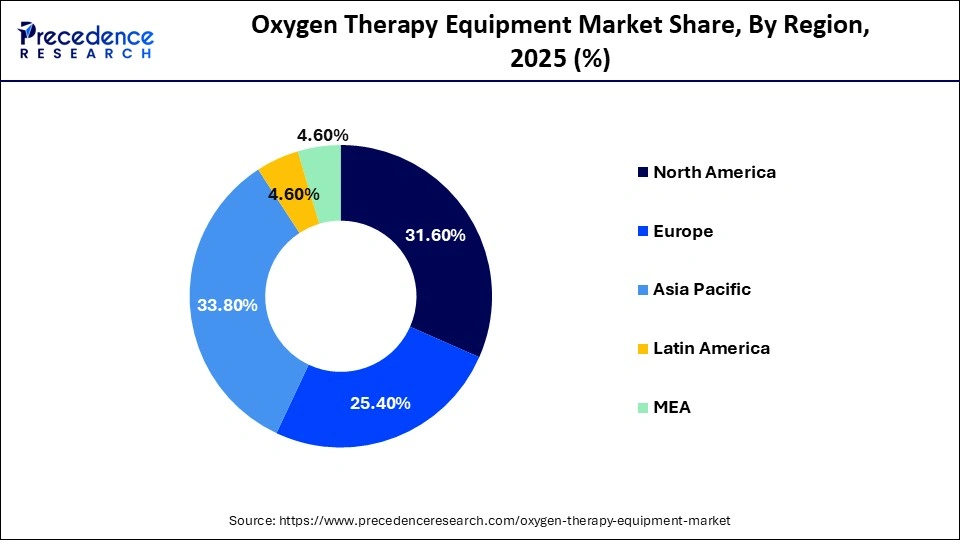
- Asia Pacific dominated the oxygen therapy equipment market with a share of 33.80% in 2025.
- North America is expected to grow at the fastest CAGR during the forecast period.
- By product type, the oxygen concentrators segment held a dominant position in the market with a share of 41.70% in 2025.
- By product type, the high-flow nasal cannula systems segment is expected to grow at the fastest CAGR of 10.70% in the market between 2026 and 2035.
- By portability, the stationary oxygen therapy equipment segment accounted for the largest market share of 62.40% in 2025.
- By portability, the portable oxygen therapy equipment segment is expected to grow with the highest CAGR of 9.80% in the market during the studied years.
- By oxygen generation and storage technology, the pressure swing adsorption systems segment led the global market with a share of 45.60% in 2025.
- By oxygen generation and storage technology, the vacuum swing adsorption systems segment is expected to expand at a CAGR of 9.10% in the coming years.
- By end user, the homecare settings segment registered its dominance in the global market with a share of 55.80% in 2025.
- By clinical application, the chronic obstructive pulmonary disease segment dominated the global market with a share of 32.80% in 2025.
- By clinical application, the obstructive sleep apnea segment is expected to grow at the highest CAGR of 9.20% between 2026 and 2035.
Market Overview
The oxygen therapy equipment market comprises medical devices that are used to produce, store, control, and distribute supplemental oxygen to patients with respiratory deficiency or low oxygen levels in the blood. These devices are extensively applied both at the clinical and homecare levels as a means to assist patients with acute and chronic respiratory problems. The market includes oxygen concentrators, liquid oxygen delivery systems, oxygen cylinders, flow regulators, oxygen conserving devices, and delivery interfaces. The market is experiencing significant growth, driven by the rapidly growing geriatric population that is more prone to respiratory disorders. Also, the increased trend toward home-based healthcare, technological progress in portable oxygen systems, and increased healthcare infrastructure are adding to the long-term growth of the market across the globe.
How is AI Influencing the Oxygen Therapy Equipment Market?
Artificial intelligence (AI) is significantly impacting the market by enhancing the accuracy of the treatment, monitoring, and patient outcomes. AI-enabled respiratory monitoring systems and oxygen concentrators are capable of measuring a patient's breathing rate and oxygen saturation in real time, automatically adjusting the oxygen flow as needed. This enhances treatment efficiency while reducing the risks of over-oxygenation or under-oxygenation. In homecare settings, AI-powered devices support predictive maintenance, optimize device performance, and provide automatic alerts, minimizing downtime and improving reliability. Furthermore, AI-based analytics assist clinicians in designing personalized oxygen therapy plans based on the individual respiratory patterns and needs of each patient, ensuring more effective and tailored care.
Oxygen Therapy Equipment Market Trends
- The growing need for at-home respiratory care is driving the adoption of portable oxygen concentrators. These lightweight and compact devices allow patients to receive continuous oxygen therapy while maintaining daily activities, thereby improving treatment adherence, independence, and overall quality of life.
- The rapid expansion of home healthcare services is increasing the global demand for oxygen therapy equipment. Home-based care offers convenience, reduces healthcare costs, and enables better long-term management of chronic respiratory conditions, making it a preferred option for patients.
- The rising prevalence of respiratory diseases, including chronic obstructive pulmonary disease (COPD), asthma, and pneumonia, is significantly contributing to the demand for oxygen therapy equipment. Factors such as increasing air pollution and smoking-related lung diseases further exacerbate the global burden of respiratory illnesses.
- The growing geriatric population is another key driver of long-term oxygen therapy demand. Older adults are more susceptible to chronic respiratory conditions and often require continuous oxygen support in hospitals, long-term care facilities, and home settings.
Market Scope
| Report Coverage | Details |
| Market Size in 2025 | USD 5.16 Billion |
| Market Size in 2026 | USD 5.61 Billion |
| Market Size by 2035 | USD 11.92 Billion |
| Market Growth Rate from 2026 to 2035 | CAGR of 8.74% |
| Dominating Region | Asia Pacific |
| Fastest Growing Region | North America |
| Base Year | 2025 |
| Forecast Period | 2026 to 2035 |
| Segments Covered | Product Type, Portability, Oxygen Generation and Storage Technology, End User, Clinical Application, and Region |
| Regions Covered | North America, Europe, Asia-Pacific, Latin America, and Middle East & Africa |
Segment Insights
Product Type Insights
Why Did the Oxygen Concentrators Segment Dominate the Oxygen Therapy Equipment Market?
The oxygen concentrators segment dominated the market, holding a major share of 41.70% in 2025. This is mainly due to the increased need for a continuous oxygen supply system among patients with chronic respiratory conditions. The segment's prominence is further reinforced by the increasing adoption of long-term oxygen therapy among individuals with chronic obstructive pulmonary disease (COPD), asthma, pulmonary fibrosis, and other respiratory disorders. Technological advancements have also improved concentrator performance, with innovations such as energy-efficient operation, quieter functioning, and compact, portable designs enhancing usability and patient convenience.
The high-flow nasal cannula systems segment is expected to grow at the fastest CAGR of 10.70% in the upcoming period due to the growing use of modern respiratory support systems in hospitals and critical care units. HFNC systems deliver a high flow of warmed and humidified oxygen, providing superior oxygenation and enhanced patient comfort compared to traditional oxygen therapy methods. These systems minimize the necessity of invasive mechanical ventilation in some situations and, consequently, decrease the risk of complications with intubation. Moreover, HFNC systems enable patients to breathe more normally while receiving sufficient oxygen, which enhances the patient's outcomes.
Portability Insights
Why Did the Stationary Oxygen Therapy Equipment Segment Lead the Oxygen Therapy Equipment Market?
The stationary oxygen therapy equipment segment led the global market with the largest share of 62.40% in 2025, primarily due to its widespread use in long-term respiratory treatment. A significant portion of patients with chronic respiratory conditions, including chronic obstructive pulmonary disease (COPD), pulmonary fibrosis, and severe asthma, rely on stationary oxygen therapy. These devices are generally more cost-effective than portable alternatives and do not require frequent recharging, making them a convenient option for continuous use. Additionally, the rising trend of home healthcare, increased physician prescriptions for long-term oxygen therapy, and the growing geriatric population are further driving the demand for stationary oxygen therapy equipment.
The portable oxygen therapy equipment segment is expected to grow at a robust CAGR of 9.80% between 2026 and 2035, driven by the increasing demand for flexible and mobile oxygen delivery solutions. Portable oxygen concentrators and lightweight oxygen cylinders enable patients to maintain active lifestyles while receiving continuous respiratory support. These innovations allow patients to move freely, work, and perform daily activities without being restricted by stationary oxygen systems. Furthermore, the growing focus on patient-centered healthcare and the enhancement of quality of life are encouraging healthcare professionals to prescribe portable oxygen therapy devices to suitable patients.
Oxygen Generation and Storage Technology Insights
Why Did the Pressure Swing Adsorption Systems Segment Lead the Oxygen Therapy Equipment Market?
The pressure swing adsorption systems segment registered dominance in the global market with a share of 45.60% in 2025. This is because of their widespread use in oxygen concentrators utilized in both healthcare facilities and home care environments. PSA technology operates by isolating oxygen in the atmosphere with the help of special adsorbent material, usually zeolite, which selectively isolates nitrogen to produce enriched oxygen that can be used in the medical field. These are energy-efficient systems, which have fairly low maintenance needs, and can be run over extended periods. The segment's leadership is further reinforced by rising rates of respiratory diseases and demand for long-term oxygen therapy solutions.
The vacuum swing adsorption systems segment is expected to grow at the fastest CAGR of 9.10% over the forecast period due to the growing demand for energy-efficient and high-capacity oxygen generation technologies. VSA systems operate similarly to pressure swing adsorption (PSA) systems but utilize vacuum pressure to regenerate the adsorbent material more efficiently, resulting in higher oxygen output and lower energy consumption. The rising need for scalable oxygen supply systems in hospitals and large healthcare facilities, which require continuous oxygen availability for multiple patients, is further fueling segmental growth. Additionally, advancements in oxygen generation technology are enhancing the performance, reliability, and operational efficiency of VSA systems, making them increasingly attractive for healthcare providers.
End User Insights
Why is the Homecare Settings Segment Leading the Oxygen Therapy Equipment Market?
The homecare settings segment led the global oxygen therapy equipment market with a share of 55.80% in 2025 and is expected to continue its leadership throughout the forecast period, driven by the increasing preference for home-based therapy among patients. Individuals with chronic respiratory conditions, such as COPD, asthma, and pulmonary fibrosis, require continuous oxygen therapy, which can be conveniently administered in a home environment. Home oxygen therapy not only enhances patient comfort, independence, and overall quality of life but also helps reduce healthcare costs for both providers and patients. Technological advancements, including the development of portable and user-friendly oxygen devices, have further expanded the availability and adoption of home-based respiratory care solutions.
The hospitals segment is expected to expand at a significant CAGR of 5.40% in the coming years, driven by the rising number of hospitalizations due to respiratory illnesses and emergency care requirements. Hospitals rely heavily on advanced oxygen delivery systems to provide timely respiratory support for patients experiencing acute respiratory failure, severe infections, or post-surgical complications. Increased investments in healthcare infrastructure and the expansion of intensive care units across both developed and developing regions are further supporting this growth. Additionally, the adoption of advanced oxygen therapy technologies, such as high-flow nasal cannula systems, non-invasive ventilation systems, and integrated oxygen monitoring solutions, is helping hospitals improve patient outcomes and operational efficiency.
Clinical Application Insights
Why Did the Chronic Obstructive Pulmonary Disease Segment Lead the Oxygen Therapy Equipment Market?
The chronic obstructive pulmonary disease segment held a major revenue share of 32.80% in the market in 2025, driven by the high global prevalence of COPD and the large number of patients requiring long-term oxygen therapy. COPD is a progressive respiratory disorder that causes airflow obstruction and reduced blood oxygen levels, often necessitating lifelong oxygen supplementation to manage the condition effectively. Increasing exposure to risk factors such as smoking, air pollution, and occupational respiratory hazards further contributes to the disease burden. Oxygen concentrators and other oxygen delivery systems are widely used among patients with advanced COPD to maintain adequate oxygen saturation and support overall respiratory health.
The obstructive sleep apnea segment is expected to show the fastest growth with a CAGR of 9.20% over the forecast period, driven by the rising global prevalence of sleep-related breathing disorders. OSA occurs when the airway becomes repeatedly obstructed during sleep, leading to impaired breathing and reduced blood oxygen levels. The increasing incidence of OSA is largely attributed to factors such as rising obesity rates, sedentary lifestyles, and an aging population, all of which contribute to the growing demand for effective oxygen therapy and related respiratory care solutions.
Regional Insights
Asia Pacific Oxygen Therapy Equipment Market Size and Growth 2026 to 2035
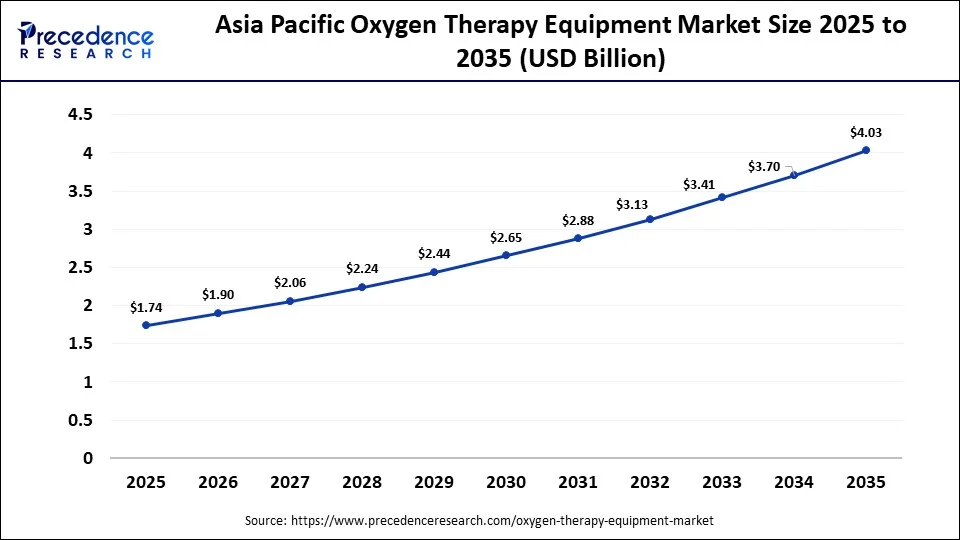
The Asia Pacific oxygen therapy equipment market size is expected to be worth USD 1.74 billion by 2035, increasing from USD 4.03 billion by 2025, growing at a CAGR of 8.76% from 2026 to 2035.
Why Did Asia Pacific Lead the Global Oxygen Therapy Equipment Market?
Asia Pacific led the oxygen therapy equipment market while holding a 33.80% share in 2025 and is expected to sustain its position in the upcoming period. This growth is driven by rapid urbanization, high levels of air pollution, and the increasing prevalence of respiratory diseases across major economies in the region. Rising cases of chronic respiratory conditions, such as chronic obstructive pulmonary disease (COPD), asthma, and pollution-related lung diseases in countries like China, India, and Japan, are fueling demand for oxygen therapy equipment. Additionally, the expanding geriatric population is driving the need for long-term oxygen therapy solutions, while increased government and private healthcare spending is improving healthcare infrastructure and enhancing the availability of advanced respiratory devices.
Why is North America Experiencing the Fastest Growth in the Oxygen Therapy Equipment Market?
North America is expected to grow at the fastest CAGR in the market during the forecast period, due to the high rate of chronic respiratory diseases and advanced healthcare facilities in the region. Respiratory disorders like COPD, sleep apnea, and asthma are commonly diagnosed in the U.S. and Canada, and this has led to a huge demand for oxygen therapy equipment. The U.S. has been a key contributor to the growth of the North American oxygen therapy equipment market, supported by favorable reimbursement policies that make oxygen therapy devices and related services more accessible to patients. Additionally, continuous technological advancements and the widespread adoption of innovative oxygen delivery systems from leading manufacturers are enhancing treatment efficiency, patient comfort, and overall clinical outcomes.
Oxygen Therapy Equipment Market Companies
- Philips Respironics
- ResMed
- Inogen
- CAIRE
- Drive DeVilbiss Healthcare
- Invacare
- Fisher and Paykel Healthcare
- Chart Industries
- Air Liquide Healthcare
- Messer Group
- GCE Group
- O2 Concepts
- Nidek Medical Products
- Precision Medical
- Jiangsu Yuyue Medical Equipment & Supply (Yuwell)
Recent Developments
- In June 2025, Inogen, Inc. launched the Voxi 5 stationary oxygen concentrator to enhance the delivery of high-quality oxygen therapy to long-term care patients in the United States. This introduction adds to the product range of the company beyond the portable oxygen systems and enhances the position of the company as a provider of stationary oxygen therapy.(Source: https://mexicobusiness.news)
- In June 2025, VARON introduced a new oxygen therapy platform in Mexico to meet the rising demand for reliable home oxygen therapy. The platform will receive patients with chronic respiratory illnesses and help them with efficient oxygen delivery methods.(Source: https://investor.inogen.com)
- In January 2025, Caire introduced the IntenOxy 5 stationary oxygen concentrator for the U.S. and Puerto Rico, and it will soon be available in Canada. The product is created to offer a more efficient and reliable oxygen therapy solution to long-term care patients.(Source: https://respiratory-therapy.com)
Segments Covered in the Report
By Product Type
- Oxygen concentrators
- Liquid oxygen systems
- Oxygen cylinders
- Oxygen-conserving devices
- High-flow nasal cannula systems
- Continuous positive airway pressure devices
- Bilevel positive airway pressure devices
By Portability
- Portable oxygen therapy equipment
- Stationary oxygen therapy equipment
By Oxygen Generation and Storage Technology
- Pressure swing adsorption systems
- Vacuum swing adsorption systems
- Membrane separation systems
- Liquid oxygen storage systems
- Compressed oxygen cylinder systems
By End User
- Homecare settings
- Hospitals
- Ambulatory surgical centers
- Long-term care facilities
By Clinical Application
- Chronic obstructive pulmonary disease
- Asthma
- Obstructive sleep apnea
- Pneumonia
- Respiratory distress syndrome
- Cystic fibrosis
- Others
By Region
- North America
- Asia Pacific
- Europe
- Latin America
- Middle East & Africa
For inquiries regarding discounts, bulk purchases, or customization requests, please contact us at sales@precedenceresearch.com
Frequently Asked Questions





Ask For Sample
No cookie-cutter, only authentic analysis – take the 1st step to become a Precedence Research client
 Get a Sample




 sales@precedenceresearch.com
 Schedule a Meeting
