



Medical Oxygen Concentrators Market Trends, Key Companies, Company Production Capacity, Procedure Volume, Healthcare Spending, Technology Adoption, Reimbursement Analysis, Cost Structure, Market Penetration, and Growth Outlook
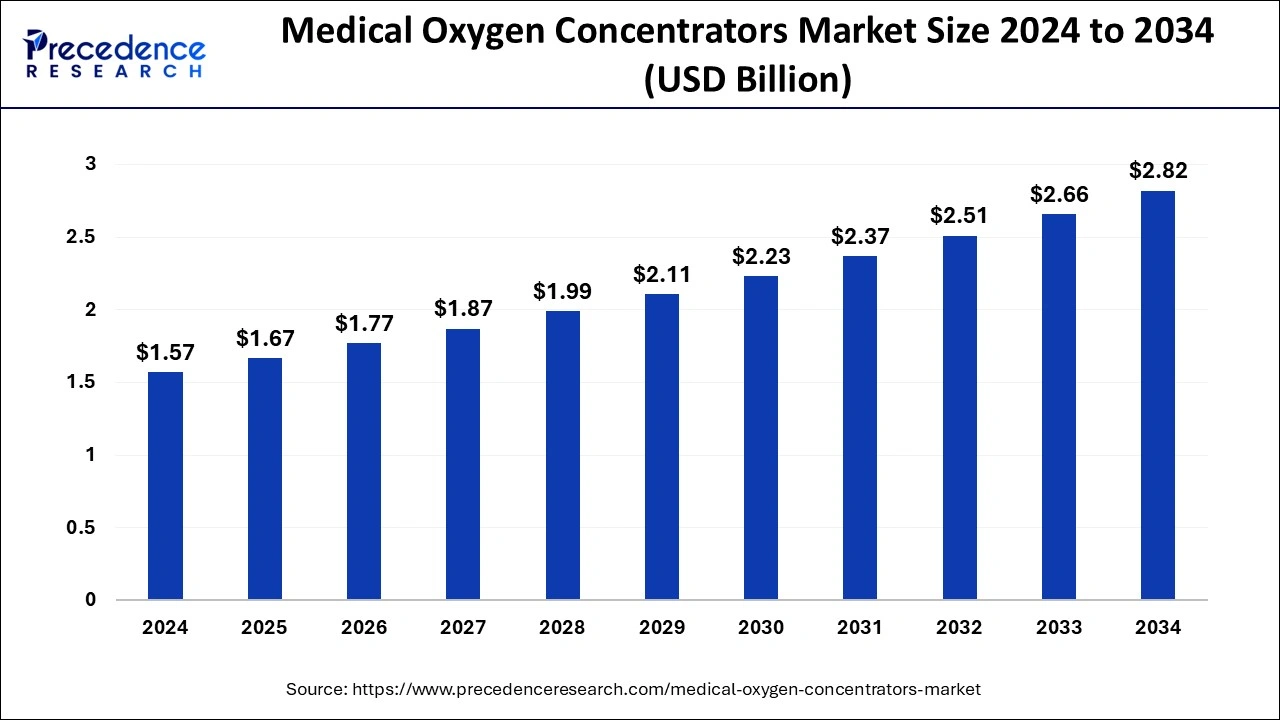
The global medical oxygen concentrators market is projected to grow from USD 1.77 billion in 2026 to USD 2.97 billion by 2035, registering a CAGR of 5.93%. Growth is driven by the rising prevalence of respiratory diseases, increasing demand for home oxygen therapy, and advancements in AI-enabled, portable oxygen concentrators. North America dominates the market, while Asia Pacific is expected to witness the fastest growth due to expanding healthcare infrastructure and increasing awareness of respiratory care.
Source: https://www.precedenceresearch.com/medical-oxygen-concentrators-market
 Get a Sample
 Table Of Content


What is Medical Oxygen Concentrators Market Size?
The global medical oxygen concentrators market size accounted for USD 1.77 billion in 2026 and is expected to be worth around USD 2.97 billion by 2035, at a CAGR of 5.93% from 2026 to 2035. The medical oxygen concentrators market is driven by the increasing incidence of respiratory diseases and the increasing demand for home oxygen therapy.
Key Takeaways
- By Region, North America accounted for the largest revenue share of the medical oxygen concentrators market in 2025.
- By Region, Asia Pacific is expected to grow at the fastest CAGR in the market during the forecast period.
- By technology, the continuous flow segment held a dominant position in the market with a share in 2025.
- By technology, the pulse dose segment is expected to grow at the fastest CAGR in the market between 2026 and 2035.
- By product, the portable segment accounted for a considerable revenue share in the market in 2025.
- By product, the fixed segment is expected to grow with the highest CAGR in the market during the studied years.
- By application, the home care segment led the global market, accounting in 2025.
- By application, the non-home care segment is expected to expand rapidly in the market with a CAGR in the coming years.
Market Size and Forecast
- Market Size in 2025: USD 1.67 Billion
- Market Size in 2026: USD 1.77 Billion
- Forecasted Market Size by 2035: USD 2.97 Billion
- CAGR (2026-2035): 5.93%
- Largest Market in 2025: North America
- Fastest Growing Market: Asia Pacific
Market Overview
Medical oxygen concentrators refer to devices that deliver oxygen therapy. They are usually small in size, allowing users to carry. The medical oxygen concentrators market is driven by the rise in air pollution. Moreover, the increasing demand for cost-effective and sustainable medical oxygen devices is likely to boost the market. Stationary oxygen concentrators are widely used in hospitals and clinics, as they are safer and more cost-effective than compressed gas cylinders.
Key AI Integration in the Medical Oxygen Concentrators Market
Predictive maintenance, monitoring, and efficiency in medical oxygen concentrator operations are fueling the growth of the medical oxygen concentrators market by leveraging AI technology. AI-driven concentrators continuously track patient oxygen levels, respiratory rate, and breathing patterns and optimize oxygen flow as needed for every patient. AI helps analyze data for personalized therapy, adherence to treatment regimens, and long-term disease management.
Medical Oxygen Concentrators Market Growth Factors
- Increasing prevalence of respiratory ailments
- Growing geriatric population
- High investment in research and development
- Increasing focus on home healthcare
- Increasing per capita healthcare expenditure
- Growing incidence of novel viral diseases
- Technological advancements
- Improving reimbursement scenario in developing regions
Market Scope
| Report Highlights | Details |
| Market Size in 2025 | USD 1.67 Billion |
| Market Size in 2026 | USD 1.77 Billion |
| Market Size by 2035 | USD 2.97 Billion |
| Growth Rate from 2026 to 2035 | CAGR of 5.93% |
| Largest Market | North America |
| Base Year | 2025 |
| Forecast Period | 2026 to 2035 |
| Segments Covered | Technology, Product, Application and Region |
| Regional Scope | North America, Europe, Asia Pacific, Latin America, Middle East & Africa (MEA) |
Market Dynamics
Drivers
Increasing prevalence of respiratory disorders
The increasing prevalence of respiratory diseases, such as pulmonary edema, hypoxemia, sleep apnea, and chronic obstructive pulmonary disorder (COPD), is a key factor driving the global market. Oxygen therapy is needed for chronic obstructive pulmonary disease patients to control oxygen levels. According to the World Health Organization (WHO), COPD is the third leading cause of death worldwide, accounting for around 3.23 million deaths in 2019. With the increasing prevalence of smoking, COPD is increasing rapidly. Moreover, the increasing number of bedridden and geriatric patients is also expected to contribute to the growth of the market.
Restraints
High cost and stringent regulatory process
The high cost of medical devices and stringent regulatory measures hinder market growth. Medical oxygen concentrators require regular maintenance to work properly. When oxygen concentrators generate oxygen, they may create noise. Moreover, stationary medical oxygen concentrators run on electricity. If there is no electric supply, they won't work and may create further challenges, thereby restraining the market.
Opportunities
Technological advancements
The rising technological advancements in medical devices, including oxygen concentrators, create immense opportunities in the market. Key players operating in the market are making efforts to increase their production capacities to fulfill the rising need for these concentrators. The rising research and development activities to develop rechargeable oxygen concentrators are likely to fuel the market. Furthermore, the increasing emphasis on providing medical oxygen concentrators and favorable government initiatives supporting the expansion of healthcare infrastructure are propelling the market.
Segment Insights
Technology Insights
The continuous flow segment held a large share of the market in 2025. Continuous flow technology delivers a steady oxygen flow, maintaining adequate oxygen levels in patients with severe respiratory conditions. Improvements carried out in the technology to make the equipment more efficient are the key factors contributing to the segmental growth. Additionally, multiple benefits over other technologies, such as reducing fatigue and providing better sleep quality, are expected to retain the dominance of the continuous flow technology segment in the near future.
The pulse dose segment is projected to expand at the highest CAGR throughout the forecast period due to rising technological advancements. Pulse dose oxygen concentrators deliver oxygen based on breathing and inhaling patterns, allowing users to customize their oxygen delivery according to their breath rate. This, in turn, improves health outcomes.
Product Insights
The portable segment accounted for the largest market share in 2025. The segment growth is attributed to the increasing adoption of portable oxygen concentrators in homecare settings. These concentrators are gaining immense popularity due to their ease of use and affordability. Portable medical oxygen concentrators are used in the treatment of multiple respiratory ailments, such as asthma and COPD. Thus, the rising incidence of respiratory ailments is expected to boost the demand for portable oxygen concentrators in the forecast time-frame. Moreover, market players are focusing on developing advanced portable concentrators to meet the increasing demand worldwide. For instance.
The fixed segment is expected to grow with the highest CAGR in the market during the studied years, driven by the demand for oxygen therapy at home and respiratory care. Demand is being boosted by the increasing levels of chronic respiratory diseases and the ageing population. With the aid of technology, the devices are being improved to make them more efficient, quieter, and oxygen-carrying.
Application Insights
The home care segment dominated the market in 2025 and is anticipated to continue its dominance in the near future due to the rising trend of self-care. Home care services offer the convenience of treating chronic disorders at the patients' homes. The preference for home care is on the rise in developed regions majorly due to high geriatric population. Furthermore, using portable oxygen concentrators is extremely convenient for the elderly patients.
The non-home care segment is expected to grow at the fastest CAGR in the market between 2026 and 2035, owing to the hospitals, emergency care centers, and ambulatory surgical facilities' needs for reliable oxygen therapy systems. There is an increasing need for high-capacity oxygen concentrators because of the increased number of patients being admitted to hospitals due to Respiratory problems. Hospitals are buying cutting-edge oxygen generation technology to enhance patient care.
Regional Insights
How is North America Growing in the Medical Oxygen Concentrators Market?
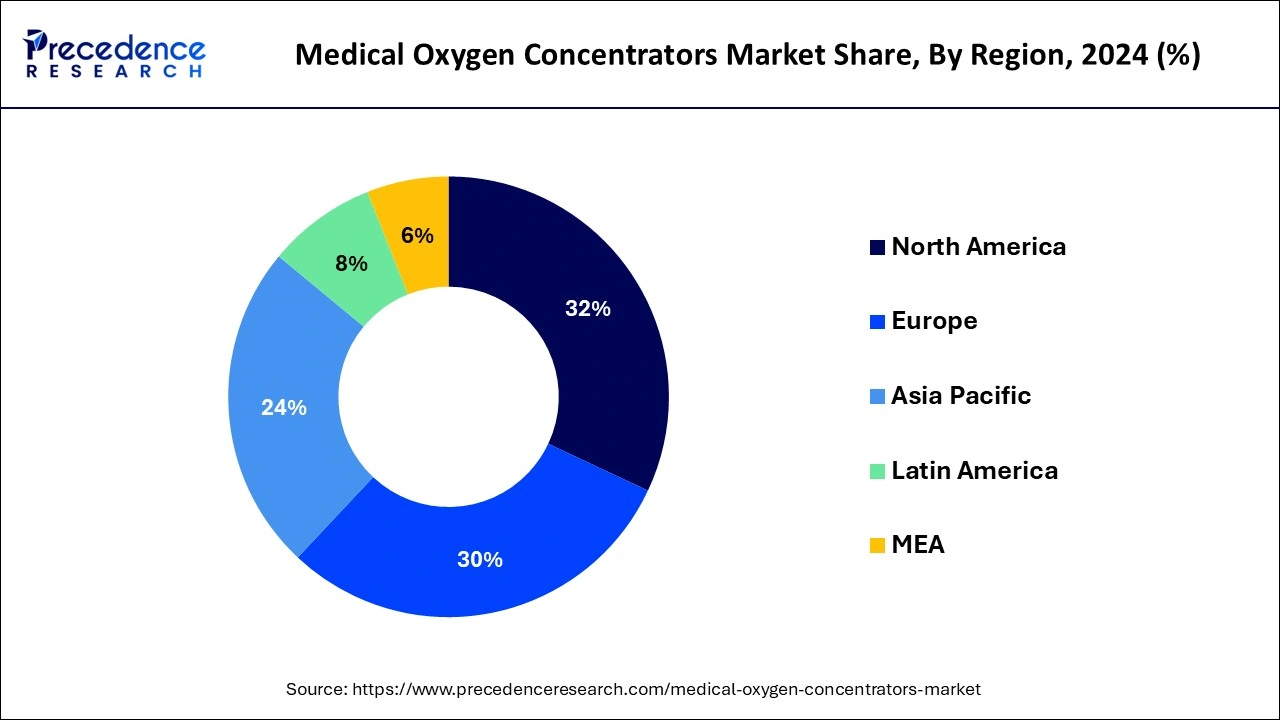
North America dominated the global market in 2025 owing to its developed healthcare infrastructure and the high penetration of home oxygen therapy. Chronic respiratory illnesses like COPD and sleep apnoea are prevalent in the region, creating an increased need for oxygen concentrators. Products are adopted due to favorable reimbursement policies and to the fact that health expenditure is being distributed in a favorable way for such products. The leading brands are continuously manufacturing technologically advanced portable and stationary Oxygen Concentrators.
U.S. Medical Oxygen Concentrators Market Size and Growth 2026 to 2035
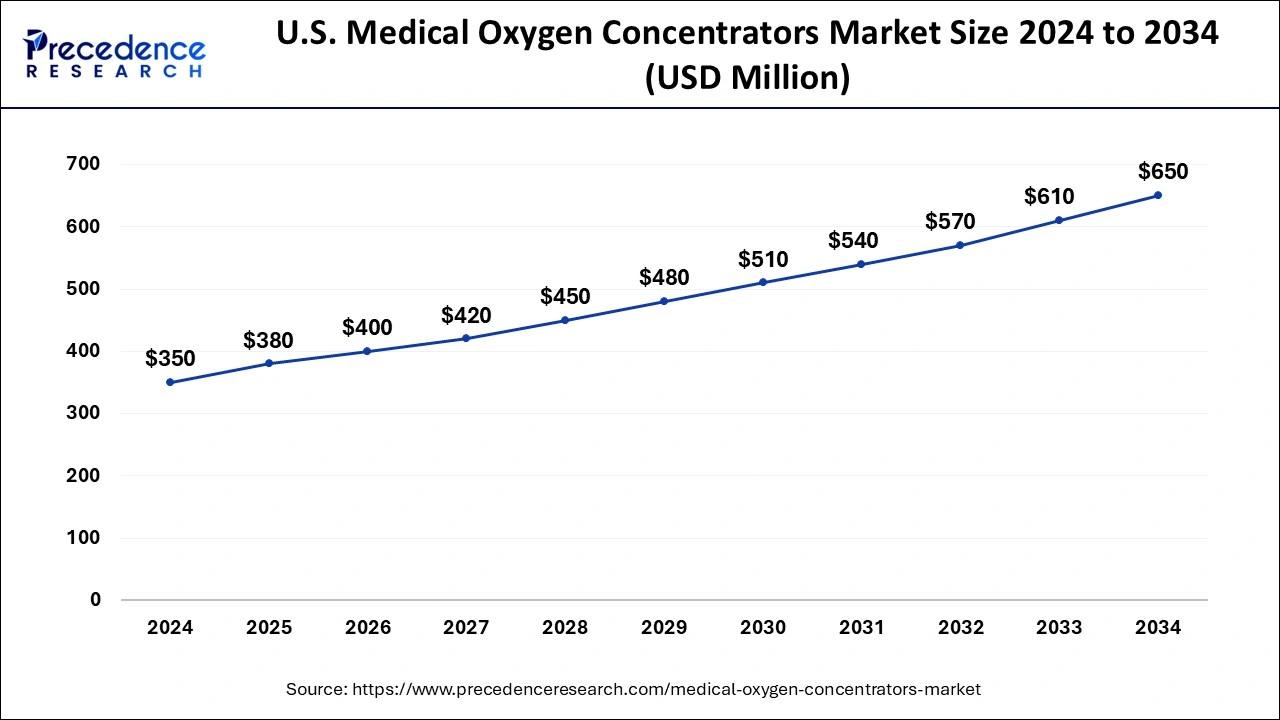
The U.S. medical oxygen concentrators market size was estimated at USD 380 million in 2025 and is predicted to be worth around USD 690 million by 2035, at a CAGR of 5.93% from 2026 to 2035.
U.S. Market Trends
U.S. market is anticipated to grow significantly, due to an increase in the incidence of chronic respiratory diseases and an aging population. The rising trend of healthcare services being provided in the home is driving the growth of portable oxygen concentrators. AI-powered monitoring and remote management of patients are becoming innovations in healthcare that enhance treatment outcomes. Remuneration support and health care facilities are still supportive of high usage of products.
The research study covers key prospects and trends of medical oxygen concentrators products throughout different regions including Europe, North America, Asia-Pacific, Middle East and Africa, and Latin America. Regionally, the medical oxygen concentrators market is dominated by North America due to presence of skilled researchers and high prevalence of chronic respiratory ailments. Europe accounted for the second highest share majorly due to encouraging reimbursement scenario and high geriatric population. On the other hand, Asia-Pacific is anticipated to witness the rapid growth rate, on account of increasing investment by major manufacturers, high tobacco usage for smoking, and growing per-capita healthcare expenditure.
Smart oxygen concentrators with Internet of Things (IoT), Artificial Intelligence (AI), and remote monitoring features are working well in the U.S. market. Patients are keen on lightweight and portable equipment, which allows them to have an active lifestyle. Also, the system of reimbursing health care providers for oxygen services is evolving, thereby creating a movement toward the use of oxygen concentrators at home for a longer period of time that are both less expensive and more convenient.
Asia Pacific is Undergoing the Fastest Growth in the Medical Oxygen Concentrators Market
Asia Pacific is expected to grow at the fastest rate in the market as healthcare spending is expected to grow and there is growing access to respiratory care. Rapidly increasing air pollution and the increasing afflictions of respiratory ailments are boosting demand for oxygen therapy devices. The health sector has seen governments boost the infrastructure and encourage home healthcare services. The expandability of the market is boosted by healthcare spending growth and the substantial aging population.
China Market Trends
China's medical oxygen concentrators market is anticipated to grow significantly, with the rapidly growing healthcare modernization and the prevalence of respiratory diseases. The rising number of patients requiring home healthcare services and hospital infrastructure is contributing to the growth of the oxygen concentrators market. The development of new technologies in their homes is being used to increase their product performance and that of the domestic manufacturers, making products more affordable.
India Medical Oxygen Concentrators Market Trends
The government's efforts are boosting the production of oxygen concentrators in India, making them more accessible and affordable. The rising demand for smaller cities and suburban areas is attributed to better health care systems and awareness of respiratory diseases. The growing incidence of chronic respiratory diseases and awareness of respiratory issues among people after the pandemic are also driving the market growth throughout the country.
Advancements in the Medical Oxygen Concentrators Market in Europe
Europe is expected to witness significant market growth throughout the forecast period. Product demand is being continually propelled by the increasing incidence of chronic respiratory diseases and the aging population. Oxygen concentrators are becoming more lightweight, compact, and energy-efficient to facilitate patient mobility. Extensive adoption is made easier by good health systems and policies that reward the use of these services. New product development is expected to help sustain the market.
Germany Market Trends
Germany market is anticipated to grow significantly, due to the highly developed healthcare setup and rising demand for home use of oxygen therapy. Growing population and increasing chronic respiratory diseases in the country are fueling market growth. Advanced oxygen concentrators are now being used by healthcare providers that come with technologically advanced features such as remote monitoring. Medical technology innovation is also well supported, and the pace of adoption continues to accelerate.
Germany Medical Oxygen Concentrators Market Trends
Germany focuses more on specifically older patients' oxygen concentrators with less noise and more user-friendly functions. Telehealth integration is improving remote patient monitoring and reducing hospital visits. Telehealth integration is enhancing the use of remote patient monitoring and reducing the need to visit hospitals. Manufacturers are also working on energy-efficient equipment and eco-friendly production methods to further improve their environmental footprint in the production of respiratory care equipment.
Key Trends in the Medical Oxygen Concentrators Market in Latin America
Latin America is expected to witness significant growth in the market as the health provisions are increasing in the region and access to respiratory care is improving. The growing incidence of chronic respiratory diseases is affecting the demand for oxygen therapy devices. Governments are investing in the development of health care facilities and improving disease management initiatives. There is increasing knowledge of home-based oxygen therapy, enhancing the uptake of the products.
Brazil Market Trends
Brazil medical oxygen concentrators market is anticipated to grow significantly, owing to the increasing incidence of respiratory ailments and the growing healthcare infrastructure. Portable oxygen concentrators are becoming more and more popular in hospitals and at home with healthcare providers to help enhance patient care. The technology is advancing in efficiency and cost reduction, and as a result, devices are even more efficient and less expensive.
Growth of the Middle East and Africa in the Medical Oxygen Concentrators Market
The Middle East and Africa region is expected to witness significant growth in the market with rising investments in healthcare infrastructure and respiratory disease management in the region. Access to advanced medical equipment in hospitals and healthcare units is enhanced by the government. Increasing awareness of oxygen therapy for the treatment of chronic diseases is enabling market growth. The presence of international manufacturers is taking firm root in the region through relationships and distribution networks.
Saudi Arabia Market Trends
Saudi Arabia market is anticipated to grow significantly, attributed to the country's healthcare modernization drive in Vision 2030. The increasing investments in hospitals and home healthcare are driving the oxygen concentrates market. Respiratory problems and chronic illnesses are becoming common, which also leads to an increase in product adoption. Healthcare systems' quality improvements, also assisted by the government, will continue to drive market growth.
Supply Chain Analysis-Medical Oxygen Concentrators Market
- R&D: Research focuses mostly on the development of more oxygen-pure, portable, AI-monitored, quiet, efficient oxygen concentrators used in the area of respiratory care.
Key Players: Philips Healthcare, Invacare Corporation, Inogen Inc. - Clinical Trials and Regulatory Approvals: Medical devices are clinically tested, safety proven, quality assured, and submitted to regulatory bodies for approval according to international medical device quality and safety standards.
Key Players: ResMed Inc., CAIRE Inc., Drive DeVilbiss Healthcare - Patient Support and Services: Companies provide installation, technical support, maintenance, training, remote monitoring, and after-sales services to optimize device performance, improve patient adherence, and maximize long-term respiratory care.
Competitive Landscape
The medical oxygen concentrators market comprises medical oxygen concentrator companies that specialize in producing respiratory care equipment and oxygen therapy products. Some of the major companies are Teijin Limited, Drive DeVilbiss Healthcare, AirSep Corporation, Inogen Inc., and Naand Nandekical Products, Inc., with a strong market presence globally. Product innovation, portable oxygen concentrator development, partnerships, and geographic expansion are the factors used to compete among the companies.
The manufacturers are prioritizing lightweight, portable units, remote monitoring with AI capabilities, and energy-efficient oxygen concentrators to develop a competitive advantage. Furthermore, organizations are starting to expand service delivery and post-sales support to improve patient access and service delivery. Pricing pressure, strict regulatory standards, and consistent global supply chains are some of the obstacles.
Medical Oxygen Concentrators Market Companies
- Teijen
- DeVilbiss Healthcare
- AirSep
- Inogen
- Nidek Medical
- Invacare
- O2 Concepts
- Inova Labs
- Covidien
- Philips Respironics
Recent Developments
- In April 2026, DeVilbiss by Drive launched the 555 Compact Oxygen Concentrator, a 5L device aimed at enhancing efficiency and reducing costs for respiratory providers. This product is the first from the rebranded Drive Medical, assembled in the US. (Source: https://respiratory-therapy.com)
- In April 2026, Oxymed introduced the Inteli 5 LPM, India's first intelligent home oxygen concentrator that adjusts oxygen flow in real-time according to blood oxygen saturation (SpOâ‚‚) levels, transitioning from fixed-flow systems to adaptive therapy for home respiratory care. (Source: https://www.financialexpress.com/life/technology/oxymed-launches-indias-first-intelligent-home-oxygen-concentrator/4210491/)
- In July 2023, Emerson, a technology and software company, launched the ASCO Series 588 Stationary Oxygen Concentrator Manifold to improve respiratory therapy device designs.
- In April 2022, CAIRE Inc., a major oxygen equipment manufacturer, announced a plan to expand its oxygen concentrator's portfolio in Brazil.
Segments Covered in the Report
By Technology
- Pulse Dose
- Continuous Flow
- Others
By Product
- Fixed
- Portable
By Application
- Non-home Care
- Home Care
By Region
- North America
- Europe
- Asia Pacific
- Latin America
- Middle East & Africa
For inquiries regarding discounts, bulk purchases, or customization requests, please contact us at sales@precedenceresearch.com
Frequently Asked Questions





Ask For Sample
No cookie-cutter, only authentic analysis – take the 1st step to become a Precedence Research client
 Get a Sample
.webp)



 sales@precedenceresearch.com
 Schedule a Meeting
