



Plant-based Milk Market Size, Share and Trends 2026 to 2035
Plant-based Milk Market (By Milk Type: Almond, Soy, Rice, Oat, Coconut, Others; By Distribution Channel: Online, Supermarkets, Convenience Stores; By End-user: Retail/Household, Food and Beverages Industry, Food Services Industry) - Global Industry Analysis, Size, Trends, Leading Companies, Regional Outlook, and Forecast 2026 to 2035
Source: https://www.precedenceresearch.com/plant-based-milk-market
 Get a Sample
 Table Of Content


What is the Plant-based Milk Market Size?
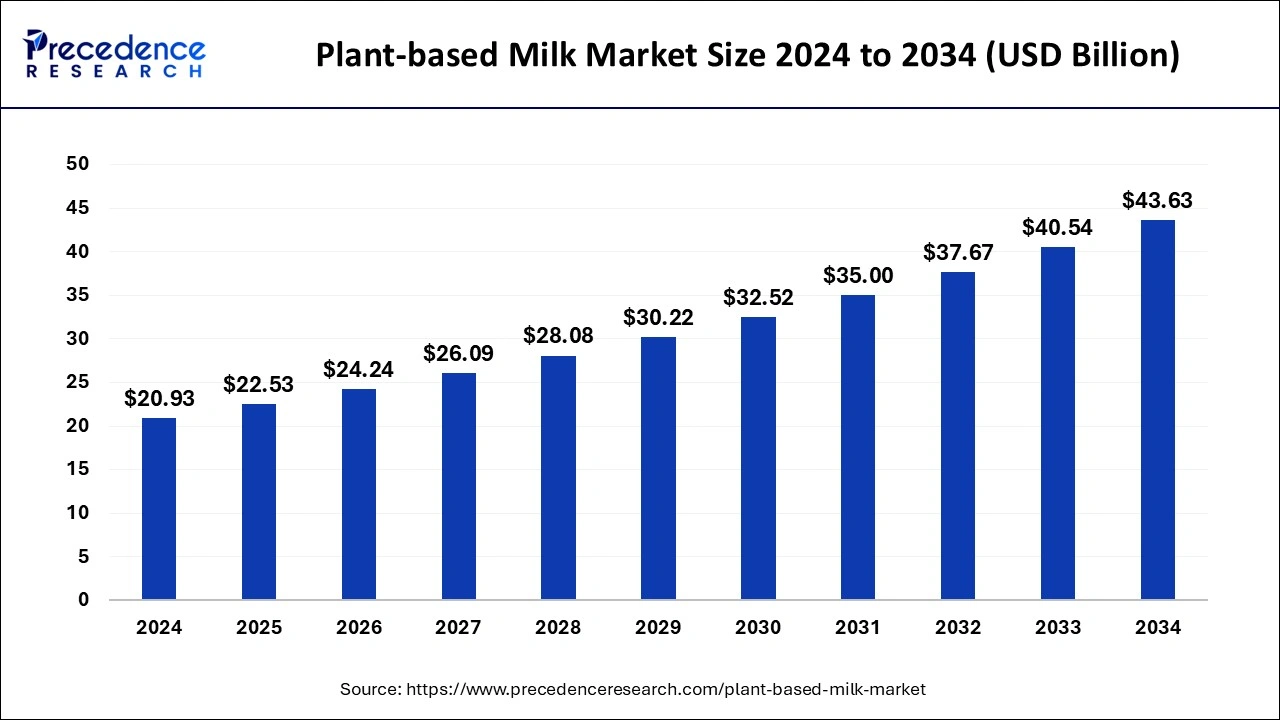
The global plant-based milk market size was valued at USD 22.53 billion in 2025 and is anticipated to reach around USD 46.57 billion by 2035, expanding at a CAGR of 7.53% from 2026 to 2035. The rise in vegan and vegetarian lifestyles has contributed significantly to the demand for plant-based milk market. And thereby fuelling the plant-based milk market further over the forecast period globally.
Plant-based Milk Market Key Takeaways
- The global plant-based milk market was valued at USD 22.53 billion in 2025.
- It is projected to reach USD 46.57 billion by 2035.
- The plant-based milk market is expected to grow at a CAGR of 7.53% from 2026 to 2035.
- Asia Pacific dominated the market with the largest share in 2025.
- By milk type, the soymilk segment dominated the market in 2025.
- Distribution Channel, the supermarket segment has held the largest market share in 2025.
- By end-user, the retail/household segment led the global market in 2025.
Market Overview
The plant-based milk market has experienced significant growth in recent times. It is driven by increasing consumer demand for a healthy lifestyle and more variety of food that is sustainable in nature and gives immense nutrients. Plant-based milk is generally derived from the plant sources like soy, almond, rice, oats, coconut, etc. It offers a great optional value for traditional dairy milk from animals, which contains lactose content that may trigger cholesterol-related issues and harmful ingredients if it is contaminated with other chemicals that increase milk production in animals.
Unlike tastes, plant-based milk is quite similar to animal milk in terms of base appearance, usage, and texture. Innovation in product development and manufacturing processes has also levelled up with various techniques that do not squeeze vital nutrients from plant-based milk. For instance, soy milk and almond milk have gained popularity as beverages for their rich source of protein. It has been used since ancient times in Indian food culture.
Impact of Artificial Intelligence on the Plant-based Milk Market
Food & beverage manufacturing companies are increasingly using AI technologies to analyze market trends and consumer preferences. AI technologies also help manufacturers to develop specialized products based on the specific dietary requirements of consumers. Integrating AI technologies in manufacturing processes enhances production efficiency by reducing waste and human errors. They also improve the quality control process, ensuring the final product meets stringent safety and quality regulations set by regulatory agencies. AI-driven automation further contributes to sustainability. Furthermore, by utilizing AI technologies, food & beverage manufacturers can streamline the supply chain by managing inventory levels.
Market trends
- In July 2025, the customer base of Alpro is expanding with the launch of a new range, which will be dedicated to children. The strawberry soy milk, strawberry soy yoghurts, chocolate oat milk, and vanilla, with less than 30% sugar compared to the average market for similar products, will be provided in this new Alpro Kids range, as per the brand. Moreover, the head of the plant-based category at Danone, Tom Kerr, stated that they are providing nutritious and healthy options for every family member, which are delicious. Furthermore, this launch was to contribute to “the healthiest generation of children ever” development, which was introduced for a new healthy food standard, by the UK government and supermarkets. (Source: https://www.greenqueen.com.hk)
- In June 2025, Vanilla Almond, which is a shelf-stable product, was launched by MALK Organics, which is a US-based milk alternative brand. The organic vanilla extract made from vanilla beans, organic almonds, Himalayan pink salt, and filtered water are the four clean ingredients that were used in this plant-based milk. Moreover, this launch will be added to the existing shelf-stable range of MALK Organics, which consists of Original Oat and Unsweetened Almond. (Source: https://vegconomist.com)
Plant-based Milk Market Growth Factors
- The growing lactose intolerant population is a major factor boosting the demand for plant-based milk. Plant-based milk is naturally lactose-free, making it an excellent choice for individuals who are lactose intolerant or have difficulty in digesting dairy products. According to the National Institutes of Health, approximately 65% of the world's population is lactose intolerant.
- The rising health consciousness among people boosts the market growth. Many plant-based milk varieties, such as almond and oat milk, are lower in saturated fat than whole cow's milk. Plant-based milk contains zero cholesterol. However, high cholesterol levels are associated with an increased risk of heart disease.
- The increasing awareness about the benefits of plant-based milk fuels the market growth. Depending on the type, plant-based milk can be fortified with essential nutrients such as calcium, vitamin D, and B vitamins. These nutrients are crucial for bone health, immune function, and well-being. Plant-based milk is also beneficial for heart health.The increasing demand for innovative products propels the growth of the market. Plant-based milk comes in various flavors and options, including almond, soy, coconut, oat, and rice milk. This diversity allows consumers to choose product based on their taste preferences and dietary needs.
- The rising emphasis on sustainable practices further contributes to market expansion. Producing plant-based milk generally has a lower environmental footprint compared to dairy milk. It requires less water and land and emits fewer greenhouse gases.
- The increasing demand for innovative products propels the growth of the market. Plant-based milk comes in various flavors and options, including almond, soy, coconut, oat, and rice milk. This diversity allows consumers to choose product based on their taste preferences and dietary needs.
Market Scope
| Report Coverage | Details |
| Growth Rate from 2026 to 2035 | CAGR of 7.53% |
| Global Market Size in 2025 | USD 22.53 Billion |
| Global Market Size by 2035 | USD 46.57 Billion |
| Largest Market | Asia Pacific |
| Base Year | 2025 |
| Forecast Period | 2026 to 2035 |
| Segments Covered | Milk Type, Distribution Channel, End-user, and Region |
| Regions Covered | North America, Europe, Asia-Pacific, Latin America, and Middle East & Africa |
Market Dynamics
Drivers
Growing number of individuals opting for vegetarian diet
One of the major drivers for the plant-based milk market is the increasing popularity of vegan and plant-based diets, as they are more convenient for the human digestive tract to digest and absorb. For health-conscious consumers, ethical values regarding animal welfare are supreme for their lifestyle. For this reason, they are more prone to make plant-based food choices than dairy products to promote a healthy environment for the planet. Also, allergies to dairy products have seen an upsurge over the past years, leading to the consumption and development of plant-based milk as a better alternative. Various kinds of milk are available for different people and their demands, such as soy, almond, coconut, oat, etc.
These milks offer a safer choice for people who are lactose intolerant and susceptible to allergies due to animal-based dairy products. Also, trends on social media about plant-based milk have gained popularity and influenced many people's diet habits. As mentioned, several health benefits and the antioxidant properties of plant-based milk are more important for reversing aging or slowing the aging process in humans. All these marketing tactics go very well to drive the further growth of the plant-based milk market globally.
Restraint
Processing level of plant-based milk is rising health concern.
Many plant-based milk products undergo over-processing and contain preservatives to extend their shelf life and mimic the taste and texture of dairy milk to attract consumers who are more prone to using dairy milk products. Because the inconsistency of plant-based milk compared to dairy milk is more noticeable. To overcome this, plant-based milk consists of additives, which may be the reason for concern regarding its health implications on the human system. Higher processing levels can reduce nutritional values and leave only Fiber content in it.
Also, plant-based milk and its products are primarily wrapped in a plastic cover, which is also an area of concern as plastic is nearly impossible to degrade and thereby harmful to the ecosystem of the earth. Such concerns are relatable and essential to consider. Hence, this can hinder the growth of the plant-based milk market.
Opportunity
Innovative product diversification
While soy analmond milk have dominated the plant-based milk market, there's a lot more potential for diversification in this market. Because Consumers are increasingly seeking variety in flavours along with nutritional benefits beyond the traditional traits, to achieve this, distributors of plant-based milk products need to incorporate Innovations in achieving creamy textures without solely depending upon fat content to attract a broader consumer base. Also, infusing plant-based milk with natural flavours can create exciting options for different consumers. Research and development can focus on lesser-known plant sources such as oats, flaxseed, quinoa, etc.
These ingredients offer unique tastes and nutritional benefits as well. Additionally, incorporating functional additives like probiotics and prebiotics is vital to life. It can enhance the health appeal of plant-based milk among health-conscious people across the globe, and it will create immense opportunities to proliferate the plant-based milk market.
Segment Insights
Milk Type Insights
The soymilk segment dominated the market share in 2025. Soy milk is naturally resistant to allergens like lactose and dairy products. For people with lactose intolerance, soymilk is the best and most convenient option as it is available widely nowadays. Such a rising prevalence of lactose intolerance is increasing the demand for the soymilk segment. Also, plant-based diets and vegan trends have spurred the world widely due to the benefits that plant-based milk provides. Soymilk production requires less natural resources like water and land, and therefore, it generates lower greenhouse emissions than dairy production. All these factors are propelling the soymilk segment in the plant-based milk market globally.
Distribution Channel Insights
The supermarket segment has dominated the plant-based milk market based on distribution channels in 2025. The segment is observed to sustain the position throughout the forecast period in response to the higher demand from the industry, supermarkets offer various brands of plant milk markets. This is to ensure a diverse range of options, including flavours and different formulations as per consumers' needs, can be available easily on their shelves.
Such ease of availability encourages consumers to repeatedly purchase from the same shops or supermarkets owing to the availability of a wide range of products at the same place. Moreover, supermarkets play an important role in marketing plant-based milk products and promoting them as a healthy diet option. They mainly highlight the benefits and contains of the product to maintain transparency throughout. Such an effort raises awareness of the masses and drives frequent purchasing from the same store.
End-user Insights
The retail/household segment dominated the global plant-based milk market. Increasing awareness about health and wellness has impacted the masses over the past years and drives plant-based milk products. That is why many people adopt a plant-based diet.
Plant-based milk is often perceived as a healthy alternative to dairy products as it contains less saturated fats and fewer calories. It also increases awareness about the impact of animal agriculture, water use, and greenhouse emissions fuelling the plant-based milk market.
Regional Insights
What is the Asia Pacific Plant-based Milk Market Size?
The Asia Pacific plant-based milk market size was estimated at USD 9.46 billion in 2025 and is anticipated to attain around USD 19.85 billion by 2035, expanding at a CAGR of 7.69% from 2026 to 2035.
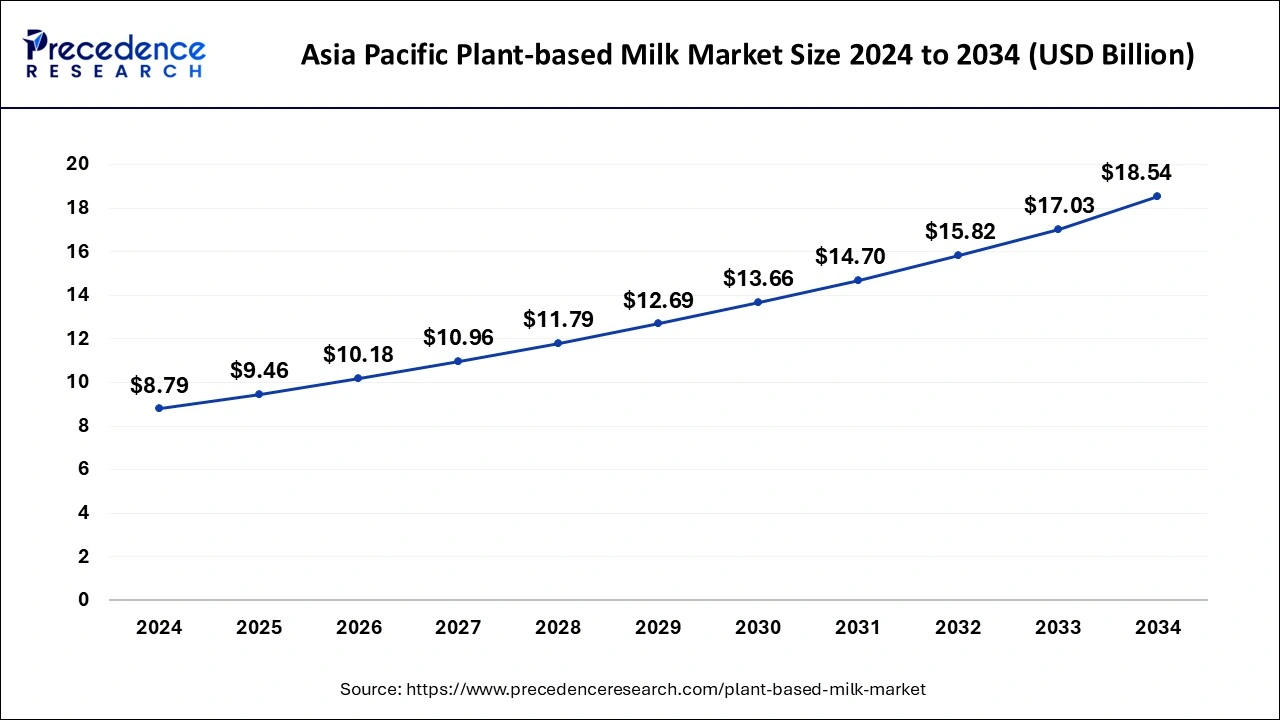
Asia Pacific region dominated the global plant-based milk market in 2025. The region is observed to sustain the dominance throughout the forecast period. Owing to the increase in demand for lactose-free milk and less fatty milk products as a regime of healthy lifestyle among several people in urban cities. India, China, Taiwan, and Singapore are some of the leading countries and, thus, major market contributors in the market.
The raw source materials like soy, almond and rice are abundantly available in the Asian region will further propel the markets growth. The most demanding milk is soy, hemp, coconut, and almond milk. All these milks are widely available in the regional market because of the increasing demand from people. The rising awareness of vegan products and avoiding dairy products will further boost the plant-based milk market growth on a larger scale in the food and beverage industry throughout Asia Pacific.
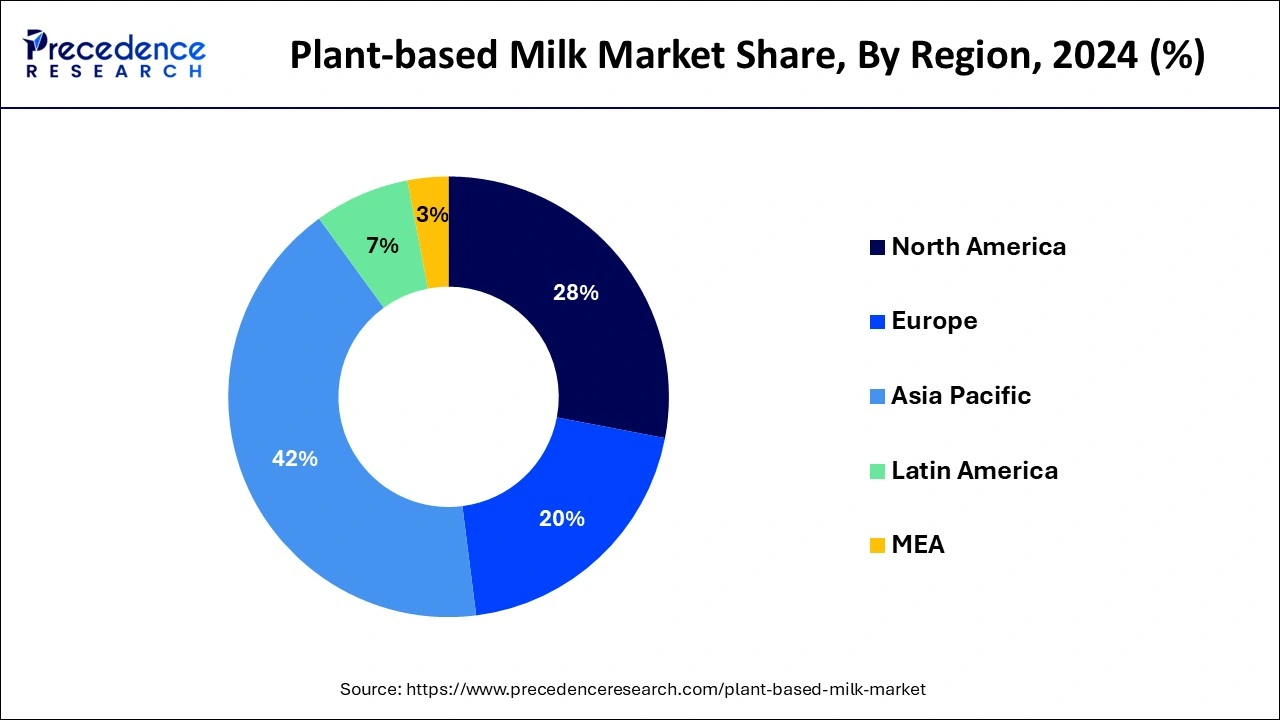
North America is the second-largest region globally for plant milk. North America is a significant and most influential market for plant-based milk, with substantial growth and consumer adoption across the globe. Plant-based milk alternatives have become mainstream, appealing to vegans and a broader consumer base. For instance, in the United States, nearly three billion dollars in revenue is generated annually due to the surge of plant-based milk.
As health awareness increases, the country is witnessing a sudden spur for plant-based milk and its product as a dairy alternative. This is part of trends in the USA, which is declared by eating and nutrition trends. It shows a forecast by the USA Department of Agriculture that shows consumers' eating habits and preferences. High demand for plant-based milk can also be the reason for increasing lactose intolerance and general awareness of healthy eating habits.
Europe is expected to grow significantly in the plant-based milk market during the forecast period. The growing awareness about health in Europe is increasing the use of plant-based milk products. At the same time, the growing vegan culture is also contributing to the same. Hence, the industries are focusing on the development of various plant-based milk products with enhanced nutritional values. Moreover, their growing launches are also attracting the population. Similarly, their availability in the supermarkets is increasing their use. Thus, all these factors are promoting the market growth.
Rising Demand for Dairy Alternatives Driving the Plant-Based Milk Market in Latin America
Latin America shows a notable growth during the forecast period. It is driven by high rates of lactose intolerance, a growing health-conscious user base seeking dairy-free options, and rising environmental concerns surrounding livestock production. Users are increasingly concerned about weight management, cholesterol, along with acne associated with animal milk, driving them toward lower-fat, plant-driven alternatives.
Growing Vegan Population Accelerating the MEA Plant-Based Milk Market
MEA shows a rapid growth during the forecast period. This is due to a confluence of rising health consciousness, environmental concerns, along with a shift toward ethical consumption among a younger, worldwide connected demographic. A significant section of the population in the Middle East suffers from lactose intolerance, which drives the need for dairy-free alternatives. Plant-based milks are perceived as healthier, providing a cholesterol-free, lower-saturated-fat option, which assists combat high rates of obesity and associated diseases.
Plant-based Milk Market Companies
- Pacific Foods of Oregon, Inc.: Pacific Foods of Oregon, Inc. provides a diverse portfolio of plant-based milks, thus, specializing in organic, non-GMO, along with dairy-free options designed for drinking, cooking, along with professional coffee applications.
- Goya Foods.: Goya Foods provides a variety of plant-based milk options, primarily focusing on coconut-driven products that serve as dairy-free, vegan, along with gluten-free options. Their portfolio is recognized as a major player in the plant-based milk market.
- Califia Farms: Califia Farms provides a wide range of premium, plant-based milks, which includes popular almond, oat, coconut, along with soy varieties designed for creaminess without dairy.
- Ripple Foods: Ripple Foods provides a high-protein, allergen-friendly plant-based milk made from yellow peas, thus, featuring 8g of protein per serving, 50% more calcium than dairy milk, and even half the sugar.
Other Major Key Players
- Groupe Danone
- The Hain Celestial Group Inc.
- Vitasoy International Holdings Limited.
- SunOpta Inc.
- Blue Diamond Growers, Inc.
- Sanitarium
- Ecomil
- Hiland Dairy
- Natura Foods.
- Earth's Own Food Company Inc.
- Edward & Sons
- Chef's Choice Food Manufacturer Company Limited
Latest Announcement by Industry Leader
- In December 2024, A European innovation project called DELICIOUS officially launched with the goal of accelerating the transition to plant-based dairy alternatives. The four-year initiative, backed by a €5 million budget, will leverage advanced technologies like high-throughput screening and machine learning. RISE Research Institutes of Sweden leads the project, with a vision to integrate cutting-edge technology and consumer insights. “By combining these technologies with a deeper understanding of consumer preferences, we aim to expedite the shift toward plant-based diets and set a new standard for the plant-based dairy industry,” said Charilaos Xiros, Project Coordinator for DELICIOUS.
Recent Developments
- In June 2022, nestle owned an SMA feeding and launched a new product for kids ages one to three. It is a vegan alternative drink named Plantygrow Growing Up Drink, extending its product range to the infant nutrition line.
- In January 2025, Edenesque, a plant-based milk company founded by Leslie Woodward, introduced its Barista Blend Pistachio Milk. The product is now available at Whole Foods Market locations across New York State and Connecticut and also available on company's website.
- In May 2024, Lactalis Canada, a subsidiary of France-based Lactalis Group, launched a new plant-based milk brand, Enjoy!, following the conversion of one of its facilities into a fully vegan hub. The brand complements Lactalis Canada's wide-ranging portfolio of now 20 iconic consumer brands and expands its plant-based offering to Canadian consumers.
- In February 2024, Califia Farms, a leading plant-based beverage brand, unveiled Califia Farms Complete, a creamy plant milk containing nine essential nutrients and eight grams of protein. Made from a blend of pea, chickpea, and fava bean protein, this product delivers all nine essential amino acids and half the sugar of dairy milk. The product is available at Target, Walmart, and other retailers in Los Angeles.
Segments Covered in the Report
By Milk Type
- Almond
- Soy
- Rice
- Oat
- Coconut
- Others
By Distribution Channel
- Online
- Supermarkets
- Convenience Stores
By End-user
- Retail/Household
- Food and Beverages Industry
- Food Services Industry
By Geography
- North America
- Europe
- Asia-Pacific
- Latin America
- Middle East and Africa
For inquiries regarding discounts, bulk purchases, or customization requests, please contact us at sales@precedenceresearch.com
Frequently Asked Questions
Tags





Ask For Sample
No cookie-cutter, only authentic analysis – take the 1st step to become a Precedence Research client
 Get a Sample




 sales@precedenceresearch.com
 Schedule a Meeting
