



Power Quality Equipment Market Size, Equipment Production Volume, Sales Performance, Manufacturing Cost, Export & Import Trends, and Market Share Analysis
Power Quality Equipment Market (By Type: Surge Arrester, Surge protection devices, Harmonic filters, Power conditioning units, Power distribution units, Voltage regulators, Uninterruptable power supplies, Synchronous condensers, Digital static transfer switches, Static VAR compensators, Solid oxide fuel cells, Isolation transformers, Power quality meters; By Application: Industrial & Manufacturing, Commercial, Residential, Transportation, Utilities; By Phase: Single Phase, Three Phase, By End User: Telecommunications, Automotive & Industrial, Electrical & Electronics, Energy & Utilities, Others) - Global Industry Analysis, Size, Trends, Leading Companies, Regional Outlook, and Forecast 2026 to 2035
Source: https://www.precedenceresearch.com/power-quality-equipment-market
 Get a Sample
 Table Of Content


What is the Power Quality Equipment Market Size?
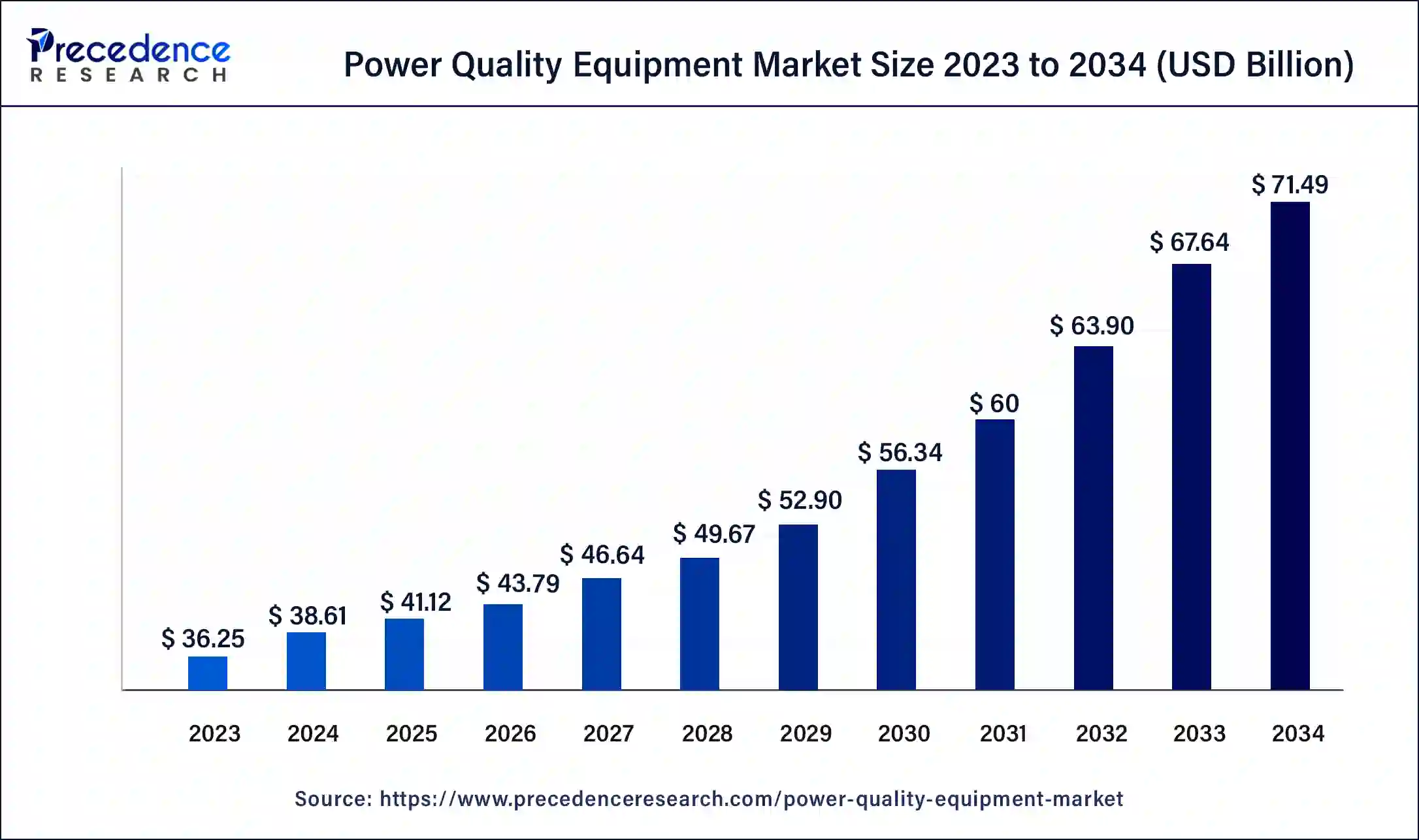
The global power quality equipment market size accounted for USD 41.12 billion in 2025, and is anticipated to hit around USD 43.79 billion by 2026, and is predicted to reach around USD 75.26 billion by 2035, growing at a CAGR of 6.35% from 2026 to 2035. The power quality equipment market is driven by the increasing adoption of renewable energy sources. The market is driven by the increasing demand for reliable and efficient power systems. As industries and consumers alike become more reliant on uninterrupted power supply, the focus on power quality has further intensified.
Market Highlights
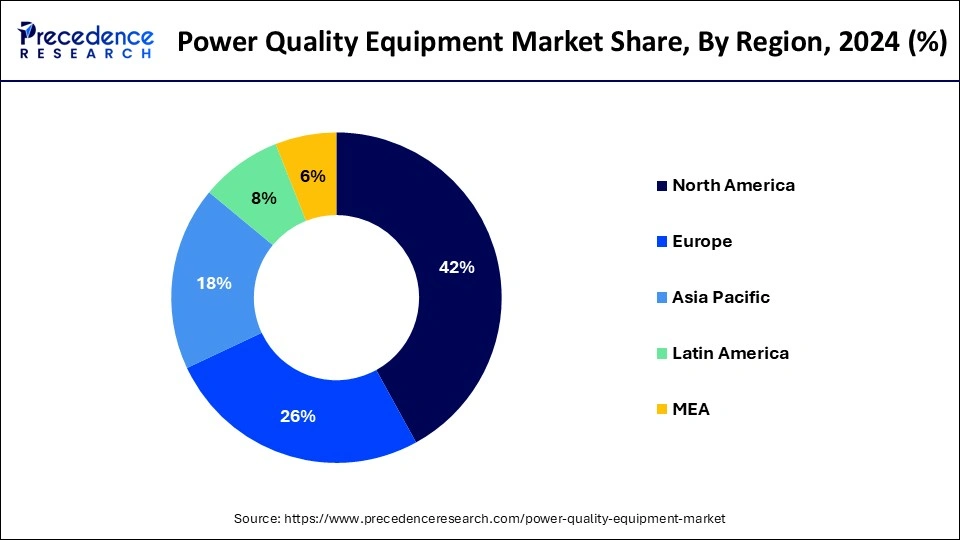
- North America dominated the market with the largest market share of 33% in 2025.
- The china power quality equipment market is expected to grow at a CAGR 9% from 2026 to 2035
- The three phase segment accounted largest revenue share 75% in 2025.
Market Overview
Power quality equipment is gear that is essentially used for conveying uniform power quality as well as power guideline. It guarantees a continuous stockpile of power inside a predefined range. Power quality is dealt with and is subject to various models, for example, flash current, voltage plunges, music, voltage, homeless people, etc. The power quality equipment attempts to diminish the times a similar piece of gear is utilized in the framework. It will in general help data sets where information examination and get-together might be perused and saved with no time postponements, and it likewise proficiently examinations the information important for a brief period. This area's ideal interest group includes power quality equipment vendors and producers, end-clients, wholesalers and supply firms, venture financiers and counsels, etc.
Artificial Intelligence: The Next Growth Catalyst in Power Quality Equipment
Power systems manufacturing includes power equipment, system construction, and testing. These involve generators, transformers, motors, and switchgear; the list is endless. Concepts of artificial intelligence AI can be used to indicate approaches to creating methods for designing the power system as well as simulating the prototypes of this system in favor of maximization of production based on the efficiency of this system. AI plays a vital role in effectively connecting energy storage systems to the grid so that energy storage and its flow and storage cycle can be identified, stopped, and started as desired.
Market Trends
- Integration of Renewable Energy Sources: The incorporation of renewable energy into existing power grids is reshaping the market. This transition introduces variability in power supply, necessitating advanced equipment to maintain stability and quality.
- Advancements in Smart Grid Technologies: The emergence of smart grid technologies is transforming how power quality is monitored and managed. These systems help to enable real-time data analysis, allowing for immediate responses to power quality issues, thereby enhancing overall system reliability.
- Regulatory Focus on Energy Efficiency: Increasing regulatory emphasis on energy efficiency is increasingly influencing the global market landscape. Manufacturers are seen actively adapting their products to meet stringent standards, which is likely to drive innovation and improve overall power quality.
- Integration of IoT: One more notable trend is the integration of Internet of Things (IoT) technology, which helps in enabling real-time monitoring and control of power quality. This allows for proactive maintenance and quick response to power disturbances, thus minimizing downtime and operational costs.
Market Outlook
- Market Growth Overview: The power quality equipment market is expected to grow significantly between 2025 and 2034, driven by the increased reliance on sensitive electronics in manufacturing, data centers, and healthcare demand, growing infrastructure modernization, and rising energy efficiency and sustainability.
- Sustainability Trends: Sustainability trends involve the integration of renewable energy, energy efficiency, and cost reduction, and growing electrification and Industry 4.0.
- Major Investors: Major investors in the market include ABB Ltd., Schneider Electric, Siemens, Eaton Corporation, and General Electric.
Market Report Coverage and Key Metrics
| Report Highlights | Details |
| Market Size in 2025 | USD 41.12 Billion |
| Market Size in 2026 | USD 43.79 Billion |
| Market Size by 2035 | USD 75.26 Billion |
| Growth Rate from 2026 to 2035 | CAGR of 6.35% |
| Largest Market | North America |
| Base Year | 2025 |
| Forecast Period | 2026 to 2035 |
| Segments Covered | Type, Application, Phase, End User, and Region |
| Regions Covered | North America, Europe, Asia-Pacific, Latin America, and Middle East & Africa |
Market Dynamics
Driver
Increased Focus on Energy Efficiency
The increased focus on energy efficiency is a key driver that is propelling the market forward. Several regulatory bodies all over the world are seen implementing stringent energy efficiency standards, compelling industries to adopt power quality solutions that minimize energy waste. This regulatory focus is likely to drive the market forward, as organizations invest in equipment that not only meets compliance requirements but also enhances operational efficiency. The market is also expected to witness a notable increase in the adoption of energy-efficient power quality equipment, which will lead to cost savings and reduced environmental impact.
The increasing reliance on electronic devices and digital infrastructure is also another such key driver that is leading to a heightened demand for a reliable power supply. In various sectors, including manufacturing, healthcare, and data centers, the need for uninterrupted power is crucial. This trend is driving the growth of the market, as organizations are increasingly seeking to mitigate the risks that are associated with power disturbances.
Restraint
High Investment Costs
Despite various growth opportunities, the market does have its fair share of challenges. The high initial investment costs and maintenance expenses are one such restraint that can limit small and medium-sized enterprises from adopting these solutions, thereby posing challenges for market growth. Additionally, the complexity of integrating advanced power quality equipment with existing infrastructure can bring technical challenges. There is also a need for skilled personnel to manage and maintain these systems, which can be a constraint in regions with limited technical expertise.
Opportunity
Technological Advancements and Growth of IT Infrastructure
Technological innovations are significantly shaping the market, opening various avenues for growth and development. The development of advanced power quality analyzers, voltage regulators, and harmonic filters has further enhanced the ability to monitor and manage power quality issues effectively. These advancements not only help to improve performance but also help in reducing energy losses. The integration of IoT and AI technologies into power quality equipment is also gaining traction and is expected to further optimize energy consumption and enhance predictive maintenance capabilities.
The rapid expansion of data centers and IT infrastructure is another such opportunity that is significantly influencing market growth. As businesses increasingly rely on cloud computing and big data analytics, the demand for robust power quality solutions has also surged. This sector is projected to account for a substantial share of the market, with investments in power quality equipment expected to rise as organizations prioritize the protection of their critical IT assets.
Market Segmentation Insights
Types Insights
Which Type Dominated the Power Quality Equipment Market?
The uninterruptible power supplies segment dominated the global market in 2025. This dominance can be attributed to its widespread use in guaranteeing a continuous power supply. The segment growth is further propelled by the growing demand for UPS in data centers, hospitals, and other critical infrastructure that requires an uninterrupted power supply.
The surge protection devices segment is expected to grow rapidly during the forecast period. These devices are essential for protecting electrical systems from voltage spikes. The segment is expected to grow due to the rising need to safeguard electronic gadgets in homes and workplaces. In addition to that, rising awareness about the protection of sensitive electronic equipment and increasing instances of voltage surges due to lightning and power outages are expected to fuel the segment's growth.
Application Insights
Which Application Led the Power Quality Equipment Market?
The industrial and manufacturing segment led the global market in 2025, characterized by a robust demand for power quality solutions due to the critical need for uninterrupted operations in production lines. This segment often requires sophisticated equipment to handle electrical imbalances and harmonic distortions, ensuring optimal performance and minimizing downtime. This segment also benefits from the increasing demand for efficient and reliable power quality solutions to mitigate disturbances in manufacturing processes.
The commercial segment is expected to witness rapid growth throughout the forecast period, especially due to the progressive shift towards smart buildings and the booming data center industry. These facilities require advanced power quality equipment to ensure reliability and efficiency. As this sector continues to grow, there's a marked increase in the emphasis on innovative technologies and integrated solutions to support energy management and performance in commercial infrastructures.
Phase Insights
How the Three Phase Segment Dominated the Power Quality Equipment Market?
The three phase segment dominated the global market in 2025. This segment is mainly used in large commercial and industrial applications due to its higher power capacity and efficiency. Growing industrialization is anticipated to propel the demand for three-phase power quality equipment as it helps to provide greater power stability for large-scale operations. This segment is also being driven by technological advancements, promoting higher performance and reliability.
The single phase segment is anticipated to grow at the fastest CAGR throughout the forecast period. This rapid growth can be attributed to the growing demand for power quality equipment for residential and light commercial use. Another factor that is fueling this segment's growth is the ease of installation of single-phase equipment and the lower cost compared to three-phase systems. Its simplicity, cost-effectiveness, and suitability for residential applications make it a popular segment in the market.
End User Insights
How does the Energy & Utilities Segment Dominate the Power Quality Equipment Market in 2025?
The energy & utilities segment dominated the market in 2025, owing to the rising preference for grid stability, infrastructure protection, integration of renewable energy, and improving energy efficiency. Utilities use power quality equipment like harmonic filters, surge protectors, and static VAR compensators to protect expensive grid assets. Renewable energy systems depend strongly on inverters that introduce high levels of harmonic distortion control.
The electrical & electronics segment is expected to grow at the fastest CAGR in the market during the forecast period due to reliability, electrical efficiency of the plant, and reduced risks with the appropriate design. The interaction between electronic components and electrical power systems impacts equipment lifespans, operational efficiency, and energy costs. They are enabling high-speed mitigation and advanced power quality and monitoring.
Market Regional Analysis: North America, Europe, Asia-Pacific
What is the U.S. Power Quality Equipment Market Size?
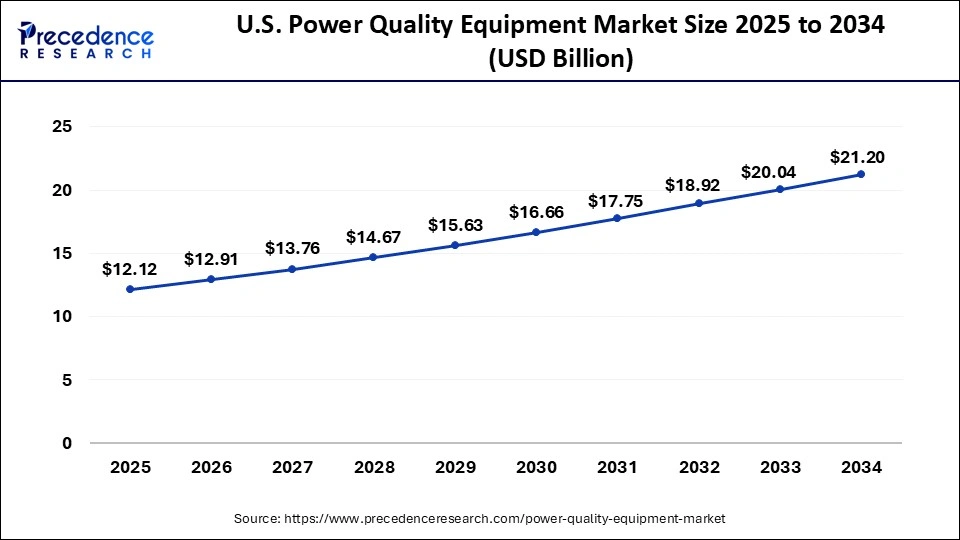
The U.S. power quality equipment market size is valued at USD 12.12 billion in 2025 and is expected to be worth around USD 22.33 billion by 2035, at a CAGR of 6.3% from 2026 to 2035.
Because of the rising digitalization of the broadcast communications area, North America is probably going to lead the worldwide power quality equipment market. Besides, rising natural awareness is projected to fuel market extension. The district's fast growing present day and collecting regions, telecom industry, and business region are huge end-clients of power quality stuff.
- In March 2024, NVIDIA declared that NVIDIA Omniverse Cloud as APIs, extending the reach of the world's leading platform for generating industrial digital twin applications and workflows across the entire ecosystem of software makers.
U.S. Power Quality Equipment Market Trends
The U.S. rapid expansion of EV charging networks is driving an unprecedented need for high-quality, stable power infrastructure. This demand is further accelerated by the integration of intermittent renewable energy, necessitating advanced grid modernization and harmonic filtering to maintain system stability.
During the gauge time period, the media correspondences segment is expected to be the fundamental end client area in the North American power quality stuff market, with a compound annual growth rate of 4.2% to the extent that value someplace in the scope of 2026 and 2035. The telecoms characterization should be the market boss in the APEJ power quality equipment market, with a pay compound annual growth rate of 6% over the guess period.
How did Asia Pacific Grow Fastest in the Power Quality Equipment Industry?
Asia Pacific's rapid industrialization and manufacturing create a massive need for uninterrupted, stable power for high-tech equipment. Growing cities and increased electricity demand, rising frequent outages in some areas, necessitate power quality solutions for reliable supply, and the proliferation of data centers across the region and digital transformation expand the market growth.
India Power Quality Equipment Market Trends
India's shift towards decarbonization has made high-quality power infrastructure a critical requirement for modern economic stability. The integration of renewable energy and the expansion of EV networks demand advanced solutions to manage the inherent grid fluctuations of a decentralized energy system.
How did Europe Experience A Notable Growth in the Power Quality Equipment Industry?
Europe's critical need to stabilize a grid increasingly reliant on variable renewable energy and decentralized EV charging infrastructure. Strict adherence to sustainability regulations like the EU Green Deal mandates the adoption of advanced STATCOMs and efficient controllers to minimize energy losses.
Germany Power Quality Equipment Market Trends
Germany is driving the adoption of innovative equipment to ensure grid stability and operational continuity. Ultimately, maintaining stable power is essential for protecting sensitive electronics across critical sectors, from manufacturing to the rapidly expanding EV charging infrastructure.
What are the Key Trends in the Power Quality Equipment Market in Latin America?
Latin America is expected to witness significant growth in the upcoming years, driven by increasing industrialization, urbanization, and the rising demand for a reliable power supply. Government initiatives promoting renewable energy and smart grid technologies are also gaining traction, further boosting market growth and making it a key area for investments and development. Countries such as Brazil and Mexico are leading players, with significant contributions being made from both local and international players.
Brazil Market Trends
The region's market landscape is evolving at a steady pace, with a high focus on innovation and cost-effective solutions in order to meet the growing demand. The presence of a large manufacturing base and increasing investments in infrastructure are expected to drive further growth and development in the region.
How is the Middle East and Africa Region Growing in the Power Quality Equipment Market?
The Middle East and Africa region is expected to have a significant amount of growth throughout the forecast period, driven by increasing investments in infrastructure, urbanization, and the need for a reliable power supply in various sectors. Government initiatives aimed at enhancing energy efficiency and sustainability are also gaining traction, further contributing to market expansion. Countries like South Africa, the UAE, and Saudi Arabia are leading players, with a growing presence of key companies.
Saudi Arabia Market Trends
The region's growth and development are characterized by a mix of local and international companies, all of whom are focusing on innovative solutions in order to address the unique challenges of the region. The increasing adoption of renewable energy sources is also expected to further boost the demand for power quality equipment in this region.
Government Initiatives in the Power Quality Equipment Market
China
- In September 2025, China announced a two-year plan to accelerate the growth and expansion of the power equipment sector through supportive measures to promote green and intelligent transformation. This plan includes multiple development targets for the 2025-2026 period, including a steady rise in new energy equipment. It also aims to reach an average annual revenue increase of approximately 6% in conventional power equipment. (Source: https://english.www.gov.cn)
United States
- In November 2025, the Government of Canada reported that the U.S. is transforming all of its trade relationships, shaping the rapidly changing global trade landscape. It is fueled by persistent unfair trade practices and growing geopolitical tensions. It has also been reported that Canada holds the best deal of any U.S. trading partner. (Source: https://budget.canada.ca)
Germany
- In June 2026, Germany announced that it will support energy-intensive industry after approval from the European Commission, and it will combine two subsidy schemes throughout 2026. It has signed an agreement that allows companies to benefit from both a power price compensation scheme and a temporary lower industrial electricity price, reducing their exposure to carbon pricing. (Source: https://www.cleanenergywire.org)
Brazil
- In June 2026, the National Council of Metrology launched the National Quality Infrastructure along with its first action plan for the 2025-2026 period. The core pillars of this action plan are a regional quality infrastructure development program, digitalization of product certification, mobile integration, modernization of laboratory infrastructure, and remote telemetry inspection for chronotachographs. (Source: https://braziliannr.com)
Saudi Arabia
- In May 2026, the International Trade Administration reported that Saudi Arabia continues to accelerate its capacity in the power sector, including transmission, electricity generation, smart grid, and distribution to meet increasing demand for electricity from commercial and residential consumers. It will also support the diversification of its domestic energy mix. (Source: https://www.trade.gov)
Investments in the Power Quality Equipment Market
- In June 2026, Quality Power Electrical Equipments Limited announced its plan to acquire Winwin Insulators for INR 315 Crores. This acquisition will integrate the heritage WS Insulators brand and high-voltage ceramic insulator manufacturing up to 1200 kV to Quality Power's portfolio. (Source: https://scanx.trade/stock-market-news)
- In May 2026, Siemens announced that it has reached an investment milestone of $1 billion in U.S. manufacturing that will strengthen the American workforce, reindustrialization, and supply chains. Siemens continues to establish the support system of American manufacturing, from critical power equipment to passenger rail manufacturing sites. (Source: https://news.siemens.com)
- In September 2025, ABB announced its plan to invest $110 million in U.S. manufacturing to expand the research and development and manufacturing of its advanced electrification solutions. It is driven by increased customer focus on improving uptime and energy efficiency while reducing their energy costs. (Source: https://new.abb.com)
- In October 2025, Toshiba Energy Systems & Solutions Corporation announced a significant investment of 20-billion-yen to boost power transmission and distribution (T&D) equipment production to meet the global rising demand for electricity. The company planned a total investment of 55 billion yen by the first year of 2027. It is expected to increase more than double the combined production capacity at the company's major facilities in India and Japan by the first year of 2030. (Source: https://www.global.toshiba)
Collaborations in the Power Quality Equipment Market
- In August 2025, Toshiba Electronic Devices & Storage Corporation and SICC Co. Ltd. signed a memorandum of understanding (MOU). Under this collaboration, they aim to improve the quality and characteristics of silicon carbide power semiconductor wafers that are produced by SICC. They also aim to expand the supply of high-quality, stable wafers from SICC to Toshiba. (Source: https://toshiba.semicon-storage.com)
- In May 2026, ABB Ltd. proclaimed that the company collaborates with its partners and customers to resolve the major challenges in energy management and electrical distribution. It has been reported that the company has brought grid modernization expertise and solutions to advance the utility industry. (Source: https://new.abb.com)
- In June 2026, GE Vernova Inc. participated in the Quang Trach II project, which also establishes its broad collaboration, including the MoU, signed to explore potential opportunities in high-voltage direct current technology to support greater integration of renewable energy and help strengthen grid reliability. The company has secured its position to supply two H78 generators and two 9HA.02 gas turbines for EVN's Quang Trach II LNG Power Plant. (Source: https://www.gevernova.com)
- In June 2026, Schneider Electric launched a collaborative model, which is specifically designed to deploy cost-effective, resilient energy solutions. The company also reported that strategic financing is driving the expansion of critical energy infrastructure projects. (Source: https://blog.se.com)
Value Chain Analysis
- Raw Material Sourcing (Metals, Electronics): The process of obtaining and handling the entire electronic and metal components necessary for the production of power quality equipment with high efficiency and durability.
Key Players: Electris, thyssenkrupp Materials NA, and Supreme Components International - Component Fabrication and Machining: The use of cutting-edge manufacturing techniques to transform raw materials into accurate parts and sub-assemblies for the final equipment production.
Key Players: Siemens AG, Eaton Corporation Plc, Vertiv Group Corp. - Testing and Certification: The process of verifying that the equipment is in line with the needed safety, quality, and performance standards before it is allowed to enter the market.
Key Players: SGS SA, TÜV SÜD, UL LLC - Installation and Commissioning: The provision of setting up and activating the power quality equipment at the customer's location to ensure its proper working and reliability.
Key Players: Vertiv Group Corp., and Hitachi Energy - Distribution and Sales: The act of making and selling the completed power quality equipment through different sales channels to ultimate users and industrial clients.
Key Players: Hitachi Energy and Selec Controls Pvt. Ltd - Maintenance and After-Sales Service: The practice of giving continuous customer support, maintenance, and repair services to guarantee steady product performance and satisfaction.
Key Players: ABB - Product Lifecycle Management of Power Quality Equipment: The activity of looking after the whole lifespan of the product, which encompasses its design, updates, and environmentally sound recycling or disposal at the end of use.
Key Players: PTC, Siemens Digital Industries Software, and Autodesk
Market Competitive Landscape: Leading Companies and Strategies
Major players in the power quality equipment market attempting to increase market demand by investing in research and development operations include ABB Ltd., General Electric Company, Schneider Electric, Siemens AG, Emerson Electric Company, Eaton Corporation Plc, Active Power Inc., MTE Corporation, Smiths Group plc., and Toshiba Corporation.
In terms of business tactics, the market appears to be moderately fragmented. Leading market players are seen investing heavily in research and development in order to expand their product lines, which will help the market grow even more. Market participants are also looking into a variety of strategic activities to expand their global footprint, with important market developments including new product launches, contractual agreements, mergers and acquisitions, higher investments, and collaborations with other organizations.
Power Quality Equipment Market Companies
- Toshiba Corporation : Toshiba offers a range of high-reliability transmission and distribution equipment, such as Gas Insulated Switchgear (GIS) and transformers, to stabilize power grids.
- General Electric Company (GE Vernova): GE provides a comprehensive portfolio of power conversion and storage solutions that maintain grid stability, including Microgrid controllers, FLEXINVERTER for solar, and battery energy storage systems.
- ABB Ltd.: As a leader in this space, ABB offers a complete portfolio of low, medium, and high-voltage power quality products, such as active filters (PQF) and shunt reactors that mitigate harmonic distortions and correct power factors.
- Schneider Electric: Schneider Electric provides a holistic ecosystem, integrating EcoStruxure software with hardware like AccuSine active harmonic filters and PowerLogic meters to diagnose and mitigate network disturbances.
- Emerson Electric Company: Emerson (now part of Vertiv for critical power) contributes through high-efficiency uninterruptible power supplies (UPS) and power conditioning equipment designed for mission-critical applications.
- Siemens AG: Recognized as a "Star Player" in the market, Siemens provides comprehensive, digitized power quality solutions for industrial and utility clients. Their offerings include advanced power monitoring, reactive power compensation, and harmonic filtering, which support the integration of renewable energy and optimize grid stability.
Other Major Key Players
- Eaton Corporation Plc.
- MTE Corporation
- Active Power Inc.
- Smith's Group plc.
Latest Announcements by Industry Leaders
- NVIDIA declared it is teaming with United States technology leaders to help organizations create custom AI applications and transform the world's industries using the latest NVIDIA NIM Agent Blueprints and NVIDIA NeMo and NVIDIA NIM microservices.
Recent Developments
- In July 2026, CNBYG, an enterprise dedicated to the production of power quality products, announced the launch of advanced power quality systems and intelligent power capacitors for industrial grids. This enterprise is committed to providing end-to-end solutions that help global clients reduce operational costs, improve grid efficiency, and extend asset lifespan. (Source: https://www.einnews.com)
- In May 2026, Toshiba International Corporation launched the Toshiba 3000 TP (three-phase) Series Uninterruptible Power System (UPS), which offers 96.5% efficiency for mission-critical applications and exceptional reliability. It is ideal for operations in commercial or retail markets, edge data centers, and enterprise AI systems. (Source: https://news.toshiba.com)
- In October 025, Ingeteam launched the INGECON H2 Megalyzer, a modular rectifier for renewable hydrogen production, during World Hydrogen Week 2025 in Copenhagen.
- In February 2025, Socomec launched the DELPHYS XM UPS system (300-800 kVA) and DIRIS A-100/A-200 power quality meters, tailored for modern Data Centres and critical infrastructures, enhancing power management solutions.
Segments Covered in this Report
By Type
- Surge Arrester
- Surge protection devices
- Harmonic filters
- Power conditioning units
- Power distribution units
- Voltage regulators
- Uninterruptable power supplies
- Synchronous condensers
- Digital static transfer switches,
- Static VAR compensators
- Solid oxide fuel cells
- Isolation transformers
- Power quality meters
By Application
- Industrial & Manufacturing
- Commercial
- Residential
- Transportation
- Utilities
By Phase
- Single Phase
- Three Phase
By End User
- Telecommunications
- Automotive & Industrial
- Electrical & Electronics
- Energy & Utilities
- Others
By Region
- North America
- Latin America
- Europe
- Asia-pacific
- Middle and East Africa
For inquiries regarding discounts, bulk purchases, or customization requests, please contact us at sales@precedenceresearch.com
Frequently Asked Questions





Ask For Sample
No cookie-cutter, only authentic analysis – take the 1st step to become a Precedence Research client
 Get a Sample




 sales@precedenceresearch.com
 Schedule a Meeting
