



Next-Generation Bispecific Antibody Market Revenue to Attain USD 52.08 Bn by 2035
Published: 19 Jan 2026
Author: Precedence Research



Next-Generation Bispecific Antibody Market Revenue and Trends 2026 to 2035
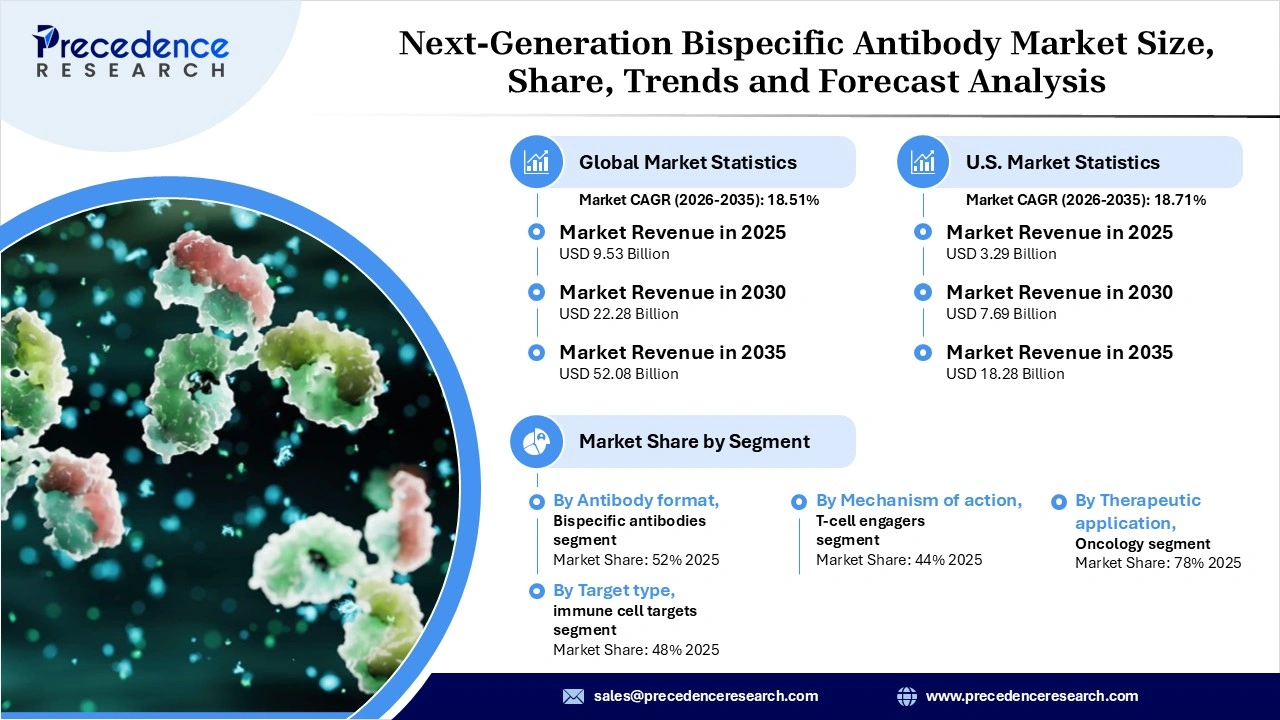
The global next generation bispecific antibody market revenue reached USD 9.53 billion in 2025 and is predicted to attain around USD 52.08 billion by 2035 with a CAGR of 18.51%. The market is rapidly evolving due to the excellent efficacy required in oncology, minimized effects of off-targets, and growing demand for applications in autoimmune diseases with increased rates for R&D.
What Are the Driving Factors of the Next-generation Bispecific Antibody Market?
The next-generation bispecific antibody market is significantly growing due to key factors like the increasing burden of chronic diseases, advancements in antibody engineering, a growing shift towards targeted therapies rather than traditional monoclonal antibodies, and strategic collaborations, acquisitions, and partnerships between leading companies.
Regulatory bodies like the FDA support quick approvals for BsAbs through fast-track designation. This is possible due to the ongoing advancements in antibody engineering, where next-generation platforms allow improved tissue penetration, increased stability, and minimized immunogenicity.
Next-Generation Bispecific Antibody Market Coverage
| Report Attribute | Key Statistics |
| Market Revenue in 2025 | USD 9.53 Billion |
| Market Revenue by 2035 | USD 52.08 Billion |
| CAGR from 2026 to 2035 | 18.51% |
| Quantitative Units | Revenue in USD million/billion, Volume in units |
| Largest Market | North America |
| Base Year | 2025 |
| Regions Covered | North America, Europe, Asia-Pacific, Latin America, and the Middle East & Africa |
Segment Insights
- By Antibody Format
The IgG-like bispecific antibodies segment held the largest market share in 2025 as it shows structural similarity to natural IgG antibodies with characteristics like good pharmacokinetics, extended half-life, and minimized immunogenicity.
- By Mechanism of Action
The T-cell engagers segment held the largest market share in 2025 due to its ability to directly target the recruitment of cytotoxic T-cells to tumor cells, which supports targeted tumor cell-mediated killing. T-cell engagers can be used in various therapies.
- By Therapeutic Application
The oncology segment held the largest market share in 2025 due to the common factor in various cancers, and targeted therapies are highly recommended for better efficacy and safety for cancer treatment with regulatory support.
- By Target Type
The tumor antigen/immune cell target segment held the largest market share in 2025 as this dual-targeting system can enhance antitumor effect and minimize off-target effects, which is a crucial aspect in hematologic malignancies and solid-type tumors.
Regional Insights
North America held the largest market share in 2025 due to the well-established pharma and biotech infrastructure with active clinical research and huge spending to accelerate healthcare sectors in the region amid rising cases of cancer and early adoption of immuno-oncology treatment.
Strong presence of leading biopharmaceutical companies and academic research centers is accelerating translational research and clinical trial activity across oncology indications. Advanced regulatory frameworks and faster approval pathways are supporting timely commercialization of innovative immunotherapies. In addition, high adoption of precision medicine and companion diagnostics is reinforcing sustained demand across the North American market.
Asia pacific is projected to grow at the fastest CAGR during the foreseeable period due to the increasing number of cancer patients and chronic diseases, growing healthcare spending, and government initiatives in terms of huge funding to reduce the burden of chronic disease, which is fueling the market's growth in the region. Also, local enterprises are engaging in leveraging cutting-edge antibody engineering platforms like AI-powered discovery tools, and cost-effective methods for large-scale manufacturing are major drivers.
Rapid expansion of oncology treatment centers and improving access to advanced therapies are increasing diagnosis and treatment rates across major Asia Pacific economies. Growing participation of domestic biopharma companies in global clinical development programs is strengthening regional innovation capacity. In parallel, investments in biologics manufacturing infrastructure are improving scalability and affordability, supporting long-term market expansion across the region.
Recent Development
- In January 2026, Sidewinder therapeutics and Synaffix, a Lonza Company collaborated for advanced development of next-generation bispecific ADCs by signing a multi-target license agreement. (Source: https://www.prnewswire.com)
Get this report to explore global market size, share, CAGR, and trends, featuring detailed segmental analysis and an insightful competitive landscape overview @ https://www.precedenceresearch.com/sample/7336
You can place an order or ask any questions, please feel free to contact us at sales@precedenceresearch.com |+1 804 441 9344