



Lab on Chip Market Revenue, Leading Companies, Company Technology / Innovation, Diagnostic Testing Volume, Adoption Rates, Pricing Metrics, Supply Chain Performance, Competitive Positioning, and Industry Trends
Lab on Chip Market (By Product: Reagents & Consumables, Software, IV Needles; By Technology: Microarrays, Microfluidics, Tissue Biochip, Others; By Application: Genomics, Proteomics, Point of Care Diagnostics, Drug Discovery, Others; By End-Use: Hospitals and Clinics, Biotechnology and Pharmaceuticals Companies, Forensic Laboratories, Diagnostics Centers, Academic and Research Institutes) - Global Industry Analysis, Size, Trends, Leading Companies, Regional Outlook, and Forecast 2026 to 2035
Source: https://www.precedenceresearch.com/lab-on-chip-market
 Get a Sample
 Table Of Content


What is the Lab on Chip Market Size?
The global lab on chip market size accounted for USD 8.20 billion in 2026 and is expected to exceed around USD 18.39 billion by 2035, growing at a CAGR of 9.40% from 2026 to 2035. The lab on chip market is growing rapidly due to the rising healthcare diagnosis facilities. The lab on chip market is driven by growing demand for rapid point of care diagnostics.
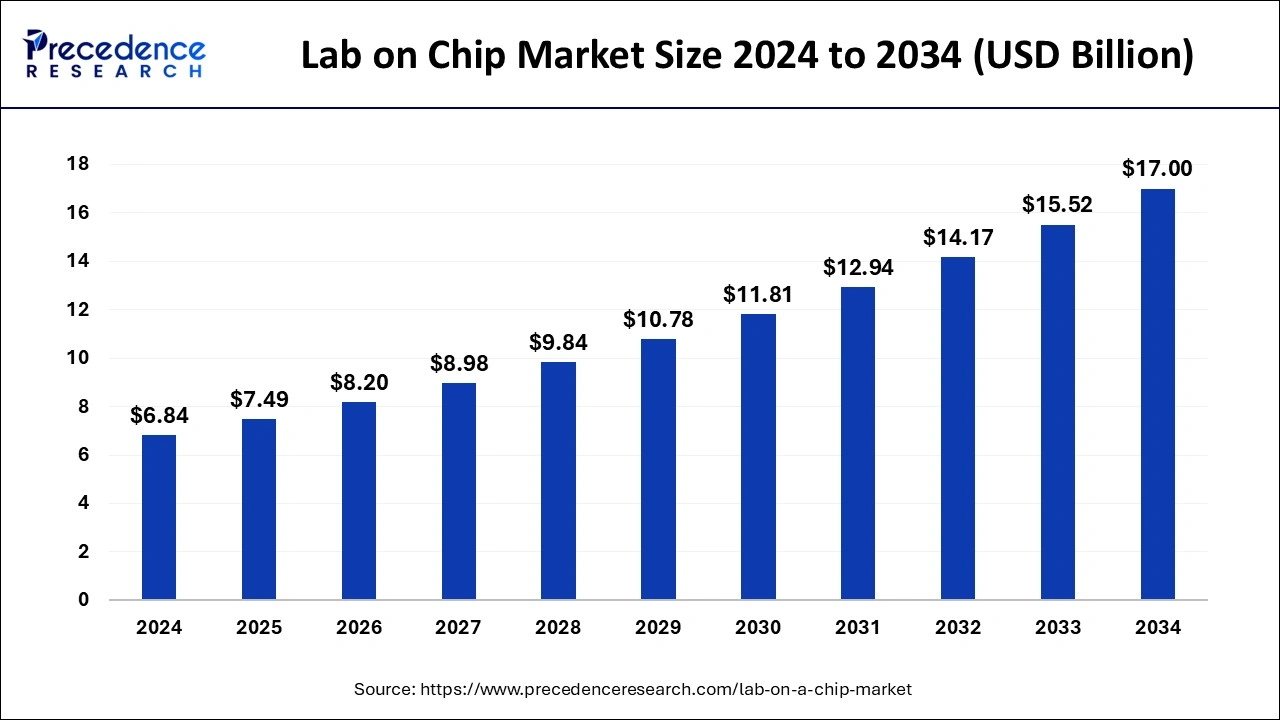
Lab on Chip Market Key Takeaways
- Industry growth overview: The lab on chip market is expanding steadily as healthcare providers, pharmaceutical companies and research institutions adopt compact technologies that deliver faster testing, lower costs and improved operational efficiency.
- Global expansion: The lab on chip market is growing rapidly in the Asia Pacific, Latin America, and the Middle East due to growing demand for portable diagnostic technologies.
- Major Investors: Government research agencies, venture capital firms, and healthcare technology funds are investing to support lab on chip innovation, product development and clinical validation. Major investors in the market include OrbiMed Advisors, Bayland Capital, Sofinnova Partners / Ventures and ALS Investment Fund.
- Startup ecosystem: The startup economy in the market is focused on introducing advanced microfluidic platforms and artificial intelligence supported analytical tools.
Market Overview
The lab on chip devices is nothing but the miniaturization of laboratory procedures and an integration of various disciplines. These devices are used in various branches of the healthcare segments like the drug delivery, synthetic biology, stem cells, environmental monitoring etc an increased use of lab on chips in the chronic diseases is leading to a growth in the market. Little prevalence of expensive health problems and an increase in the geriatric population, the market is expected to grow. The lab on chip device is able to scale down singular, multiple laboratory functions into a chip format where the chip size is approximately millimeters to a few square centimeters.
Role of AI Integration in the Lab on Chip Market
The integration of AI in the lab on chip market helps to bring revolution to this sector and by advanced diagnosis process. The major role of AI in this market is to improve the analysis of data and its interpretation. This device is used to generate huge amounts of data from the samples that are present in complex forms, and AI can help to understand that information in a simplified way possible. AI plays an important role in the automation of processes in the lab-on-chip system.
Lab on Chip Market Growth Factors
- An increase in chronic diseases and expanding applications of genomics and proteomics in Cancer Research along with the revenue growth have led to an increase in the chip-on-lab market.
- There is an increased demand for personalized medicine, which has further helped in driving the market for lab on a chip. The trend is expected to continue and the revenue shall keep growing for this technology.
- Due to the increasing prevalence of cancer in many nations, the lab on chip market is expected to garner more revenue growth. It helps in detecting pathogens for early diagnosis of oral cancer and also helps in detecting swine flu, malaria, Zika virus and Ebola virus. In countries like North America, Asia and Europe, the lab and ship technology is under exploration for many applications.
- Increased investments by various nations in research and development have led to growth in the lab and ship market. Increased investments in personalized medicine and life sciences have also created a demand for lab on chips.
- Various partnerships and collaborations for producing innovative lab ownership solutions are also fueling the growth of the market.
- With the use of advanced technologies, labs and chips are capable of detecting early pathology which will drive the growth of this technology.
Market Outlook
- Industry growth overview - The lab on chip market is expanding steadily as healthcare providers, pharmaceutical companies and research institutions adopt compact technologies that deliver faster testing, lower costs and improved operational efficiency.
- Global expansion - The lab on chip market is growing rapidly in the Asia Pacific, Latin America, and the Middle East due to growing demand for portable diagnostic technologies.
- Major Investors - Government research agencies, venture capital firms, and healthcare technology funds are investing to support lab on chip innovation, product development and clinical validation. Major investors in the market include OrbiMed Advisors, Bayland Capital, Sofinnova Partners / Ventures and ALS Investment Fund.
- Startup ecosystem - The startup economy in the market is focused on introducing advanced microfluidic platforms and artificial intelligence supported analytical tools.
Market Scope
| Report Coverage | Details |
| Market Size in 2026 | USD 8.20 Billion |
| Market Size in 2035 | USD 18.39 Billion |
| Growth Rate from 2026 to 2035 |
CAGR of 9.40% |
| Largest Market | North America |
| Fastest Market | Asia Pacific |
| Base Year | 2025 |
| Forecast Period | 2026 to 2035 |
| Segments Covered | Product, Technology, Application, End-Use, Geography |
| Regions Covered | North America, Europe, Asia-Pacific, Latin America, and Middle East & Africa |
Market Dynamics
Driver
Demand for digitization in lab testing
Lab on chip devices offer more cost-effective and efficient tools for diagnostics. Lab on chip devices offer faster results and are accessible to minimally trained technicians. These are particularly useful in point-of-care and emergency settings where quick and accurate diagnostics are pivotal in administering medical treatment. Growing trends in personalized medicine are also fuelling demand for lab on chip devices for measurements of biomarkers and other crucial health indicators.
Restraint
High research and development cost
The high investment costs behind lab on chip devices, including the integration of several functions on a single chip, lead to high costs of production and, in turn, costs to patients and healthcare providers. Stringent government regulations around the use of such devices also lead to high in-market costs for companies. The materials and synthesis costs associated with lab on chip devices are also costly and require technical expertise.
Opportunity
Integration and machine learning with LOC devices
There are several opportunities for growth in the lab on chip market due to advancements in biomedical science, fuelled by the integration of artificial intelligence and machine learning. The development of LOC capabilities in wearable smart health devices and increasing continued demand for real-time health data processing are expected to spur demand in the coming years in the market.
Segments Insights
Technology Insights
On the basis of technology, the lab on chip market is segmented into microfluidics and micro arrays. There's an increased application of microfluidics which is responsible for the shift from the conventional laboratory procedures to a lab on chips. In order to manufacture varied consumer products, microfluidics has been used extensively and it is expected to have a great application in many regions or areas. They help in reducing errors in cost management and offer a good return on the investments.
Laboratories use microarray as a tool to detect many genes at the same time due to increased advancements in this technology, the adoption of microarrays is expected to grow during the forecast. Increase of biochips in the treatment and diagnosis of cancer and providing personalized medicine will help in the growth of the microarray segment. The microfluidic lab on Chip has great potential in order to revolutionize the biomedical stream and provide for the growth of the healthcare sector. The microfluidic platform helps in the automation of biochemical assays, favoring the lab on chip device over traditional tests in research laboratories integration miniaturization etc.
Application Insights
The various applications of lab and ship technology in the biomedical field and immunoassay lab on chip for bacteria detection, DNA chip, gene chip, cellular analysis, chip flow, cytometer lab on chip which is used in order to detect HIV. The lab and ship market on the basis of application can be segmented into genomics, proteomics, drug discovery and diagnostics. Good growth opportunity is provided by the Proteomics Lab on chip as it helps to perform protein analysis. It also has a great potential for crystallization of protein, which is an important field that helps in revealing the structures of a protein. Researchers are able to gain greater control and faster ways to cover all the parameters which help in the crystallization of protein with the help of a lab on chip. Lab on chip also helps in RNA and DNA sequencing in the future. These opportunities for sequencing of DNA and RNA are expected to grow during the forecast.
In order to detect the virus and bacteria with the help of a lab on chip which has the biomolecular operations has an enormous possibility and it is expected to grow during the forecast. Lab and ship is able to sequence genomes many times faster for any kind of DNA probes. The advances in the field of computational simulations have also made it possible to produce inorganic nanomaterials. Based on nanomedicine using lab on shift technology the lab on chip devices are also used for biomarker based identification which helps in detecting oral cancer in the early stages and increases the survival rate.
Product Insights
The reagents & consumables segment registered its dominance over the global market. Reagents and consumables are used in every instance of diagnostic testing administered with lab on chip devices. There is a high demand for state-of-the-art reagent kits due to an increase in diagnostic testing and investment in research and biotechnology. These reagents are used regularly for conducting various analyses and assays, leading to this high demand.
The software segment is predicted to witness significant growth in the market over the forecast period. The increasing sophistication of lab on chip devices means frequent software and hardware updates. Future devices are expected to be streamlined and optimized with software rather than changing devices completely. This is expected to propel growth in the market in the coming years.
End Use Insights
The hospitals and clinics segment dominated the global market. The increasing use of lab on chip devices in hospital settings, especially with applications in the ER, point-of-care medicine, and quicker diagnoses for treatment, is fuelling demand. Hospitals have larger budgets for adopting new innovative technologies, where they are required on a large scale. This allows businesses opportunities to scale their operations.
The biotechnology and pharmaceutical companies segment is predicted to witness significant growth in the market over the forecast period. The increasing testing standards in biotech and pharmaceutical labs are expected to lead to the growing adoption of lab on chip devices in this segment. Increasing investment in healthcare and biomedical research is expected to boost future demand for lab on chip devices.
Regional Insights
What Factors Made the North America Region the Dominant Region in the Market?
North America dominated the lab on chip market in 2025, driven by increased adoption of advanced technologies, research and development and investments by various pharmaceutical companies in the domain. The advanced healthcare infrastructure and strong biotechnology ecosystem also support market expansion. The region benefits from high adoption of point of care testing, precision medicine, and genomic research across hospitals, academic institutions, and pharmaceutical companies. The presence of the leading firms providing lab on chip solutions contributes to the market growth in the region.
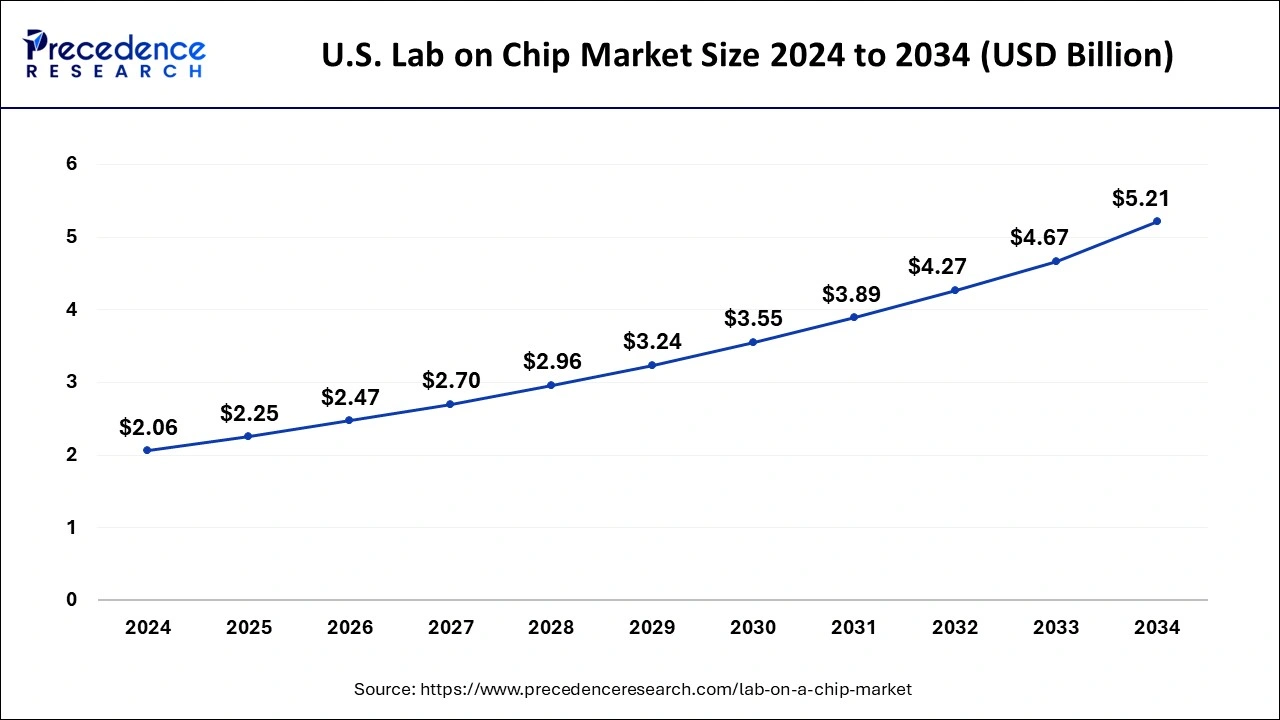
U.S. Lab on Chip Market Size and Growth 2026 to 2035
The United States represents the largest share of the lab on chip market in North America. The growth is driven by a strong healthcare system, advanced technological infrastructure, and extensive investment in molecular diagnostics. The rising demand for rapid molecular testing further fuels the adoption of lab on chip across the country. The country has leading pharmaceutical and biotechnological companies that drive innovation in the field. The increasing collaboration between academia and industry, which continues innovations in microfluidic platforms, strengthens the country's competitive position.
The U.S. lab on chip market size was evaluated at USD 2.25 billion in 2025 and is projected to be worth around USD 5.66 billion by 2035, growing at a CAGR of 9.66% from 2026 to 2035.
The Asia Pacific market is also expected to see faster growth for the lab and ship market during the forecast period as there are developments in the healthcare infrastructure and the diseases, like the renal diseases, which are prevalent in this region. Also, the increased cardiovascular diseases and government initiatives in this region are leading to a growth in the market. The increasing geriatric population and the demand for the regenerative medicines is another reason why the market is expected to grow during the forecast.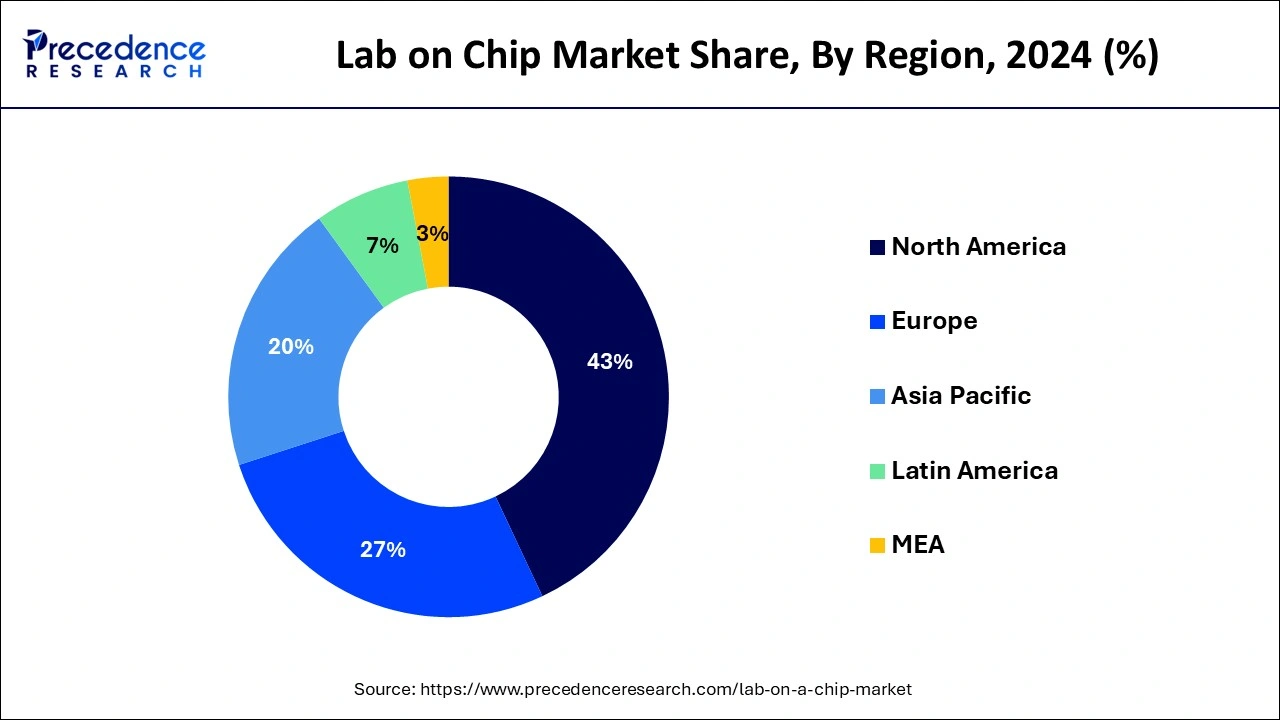
China Market Trends
China accounts for the largest share of the lab on chip market in Asia-Pacific in 2025. The growth is driven by expanding healthcare infrastructure, increasing investment in biotechnology, and government support for domestic medical innovation. Rising demand for affordable diagnostic solutions and precision medicine is encouraging adoption across hospitals and research laboratories. Government funding for research and development, combined with increasing collaboration between academic institutions and private firms, enhances rapid adoption of lab on chip technologies in the healthcare sector.
Why is the Lab on Chip Market Gaining Momentum in Europe?
Europe is considered to be a significantly growing area, due to robust investments in healthcare infrastructure and increasing government support for innovative diagnostic solutions. The presence of leading biotechnology firms, along with collaborative initiatives between academia and industry, is fostering advancements in microfluidics and integrated biosensors. Additionally, rising patient demand for point-of-care testing and personalized medicine is driving the adoption of lab-on-chip technologies.
Germany Market Analysis
Germany is leveraging its strong engineering capabilities and extensive research institutions to enhance lab-on-chip developments. The country's well-established pharmaceutical and biotechnology sectors are increasingly integrating advanced lab-on-chip applications for drug discovery and disease testing. Furthermore, Germany's focus on automation and digital health initiatives is propelling innovation in diagnostic technologies.
Why is the Lab on Chip Market Gaining Momentum in the Middle East and Africa?
The Middle East and Africa are expected to grow at a lucrative CAGR during the forecast period, as it is aided by an evolving healthcare setup, a growing demand for quick diagnostic solutions, and growing investments in medical research and laboratory modernization. Governments in the region are emphasizing strengthening the disease detection system and making advanced disease diagnostic technologies more readily available, especially in urban health centers. Further, the rising awareness about POC testing and the rising prevalence of infectious diseases are further driving the market.
Saudi Arabia Market Analysis
Saudi Arabia serves as a pivotal player in the regional market. The modernization of healthcare systems, heightened interest in precision medicine, and the rising demand for mobile diagnostic solutions are major factors driving significant growth in Saudi Arabia. The market is also driven by improved access to healthcare and increasing research efforts focused on infectious disease diagnostics.
What are the Advancements in the Market in Latin America?
Latin America held a considerable share of the lab on chip market in 2025, supported by an increase in investment in healthcare systems. The growing awareness of point of care testing and improving laboratory infrastructure are supporting market development. The region has a large population base and a strong pharmaceutical and biotechnological ecosystem, which further contributes to the market growth. Increasing investment in faster and more accessible diagnostic technology is supporting market growth in the Latin America region.
Brazil Market Trends
Brazil accounts for the largest share of the Latin American lab on chip market in 2025, due to a well established healthcare sector, expanding biomedical research, and increasing investment in diagnostic technologies. The increasing collaboration between universities, research organizations and healthcare providers is creating new opportunities for market growth. The demand for rapid and cost effective diagnostic solutions continues to grow across public and private hospitals. The government in the country is also supporting technological innovation initiatives, which further supports market growth.
Competitive Landscape
Competition and innovation in the lab-on-chip market are intense, featuring an array of biotechnology companies, diagnostic device makers, and microfluidics technology providers, all competing with sophisticated miniaturized testing platforms and integrated analytical solutions. Key companies include Danaher Corporation, Agilent Technologies, Thermo Fisher Scientific, and PerkinElmer, which boast extensive research portfolios, wide product lines, and international distribution networks to provide a strong market position.
Strategic efforts like acquisitions, working with research institutions, product introductions, and investments in microfabrication technology are creating the competitive environment of the lab-on-chip market. Companies are incorporating AI, advanced biosensing technology, and automated sample processing into their diagnostic tools, aiming to improve diagnostic capabilities and workflow efficiency. The increasing use of lab-on-chip technology in the field of genomics, proteomics, drug discovery, and infectious disease testing is driving companies to offer more and more application-specific products.
Top Companies in the Lab on Chip Market and Their Offerings
- Thermo Fisher Scientific, Inc. - A United States based company provides portfolio for molecular analysis and life science research.
- Key offerings - Ion Torrent semiconductor sequencing systems, microfluidic based genetic analysis platforms and PCR technologies.
- QIAGEN - A Germany based company develops molecular testing and sample processing technologies.
- Key offerings - QIAstat-DX, digital PCR system, nucleic acid extraction technologies.
- Agilent Technologies, Inc. - A United States based company and major provider of analytical and life science technologies.
- Key offerings - The Agilent 2100 Bioanalyzer and 4200 TapeStation systems.
- Bio-Rad Laboratories, Inc. - A well established provider of life science research and clinical diagnostic products.
- Key offerings - QX200 and QX600 Droplet Digital PCR (ddPCR) System.
- Danaher Corporation (via Cepheid & Molecular Devices) - Its key offerings include - LabChip GX and LabChip GXII Touch system
Lab on Chip Market Companies
- Micronit
- MIMETAS
- BEOnChip
- Nortis Bio
- TisssUse
- InSphero
- Elvesys
- Mesobiotech
- AxoSim
- Emulate Bio
- Tara Biosystems
- Hepregen
- Hurel Corporation
- Cherry Biotech
- Alveolix
- BiomimiX
- BioIVT
- 4D Cell
- Fluigent
Recent Developments
- In June 2026, Midjourney Inc, a popular generative AI company focused on image creation with new healthcare division named Midjourney Medical. Midjourney Inc. invested $74 million to launch a full body healthcare screening venture utilizing a novel 3D imaging technology called " Ultrasonic CT”.
- In August 2024, Lightcast Discovery Ltd. announced the launch of its first peer-reviewed scientific publication outlining the technical details and applications for the company's proprietary technology platform.
- In May 2024, Nano Labs announced the launch of New Product Cuckoo3.0 Chip with Significant Improvements in Performance and Energy Efficiency.
Segments Covered in Report
By Product
- Reagents & Consumables
- Software
- IV Needles
By Technology
- Microarrays
- Microfluidics
- Tissue Biochip
- Others
By Application
- Genomics
- Proteomics
- Point of Care Diagnostics
- Drug Discovery
- Others
By End-Use
- Hospitals and Clinics
- Biotechnology and Pharmaceuticals Companies
- Forensic Laboratories
- Diagnostics Centers
- Academic and Research Institutes
By Geography
- North America
- U.S.
- Canada
- Europe
- U.K.
- Germany
- France
- Asia-Pacific
- China
- India
- Japan
- South Korea
- Malaysia
- Philippines
- Latin America
- Brazil
- Rest of Latin America
- Middle East & Africa (MEA)
- GCC
- North Africa
- South Africa
- Rest of the Middle East & Africa
For inquiries regarding discounts, bulk purchases, or customization requests, please contact us at sales@precedenceresearch.com
Frequently Asked Questions
Tags





Ask For Sample
No cookie-cutter, only authentic analysis – take the 1st step to become a Precedence Research client
 Get a Sample
.webp)



 sales@precedenceresearch.com
 Schedule a Meeting
