



Transdermal Drug Delivery Systems Market Revenue to Attain USD 239.43 Bn by 2035
Published: 20 Mar 2026
Author: Precedence Research



Transdermal Drug Delivery Systems Market Revenue and Trends 2026 to 2035
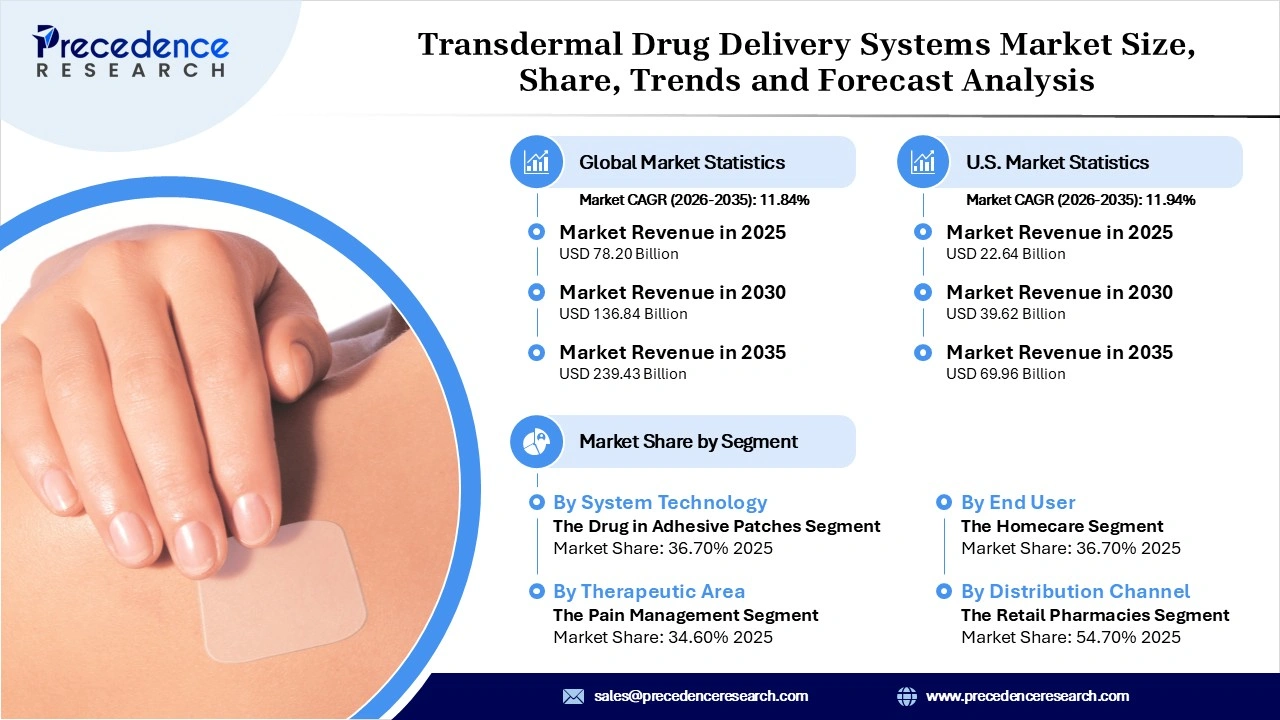
The global transdermal drug delivery systems market revenue reached USD 78.20 billion in 2025 and is predicted to attain around USD 239.43 billion by 2035 with a CAGR of 11.84%. The growth of the market is driven by rising demand for personalized dosing, non-invasive drug administration, and controlled drug release technologies.
What Drives the Transdermal Drug Delivery Systems Market?
There is a rapid shift from traditional passive patches to advanced systems capable of delivering biologics and vaccines through the skin, which is driving the market. Market growth is also driven by increasing demand for sustained-release drug profiles and improved patient adherence. As personalized medicine continues to expand, smart transdermal patches enable real-time monitoring and automated dosing. Additionally, these high-value drug-device combination systems support the management of chronic pain, hormonal disorders, and central nervous system (CNS) conditions, further strengthening their role in modern therapeutic delivery.
Segment Insights
- By system technology, the drug in adhesive patches segment contributed the largest market share of 36.70 % in 2025, driven by patient-centric design, as the medication is embedded directly within a pressure-sensitive adhesive layer, providing a sleek, discreet, and flexible therapy option. The patch functions as a self-contained reservoir, controlling drug release and maintaining stable plasma levels. Additional advantages include ease of manufacturing, improved patient compliance, and reduced risk of leakage, making it a preferred choice in transdermal drug delivery.
- By therapeutic area, the pain management segment held the biggest market share of 34.60 % in 2025. These transdermal systems provide continuous drug delivery, reducing gastrointestinal side effects and supporting the shift toward non-opioid and abuse-deterrent therapies for chronic pain management. By preventing severe pain and minimizing adverse effects, these systems enhance patient adherence and outcomes. The segment is further expanding with advanced delivery technologies, including microneedles and iontophoresis, enabling personalized dosing, improved clinical efficiency, and a higher quality of life for patients.
- By end-user, the homecare segment maintains its dominance by holding the largest share of 36.70% in 2025. This is mainly due to the increasing demand for user-friendly, non-invasive transdermal patches that enhance adherence to chronic therapies. Integration with biosensors enables remote patient monitoring, making homecare delivery comparable to high-technology clinical settings. These innovations help reduce healthcare costs while improving long-term patient outcomes.
- By distribution channel, the retail pharmacies segment dominated the market with the highest share of 54.70% in 2025. This is because these pharmacies play a crucial role in delivering outpatient and maintenance therapies by providing supportive care medications that facilitate home-based treatment and enhance patient adherence. Retail pharmacies also ensure continued access to post-remission care and strengthen their role in delivering innovative therapies promoted through survivorship programs.
Transdermal Drug Delivery Systems Market Coverage
| Report Attribute | Key Statistics |
| Market Revenue in 2025 | USD 78.20 Billion |
| Market Revenue by 2035 | USD 239.43 Billion |
| CAGR from 2026 to 2035 | 11.84% |
| Quantitative Units | Revenue in USD million/billion, Volume in units |
| Largest Market | North America |
| Base Year | 2025 |
| Regions Covered | North America, Europe, Asia-Pacific, Latin America, and the Middle East & Africa |
Regional Insights
North America dominated the transdermal drug delivery systems market by holding the maximum market share of 38.60% in 2025. The region’s dominance is driven by the commercialization of patient-centric solutions and a supportive regulatory framework. The region is recognized for its adoption of digital integration and innovative transdermal technologies, particularly in home-based healthcare and decentralized treatment models that enhance therapeutic adherence. In addition, substantial investments and advancements in controlled-release pharmacology are further boosting market growth.
Asia Pacific is anticipated to grow at the fastest CAGR during the forecast period, driven by a rapidly aging population and the transition toward non-invasive healthcare solutions. The expanding regional manufacturing base is accelerating the development of cost-effective microneedle arrays and herbal-integrated adhesive patches. Additionally, domestic R&D investments and the rise of self-administration, combined with modern controlled-release systems, are driving therapeutic diversification and expanding the market.
Recent Development
- In November 2025, Halozyme Therapeutics, Inc. announced a strategic partnership with Merus N.V. to develop a subcutaneous formulation of petosemtamab. The collaboration focuses on licensing the ENHANZE® drug delivery technology to improve treatment efficiency and enhance patient treatment. (Source: https://www.prnewswire.com)
Get this report to explore global market size, share, CAGR, and trends, featuring detailed segmental analysis and an insightful competitive landscape overview @ https://www.precedenceresearch.com/sample/8074
You can place an order or ask any questions, please feel free to contact us at sales@precedenceresearch.com |+1 804 441 9344