



Sedative-Hypnotic Drugs Market Size, Companies, Share, Patient Volume, Treatment Adoption Rates, Pricing Analysis, Regulatory Landscape, Competitive Positioning, and Demand Forecast
Sedative-Hypnotic Drugs Market (By Drug Class: Benzodiazepines, Non-benzodiazepines, Barbiturates, Antihistamines, Others; By Route of Administration: Oral, Parenteral (IV/IM), Other Routes; By Disease Type/Therapeutic Application: Sleep Disorders (Insomnia), Anaesthesia, Pain Management, Other Disorder; By End-User: Hospitals, Specialty Clinics, Homecare/Others, Retail/Online Pharmacies; By Distribution Channel: Hospital Pharmacy, Retail Pharmacy, Online Pharmacy, Other Channels) - Global Industry Analysis, Size, Trends, Leading Companies, Regional Outlook, and Forecast 2026 to 2035
Source: https://www.precedenceresearch.com/sedative-hypnotic-drugs-market
 Get a Sample
 Table Of Content


What is the Sedative-Hypnotic Drugs Market Size?
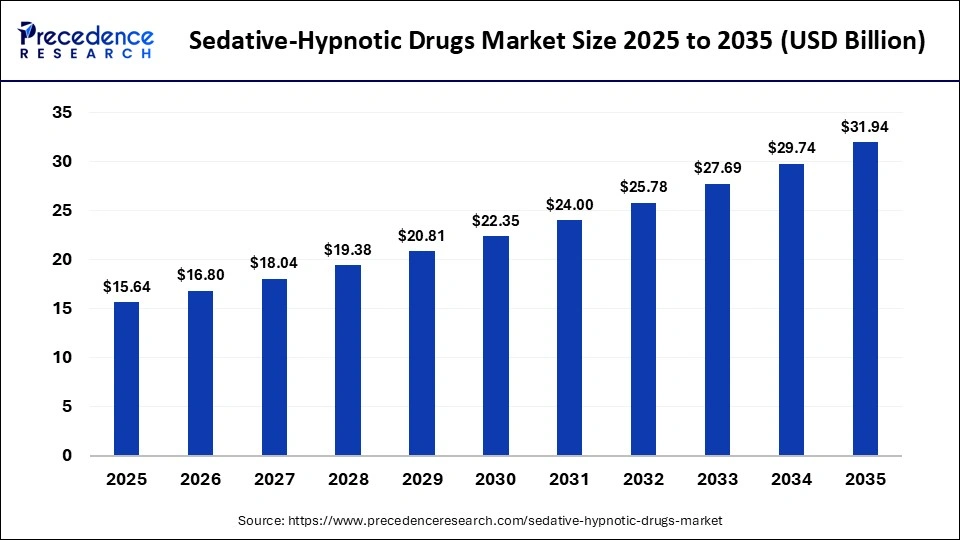
The global sedative-hypnotic drugs market size accounted for USD 15.64 billion in 2025 and is predicted to increase from USD 16.80 billion in 2026 to approximately USD 31.94 billion by 2035, expanding at a CAGR of 7.40% from 2026 to 2035. This market is growing because of rising sleep disorders, increasing stress, and awareness of mental and sleep health, which demands sedative and hypnotic medication use.
Market Highlights
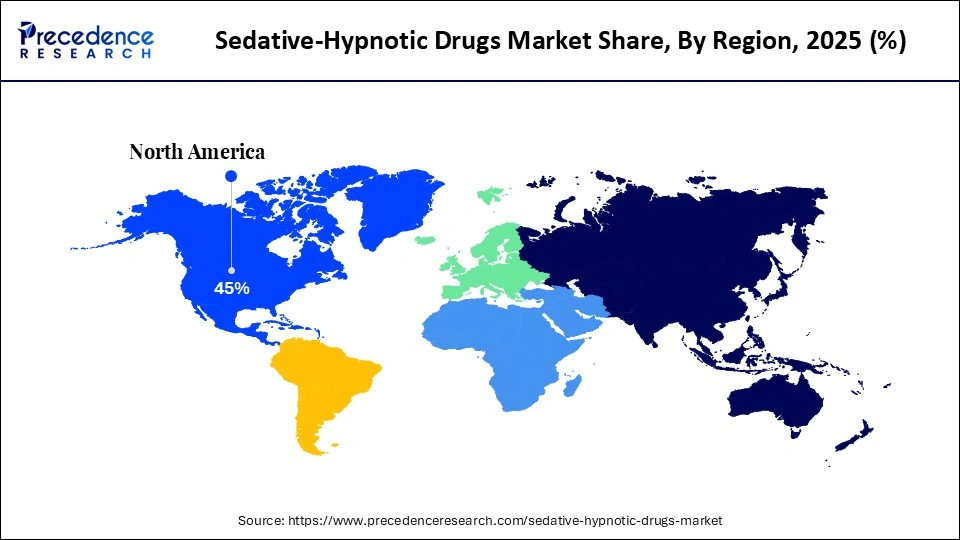
- North America dominated the sedative-hypnotic drugs market in 2025, with a revenue of approximately 45%.
- Asia-Pacific is expected to be the fastest-growing region with a CAGR of 7.8% between 2026 and 2035.
- By drug class, the benzodiazepines segment held a dominant position in the market with a share of approximately 45% in 2025.
- By drug class, the non-benzodiazepines segment is expected to grow at the fastest CAGR of 6.2 % during the forecast period.
- By route of administration, the oral segment dominated the market with a share of approximately 70% in 2025.
- By route of administration, the parenteral (IV/IM) segment is expected to show the fastest growth with a CAGR of 6.5% over the forecast period.
- By therapeutic application, the sleep disorders (insomnia) segment captured a dominant share of approximately 50% of the sedative-hypnotic drugs market in 2025.
- By therapeutic application, the anaesthesia segment is expected to witness the fastest growth in the market with a CAGR of 7.1% over the forecast period.
- By end-user, the hospitals segment registered its dominance over the global market with a share of approximately 50% in 2025.
- By end-user, the home care segment is expected to expand rapidly in the market with a CAGR of 6.7% in the coming years.
- By distribution channel, the hospital pharmacy segment led the global market with a share of approximately 45% in 2025.
- By distribution channel, the online pharmacy segment is expected to witness the fastest growth in the market with a CAGR of 6.9% over the forecast period.
Market Overview
The sedative-hypnotic drugs market consists of pharmaceuticals used to induce and maintain sedation and sleep, primarily for conditions such as insomnia, anxiety disorders, anesthesia support, and other neurological indications. These drugs include benzodiazepines, non-benzodiazepines, barbiturates, antihistamines, and emerging classes with improved safety profiles. Growth is propelled by rising prevalence of sleep and anxiety disorders, ageing populations, expanding healthcare access, and preferences for safer alternatives with lower dependency risk. Market expansion spans hospitals, clinics, pharmacies, and online distribution channels.
AI Technological Shifts in the Market
Artificial intelligence is slowly changing the sedative-hypnotic drugs market, particularly in the research and development segment. Pharmaceutical companies use AI to study sleep patterns and patient data to identify better target sites. This helps researchers to optimize formulation to reduce side effects. AI tools also speed up drug discovery by predicting suitable compounds before lab testing, which reduces developmental cost and time. AI can be integrated into wearable devices, and sleep apps support doctors by monitoring sleep quality and medication response.
Market Trends
- Increasing prevalence of sleep disorders like insomnia and disturbed circadian rhythm because of high stress, long screen exposure, long work hours, and irregular sleep routines. This growing burden demands reliable and fast relief from sleep medication.
- Growing awareness around mental health issues such as anxiety, stress, and sleep issues. People seek medical help rather than ignoring symptoms, which leads to higher diagnosis rates and acceptance of sedative and hypnotic therapies.
- Advancements in pharmaceutical research and development are influencing the market. Companies are developing newer sedative and hypnotic drugs with improved safety profiles and reduced dependency risk.
- Improved access to healthcare services supports the diagnosis rate of anxiety and sleep disorders. This increases demand for sedative and hypnotic medications across hospitals and retail pharmacies.
Market Scope
| Report Coverage | Details |
| Market Size in 2025 | USD 15.64 Billion |
| Market Size in 2026 | USD 16.80 Billion |
| Market Size by 2035 | USD 31.94 Billion |
| Market Growth Rate from 2026 to 2035 | CAGR of 7.40% |
| Dominating Region | North America |
| Fastest Growing Region | Asia Pacific |
| Base Year | 2025 |
| Forecast Period | 2026 to 2035 |
| Segments Covered | Drug Class, Route of Administration, Disease Type/Therapeutic Application, End-User, Distribution Channel, and Region |
| Regions Covered | North America, Europe, Asia-Pacific, Latin America, and Middle East & Africa |
Segmental Insights
Drug Class Insights
Why Benzodiazepines Segment Dominated the Sedative-Hypnotic Drugs Market?
The benzodiazepines segment led the global market with a share of approximately 45% in 2025 due to its long history of use and strong effectiveness in treating insomnia and anxiety. It is a well-known drug that acts quickly and provides reliable symptom relief, became choice of drug to use in hospitals and emergency settings. Due to generic availability, it is affordable and easily accessible across both developed and developing regions.
The non-benzodiazepines segment is expected to witness the fastest growth in the market with a CAGR of 6.2 % over the forecast period as doctors and patients prefer safer alternatives with low dependency risks. These drugs are mainly used to treat sleep disorders with their targeted action and lower side effects. Rising cases of insomnia and sleep disorders are further driving demand in the market.
Route of Administration Insights
How Oral Segment Dominated the Sedative-Hypnotic Drugs Market?
The oral segment registered its dominance over the global market with a share of approximately 70% in 2025 due to its convenience and ease of use. Oral formulations like tablets and capsules are easy to manufacture, store, and consume, suitable for long-term use. Patients prefer oral formulation because it is affordable and easily available in retail stores, pharmacies, and online platforms. Oral formulation allows flexible dosing and is suitable for a wide range of ingredients.
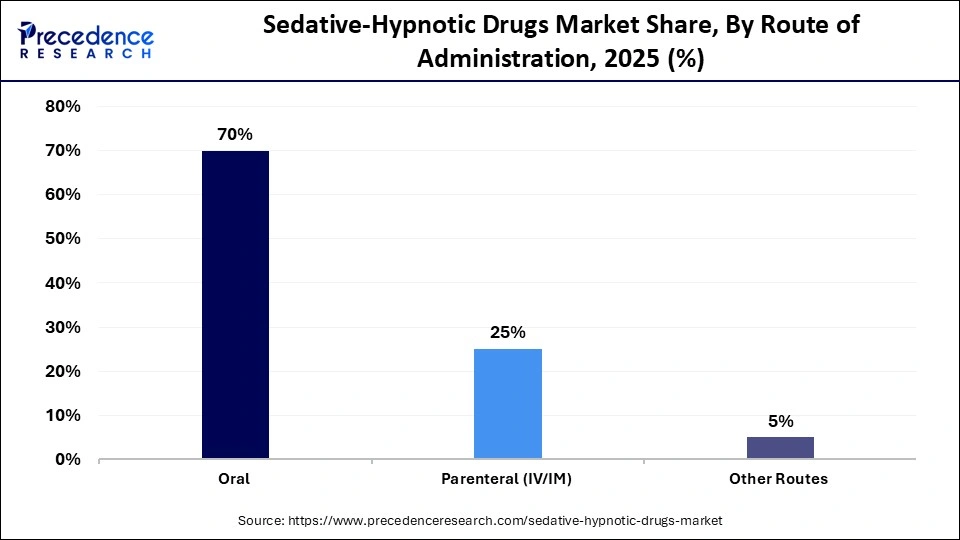
The parenteral (IV/IM) segment is expected to gain the highest share of the market with a CAGR of 6.5% during the forecast period. These formulations are preferred when rapid action is required, such as during severe anxiety or pre-surgical sedation. Parenteral sedatives offer faster onset and precise dosing under medical supervision.
Disease Type/Therapeutic Application Insights
Why the Sleep Disorders (Insomnia) Segment Dominated the Market?
The sleep disorders (insomnia) segment held a dominant position in the sedative-hypnotic drugs market with a share of approximately 50% in 2025 because sleep problems have become very common across all age groups. High stress levels, lifestyle change, long screen time, and irregular work hours have increased difficulty in falling and staying asleep. Patients seek medical help when sleep issues affect productivity, mental health, and daily life.
The anaesthesia segment is expected to expand rapidly in the market with a CAGR of 7.1% in the coming years. Sedative and hypnotic drugs are widely used before and during surgical procedures to calm patients. Healthcare professional prefers fast-acting injectable formulations that allow precise dosing under medical supervision.
End-user Insights
Why Hospitals Dominated the Sedative-Hypnotic Drugs Market?
The hospitals segment dominated the global market with a share of approximately 50% in 2025 because they are the primary centre for acute care, surgeries, and emergency treatment. Sedatives and hypnotics are commonly used for anaesthesia and the management of severe anxiety. Hospitals have trained professionals to monitor dosing and manage side effects.
The home care segment is expected to witness the fastest growth in the market with a CAGR of 6.7% over the forecast period. Insomnia is often treated at home with prescribed oral sedative and hypnotic drugs. Patients prefer homecare for convenience, comfort, and lower costs compared to hospital stays.
Distribution Channel Insights
What Made the Hospital Pharmacy Segment Lead the Sedative-Hypnotic Drugs Market?
The hospital pharmacy segment accounted for a considerable revenue share of approximately 45% in the market in 2025. Sedatives are widely used for surgeries, emergency care, intensive care, and acute anxiety management, which require medical supervision. Hospital pharmacies ensure controlled storage, accurate dosing, and strict compliance with regulations, which is necessary for these habit-forming drugs.
The online pharmacy segment is expected to grow with the highest CAGR of 6.9% in the market during the studied years because of its easier and more convenient access to prescribed sedative and hypnotic medicines. People dealing with insomnia or anxiety at home prefer online platforms for home deliveries. Telemedicine growth has supported online platforms.
Regional Insights
How Big is the North America Sedative-Hypnotic Drugs Market Size?
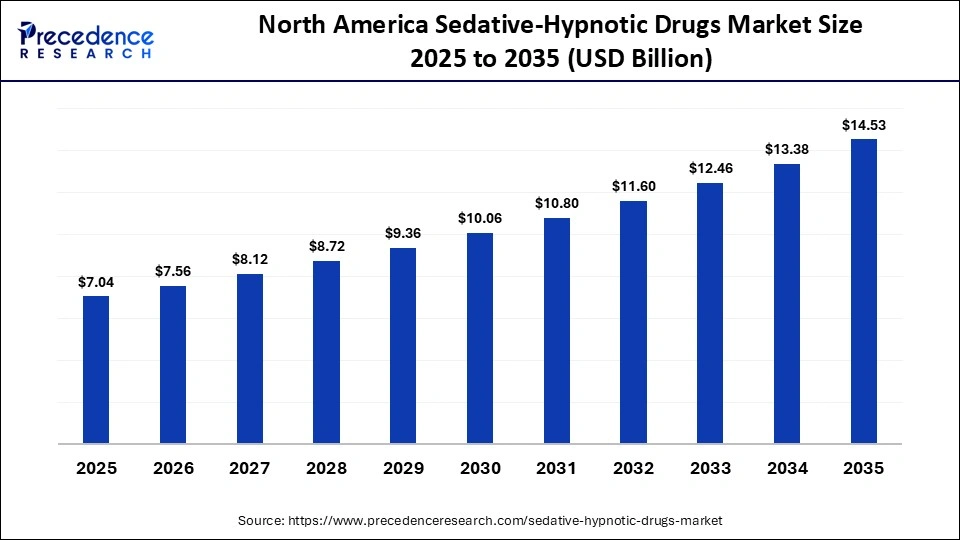
The North America sedative-hypnotic drugs market size is estimated at USD 7.04 billion in 2025 and is projected to reach approximately USD 14.53 billion by 2035, with a 7.52% CAGR from 2026 to 2035.
What Factors Made the North America Region the Dominant Region in the Market?
North America dominated the global sedative-hypnotic drugs market with a share of approximately 45% in 2025 because of high diagnosis rates, advanced healthcare infrastructure. Increasing cases of sleep disorders, anxiety, and stress-related conditions across the region. Healthcare professionals have easy access to diagnostic tools, sleep clinics, and mental health centres, resulting in earlier intervention and larger prescription volumes. Insurance coverage and reimbursement policies support easy availability of branded and generic sedative medications. These factors together support regions' dominance in the market.
What is the Size of the U.S. Sedative-Hypnotic Drugs Market?
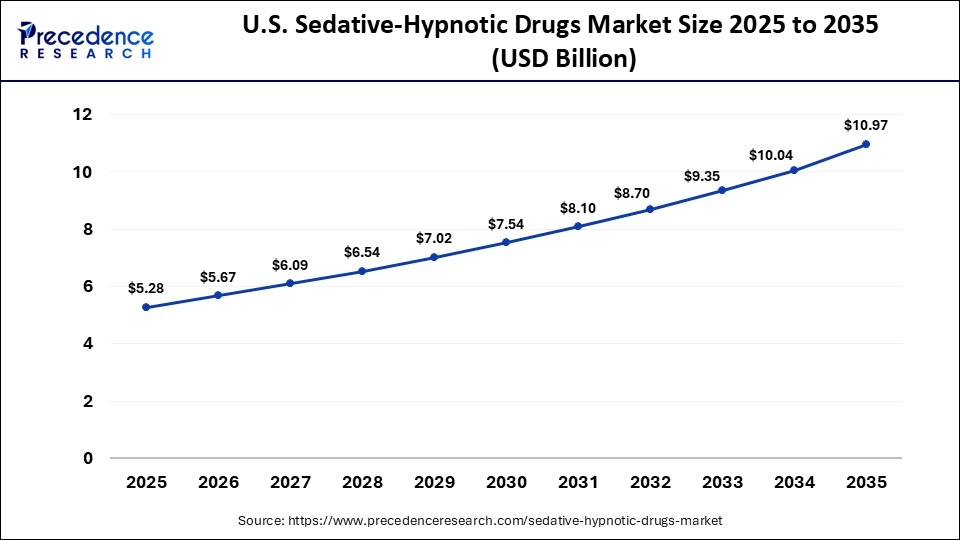
The U.S. sedative-hypnotic drugs market size is calculated at USD 5.28 billion in 2025 and is expected to reach nearly USD 10.97 billion in 2035, accelerating at a strong CAGR of 7.59% between 2026 and 2035.
U.S. Market Analysis
The U.S. represents the largest share of the North American sedative-hypnotic drugs market. High levels of stress, rising sleep disorders, and anxiety issues are continuously driving the demand. The presence of leading pharmaceutical manufacturers and continuous clinical research strengthens the market. Higher awareness among patients about sleep health and mental health encourages medical consultation rather than self-treatment. Strong regulatory guidelines in the region ensure controlled use of sedative medication.
Which Factors Influence the Fastest Growth of the Asia Pacific Market?
Asia Pacific is expected to grow at the fastest CAGR of 7.8 % in the sedative-hypnotic drugs market during the forecast period due to rapid urbanization, changing lifestyles, and upgrading healthcare access. High digital screen exposure, long working hours, and increasing stress levels have significantly raised sleep disorders across countries like China, India, Japan, and South Korea. Improved healthcare system offering easy access to doctors, hospitals, and mental health services. High awareness of mental and sleep health leads to higher diagnosis rates.
China Market Analysis
China's sedative-hypnotic drugs market is growing due to lifestyle changes, rising stress levels, and high awareness of sleep and mental health. A fast-paced lifestyle and a competitive work culture have led to higher rates of insomnia, particularly in the urban population. Governments are investing in healthcare infrastructure, while pharmaceutical companies are expanding their presence through generics and affordable formulations. Regulatory guidelines are becoming strict, ensuring the responsible use of sedative medications.
Which Factors Drive the Sedative-Hypnotic Drugs Market in Europe?
Europe is expected to grow at a notable CAGR in the foreseeable future due to mental health problems, increased incidences of sleep disorders, and easy access to medical care. The earlier detection and treatment of anxiety disorders and insomnia result in increased use of sedative-hypnotics by governments and hospitals throughout the region.
Germany Market Trends
The German market is driven by its highly developed health system, increasing geriatric patients, and the emphasis on neuropsychiatric issues. The rise in the use of sedative hypnotic drugs was driven by the prevalence of sleep disorders and other anxiety-related problems among employees and the geriatric population.
How is Latin America growing in the Sedative-Hypnotic Drugs Market?
Latin America is expected to grow at a notable CAGR in the foreseeable future, due to the increasing cases of anxiety, depression, and insomnia disorders. Healthcare service improvements, an increase in pharmaceutical products, and awareness about mental disorders have led to high demand for sedative-hypnotics.
Brazil Market Trends
The Brazilian market is driven by rapid development in the healthcare system, increasing knowledge about mental illnesses, and greater use of prescription sleep medicines. Growing stress-induced illnesses, altered working conditions, and better psychiatric services have led to an increased need for sedatives in the country.
What are the Advancements of Sedative-Hypnotic Drugs Market in the Middle East and Africa?
The Middle East and Africa region is expected to show lucrative growth in the coming years, due to increasing knowledge regarding mental disorders, better quality of healthcare facilities, and higher numbers of diagnoses of sleeping disorders will drive market growth. Higher healthcare expenditure and improved networks for distributing medicines will facilitate increased consumption of sedative hypnotic drugs.
UAE Market Trends
The UAE market is driven by an increase in stress-related illnesses, heightened awareness about mental well-being, and the availability of private health care services. There was more demand for sedative hypnotic medications since the emphasis in health care was placed on treating insomnia and anxiety.
What are the Government Initiatives for the Sedative-Hypnotic Drugs Market?
- In the United States, the Food and Drug Administration implemented boxed warning labels and prescribing guidelines to minimize potential problems of dependence on these classes of medications.
- In Europe, the European Medicines Agency developed pharmacovigilance and prescription guidelines to address adverse reactions, abuse, and dependence of sedative-hypnotics.
- Public health care services in China were improved, and monitoring of the side effects of drugs was enhanced, thus increasing the safety and availability of sedative-hypnotics.
- The United Arab Emirates initiated programs aimed at healthcare reforms and enhancing mental well-being through the provision of adequate facilities for psychiatric treatment and management of sleep disorders using prescription-controlled sedative-hypnotics.
Sedative-Hypnotic Drugs Market Value Chain Analysis
- R and D: Research and development in the market focuses on developing and designing safe sedative and hypnotic molecules with low dependency and improved sleep quality.
Key Players: Pfizer Inc., F. Hoffmann-La Roche Ltd., Eli Lilly and Company, Sanofi - Clinical Trials and Regulatory Approvals: Products are tested for efficacy, dependence potential, and long-term safety, followed by regulatory approvals to ensure healthcare standards, and can be legally sold in different regional markets.
Key Players: Sanofi-Aventis AG, Teva Pharmaceutical Industries Ltd., Sun Pharmaceutical Industries Ltd - Formulation and Final Dosage Preparation: Formulation and final dosage preparation involve developing a safe, effective, and patient-friendly dosage form, such as tablets and capsules, injectables, and modified release forms, to balance rapid onset and sustained action.
Key Players: Pfizer Inc., Teva Pharmaceutical Industries Ltd., AstraZeneca PLC, GlaxoSmithKline plc, Abbott Laboratories. - Packaging and Sterilization: The final product is packed carefully to avoid contamination and misuse. Child-safe packaging and clear warning labels are very important for sedatives. Sterilization ensures safety, prevents contamination, and protects product quality during storage, transportation, and daily patient use.
Key Players: Gerresheimer AG, SCHOTT Pharma, Becton, Dickinson and Company (BD), Amcor plc, Berry Global, Inc., SGD Pharma, ACG Pharma. - Distribution to Hospitals, Pharmacies: Manufacturers supply products through established distributor networks and direct hospital partnerships, ensuring consistent product availability across hospitals, clinics, and retail healthcare outlets.
Key Players: Sun Pharmaceutical Industries Ltd, Pfizer Inc., F. Hoffmann-La Roche Ltd., Merck and Co., Inc., Novartis AG, AstraZeneca PLC - Patient Support and Services: Patients often require education programs, simple usage guides, and support services help patients avoid misuse, follow prescriptions properly, and manage sleep issues.
Who are the Major Players in the Global Sedative-Hypnotic Drugs Market?
The major players in the sedative-hypnotic drugs market include Pfizer Inc., Sanofi S.A., Merck and Co., Inc., F. Hoffmann-La Roche Ltd., Teva Pharmaceutical Industries Ltd., Sun Pharmaceutical Industries Ltd., GlaxoSmithKline plc, AstraZeneca plc, Johnson and Johnson, Eli Lilly and Company, Cipla Inc., Dr. Reddy's Laboratories Ltd., Aurobindo Pharma, Mylan N.V. (Viatris), and Endo International plc.
Recent Developments
- In June 2025, researchers found the shift towards prescribing trazodone instead of the traditional sleeping pill zolpidem. Zolpidem is used to treat insomnia by reducing nerve activity and promoting sleep, but it has serious side effects. Trazodone is an antidepressant drug that, at low dose can be used to treat insomnia with no side effects.(Source: https://www.health.harvard.edu)
- In January 2025, according to reports, there was a sharp rise in hypnotic, sedative, and anti-anxiety use disorder diagnoses in adolescents and young adults, rising concern over prescribing patterns, dependence risk, and long-term mental health impacts worldwide.(Source: https://www.rutgers.edu)
Segments Covered in the Report
By Drug Class
- Benzodiazepines
- Non-benzodiazepines
- Barbiturates
- Antihistamines
- Others
By Route of Administration
- Oral
- Parenteral (IV/IM)
- Other Routes
By Disease Type/Therapeutic Application
- Sleep Disorders (Insomnia)
- Anaesthesia
- Pain Management
- Other Disorders
By End-User
- Hospitals
- Specialty Clinics
- Homecare/Others
- Retail/Online Pharmacies
By Distribution Channel
- Hospital Pharmacy
- Retail Pharmacy
- Online Pharmacy
- Other Channels
By Region
- North America
- Europe
- Asia-Pacific
- Latin America
- Middle East & Africa
For inquiries regarding discounts, bulk purchases, or customization requests, please contact us at sales@precedenceresearch.com
Frequently Asked Questions





Ask For Sample
No cookie-cutter, only authentic analysis – take the 1st step to become a Precedence Research client
 Get a Sample




 sales@precedenceresearch.com
 Schedule a Meeting
