



Sinusitis Treatment Market Size, Share and Trends 2026 to 2035
Sinusitis Treatment Market (By Type: Chronic Sinusitis, Acute Sinusitis, Sub-Acute Sinusitis; By Route of Administration: Nasal, Oral, Injectable, Topical; By Treatment: Antibiotic, Analgesic, Anti-inflammatory, Expectorants) - Global Industry Analysis, Size, Trends, Leading Companies, Regional Outlook, and Forecast 2026 to 2035
Source: https://www.precedenceresearch.com/sinusitis-treatment-market
 Get a Sample
 Table Of Content


What is the Sinusitis Treatment Market Size?
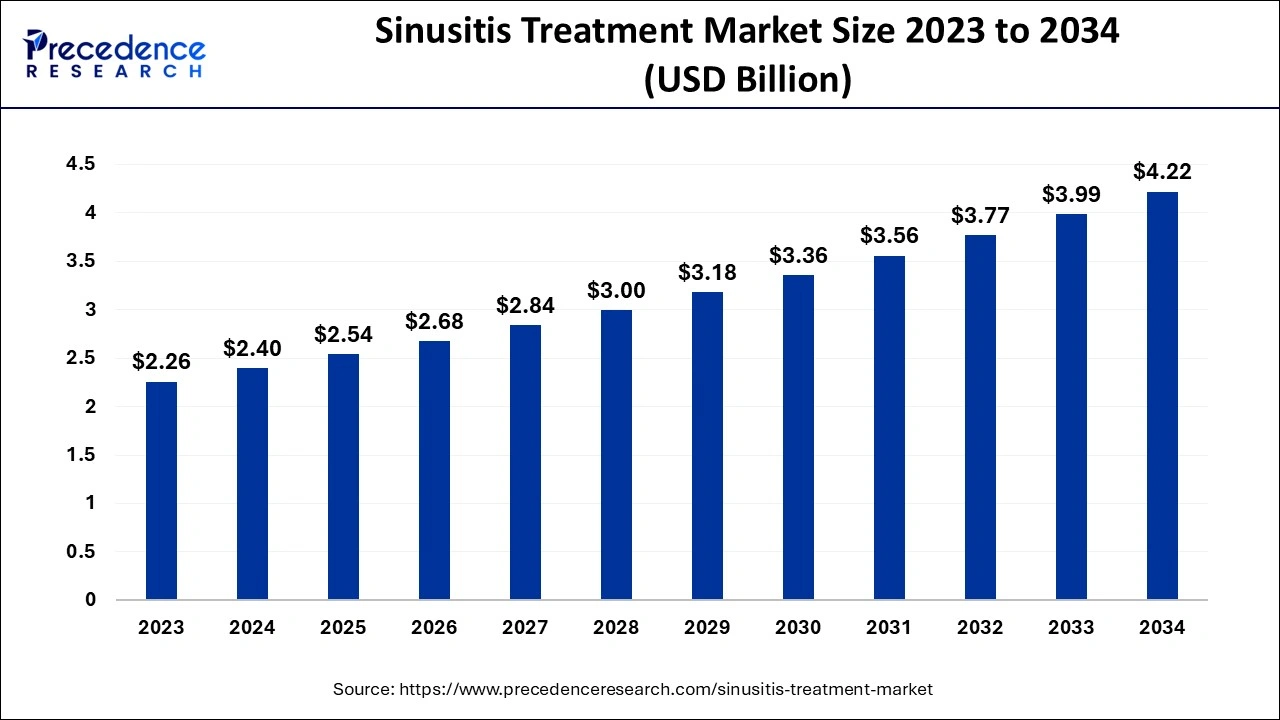
The global sinusitis treatment market size was calculated at USD 2.54 billion in 2025 and is anticipated to reach around USD 4.44 billion by 2035, expanding at a CAGR of 5.74% from 2026 to 2035. The increasing prevalence of the condition is the key factor driving the growth of the market. Also, the growing need for timely diagnosis, along with the growing demand for better treatment options, is expected to fuel market growth shortly.
Sinusitis Treatment Market Key Takeaways
- The global sinusitis treatment market was valued at USD 2.54 billion in 2025.
- It is projected to reach USD 4.44 billion by 2035.
- The sinusitis treatment market is expected to grow at a CAGR of 5.74% from 2026 to 2035.
- North America dominated the sinusitis treatment market in 2025.
- Asia Pacific is expected to grow at the fastest rate over the projected period.
- By type, the acute sinusitis segment dominated the market in 2025.
- By type, the chronic segment has been growing significantly over the forecast period.
- By route of administration, the nasal segment led the market in 2025 by holding the largest market share.
- By route of administration, the oral segment held a significant share in 2025.
- By treatment, the analgesic segment dominated the sinusitis treatment market in 2025.
Market Overview
Sinusitis is a disease condition that has adverse effects on the majority of the population in the world. The condition can be triggered by environmental factors like smoke, animal dander, dust, and polluted air. Sinusitis is also distinguished by inflammation of the sinus layer caused by irritants, viruses, allergens, bacteria, and microbes. The infected patient complains of facial pain, congestion, postnasal drip, and headache. Viral sinusitis is easier to treat, and patients can recover quickly without antibiotics.
Global Lung Cancer Statistics (2022)
| Country | Number |
| China | 1060,584 |
| United States of America | 226,033 |
| Japan | 136,723 |
| India | 81,748 |
| Russian Federation | 70,362 |
| Germany | 62,025 |
| United Kingdom | 50,700 |
| France (metropolitan) | 49,613 |
| Brazil | 44,213 |
| Italy | 43,808 |
| World | 2,480,675 |
Impact of AI on the Sinusitis Treatment Market
The integration of artificial intelligence (AI) is substantially impacting the market. AI-generated diagnostics and treatment options are improving the precision and efficiency of patient management. Furthermore, AI is optimizing workflow efficiencies, decreasing the time needed for diagnosis and customized treatment approaches. The rising adoption of AI in medical settings is expected to fuel the opportunities and advancements in the sinusitis treatment sector.
- In July 2024, SoundHealth, a medical technology company that emphasized harnessing AI for better health outcomes, unveiled SONU, the world's first FDA-cleared AI-powered wearable for treating moderate to severe nasal congestion.
- In January 2022, Acclarent Inc., a leader in making minimally invasive ear, nose, and throat (ENT) technologies, launched its first-ever AI-powered ENT technology, created to simplify surgical planning and offer real-time feedback during ENT navigation procedures.
Sinusitis Treatment Market Growth Factors
- Factors such as unhealthy lifestyles and habits like smoking are expected to increase the incidence of sinus disorders, thereby boosting market growth.
- Increasing demand for fast relief treatment options for sinuses can propel market growth further.
- Growing recommendations from regulatory bodies for approval of the advanced drug used in the treatment of sinuses will likely contribute to market expansion soon.
Market Scope
| Report Coverage | Details |
| Market Size by 2035 | USD 4.44 Billion |
| Market Size in 2025 | USD 2.54 Billion |
| Market Size in 2026 | USD 2.68 Billion |
| Market Growth Rate from 2026 to 2035 | CAGR of 5.74% |
| Largest Market | North America |
| Base Year | 2025 |
| Forecast Period | 2026 to 2035 |
| Segments Covered | Type, Route of Administration, Treatment, and Regions |
| Regions Covered | North America, Europe, Asia-Pacific, Latin America, and Middle East & Africa |
Market Dynamics
Driver
Increasing demand for nasal sprays
Advanced nasal spray designs are a fact-pacing phenomenon in the market. Innovators are suggesting that investors must go beyond drug advancements and emphasize various ways to deliver it in the cavities of sinus patients. Additionally, key players are taking advantage of such advances to develop new innovative devices that enable individuals to treat themselves in the comfort of their homes and lessen the symptoms of sinusitis in the primary stages.
- In September 2024, Mucinex, a Reckitt brand and the #1 most trusted brand by doctors for cough and cold symptoms, introduced Mucinex Sinus Saline Nasal Spray designed to treat sinus-related symptoms.
- In September 2022, Ryaltris's new nasal spray was approved by the US Food and Drug Administration for adults and children aged 12 years and older and has an onset of action of within 15 minutes for nasal symptoms, according to a company press release.
Restraint
Lack of skilled medical professionals
The lack of well-trained medical professionals who are unable to diagnose and treat patients with proper treatments can hinder the growth of the sinusitis treatment market. However, the huge expenditure related to the treatment of sinusitis can also negatively impact the market growth because it includes high-end drug types like antihistamines and corticosteroids.
Opportunity
Increase in prevalence of rhinosinusitis
The incidence of rhinosinusitis is increasing rapidly across the globe. Acute rhinosinusitis lasts less than 4 weeks, and subacute rhinosinusitis lasts approximately 12 weeks. Furthermore, Patients suffering from acute rhinosinusitis witness more than four acute episodes that last for at least f 7 days. The symptoms of chronic rhinosinusitis can last for more than 12 weeks. The extensive range of impact created by rhinosinusitis constrains individuals from doing mundane tasks and suggests a high time for searching for a better life.
- In April 2024, OM1 and Medtronic Partnered on PROPEL to study and assess long-term outcomes for patients with chronic Rhinosinusitis. The research is meant to prove that PROPEL devices are associated with decreased HCRU and surgical revisions after sinus surgery.
Segment Insights
Type Insights
The acute sinusitis segment dominated the sinusitis treatment market in 2025. The dominance of the segment can be attributed to the increasing introduction of biologics like omalizumab, etc. Key firms are continuously increasing their expenditure on innovation and marketing, which in turn results in a rising focus on process efficiency and cost management. Additionally, disease symptoms like Hay fever or common cold caused by allergies can be treated with biological treatments.
The chronic segment is expected to grow significantly in the sinusitis treatment market over the forecast period. The growth of the segment can be linked to the rising prevalence of chronic Hay sinusitis in the majority of the population across the globe. Chronic sinusitis is caused by bacteria growing in the sinuses and can last for more than three months. Furthermore, conditions like allergies, asthma, and cystic fibrosis can block the nasal airways, which can lead to the occurrence of chronic sinusitis.
Route of Administration Insights
The nasal segment led the sinusitis treatment market in 2025 by holding the largest market share. The dominance of the segment is due to the drug administration through the nasal root, which absorbs more drugs to exert local or systemic therapeutic effects. However, the nasal route has benefits for being non-invasive with rapid absorption, low infection, and brain targeting properties, which can drive the segment growth further.
- In October 2024, Aero Pump and Resyca will announce their partnership in the launch of the innovative Ultra Soft Nasal Pump Spray. Available for immediate licensing, this co-developed system represents a new frontier in nasal drug delivery, providing improved delivery efficiency, accuracy, and comfort for users.
The oral segment held a significant share of the sinusitis treatment market in 2023. This is because Oral administration is convenient and cost-effective. This route is the most commonly used drug administration route. The main site of drug absorption is generally the small intestine. Furthermore, the oral route offers a non-invasive, safer, and simpler way to administer medications for all types of diseases, including sinusitis. Drugs taken by oral routes can also show good patient compliance and response to the medications.
Treatment Insights
In 2025, the analgesic segment dominated the sinusitis treatment market by holding the share. The dominance of the segment can be credited to the increasing consumption of analgesics, which relieve the pain caused by pressure buildup in the sinus cavities. Also, analgesics and other pain relievers can help lessen fever and allergic conditions. Analgesics, such as ibuprofen, acetaminophen, and aspirin, can help relieve sinus pain and show the least side effects.
Regional Insights
North America dominated the sinusitis treatment market in 2025. The dominance of the region can be attributed to the increasing incidence of rhinosinusitis. Furthermore, rising pervasiveness of viral and bacterial infections. Also, major players in the market are focusing on developing advanced drug products for sinusitis because of ongoing innovations and advanced technology.
- In May 2023, the supplemental new drug application (NDA) submitted by the company Optinose for the approval of XHANCE, a treatment for chronic rhinosinusitis, was accepted for review by the U.S. Food and Drug Administration (FDA).
U.S. Market Trends
The U.S. market is driven by high prevalence, rising antibiotic or corticosteroid use, and even advanced drug delivery systems. AI is being integrated into surgical imaging for FESS to raise precision during complex procedures.
Asia Pacific region is expected to grow at the fastest rate over the projected period. The growth of the region can be driven by the high prevalence of sinusitis. However, the developing countries in the region, such as India and China, have the world's worst air quality, which can lead to a rapid surge in respiratory disorders along with the growth in industrialization.
South Korea Market Trends
There is a notable trend towards utilizing AI-enabled diagnostic platforms in ENT clinics to accurately distinguish between bacterial and viral sinusitis. There is a notable need for both conventional and traditional Korean medicine approaches to treating Chronic Rhinosinusitis (CRS). Corticosteroid nasal sprays, along with targeted nasal formulations, are preferred for their direct delivery to sinus cavities and high efficacy.
How is the Sinusitis Treatment Market Evolving in Europe?
Europe is expected to show significant growth during the forecast period, driven by strong expansion propelled by high prevalence, advanced healthcare infrastructure, and even favorable reimbursement policies for respiratory care. The market is seeing an influx of advanced drugs, which include biologics targeting chronic rhinosinusitis, like Depemokimab and Verekitug.
Sweden Market Trends
The Swedish market trends include rising need for minimally invasive procedures such as balloon sinuplasty, increasing acceptance of biologics for chronic cases, and a change towards outpatient ENT care, along with a high prevalence of respiratory conditions such as asthma.
Is the Sinusitis Treatment Market Set for Significant Expansion in Latin America?
Latin America is expected to show notable growth during the forecast period. It is driven by a rising prevalence of chronic and allergic sinusitis, increasing environmental pollution, and even expanding healthcare infrastructure in major nations. Urbanization and rising pollution levels are directly leading to higher rates of chronic and even allergic sinusitis across the region.
Brazil Market Trends
Steroid nasal sprays are the market leader for treating chronic inflammation caused by Brazil's tropical or subtropical climate, followed by antihistamine sprays, which are popular in urban areas. Moreover, increased investment in R&D is introducing new pharmaceutical formulations, and there is even a rising integration of telemedicine in ENT consultations.
Why is Demand Rising in the Sinusitis Treatment Market in the Middle East and Africa?
The Middle East and Africa are expected to show lucrative growth during the forecast period. Due to the rising prevalence of chronic sinus infections caused by high pollution, along with environmental allergens. Increased adoption of minimally invasive procedures, such as balloon sinuplasty, and even new pharmaceutical treatments, which include biologics, attracts patients seeking effective options to traditional surgery.
UAE Market Trends
The market is driven by increasing rates of respiratory infections and even structural nasal issues. Environmental factors and a high prevalence of allergies in the region also led to high demand for care. Local pharmaceutical firms and large entities such as Julphar are focusing on providing user-friendly, preservative-free nasal sprays with improved, no-drip delivery mechanisms.
Sinusitis Treatment Market Companies
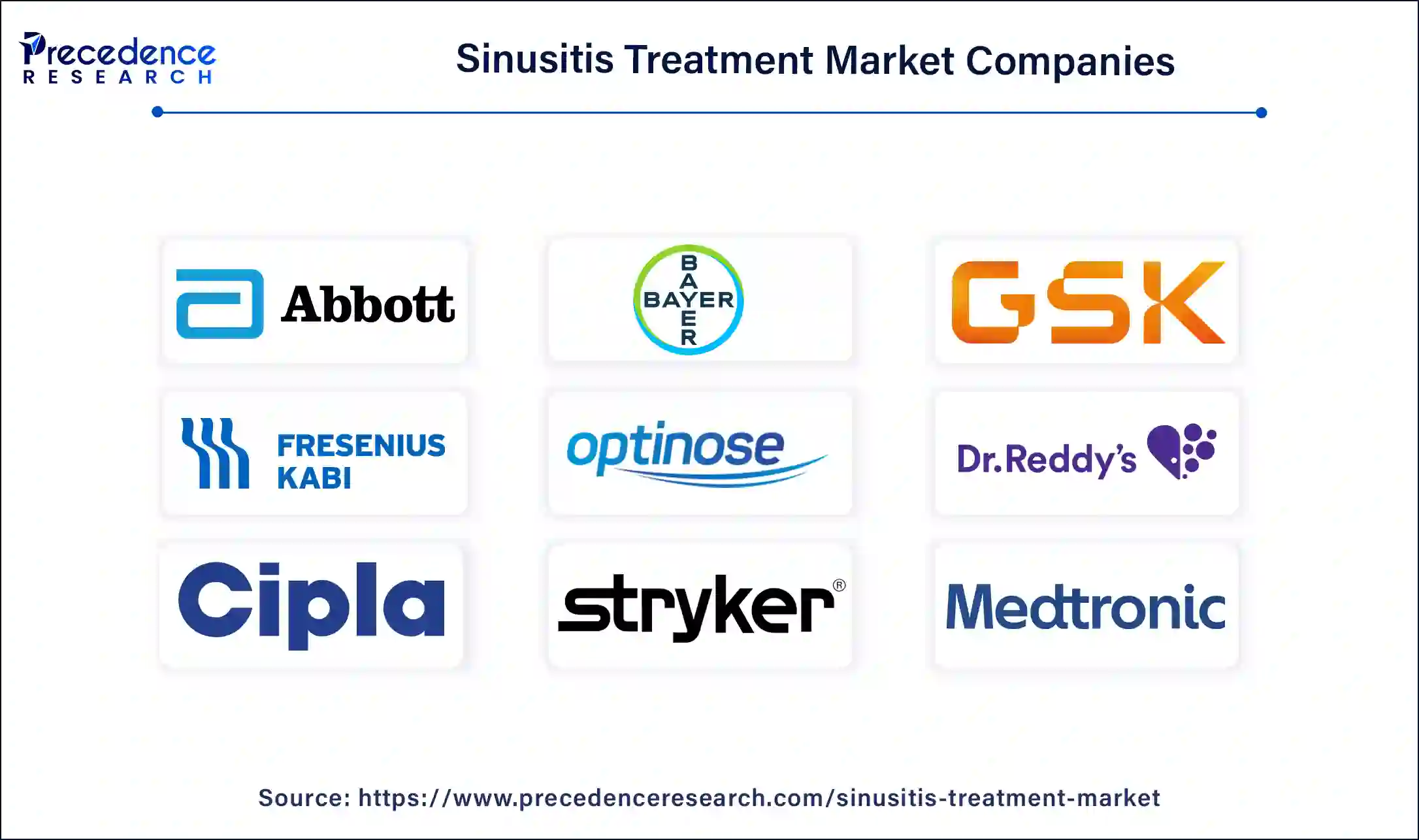
- Fresenius Kabi AG: Fresenius Kabi AG provides a range of critical care and anti-infective products for sinusitis treatment, with a particular aim on injectable antibiotics and infusion therapies programmed for severe sinusitis cases that require hospitalization.
- OptiNose US, Inc: OptiNose US, Inc. provides XHANCE nasal spray, a specialized, FDA-approved treatment alternative for patients suffering from chronic sinusitis.
- Cipla Inc.: Cipla Inc. provides a diverse portfolio for sinusitis treatment, primarily aiming on nasal decongestants, nasal sprays, and anti-infectives to manage symptoms and infections.
- Stryker Corporation.: Stryker Corporation provides a comprehensive portfolio of products for sinusitis treatment, with a strong aim on minimally invasive, office-based, and even endoscopic surgical solutions.
Other Major Key Players
Recent Developments
- In February 2026, the U.S. FDA approved Dupixent (dupilumab) for the treatment of adult and pediatric patients aged 6 years and older with allergic fungal rhinosinusitis (AFS) developed by Sanofi and Regeneron. The drug lessens multiple signs and symptoms of disease, helps break the cycle of recurrence, and reduces the risk for subsequent surgeries and corticosteroids by 92%. (Source: https://www.globenewswire.com )
- In October 2025, AstraZeneca and Amgen's Tezspire (tezepelumab) was approved by the U.S. FDA for the add-on maintenance treatment of adults and pediatric patients affected by inadequately controlled chronic rhinosinusitis with nasal polyps. Tezspire is the first and only biologic that targets thymic stromal lymphopoietin (TSLP) to be approved for CRSwNP. (Source: https://www.astrazeneca.com )
Segments Covered in The Report
By Type
- Chronic Sinusitis
- Acute Sinusitis
- Sub-Acute Sinusitis
By Route of Administration
- Nasal
- Oral
- Injectable
- Topical
By Treatment
- Antibiotic
- Analgesic
- Anti-inflammatory
- Expectorants
By Geography
- North America
- Asia Pacific
- Europe
- Latin America
- Middle East and Africa
For inquiries regarding discounts, bulk purchases, or customization requests, please contact us at sales@precedenceresearch.com
Frequently Asked Questions
Tags





Ask For Sample
No cookie-cutter, only authentic analysis – take the 1st step to become a Precedence Research client
 Get a Sample
.webp)



 sales@precedenceresearch.com
 Schedule a Meeting
