



Sleep Trackers Market Size, Share and Trends 2026 to 2035
Sleep Trackers Market (By Product Type: Wearable Sleep Trackers, Non-Wearable Sleep Trackers; By Wearable Sub-Type: Smart Bands & Wristwear, Smart Watches, Wearable Rings & Headbands; By Application: Homecare/Personal Sleep Monitoring, Clinical/Healthcare Monitoring, Others (Fitness & Wellness); By Distribution Channel: Online Retail/E-Commerce, Offline/Retail Stores, Specialty & Sleep Clinics; By End-User: Individuals/Consumers, Healthcare Providers/Clinics, Fitness & Wellness Centers) - Global Industry Analysis, Size, Trends, Leading Companies, Regional Outlook, and Forecast 2026 to 2035
Source: https://www.precedenceresearch.com/sleep-trackers-market
 Get a Sample
 Table Of Content


What is the Sleep Trackers Market Size?
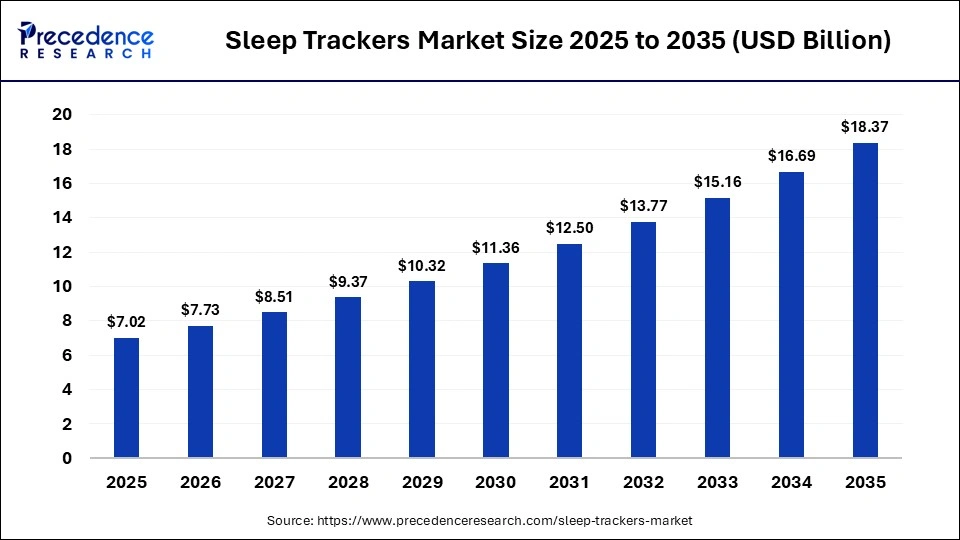
The global sleep trackers market size was calculated at USD 7.02 billion in 2025 and is predicted to increase from USD 7.73 billion in 2026 to approximately USD 18.37 billion by 2035, expanding at a CAGR of 10.10% from 2026 to 2035. The increasing cases of sleep apnea and the rising availability of advanced sleep monitoring devices on e-commerce platforms are driving the market growth.
Market Highlights
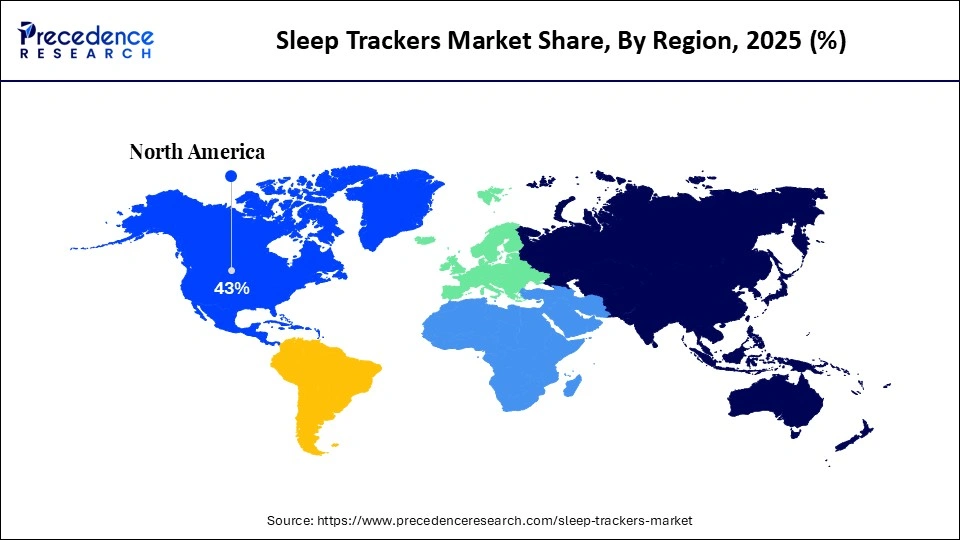
- North America led the market with a major market share of around 43% in 2025.
- Asia Pacific is expected to grow at the fastest CAGR of 10.5% during the forecast period.
- By product type, the wearable sleep trackers segment held the largest market share of 72% in 2025.
- By product type, the non-wearable sleep trackers segment is expected to grow at a significant CAGR of 9.2% between 2026 and 2035.
- By wearable sub-type, the smart bands & wristwear segment held the largest market share of 60% in 2025.
- By wearable sub-type, the smart watches segment is expected to expand at the fastest CAGR during the forecast period.
- By application, the homecare / personal sleep monitoring segment held the highest share of 65% in the market in 2025.
- By application, the clinical / healthcare monitoring segment is expected to grow at a strong CAGR of 8.8% during the forecast period.
- By distribution channel, the online retail / e-commerce segment dominated the market with a share of 50% in 2025.
- By distribution channel, the offline / retail stores segment is expected to expand at a significant rate during the forecast period.
- By end-user, the individuals / consumers segment dominated the market with a major share of 70% in 2025.
- By end-user, the healthcare providers / clinics segment is expected to grow at a CAGR of 9.3% in the upcoming period.
Market Overview
The sleep trackers market is a crucial segment of the healthcare devices industry. This market deals with the production and distribution of sleep tracking devices across the world. Sleep trackers are electronic devices or digital systems that monitor and analyze sleep patterns, stages, and related physiological metrics, including movement, heart rate, respiration, and others, to help users and healthcare professionals assess sleep quality and detect sleep disorders. The growing demand for wearable gadgets such as smartwatches, wristbands, and smart rings is expected to drive market growth. Moreover, growing health awareness, prevalence of sleep disorders, and advancements in sensors and AI-based analysis are driving the market.
What is the Role of AI in Sleep Trackers?
In medical devices, including sleep trackers, AI helps in optimizing device design, enhancing diagnostics, and increasing operational efficiency. Nowadays, the sleep tracker manufacturing companies are integrating AI to analyze sleep stages, heart rate, breathing, and environmental factors. AI also allows integration with other health metrics and smart home devices, creating a holistic and automated sleep optimization experience. By combining predictive analytics and personalized coaching, AI turns sleep trackers into intelligent wellness tools rather than simple monitoring devices.
- In December 2025, Sleep.AI launched Sleep Sense. Sleep Sense is an AI-enabled sleep monitoring solution designed for patients suffering from sleep disorders.
Sleep Trackers Market Trends
- Surging Cases of Sleep Apnea: The rising prevalence of sleep apnea in various nations has increased the demand for sleep tracking solutions.
- Focus on Holistic Health Monitoring: Sleep trackers are expanding beyond simple sleep metrics (like duration or efficiency) to incorporate holistic health data, including heart rate variability, respiratory rate, stress levels, and blood oxygen saturation (SpO2).
- Personalized and Actionable Sleep Coaching: Rather than just collecting sleep data, modern sleep trackers offer personalized coaching, behavioral insights, and actionable suggestions tailored to individual habits and goals. Some even integrate with wellness apps to guide users on routines that improve sleep outcomes.
- Collaborations: Numerous medical device companies are collaborating with tech providers to develop IoT-based sleep trackers.
- Business Expansions: Several market players are investing rapidly in opening new manufacturing facilities to increase the production of sleep monitoring devices.
Market Scope
| Report Coverage | Details |
| Market Size in 2025 | USD 7.02 Billion |
| Market Size in 2026 | USD 7.73 Billion |
| Market Size by 2035 | USD 18.37 Billion |
| Market Growth Rate from 2026 to 2035 | CAGR of 10.10% |
| Dominating Region | North America |
| Fastest Growing Region | Asia Pacific |
| Base Year | 2025 |
| Forecast Period | 2026 to 2035 |
| Segments Covered | Product Type, Wearable Sub-Type, Application, Distribution Channel, End-User, and Region |
| Regions Covered | North America, Europe, Asia-Pacific, Latin America, and Middle East & Africa |
Segment Insights
Product Type Insights
Why Did the Wearable Sleep Trackers Segment Dominate the Sleep Trackers Market?
The wearable sleep trackers segment dominated the market with a 72% share in 2025. This is mainly due to the increased demand for high-quality smartwatches and smart bands from consumers in developed nations. Their integration with smartphones and health apps allows users to access personalized insights and actionable recommendations, enhancing user engagement. Additionally, the rapid investment by medical device companies in opening new production units to increase the manufacturing of wearable sleep trackers is expected to sustain the segment's dominance.
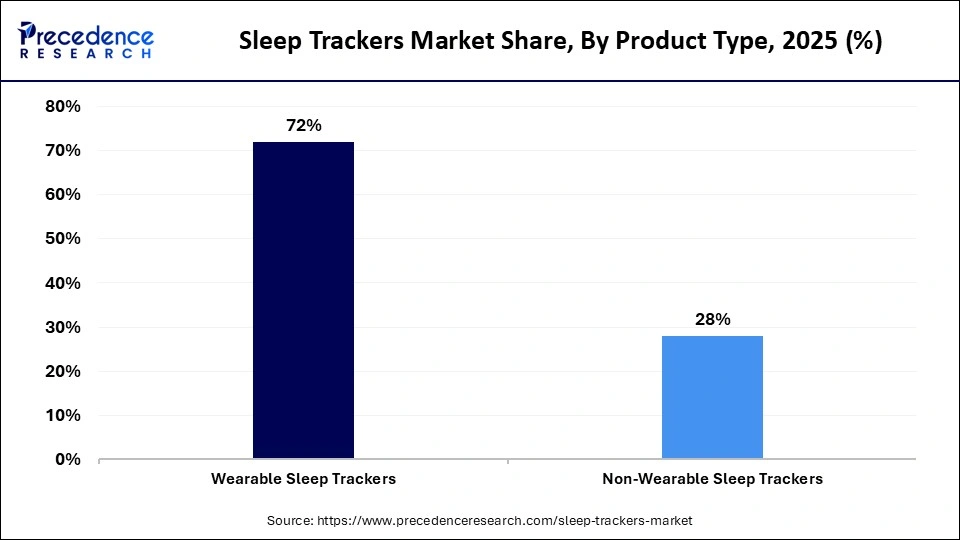
The non-wearable sleep trackers segment is expected to grow at the highest CAGR of 9.2% between 2026 and 2035. The growth of the segment is attributed to the surging popularity of under-mattress sensors/pads and bedside monitors in technologically advanced countries such as Japan, the U.S., and Germany. The segment is also benefiting from advancements in sensor technology, AI-driven analytics, and smart home integration, enabling accurate sleep tracking and actionable insights. Also, the rising adoption of non-wearable sleep trackers by modern hospitals is contributing to segmental growth.
Wearable Sub-Type Insights
What Made Smart Bands & Wristwear the Leading Segment in the Sleep Trackers Market?
The smart bands & wristwear segment led the market for sleep trackers while holding the largest share of 60% in 2025. This is mainly due to the increased adoption of smart bands by modern athletes to monitor their daily activities. Their compact design, ease of use, and seamless integration with smartphones and health apps make them highly attractive to consumers. Also, the surging preference of individual consumers to purchase wrist bands for analyzing sleep quality is expected to drive segmental growth.
The smartwatches segment is expected to grow at a significant rate during the forecast period. This is due to their high convenience, affordability, and multifunctionality. The growing sales of smartwatches across numerous countries, including the U.S., China, India, the UK, Germany, and the UAE has boosted the segment's growth. Additionally, the availability of AI-based smartwatches on online platforms is expected to foster the growth of the segment.
Application Insights
Why Did the Homecare/Personal Sleep Monitoring Segment Dominate the Sleep Trackers Market?
The homecare/personal sleep monitoring segment dominated the market with a share of 65% in 2025. This is mainly due to the increased use of personal sleep monitoring devices by athletes to track their daily activities. The availability of affordable, non-intrusive, and AI-enabled trackers that provide real-time insights, sleep coaching, and integration with health apps has further boosted adoption. Additionally, the rise of remote healthcare solutions and preventive health practices has strengthened the demand for home-based sleep monitoring, making this segment the market leader.
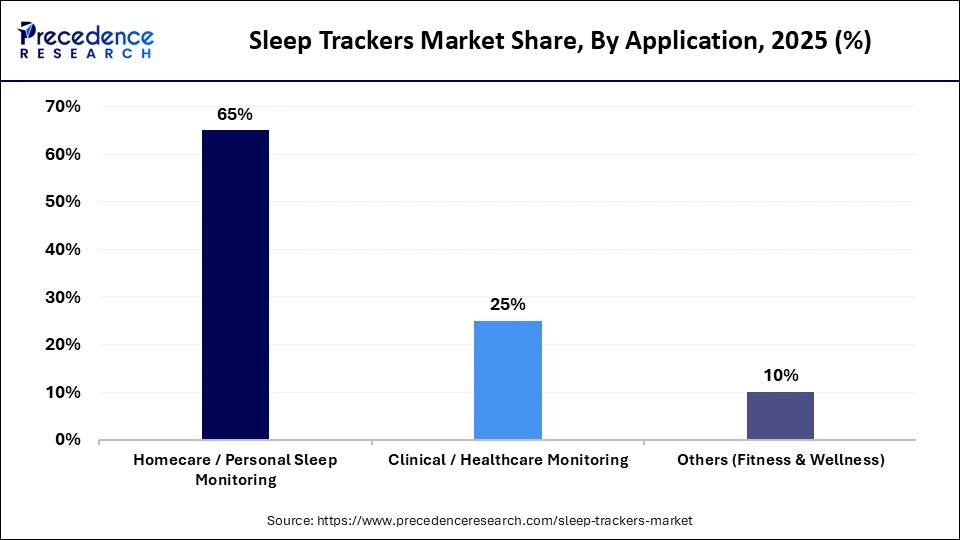
The clinical/healthcare monitoring segment is expected to expand at a robust CAGR of 8.8% during the forecast period. The growth of the segment is driven by the increasing use of sleep monitoring solutions in healthcare clinics for monitoring the sleeping activities of patients. Additionally, partnerships among medical device companies and healthcare providers to develop personalized health monitoring devices are expected to contribute to segmental growth.
Distribution Channel Insights
Why Did the Online Retail / E-Commerce Segment Lead the Sleep Trackers Market?
The online retail / e-commerce segment led the market with a major share of 50% in 2025. This is due to the convenience, wide product selection, and competitive pricing offered to consumers. Online platforms allow customers to compare different brands, models, and features easily while providing doorstep delivery and flexible return options, which enhances the purchasing experience. Additionally, the availability of a wide range of medical devices on e-commerce platforms is boosting accessibility to consumers, supporting segmental growth.
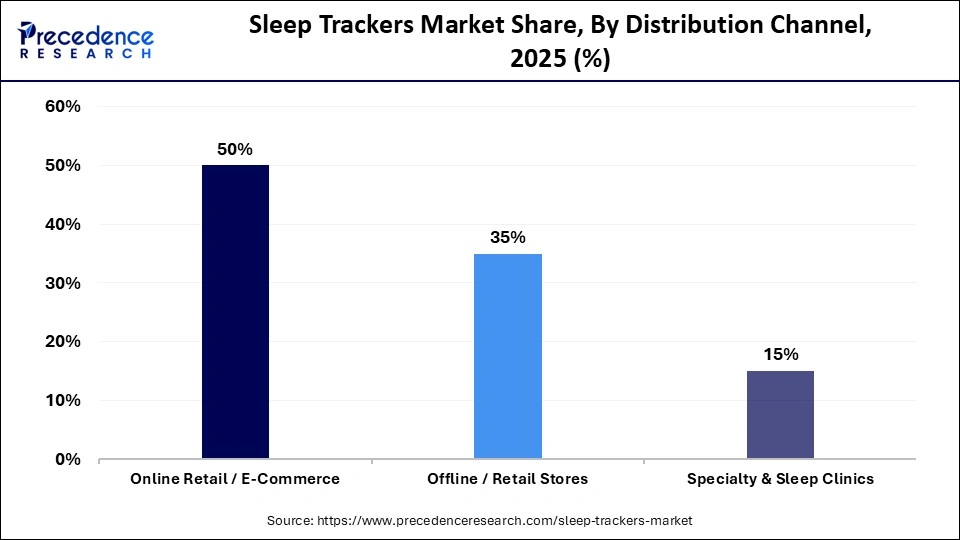
The offline/retail stores segment is expected to grow at a significant CAGR during the forecast period. The rapid investment by medical device companies in opening new retail outlets is driving the growth of the segment. Customers often prefer to try on wearable devices, assess comfort, and see product features in person before buying, which offline stores provide. Additionally, in-store promotions, personalized consultations, and after-sales support offered by retail stores are driving consumer confidence and contributing to the expansion of this segment.
End-User Insights
What Made Individuals/Consumers the Dominant Segment in the Market?
The individuals/consumers segment dominated the sleep trackers market with the largest share of 70% in 2025. This is mainly due to the growing demand for smart bands among individual consumers. The widespread availability of affordable, user-friendly, and AI-enabled devices, such as smartwatches, bands, and non-wearable sensors, has further fueled adoption. Additionally, the integration of sleep trackers with health apps, fitness platforms, and personalized coaching features has made them highly appealing to individual users, solidifying this segment's leadership in the market.
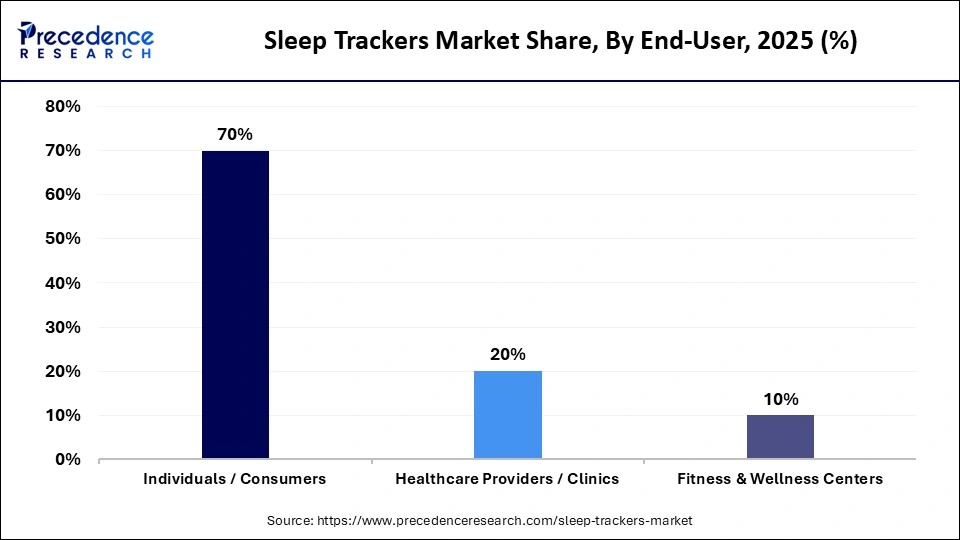
The healthcare providers/clinics segment is expected to grow at a CAGR of 9.3% in the upcoming period. The growth of the segment is driven by the rising demand for sleep trackers from healthcare providers to monitor sleeping activities of patients. Also, the rise in the number of psychiatric clinics, along with partnerships among healthcare providers and market players to design high-quality sleep tracking devices, is expected to accelerate the growth of the segment.
Regional Insights
How Big is the North America Sleep Trackers Market Size?
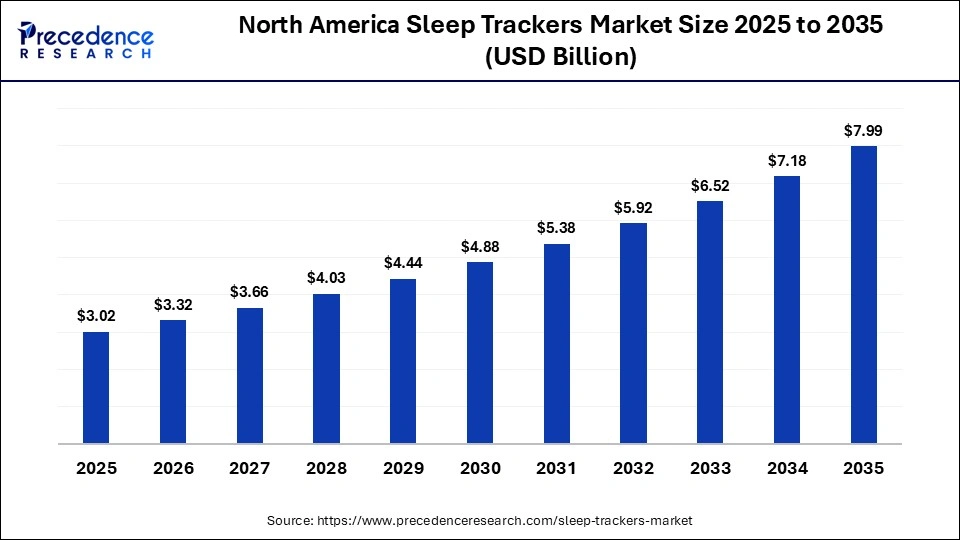
The North America sleep trackers market size is estimated at USD 3.02 billion in 2025 and is projected to reach approximately USD 7.99 billion by 2035, with a 10.22% CAGR from 2026 to 2035.
What Made North America the Dominant Region in the Sleep Trackers Market?
North America dominated the sleep trackers market, accounting for 43% share in 2025. The region's dominance in the market is attributed to the growing cases of sleep apnea in the U.S., Canada, and Mexico. The rise in the number of med-tech startups, as well as numerous government initiatives aimed at strengthening the healthcare sector, positively contributed to the market. Moreover, the presence of various market players, such as Google, ResMed, and Garmin Ltd., is expected to sustain the region's leadership in the market.
- In March 2025, ResMed launched NightOwl in the U.S. NightOwl is an FDA-cleared home sleep apnea test (HSAT) designed for healthcare providers in this nation.
What is the Size of the U.S. Sleep Trackers Market?
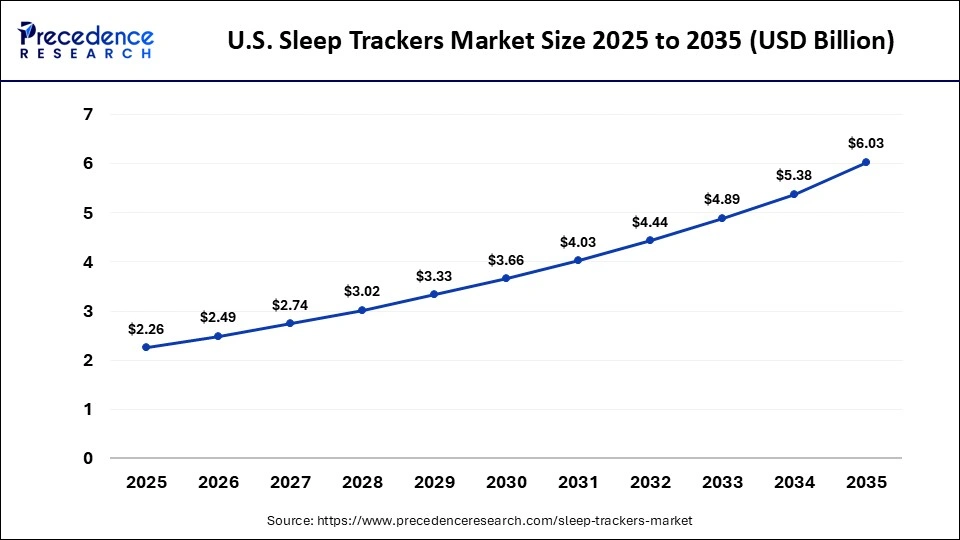
The U.S. sleep trackers market size is calculated at USD 2.26 billion in 2025 and is expected to reach nearly USD 6.03 billion in 2035, accelerating at a strong CAGR of 10.31% between 2026 and 2035.
U.S. Sleep Trackers Market Trends
The market in the U.S. is expanding due to the increasing adoption of portable sleep tracking devices and the surging investment by the market players in opening new production units. Additionally, technological advancements in medical devices, as well as the growing cases of sleeping disorders, are driving the market in the country.
- In October 2025, ResMed announced a plan to open a new manufacturing facility in Indianapolis, U.S, in 2027. This production unit is set to increase the production of sleep apnea devices.
Why is Asia Pacific Considered the Fastest-Growing Region in the Market?
Asia Pacific is expected to expand at the fastest CAGR of 10.5% during the forecast period. This is primarily due to the increasing prevalence of insomnia across various nations, such as Japan, India, China, and South Korea. The rapid investment by the medical device companies in opening new production centers, along with technological advancements in the healthcare sector, is playing a prominent role in shaping the industrial landscape. Moreover, the presence of various market players, including Samsung, Huawei Technologies, and Xiaomi Corporation, is expected to propel the growth of the sleep trackers market in this region.
China Sleep Trackers Market Analysis
The rising adoption of smart rings for monitoring sleep habits, along with technological advancements in the electronics industry, is boosting the market in China. Moreover, the rapid investment by market players in opening new production centers, as well as the surging demand for smart watches, is positively contributing to the market.
- In October 2025, Xiaomi launched the Redmi Watch 6 in China. Redmi Watch 6 is equipped with a 2.07-inch AMOLED display and a dual-button design.
How is Europe Growing in the Sleep Trackers Market?
Europe is expected to show significant growth during the forecast period. The market is driven by rising health consciousness, high prevalence of sleep disorders such as insomnia and sleep apnea, and the integration of AI-based analytics into wearables. Strict regulations regarding data privacy, along with diverse regulatory standards across European countries, could now slow down product deployment.
France Market Trends
France represents a major portion of the European market, with wearable tracker revenues projected to rise significantly, driven by growing knowledge of sleep health. A prominent trend includes integrating medical-grade sensors into user devices, funding remote diagnostics and telemedicine for sleep disorders.
Why is the Demand for Sleep Trackers Increasing in Latin America?
Latin America is expected to show notable growth during the forecast period. Growing urban populations are focusing more on wellness, looking for personalized insights into sleep quality, heart rate, and even movement. Users are increasingly seeking personalized health metrics and insights, moving towards devices that offer personalized feedback and actionable recommendations for enhancing sleep habits.
Brazil Market Trends
Rising insomnia rates, partially associated with post-pandemic stress, are driving users toward wearables for health monitoring. The smart mattress and the IoT sleep tracking industry is seeing growth, driven by the need for passive monitoring in urban centers such as São Paulo and Rio de Janeiro.
How is the Sleep Trackers Market Transforming the Middle East and Africa?
The Middle East and Africa region is expected to grow at a notable CAGR in the foreseeable future. By changing the focus from reactive, clinical sleep studies to proactive, home-driven, and continuous wellness management. It is driven by increasing health awareness and high smartphone penetration.
Saudi Arabia Market Trends
The Saudi Arabian market is driven by Vision 2030's health digitization and rising insomnia cases, driving the need for smartwatches and fitness bands. Technologies are increasingly incorporating AI and machine learning to determine sleep patterns and provide personalized, actionable advice for better sleep hygiene.
Sleep Trackers Market Value Chain Analysis
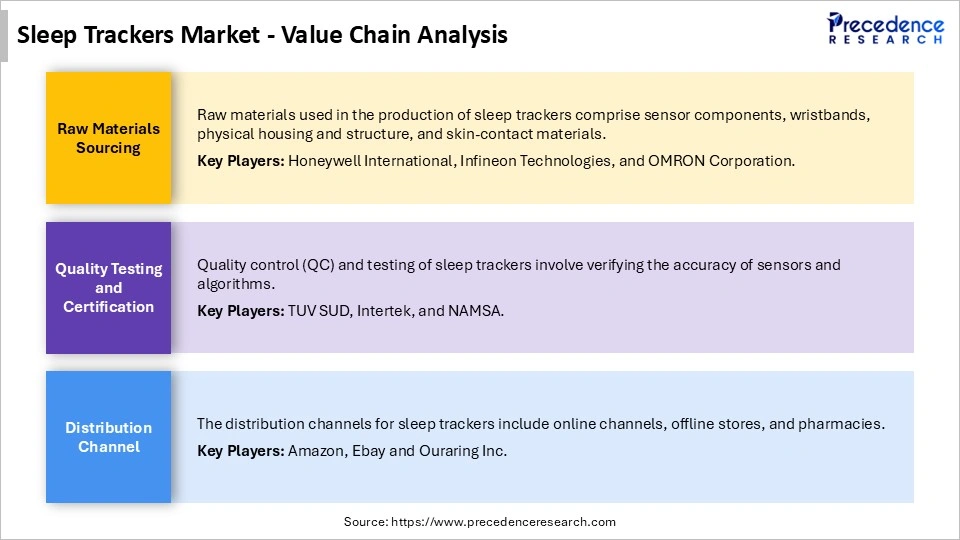
Who are the Major Players in the Global Sleep Trackers Market?
The major players in the sleep trackers market include Garmin Ltd., Withings, ResMed Inc., Polar Electro Oy, Oura Health Ltd., Sleep Number Corporation, Beddit (Apple), Emfit Ltd., Eight Sleep Inc., Xiaomi Corporation, and Huawei Technologies Co., Ltd.
Other Major Key Players
- Fitbit Inc.: Fitbit Inc. provides comprehensive, 24/7 sleep tracking via its wearables, using motion detectors and even heart rate sensors (PPG) to determine sleep stages (light, deep, REM) and restlessness.
- Apple Inc.: Apple Inc. provides a comprehensive suite of sleep tracking capabilities primarily via the Apple Watch and even the integrated Health app on iPhone. The approach combines hardware sensor information with machine learning to monitor, analyze, and assist in improving sleep quality.
- Samsung Electronics Co., Ltd.: Samsung Electronics Co., Ltd. offerings combine wearable sensors with AI-based analysis via the Samsung Health app to offer deep insights into environmental factors, sleep patterns, and overall wellness.
- Philips Healthcare: Philips Healthcare provides a comprehensive portfolio for the sleep trackers and management industry, ranging from consumer-focused wearables to professional sleep diagnostics and therapeutic devices. Its offerings focus on sleep quality improvement, sleep apnea management, and long-term therapy adherence.
Recent Developments
- In December 2025, Polar launched Polar Loop. Polar Loop is a fitness tracker designed for consumers in India.
- In December 2025, Re-Time launched Retimer Ring. Retimer Ring is a smart ring designed to monitor health metrics and sleep.
- In June 2025, Garmin Ltd. launched an arm band. This arm band helps in tracking blood oxygen saturation, respiration rates, breathing patterns, heart rate variability, and skin temperature.
- In June 2025, Xiaomi launched Smart Band 10 in China. This smart band is equipped with a sleep monitor feature that enables users to improve their sleeping habits.
Segments Covered in the Report
By Product Type
- Wearable Sleep Trackers
- Non-Wearable Sleep Trackers
By Wearable Sub-Type
- Smart Bands & Wristwear
- Smart Watches
- Wearable Rings & Headbands
By Application
- Homecare/Personal Sleep Monitoring
- Clinical/Healthcare Monitoring
- Others (Fitness & Wellness)
By Distribution Channel
- Online Retail/E-Commerce
- Offline/Retail Stores
- Specialty & Sleep Clinics
By End-User
- Individuals/Consumers
- Healthcare Providers/Clinics
- Fitness & Wellness Centers
By Region
- North America
- Europe
- Asia-Pacific
- Latin America
- Middle East & Africa
For inquiries regarding discounts, bulk purchases, or customization requests, please contact us at sales@precedenceresearch.com
Frequently Asked Questions
Tags





Ask For Sample
No cookie-cutter, only authentic analysis – take the 1st step to become a Precedence Research client
 Get a Sample
.webp)



 sales@precedenceresearch.com
 Schedule a Meeting
