



Sporicidal and Sterilant Chemicals Market Size, Companies, Share, Production Capacity, Raw Material Pricing, Export & Import Analysis, Manufacturing Cost, Competitive Positioning, and Demand Forecast
Sporicidal and Sterilant Chemicals Market (By Sterilant/Sporicide Type: Peracetic Acid Systems, Hydrogen Peroxide Systems, Glutaraldehyde & Aldehydes, Other Sterilants (e.g., OPA, chlorine dioxide); By Use Mode: High-Level Disinfection (HLD), Cold Sterilization, Surface Sporocidal Use, Other Uses; By End-Use Setting: Hospitals, Ambulatory Surgery Centers, Dental Clinics, Other Settings) - Global Industry Analysis, Size, Trends, Leading Companies, Regional Outlook, and Forecast 2026 to 2035
Source: https://www.precedenceresearch.com/sporicidal-and-sterilant-chemicals-market
 Get a Sample
 Table Of Content


What is the Sporicidal and Sterilant Chemicals Market Size in 2026?
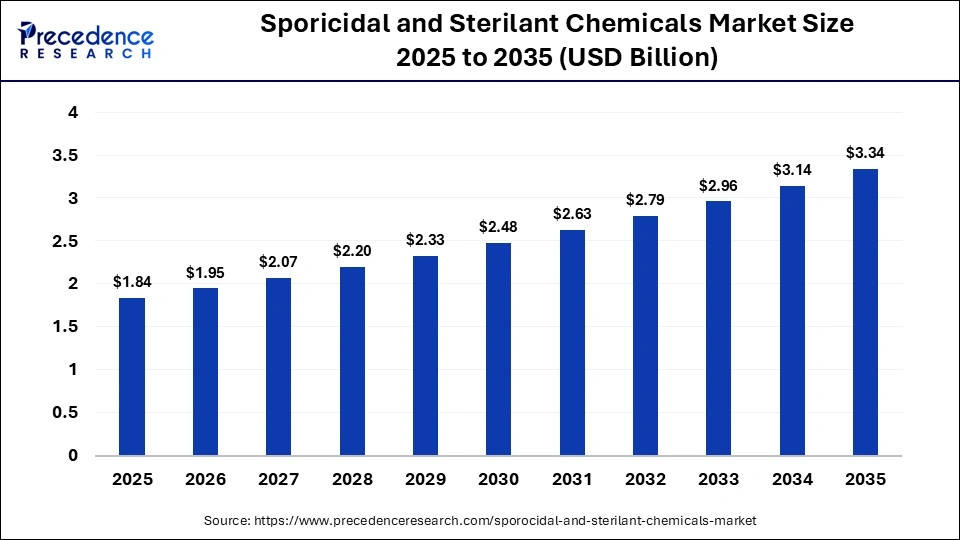
The global sporicidal and sterilant chemicals market size was calculated at USD 1.84 billion in 2025 and is predicted to increase from USD 1.95 billion in 2026 to approximately USD 3.34 billion by 2035, expanding at a CAGR of 6.13% from 2026 to 2035. The market growth is attributed to rising healthcare-associated infection prevention initiatives and the adoption of advanced sporicidal and chemical sterilization technologies.
Key Takeaways
- North America dominated the market in 2025.
- Asia-Pacific is expected to grow at the fastest CAGR between 2026 and 2035.
- By sterilant/sporicide type, the peracetic acid systems segment contributed the highest market share in 2025.
- By sterilant/sporicide type, the hydrogen peroxide systems segment is expected to grow at a strong CAGR between 2026 and 2035.
- By use mode, the high-level disinfection (HLD) segment held a major market share in 2025.
- By use mode, the cold sterilization segment is expected to expand at the fastest CAGR from 2026 to 2035.
- By end-use setting, the hospitals segment captured the highest market share in 2025.
- By end-use setting, the dental clinics segment is expected to show the fastest growth over the forecast period.
Which Factors Influence the Sporicidal and Sterilant Chemicals Market?
The rising burden of healthcare-associated infections (HAIs) is a primary driver of the sporicidal and sterilant chemicals industry, as infection prevention remains central to modern healthcare systems. Ethylene oxide, hydrogen peroxide, and peracetic acid are chemical sterilants that are essential in destroying bacteria, viruses, fungi, and resistant spores of medical devices and critical surfaces.
They are especially needed in the case of heat-sensitive instruments, which cannot be sterilized by high-temperature steam. Furthermore, the strengthening of infection control compliance continues to drive steady demand for high-performance sporicidal and sterilant chemicals.
Impact of Artificial Intelligence on Sporicidal and Sterilant Chemicals
Artificial intelligence (AI) is significantly reshaping the sporicidal and sterilant chemicals industry by enhancing production efficiency and infection control performance. Chemical manufacturers are currently working with AI-based tools of optimization of the processes to measure the conditions of the reactions in real time.
AI algorithms ensure the stable purity of hydrogen peroxide, peracetic acid, and ethylene oxide formulations. Moreover, pharmaceutical cleanrooms use machine learning models to detect the trend of microbial contamination and prescribe accurate disinfectant rotation procedures.
Sporicidal and Sterilant Chemicals Market Trends
- Real-Time Microbial Risk Alerts in Healthcare Settings: Smart sterilization systems now generate real-time alerts using sensor data and AI analytics to identify contamination hotspots before outbreaks occur. Such warning systems can assist healthcare teams to take action more quickly and use the chemicals more efficiently according to the risk profiles. This has an outcome of improved infection prevention in regulatory hospitals.
- Sustainable Sterilant Certification Schemes Gain Market Preference: The procurement policies are being pushed by new international eco-certification of low-toxicity sterilants in huge health systems. Certified products have reduced environmental impact and reduced risks of worker exposure without reduced sporicidal activity. These certifications are becoming a mandatory requirement on large contracts by hospitals and governments.
Sporicidal and Sterilant Chemicals Market Growth Factors
- Adoption of Automated Sterilization Systems: Increasing integration of automated monitoring and sterilization units is driving operational efficiency and compliance.
- Strengthening Infection Control Regulations: New regional and national mandates are fuelling the adoption of validated sporicidal chemicals in healthcare facilities.
- Growing Focus on Laboratory and Pharmaceutical Sterility: Rising requirements in pharmaceutical cleanrooms and research labs are propelling sterilant chemical usage.
- Innovation in Low-Toxicity Sterilants: Development of safer, environmentally friendly sterilants is boosting market preference over traditional high-toxicity chemicals.The Sterilant Boom and How International Trade, Regulatory Push, and Innovation Are Reshaping the Sporicidal and Sterilant Chemicals MarketBelgium emerged as the largest exporter of hydrogen peroxide in bulk, with exports valued at approximately USD 133.1 million and 235,371,000 kg, followed by the European Union at approximately USD 116.2 million and the Netherlands at approximately USD 96.4 million, highlighting strong outbound flows of this critical sterilant intermediate.
- According to global market trade data, worldwide hydrogen peroxide import value reached approximately USD 986 million in 2024, demonstrating robust international trade flows for this key sporicidal chemical.
- The U.S. Food and Drug Administration (FDA) has recognized and encouraged broader adoption of vaporized hydrogen peroxide as an established sterilization method for medical devices, supporting safer alternatives to traditional gas sterilants with significant adoption potential between 2024 and 2026.
- According to Practice Greenhealth's 2024 sustainability benchmark data, 74% of U.S. hospitals have eliminated glutaraldehyde in favor of safer alternatives like ortho-phthalaldehyde with 74% adoption, hydrogen peroxide with 63%, and peracetic acid with 34%. This indicates a broader trend in replacing high-toxicity disinfectants, including formaldehyde.
- The CDC's 2024 report shows 17 U.S. states improved on at least two HAI types compared with the prior year. This reflects stronger infection prevention efforts in acute care facilities. Such progress is driving higher adoption of validated sporicidal and sterilant chemicals across hospitals.
Segmental Insights
Sterilant/Sporicide Type Insights
Why Did the Peracetic Acid Systems Segment Dominate the Market?
The peracetic acid systems segment dominated the sporicidal and sterilant chemicals market in 2025, due to its ability to provide a broad spectrum of sporicidal activity without residues, which are considered harmful. They are quite applicable in healthcare and pharmaceutical settings.
The use of peracetic acid formulations became popular in healthcare facilities as they have the ability to inactivate spores, bacteria, and viruses on heat-sensitive instruments quickly. Furthermore, emergency preparedness protocols, including those revised by national health agencies following pathogen outbreaks, will increasingly incorporate peracetic acid in the coming years.
The hydrogen peroxide systems segment is expected to grow at the fastest CAGR in the coming years, as facilities seek safer, low-temperature sterilization methods that support advanced materials used in modern medical devices. The presence of regulatory signals by agencies, including the U.S. FDA, recognizes the vaporized hydrogen peroxide and hydrogen peroxide gas plasma technologies.
These viable alternatives to devices that are unable to sustain heat or moisture are a key growth driver. Moreover, the demand for hydrogen peroxide systems is anticipated to rise with technology improvements expanding their applicability beyond traditional instrument sterilization into areas such as room decontamination and biological safety cabinets.
Use Mode Insights
Which Use Mode Segment Dominated the Sporicidal and Sterilant Chemicals Market?
The high-level disinfection (HLD) segment held the largest revenue share in the market in 2025, as healthcare facilities needed reliable methods to eliminate vegetative bacteria, fungi, and viruses on semi-critical equipment that contacts mucous membranes and non-intact skin.
The disinfection and sterilization guidelines of the CDC specifically suggest that HLD be used on the equipment, such as endoscopes and respiratory gear, to reduce the chances of infection between patients. Furthermore, professional societies and accreditation bodies reinforced HLD protocols in quality metrics, which fuelled the segment growth.
The cold sterilization segment is expected to expand rapidly in the market in the coming years, as healthcare providers and sterile processing departments are in need of viable sterilization techniques. Cold sterilization is usually applied to heat-sensitive medical equipment that cannot withstand high temperature sterilization by steam or other conventional sterilization processes. Additionally, the segmental growth is further fueled by improvements in technology that enhance chemical penetration and sporicidal performance without harmful residues.
End-Use Setting Insights
What Made Hospitals the Dominant Segment in the Market?
The hospitals segment led the sporicidal and sterilant chemicals market in 2025, as they use the most complicated tools and the highest-risk procedures that involve stricter sterilization and disinfection procedures to avoid HAIs. The CDC reports that about 1 in 31 hospital patients had at least one HAI on any given day in 2024.
This is attributed to the current challenges in infection control that provoke the use of sterilants intensively. Furthermore, the ongoing emphasis by public health authorities such as the WHO on global infection prevention and control (IPC) implementation frameworks through 2030 highlights institutional sterilization as a core pillar of reducing HAIs worldwide.
The dental clinics segment is expected to grow with the highest CAGR in the market during the studied years. Dental clinics are likely to implement HLD and sterilization measures, which are in line with national infection control guidelines specific to the outpatient setting. The dental infection prevention guidelines of the CDC emphasize that semicritical dental instruments that have been in contact with mucous membranes.
This equipment must be sterilized or at least subjected to HLD in case of inappropriateness of heat sterilization and the use of chemical sporicidal agents in practice. Additionally, the increasing surgical volumes, expanding intensive care services, and greater use of reusable medical devices have driven the routine application of advanced sporicidal and sterilant agents.
Regional Insights
Why North America Dominated the Sporicidal and Sterilant Chemicals Market?
North America held a major revenue share of the market in 2025, due to the strong presence of healthcare structures, high levels of infection control, and regulatory measures, which contribute to the intensive application of sterilants and sporicidal agents in hospitals and clinical facilities.
The guidance by CDC, Disinfection and Sterilization in Healthcare Facilities, states that critical care equipment should be highly disinfected or sterilized to reduce risks of HAIs, which supports the use of chemicals during a procedure. Additionally, North America was the largest user of regulated sterilant and sporicidal agents in recent times, as it has maintained and still enhances outcomes in the prevention of infections and patient safety.
U.S.: Driving Sterilant and Sporicidal Chemical Use in North America
The U.S. leads the market in North America due to its advanced infection control requirements, which conform to federal objectives of public health. FDA requires sterilization procedures of reusable medical equipment to contain validated chemical sterilants or high-level disinfectants. This facilitates the use of hydrogen peroxide and peracetic acid preparation in central sterile processing departments. Integration of various sterilization modalities is adopted in hospitals across the U.S. to address multiple clinical requirements and the national surveillance system.
How is Asia-Pacific Growing in the Sporicidal and Sterilant Chemicals Market?
Asia-Pacific is expected to grow at the fastest CAGR in the market during the forecast period, owing to the rising surgical and diagnostic case volumes and strengthened infection prevention and control frameworks across emerging and developed economies in the region. National infection prevention policies in countries such as China, India, Japan, and South Korea increasingly align with World Health Organization (WHO) IPC guidelines.
This emphasizes validated sterilization and disinfection practices as essential components of quality healthcare delivery. Furthermore, the developing Asia-Pacific market of the private healthcare sector and the growth in health awareness of patients promote a standardization of infection prevention.
China: Leading Growth in Asia-Pacific Sterilization Chemical Adoption
China is leading the charge in Asia-Pacific, owing to the rapid expansion of its healthcare infrastructure, aggressive infection prevention targets, and evolving regulatory frameworks that emphasize product quality and safety. In 2025, the National Health Commission of the People's Republic of China enhanced the standard of hospital infection management.
This mandates tertiary care and specialized facilities to adopt proven methods of sterilization and disinfection procedures that are consistent with IPC frameworks. Additionally, China's growth trajectory in sterilant and sporicidal chemical adoption also reflects broader public and private healthcare modernization efforts supported by national policy initiatives.
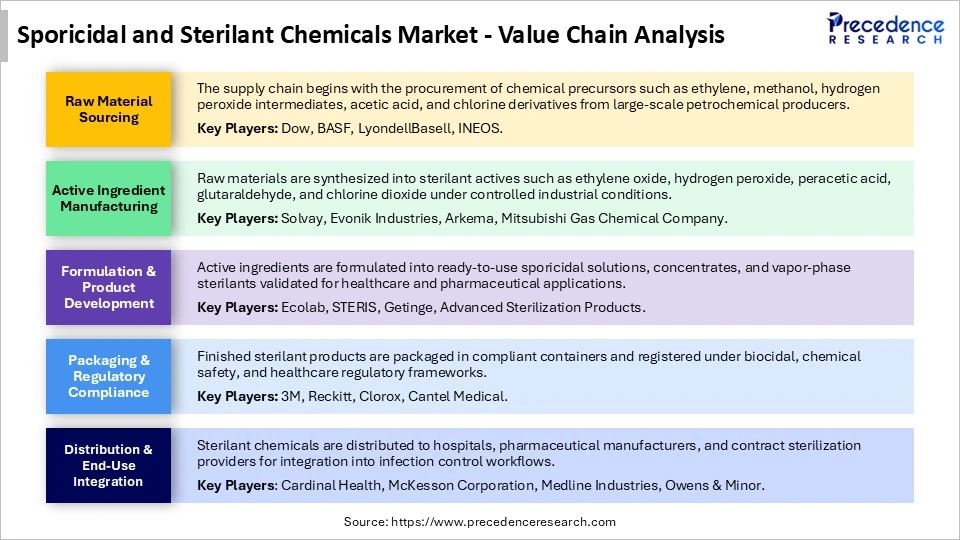
Value Chain Analysis Sporicidal and Sterilant Chemicals Market
Sporicidal and Sterilant Chemicals Market Companies
- 3M
- Advanced Sterilization Products (ASP)
- Cantel (STERIS)
- Ecolab
- Getinge
- Metrex
- Paul Hartmann
- Reckitt
- Schülke & Mayr
- STERIS
Recent Developments
- In February 2026, EnvirOx launched the OxiGenesis Hyper-Concentrate, a solution that was designed to meet 99% of facility cleaning and disinfection needs across four dilution levels, without requiring PPE when diluted. The product continues EnvirOx's commitment to simplifying sterilization workflows while maintaining high safety and performance standards for healthcare and laboratory environments.(Source: https://www.issa.com)
- In October 2025, Ecolab Life Sciences introduced Klercide Rapid Sporicide, a next-generation disinfectant designed to enhance pharmaceutical cleanroom safety and efficiency. The product addresses longstanding microbial control challenges such as strong odors, corrosiveness, and incomplete surface coverage, thereby extending equipment lifetime and creating a safer, more productive cleanroom environment.(Source: https://www.ecolab.com)
- In February 2025, the Association for the Advancement of Medical Instrumentation (AAMI), endorsed by ANSI, officially recognized chlorine dioxide foam as a high-level disinfectant for medical devices in the U.S. market. This update aligns with 2024 guidelines from the World Federation for Ultrasound in Medicine and Biology, which recommended chlorine dioxide for cleaning and disinfecting endocavitary ultrasound probes, highlighting its effectiveness in critical device sterilization.(Source: https://www.prnewswire.com)
Segments Covered in the Report
By Sterilant/Sporicide Type
- Peracetic Acid Systems
- Hydrogen Peroxide Systems
- Glutaraldehyde & Aldehydes
- Other Sterilants (e.g., OPA, chlorine dioxide)
By Use Mode
- High-Level Disinfection (HLD)
- Cold Sterilization
- Surface Sporocidal Use
- Other Uses
By End-Use Setting
- Hospitals
- Ambulatory Surgery Centers
- Dental Clinics
- Other Settings
By Region
- North America
- Latin America
- Europe
- Asia-pacific
- Middle and East Africa
For inquiries regarding discounts, bulk purchases, or customization requests, please contact us at sales@precedenceresearch.com
Frequently Asked Questions





Ask For Sample
No cookie-cutter, only authentic analysis – take the 1st step to become a Precedence Research client
 Get a Sample




 sales@precedenceresearch.com
 Schedule a Meeting
