



Transradial Access Market Size, Companies, Share, Patient Volume, Treatment Adoption Rates, Pricing Analysis, Regulatory Landscape, Competitive Positioning, and Demand Forecast
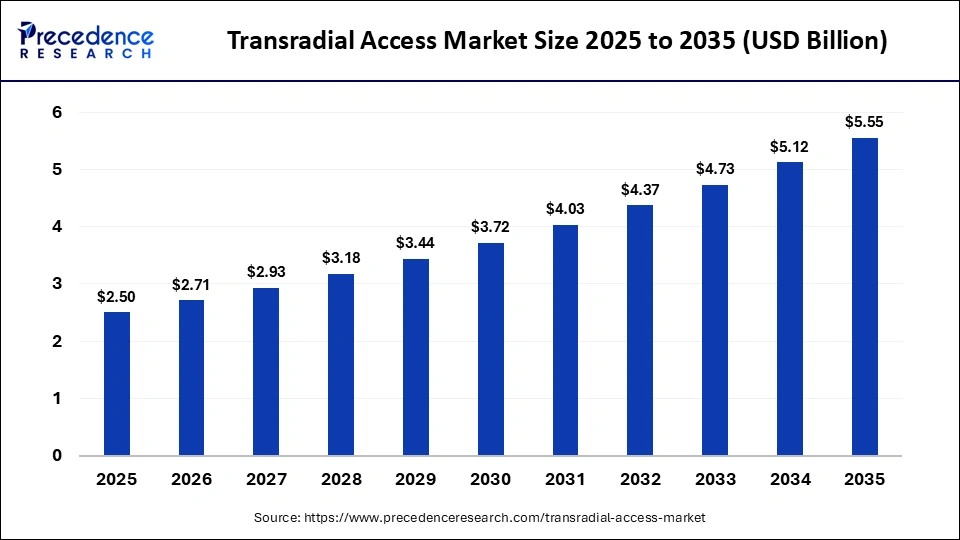
Rohan Patil, a Healthcare Industry Expert, highlights that the transradial access market has reached USD 2.71 billion in 2026 and is on track to reach USD 5.55 billion by 2035, advancing at a CAGR of 8.30%. Key transradial access market companies shaping the market include Terumo Corporation, Abbott Laboratories, Boston Scientific Corporation, Medtronic PLC, Cordis Corporation, while major growth segments span By Product Type, By Procedure Type, By End-Use.
Source: https://www.precedenceresearch.com/transradial-access-market
 Get a Sample
 Table Of Content


What is the Transradial Access Market Size in 2026?
The global transradial access market size accounted for USD 2.50 billion in 2025 and is predicted to increase from USD 2.71 billion in 2026 to approximately USD 5.55 billion by 2035, expanding at a CAGR of 8.30% from 2026 to 2035. The market is driven by increasing demand for minimally invasive procedures, growing prevalence of cardiac disorders, and ongoing technological advancements in catheters.
Key Takeaways
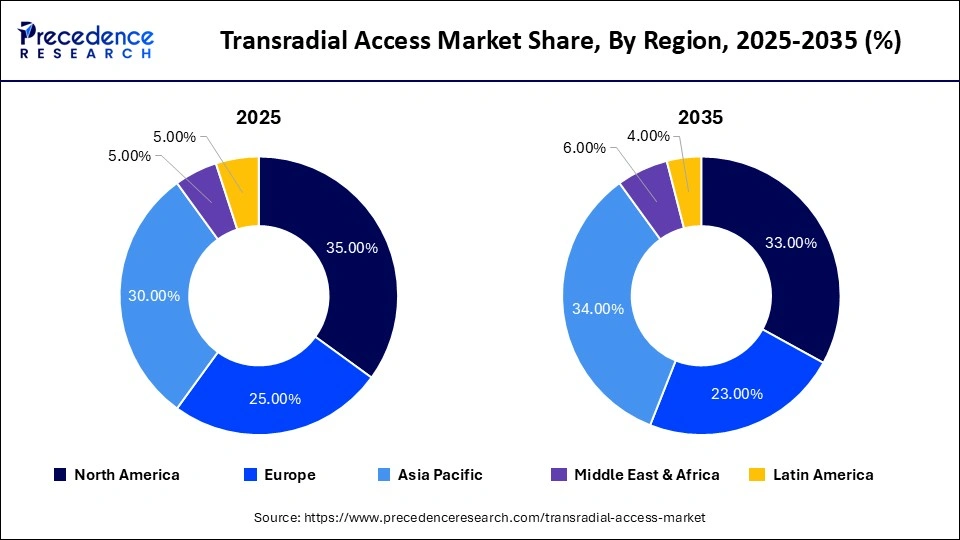
- North America led the transradial access market in 2025 with a 35% share.
- Asia Pacific is expected to grow at the fastest CAGR of 9% between 2026 and 2035.
- By product type, the radial artery catheters segment led the market with a 40% share in 2025.
- By product type, the balloon dilatation catheters segment is expected to grow at the fastest CAGR of about 9.2% in the upcoming period.
- By procedure type, the coronary angiography segment led the global market in 2025 with a 45% share.
- By procedure type, the percutaneous coronary intervention (PCI) segment is expected to expand at a CAGR of 8% in the coming years.
- By end-use, the hospitals segment led the global market in 2025 with a 55% share.
- By end-use, the ambulatory surgery centers (ASCs) segment is expected to grow at the fastest CAGR of 8% throughout the forecast period.
Transradial Access Market Overview
The transradial access technique is a minimally invasive procedure utilized to diagnose and treat various cardiovascular conditions, often called transradial angiography. Transradial access is considered a crucial strategy for mitigating the risks of bleeding during PCI and coronary angiography, especially compared to the traditional transfemoral approach. The utilization of the radial artery ensures minimal chances of bleeding, easy access closure using simple manual compression, and rapid mobilization. Such factors contribute to shorter nursing time per patient
Impact of Artificial Intelligence on the Transradial Access Market
Artificial intelligence is revolutionizing clinical practice and transradial access by facilitating quantitative assessment of wrist stability during TRA procedures. AI can enhance diagnostic and prognostic precision by combining various clinical data types and boosting the effectiveness of risk evaluation tools. It also enhances efficiency in image-based detection, simplifying data gathering and analysis. Through the standardization of diagnostic methods and the acceleration of clinical decision-making, AI facilitates more tailored treatments in practical environments and promotes a wider acceptance of AI-based solutions to enhance heart health.
Transradial Access Market Trends
- Preference for Minimally Invasive Procedures: Patients are preferring transradial access more often due to its benefits of shorter hospital stays, faster recovery, and reduced complication risks compared to traditional open or transfemoral methods.
- Focus on Radiation Safety: A growing emphasis on minimizing radiation exposure is supporting the acceptance of transradial techniques, helping ensure safer outcomes for both patients and healthcare professionals during interventional procedures.
- Supportive Regulatory and Industry Collaboration: Improving regulatory frameworks and increasing alliance between manufacturers and hospitals are enhancing procedural quality and safety standards, thereby accelerating the adoption of transradial access techniques.
Market Scope
| Report Coverage | Details |
| Market Size in 2025 | USD 2.50 Billion |
| Market Size in 2026 | USD 2.71 Billion |
| Market Size by 2035 | USD 5.55 Billion |
| Market Growth Rate from 2026 to 2035 | CAGR of 8.30% |
| Dominating Region | North America |
| Fastest Growing Region | Asia Pacific |
| Base Year | 2025 |
| Forecast Period | 2026 to 2035 |
| Segments Covered | Product Type, Procedure Type, End-Use, and Region |
| Regions Covered | North America, Europe, Asia-Pacific, Latin America, and Middle East & Africa |
Market Dynamics
Drivers
Rising Cardiac Awareness and Procedural Advancements
Rising cardiac awareness is driving the transradial access market as more patients seek early diagnosis and treatment for cardiovascular conditions, increasing the volume of interventional procedures. At the same time, continuous procedural advancements, including improved catheter designs and imaging techniques, are enhancing success rates, reducing complications, and making transradial access a preferred approach among clinicians.
Restraint
Clinical Complications in Transradial Cannulation
Complications such as hemorrhage and hematoma associated with transradial cannulation, particularly during hemodynamic monitoring, can pose safety concerns. These risks may lead clinicians to exercise caution or opt for alternative access methods in certain cases, thereby restraining market growth.
Opportunity
Expansion in Emerging Regions
The growing healthcare infrastructure and increasing access to advanced cardiovascular treatments in emerging economies present a significant opportunity for the transradial access market. Rising patient awareness, improving reimbursement frameworks, and greater adoption of minimally invasive procedures are expected to drive demand for transradial techniques in these regions.
Segment Insights
Product Type Insights
Transradial Access Market Share, By Product Type, 2025-2035 (%)
| Product Type | 2025 | 2035 | CAGR (%) |
| Radial Artery Catheters | 40.00% | 42.00% | 8.0% |
| Guidewires | 25.00% | 26.50% | 8.5% |
| Sheaths & Introducers | 15.00% | 16.00% | 8.0% |
| Needles & Cannulas | 10.00% | 9.50% | 7.5% |
| Balloon Dilatation Catheters | 5.00% | 5.50% | 9.2% |
| Others | 5.00% | 5.00% | 6.0% |
The Radial Artery Catheters Segment Held a 40% Market Share in 2025
The radial artery catheters segment dominated the transradial access market in 2025, holding approximately 40% share, driven by their widespread adoption in coronary interventions and superior patient outcomes compared to femoral access. Patients generally find radial catheterization more comfortable, as they can sit up, walk, and eat shortly after the procedure. In addition, because the radial artery is smaller and located closer to the skin surface, the risk of internal bleeding is minimized, and any external bleeding can be easily controlled with compression.
The balloon dilation catheters segment held a share of 5% in the market in 2025 and is expected to grow at a CAGR of 9.2% during the projection period. This is because balloon dilation catheters are predominantly employed in coronary angioplasties and have gained popularity with trans-radial PCI. They play an important role in opening constricted or blocked blood vessels and are extensively used in managing peripheral artery disease (PAD).
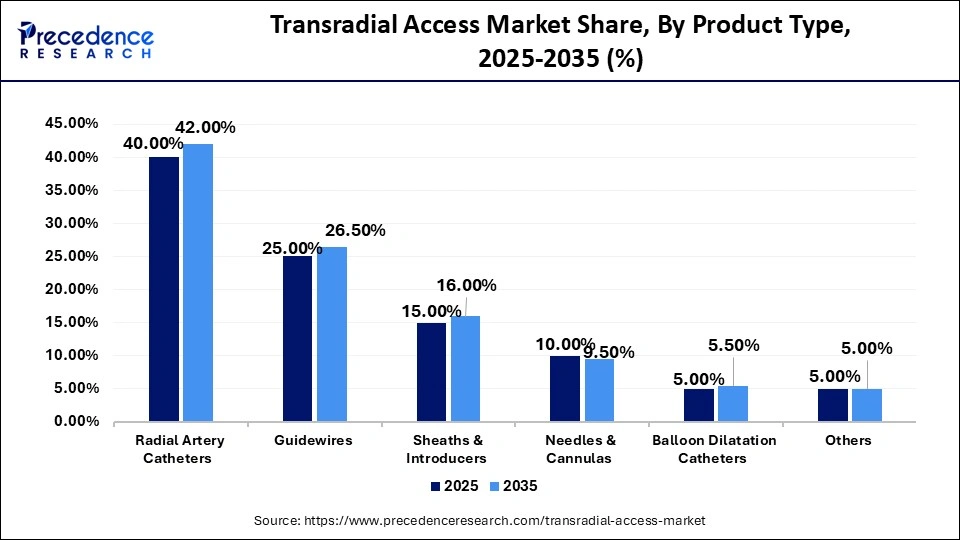
The guidewires segment held a 25% market share in 2025 and is expected to grow at a CAGR of approximately 8.5% in the coming years. This growth is attributed to the essential role of guidewires in transradial access procedures for directing catheters through arteries, alongside ongoing advancements in material technology that enhance their performance. Guidewires are available in a range of shapes, lengths, diameters, stiffness levels, and degrees of hydrophilicity. They are typically categorized by primary use into access wires, manoeuvre wires, and rail wires. This wide variety of specialized options promotes broader adoption of guidewires in the market.
The sheaths & introducers segment held a 15% share of the transradial access market in 2025 and is expected to grow at a CAGR of 8% between 2026 and 2035, driven by the necessity of these products for maintaining access to the radial artery. Innovations in sheaths and introducers enhance patient comfort and procedural efficiency, as they are designed for percutaneous insertion into blood vessels, providing stable vascular access during interventional procedures and supporting market growth.
The needles and cannulas segment held a 10% market share in 2025 and is projected to grow at a CAGR of 7.5% during the forecast period, driven by the essential role of needles and cannulas in transradial access procedures, as well as ongoing advancements aimed at enhancing precision and reducing complications. Needles are designed for high precision in fluid delivery, which is crucial for applications requiring accurate control. In contrast, cannulas are longer and more flexible, allowing for broader coverage from a single insertion point. They can also be integrated with other medical devices, such as tubing and syringes, which further support their adoption and contribute to market growth.
Procedure Insights
Transradial Access Market Share, By Procedure Type, 2025-2035 (%)
| Procedure Type | 2025 | 2035 | CAGR (%) |
| Coronary Angiography | 45.00% | 43.00% | 7.5% |
| Percutaneous Coronary Intervention (PCI) | 35.00% | 38.00% | 8.0% |
| Angioplasty | 10.00% | 9.50% | 6.5% |
| Endovenous Laser Therapy (EVLT) | 5.00% | 5.50% | 7.0% |
| Others | 5.00% | 4.00% | 5.0% |
The Coronary Angiography Segment Held a 45% Share of the Market in 2025
The coronary angiography segment led the transradial access market by holding a 45% share of the market in 2025. This is mainly because it is the most performed procedure using transradial access. The adoption of this procedure is driven by the rising rates of cardiovascular diseases and a growing preference for using the radial artery, which is safer and more comfortable for patients. Coronary angiography is essential for diagnosing and managing coronary artery disease, as it shows where arteries are narrowed or blocked and assesses the severity of these issues. While it offers limited information on blood flow dynamics, further procedures are usually needed to get detailed measurements of cardiac output and pressures inside the heart.
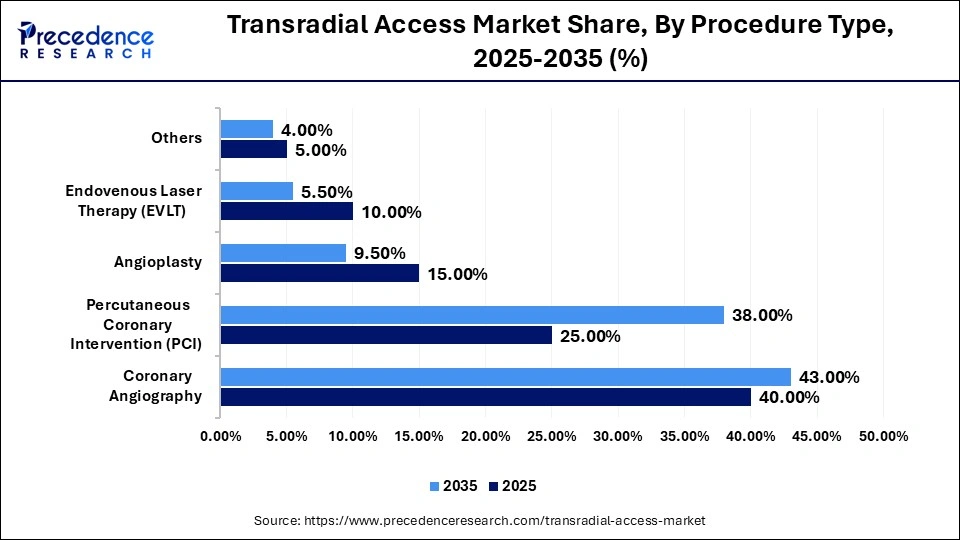
The percutaneous coronary intervention (PCI) segment accounted for 35% share of the market in 2025 and is expected to grow at the fastest CAGR of 8% during the projection period. This growth is driven by the increasing popularity of PCI performed via radial access, which offers faster recovery times and fewer complications compared to femoral access. PCI is a minimally invasive procedure used to treat narrowed or blocked coronary arteries that supply blood to the heart muscle. Its primary goal is to restore adequate blood flow to the heart, thereby relieving symptoms and reducing the risk of serious heart-related complications, which supports its growing adoption.
The angioplasty segment accounted for 10% share of the market in 2025 and is expected to grow at a CAGR of 6.5% throughout the forecast period, as procedures utilizing transradial access for angioplasty are increasingly popular due to their provision of a safer and less invasive method for addressing arterial blockages. This technique facilitates the restoration of healthy blood flow to the heart muscle that is deprived of oxygen, all without the necessity of opening the chest, splitting the breastbone, or halting the heart, which in turn enhances patient comfort and shortens recovery time.
End-Use Insights
Hospitals Led the Market With a 55% Share in 2025
The hospitals segment led the transradial access market with a 55% share in 2025 due to their central role in managing complex coronary and vascular procedures. They are equipped with advanced technology for accurate diagnosis and minimally invasive interventions and staffed by expert cardiologists and surgeons trained to handle complex and emergency cases. In addition, hospitals offer comprehensive care across the continuum, from preventive cardiology to post-surgery rehabilitation. These capabilities give hospitals a strong competitive advantage in the market and support their continued dominance in the transradial access segment.
Transradial Access Market Share, By End-Use, 2025-2035 (%)
| End-Use | 2025 | 2035 | CAGR (%) |
| Hospitals | 55.00% | 53.00% | 7.0% |
| Ambulatory Surgical Centers (ASCs) | 25.00% | 27.00% | 8.0% |
| Specialized Cardiac Centers | 10.00% | 9.00% | 6.5% |
| Others | 10.00% | 11.00% | 7.5% |
The ambulatory surgical centers (ASCs) segment held nearly 25% market share in 2025 and is expected to expand at the fastest CAGR of about 8% over the forecast period. ASCs are rapidly adopting transradial access for outpatient procedures, supported by the growing trend toward less invasive surgeries and faster recovery times. They provide same-day surgical and procedural care, typically for low-risk patients, which enhances convenience and efficiency. The shift toward ASCs is primarily driven by the potential for cost savings, ongoing innovation in clinical diagnostics, and the expanding aging population requiring cardiovascular care, all of which support the segment's robust growth.
The specialized cardiac centers segment accounted for 10% share of the market in 2025 and is projected to grow at a CAGR of 6.5% over the projection period. These centers focus exclusively on cardiovascular procedures, are key market players, and are increasingly adopting transradial access due to its ability to reduce complications and improve recovery times. They are equipped with functional, well‑resourced cardiac operating theatres and cardiac labs, and offer personalized care for cardiac patients. These capabilities support wider adoption of transradial access and reinforce the segment's role in the market.
Regional Insights
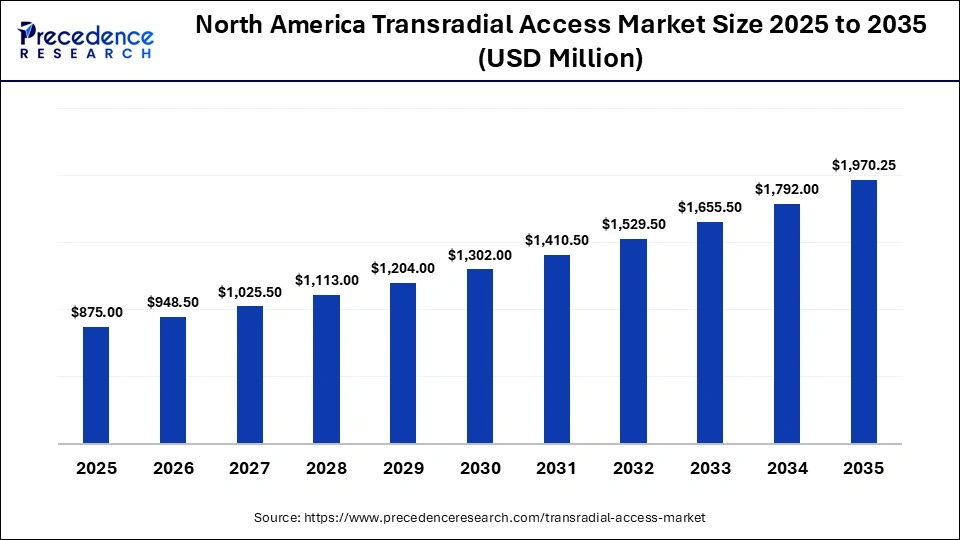
North America Transradial Access Market Size and Growth 2026 to 2035
The North America transradial access market size is estimated at USD 875.00 million in 2025 and is projected to reach approximately USD 1,970.25 million by 2035, with a 8.46% CAGR from 2026 to 2035.
North America Dominated the Market With a 35% Share in 2025
North America dominated the transradial access market by capturing about 35% share in 2025. This leadership is mainly fueled by the significant uptake of transradial access within healthcare systems, especially in the U.S., where there is a robust and increasing inclination toward radial artery procedures. The growing incidence of cardiovascular diseases, ongoing improvements in healthcare facilities, and a greater tendency toward minimally invasive treatments further strengthen the region's market leadership.
U.S. Transradial Access Market Size and Growth 2026 to 2035
The U.S. transradial access market size is calculated at USD 656.25 million in 2025 and is expected to reach nearly USD 1,487.54 million in 2035, accelerating at a strong CAGR of 8.53% between 2026 and 2035.
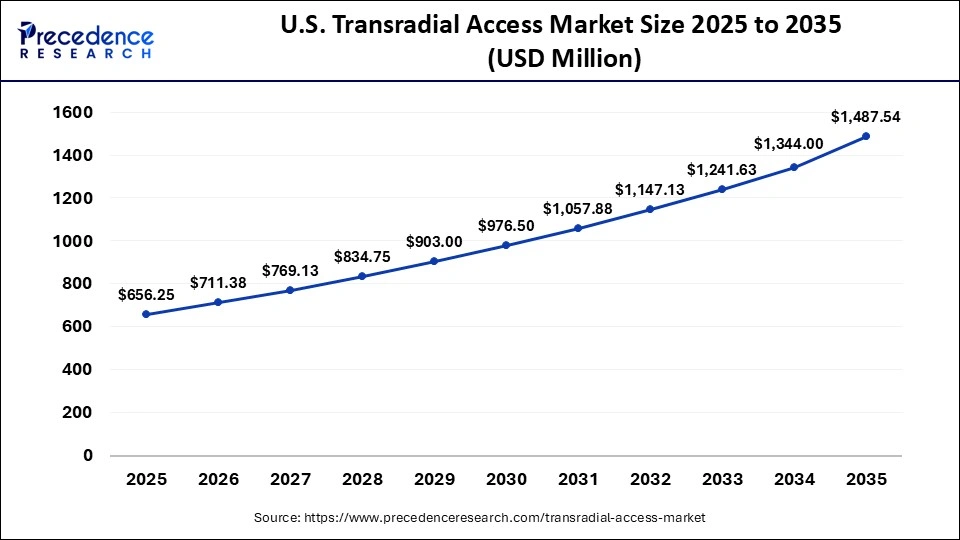
U.S. Transradial Access Market Analysis
The U.S. leads the North American market, supported by robust healthcare infrastructure, rapid technological adoption, and the growing use of minimally invasive procedures in ambulatory surgery settings. A strong shift toward outpatient care, favorable reimbursement policies, and the presence of key industry players such as Terumo Corporation and Medtronic plc further contribute to market growth.
What Makes Asia Pacific the Fastest-Growing Region in the Market?
Asia Pacific accounted for 30% share of the market in 2025 and is expected to grow at the fastest CAGR of nearly 9% over the forecast period, driven by expanding healthcare access and a rising number of cardiovascular procedures performed. Increasing technological advancement, greater awareness of cardiovascular health, a growing prevalence of heart disease, and substantial investments in medical infrastructure further support market expansion. In addition, rising manufacturing activity and rapid digital transformation across the region are enhancing the availability and adoption of transradial access technologies.
China Transradial Access Market Analysis
China is a major contributor to the Asia Pacific market, driven by a technologically advanced, health-aware population, a growing elderly demographic, and improving healthcare infrastructure. In addition, collaborations between medical device manufacturers and local healthcare providers are enhancing product accessibility and affordability, further accelerating market growth in the country.
How is the Opportunistic Rise of Europe in the Market?
Europe held about 25% share of the transradial access market in 2025 and is expected to grow at a significant CAGR of 6.8% over the forecast period. This growth is driven by advances in healthcare technologies, improved healthcare policies, and a strong shift toward less invasive procedures. The increasing adoption of minimally invasive interventions, ongoing advancements in interventional cardiology techniques, and a growing emphasis on patient safety and comfort are further accelerating market expansion. Moreover, stringent regulatory guidelines ensure high-quality procedures and devices, which enhance clinical outcomes and support sustained market growth in the region.
Germany Transradial Access Market Analysis
Germany leads the European transradial access market, driven by advancements in interventional cardiology techniques and a growing emphasis on patient safety and comfort. In addition, national and regional initiatives promoting early diagnosis and timely treatment of cardiovascular conditions further support market growth in the country.
Transradial Access Market Companies
- Terumo Corporation
- Abbott Laboratories
- Boston Scientific Corporation
- Medtronic PLC
- Cordis Corporation
- Teleflex Incorporated
- Johnson & Johnson (Ethicon)
- Asahi Intecc Co., Ltd.
- C.R. Bard, Inc. (now part of BD)
- AngioDynamics, Inc
- Stryker Corporation
- Biotronik SE & Co. KG
- Neovasc Inc.
- Cook Medical
- Merit Medical Systems, Inc.
Recent Developments
- In November 2025, Medtronic officially named its next-generation renal denervation (RDN) catheter as part of its efforts to expand the RDN field. The new iteration of its minimally invasive Symplicity Spyral catheter will be marketed as Symplicity Spyral+, according to Medtronic RDN General Manager Jason Fontana in an interview with Medical Design & Outsourcing.(Source: https://www.medicaldesignandoutsourcing.com)
- In October 2025, Crossroads Neurovascular announced successful early clinical use of its FDA-cleared Path balloon guide catheter during the limited market release phase, with 40 procedures performed across four hospitals by eight operators, highlighting its versatility in complex neurovascular interventions.(Source: https://neuronewsinternational.com)
Segments Covered in the Report
By Product Type
- Radial Artery Catheters
- Guidewires
- Sheaths & Introducers
- Needles & Cannulas
- Balloon Dilatation Catheters
- Others
By Procedure Type
- Coronary Angiography
- Percutaneous Coronary Intervention (PCI)
- Angioplasty
- Endovenous Laser Therapy (EVLT)
- Others
By End-Use
- Hospitals
- Ambulatory Surgical Centers (ASCs)
- Specialized Cardiac Centers
- Others
By Region
- North America
- Latin America
- Europe
- Asia-pacific
- Middle and East Africa
For inquiries regarding discounts, bulk purchases, or customization requests, please contact us at sales@precedenceresearch.com
Frequently Asked Questions
Tags





Ask For Sample
No cookie-cutter, only authentic analysis – take the 1st step to become a Precedence Research client
 Get a Sample




 sales@precedenceresearch.com
 Schedule a Meeting
