



Ultrasound Transducer Market Driving Growth with AI Integration and Expanding Healthcare Applications
The ultrasound transducer market is witnessing steady growth, fueled by rising demand in diagnostics, maternal healthcare, and minimally invasive procedures. With AI enhancing imaging precision and healthcare infrastructure expanding across emerging regions, the market is projected to grow from USD 3.92 billion in 2025 to USD 5.23 billion by 2034 at a CAGR of 3.25%.
Source: https://www.precedenceresearch.com/ultrasound-transducer-market
 Get a Sample
 Table Of Content


Ultrasound Transducer Market Size and Forecast 2026 to 2035
The global ultrasound transducer market size was calculated at USD 3.92 billion in 2025, and is projected to hit around USD 4.05 billion by 2026, and is anticipated to reach around USD 5.39 billion by 2035, growing at a CAGR of 3.24% from 2026 to 2035. The demand for the ultrasound transducer market is growing due to their rising use in medical fields like diagnostics and surgeries. The increasing prevalence of medical conditions also contributes to market growth.
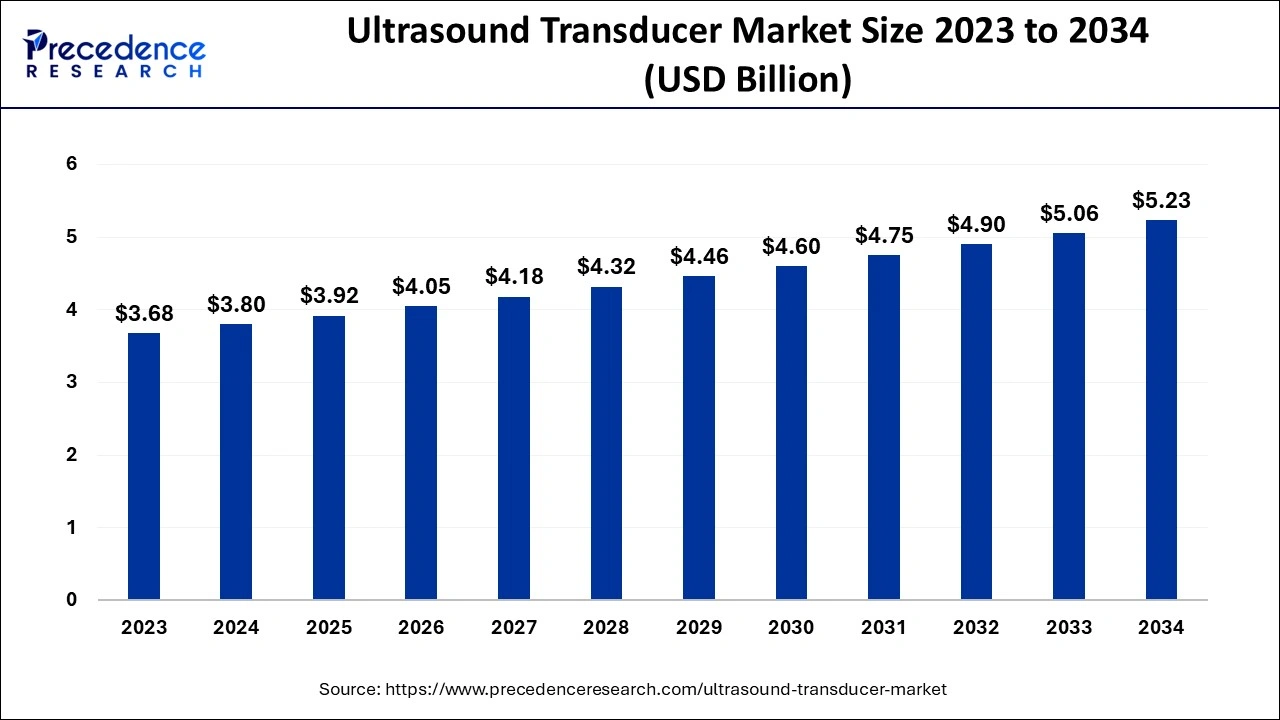
Ultrasound Transducer Market Key Takeaways
- In terms of revenue, the market is valued at $3.92 billion in 2025.
- It is projected to reach $5.23 billion by 2035.
- The market is expected to grow at a CAGR of 3.25% from 2026 to 2035.
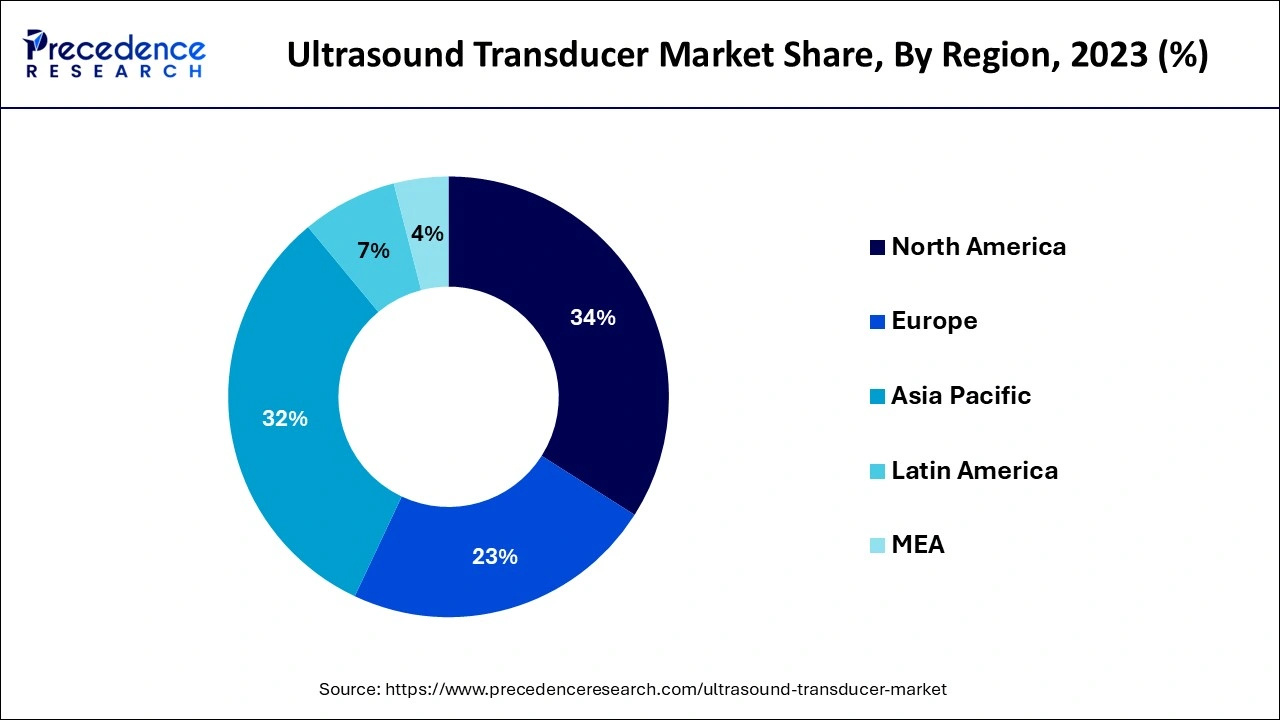
- North America dominated the global market with the largest market share of 34% in 2025.
- Asia Pacific is anticipated to grow at a significant CAGR in the market during the forecast period of 2026 to 2035.
- By product type, the convex segment contributed the highest market share of 34% in 2025.
- By application, the general imaging segment captured the biggest market share of 34% in 2025.
- By application, the OB/GYN segment is expected to grow at a solid CAGR of 4.2% during the forecast period.
- By end-user, the hospitals segment generated the major market share of 45% in 2025.
- By end-user, the ambulatory surgery centers segment expected significant growth during the predicted period.
Market Overview
The ultrasound transducer market is experiencing a significant rise in the industry due to early detection of all chronic diseases, providing instant solutions to humans. The industry is constantly unveiling its potential for generative AI by continually improving its technology for better use in surgical procedures. The ultrasound is broadly used in radiology, cardiology, obstetrics, and gynecology for musculoskeletal imaging and point-of-care diagnostics driven by real-time and cost-effective tomographic calibration. The continued rise in investments in healthcare, the expansion of diagnostic services, and the growing use of portable ultrasound systems drive the market.
How is AI Helping the Growth of the Ultrasound Transducer Market?
The market is poised for AI-driven advancements, such as increased image resolution, automated measurement systems, and more accurate diagnoses. AI-enhanced ultrasound machine supports real-time image acquisition, anatomical recognition, and abnormality detection, decreasing operator dependence and examination time. Machine learning algorithms can also enhance the performance of the transducers by reducing image noise and thereby improving tissue visualization. Additionally, AI can facilitate predictive maintenance, workflow automation, and cloud-based image analysis, aiding quicker decision-making.
What are the Major Trends in the Market?
- Handheld Portable Ultrasonic Devices: The widespread use of portable handheld ultrasonic devices by physicians is due to their convenience and ability to provide instant diagnostics anywhere in the world. Whether you are at home or traveling, these devices are commonly seen in use. Their use is helping to increase access to ultrasound in hospitals and remote health care environments.
- Growth of Point of Care Ultrasound (POCUS): As ultrasound is being adopted more frequently in the emergency room, intensive care unit (ICU), and outpatient clinics, the demand for specialised, highly efficient, and advanced ultrasound transducers that provide rapid bedside imaging is increasing.
- Advancements in Ultrasound Transducer Technology and Image Quality: Manufacturers are focusing on developing advanced transducers with improved resolution, sensitivity, and signal processing capabilities.
Ultrasound Transducer Market Growth Factors
- The expansion of ultrasound transducers into veterinary applications is playing a crucial role as it is creating more opportunities in the ultrasound transducer market.
- The rising preferences towards maternal health are leading towards the adoption of specialized transducers which contributes towards the market growth.
- The rising need for instant imaging is leading to many technological advancements like POCUS, which provides effective solutions in case of any medical emergency.
- The rising use of transducers in drug delivery and tumor ablation is creating multiple business opportunities that play a major role in market growth.
Market Scope
| Report Coverage | Details |
| Market Size in 2025 | USD 3.92 Billion |
| Market Size in 2026 | USD 4.05 Billion |
| Market Size by 2035 | USD 5.39 Billion |
| Market Growth Rate from 2026 to 2035 | CAGR of 3.24% |
| Largest Market | North America |
| Base Year | 2025 |
| Forecast Period | 2026 to 2035 |
| Segments Covered | Product Type, Application, End-user, and Regions |
| Regions Covered | North America, Europe, Asia-Pacific, Latin America and Middle East, and Africa |
Market Dynamics
Drivers
Rising prevalence of chronic diseases
The rising prevalence of chronic diseases like cardiovascular diseases, cancer, diabetes, etc, plays a critical role in market growth. The ultrasound transducer market is growing efficiently due to the rising need for early diagnosis of these diseases. The healthcare sector is also driven by the rising prevalence of chronic joint and tissue disorders, which increases the demand for these devices that help in medical settings.
- According to the report by NIH, around 41.73% of adults in India suffer from at least one disease.
Rising pregnancy rates
The rising pregnancy rate is playing a crucial role in increasing the demand for ultrasound transducers as these devices help in detecting complications related to pregnancy. As a result, the ultrasound transducer market is gaining significant demand, and the healthcare sector is increasing these technologies, which can help provide effective diagnoses to women.
Restraint
Limited availability in underdeveloped countries
Ultrasound systems usually contain advanced technologies, which makes them expensive. The ultrasound transducer market has marked significant dominance in the developed regions due to their well-established infrastructure, but there are still some factors, like higher costs, which could potentially affect the market growth. The rising prevalence of diseases and the rising pregnancy rate in these countries raise the demand for ultrasound devices in the region. However, the limited availability of funds for the healthcare sector is anticipated to restrict the market growth.
Opportunities
Adoption of therapeutic applications
The expansion of ultrasound has gained significant popularity in various therapeutics like pain management therapies, such as high-intensity focused ultrasound (HIFU). The ultrasound transducer market is grabbing attention due to its rising adoption, which is also creating multiple business opportunities for the market companies. Many healthcare organizations are also heavily investing in innovating new technologies that can fulfill the requirements needed in these applications.
Rising preferences toward minimally invasive procedures
The rising adoption of ultrasound in needle biopsies is playing a crucial role as it boosts the recovery process. These devices are significantly helping as they reduce complications and enhance accuracy. The ultrasound transducer market is growing due to its rising use in cardiac procedures which helps in improving real-time procedures.
Rising geriatric population
The increasing geriatric population is one of the major factors that is anticipated to boost market growth at an exponential rate. The ultrasound transducer market is anticipated to grow because these populations are more prone to diseases, which leads to the need for ultrasound devices. The population mostly prefers easy diagnosis, which leads to the innovation of tools that can be used for their treatment. Additionally, there is increasing health awareness among these populations.
- According to the United Nations, the number of people aged 65 and older is expected to more than double from 761 million in 2021 to 1.6 billion in 2050.
Segments Insight
Product Type Insights
Why Did the Convex Segment Dominate the Market in 2025?
The convex segment dominated the ultrasound transducer market with the largest share in 2025. This is mainly due to its crucial role in abdominal imaging, obstetrics, and gynecology. It offers excellent capabilities such as deep tissue penetration, wide fields of view, and high-frequency capabilities for routine diagnostics. Its versatility and growing demand for abdominal screening and comprehensive fetal monitoring also fuel the growth of the segment. Growing adoption in bedside diagnostics and rural healthcare also propels the growth of the segment.
The phased array segment is expected to grow at the fastest rate in the foreseeable period. The segment's growth is mainly propelled by growing demand for cardiac imaging, small-footprint probes for specialized applications, and advanced non-destructive testing. Phased arrays are also beneficial for the industrial sectors through Phased Array Ultrasonic Testing (PAUT). The segment is also observed to grow as phased array transducers have a major ability to focus and steer beams electronically without moving any parts.
Application Insights
The General Imaging Segment Held a Major Market Share in 2025
The general imaging segment dominated the ultrasound transducer market in 2025 by holding a major share. The segment's dominance is mainly driven by higher demand for diagnostic imaging in hospitals and clinics, along with the major reliance on convex and linear transducers for abdominal, soft-tissue, and cardiac imaging. Higher usage of AI-assisted ultrasound tools and high-resolution 3D/4D matrix-array probes for better diagnostic accuracy is also one of the major drivers. The segment's growth is also majorly propelled by factors such as extreme versatility, clinical utility, and cost-effectiveness of general-purpose probes across multiple medical specialties.
The OB/GYN segment is expected to grow at the fastest CAGR in the market during the forecast period, driven by the increasing adoption of ultrasound technologies in obstetrics and gynecology applications. These transducers are specifically designed to support fetal monitoring, pregnancy assessments, and various gynecological diagnostic procedures. The growth of the segment is also supported by rising birth rates, particularly in developing regions, along with increasing demand for advanced maternal healthcare solutions. Furthermore, government initiatives aimed at improving maternal health awareness, prenatal care, and access to diagnostic technologies are expected to further accelerate the adoption of ultrasound transducers in OB/GYN applications.
End-user Insights
What Made Hospitals the Leading Segment in the Market?
The hospitals segment led the ultrasound transducer market in 2025, supported by the high volume of diagnostic imaging procedures and the increasing adoption of advanced, integrated, and portable ultrasound systems. The rising prevalence of chronic diseases and the growing aging population are increasing the demand for rapid and accurate imaging services, contributing to segment growth.
Hospitals are also investing in advanced healthcare infrastructure, including emergency departments, intensive care units (ICUs), and handheld wireless ultrasound probes for quick bedside diagnostics. These technologies enable faster clinical decision-making and improve patient care efficiency, further strengthening the adoption of ultrasound transducers in hospital settings.
The ambulatory surgical centers (ASC) segment is projected to grow at the highest CAGR during the forecast period, driven by the growing shift from traditional hospital-based procedures toward outpatient surgical and diagnostic facilities. ASCs are increasingly adopting advanced, portable, and specialized ultrasound transducers to enhance diagnostic efficiency, improve workflow, and support faster patient recovery.
The increasing use of compact and mobile ultrasound systems in ASCs is improving flexibility and accessibility for healthcare providers. The demand for efficient, cost-effective, and minimally invasive diagnostic solutions is expected to further accelerate the adoption of ultrasound transducer technologies in ambulatory care settings.
Regional Insights
U.S. Ultrasound Transducer Market Size and Growth 2026 to 2035
The U.S. ultrasound transducer market size was exhibited at USD 1.07 billion in 2025 and is projected to be worth around USD 1.51 billion by 2035, growing at a CAGR of 3.5% from 2026 to 2035.
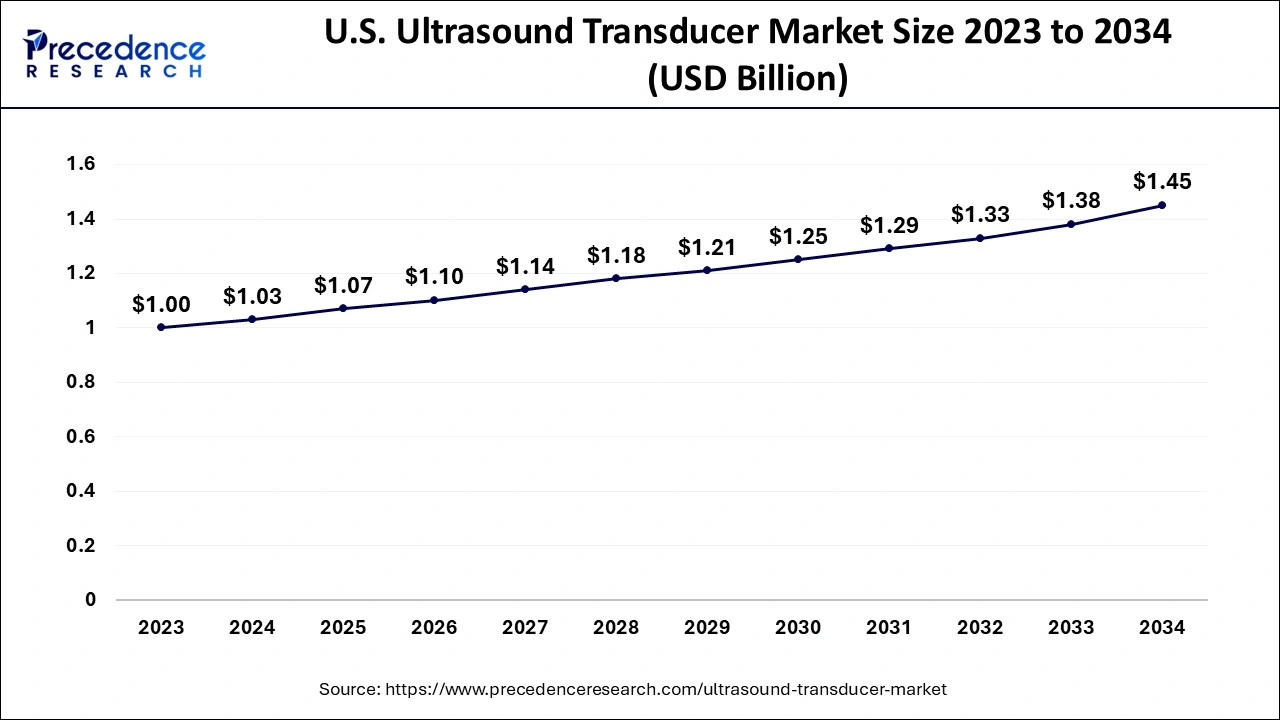
North America: The Dominant Region
North America dominated the global ultrasound transducer market with the largest share in 2025. The dominance of the region is attributed to the well-established healthcare infrastructure in countries like the U.S. and Canada, which drives the adoption of advanced technologies. Governments are also contributing heavily to the adoption of medical technologies. Additionally, the rising prevalence of chronic diseases is leading to the need for advanced technologies, including ultrasound transducers. The rising influence of social media is also increasing health awareness among the population, which is boosting the need for early diagnosis.
U.S. Market Trends
The U.S. is a major contributor to the growth of the market in North America due to the growing demand for non-invasive diagnostics in cardiology, obstetrics, and point-of-care applications. Growing healthcare spending in the country and early adoption of advanced imaging technology also help to fuel the growth of the market in the region.
What Makes Asia Pacific the Fastest-Growing Region in the Market?
Asia Pacific is expected to grow at the fastest CAGR during the forecast period, driven by the rapid expansion of healthcare infrastructure, increasing adoption of advanced medical technologies, and rising demand for diagnostic imaging services across countries such as China, India, and Japan. The presence of some of the world's largest populations, coupled with increasing demand for maternal healthcare and prenatal diagnostic services, is supporting market expansion. Additionally, the growing prevalence of chronic diseases and increasing healthcare investments are accelerating the adoption of advanced ultrasound transducer technologies throughout the region.
China Market Trends
China is a key contributor to the Asia Pacific ultrasound transducer market, supported by rising healthcare expenditure, ongoing healthcare infrastructure development, a rapidly aging population, and an increasing burden of chronic diseases. Growing demand for portable, high-performance, and AI-enabled ultrasound transducers is further driving market growth, as healthcare providers seek more efficient and accessible diagnostic solutions.
How is the Opportunistic Rise of Europe in the Market?
Europe is expected to grow at a significant rate in the ultrasound transducer market, driven by an aging population, increasing demand for routine diagnostic imaging, and the growing adoption of portable and wireless ultrasound systems. The integration of artificial intelligence into imaging workflows is also enhancing diagnostic accuracy and operational efficiency across healthcare facilities. Technological innovations such as 3D/4D imaging, advanced Doppler ultrasound, and miniaturized wireless probes are contributing to market development. These advancements are enabling more precise diagnostics and expanding the range of clinical applications for ultrasound systems.
Germany Market Trends
Germany plays a significant role in the European ultrasound transducer market due to its well-established healthcare infrastructure and strong demand for advanced diagnostic technologies. The market is benefiting from increasing adoption of point-of-care ultrasound (POCUS) systems, continuous transducer replacement and servicing activities, and ongoing innovation in high-frequency and specialized probe technologies.
What Drives the Market within the Middle East & Africa?
The ultrasound transducer market in the Middle East & Africa is growing at a notable rate due to expanding healthcare infrastructure, increasing demand for early disease diagnosis, and rising adoption of portable and cost-effective imaging solutions. Healthcare providers are increasingly utilizing compact ultrasound systems in emergency and critical care settings to improve diagnostic accessibility and patient outcomes.
Saudi Arabia Market Trends
Saudi Arabia is a major contributor to regional market growth, supported by substantial investments in healthcare modernization and advanced medical technologies. Government initiatives such as Saudi Arabia's Vision 2030 are encouraging the adoption of innovative healthcare solutions, including AI-enabled imaging systems and advanced diagnostic equipment.
What Influences the Market in Latin America?
The ultrasound transducer market in Latin America is influenced by the ongoing expansion of healthcare infrastructure, increasing healthcare expenditure, and growing demand for diagnostic imaging services. Rising prevalence of chronic diseases, including cardiovascular disorders, cancer, and diabetes, is driving the need for early diagnosis and routine imaging procedures across the region. The market is also benefiting from greater adoption of portable and point-of-care ultrasound (POCUS) systems, particularly in underserved and remote areas where access to advanced healthcare facilities is limited.
Brazil Market Trends
Brazil leads the Latin American ultrasound transducer market due to its large healthcare sector, growing healthcare expenditure, and increasing demand for diagnostic imaging services. The country's expanding healthcare infrastructure, rising prevalence of chronic diseases, and large patient population are driving the adoption of advanced ultrasound technologies across hospitals, diagnostic centers, and outpatient facilities.
Ultrasound Transducer Market Companies
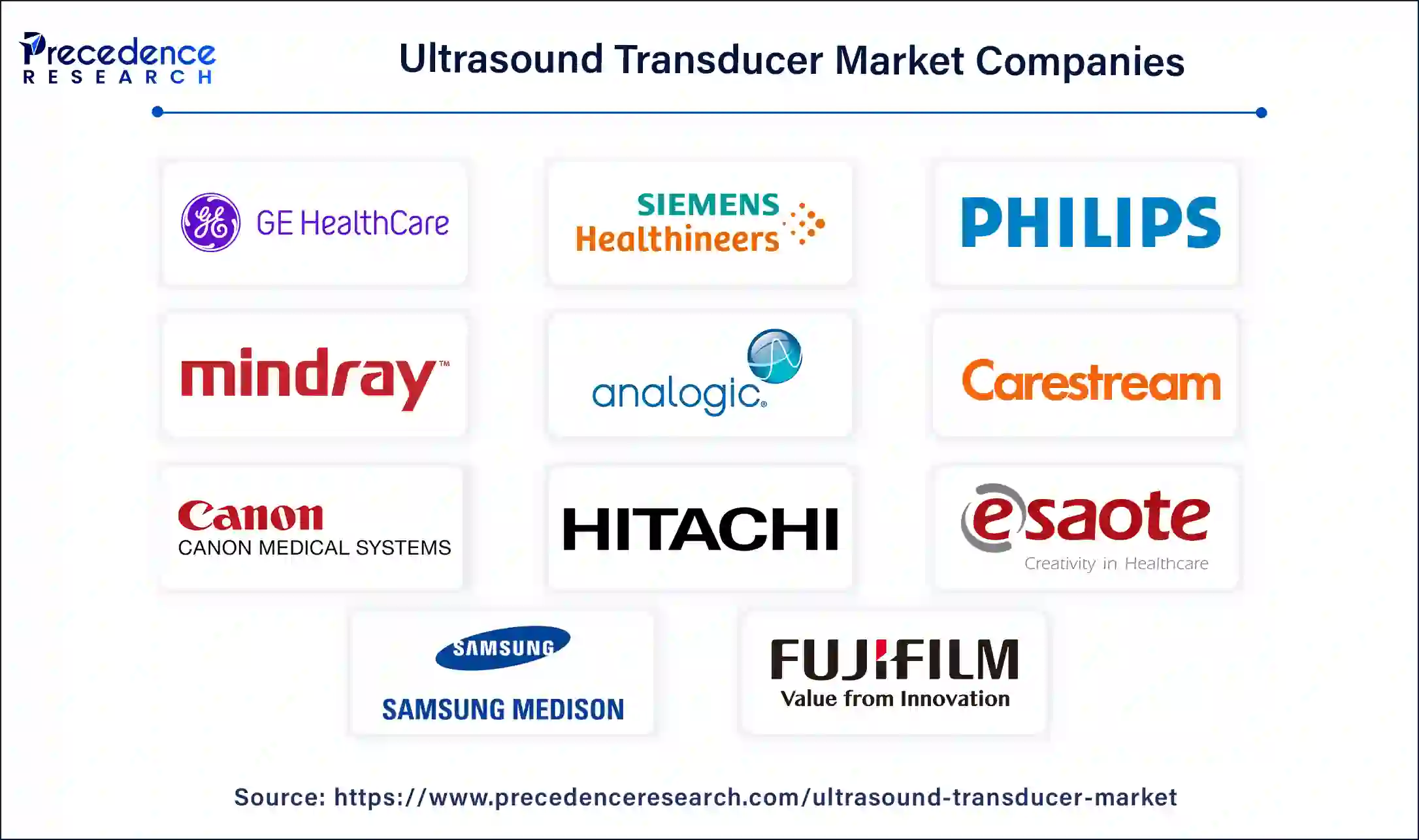
- GE HealthCare
- Siemens Healthineers AG
- Koninklijke Philips N.V.
- Shenzhen Mindray Bio-Medical Electronics Co., Ltd.
- Analogic Corporation
- Carestream Health
- ALPINION MEDICAL SYSTEMS Co., Ltd.
- CANON MEDICAL SYSTEMS CORPORATION
- Hitachi, Ltd.
- Samsung Medison Co., Ltd.
- FUJIFILM Holdings Corporation
- Esaote SPA
Recent updates on ultrasound transducer
Technological Advancements Propel Diagnostic Precision and Portability
- On 18 March 2025, Technology in the ultrasound transducer market advanced significantly especially in terms of imaging accuracy and miniaturization. Improvements in 3D/4D transducer technology and piezoelectric material science are improving real-time imaging particular
Rising Demand from Cardiology, Oncology, and Women's Health
- In April 2025, Increasing maternal health awareness early cancer detection initiatives and the prevalence of chronic diseases have all contributed to the global uptake of sophisticated ultrasound systems. High-frequency linear and convex transducers are in greater demand as a result of this surge. Furthermore, transducers driven by AI are being developed to help with workflow automation and image interpretation enhancing diagnostic results and lowering operator dependency.
Latest Announcement by Industry Leader
- In November 2024, Novosound, a Scottish sensor technology startup, announced their patent for a wearable, WiFi-enabled ultrasound system, the Slanj digital platform, designed for the medical and wearable device market.
Recent Developments
- In December 2025, FUJIFILM Healthcare Europe announced the European launch of the Advanced Laparoscopic Linear Transducer (L43LAP). The transducer presents an opportunity for minimally invasive surgery in a range of surgical areas such as hepatobiliary (HBP), urological, gynaecological, or general surgery. (Source: https://www.fujifilm.com)
- In November 2025, a KAIST team of researchers developed a flexible ultrasound sensor with statistically adjustable curvature for high-resolution imaging or therapeutic applications. The sensor is a "flex-to-rigid (FTR)" capacitive micromachined ultrasonic transducer (CMUT) capable of transitioning freely between flexibility and rigidity using a semiconductor wafer process (MEMS). (Source: https://medicalxpress.com)
- On 20th February 2025, GE HealthCare introduced a new line of high-frequency linear array transducers optimized for musculoskeletal and vascular imaging. The product features enhanced Doppler sensitivity and thermal efficiency for longer, safer diagnostic sessions.
- In March 2025, Philips launched its next-generation 3D transesophageal echocardiography (TEE) probe, designed for structural heart disease evaluation. The device combines 3D imaging with real-time navigation for interventional procedures, improving clinical confidence during cardiac repairs.
- In March 2025, Mindray expanded its handheld ultrasound portfolio with wireless transducers capable of cloud-based data sharing and AI-assisted measurements. These transducers target primary care clinics and ambulatory settings where affordability and speed are critical.
Segments Covered in the Report
By Product Type
- Linear
- Convex
- Phased Array
- Endocavitary
- CW Doppler
- Others
By Application
- Cardiovascular
- General Imaging
- Musculoskeletal
- OB/GYN
- Vascular
- Others
By End-user
- Hospital
- Clinics
- Diagnostic Center
- Ambulatory Surgery Centers (Ascs)
By Region
- North America
- Asia Pacific
- Europe
- Latin America
- Middle East and Africa
For inquiries regarding discounts, bulk purchases, or customization requests, please contact us at sales@precedenceresearch.com
Frequently Asked Questions





Ask For Sample
No cookie-cutter, only authentic analysis – take the 1st step to become a Precedence Research client
 Get a Sample
.webp)



 sales@precedenceresearch.com
 Schedule a Meeting
