



Unified Communications as a Service in Healthcare Market Size, Key Companies, Company Product Portfolio, Hospital Procurement Trends, Manufacturing Capacity, Sales Performance, Regulatory Approvals, Company Market Share, and Forecast
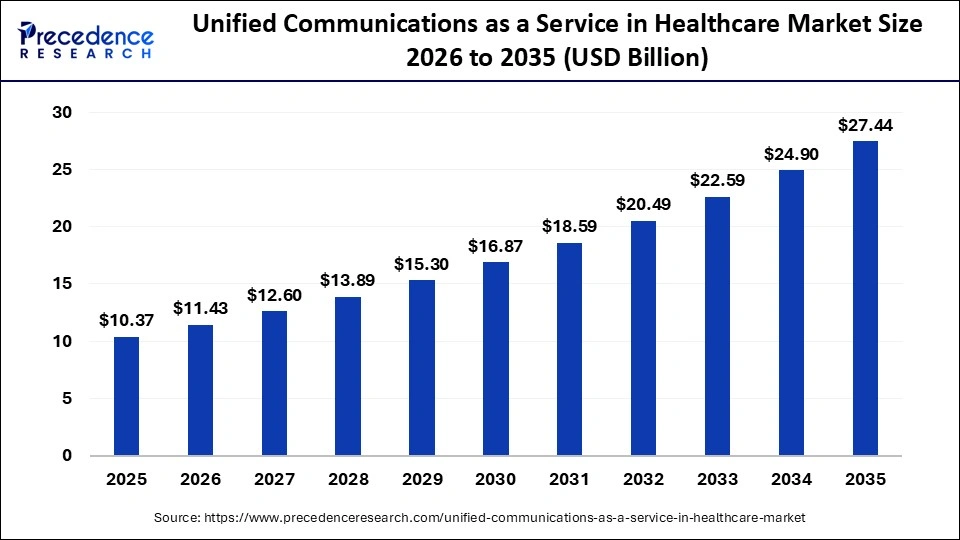
Deepa Pandey, a Healthcare Industry Expert, highlights that the unified communications as a service in healthcare market has reached USD 11.43 billion in 2026 and is on track to reach USD 27.44 billion by 2035, advancing at a CAGR of 10.22%. Key unified communications as a service in healthcare market companies shaping the market include Cisco Systems, Inc., Microsoft Corporation while major growth segments span product type, deployment type, application, distribution channel, region.
Source: https://www.precedenceresearch.com/unified-communications-as-a-service-in-healthcare-market
 Get a Sample
 Table Of Content


What is the Unified Communications as a Service in Healthcare Market Size?
The global unified communications as a service in healthcare market size is calculated at USD 10.37 billion in 2025 and is predicted to increase from USD 11.43 billion in 2026 to approximately USD 27.44 billion by 2035, expanding at a CAGR of 10.22% from 2026 to 2035. The market is driven by rising demand for secure, real-time communication and enhanced telehealth efficiency in healthcare.
Market Highlights
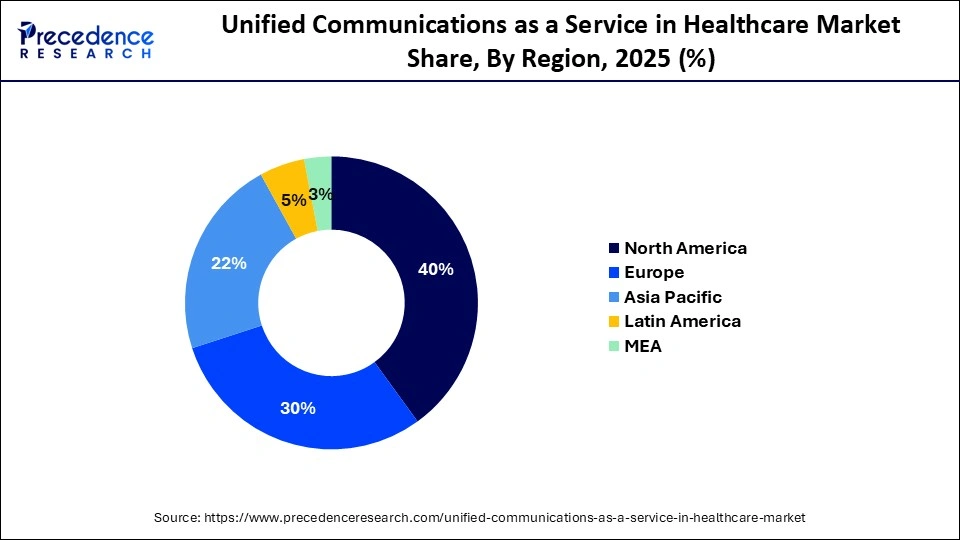
- North America dominated the market, holding the largest market share of 40% in 2025.
- The Asia Pacific is expected to expand at the fastest CAGR between 2026 and 2035.
- By product type, the voice communication solutions segment held the major market share of 35% in 2024.
- By product type, the video conferencing and collaboration platforms segment is growing at the fastest CAGR from 2026 to 2035.
- By deployment type, the cloud-based segment contributed the highest market share of 50% in 2025.
- By deployment type, the hybrid segment is growing at the highest CAGR between 2026 and 2035.
- By application, the telehealth and remote patient consultation segment captured the biggest market share of 40% in 2025.
- By application, the clinical workflow management segment is expanding at the fastest CAGR between 2026 and 2035.
- By distribution channel, the direct vendor sales segment generated the highest market share of 50% in 2025.
- By distribution channel, the cloud service providers / online platforms segment is growing at a strong CAGR between 2026 and 2035.
Revolutionizing Healthcare: UCaaS Adoption Trends and Market Forecast
Unified communications as a service (UCaaS) in healthcare refers to cloud-based communication solutions that integrate voice, video, messaging, and collaboration tools into a secure ecosystem. UCaaS simplifies clinical workflows, facilitates real-time information exchange, and ensures compliant communication across hospitals, clinics, and home-based care settings. It enables teleconsultations, patient interactions, and seamless coordination of medical personnel, especially in emergency situations.
The rapid adoption of telemedicine, ongoing digital transformation efforts, and the growing demand for patient-centered communication are driving market expansion. As healthcare moves toward hybrid care models that combine virtual and in-person services, flexible, cloud-native communication systems are essential. Secure, scalable, and cost-effective platforms that support remote rounds, multidisciplinary collaboration, and integration with electronic health records (EHRs) are becoming top priorities for healthcare organizations, while the need for reduced administrative burdens, operational efficiency, and regulatory compliance further accelerates UCaaS adoption.
AI Integration in the Unified Communications as a Service in Healthcare Market
AI is significantly enhancing UCaaS in healthcare by automating patient interactions and administrative tasks, such as scheduling and follow-ups, through chatbots and virtual assistants, thereby reducing staff workload. Advanced technologies such as Natural Language Processing (NLP), voice recognition, and machine learning optimize communication, improve transcription accuracy, and enable seamless teleconsultations, while AI-driven analytics provide predictive insights to enable proactive care. Additionally, AI integration with Electronic Health Records (EHRs) and telehealth systems creates a cohesive, intelligent environment that fosters improved patient care and operational efficiency.
Unified Communications as a Service in Healthcare Market Outlook
- Industry Growth Overview: The unified communications as a service in healthcare market is rapidly growing, driven by the increasing demand for seamless, cloud-based communication tools to support telemedicine, patient engagement, and real-time collaboration across healthcare settings. UCaaS solutions enable healthcare providers to enhance operational efficiency, improve patient care, and ensure compliance with regulatory standards, while also facilitating flexible, hybrid care models. Healthcare facilities are also investing in a secure, integrated communication system to increase efficiency and patient care, supporting market growth.
- Global Expansion: The market is expanding globally, driven by the rapid adoption of telemedicine, digital transformation, and the need for secure, scalable communication systems across healthcare settings. Emerging regions, particularly in Asia-Pacific and Latin America, present significant opportunities as healthcare systems modernize, telemedicine adoption rises, and the demand for cost-effective, flexible communication platforms to support hybrid care models increases.
- Major Investors: Major investors in the market include venture capital firms, private equity investors, and technology giants like Cisco, Microsoft, and Zoom Video Communications. These investors contribute by funding innovative UCaaS platforms, integrating advanced communication tools into healthcare systems, and driving advancements in telemedicine, remote patient care, and healthcare collaboration, all of which improve operational efficiency and patient outcomes.
Market Scope
| Report Coverage | Details |
| Market Size in 2025 | USD 10.37 Billion |
| Market Size in 2026 | USD 11.43 Billion |
| Market Size by 2035 | USD 27.44 Billion |
| Market Growth Rate from 2026 to 2035 | CAGR of 10.22% |
| Dominating Region | North America |
| Fastest Growing Region | Asia Pacific |
| Base Year | 2025 |
| Forecast Period | 2026 to 2035 |
| Segments Covered | Product Type, Deployment Type, Application, Distribution Channel, and Region |
| Regions Covered | North America, Europe, Asia-Pacific, Latin America, and Middle East & Africa |
Segment Insights
Product Type Insights
The voice communication solutions segment led the unified communications as a service market, holding a 35% share in 2025, driven by heightened adoption of VoIP telephony and SIP trunking. These solutions enable real-time voice communication for instant consultations, emergency coordination, and administrative communication across healthcare settings, offering low latency, easy integration with EHR systems, and HIPAA compliance to protect sensitive patient data. While the adoption of video conferencing and collaboration tools is growing, voice communication solutions are essential for critical decision-making, immediate care responses, and optimizing internal workflows.
The video conferencing & collaboration platforms segment is expected to grow at the fastest rate during the projection period, driven by the rising adoption of telehealth models and remote care. These solutions enable physicians, patients, and administrators to interact and organize effectively across different locations. The addition of electronic health records, artificial intelligence-based analytics, and secure messaging also increases operational efficiency, patient interactions, and clinical judgment. The shift to hybrid care models, distance learning, and remote patient monitoring has increased the need for robust video and collaboration tools. Cloud-based collaboration platforms are becoming more popular as healthcare organizations adopt digital transformation to complement traditional voice-based communication methods.
Deployment Type Insights
The cloud-based segment dominated the unified communications as a service in healthcare market, accounting for a 50% share in 2025. This is due to its scalability, cost-effectiveness, and ease of deployment. UCaaS SaaS is a cloud-based solution that enables healthcare organizations to deploy secure and HIPAA-compliant voice, video, messaging, and collaboration tools in various facilities and remotely without significant infrastructure investments. Cloud deployment is ideal in current healthcare environments because it offers hospitals and clinics seamless updates, access on multiple devices, and disaster recovery options. The rising focus on digital transformation, hybrid care models, and patient-centric communication continues to drive adoption.
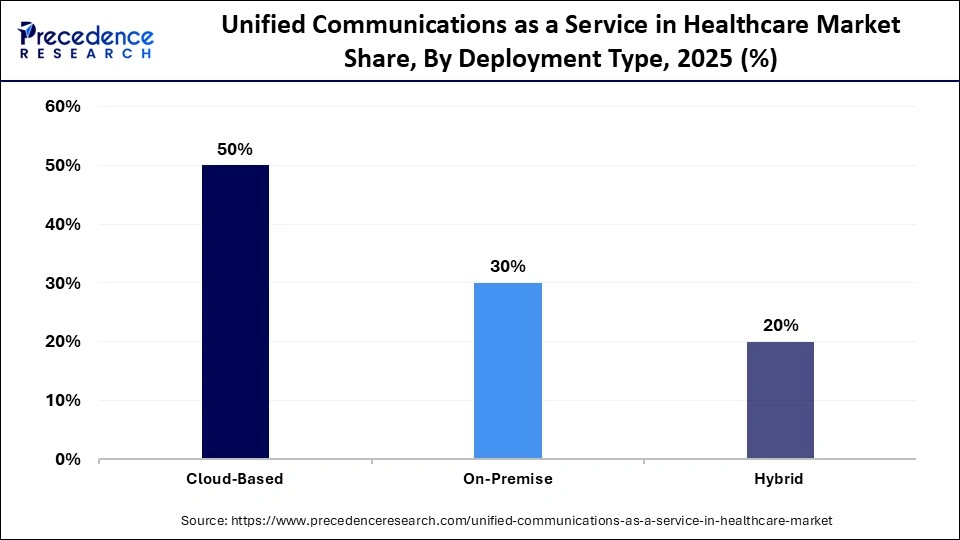
The hybrid segment is expected to grow at the fastest CAGR during the forecast period, owing to its flexibility, security, and control. Hybrid deployment is a mix of on-premises and cloud systems, where on-premises provides data control and customization at the expense of scalability and low maintenance. This deployment is increasingly preferred by healthcare organizations to handle sensitive patient information or meet stringent regulatory standards, highlighting the benefits of cloud-enabled collaboration, telehealth, and remote monitoring. Hybrid UCaaS enables integration with existing IT infrastructure and electronic health records, ensuring continuous operation and enhancing workflow efficiency.
Application Insights
The telehealth & remote patient consultation segment led the market, holding a 40% share in 2025, driven by the increasing need for remote healthcare delivery solutions, as it is more likely to be sought in areas with fewer in-person medical services. Medical professionals are adopting new, advanced telehealth solutions that provide secure video calls, mobile health apps, and real-time patient monitoring to enhance care quality and efficiency. Additionally, supportive government policies, reimbursement programs, and investments in healthcare IT infrastructure have boosted telehealth adoption. The rising prevalence of chronic diseases, aging populations, and the ongoing need to engage patients continue to drive the dominance of this segment.
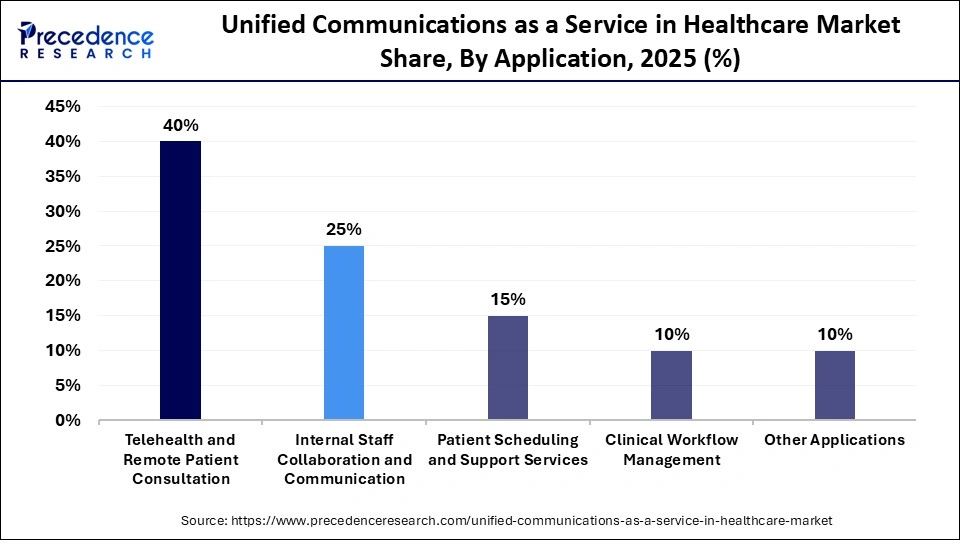
The clinical workflow management segment is expected to register the highest CAGR over the forecast period. The demand to maximize efficiency and simplify the administrative procedures of healthcare organizations drives this growth. Clinical workflow management solutions also assist with scheduling, task coordination, patient record keeping, and communication among multidisciplinary teams, reducing wasted time and improving productivity. Additionally, the increasing complexity of healthcare processes and the growing patient volume have increased the pressure to automate workflows. Providers of telemedicine, hospitals, and clinics are investing in these solutions to boost staff efficiency, reduce administrative burdens, and deliver high-quality patient care.
Distribution Channel Insights
The direct vendor sales segment dominated the unified communications as a service in healthcare market by capturing a 50% share in 2025. Healthcare organizations prefer to deal directly with solution providers to ensure bespoke services, focused attention, and easy integration with existing IT systems. Direct vendor relationships enable hospitals and clinics to negotiate personalized contracts, on-site training, and timely maintenance services, thereby improving the efficiency and reliability of their operations. Numerous organizations emphasize practical assistance and personal responsibility and accountability, particularly in mission-critical healthcare communications.
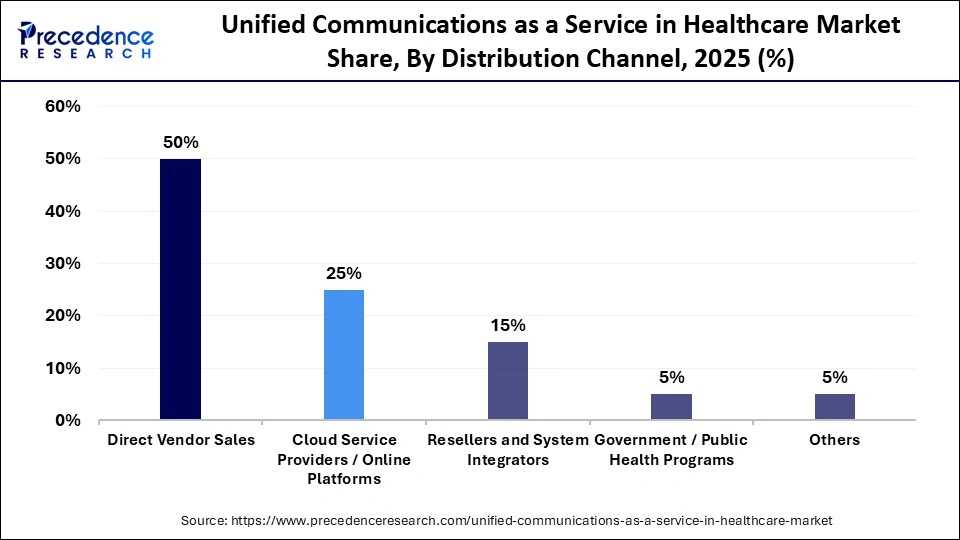
The cloud service providers/online platforms segment is expected to grow at the highest CAGR in the upcoming period. Cloud services provide access via the Internet, centralized controls, and the ability to integrate with electronic health records, promoting real-time collaboration among medical professionals. The adoption of cloud technology is still growing, driven by efforts toward digital transformation in hospitals, clinics, and telehealth providers. Cloud service providers also present an alternative to traditional direct sales channels because of their flexibility and quick implementation. As healthcare providers focus more on efficiency, interoperability, and remote communication, the cloud segment is expected to experience strong and sustained growth in the coming years.
Regional Insights
North America Unified Communications as a Service in Healthcare Market Size and Growth 2026 to 2035
The North America unified communications as a service in healthcare market size is estimated at USD 4.15 billion in 2025 and is projected to reach approximately USD 11.11 billion by 2035, with a 10.35% CAGR from 2026 to 2035.
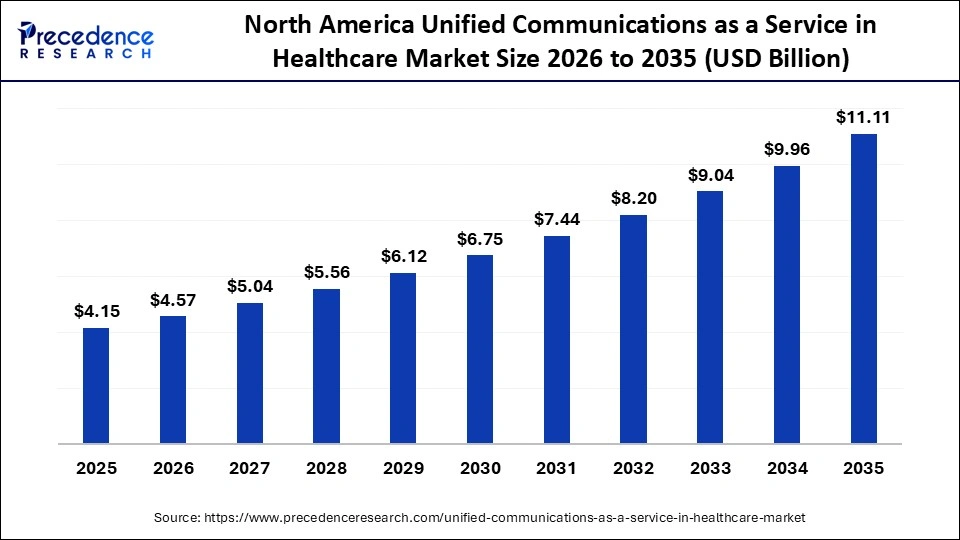
How Does North America Lead the Global Unified Communications as a Service in Healthcare Market in 2025?
North America led the global unified communications as a service in healthcare market, capturing a 40% share in 2025. This is mainly due to its advanced healthcare infrastructure, widespread adoption of telemedicine, and significant investments in digital transformation. The dominance of North America in the market is also driven by advanced healthcare facilities, widespread adoption of digital healthcare technologies, and supportive regulatory environments. In the U.S., the rapid growth of telehealth, remote consultations, and clinical workflow management solutions has been fueled by significant investments in IT infrastructure, cloud computing, and cybersecurity. Additionally, the growing demand for convenient healthcare, along with rising chronic disease rates and an aging population, has further accelerated the need for UCaaS solutions in healthcare.
U.S. Unified Communications as a Service in Healthcare Market Size and Growth 2026 to 2035
The U.S. unified communications as a service in healthcare market size is calculated at USD 3.03 billion in 2025 and is expected to reach nearly USD 8.17 billion in 2035, accelerating at a strong CAGR of 10.43% between 2026 and 2035.
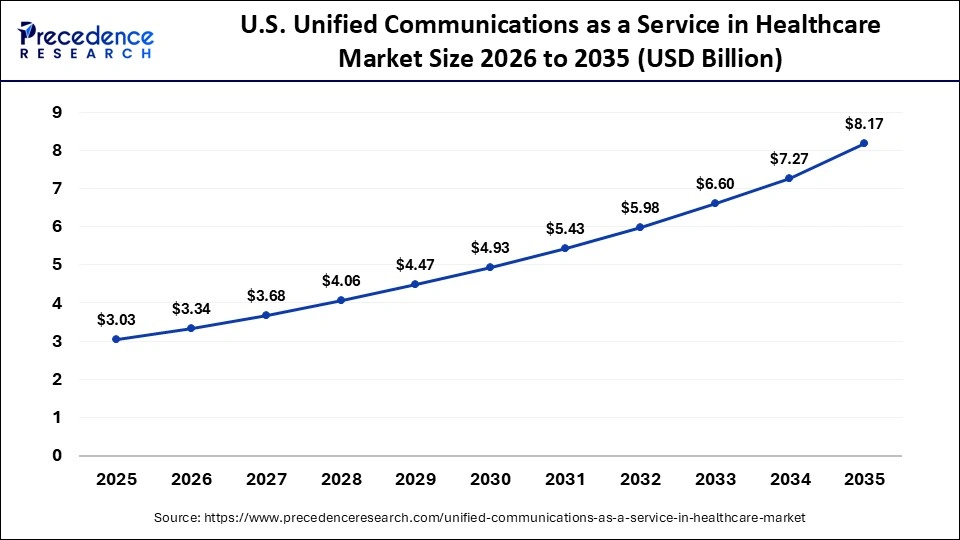
U.S Unified Communications as a Service in Healthcare Market Analysis
The U.S. leads the market in North America because it has a highly developed healthcare infrastructure and has already adopted digital technologies. Outpatient facilities and hospitals are shifting toward telehealth, remote patient consultations, and clinical workflow management solutions to improve operational efficiency, patient engagement, and care delivery. Virtual consultations, real-time communication, and secure data exchange are easily enabled by high-speed internet, robust cloud services, and a large number of smartphones. Government programs, telemedicine reimbursement policies, and regulatory systems, including HIPAA compliance, have also contributed to increased adoption.
Asia Pacific Unified Communications as a Service in Healthcare Market Size and Growth 2026 to 2035
The Asia Pacific unified communications as a service in healthcare market size is expected to be worth USD 6.17 billion by 2035, increasing from USD 2.28 billion by 2025, growing at a CAGR of 10.47% from 2026 to 2035.
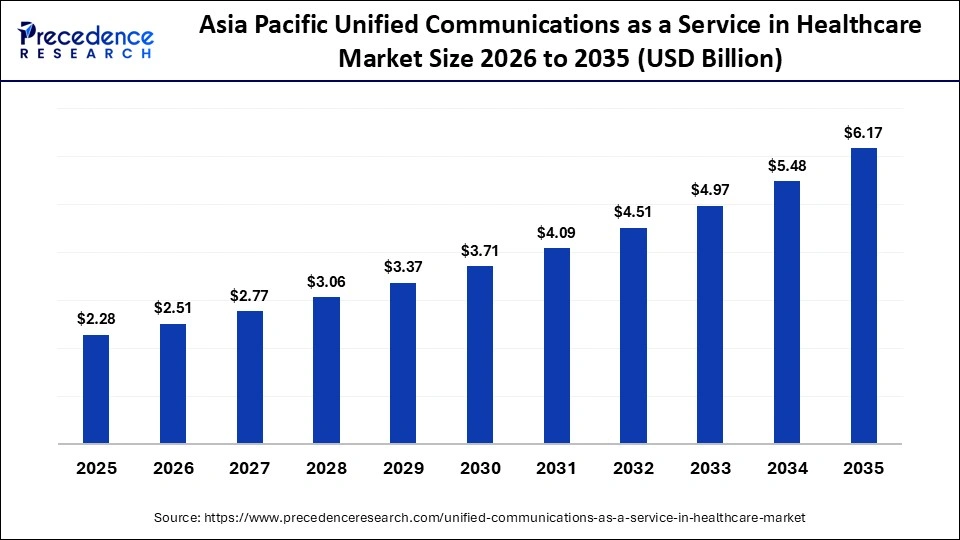
Why is Asia Pacific Considered the Fastest-Growing Area in the Unified Communications as a Service in Healthcare Market?
Asia Pacific is expected to grow at the fastest rate in the market during the forecast period. Major drivers of growth include rapid urbanization, expansion of healthcare infrastructure, and increased smartphone and internet penetration. Significant investments in digital healthcare, telemedicine, and remote patient monitoring solutions are observed in countries like China and India to serve large populations and underserved areas. Government initiatives and supportive policies that promote digital health transformation further boost growth. Additionally, the development of the local healthcare sector and increased collaboration with providers of globally recognized technologies facilitate the rapid adoption of highly advanced UCaaS solutions.
In June 2023, RingCentral introduced a cloud telephone service in India to allow multinational companies to organize contact with their customers and employees in an optimal way. The service streamlines the deployment of cloud-based telephony to conduct business worldwide.
China Unified Communications as a Service in Healthcare Market Trends
China is a major player in the market in Asia Pacific. The market in China is driven by expanding healthcare infrastructure, digital transformation efforts, and a large population in need of accessible healthcare. The increasing use of remote consultations, telehealth, and clinical workflow management systems is helping meet the healthcare needs of both urban and rural populations. Rising internet penetration, smartphone usage, and investments in cloud infrastructure enable the scalable, secure, and efficient deployment of UCaaS platforms. Government support for digital care, the growth of telemedicine, and partnerships between local healthcare services and international tech companies are further fueling the market's expansion.
Europe Unified Communications as a Service in Healthcare Market Size and Growth 2026 to 2035
The Europe unified communications as a service in healthcare market size has grown strongly in recent years. It will grow from USD 3.11 billion in 2025 to USD 8.37 billion in 2035, expanding at a compound annual growth rate (CAGR) of 10.41% between 2026 and 2035.
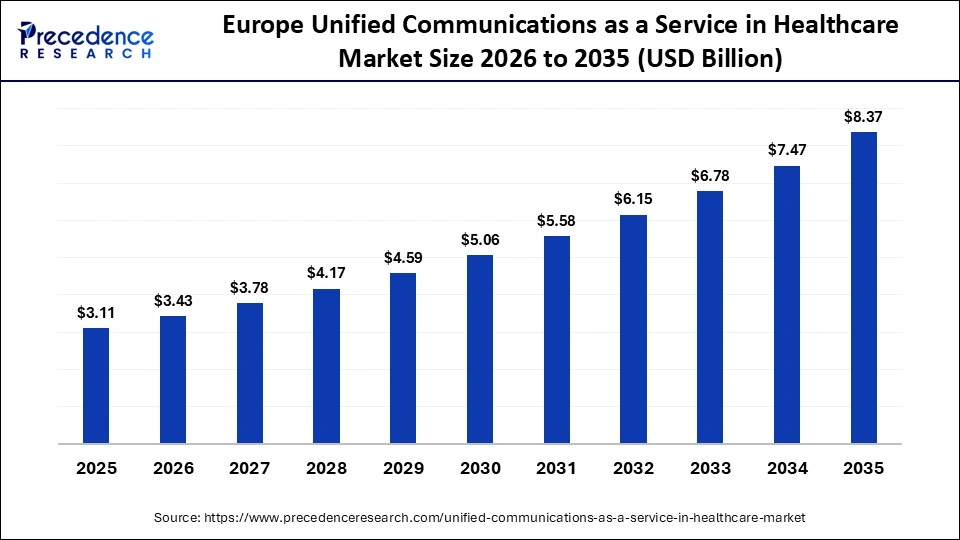
Why Is Europe Experiencing Significant Growth in the Unified Communications as a Service in Healthcare Market?
Europe is experiencing a notable growth in the market, driven by the increasing adoption of telehealth services, electronic health records, and unified communication systems to enhance patient care efficiency. Countries such as the UK, Germany, and France are at the forefront, using UCaaS to streamline clinical operations and enable remote consultations. Additionally, the adoption of cloud-based applications by European healthcare professionals is improving operational effectiveness and interoperability across hospitals and clinics, further driving market expansion.
UK Unified Communications as a Service in Healthcare Market Trends
The market in the UK is expanding due to NHS initiatives and the adoption of digital healthcare, along with the increasing need to deliver patient care efficiently. High-speed telehealth, teleconsultations, and integrated clinical workflow management systems are becoming widely used in hospitals, clinics, and remote care settings. The UCaaS platforms provide secure, real-time communication and ensure compliance with data protection laws, including GDPR. Growing focus on interoperability and digital transformation in healthcare is driving the adoption of cloud-based and on-premises UCaaS to improve healthcare system efficiency and enhance communication among healthcare professionals.
The market in the Middle East & Africa (MEA) is expanding due to the progress of more healthcare modernization initiatives, increasing adoption of telemedicine, and government spending on digital health. Advanced communication solutions are being actively implemented in countries such as the UAE, Saudi Arabia, and South Africa, aiming to improve clinical processes and enable remote patient consultations. The rising interest in the benefits of digital healthcare and partnerships with international technology providers are boosting the adoption of UCaaS platforms.
What Opportunities Exist in South America for the Unified Communications as a Service in Healthcare Market?
South America offers significant opportunities for the market, driven by the increasing use of telehealth, digital communication platforms, and remote patient monitoring solutions in hospitals and clinics. Brazil and Mexico are experiencing growing investments in healthcare IT infrastructure and government initiatives to improve healthcare access and efficiency. Rising demand for virtual consultations and streamlined clinical workflows is encouraging providers to adopt UCaaS solutions. Additionally, strategic collaborations between domestic healthcare organizations and international technology providers are speeding up the adoption of cloud-based and integrated communication solutions.
Top Companies in the Unified Communications as a Service in Healthcare Market & Their Offerings
- Cisco Systems, Inc.
- Microsoft Corporation
- Zoom Video Communications, Inc.
- RingCentral, Inc.
- Avaya Holdings Corp.
- Mitel Networks Corporation
- 8x8, Inc.
- Verizon Communications Inc.
- AT&T Inc.
- Vonage Holdings Corp.
- Intermedia, Inc.
- LogMeIn, Inc. (GoTo platform)
- Alcatel-Lucent Enterprise
- NEC Corporation
- Fuze, Inc.
- ShoreTel (acquired by Mitel)
- Sangoma Technologies Corporation
- Enghouse Systems Limited
- Dialpad, Inc.
- BT Group plc
Recent Developments
- In July 2024, Vodafone Business collaborated with RingCentral to provide cloud-based UCaaS platforms in 20 countries, which comprised voice, video, and messaging capabilities. By early 2025, the company intends to go global into more than 30 countries and is integrating RingCX, a Contact Center as a Service (CCaaS) solution, to provide better customer experiences.(Source: https://ir.ringcentral.com)
- In June 2024, NICE released its UCaaS platform, 1CX, which costs USD 5 per user/month, to be affordable and quickly deployed. It is a solution that is aimed at providing a smooth global communication experience with rapid deployment and early payback for businesses.(Source: https://www.nice.com)
- In July 2023, Tata Tele Business Services launched Smartflo UCaaS, a voice service on the Microsoft Teams platform, based on the cloud. The service is meant to offer Businesses with effective and unified means of communication.(Source: https://www.cnbctv18.com)
Segments Covered in the Report
By Product Type
- Voice Communication Solutions
- VoIP Telephony
- SIP Trunking
- Video Conferencing & Collaboration Platforms
- Telehealth/Remote Consultation
- Team Collaboration Tools
- Messaging & Chat Platforms
- Secure Messaging
- Instant Chat & Alerts
- Contact Center Solutions
- Patient Support & Scheduling
- Call Routing & Management
- Integration & Analytics Tools
- Unified Dashboard
- Reporting & Performance Analytics
By Deployment Type
- Cloud-Based
- On-Premise
- Hybrid (Cloud + On-Premise)
By Application
- Telehealth & Remote Patient Consultation
- Internal Staff Collaboration & Communication
- Patient Scheduling & Support Services
- Clinical Workflow Management
- Other Applications
By Distribution Channel
- Direct Vendor Sales
- Cloud Service Providers/Online Platforms
- Resellers & System Integrators
- Government/Public Health Programs
- Others
By Region
- North America
- Europe
- Asia-Pacific
- Latin America
- Middle East & Africa
For inquiries regarding discounts, bulk purchases, or customization requests, please contact us at sales@precedenceresearch.com
Frequently Asked Questions





Ask For Sample
No cookie-cutter, only authentic analysis – take the 1st step to become a Precedence Research client
 Get a Sample
.webp)



 sales@precedenceresearch.com
 Schedule a Meeting
