



Healthcare Software As A Service Market Size, Key Companies, Company Market Share, Patient Volume, Treatment Adoption Rates, Pricing Analysis, Regulatory Landscape, Competitive Positioning, and Demand Forecast
Healthcare Software As A Service Market (By Product: Ententerprise Content Management, Business Intelligence, Customer Relationship Management (CRM), Revenue Cycle Management (RCM); By Delivery Mode: Cloud- based, On-Premise; By Applications: Healthcare Providers, Healthcare Players, Telemedicine, Medical Billing, Patient Portal, Mobile communication, e Prescribing, EHR Systems, ERP & HR portal, Others; By Deployment: Public, Hybrid, Private; By End User: Provider, Payer) - Global Industry Analysis, Size, Trends, Leading Companies, Regional Outlook, and Forecast 2026 to 2035
Source: https://www.precedenceresearch.com/healthcare-software-as-a-service-market
 Get a Sample
 Table Of Content


Healthcare Software As A Service Market Size and Forecast 2026 to 2035
The global healthcare software as a service market size is valued at USD 38.50 billion in 2025 and is predicted to increase from USD 42.54 billion in 2026 to approximately USD 102.98 billion by 2035, expanding at a CAGR of 10.34% from 2026 to 2035.
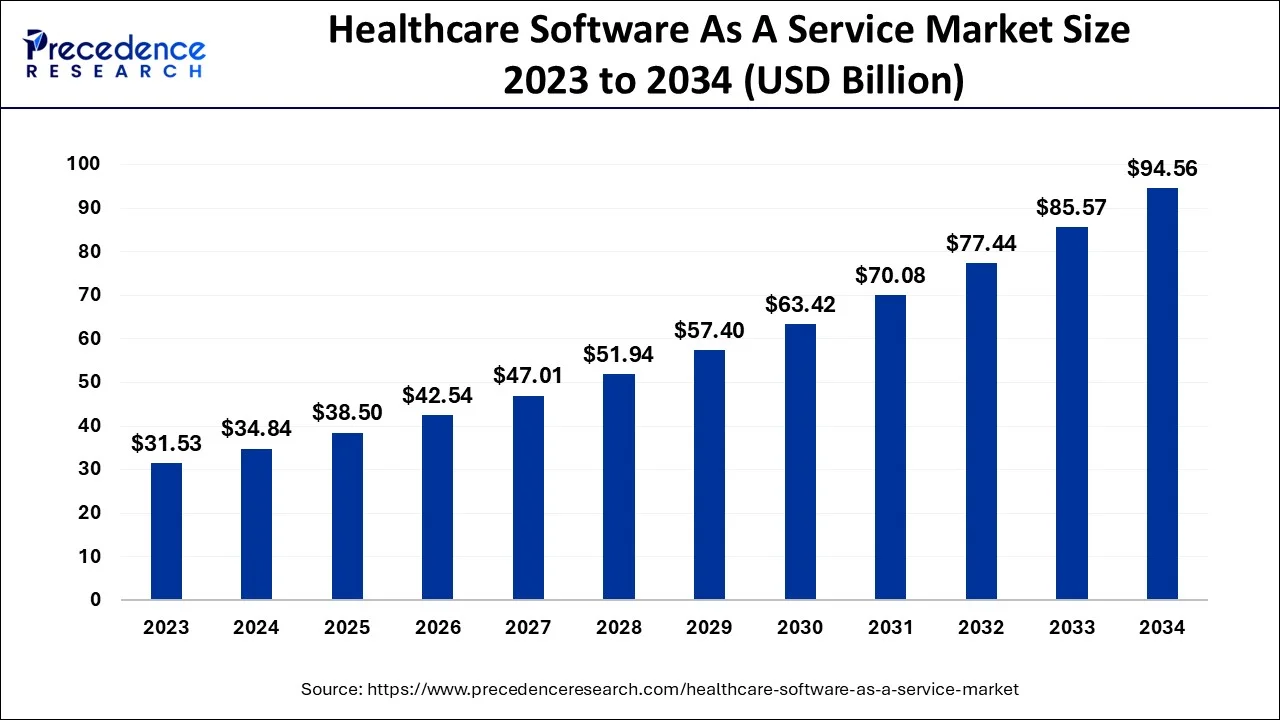
Healthcare Software As A Service Market Key Takeaways
- By application, the patient portal segment accounted for a 17.4% revenue share in 2025.
- By end user, the provider segment held 71% revenue share in 2025.
- By deployment model, the hybrid segment hit 50.5% revenue share in 2025.
- North America region has garnered a revenue share of around 48% in 2025.
- Asia Pacific is expected to grow at the highest CAGR over the forecast period.
Strategic Overview of the Global Healthcare Software As A Service Industry
Increased utilization of clouding and wireless technologies worldwide and increasing the growth of digitalization in health care center. Healthcare center plays a major role in driving the growth of the health care software and installing the software system in to the devices. Which helps to boost the healthcare software as a service (SaaS). According to investigation around 23% of organizations are deciding for installing the cloud process system in future. As per survey about 94% center are utilizing the healthcare software as a service.
Healthcare centers are in future planning to install the SaaS and many of the centers have already installed having the benefits of ease of workflow, management of the work, cost benefits, managing capabilities, increased administration, ease of integration, guarantee, disaster recovery, customized infrastructure, scalability, customer supports multiple applications of SaaS in database server, mobile services, website, email communications, customer relationship management, data analytics, documentation management, productivity apps, ERP.
Artificial Intelligence: The Next Growth Catalyst in Healthcare Software As A Service
AI is profoundly impacting the healthcare software as a service (Healthcare SaaS) market by transforming how data is processed, analyzed, and applied within clinical and administrative workflows. This integration allows SaaS platforms to evolve from simple data repositories into intelligent decision-support systems that enhance efficiency, improve diagnostic accuracy, and personalize patient care plans.
For instance, AI algorithms embedded within a SaaS platform can analyze vast datasets to flag potential risks, predict patient outcomes, or automate routine tasks like medical coding and documentation, thereby significantly reducing administrative burden and operating costs for healthcare providers. Furthermore, AI-driven Healthcare SaaS solutions facilitate predictive maintenance for medical equipment and optimize resource allocation within hospitals, leading to more efficient operations and better overall quality of care.
Healthcare Software As A Service Market Growth Factors
Increased developments and benefits from the SaaS and increased digitalization across the various regions in the health sector as increased the market of SaaS. Impact of Covid-19 on SaaS has enhanced the digitalization. Increased digitalization and managing health care center and other work flow through digitalized method due to shortage of multiple necessities in the healthcare center and manpower. Various tasks are performed through digitalized method utilizing cloud method during the pandemic situation. Furthermore, increased usage of SaaS in health care centers, improved data management, disparate systems and increasing further planning to install the SaaS and to update the software with advanced new features developed for easy work flow and to drive the healthcare SaaS market during the forecast period.
- Increased integration of wearable devices, telehealth, remote patient monitoring, surging patient, ERP, CRM, mobile applications support for the expansion of the SaaS to drive the market growth with increased demands from the healthcare centers having multiple benefits.
- The rapid acceptance and development of the clouding technologies and increased development of the software in the health care sectors and easy transmission of information from one machine to another uploading over a software using the clouding technology to increase the market growth.
- The market players involved in introducing new health care development software's managing the documentation with less paper work and easy access of the patient's health information.
- Health care software's utilized in acute care hospitals, critical access hospitals, rehabilitation centers, specialty physicians and many more.
Market Outlook
- Industry Growth Overview: The healthcare software as a service market is poised for significant growth between 2025 and 2034. This growth is driven by increasing healthcare digitization, rising demand for telehealth, and the need to reduce operational inefficiencies. Regulations supporting electronic health records and data transparency are accelerating cloud migration. The industry is moving toward integrated SaaS ecosystems that combine clinical, financial, and administrative workflows.
- Major Investors: Major investors in the market include venture capital firms such as Andreessen Horowitz, General Catalyst, Khosla Ventures, and OrbiMed Advisors, which provide growth capital and strategic support that help startups scale their products and expand into new healthcare segments. Strategic investors and tech giants like Microsoft, Google, and Salesforce also invest in or partner with SaaS healthcare providers, contributing by integrating advanced cloud, AI, and analytics technologies that enhance platform capabilities and drive wider adoption across healthcare systems.
- Global Expansion: The market is growing worldwide due to increasing demand for cost-effective, scalable digital health solutions that improve clinical efficiency, data management, and regulatory compliance. Emerging regions present strong opportunities as healthcare systems modernize, cloud adoption expands, and governments invest in digital health infrastructure to improve access and care quality.
Market Scope
| Report Coverage | Details |
| Market Size in 2026 | USD 42.54 Billion |
| Market Size by 2035 | USD 102.98 Billion |
| Growth Rate from 2026 to 2035 | CAGR of 10.34% |
| Base Year | 2025 |
| Forecast Period | 2026 to 2035 |
| Segments Covered | Product, Delivery Mode, Applications, Deployment, End User and Geography |
Market Dynamics
Market Drivers
Software systems developed with new innovations and technologies as per the requirements from the healthcare institutes for managing the patients' health information, documentation, telemedicine and many more. Utilized in acute care hospitals, critical access hospitals, multi special physicians, rehabilitation centers, psychiatric hospitals and many more. Majorly use of software in managing hospital system, hospital information system and hospital resource planning drives the market of Healthcare SaaS during the forecast period.
Increased needs of the software services in health care centers integration new software's and increased completion have increased market growth across the world. Rising growth and integration of the software's in the health care centers. Market players focused on developing the newly developed software's with new features and reduced costing of the software, increased research and development process, inpatient security drives the market to grow during the forecast period.
Healthcare SaaS to hold the top position in the market, revenue cycle management during the forecast period. Expansion of the financial data management to increase the business by developing system software's with higher efficacy and good productivity, increased remote patient monitoring, home health care devices with increasing geriatric and pediatric populations led to increase the market of health care software as a service.
Market Challenges
- Increased Healthcare SaaS with newly developed technologies and new features have increase the market rate. Developed software systems led to rising cost of the software is a challenging task for increasing the market growth of SaaS during the forecast period.
- Rising competition of the system software developers with new innovative features developed by the different companies may restraint the market growth.
- Software system with wireless connections through clouding and other networking systems, decrease in the network connectivity may led to stop the work flow management and data security also challenges for the market to growth during the forecast period.
Market Opportunities
- Increasing software as a service in the health care centers, clinics and many more across the various regions and rising needs and requirements from the health care center for installing the software's to access easy work flow management, increased revenue cycle management, managing the hospital information, managing the health records of the patient, telemedicine, store and forward telemedicine, prescription can be managed over the SaaS. Increased IT development infrastructures with new software's installed.
- Effective and efficient work flow with good productivity and increased patient health care helps to boost the Healthcare SaaS market to a greater extent during the forecast period. The market players involved in developing and updating the software system technology contribute to enhance the market.
Segment Insights
Product Insights
Segmentation of health care software as a service based on the product divided in to eEnterprise content management, business intelligence, customer relationship management, revenue cycle management are developed products with improved software systems helps to growth the market revenue share with increased management and increased patient care to expand the SaaS market to grow high.
Delivery Mode Insights
Segmentation of health care software as a service based on the deliver mode it is divided in to cloud based and on premise, increased clouding connectivity and on-premise connectivity for the easy work flow management over the software.
Based on deployment services includes utilization of software's in public, private and hybrid. Increased utilization of the software system and increasing the SaaS to enhance the market to grow and develop more updated software's.
Application Insights
Segmentation of health care software as a service based on the application includes multiple applications such as medical billing, ERP & HR portal, EHR system, prescribing, mobile communication, telemedicine, patient portal, health care providers, health care players these applications are contributing to grow the heath Care SaaS market to a greater extent with increasing applications in health care center.
Regional Insights
U.S. Healthcare Software As A Service Market Size and Growth 2026 to 2035
The U.S. healthcare software as a service market size is evaluated at USD 14.29 billion in 2026 and is predicted to be worth around USD 35.34 billion by 2035, rising at a CAGR of 10.57% from 2026 to 2035.
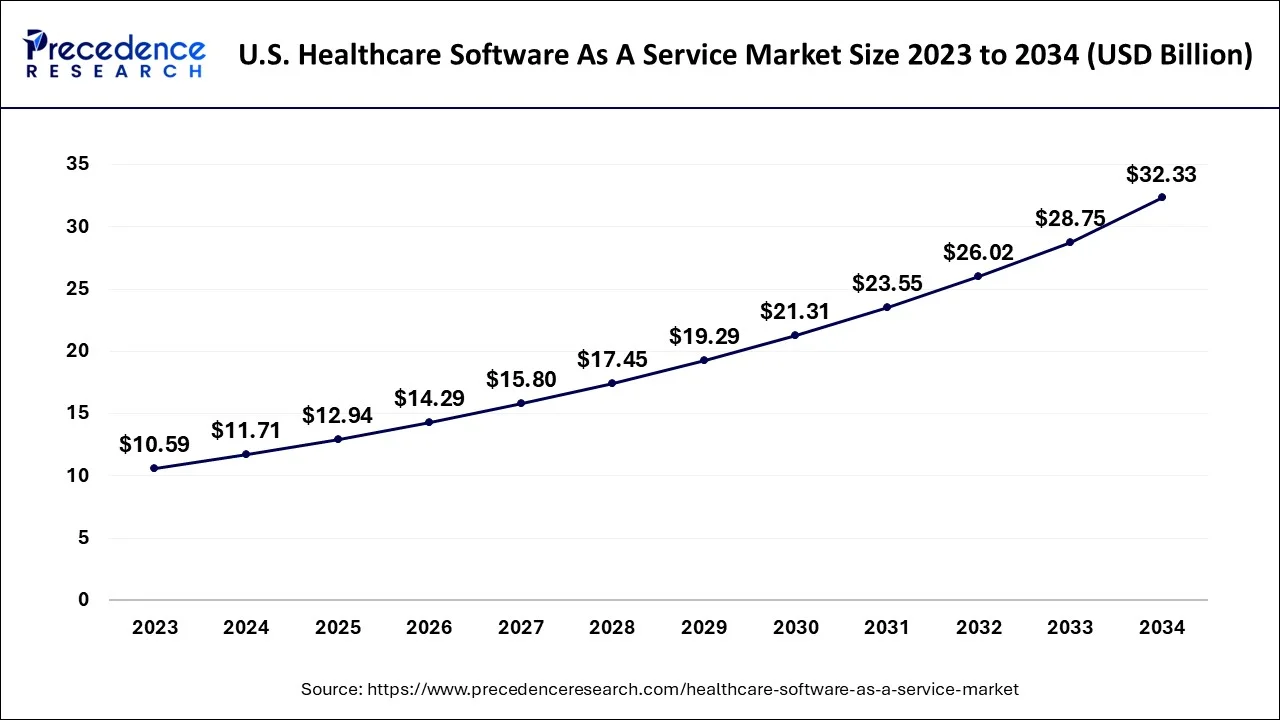
Segmentation of healthcare software as a service on the basis of geography North America to hold the highest position to increase the utilization and development of SaaSin health care centers with rapid acceptance of the developed technology driving the market to grow high.
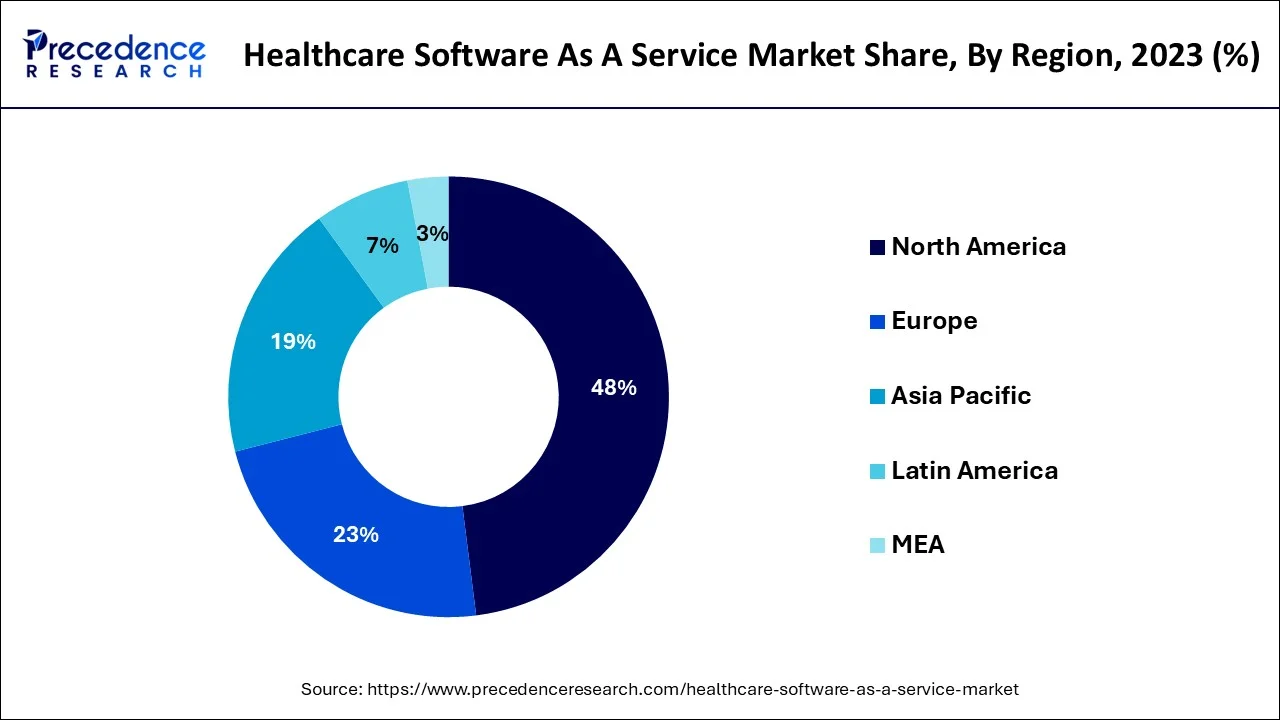
Asia Pacific region also examined to grow the market at a high CAGR with increased digitalization helps to support the growth of SaaS in health care. Other regions such as Europe, Latin America, Middle East and Africa also contributed to enhance the market rate with increased revenue share during the forecast period.
China Healthcare Software As A Service Market Trends
The Chinese proactive government's digital health initiatives and widespread AI adoption in diagnostics and smart hospital operations. Telemedicine is booming to address resource imbalances across urban and rural areas. Strict data localization and privacy laws necessitate robust, compliant platforms.
U.S. Healthcare Software As A Service Market Trends
The U.S. Healthcare SaaS market is shifting from mere data management to delivering intelligent, outcome-focused solutions. Key trends include the integration of AI for predictive analytics and the normalization of telehealth and remote monitoring. Regulatory pushes for interoperability and a transition to value-based care are reshaping product development. Simultaneously, cybersecurity and flexible business models are becoming essential requirements.
What Makes Europe a Notably Growing Area in the Market?
Europe is expected to grow at a notable rate in the healthcare software as a service market. This is mainly due to its well-established healthcare infrastructure. Hospitals and other healthcare providers in the region are increasingly willing to move their operations to cloud computing services to make care coordination more efficient and data sharing easier across countries. However, a strong focus on patient data security has necessitated the creation and use of compliant SaaS platforms that meet the region's specific requirements. Moreover, the use of SaaS solutions is also gaining popularity in remote patient monitoring and population health management.
Germany Healthcare Software As A Service Market Trends
Germany's strict GDPR compliance requirements and significant government-mandated digitization initiatives. The unique "DiGA" program allows specific SaaS apps to be prescribed and reimbursed, fostering specialized solutions. While telehealth adoption remains uneven, the overall trend is towards secure, interoperable cloud solutions that address the needs of an aging population. Vendors must prioritize robust data protection and seamless integration with existing systems to succeed in this complex regulatory landscape.
What Potentiates the Market in the Middle East & Africa?
The healthcare software as a service market in the Middle East & Africa (MEA) is potentiated by the growing need to build modern healthcare infrastructure, driven by rising demand for cloud-based healthcare solutions across the region. Cloud platforms help address critical challenges, such as healthcare professional shortages and limited medical facilities, by enabling more efficient data management and service delivery. Governments are prioritizing digital transformation through national healthcare and smart city initiatives, accelerating SaaS adoption in both public and private sectors. In Africa, SaaS enables healthcare systems to bypass legacy infrastructure, shifting perceptions of cloud-based healthcare platforms from short-term operational tools to long-term foundations for resilient, scalable healthcare systems.
The UAE leads the region in healthcare SaaS implementation, with many hospitals operating on cloud platforms and the development of national health data systems. Saudi Arabia is rapidly integrating SaaS solutions to address system gaps and support large-scale healthcare transformation programs. South Africa is increasingly adopting healthcare SaaS for hospital administration and the expansion of telemedicine services. Kenya and Nigeria show growing demand for cloud-based health platforms, largely driven by digital health startups, while North African countries are gradually adopting SaaS to improve efficiency in public healthcare systems.
What Drives the Healthcare Software as a Service Market in Latin America?
The market in Latin America is being driven by healthcare system modernization efforts, with governments and providers increasingly investing in digital health platforms to improve data management, interoperability, and clinical workflows. Growing adoption of telemedicine, electronic health records (EHRs), and cloud-based solutions helps address cost and infrastructure limitations while expanding access to care, especially in underserved areas, and the low-cost subscription model of SaaS makes advanced healthcare IT more affordable for public and private providers.
Brazil is the major contributor to the market in Latin America due to its large healthcare system, strong demand for digital health solutions, and active adoption of cloud-based platforms by hospitals and clinics. Government initiatives supporting healthcare digitization, along with a growing ecosystem of health IT vendors and startups, further accelerate SaaS adoption. Additionally, Brazil's focus on improving healthcare efficiency, interoperability, and access across both public and private sectors drives sustained market growth.
Value Chain Analysis of the Healthcare Software As A Service Market
- Product Development & Content Creation
This foundational stage involves designing and building the software platforms, including core functionalities like EHR, telemedicine modules, and specialized AI algorithms for diagnostics or administration.
Key Players: Cerner, Athenahealth, and NextGen Healthcare - Software Deployment & Cloud Infrastructure
This stage involves making the software accessible to end-users (hospitals, clinics, payers) via cloud platforms, requiring robust, scalable, and highly secure infrastructure that adheres to regulations like HIPAA and GDPR.
Key Players: Microsoft (Azure), Amazon Web Services (AWS), and Google Cloud - Marketing & Sales
This involves promoting SaaS solutions to a highly specific and regulated market of healthcare providers and payers, focusing on value propositions like cost reduction, efficiency improvements, and enhanced patient outcomes.
Key Players: Salesforce, Oracle, and SAP - Health Service Delivery & Operations
This stage involves the actual use of the SaaS platform in a clinical setting to deliver services, manage patient care, and streamline operations such as patient management, clinical documentation, and medical billing.
Key Players: CareCloud and specialized RCM (Revenue Cycle Management) - Customer & Patient Services (Support and Follow-up)
This critical post-implementation stage focuses on ongoing technical support, user training, maintenance, and follow-up to ensure continuous patient engagement and satisfaction.
Key Players: ServiceNow, Deloitte, and IBM
Top Companies in the Healthcare Software As A Service Market & Their Offerings:
- Jag Products LLC (US): This company contributes to the Healthcare SaaS market by offering specific, niche software solutions for healthcare logistics and product management.
- Oracle (U.S): Following its acquisition of Cerner, Oracle is a major player in the Healthcare SaaS market, providing cloud-based platforms that integrate clinical and administrative data to enable better decision-making.
- Cognizant (U.S): Cognizant contributes primarily as a major IT services and consulting provider, helping healthcare organizations implement, integrate, and manage complex SaaS solutions.
- INFOR (U.S): Infor provides industry-specific cloud software, including a healthcare suite that helps organizations manage their enterprise functions like human capital management, financial operations, and supply chain.
- Epic Systems Corporation (U.S): Epic is a dominant player in the Electronic Health Record (EHR) market, providing comprehensive SaaS solutions that manage patient records and clinical workflows across large integrated healthcare systems.
- Elinext (U.S): This company contributes to the market as a software development service provider, building custom healthcare SaaS applications for various clients. They focus on creating tailored, innovative solutions for specific healthcare needs, including patient engagement and data analytics platforms.
- Meta (U.S): While not a traditional direct healthcare SaaS vendor, Meta impacts the market through its technologies for communication, virtual reality (VR), and augmented reality (AR) in medical training and patient engagement applications.
- CPSI (U.S): CPSI focuses on providing healthcare information solutions, including EHR and financial management software, to rural and community hospitals. Their SaaS models are crucial for enabling smaller healthcare facilities to access modern, affordable technology.
- SAP (Germany): SAP contributes to the global Healthcare SaaS market with its enterprise resource planning (ERP) and supply chain management software tailored for healthcare providers. Their cloud solutions help manage complex administrative and financial operations efficiently.
- Medical Information Technology Inc. (U.S): As the company behind MEDITECH, they provide integrated EHR systems and managed services, offering cloud-based solutions to a wide range of healthcare organizations. They focus on delivering cost-effective and scalable clinical information systems.
- eClinicalWorks (U.S): eClinicalWorks is a key provider of cloud-based EHR and practice management solutions, primarily targeting ambulatory care settings and small to medium-sized practices. They offer an integrated suite of services for clinical documentation, patient engagement, and billing.
- Athenahealth (U.S): Athenahealth provides cloud-based physician practice management and EHR software that focuses on streamlining clinical and administrative tasks.
- Koninklijke Philips N.V. (Netherlands): Philips contributes to the market with its wide range of health technology solutions, focusing on integrated informatics and connected care platforms delivered via SaaS models. They provide solutions in areas such as radiology, cardiology, and remote patient monitoring.
- Change Healthcare (U.S): Now part of Optum, Change Healthcare was a major independent provider of healthcare technology solutions, particularly in revenue cycle management, payment processing, and data analytics via its SaaS platforms. They played a critical role in streamlining administrative workflows across the U.S. health system.
- Cerner Corporation (U.S): Prior to its acquisition by Oracle, Cerner was a leading supplier of health information technology solutions, offering an extensive suite of EHR and population health management SaaS products. Their platforms are integral to the operations of numerous hospitals and health systems globally.
- Optum Inc. (U.S): As the health services and innovation company within UnitedHealth Group, Optum uses a comprehensive SaaS approach to offer data analytics, health management, and consulting services to payers and providers.
- Allscripts Healthcare LLC (U.S): Allscripts provides a range of clinical and administrative software solutions, including EHR and population health analytics, primarily offered via SaaS models.
Healthcare Software As A Service Market Companies
- Jag Products LLC (US)
- Oracle (U.S)
- Cognizant (U.S)
- INFOR (U.S)
- Epic Systems Corporation (U.S)
- Elinext (U.S)
- Meta (U.S)
- CPSI (U.S)
- SAP (Germany)
- Medical Informatin Techology Inc. (U.S)
- eClinicalWorks (U.S)
- athenahealth (U.S)
- Koninklijke Philip N.V (Netherlands)
- Change Healthcare (U.S)
- Cerner Corporation (U.S)
- Optum Inc. (U.S)
- Allscripts Healthcare LLC (U.S)
Recent Developments
- In September 2025, Glooko acquired Monarch Medical Technologies to link inpatient insulin-dosing algorithms with outpatient monitoring tools. This acquisition creats an integrated diabetes management platform. (https://glooko.com)
Segments covered in the report
By Product
- Ententerprise Content Management
- Business Intelligence
- Customer Relationship Management (CRM)
- Revenue Cycle Management (RCM)
By Delivery Mode
- Cloud- based
- On-Premise
By Applications
- Healthcare Providers
- Healthcare Players
- Telemedicine
- Medical Billing
- Patient Portal
- Mobile communication
- e Prescribing
- EHR Systems
- ERP & HR portal
- Others
By Deployment
- Public
- Hybrid
- Private
By End User
- Provider
- Payer
By Geography
- North America
- U.S.
- Canada
- Europe
- U.K.
- Germany
- France
- Asia-Pacific
- China
- India
- Japan
- South Korea
- Malaysia
- Philippines
- Latin America
- Brazil
- Rest of Latin America
- Middle East & Africa (MEA)
For inquiries regarding discounts, bulk purchases, or customization requests, please contact us at sales@precedenceresearch.com
Frequently Asked Questions





Ask For Sample
No cookie-cutter, only authentic analysis – take the 1st step to become a Precedence Research client
 Get a Sample
.webp)



 sales@precedenceresearch.com
 Schedule a Meeting
