



Dietary Supplements Market Size, Key Companies, Company Market Share, Production Volume, Consumption Trends, Pricing Analysis, Export & Import Dynamics, Competitive Positioning, and Demand Forecast
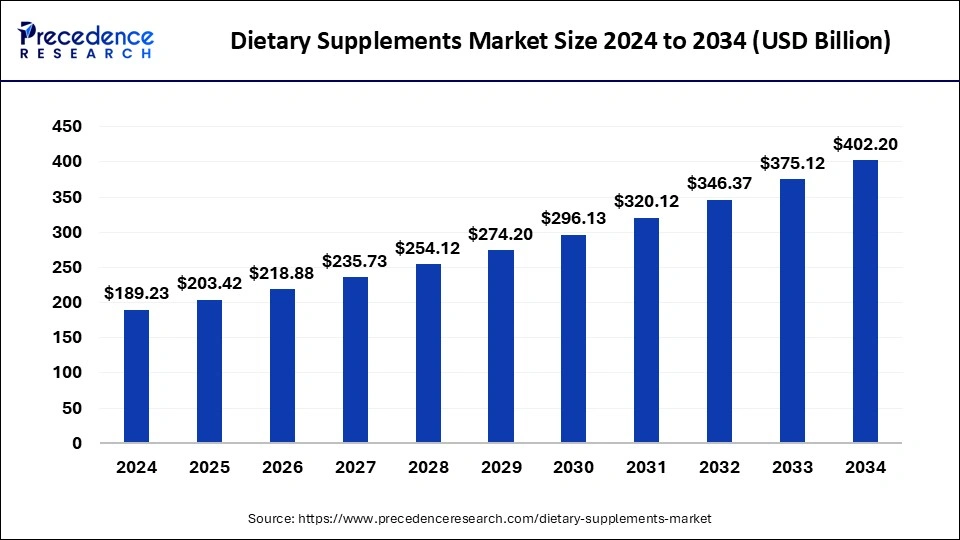
Food and beverage specialist Vidyesh Swar puts the dietary supplements market at USD 218.88 billion in 2026, with the market expected to reach USD 430.39 billion by 2035 at a CAGR of 7.78%. Major dietary supplements market companies such as Nu Skin Enterprises, Carlyle Group, Pfizer are responding to changing consumer demand across segments including by ingredient, by form, by application, by end user, by type, by distribution channel, by function, and region.
Source: https://www.precedenceresearch.com/dietary-supplements-market
 Get a Sample
 Table Of Content


What is Dietary Supplements Market Size?
The dietary supplements market size is valued at USD 203.42 billion in 2025 and is predicted to increase from USD 218.88 billion in 2026 to approximately USD 430.39 billion by 2035, expanding at a CAGR of 7.78% from 2026 to 2035. The market is driven by increasing consumer focus on preventive healthcare, wellness, and nutritional support for overall health and immunity.
Market Highlights
- By region, Asia Pacific led the market in 2025.
- By type, the OTC segment led the market with the largest share in 2025.
- By type, the prescribed segment is expected to grow at the fastest rate in the market during the forecast period.
- By ingredient, the vitamins segment led the market in 2025.
- By ingredient, the botanicals segment is expected to grow at the fastest CAGR in the market during the forecast period.
- By form, the tablets segment led the market in 2025.
- By form, the liquid dietary supplements segment is expected to grow in the market during the forecast period.
- By application, the general health segment led the market in 2025.
- By application, the immunity segment is expected to grow at a significant rate during the forecast period.
- By function, the additional supplements segment dominated the market in 2025.
- By function, the medicinal supplements segment is expected to grow at a significant rate in the coming years.
- By end-user, the adults segment dominated the market in 2025.
- By distribution channel, the offline segment dominated the market in 2025.
- By distribution channel, the online segment is expected to grow at the fastest CAGR over the projection period.
Market Overview
The aging population, rising interest in preventative healthcare, and growing health consciousness have all contributed to the steady rise of the dietary supplements market worldwide. Factors such as changing lifestyles, urbanization, and disposable income also shape the market. A broad array of products falls under dietary supplements, including vitamins, minerals, enzymes, amino acids, and herbal supplements, with commonly used categories including multivitamins, omega 3, fatty acids, probiotics, calcium, and vitamin D.
Dietary supplements are typically sold through various channels, including online retailers, pharmacies, health food stores, and supermarkets. The convenience of online shopping and a wider product assortment have been the main drivers behind the e-commerce segment's rapid rise. Growing consumer demand for individualized nutrition solutions has also fueled interest in customized and targeted supplements, with purchase decisions increasingly shaped by trends toward natural ingredients and clean-label products.
AI in the Dietary Supplements Market
Artificial intelligence is reshaping the dietary supplements market by making it more personalized, creative, and efficient. Through data analysis, AI in dietary supplements enables personalized plans that account for a consumer's health profile, genetic background, and eating habits. AI-driven chatbots and virtual assistants are strengthening customer engagement, speeding up ingredient discovery, and providing scientific support for product development. On the production line, AI applies smart sensors and vision systems to carry out rigorous quality control, while supply chain optimization improves demand forecasting, reduces inventory waste, and enhances delivery accuracy. Together, these applications are building a more intelligent, customer-centered personalized nutrition ecosystem.
Dietary Supplements Market Growth Factors
- A growing understanding of the importance of health and wellness has resulted in greater emphasis on preventative healthcare.
- Consumers are becoming more aware of their dietary intake and turning to dietary supplements to address potential nutritional gaps.
- Demand for products supporting general health and addressing age-related conditions is rising as the world's population ages, with vitamins and minerals among the supplements most frequently used for this purpose.
- Poor eating habits and fast-paced, stressful lifestyles are common features of modern life. People with hectic schedules and convenience-driven meal choices may need additional nutrients, prompting them to turn to dietary supplements to stay healthy.
- Sports nutrition supplements are in greater demand as interest in fitness and sports activities grows, with athletes and fitness enthusiasts using them to support muscle repair, improve performance, and meet dietary needs.
- Consumers now have easier access to nutritional supplements thanks to the growth of e-commerce platforms, which let them research, evaluate, and buy a wide range of products quickly and conveniently.
- Ongoing nutritional science research and development have enabled novel supplement formulations, with innovative ingredients, enhanced bioavailability, and new delivery methods making dietary supplements increasingly appealing.
What are the Major Trends in the Market?
Growing Demand for Personalized Nutrition
Consumers are increasingly seeking dietary supplements tailored to their age, lifestyle, health goals, and genetic profile. Advances in health data analytics and personalized wellness platforms are enabling manufacturers to offer more customized supplement formulations.
Rising Popularity of Plant-Based and Natural Ingredients
There is a growing preference for supplements made from botanical extracts, herbs, and other plant-based ingredients as consumers become more health-conscious and seek out clean-label products. This trend is driving innovation across vegan, organic, and naturally sourced supplement formulations.
Expansion of Immunity-Boosting Products
Demand for immunity-boosting supplements continues to rise as consumers focus on preventive healthcare and overall wellness, with products containing vitamins, minerals, probiotics, and herbal ingredients gaining popularity for their perceived immune-support benefits.
Market Scope
| Report Highlights | Details |
| Market Size in 2025 | USD 203.42 Billion |
| Market Size in 2026 | USD 218.88 Billion |
| Market Size by 2035 | USD 430.39 Billion |
| Growth Rate from 2026 to 2035 | CAGR of 7.78% |
| Base Year | 2025 |
| Forecast Period | 2026 to 2035 |
| Segments Covered | Ingredient, Form, Application, End User, Type, Distribution Channel and Function, and region |
| Regions Covered | North America, Europe, Asia Pacific, Latin America, Middle East & Africa (MEA) |
Market Dynamics
Drivers
Growing Emphasis on Organics Products
Organic dietary supplements are subject to strict regulations and certifications that help ensure their safety, authenticity, and quality. Consumers are often willing to pay a premium for organic supplements, trusting that these products have undergone rigorous testing and adhere to organic standards. As consumers become more health-conscious, they are actively seeking greater transparency in product ingredients and sourcing, further fueling demand for organic alternatives. Many governments around the world are also promoting organic agriculture and incentivizing the production and consumption of organic products, support that has contributed to increased availability and variety of organic dietary supplements in the market. Together, these dynamics continue to fuel growth across the market.
Restraint
Regulatory Hurdles
Dietary supplements must adhere to specific labeling and regulatory requirements to provide consumers with accurate, transparent information. Claims made about a supplement's health benefits must be backed by scientific evidence, which can limit how companies market their products. Regulatory agencies may also require manufacturers to follow Good Manufacturing Practices (GMPs) to ensure product quality and safety, standards that can be particularly challenging for smaller companies or those operating in developing regions. Companies are often required to report adverse events associated with their products, a process that can be burdensome and may invite increased regulatory scrutiny. Different countries maintain varying regulations for dietary supplements, making it difficult for companies to navigate global markets, and compliance with multiple regulatory frameworks adds further complexity to exporting and importing these products. These regulatory hurdles continue to act as a restraint on the market.
Opportunity
Booming E-commerce Market
E-commerce platforms allow dietary supplement companies to reach consumers worldwide, opening markets that were previously difficult to access through traditional retail channels. Companies can target customers across various regions without needing to establish physical stores or distribution networks in each location. Online stores also operate around the clock, giving customers the flexibility to shop whenever it suits them, removing the limitations of physical store hours and enabling purchases across different time zones. The booming global e-commerce market is opening substantial new opportunities across the industry.
Challenges
Misinformation and False Claims
The prevalence of false claims can make health professionals wary of recommending dietary supplements to their patients, a reluctance that may prevent people who could genuinely benefit from certain supplements from receiving appropriate guidance. Companies that make false product claims may face legal consequences from regulatory authorities such as the U.S. Food and Drug Administration (FDA) or the Federal Trade Commission (FTC), resulting in fines and reputational damage. False claims can also lead consumers to believe certain supplements are effective and safe when they may not be, potentially leading individuals to take products that could be harmful or interact negatively with other medications. This ongoing misinformation and the spread of false claims present a meaningful challenge to the market's growth.
Segments Insights
Type Insights
Why Did the OTC Segment Dominated the Market in 2025?
The OTC dietary supplements segment held the largest share of the market in 2025, as self-care and preventive healthcare become more popular among consumers. Vitamins, minerals, probiotics, and herbal supplements are readily accessible through pharmacies, retail stores, and online retailers. Growing health consciousness, increased disposable income, and consumer demand for wellness and immunity products all contribute to the segment's dominance. Since these supplements do not require a prescription, they help reduce hospital visits and healthcare costs, and manufacturers continue to launch innovative formulations and flavored products to enhance consumer appeal.
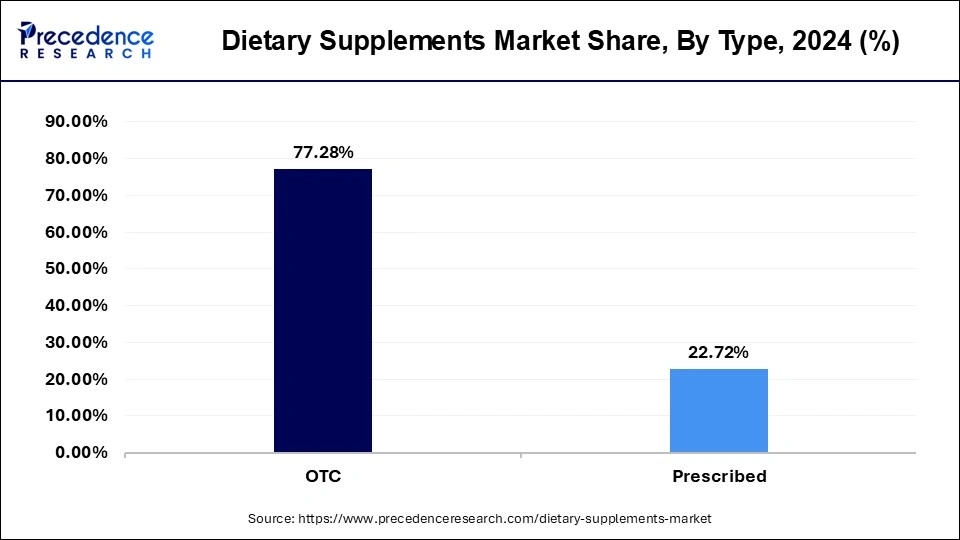
The prescribed supplements segment is expected to grow at the fastest rate in the coming years, as healthcare professionals increasingly recommend targeted nutritional products for specific deficiencies and medical conditions. These supplements are frequently used to treat chronic illnesses and support bone health, cardiovascular health, and prenatal nutrition. Physician-recommended supplements are becoming increasingly popular as the population ages and the importance of individualized nutrition grows, supported further by rising diagnosis rates for nutrient deficiencies and clinical research demonstrating the effectiveness of specific supplements.
Dietary Supplements Market Revenue, By Type, 2022-2024 (USD Billion)
| Type | 2022 | 2023 | 2024 |
| OTC | 128.1 | 136.8 | 146.2 |
| Prescribed |
36.1 | 39.4 | 43.0 |
Function Insights
Why Did the Additional Supplements Segment Dominated the Market in 2025?
The additional supplements segment dominated the market, holding a major share in 2025, largely due to growing consumer focus on overall wellness, preventive healthcare, and nutritional support beyond basic dietary needs. Products such as multivitamins, minerals, omega-3 fatty acids, probiotics, and specialty supplements are widely used to address nutritional deficiencies, support daily health, and enhance overall wellbeing, with rising health awareness, busy lifestyles, and demand for convenient health solutions further supporting segment growth.
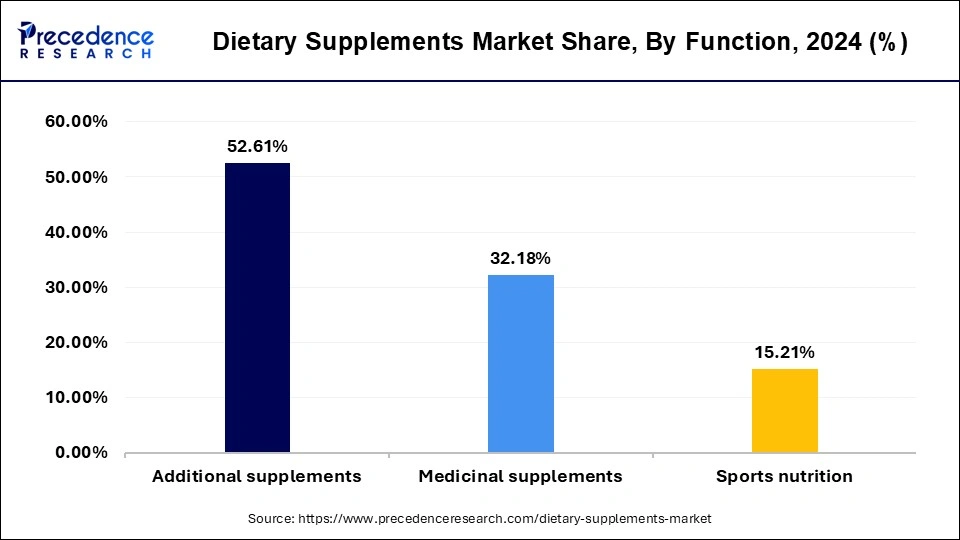
The medicinal supplements segment is expected to grow at a significant rate in the coming years, owing to the increasing prevalence of chronic diseases, rising health awareness, and growing consumer preference for preventive healthcare solutions. Consumers are increasingly turning to medicinal supplements to support the management of conditions such as cardiovascular disease, diabetes, joint disorders, and immune-related health issues.
Dietary Supplements Market Revenue, By Function, 2022-2024 (USD Billion)
| Function | 2022 | 2023 | 2024 |
| Additional supplements | 87.7 | 93.4 | 99.5 |
| Medicinal supplements | 52.5 | 56.5 | 60.9 |
| Sports nutrition | 24.0 | 26.3 | 28.8 |
Ingredient Insights
The Vitamins Segment Held the Largest Market Share in 2025
The vitamins segment held the largest share of the dietary supplements market in 2025, reflecting broad consumer awareness of nutritional deficiencies and preventive health management. Vitamins that support immunity, energy metabolism, and general wellbeing, including vitamins B-complex, vitamin D, and vitamin C, continue to strengthen this segment alongside growing demand for daily nutritional supply and healthy aging solutions. Global vitamin consumption has risen alongside the growing incidence of lifestyle-related health issues, and manufacturers continue to launch combination vitamin formulations designed to meet specific consumer needs.
The botanical supplements segment is expected to see significant growth as consumers show greater interest in natural and plant-based health products. Ingredients such as turmeric, ginseng, ashwagandha, and green tea extract are becoming increasingly popular for their clean-label appeal and perceived health benefits. The segment continues to expand alongside growing interest in holistic wellness and traditional medicine, with consumer demand for substitutes for synthetic ingredients and ongoing research into plant-derived bioactive compounds further broadening product applications.
Dietary Supplements Market Revenue, By Ingredient, 2022-2024 (USD Billion)
| Ingradient | 2022 | 2023 | 2024 |
| Vitamins | 52.6 | 56.2 | 60.2 |
| Minerals |
23.9 | 25.7 | 27.7 |
| Fibers & Specialty Carbohydrates | 17.6 | 18.6 | 19.7 |
| Omega Fatty Acids | 20.3 | 21.9 | 23.7 |
| Botanicals | 16.3 | 17.7 | 19.2 |
| Proteins & Amino Acids | 18.7 | 20.2 | 21.8 |
| Others | 14.7 | 15.8 | 16.9 |
Forms Insights
What Made Tablets the Leading Segment in the Market?
The tablet supplements segment led the market in 2025, owing to affordability, longer shelf life, precise dosage, and ease of use. Because tablets are simple to package, transport, and store, both manufacturers and consumers favor them, and demand in this segment continues to grow alongside advancements in sustained-release formulations and formulation technology more broadly. Tablets appeal to a wide range of consumers thanks to their affordability relative to other supplement forms, with growing availability of chewable and coated formats further enhancing the user experience.
The liquid supplements segment is growing rapidly as consumers seek products that are easier to use and absorb more quickly. Liquid formulations are particularly preferred by children, older adults, and people who have difficulty swallowing pills, with the segment growing due to rising demand for nutritional shots and functional drinks. Manufacturers are increasingly adding vitamins, minerals, and herbal extracts to ready-to-drink products, with the broader trend toward portable, easy-to-use wellness solutions accelerating market adoption.
Dietary Supplements Market Revenue, By Form, 2022-2024 (USD Billion)
| Form | 2022 | 2023 | 2024 |
| Capsules | 35.4 | 37.7 | 40.3 |
| Tablets | 53.2 | 57.3 | 61.7 |
| Gummies | 17.8 | 19.5 | 21.3 |
| Soft gels | 21.3 | 22.9 | 24.8 |
| Liquids | 5.7 | 6.2 | 6.7 |
| Powders | 19.8 | 21.1 | 22.4 |
| Others | 11.1 | 11.5 | 12.0 |
Application Insights
Why Did the General Health Segment Dominated the Market in 2025?
The general health supplements segment dominated the market with the largest share in 2025, as consumers place greater emphasis on preserving overall wellness and avoiding health problems. Products supporting energy, immunity, digestive health, and everyday nutrition continue to find broad appeal across all age groups, with strong demand still driven by growing health consciousness and preventive healthcare trends. Consumers are integrating supplements into their daily routines to support long-term health goals; a habit further encouraged by rising awareness through digital health platforms.
The immunity segment is expected to grow at the fastest CAGR in the coming period, driven by rising consumer awareness of preventive healthcare and the importance of a strong immune system. Consumers are increasingly incorporating vitamins, minerals, probiotics, and herbal supplements into their daily routines to support immune function and reduce illness risk, with the rising prevalence of infectious disease, growing health consciousness, and demand for natural wellness products all supporting adoption of immunity-focused supplements worldwide.
The brain and mental health supplements segment are expected to grow at a notable rate, driven by growing awareness of mental performance, stress management, and cognitive wellness. Supplements containing magnesium, nootropics, adaptogens, and omega-3 fatty acids are becoming increasingly popular among consumers seeking to improve mood, focus, and memory. Growing concern around stress, anxiety, and work-life balance continues to drive demand for brain-health-supporting supplements, with sharp growth in demand for cognitive support products among working professionals and students further supporting segment growth.
By End-User
The Adults Segment Held a Major Market Share in 2025
The adults segment dominated the dietary supplements market in 2025, driven by increasing health awareness, growing focus on preventive healthcare, and the rising prevalence of lifestyle-related conditions such as obesity, diabetes, cardiovascular disease, and stress-related disorders. Adults remain the primary consumers of dietary supplements, using products to support immunity, boost energy, manage weight, and maintain bone, joint, and overall wellbeing. Busy lifestyles, changing dietary habits, and higher disposable incomes have further encouraged greater adoption of dietary supplements among the adult population.
By Distribution Channel
How Does the Offline Segment Dominated the Market in 2025?
The offline distribution segment dominated the market in 2025, reflecting strong consumer preference for purchasing health and wellness products through pharmacies, supermarkets, health stores, and specialty nutrition outlets. Physical retail stores allow consumers to examine products directly, seek professional recommendations, and make immediate purchases, all of which enhance trust and confidence, while the extensive retail presence of leading supplement brands and established distribution networks further reinforced this segment's dominant position.
The online distribution segment is expected to grow at the fastest CAGR over the projection period, driven by increasing adoption of e-commerce platforms and the convenience of online shopping. Consumers benefit from wider product selection, competitive pricing, subscription services, home delivery, and easy access to product reviews and nutritional information. Growing internet penetration, smartphone usage, and digital marketing efforts by supplement manufacturers are further accelerating online sales growth worldwide.
Regional Insights
What is the Asia Pacific Dietary Supplements Market Size?
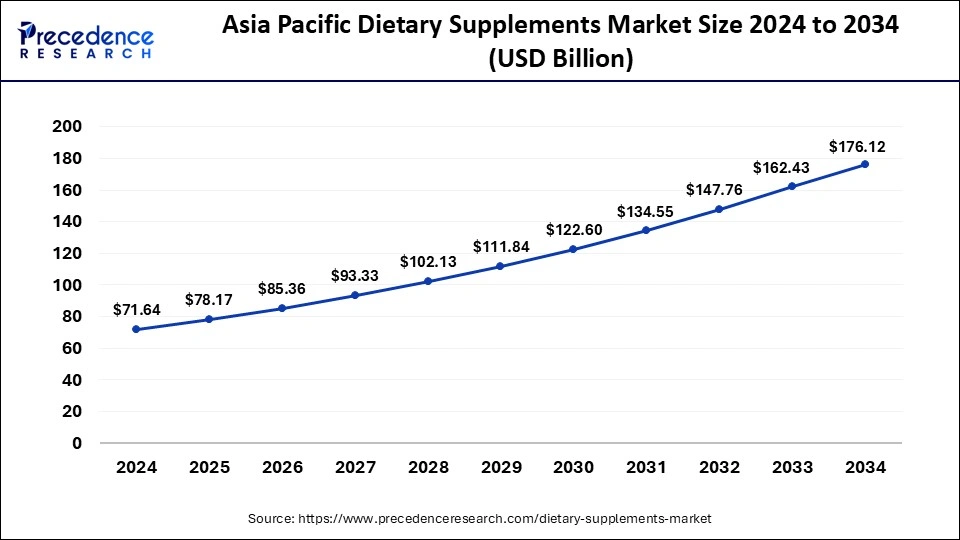
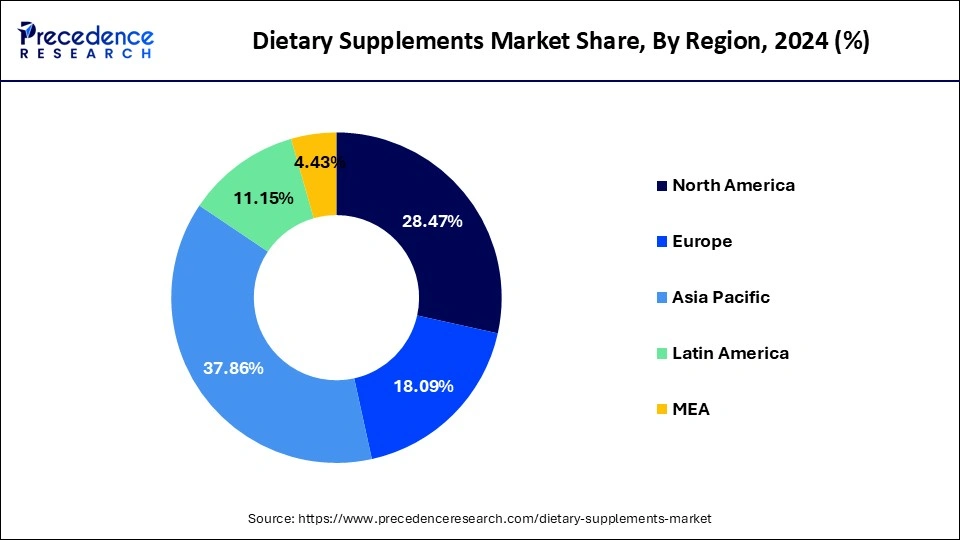
The Asia Pacific dietary supplements market size is exhibited at USD 78.17 billion in 2025 and is projected to be worth around USD 190.46 billion by 2035, growing at a CAGR of 9.31% from 2026 to 2035
What Made Asia Pacific the Dominant Region in the Market?
Asia Pacific dominated the dietary supplements market, holding the largest share in 2025, supported by a sizable population, rising disposable income, and expanding awareness of preventive healthcare. Growing middle-class populations, rapid urbanization, and rising nutritional product consumption in countries like China, India, and Japan are all contributing factors, alongside strong regional demand for herbal and traditional supplements. Government programs promoting nutrition and health are further supporting product accessibility across the region.
India Dietary Supplements Market Trends
The India dietary supplements market is expanding rapidly, driven by growing awareness of nutritional deficiencies, rising health consciousness, and increasing fitness participation. Urban and semi-urban areas are seeing a marked rise in demand for vitamins, protein supplements, herbal products, and immunity boosters, with growing healthcare spending and e-commerce adoption both contributing to expansion. Rising demand for Ayurveda-based supplements is opening new business prospects for producers, while rising disposable income and shifting dietary habits continue to encourage supplement consumption nationwide.
What Drives the Market Within North America?
North America represents a highly developed dietary supplements market, driven by widespread adoption of preventive wellness practices, high healthcare spending, and strong consumer awareness. Demand for personalized nutrition products remains high across the region, which benefits from a well-established regulatory framework. Market expansion is further reinforced by ongoing innovation in functional ingredients and delivery systems, with consumers increasingly seeking science-backed products and rising R&D investment continuing to support competitiveness across the market.
U.S. Dietary Supplements Market Trends
The U.S. holds the largest share of the North American dietary supplements market, as consumers continue to spend heavily on wellness and health products. The market keeps expanding on the back of rising demand for immunity supplements, sports nutrition products, healthy aging solutions, and customized nutrition options, with market leadership further supported by innovative products and robust distribution networks. The country's strong e-commerce sector makes a wide variety of supplements widely accessible, with growing interest in preventive healthcare remaining as a key growth driver.
How is the Opportunistic Rise of Europe in the Market?
Europe is expected to grow at a significant rate in the dietary supplements market, supported by an aging population, healthy lifestyle trends, and preventative healthcare programs. Supplement products that are natural, organic, and backed by science are becoming increasingly popular, with the market further expanding regulatory support and rising demand for clean-label formulations and sustainable packaging. Growing awareness of nutritional deficiencies among older adults is supporting adoption, while producers increasingly focus on eco-friendly ingredient sourcing and packaging.
Germany Dietary Supplements Market Trends
Germany is a major player in the European market, driven by a high level of consumer knowledge about wellness and nutrition. Vitamins, minerals, probiotics, and herbal supplements remain highly sought after nationwide, particularly among older adults, with the market continuing to expand alongside growing interest in natural health products and preventive healthcare. Customers prioritize product safety, quality, and scientific validation, and ongoing innovation in functional nutrition products continues to bolster market expansion.
What Influences the Latin American Market?
The Latin American dietary supplements market is shaped by increased access to nutritional products, improving economic conditions, and growing healthcare awareness. Supplements aimed at boosting immunity, vitality, and general wellbeing are becoming increasingly popular among consumers, with rising e-commerce adoption and retail penetration further expanding the market. Growing urbanization is increasing regional exposure to fitness and health trends, while local producers broaden their product lines to meet evolving consumer demand.
Brazil Dietary Supplements Market Trends
Brazil leads the Latin American dietary supplements market, supported by rising sports participation, growing health awareness, and increasing demand for fitness and nutritional products. Vitamins, weight-management products, and protein supplements are becoming increasingly popular among consumers, with sustained growth supported by expanding distribution networks and wellness trends. The country's strong fitness and sports nutrition culture continues to fuel demand, and rising investment from international supplement companies is further improving market growth.
Why is the Market Within the Middle East & Africa Gaining Momentum?
The Middle East and Africa dietary supplements market is growing steadily, supported by expanding healthcare infrastructure, rising disposable incomes, and growing awareness of nutritional health. Numerous countries across the region are seeing rising demand for vitamins, minerals, and immunity-boosting products, with government programs supporting wellness and health further driving expansion. Access to dietary supplements continues to improve thanks to the growth of modern retail formats, while rising prevalence of lifestyle-related health conditions is further driving product demand.
UAE Dietary Supplements Market Trends
The UAE dietary supplements market is experiencing robust growth, driven by strong purchasing power, increased interest in fitness and preventive healthcare, and high health awareness. Premium vitamins, sports nutrition products, and wellness supplements are becoming increasingly popular among consumers seeking to support healthy lifestyles. Market expansion is further accelerated by the presence of global brands and a rapidly expanding retail sector, with rising wellness and fitness participation continuing to drive consumption and growing demand for high-end, customized nutritional products creating fresh growth prospects.
Key Government Initiatives for the Dietary Supplements Market
Governments across leading economies continue to push forward with nutrition programs and regulatory policies aimed at improving the availability of safe, high-quality dietary supplements for consumers. In Indonesia, for example, the government has partnered with UNICEF on a maternal nutrition program aimed at improving maternal and child nutrition through food supplementation, health service provision, and nutrition awareness campaigns. The initiative has contributed to improved use of vitamin and mineral supplements among pregnant women and other at-risk populations.
In the United States, the U.S. Food and Drug Administration (FDA) has advanced efforts to strengthen food safety and transparency through the Food Safety Modernization Act (FSMA) Traceability Rule, which introduces new recordkeeping obligations for selected food items. While the rule is aimed broadly at food safety, it also underscores the growing importance of supply chain traceability and quality standards for dietary supplement producers.
In the Philippines, the Food and Drug Administration has issued a draft update to FDA Circular No. 2025-001, introducing changes to the classification of vitamins and minerals in processed food and dietary supplements for adults. The proposed changes update classification requirements, support regulatory compliance, and aim to improve the availability of dietary supplements nationwide.
|
Government Initiatives |
Regions |
Key Focus Areas |
|
Draft FSS Regulations 2022/2026 |
India (FSSAI) |
Tightens safety and efficacy tests, restricts therapeutic claims, and mandates pre-market approval. |
|
Make America Healthy Again (MAHA) Initiative |
USA |
Targets clean labels, natural ingredients, and reduces synthetic fillers/additives in supplements. |
|
Production-Linked Incentive (PLI) Scheme |
India |
Boosts domestic manufacturing of nutraceuticals and herbal products to reduce import reliance. |
|
EU Biotech Act (BioTech Act and Safety Omnibus) |
Europe |
Harmonizes nutrient levels and strengthens EFSA's scientific remit over supplement safety. |
Value Chain Analysis
- Raw Material Procurement (Farms, Fisheries, etc.): The process of sourcing and managing raw plant, animal, or mineral ingredients that are to be used in the manufacturing of dietary supplements.
Key Players: DSM-Firmenich, Archer Daniels Midland (ADM), BASF SE - Processing and Preservation: Materials are processed through extraction, encapsulation, and preservation to keep the nutrients intact and the product stable for a longer period.
Key players: Nestle Health Science, Herbalife Nutrition, Sirio Pharma - Quality Testing and Certification: The process of conducting exhaustive laboratory tests and third-party verifications to establish the purity, potency, and compliance of the supplement with regulations.
Key players: Eurofins Scientific, SGS, Intertek Group - Packaging and Branding: The creation of protective packages having clear signs with the specific purpose of improving product recognition, consumer trust, and brand value.
Key Players: Amcor plc, Berry Global Group, Sealed Air Corporation - Cold Chain Logistics and Storage: The transportation and storage of sensitive products in controlled temperature conditions are being done to maintain their efficacy and quality.
Key Players: Americold Logistics, Lineage Logistics, Maersk - Waste Management and Recycling: The company is disposing of waste materials responsibly through recycling and disposal during the production and packaging cycle.
Key Players: Daniels Sharpsmart, Saahas Zero Waste, Hahn Plastics
Competitive Landscape
The dietary supplements market remains highly competitive and moderately fragmented, with a mix of multinational nutrition companies, pharmaceutical firms, and specialized supplement manufacturers competing on product quality, scientific validation, brand reputation, and distribution reach. Among the dietary supplements market key players are Nestlé Health Science, Amway Corporation, Herbalife Ltd., Abbott Laboratories, Glanbia plc, NOW Health Group, Inc., and The Nature's Bounty Co. Competition continues to be shaped by innovation in formulations, the use of clinically supported ingredients, clean-label products, and rising demand for personalized nutrition solutions.
Companies are investing heavily in research and development, product diversification, and digital sales channels to strengthen their market positions. Strategic initiatives such as mergers and acquisitions, partnerships with healthcare professionals, and expansion into emerging markets are helping companies broaden their customer base and product portfolios. Trends such as plant-based supplements, immunity-boosting products, gut health solutions, and personalized wellness offerings continue to encourage manufacturers to develop innovative products and strengthen their competitive position across the global dietary supplements market.
Dietary Supplements Market Companies
- Bayer: Conducts research and development of pharmaceuticals, consumer health products, nutrition solutions, and agricultural innovations that enable advanced medical treatments, preventive health care, and improve global wellness.
- Nature's Bounty: Produces vitamins, minerals, herbal supplements, and sports nutrition for general nutrition, health, and immunity worldwide.
- Bionova Lifesciences: Develops nutraceuticals, functional foods, and pharmaceutical supplements with an emphasis on research-based formulations for solutions to preventative healthcare and wellness management.
Other Major Key Players
- Nu Skin Enterprises
- Carlyle Group
- Pfizer
- Arkopharma Laboratoires Pharmaceutiques
- Glanbia
- Herbalife International
- Abbott Laboratories
- GlaxoSmithKline
- Nature's Sunshine Forms
- Amway
- Archer Daniels Midland
Recent Developments
- In March 2026, Herbalife announced an agreement to acquire selected assets of UK-based personalized supplements company Bioniq, strengthening its data-driven nutrition capabilities. The acquisition will integrate Bioniq's biomarker-based technology with Herbalife's global distribution network to expand personalized wellness offerings. “The future of health and wellness is becoming more personalized and informed by data,” said Herbalife Chief Executive Officer, Stephan Gratziani. “By combining Bioniq's personalized supplement technology with Pro2col and the power of our global distributor network, we are expanding our ability to deliver personalized wellness at global scale.” (Source: https://www.herbalife.com)
- In April 2026, Unilever announced the acquisition of Grüns, a fast-growing U.S. greens supplement company, to strengthen its Beauty & Wellbeing portfolio and expand its presence in the vitamins, minerals, and supplements market. Jostein Solheim, Unilever Wellbeing CEO said: “We are thrilled to welcome Grüns into the Unilever family. As a leader and true innovator in the Greens Supplement category, what sets Grüns apart is its focused portfolio of science-backed products that people genuinely enjoy, trust, and consistently use. This combination of efficacy and experience is powerful, and together we see a significant opportunity to scale the brand within our Wellbeing business.” (Source: https://www.unilever.com)
- In March 2026, AstaReal AB launched a vegan vitamin D3+K2 supplement from lichen, a sustainable alternative to lanolin, to support strong bones, normal muscle function, and immune health, says brand manager Annelie Gunnarsson. (Source: https://www.nutritioninsight.com)
- In March 2026, SuppCo launched TESTED by SuppCo, an independent certification program that anonymously tests supplements for active ingredients. This initiative complements SuppCo's TrustScore rating system, addressing concerns from previous testing that showed many top-selling supplements lacked label accuracy. (Source: https://www.nutraingredients.com)
- In February 2026, Vitux's Concordix chewable emulsion delivery technology is set to expand with over 60 launch-ready concepts, covering key health categories like longevity and immunity. Additionally, the company secured an extension on a US patent, enhancing intellectual property protection and partner confidence in the platform. (Source: https://nutraceuticalbusinessreview.com)
- In July 2025, Ahmedabad-based Torrent Pharmaceuticals expanded its Shelcal brand into the high-growth adult nutrition market with the launch of Shelcal Total, a new powdered supplement designed to promote bone and joint health, addressing the increasing demand for convenient and comprehensive nutrition solutions. (Source: https://health.economictimes.indiatimes.com )
- In July 2025, Nestle has launched a strategic review of its vitamins, miracles, minerals, and supplements brands such as Nature's Bounty and Puritan's Pride, with as possible divestiture under consideration. The company is refocusing on premium nutrition brands like Garden of Life and Solgar to align with consumer demand and drive profitability.
- In June 2025, A bipartisan congressional Dietary Supplement Caucus has been re-established to facilitate dialogue between legislators, industry stakeholders, and researchers. The imitative aims to modernize regulatory frameworks, enhance supplement education, and explore expanding coverage of dietary supplements under health savings accounts.
Segments Covered in the Report
By Ingredient
- Vitamins
- Minerals
- Fibers & Specialty Carbohydrates
- Omega Fatty Acids
- Botanicals
- Proteins & Amino Acids
- Others
By Form
- Capsules
- Tablets
- Gummies
- Soft gels
- Liquids
- Powders
- Others
By Application
- Energy & Weight Management
- Bone & Joint Health
- Diabetes
- General Health
- Immunity
- Cardiac Health
- Gastrointestinal Health
- Anti-cancer
- Lungs Detox/Cleanse
- Sexual Health
- Brain/Mental Health
- Skin/Hair/Nails
- Insomnia
- Anti-aging
- Menopause
- Prenatal Health
- Others
By End User
- Adults
- Geriatric
- Pregnant Women
- Children
- Infants
By Type
- OTC
- Prescribed
By Distribution Channel
- Offline
- Hypermarkets/Supermarkets
- Pharmacies
- Specialty Stores
- Practioner
- Others
- Online
By Function
- Additional supplements
- Medicinal supplements
- Sports nutrition
By Region
- North America
- Europe
- Asia-Pacific
- Latin America
- Middle East and Africa
For inquiries regarding discounts, bulk purchases, or customization requests, please contact us at sales@precedenceresearch.com
Frequently Asked Questions





Ask For Sample
No cookie-cutter, only authentic analysis – take the 1st step to become a Precedence Research client
 Get a Sample




 sales@precedenceresearch.com
 Schedule a Meeting
