



Fertility Market Size, Key Companies, Company Product Portfolio, Hospital Procurement Trends, Manufacturing Capacity, Sales Performance, Regulatory Approvals, Company Market Share, and Forecast
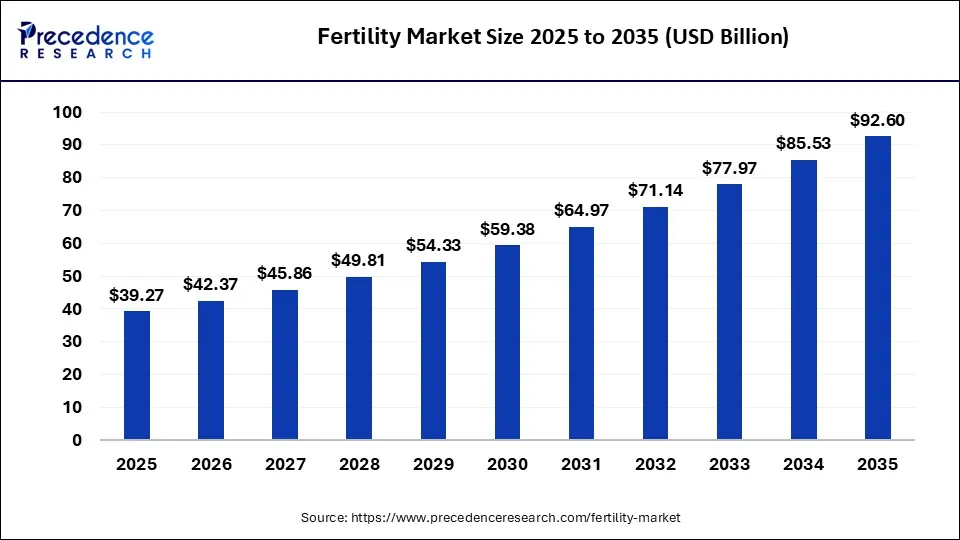
The global fertility market is projected to grow from USD 42.37 billion in 2026 to USD 92.60 billion by 2035, registering a CAGR of 8.96%. Growth is driven by rising infertility rates, delayed parenthood, increasing adoption of assisted reproductive technologies (ART), advancements in AI-enabled fertility care, and growing awareness of fertility treatments. Europe dominates the market due to its well-established fertility clinics and supportive healthcare infrastructure, while Asia Pacific is expected to witness the fastest growth, supported by increasing infertility awareness, expanding access to ART, favorable government initiatives, and improving healthcare infrastructure.
Source: https://www.precedenceresearch.com/fertility-market
 Get a Sample
 Table Of Content


Fertility Market Size and Forecast 2026 to 2035
The global fertility market is projected to grow from USD 42.37 billion in 2026 to USD 92.60 billion by 2035, registering a CAGR of 8.96%. Growth is driven by rising infertility rates, delayed parenthood, increasing adoption of assisted reproductive technologies (ART), advancements in AI-enabled fertility care, and growing awareness of fertility treatments. Europe dominates the market due to its well-established fertility clinics and supportive healthcare infrastructure, while Asia Pacific is expected to witness the fastest growth, supported by increasing infertility awareness, expanding access to ART, favorable government initiatives, and improving healthcare infrastructure.
Fertility Market Key Takeaways
- Europe led the global market with the highest market share of 32.8% in 2025.
- By offering, the assisted reproductive technology segment registered a maximum market share of 71.80% in 2025.
- By end user, the fertility clinics segment captured the biggest revenue share of 66.40% in 2025.
Market Overview
The global fertility market surpassed USD 36.5 billion in 2024 and is estimated to reach around USD 85.5 billion by 2034, expanding at a CAGR of 8.9% from 2025 to 2034, one of the fastest growth rates of any healthcare services category. Europe dominated the global market with the largest share of 33.3% in 2024, while Asia Pacific is estimated to expand at the fastest CAGR of 10.9% between 2025 and 2034, reflecting a rapidly widening treatment base across China, India, and Southeast Asia. Assisted reproductive technology (ART), primarily IVF and related laboratory procedures, held a dominant 71% share of the market in 2024, while fertility clinics accounted for the highest channel share at 65.6%, ahead of hospital-based fertility programs. Structural demand is underpinned by rising global infertility prevalence, estimated by international health bodies at 8 to 10% of couples across the world, or roughly 80 million couples, alongside delayed childbearing age, increasing male infertility incidence, and growing social and insurance-driven acceptance of assisted reproduction.
Key Coverage
- Historical, current, and forecast market size (2024 to 2034)
- Regional share and growth-rate breakdown
- Service, procedure, and end-user segmentation
- Global infertility prevalence and patient population sizing
- Treatment cost and success-rate benchmarks
Market Size & Forecast: Sustained Double-Digit-Adjacent Growth Through the Next Decade
The fertility market is projected to expand from its 2024 base of USD 36.5 billion to approximately USD 85.5 billion by 2034, representing an incremental opportunity of roughly USD 49 billion over the decade at a CAGR of 8.9%. This growth trajectory exceeds the low to mid single-digit growth typical of most established healthcare service categories, reflecting the fertility market's relatively low current treatment penetration against a large and still-expanding eligible patient base. Adjacent market estimates for the IVF services sub-segment specifically point to a market in the range of USD 26 to 32 billion in the mid-2020s, growing at a CAGR of roughly 7 to 10% toward the early 2030s, broadly consistent with the fertility market's overall trajectory and reinforcing ART's position as the dominant value pool within the category.
Key Coverage
- Global market sizing, 2024 to 2034
- Regional and sub-segment CAGR comparison
- Incremental value opportunity quantification
- Cross-validation against ART/IVF-specific market estimates
Segmentation Analysis
ART and Fertility Clinics Dominate Value, While Diagnostics and Hospital-Based Care Scale Fastest
The market is segmented across three primary product/service dimensions, procedure type, product/service category, and end-user, plus geography.
By Product/Service Category: ART, Fertility Drugs, and Diagnostics
The assisted reproductive technology segment held a dominant presence in the market, with a 71% share in 2024, making it by far the largest revenue pool in the fertility market. ART encompasses the full set of laboratory-based fertility procedures, most notably in-vitro fertilization (IVF) and intracytoplasmic sperm injection (ICSI), where fertilization occurs outside the body under controlled laboratory conditions before embryo transfer. This segment's dominant share reflects several structural factors: a higher per-procedure price point given the laboratory infrastructure, embryology expertise, and specialized consumables required; its position as the primary clinical pathway for a large share of infertility diagnoses, particularly age-related infertility and many cases of male-factor or tubal infertility; and continuous technology investment in embryo culture media, cryopreservation (vitrification), time-lapse imaging, and genetic screening that has steadily improved ART success rates.
The fertility drugs segment is expected to grow at a comparatively modest CAGR of 2% during the forecast period, the slowest-growing segment within the market's product/service mix. Fertility drugs include ovulation-stimulating medications and hormonal therapies used both as standalone treatment for certain infertility causes and as a supporting component of ART cycles (ovarian stimulation protocols). Comparatively slower growth reflects the segment's relative maturity and its increasing role as a complement to ART rather than a growing standalone treatment category.
Fertility diagnostics, covering hormonal testing, semen analysis, ovarian reserve testing, and imaging, represent the clinical entry point for most patients, identifying the underlying cause of infertility and determining the appropriate treatment pathway. While a smaller direct revenue contributor than ART, this segment is a critical gatekeeper to the rest of the market, since diagnostic results largely determine whether a patient proceeds to drug-based treatment, ART, or surgical intervention.
By End-User: Fertility Clinics and Hospitals
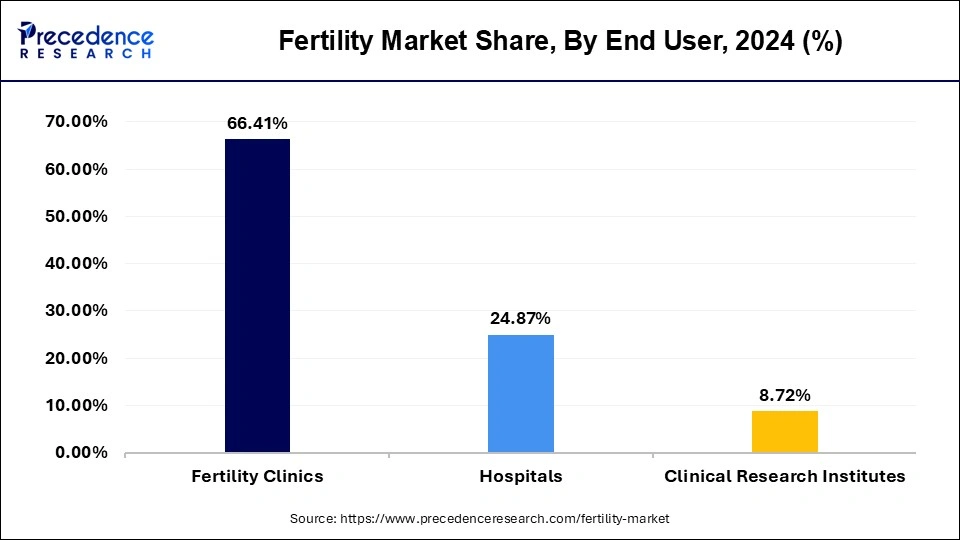
The fertility clinics segment contributed the highest market share, at 65.6% in 2024. Dedicated fertility clinics are purpose-built outpatient centers optimized specifically for ART workflows, laboratory quality control, and high patient throughput. Their leading share reflects specialization advantages over general hospital settings, including dedicated embryology labs and standardized protocols, stronger published success-rate reputations that influence patient choice, and greater operational efficiency around ART's precise, time-sensitive procedural requirements.
The hospitals segment is expected to expand to a stronger CAGR of 6.5% during the forecast period, reflecting a broader trend of larger health systems building integrated fertility and reproductive endocrinology programs. This growth is particularly pronounced in markets where insurance or public health coverage favors hospital-based care, or where hospital systems are expanding service lines to capture the full reproductive-health patient journey within a single integrated system.
By Region
Europe dominated the global market with the largest market share of 33.3% in 2024, supported by favorable reimbursement frameworks in several countries and an established treatment-seeking culture. Asia Pacific is estimated to expand at the fastest CAGR of 10.9% between 2025 and 2034, driven by rapidly expanding clinic infrastructure across China and India, rising disposable incomes, and a large, historically under-penetrated patient population. North America remains a significant and maturing market, increasingly shaped by the expansion of employer-sponsored fertility benefits coverage rather than public reimbursement. Latin America and the Middle East & Africa represent smaller but developing markets, with growth constrained in parts of the Middle East by regulatory restrictions on certain ART procedures.
Across all dimensions, the pattern is consistent: the segments with the largest current share (ART, fertility clinics, Europe) reflect the market's most clinically established and infrastructure-mature parts, while the fastest-growing segments (Asia Pacific regionally, hospitals as a channel) point toward geographic and structural expansion of treatment access into populations and care settings historically under-served relative to underlying infertility prevalence. Fertility drugs stand apart as the one segment where growth is expected to lag the broader market, reflecting its role as a stable complement rather than an independent growth driver.
Europe Fertility Market Size and Growth 2026 to 2035
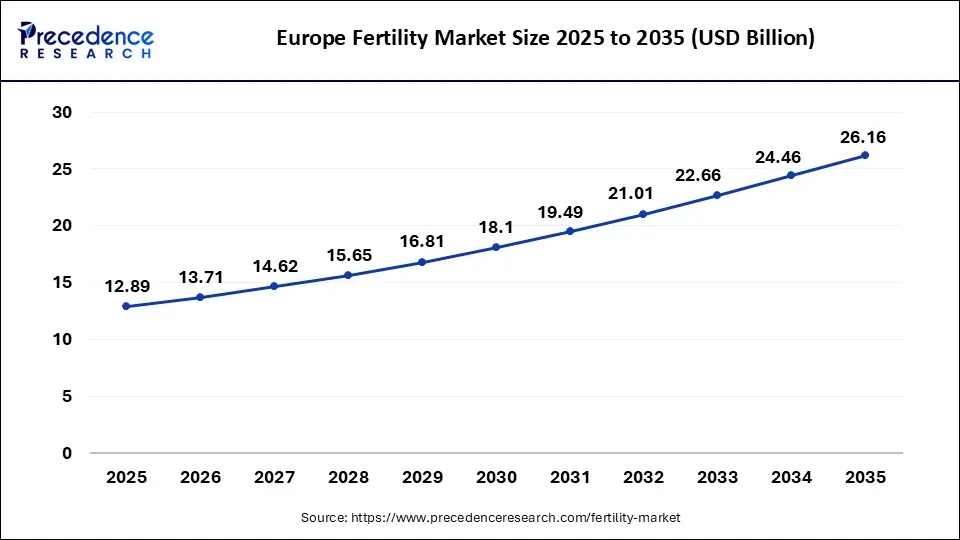
The Europe fertility market size was evaluated at USD 13.71 billion in 2026 and is projected to be worth around USD 26.16 billion by 2035, growing at a CAGR of 7.33%.
Key Coverage
- Share and growth-rate breakdown by procedure type (ART, drugs, diagnostics)
- Share and growth-rate breakdown by end-user (clinics vs. hospitals)
- Regional share and CAGR comparison
- Country-level sizing for key growth markets (India, China, U.S.)
Epidemiology & Patient Population: A Large, Structurally Growing Addressable Base Remains Under-Treated
Global infertility prevalence is estimated at 8 to 10% of couples of reproductive age, equating to approximately 80 million couples worldwide affected at any given time. In the United States specifically, health-authority data indicates that over 6% of married women aged 15 to 44 are unable to conceive or carry a pregnancy to live birth after one year of unprotected intercourse, with related estimates placing the number of U.S. women experiencing some form of infertility at approximately 6.1 million. Treatment-seeking behavior, however, remains well below clinical need in most markets: even in mature markets with established insurance coverage, only a fraction of clinically eligible patients initiate ART treatment in any given year, and the gap is substantially wider across most of Asia Pacific, Latin America, and the Middle East, where clinic density and out-of-pocket cost remain material barriers. This combination of a large diagnosed-need population and comparatively low current treatment penetration is a central structural driver of the market's above-average forecast growth rate.
Key Coverage
- Global and regional infertility prevalence estimates
- Patient population sizing by region
- Treatment penetration gap analysis
- Diagnosed vs. treated population comparison
Why Does the True Cost of an IVF Live Birth Run Several Multiples of the Headline Cycle Price?
The average cost of a single IVF cycle in the United States is estimated at approximately USD 12,400, with cycles using fresh embryos averaging around USD 8,158 and a reported median cost near USD 7,500. Costs vary substantially depending on clinic competition, regulatory environment, and the extent of public or insurance-based reimbursement. Against this pricing backdrop, IVF success rates average between 28% and 35% per cycle but decline sharply with maternal age: reported live-birth rates run around 32.2% for women under 35 versus as low as 1.9% for women over 44.
Our analysis indicates that the headline per-cycle price is a structurally misleading measure of what patients pay to achieve a live birth. With average success rates well below 50% even in the most favorable age bracket, and falling to near-negligible levels past 44, a meaningful share of patients require two, three, or more cycles before a successful pregnancy, meaning the effective cost of an outcome is frequently a multiple of the quoted single-cycle price rather than a close approximation of it. We believe this gap between quoted and effective cost is the single most important pricing dynamic in the market, more consequential to patient behavior than headline cycle pricing itself, because it directly determines affordability, financing needs, and the point at which patients abandon treatment.
In our view, the most significant implication is that competitive and commercial strategy in this market should be built around cost-per-outcome rather than cost-per-cycle. Clinics and technology suppliers that can credibly improve success rates, through better embryo selection, culture media, or genetic screening, are effectively lowering the patient's real cost of a live birth even if their per-cycle price is unchanged or higher, a distinction that matters increasingly as patients and payers become more sophisticated about comparing options. We expect this dynamic to continue driving demand toward multi-cycle financing products, refund or guarantee-based pricing packages, and employer-sponsored fertility benefits, since all three effectively convert an uncertain, potentially multi-cycle cost into a more predictable, manageable one for the patient. Our assessment indicates a clear opportunity for benefits platform providers and insurers to differentiate through outcome-based coverage models rather than simple per-cycle reimbursement caps. Such caps can leave patients under-covered when additional treatment cycles are most needed, limiting access to continued care.
The full report extends this analysis with country-level per-cycle pricing benchmarks, age-stratified success-rate curves by procedure type, and effective cost-per-live-birth modeling across major markets. It also provides a comparative assessment of how reimbursement structures, including public coverage, private insurance, and employer benefits, influence the number of treatment cycles patients typically pursue before achieving or discontinuing treatment.
This pricing and outcomes intelligence can also be structured into a queryable dataset that tracks cycle pricing, success rates, and reimbursement status by country, patient age band, and year. This enables clients to benchmark effective cost per outcome across markets, model the financial impact of different coverage designs, and identify where improvements in success rates could have the greatest impact on patient affordability. The dataset is designed to give clinical, commercial, and benefits-strategy teams a granular basis for pricing and coverage decisions that the narrative-level analysis above can only summarize.
Key Coverage
- Average and median per-cycle cost benchmarks
- Age-stratified success-rate data
- Effective cost-per-outcome analysis
- Regional cost variation and reimbursement landscape
Which Demand Forces Are Structural Rather Than Cyclical, and What Does That Mean for Long-Term Market Resilience?
Growth drivers behind the fertility market include the rising median age of first-time parents across most developed and increasingly developing markets, growing incidence of male-factor infertility, and rising obesity and lifestyle-related fertility risk factors, alongside continued clinic-network expansion and improving ART success rates driven by laboratory and embryology advances. Restraints include the persistently high out-of-pocket cost of treatment in markets without strong reimbursement coverage, the comparatively low per-cycle success rate that often necessitates multiple treatment cycles, and social or regulatory restrictions on ART access that remain in place across parts of the Middle East, parts of Asia, and some individual European countries. Opportunities center on expanding employer-sponsored fertility benefits programs, particularly across North America, rising demand for fertility preservation among younger patients delaying family formation, and continued under-penetration in large-population emerging markets across Asia Pacific and Latin America.
Our analysis indicates that the market's primary growth drivers are demographic and behavioral rather than cyclical, which distinguishes this market from many healthcare categories where demand fluctuates with economic conditions, insurance-cycle changes, or short-term health trends. Delayed childbearing is a multi-decade societal shift, not a temporary pattern, and it is occurring in parallel across developed and increasingly developing markets, meaning the underlying demand base is broadening geographically at the same time it is deepening within existing markets. We believe this combination of geographic breadth and demographic durability is what supports the market's above-average forecast CAGR relative to more mature healthcare service categories.
In our view, the most significant implication is that restraints and opportunities in this market are largely two sides of the same access equation, cost, reimbursement, and regulation determine how much of the demographically driven demand actually converts into treated patients. Where restrictive regulation persists across parts of the Middle East and Asia, or where reimbursement remains thin, as in much of the U.S. outside employer-sponsored coverage, a structural gap opens between underlying need and realized treatment volume. We expect this access gap to narrow gradually rather than close quickly, since it depends on slower-moving factors such as regulatory reform and employer benefit adoption rather than clinical capacity alone. From our assessment, this creates a clear opportunity for benefits-platform providers and clinic operators positioned in currently under-penetrated markets, since closing even a modest share of the access gap in a demographically large market translates into outsized incremental patient volume relative to markets that are already near saturation.
The full report extends this assessment with a structural-versus-cyclical classification of every major demand and restraint factor, country-level regulatory and reimbursement scoring, and a quantified view of how narrowing the access gap in specific regions would translate into incremental patient volume and market value through the forecast period.
How Much of the Market's Regional Growth Gap Is Actually a Reimbursement Story Rather Than a Demand Story?
Regulatory and reimbursement frameworks vary sharply by country and are a primary determinant of treatment-seeking rates. Several European countries mandate or heavily subsidize a defined number of ART cycles per patient, materially increasing treatment volume relative to comparably wealthy markets without such coverage. In the United States, infertility treatment coverage remains inconsistent across insurers and states, though a growing number of large employers now offer dedicated fertility benefits as part of broader efforts to improve talent retention. Regulatory approval and oversight of ART procedures, embryo handling, and genetic screening techniques, including preimplantation genetic testing, also varies by jurisdiction, shaping which advanced procedures clinics in each market are able to offer.
Our analysis indicates that reimbursement structure, not underlying infertility prevalence, is the dominant explanatory variable behind why comparably wealthy markets show materially different treatment-seeking rates. A country that mandates coverage for a defined number of ART cycles can convert a larger share of its clinically eligible population into actual treatment patients. This reflects the role of cost as a key barrier between diagnosed infertility and treatment initiation, particularly in countries with similar income levels and infertility prevalence but without comparable coverage mandates. This is a critical distinction for market sizing and forecasting purposes: regional demand differences in this market are better explained by policy variation than by biological or demographic variation.
In our view, the most significant implication is that growth in the United States is being unlocked employer by employer rather than through a single national policy shift. Coverage remains inconsistent across insurers and states, while large employers are increasingly introducing dedicated fertility benefits to expand access to treatment. We expect this employer-led expansion to continue functioning as the primary lever for growing the U.S. addressable, insured patient base over the forecast period, given the comparatively slower pace of state or federal mandate expansion relative to employer benefit adoption. From our assessment, this creates a clear opportunity for benefits-platform providers and clinic networks with strong employer-facing sales capability, since each new large-employer coverage decision effectively creates a discrete, quantifiable expansion of the addressable patient pool rather than a gradual, market-wide shift.
The full report extends this assessment with a country-by-country regulatory and reimbursement scoring framework, a comparison of ART cycle mandates and subsidy levels across major European markets, tracking of U.S. employer fertility-benefit adoption by industry and company size, and a jurisdiction-level view of which advanced procedures (genetic screening, embryo banking, donor programs) are permitted, restricted, or unregulated.
This regulatory and reimbursement intelligence also lends itself to a structured, queryable dataset: coverage mandate status, subsidized cycle count, and permitted-procedure list tracked by country and year, alongside employer fertility-benefit adoption tracked by company and industry, allowing clients to benchmark market accessibility across jurisdictions, model the addressable-patient-pool impact of a policy or employer-coverage change, and screen for markets where a regulatory shift would most expand realized treatment volume. This dataset is designed to give market-access, policy, and commercial-strategy teams a granular basis for prioritization that the narrative-level view above can only summarize.
Customer & Application Analysis: Treatment-Seeking Behavior Is Increasingly Shaped by Age, Coverage Access, and Fertility Preservation Demand
Patients seeking fertility treatment span a broad age range, but treatment intensity and procedure choice are strongly age-stratified, with younger patients more likely to pursue diagnostic and lower-intervention pathways and older patients more likely to require ART directly given lower spontaneous conception probability. A distinct and growing demand pool has emerged around elective fertility preservation, particularly egg freezing among women in their late 20s to mid-30s who seek to preserve reproductive options ahead of anticipated delayed childbearing.
This segment follows a different purchasing dynamic from traditional infertility treatment, with demand being more proactive, self-pay, and planning-oriented, compared with the reactive, diagnosis-driven, and often urgent nature of conventional infertility care. Purchasing decisions across both patient groups are heavily influenced by clinic success-rate transparency, cost and financing options, and, where available, employer or insurance coverage terms.
Competitive Landscape: A Mix of Diversified Clinical Networks, Pharmaceutical Suppliers, and Specialized Laboratory-Technology Providers
The fertility market's competitive structure spans several distinct tiers. Multi-site fertility clinic networks compete on geographic reach, success-rate reputation, and patient experience, while pharmaceutical and biotechnology companies supply fertility drugs and hormonal therapies. Specialized laboratory technology and consumables suppliers provide the reagents, culture media, cryopreservation systems, and capital equipment that underpin ART procedures. Clinic network competition remains relatively fragmented at the global level even as individual national and regional markets show meaningful consolidation, while the laboratory-technology and consumables tier is comparatively more concentrated among a smaller set of specialized global suppliers.
Leading Companies
| Company | Headquarters | Market Position | Core Strength | Major Segments | |
| 1 | Vitrolife AB | Sweden | Global ART technology leader | Culture media, lab devices, time-lapse imaging | ART consumables and equipment |
| 2 | CooperSurgical, Inc. | USA | Diversified fertility and women's health | Broad ART device and reagent portfolio | ART consumables |
| 3 | Thermo Fisher Scientific Inc. | USA | Diversified life sciences leader | Reagents, lab equipment | ART supplies |
| 4 | Merck KGaA | Germany | Pharmaceutical leader | Hormonal fertility therapies | Fertility drugs |
| 5 | Ferring Pharmaceuticals | Switzerland | Specialty pharma leader | Reproductive medicine drug portfolio | Fertility drugs |
| 6 | Cook Medical, Inc. | USA | Medical device specialist | ART catheters and devices | ART equipment |
| 7 | Kitazato Corporation | Japan | Cryopreservation specialist | Vitrification technology | ART consumables |
| 8 | Esco Micro Pte. Ltd. | Singapore | Lab equipment specialist | Incubators, workstations | ART equipment |
| 9 | The Baker Company, Inc. | USA | Lab equipment specialist | Cleanroom and biosafety equipment | ART equipment |
| 10 | Progyny Inc. | USA | Fertility benefits management leader | Employer benefits platform | Benefits administration |
| 11 | Monash IVF Group | Australia | Regional clinic network leader | Multi-site ART clinics | Clinical services |
| 12 | Virtus Health | Australia | Regional clinic network leader | Multi-site ART clinics | Clinical services |
| 13 | Genea Limited | Australia | Clinic network and technology provider | ART clinics plus proprietary tech | Clinical services, technology |
| 14 | Care Fertility Group | UK | Regional clinic network leader | Multi-site ART clinics | Clinical services |
| 15 | The Fertility Partnership | UK | Regional clinic network leader | Multi-site ART clinics | Clinical services |
| 16 | Medicover Group | Sweden | Diversified healthcare group | Multi-country fertility clinics | Clinical services |
| 17 | Bourn Hall Fertility Center | UK/global | Pioneer clinic network | Established ART clinic brand | Clinical services |
| 18 | Boston IVF | USA | Regional clinic network leader | Multi-site ART clinics | Clinical services |
| 19 | Indira IVF | India | Large-scale emerging-market network | High-volume ART clinics | Clinical services |
| 20 | Nova IVF Fertility | India | Emerging-market clinic network | Multi-city ART clinics | Clinical services |
| 21 | Apollo Hospitals Enterprise Ltd. | India | Diversified hospital group | Hospital-based fertility programs | Clinical services |
| 22 | Ovation Fertility | USA | Laboratory services specialist | Embryology lab services | Laboratory support |
Market Share & Competitive Ranking
Given the fertility market's structural split between clinical service delivery (fragmented, regionally concentrated) and ART technology/consumables supply (moderately concentrated), market share concentration differs sharply by tier. Among laboratory-technology and consumables suppliers, the top five companies are estimated to hold a meaningful minority share of global ART devices and reagent revenue, with Vitrolife, CooperSurgical, and Thermo Fisher Scientific representing the most globally diversified suppliers. Among clinical service providers, no single operator holds more than a low single-digit share of global treatment volume. This highlights the segment's continued fragmentation, even as individual national markets such as Australia, the UK, and India show meaningful consolidation around a small number of dominant regional networks.
Competitive Benchmarking
Benchmarking across leading participants highlights distinct competitive strengths across the fertility market. Global ART technology suppliers, including Vitrolife, CooperSurgical, and Thermo Fisher Scientific, demonstrate broad product portfolios and extensive global distribution but have more limited direct exposure to clinical services. Multi-site clinic networks, including Monash IVF, Virtus Health, Care Fertility Group, and Medicover, benefit from regional scale and established brand reputations, while their cross-border expansion remains more limited. Specialized players, including Progyny in benefits administration, Kitazato in cryopreservation, and Ovation Fertility in laboratory services, have strong positions within their respective niches but narrower overall market exposure.
Geographic Competitive Landscape
European clinic networks, including Care Fertility Group, The Fertility Partnership, and Bourn Hall, benefit from the region's established treatment-seeking culture and relatively supportive reimbursement environment. Australian operators, including Monash IVF, Virtus Health, and Genea, have developed highly consolidated national clinic networks. Indian operators, including Indira IVF, Nova IVF Fertility, and Apollo Hospitals, are scaling rapidly to address the country's large and under-penetrated patient population, making India an increasingly important market for both domestic and international clinic operators. U.S. competition remains fragmented across regional networks and hospital-affiliated programs, with Progyny's benefits-platform model representing a distinct, increasingly influential channel for driving patient volume through employer relationships rather than direct clinic ownership.
Strategic Developments
Recent strategic activity has centered on clinic-network expansion across Asia Pacific, alongside continued investment by ART technology suppliers in laboratory automation and time-lapse embryo monitoring technologies. In North America, employer-sponsored fertility benefits platforms are scaling rapidly as large employers increasingly expand reproductive health coverage as part of their employee benefits offerings. Clinic operators in Europe and Australia have continued to pursue selective bolt-on acquisitions of smaller regional practices to expand geographic coverage and patient throughput.
M&A Landscape
Consolidation activity has been most active among clinic-network operators seeking geographic scale, particularly across the UK, Australia, and increasingly India, alongside continued acquisition activity among ART technology and consumables suppliers seeking to broaden laboratory-product portfolios. Strategic rationale for these transactions typically centers on expanding treatment capacity in under-penetrated geographies, adding complementary laboratory technology, or building integrated patient-journey platforms spanning diagnostics, treatment, and benefits administration.
Company Strategic Positioning
Companies are broadly classified as:
- Technology/Product Leaders (Vitrolife, CooperSurgical, Thermo Fisher Scientific: broad ART consumables and equipment portfolios)
- Regional Clinic-Network Leaders (Monash IVF, Virtus Health, Care Fertility Group, Medicover: consolidated multi-site treatment delivery)
- Emerging-Market Scale Players (Indira IVF, Nova IVF Fertility, Apollo Hospitals: high-volume expansion in large under-penetrated populations)
- Channel/Platform Innovators (Progyny: benefits-administration model driving patient volume through employer relationships rather than direct clinic ownership)
Opportunity & White-Space Analysis
The largest quantifiable opportunities include: expanding employer-sponsored fertility benefits coverage across North America, where current penetration testing remains a small share of the total employer base; closing the treatment-penetration gap in Asia Pacific, where infertility prevalence is broadly comparable to Western markets but treatment-seeking rates remain considerably lower; growth in elective fertility preservation among younger patients, a category still in its relatively early adoption phase; and continued laboratory-technology innovation aimed at improving per-cycle success rates, which would directly reduce the effective cost-per-outcome that remains one of the market's most significant demand constraints.
Industry Structure (Porter's Five Forces)
- Supplier power: Moderate to High for specialized ART consumables and reagents, given the concentrated set of global suppliers with proprietary formulations.
- Buyer power: Low to Moderate for individual patients given limited price transparency and urgency of treatment need, but Moderate to High for large employers and insurers negotiating benefits contracts at scale.
- Threat of new entrants: Moderate, given clinical licensing requirements and embryology expertise needs, though relatively low capital intensity compared to hospital-scale healthcare businesses.
- Threat of substitutes: Low, as ART remains the primary clinically effective pathway for a large share of infertility diagnoses, though adoption of less-invasive diagnostic and drug-based interventions can delay progression to full ART treatment.
- Competitive rivalry: Moderate to High in mature clinic markets (Europe, Australia, U.S.) and intensifying rapidly in high-growth emerging markets (India, China).
PESTLE Analysis: Political and legal factors include country-specific ART regulation and, in some jurisdictions, restrictions on procedures such as donor conception or embryo screening; economic factors include disposable-income growth in emerging markets and the expansion of employer benefits coverage in developed markets; social factors include delayed childbearing trends and rising social acceptance of assisted reproduction; technological factors include laboratory automation, cryopreservation advances, and genetic screening adoption; and environmental factors are comparatively limited in direct relevance relative to other industrial markets.
Market Attractiveness: Assisted reproductive technology (ART) is rated Highly Attractive given its dominant revenue share, above-average growth rate, and continued technology-driven success-rate improvement; fertility clinic networks in under-penetrated emerging markets are rated Attractive given large addressable patient populations and relatively low current market saturation; infertility drugs are rated Moderate, reflecting comparatively slower forecast growth; and markets with restrictive ART regulation are rated Challenging given structurally limited addressable demand regardless of underlying infertility prevalence.
Future Outlook
By 2034, the market is projected to reach approximately USD 85.5 billion, sustaining its 8.9% CAGR trajectory, with Asia Pacific continuing to narrow the gap with Europe's current leadership position as regional clinic infrastructure and treatment-seeking rates continue to expand. ART is expected to retain its position as the dominant revenue segment, while hospital-based fertility programs and employer-sponsored benefits platforms are expected to grow faster than the market average, reflecting a broader structural shift toward integrated, insurance- and employer-connected treatment pathways. Companies combining strong clinical success-rate reputations with expanding geographic reach and integrated technology platforms are best positioned to capture disproportionate future patient volume.
Recent Developments
- In July 2025, IVI RMA Global acquired ART Fertility Clinics in the United Arab Emirates and Saudi Arabia, including three clinics with state-of-the-art facilities, from Gulf Capital. The acquisition strengthened IVI RMA's global footprint, including high-IVF-success, research-based protocols within its expansive network. This acquisition was subject to regulatory clearance and aligned with the company's global expansion priorities.
- In August 2025, Jamaican women were projected to average just 1.3 births per lifetime in 2025, according to a report from the United Nations Population Fund, marking one of the lowest fertility rates in the world. The average number of births fell well below the 2.1 births needed to keep a population stable, making Jamaica one of a very small number of countries to have lowest-low fertility rates.
- In June 2025, Guardian Life Insurance collaborated with Carrot to incorporate fertility health and family-building services into its hospital indemnity insurance product. The association made Guardian the first insurance company in this type of insurance to offer Carrot's fertility, prenatal, menopause, urology, and parenting support. Employees also had access to Carrot's Provider Finder, Carrot Academy, expertise, 24/7 care navigation, and more than 20 wellness benefits.
Fertility Market Segments Covered in the Report
By Offering
- Assisted Reproductive Technology
- IVF
- Artificial Insemination
- Surrogacy
- Others
- Fertility Drugs
- Gonadotropin
- Anti-estrogen
- Others
By End user
- Fertility Clinics
- Hospitals
- Clinical Research Institutes
By Geography
- North America
- Europe
- Asia Pacific
- Latin America
- Middle East & Africa (MEA)
For inquiries regarding discounts, bulk purchases, or customization requests, please contact us at sales@precedenceresearch.com
Frequently Asked Questions
Tags





Ask For Sample
No cookie-cutter, only authentic analysis – take the 1st step to become a Precedence Research client
 Get a Sample
.webp)



 sales@precedenceresearch.com
 Schedule a Meeting
