



Food Ingredients Market Size, Key Companies, Company Market Share, Production Volume, Consumption Trends, Pricing Analysis, Export & Import Dynamics, Competitive Positioning, and Demand Forecast
Food Ingredients Market (By Ingredient Type (USD/TONS): Functional Ingredients, Core Ingredients; By Application: Bakery & Confectionery, Beverages, Dairy & Frozen Desserts, Meat, Poultry & Seafood, Convenience Foods, Others; By Source: Natural, Synthetic, By Form: Semi-solid (Pastes, Gels); By Functionality: Taste Enhancers, Texture Modifiers, Shelf-Life Extenders, Nutritional Fortification, Color & Appearance, Binding & Thickening Agents, Emulsification & Stabilization, Fat Replacers, Infant Nutrition Companies, Retailers (Private Label Blends)) ) - Global Industry Analysis, Size, Trends, Leading Companies, Regional Outlook, and Forecast 2025 to 2034
Source: https://www.precedenceresearch.com/food-ingredients-market
 Get a Sample
 Table Of Content


What is the Food Ingredients Market Size?
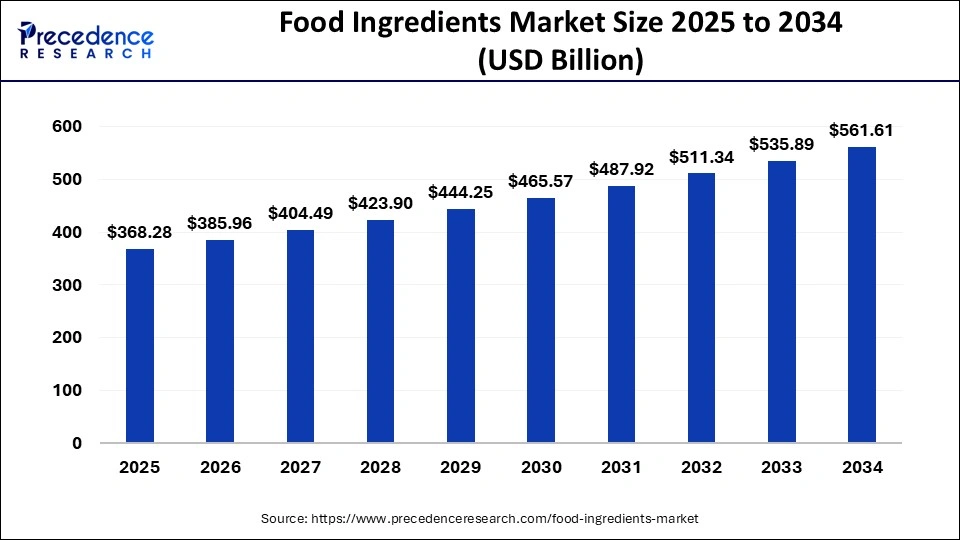
The global food ingredients market size is valued at USD 368.28 billion in 2025 and is predicted to increase from USD 385.96 billion in 2026 to approximately USD 561.61 billion by 2034, expanding at a CAGR of 4.80% over the forecast period from 2026 to 2034. The food ingredients market is driven by the increasing demand for processed food products, functional food products, and clean-label food products.
Key Takeaways
- By Region, North America held a dominant revenue share of the market in 2025 and is expected to sustain as a leader in the upcoming period.
- By Region, Asia Pacific is expected to grow at the fastest CAGR in the market during the forecast period.
- By ingredient type, the core ingredients segment held a dominant position in the market in 2025.
- By ingredient type, the functional ingredients segment is expected to grow at the fastest CAGR in the market between 2026 and 2035.
- By application, the bakery & confectionery segment accounted for a major revenue share in the market in 2025.
- By application, the plant-based foods & alternatives segment is expected to grow with the highest CAGR in the market during the studied years.
- By source, the natural segment led the global market in 2025.
- By source, the bio-based/fermentation-derived segment is expected to expand rapidly in the market with a CAGR in the coming years.
- By form, the dry segment registered its dominance over the global market in 2025.
- By form, the liquid segment is expected to witness the fastest growth in the market with a CAGR over the forecast period.
- By functionality, the taste enhancers segment dominated the global market in 2025.
- By functionality, the nutritional fortification segment is expected to gain the highest market share with a CAGR between 2026 and 2035.
- By end user/buyer type, the food & beverage manufacturers segment held the largest revenue share in the market in 2025.
- By end user/buyer type, the nutraceutical manufacturers segment is expected to show the fastest growth with a CAGR over the forecast period.
The Building Blocks of Tomorrow's Taste Economy
The food ingredients market is characterized by the continual evolution of clean-label and plant-based ingredients to meet changing consumer preferences. Growing demand for convenience food and functional ingredients, coupled with a focus on sustainable and ethically sourced components, further drives innovation and market expansion. Key players strive to address these trends through research, development, and the introduction of novel ingredients to enhance the overall quality and nutritional profile of food products.
In response to increasing health consciousness, the food ingredients market witnesses a surge in demand for organic and natural additives. Innovations in food technology and biotechnology contribute to the development of novel ingredients. As globalization impacts culinary preferences, the market adapts with a diverse range of ingredients, ensuring a dynamic landscape that caters to the complex and evolving needs of the global food and beverage industry.
Food Ingredients Market Growth Factors
- The market witnesses robust growth driven by the escalating consumer preference for natural and clean-label ingredients, aligning with health-conscious choices and transparent product labels.
- Ongoing innovations in food technology propel the market forward as manufacturers introduce novel ingredients, leveraging advancements in processing techniques to meet evolving culinary trends.
- A heightened awareness of health and wellness prompts a surge in demand for functional and nutritious ingredients, reflecting a growing emphasis on holistic well-being.
- The industry observes a paradigm shift towards clean-label and plant-based ingredients as consumers increasingly prioritize sustainable, ethical, and health-conscious food choices, influencing the market's product development trajectory.
- A prevailing trend revolves around sustainable and ethically sourced components, reflecting the industry's commitment to responsible practices and addressing environmental concerns.
- The impact of culinary globalization shapes industry trends, prompting the introduction of diverse ingredients to cater to the dynamic and varied tastes of consumers worldwide.
- The surging demand for organic and natural additives creates lucrative business opportunities for ingredient suppliers who can meet this growing consumer preference with high-quality, responsibly sourced alternatives.
- The increasing appetite for functional ingredients presents businesses with opportunities to capitalize on health and wellness trends, fostering innovation in formulations that offer tangible health benefits.
- Companies stand to benefit by investing in research and development, leveraging cutting-edge food technology to introduce innovative ingredients that capture market attention and align with evolving consumer expectations.
- The globalization of culinary preferences acts as a significant driver for the Food Ingredients Market. As consumers explore diverse cuisines, there is an increased demand for unique and exotic ingredients, fostering innovation and expanding market growth.
- The clean eating movement, marked by a focus on minimally processed and whole-food ingredients, is a driving force shaping consumer choices. Food ingredient manufacturers can capitalize on this trend by providing wholesome and minimally processed alternatives, aligning with the clean eating preferences of health-conscious consumers.
- The growing interest in personalized nutrition opens opportunities for companies to develop tailored food ingredients that cater to individual health needs and dietary preferences. Customized formulations and ingredients that address specific nutritional requirements present a niche market for innovation.
- With the rise of e-commerce and direct-to-consumer channels, there are opportunities for food ingredient suppliers to establish direct relationships with consumers. Companies can leverage online platforms to showcase their products, provide educational content, and offer unique ingredients directly to consumers, bypassing traditional retail channels.
Market Outlook
- Industry Growth Overview: The market's growth is propelled by technological convergence, where food science meets biotechnology. Functional ingredients like probiotics, peptides, and plant fibers redefine what “healthy” means in everyday foods. The growing consumer focus on immunity, mental well-being, and gut health shapes innovation pathways. Strategic mergers between ingredient giants and biotech startups enhance product diversity. Automation and smart manufacturing optimize cost efficiency without compromising quality. The industry is evolving from flavor creation to holistic nutrition architecture.
- Global Expansion: Ingredient manufacturers are expanding globally to align with shifting consumer tastes and trade flows. Companies are localizing production units to ensure raw material accessibility and cost optimization. Export opportunities are rising for natural flavor and functional additive producers in emerging economies. Cross-border collaborations foster knowledge exchange and quality harmonization. Global food giants increasingly partner with regional suppliers to tap into local authenticity. The expansion trend underscores a borderless ingredient economy powered by culinary creativity and global consciousness.
- Sustainability Trends: Sustainability defines the modern food ingredient narrative. Companies are reducing carbon footprints through energy-efficient processing and circular sourcing models. Upcycling agricultural by-products into flavor or fiber additives reduces waste. Biodegradable packaging and sustainable logistics complement eco-conscious ingredient production. Consumers now expect climate responsibility from brands at every stage of the value chain. The shift toward green chemistry and regenerative agriculture ensures that food innovation aligns with planetary health.
- Startup Ecosystem: Startups are emerging as the flavor disruptors of the global food industry. Agile companies focus on niche areas such as precision fermentation, cell-based fats, and sensory-enhancing proteins. Many new ventures are developing AI-driven formulation tools for ingredient optimization. Venture capital funding supports breakthroughs in natural sweeteners, adaptogens, and functional blends. Collaboration between academia and startups accelerates R&D cycles. This innovation-driven ecosystem brings boldness and creativity to an industry rooted in tradition.
Market Scope
| Report Coverage | Details |
| Market Size in 2026 | USD 385.96 Billion |
| Market Size in 2025 | USD 368.28 billion |
| Market Size by 2034 | USD 561.61 Billion |
| Growth Rate from 2026 to 2034 | CAGR of 4.80% |
| Largest Market | North America |
| Base Year | 2025 |
| Forecast Period | 2026 to 2034 |
| Segments Covered | By Type and By Application |
| Regions Covered | North America, Europe, Asia-Pacific, Latin America, and Middle East & Africa |
Market Dynamics
Driver
Consumer demand for clean label products and technological advancements in food processing
Consumer demand for clean label products and technological advancements in food processing synergistically drive the surge in the food ingredients market. The increasing preference for clean label products, characterized by simple, natural ingredients, stimulates innovation in response to heightened transparency expectations. Food ingredient manufacturers respond by incorporating cutting-edge technologies in processing, ensuring the production of minimally processed, high-quality ingredients that meet clean label criteria.
Technological advancements further enhance the functionality, nutritional value, and sensory attributes of food ingredients. Advanced processing techniques enable the extraction of key compounds, preservation of nutritional integrity, and the creation of unique textures and flavors. This not only aligns with clean label demands but also caters to the evolving tastes and preferences of consumers seeking healthier and more diverse food options. Together, consumer demand for transparency and technological innovations propels the food ingredients market forward, shaping a landscape of wholesome, technologically refined, and consumer-friendly offerings.
Restraint
Fluctuating raw material prices and consumer concerns about additives
Fluctuating raw material prices present a significant restraint for the food ingredients market. The industry relies heavily on diverse raw materials, including agricultural products, flavoring agents, and preservatives. Sudden changes in commodity prices, influenced by factors such as weather conditions, geopolitical events, and supply chain disruptions, impact the cost structure for manufacturers. This volatility can lead to increased production costs and decreased profit margins. To mitigate these challenges, companies may face the need to adjust pricing, which can potentially affect their competitiveness in the market. The unpredictability of raw material prices poses challenges in long-term planning and strategic decision-making for food ingredient manufacturers.
Consumer concerns about additives, including artificial colors, flavors, and preservatives, pose another restraint on the food ingredients market. As consumers become more health-conscious and prioritize clean eating, there is a growing aversion to synthetic additives perceived as unnatural or potentially harmful. Heightened awareness of food labels and ingredients prompts consumers to seek products with minimal additives and a focus on natural, wholesome alternatives. This trend places pressure on manufacturers to reformulate products or seek natural alternatives, impacting the market demand for traditional additives. Addressing consumer concerns about additives requires innovation, transparency, and a commitment to providing clean-label solutions to maintain consumer trust and meet evolving dietary preferences.
Opportunity
Functional, nutraceutical ingredients, plant-based and alternative proteins
Functional, nutraceutical ingredients and the surge in plant-based and alternative proteins are key drivers propelling the food ingredients market. The demand for functional and nutraceutical ingredients is driven by consumers seeking foods with added health benefits, such as antioxidants, vitamins, and probiotics. This trend aligns with the growing global emphasis on wellness and preventive health, spurring innovation in ingredient formulations to meet these health-conscious preferences.
Simultaneously, the rise in plant-based and alternative proteins caters to the increasing popularity of vegetarian, vegan, and flexitarian diets. Consumers are drawn to these protein sources for health reasons, ethical considerations, and environmental sustainability. This shift prompts the development of diverse plant-based ingredients and protein alternatives, ranging from plant-derived meat substitutes to dairy alternatives. The market's response to these trends reflects a dynamic landscape, with food ingredient manufacturers continually innovating to meet the evolving demands of health-conscious and environmentally aware consumers.
Segments Insight
Ingredient Type Insights
The Core Ingredients Segment Held the Largest Share of the Food Ingredients Market in 2025
The core ingredients segment held a dominant position in the market in 2025 as they play a key role in the formulation and manufacturing process. The primary uses of starches and fibers, resistant starch, inulin, psyllium, fats, and oils are related to texture, stability, nutrition, and product quality. There has been an increase in consumer demand in certain food categories as they are looking for healthier and fibre-enriched products.
The functional ingredients segment is expected to witness strong growth during the forecast period due to increasing consumer demand for health-boosting food products. New additions to growing and emerging functional foods and beverages include proteins, probiotics, prebiotics, omega-3 fatty acids, enzymes, antioxidants, plant extracts, and other ingredients. Fortification of food is introduced to address changing food preferences and health concerns related to lifestyles.
The specialty ingredients segment is projected to grow at a notable pace due to the growing demand for clean-label, premium, and customized food ingredients. Synthetic ingredients have been replaced by natural ingredients such as sweeteners, flavours, colouring, emulsifiers, stabilizers, and preservatives. The manufacturers are concentrating on enhancing the taste, consistency of the product, shelf life, and its appearance without compromising the quality.
Application Insights
The Bakery & Confectionery Segment Dominated the Food Ingredients Market in 2025
The bakery & confectionery segment dominated the market in 2025 due to the high demand for bread, cakes, biscuits, chocolates, and baked products. The products aim to enhance the texture, taste, and sweetness of the product as well as stability and nutritional value using food ingredients. The bakery products are becoming healthier and are made with more functional and clean-label ingredients.
The plant-based foods & alternatives segment is expected to grow at the fastest CAGR during the forecast period, fueled by consumers' growing interest in plant-based and flexitarian eating. As the importance of sustainable practices, animal welfare, and health and wellness concerns becomes more prevalent, the demand for plant-based ingredients is on the rise. New protein, fibre, and functional ingredients in food and beverage products based on plant proteins are coming to market.
The dairy & frozen desserts segment is projected to grow at a notable pace as the demand for high-quality dairy products and innovative frozen desserts is set to increase. Food ingredients increase dairy product stability, flavour, and texture, as well as nutritional value in dairy formulations. Manufacturers are now offering low-sugar and protein-rich products to meet the new demand of the consumer.
The meat, poultry & seafood segment is expected to witness steady growth during the forecast period as processed and convenience products of meat, poultry, and seafood continue to gain market share. Food ingredients are added to improve the flavor and texture, preserve and extend shelf life, and to ensure food safety. Manufacturers are considering natural preservatives and clean-label ingredients to meet regulatory and consumer requirements.
Source Insights
The Natural Segment Dominated the Food Ingredients Market in 2025
The natural segment dominated the market in 2025, driven by the Demand for plant-based ingredients (fruits and vegetables and grains) and animal-based ingredients (dairy), which is still strong. Consumers are increasingly mindful when it comes to food products, nutrition, transparency, and product safety. There is a growing trend for food manufacturers to use natural ingredients to meet evolving regulatory needs.
The bio-based/fermentation-derived segment is expected to grow at the highest rate during the forecast period, owing to the increasing demand for sustainable and performance food ingredients. Manufacturers are investing in bio-based production routes because of an increased focus on environmental sustainability. Consumers are consuming products with natural ingredients that are enhanced with nutrients.
The synthetic segment is projected to grow at a healthy pace due to the affordable and stable solution offered to food manufacturers. The importance of the use of synthetic ingredients cannot be overlooked because of their various applications in the extension of shelf life, product stability, and product quality assurance. They are still useful and price-competitive in processed foodstuffs and are popular.
Form Insights
The Dry Segment Dominated the Food Ingredients Market in 2025
The dry segment dominated the market in 2025, due to its longer shelf life, ease of storage, and ease of transportation. The powder, granules, and crystal forms are common, as are applications in bakery, beverage, dairy, snack, and processed food. These ingredients provide easy-to-handle, easy-to-dose, easy to dose and better product stability during manufacture. They are versatile and can be used to produce many kinds of food formulations efficiently.
The liquid segment is expected to witness notable growth in demand for liquid syrups, concentrates, and emulsions, along with liquid flavoring solutions. They are applied to a variety of products, including drinks, dairy products, sauces, cakes, and candy. The growth of the market is being driven by consumers' choice for flavored beverages and high-quality desserts.
The semi-solid segment is expected to grow steadily, as they are used in many foods such as sauces, spreads, fillings, pastes, gel foods, etc., for their excellent texture, stability, and sensory properties. New formulations for improved functional and consumer properties are being developed by manufacturers. The sales of the segment are being propelled by a rise in demand for ready-to-eat and convenience foods.
Functionality Insights
The Taste Enhancers Segment Dominated the Food Ingredients Market in 2025
The taste enhancers segment dominated the market in 2025, due to consumers' preference for flavored and high-quality food products. Processed foods, spices, snack foods, drinks, and ready-to-eat foods are enhanced with taste enhancers to enhance their taste. Flavors are being created that cater to consumer preferences and tastes. Food companies are developing innovative flavours based on consumer preference and taste.
The nutritional fortification segment is expected to witness the fastest growth during the forecast period. Food manufacturers have begun adding vitamins, minerals, protein, and other key nutrients to their products in recent years in an effort to increase the nutritional value of the product. Fortification is increasing as a result of the widespread occurrence of micronutrient deficiency and lifestyle-related diseases.
The color & appearance segment is expected to grow steadily, with the increasing consumer preference towards eye-catching and natural-looking food products. In addition to the uses in the pharmaceutical industry, fruits, vegetables, and plant extracts are also gaining popularity as natural colouring agents in food applications. Regulatory requirements are the driver for the replacement of synthetic colours by clean-label colours as manufacturers strive to meet regulatory requirements.
The emulsification & stabilization segment is projected to witness stable growth during the forecast period as it is vital to enhance product texture and consistency, along with its shelf life. Dairy products, bakery products, confectionery, beverages, and processed foods commonly use emulsifiers and stabilisers in food.
End User/Buyer Type Insights
The Food & Beverages Manufacturers Segment Dominated the Food Ingredients Market in 2025
The food & beverage manufacturers segment dominated the market in 2025, as demand for food and beverage ingredients for processed food and beverages has always been high. Manufacturers have to employ a range of ingredients to enhance product quality and functionality, nutrition, and shelf-life. Consumers are increasingly looking for convenience foods, functional foods, and clean-label products, resulting in an increase in the consumption of ingredients.
The nutraceutical manufacturers segment is expected to witness notable growth as functional foods, dietary supplements, nd wellness products are in increasing demand. Protein-enriched, probiotic, vitamin, and mineral-fortified foods are becoming more popular, as are those with plant-based ingredients. Increased consumer awareness of the importance of health and of preventive health measures has prompted manufacturers to create new formulations.
The foodservice segment is expected to grow steadily, as food outside the home grows and the world's major foodservice businesses flourish. Foodservice operators enjoy consistent food flavor, texture, and appearance due to quality food ingredients. Demand for ingredients is rising because of the need for high-quality, international, and bespoke menu items. There are new opportunities in the sector in the context of increased numbers of tourists and urbanisation.
The bakery chains segment is projected to witness stable growth during the forecast period, as demand for fresh bakery products and quality confectionery products is projected to increase during the forecast period. The best bakery brands are continuously creating new and healthy products to attract customers. Food ingredients enhance the quality of products, shelf life, flavor, and texture in bakery applications. Organized retail and fast-food bakery outlets are helping to drive market growth.
Regional Insights
North America will lead the Global Food Ingredients Market in 2025
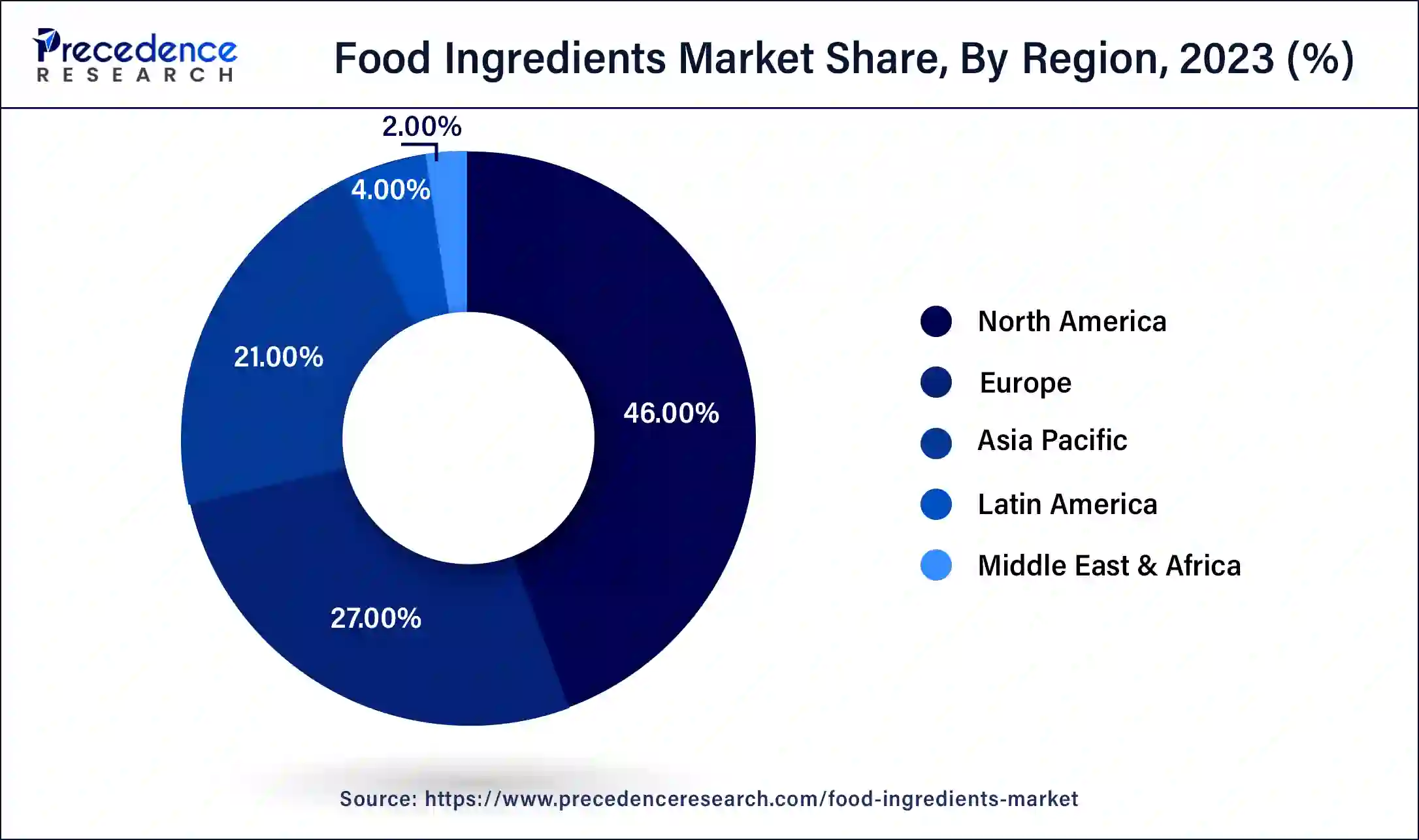
North America dominated the global market in 2025 due to its food processing industry complexities, high functional food consumer trends, and the presence of key food manufacturers. High investments are still being made in the region for clean-label products and other plant-based and fortified food products. Increased health consciousness has been noticed across markets, prompting the dietary trend towards natural ingredients and nutrients in foods to show a great increase in momentum.
U.S. Food Ingredients Market Size and Growth 2025 to 2034
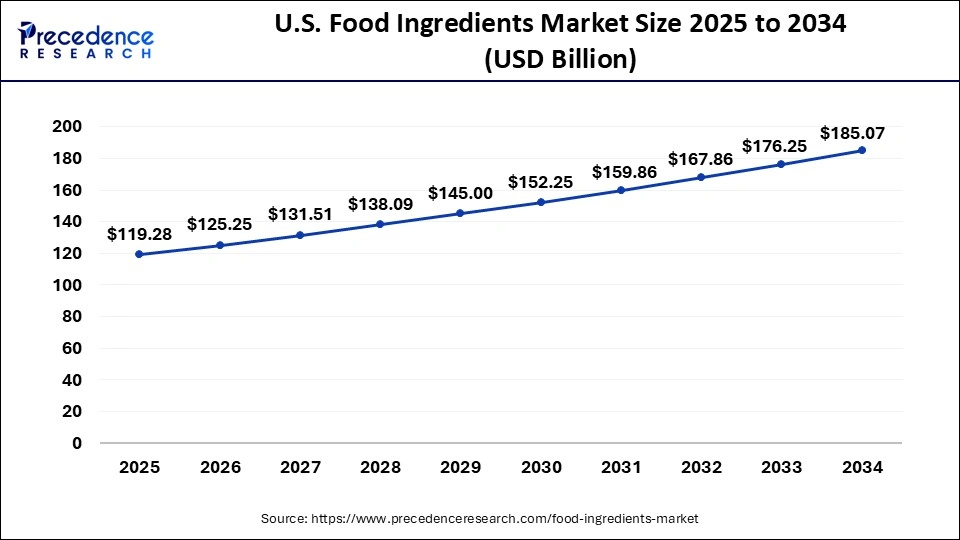
The U.S. food ingredients market size is calculated at USD 119.28 billion in 2025 and is projected to be worth around USD 185.07 billion by 2034, poised to grow at a CAGR of 5% from 2025 to 2034.
U.S. Market Trends
The U.S. market is anticipated to grow significantly due to its increased demand for clean-label, organic & functional foods. Consumers want protein-rich foods with little sugar and fortified with vitamins and minerals to contribute to their health and wellness. The food industry is determined to make its solutions future-proof and rejuvenate its offering with new ingredients to meet consumers' whims and fancies. Plant-based foods and personalised nutrition are seen as new opportunity platforms for suppliers of the ingredient market.
Asia Pacific is Undergoing the Fastest Growth in the Food Ingredients Market
Asia Pacific is expected to grow at the fastest rate in the market as the population becomes more urban, has a higher disposable income, and changes its eating habits. Consumers are increasingly interested in higher-quality, practical, and convenient food products that are more nutritious. Food processing companies and investments in food innovation of ingredients are enabling regional growth. Traditional food products are being surpassed by specialty food products in terms of sales, due to Western influences.
China Market Trends
China's food ingredients market is anticipated to grow significantly, as consumers' focus on health, functional, and organic food will increase. Product innovations are being inspired by the development of compulsory programmes concerning food safety and the approval of new food additives. Domestic and foreign companies are steadily building up their portfolios with an emphasis on PLPs, vitamins, and specialty ingredients.
In Europe, the food ingredients market showcases a commitment to sustainable and ethically sourced ingredients, aligning with the region's emphasis on responsible consumption. The market experiences a surge in demand for plant-based and alternative proteins, reflecting a growing preference for environmentally friendly and plant-forward diets. Europe's rich culinary heritage blends with a focus on innovative and diverse ingredient offerings, creating a dynamic landscape that addresses evolving consumer preferences.
Advancements in the Food Ingredients Market in Europe
Europe is expected to witness significant market growth throughout the forecast period, driven by an increasing demand for ethical and clean food labeling and sustainable food ingredients. In the field of plant protein and environmentally friendly food products, there are consumer activities. In this industry, money is being invested in new technologies for ingredients that can improve nutritional and quality aspects of food. Food use systems support the usage of safe, natural ingredients.
Germany Market Trends
Germany market is anticipated to grow significantly, as the need for natural, functional, and clean-label foods grows. Consumers are rising above the need for convenience and are choosing prepared, healthy, and nutritious meals that utilize premium ingredients. Food manufacturers are doing much to reformulate products to minimize the presence of artificial additives in making a healthier product. The bakery, dairy, and plant-based food applications continue to create significant innovation growth, fueling the demand for ingredients.
Key Trends in the Food Ingredients Market in Latin America
Latin America is expected to witness significant growth in the market, driven by growing demand for natural food ingredients. More consumers are interested in "Organic", "Minimally Processed," and "Plant-Based" products. Manufacturers are leveraging the use of native crops like quinoa, chia, and amaranth to make functional ingredients. The introduction of new flavour systems and nutrients is increasing the range of products available in the region.
Brazil Market Trends
Brazil's food ingredients market is anticipated to grow significantly, as a strong foundation for the market for food ingredients, which is projected to grow significantly in the country. Investments in sustainable agriculture and food processing technologies continue to reinforce the industry. Increasing demand for functional foods and clean-label products is a key factor fostering innovation in the Food and beverage manufacturing industry.
Growth of the Middle East and Africa in the Food Ingredients Market
The Middle East and Africa region is expected to witness significant growth in the market as investments are expected to rise in food processing and ingredients manufacturing. Awareness of health is increasing, and as a result, the demand for natural and functional as well as culinary halal certified food ingredients is also increasing. The craftsmen are trying to boost their production and reduce the use of imported ingredients. Ingredient innovations are being supported by the expanding foodservice industry and demand for convenience foods.
Saudi Arabia Market Trends
The Saudi Arabia market is anticipated to grow significantly due to increased investment in food production, sourcing of ingredients with sustainable practices, and product innovation. Increased demand for more advanced, functional, and clean-label foods is driving manufacturers to create more advanced solutions in ingredients. The government's efforts to supply food for local production are contributing to the growth of the local industry.
Competitive Landscape
Food ingredients are a highly competitive market segment, and key players aim to improve their market position by investing in product innovation and innovation relating to clean labels as well as sustainable development of food ingredients. Key operators such as Cargill, Archer Daniels Midland (ADM), Ingredion Incorporated, Kerry Group, and International Flavors & Fragrances are expanding their plant protein product line, functional ingredient line, natural flavors line, specialty additives line, and nutritional line.
Strategic partnerships, mergers and acquisitions, and R&D investments remain key strategic investments to secure a strategic advantage. Furthermore, the company is increasing its footprint across the world with its manufacturing and distribution operations to ensure access to functional, organic, and premium food ingredients to a variety of final-use industries. The market is becoming active with regard to satisfying consumer desires and regulatory standards, either through transition to sustainable sourcing or through precision fermentation and biotechnology.
Market Value Chain Analysis
- Raw Material: Primary raw materials include cereals, oils, fruits, vegetables, legumes, and bio-cultures. Demand for non-GMO and organic materials continues to grow. Advances in fermentation and bioprocessing unlock new compounds from sustainable sources. The shift toward minimally processed, traceable materials ensures consumer confidence.
Key players: Cargill, Archer Daniels Midland (ADM), and Ingredion.
| Company/Industry Segment | Product Examples | Product Aim(s) |
| Specialty Food Ingredients (e.g., cargill, Kerry Group, Azelis, Olam) | Plant-based proteins, natural sweeteners, functional additives, starches, fats/oils, flavors, colors | To provide ingredients that offer specific techno-functional properties (texture, shelf life, appearance), cater to evolving consumer demands (health, wellness, sustainability), and enable new product development. |
| Nutraceutical & Health | Bioactive compounds, vitamins, minerals, specific peptides | To support healthy and abundant lifestyles, develop innovative products with enhanced properties, and offer nutritional benefits or disease prevention capabilities. |
| General Food Production | Grains, dairy products, meat, fruits, vegetables | To ensure a reliable supply of high-quality raw materials, meet food safety standards, and develop products that are safe, nutritious, and appealing to consumers. |
Top Companies
- Ingredion Incorporated: A global ingredient solutions company that produces starches, sweeteners, nutritional ingredients, and biomaterials. Its importance lies in its role as a key supplier of specialty ingredients that help manufacturers meet consumer demands for health, wellness, and clean-label products.
- Tate & Lyle PLC: A specialty food and beverage solutions business and a global leader in sweetening, mouthfeel, and fortification. Tate & Lyle's primary importance is in using the "Science of Food to help customers create healthier and tastier choices by providing ingredients and solutions that reduce sugar, calories, and fat, and add fiber and protein to food and drinks.
- Chr. Hansen Holding A/S: A global bioscience company that develops natural ingredient solutions for the food, nutritional, pharmaceutical, and agricultural industries. Its importance is centered on its expertise in probiotics, cultures, enzymes, and natural colors, which improve food quality, safety, and shelf life, while also supporting human and animal health.
- FMC Corporation: A global agricultural sciences company.) FMC is primarily important for its role in the agriculture sector, providing solutions that include crop protection products herbicides, insecticides, fungicides to enhance crop yield and quality.
- Naturex: Its importance is in the sourcing, production, and marketing of natural ingredients, including flavours, colours, antioxidants, and plant extracts for the food, beverage, and nutrition industries. The company meets the growing consumer demand for natural, clean-label products derived from sustainable sources.
- Sensient Technologies Corporation: A global manufacturer and marketer of colours, flavors, and other speciality ingredients. Sensient is important for its expertise in sensory properties, helping food and beverage manufacturers achieve the desired colour, taste, and visual appeal in their products using advanced technologies and natural ingredients. It plays a key role in product differentiation and consumer appeal.
Food Ingredients Market companies
- Cargill, Incorporated
- Archer Daniels Midland Company (ADM)
- DuPont de Nemours, Inc.
- Kerry Group
- Corbion NV
- DSM Nutritional Products
- BASF SE
- Associated British Foods plc (ABF)
- Ajinomoto Co., Inc.
Recent Developments
- On May 5, 2025, Cinco de Mayo and Chipotle are celebrating with a new gaming experience that can score fans some free food. The company has created "Ingredient Quest" to "educate its Gen Z fans on the brand's 53 real ingredients while allowing them to claim a reward of free Chipotle in the physical world."
- In April 2025, Arla Foods Ingredients launched the Lacprodan MicelPure portfolio at Vitafoods Europe 2025, including a range of MCI solutions that are relevant for medical nutrition.
- In March 2025, Nestlé India announced the launch of its new CEREGROW with no refined sugar, to enhance its commitment to offering nutritious choices to its consumers through meaningful innovations.
- In 2022, Tate & Lyle introduced Erytesse erythritol, a new sweetener, through a strategic partnership distribution agreement with a prominent erythritol supplier. This addition strengthens Tate & Lyle's capability to assist customers in meeting the rising consumer demand for healthier, sugar-reduced, and calorie-conscious products.
- In 2022, Royal DSM agreed to acquire First Choice Ingredients, a prominent supplier of dairy-based savory flavorings, for a total enterprise value of USD 453 million. Specializing in clean-label, fermented dairy, and dairy-based savory flavorings, First Choice Ingredients contributes to taste and functional solutions across diverse applications within the food industry.
Segments Covered in the Report
By Ingredient Type (USD/TONS)
- Functional Ingredients
- Proteins (Whey, Soy, Casein, Collagen, Pea, etc.)
- Prebiotics & Probiotics
- Omega-3 & Fatty Acids
- Plant Extracts & Phytochemicals
- Enzymes
- Antioxidants
- Specialty Ingredients
- Sweeteners
- Natural (Stevia, Monk Fruit, Honey)
- Artificial (Aspartame, Sucralose)
- Sugar Alcohols (Sorbitol, Xylitol)
- Flavors & Flavor Enhancers
- Natural Flavors
- Artificial Flavors
- Umami Enhancers (MSG, Yeast Extract)
- Colorants
- Natural (Paprika, Beetroot, Spirulina)
- Synthetic
- Emulsifiers & Stabilizers
- Lecithin
- Mono- & Diglycerides
- Guar Gum, Xanthan Gum
- Preservatives
- Natural (Vinegar, Rosemary Extract)
- Synthetic (Sorbates, Benzoates)
- Sweeteners
- Core Ingredients
- Starches & Fibers
- Resistant Starch
- Inulin
- Psyllium
- Fats & Oils
- Plant-based (Canola, Sunflower)
- Animal-based (Butter, Lard)
- Starches & Fibers
By Application
- Bakery & Confectionery
- Beverages
- Dairy & Frozen Desserts
- Meat, Poultry & Seafood
- Convenience Foods
- Sauces, Dressings & Condiments
- Infant & Clinical Nutrition
- Plant-Based Foods & Alternatives
- Others
By Source
- Natural
- Plant-based (Fruits, Vegetables, Grains)
- Animal-based (Dairy, Meat-derived enzymes)
- Synthetic
- Bio-based / Fermentation-derived
By Form
- Dry (Powder, Granules, Crystals)
- Liquid (Syrups, Emulsions, Concentrates)
- Semi-solid (Pastes, Gels)
By Functionality
- Taste Enhancers
- Texture Modifiers
- Shelf-Life Extenders
- Nutritional Fortification
- Color & Appearance
- Binding & Thickening Agents
- Emulsification & Stabilization
- Fat Replacers
- Gluten Replacement (in Gluten-Free Products)
By End User / Buyer Type
- Food & Beverage Manufacturers
- Foodservice (Hotels, Restaurants, Cafes)
- Bakery Chains
- Nutraceutical Manufacturers
- Infant Nutrition Companies
- Retailers (Private Label Blends)
By Geography
- North America
- Europe
- Asia-Pacific
- Latin America
- Middle East and Africa
For inquiries regarding discounts, bulk purchases, or customization requests, please contact us at sales@precedenceresearch.com
Frequently Asked Questions





Ask For Sample
No cookie-cutter, only authentic analysis – take the 1st step to become a Precedence Research client
 Get a Sample




 sales@precedenceresearch.com
 Schedule a Meeting
